Yearly Archives: 2021

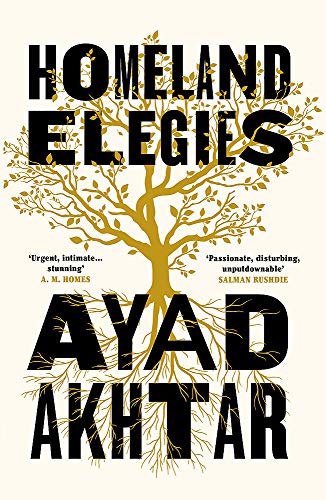
Ayad Akhtar’s Homeland Elegies

Ayad Akhtar, Homeland Elegies (Headline 2020)

The Emerging Artist has been urging this terrific book on everyone who will listen (it was her insistence that made it jump my To Be Read queue). It’s a novel that manages to include mini-essays about politics, economics, religion, cancel culture and the art of war while telling a deeply personal story about an immigrant Pakistani Muslim family in the USA, particularly after the 11 September attacks and during the Trump era. The author has described it as literary reality TV, by which I think he means that while it follows the author’s life closely and is populated by recognisable characters from his real story, and so reads like memoir, it’s actually carefully structured fiction. The epigraph, from Alison Bechdel, gives fair warning:

I only make things up about things that have already happened …

Ayad Akhtar is a Pulitzer winning dramatist. His play Disgraced was put on by the Sydney Theatre Company in 2016, so some of my readers may know his work, but this book is my introduction. It has made me a fan.

Like Philip Roth’s The Human Stain, Homeland Elegies starts with current presidential scandals – for Roth it was Clinton’s sexual misdemeanours, for Akhtar it’s Trump’s all-round egregiousness. But where Roth forgot about Clinton and moved on to his protagonist’s own misdemeanours, Akhtar stays with Trump, or at least with his (or the narrator’s) father’s infatuation with him, and Trump remains at least an ominous background presence for the duration. In the end, the book is an exploration of the state of the US nation under Trump. I read it as a kind of elegy for the USA that has been ailing for decades and been given what may be its death blow by Trumpism (it was published before the 2020 election, but hasn’t been defanged by Biden’s election). It also includes an earlier immigrant generation’s lament for a lost homeland – hence the plural elegies of the title.

In the first pages, in a section named ‘Overture: To America’, the narrator’s university mentor remarks ‘almost offhandedly’, long before the advent of Trump or even the Tea Party, that

America had begun as a colony and that a colony it remained, that is, a place still defined by its plunder, where enrichment is paramount and civil order an afterthought. The fatherland in whose name – and for whose benefit – the predation continued was no longer a physical fatherland but a spiritual one: the American Self.

The rest of the book can be read as the narrator’s process of discovering what that means.

I may be making it sound dull and programmatic. It’s anything but. Its arguments are complex and compelling, and given to Proust-like reversals. Its characters, especially the narrator’s father, leap off the page. At the sentence level it’s alive and engaging. Take this brilliant passage about the early part of Trump’s ascendancy:

The national mood was Hobbesian: nasty, brutish, nihilistic – and no one embodied all this better than Donald Trump. Trump was no aberration or idiosyncrasy, as Mike saw it, but a reflection, a human mirror image in which to see all we’d allowed ourselves to become. Sure, you could read the man for metaphors – an unapologetically racist real estate magnate embodying the rise of white property rights; a self-absorbed idiot epitomising the rampant social self-obsession and narcissism that was making us all stupider by the day; greed and corruption so naked and endemic it could only be made sense of as the outsize expression of our own deepest desires – yes, you could read the man as if he were a symbol to be deciphered, but Mike thought it was much simpler than all that. Trump had just felt the national mood, and his particular genius was a need for attention so craven, so unrelenting, he was willing to don any and every shade of our moment’s ugliness, consequences be damned.

(page 242)

‘What oft was thought but ne’er so well expressed.’ That is, the characterisation of Donald J Trump may not be startlingly original, but this is beautifully put, and there’s a lot more of it in context. No sooner have you stopped cheering (if you’re me) for this passionate statement of a vital truth, than the narrator takes us into the sleepless night that his friend Mike’s tirade has brought on. And just in case the reader wants to cheer for Mike, it turns out that Mike makes a logical – or at least logical to him – leap to arguing that it makes sense to vote Republican. This is a book that never falls in love with its own rhetorical power. It avoids cheap shots and easy answers. In a short final section, the narrator is to give a talk at a university. At first the Muslim student organisation calls for his invitation to be rescinded because his work is ‘offensive and demeaning’, but then when someone puts up posters accusing him of being pro-terrorist, the Muslims rally to back him. He’s not implying the bogus argument, ‘I’m being attacked from both sides, so I must be right,’ but holding out for complexity, for thoughtful reading. The book as a whole repays thoughtful reading in spades.

500 people: Week Seventeen

See this post for a brief description of my 500 People challenge.

I’ve been travelling this week, visiting family in Brisbane. Surprisingly, I’ve had fewer opportunities for new connections while away from home – so much time spent in the travel bubble with the EA, working out timetables and routes. Conversations with AirBnB hosts, though invariably pleasant, don’t count. But the following hit-and-run encounters do.

  1. Monday 7 June, having arrived in Brisbane, and found what we thought was a safe parking spot (it wasn’t, we copped a $100 fine) we passed Red Hill Cinemas, a building that was once a skating rink, on our way back to our flat, and decided to go to a movie. We asked the young man who sold us our tickets if there was somewhere we could eat. He directed us to the Colle Rosso (get it?) pizza place, but it and another that we found through Apple Maps were both closed. We went back to the cinema and asked the front-of-house man if we could get a refund on our tickets as we needed to eat and wouldn’t make it back in time. He went and asked his manager then, having failed to get through, told us that the cinema provided food. Gratefully we ordered toasties, and twenty minutes later, just as the movie was about to start, he brought our meals to Row F.
  2. Monday, on our search for Colle Rosso, we asked for directions at a bottle shop, which was the only sign of mercantile life nearby. The chap there was kind, pointed us in the right direction, and said he’d be surprised if it was open on a Monday night. Mildly distressed at the prospect of us going hungry, he said, ‘I’d make you a pizza myself, but I haven’t got an oven here.’
  3. Tuesday, at the Queensland Art Gallery’s wonderful William Yang retrospective, Seeing and Being Seen, there’s a series of photographs related to a North Queensland murder case in the early 1920s. The Emerging Artist asked if the magistrate who made an egregious verdict in that case was my grandfather. I had a close look at the photos and text, and said to a woman who happened to be looking at the same work, ‘That magistrate was my grandfather!’ She was suitably impressed, or perhaps horrified. (For the record, I was wrong – the case was heard four years before my grandfather got the job.)
  4. Wednesday, I was visiting an old friend who is living in a kind of home for aged Marist Brothers. He introduced me to a number of men in their 80s and in various states of frailty and apparent aphasia. The one I want to single out here was someone I had known reasonably well 55 years ago. He is the man who introduced me to the writing of John Henry Newman, Raissa Maritain and, you won’t be expecting this name, William Burroughs Jnr. When I introduced myself and offered some memory prompts, the only response I got was a blank watery gaze, and a limp handshake.
  5. Thursday morning, in the QUT campus at Gardens Point we were looking for the swimming pool. We approached a young man in a tracksuit that seemed to be made from African material with bold geometric design in dazzling orange and green. He knew where the pool was, and he was heading that way. A few seconds later he pointed to the pool, but said he had no idea how to get to it. The EA complimented him on his gorgeous outfit at the same moment as I, going for something less obvious, was saying how I liked his lavender hair. ‘Thank you,’ he said to both of us, in a tone that could have meant, ‘Why are these old people commenting on my appearance?’ (I don’t usually mention race in these encounters, but it’s significant that this man is white.)
  6. Friday morning, we called on the William Robinson Museum near the pool. The woman on security told us we could visit a website that gave a guided tour of the exhibition, relating it to Nick Earls’s book William Robinson: A New Perspective. ‘But it takes a lot longer if you do that,’ she said. I said we needed to be quick because we’d just been for a pre-breakfast swim and were hungry. ‘You went for a swim in this weather?’ she asked in Queenslandish horror (we’re having a bit of an Antarctic moment). We reassured her that we’d been to the heated pool. When we left 20 minutes later, she wished us a good breakfast.
  7. Friday, a knock on the door turned out not to be the Emerging Artist returning from the laundromat, but a woman who introduced herself nervously as working with our AirBnB hosts. ‘I’m wondering,’ she began, ‘if you’ve seen—’ I interrupted her and to say that yes, I had seen the bunch of access cards she was looking for. I apologised for not having been in touch as soon as I saw them, as I knew they weren’t meant to be there. Her relief was so enormous, it clearly didn’t occur to her to blame me.
  8. Saturday morning, as we headed out for breakfast and the European Masterpieces from the MET exhibition at QAGOMA, we shared the lift with two brightly clad young people. They barely acknowledged us when they entered the lift, not rudeness so much as mutual absorption. When the woman said something about coffee, I said something about the importance of the first coffee of the day. (I don’t actually drink the stuff, but I’ve learned that it’s richly symbolic of the good life for some people.) That broke the ice, and for the rest of our descent we chatted about the terrible noise from construction work in Roma Street that had kept up all night.
  9. Saturday afternoon, we were barefoot in bathers on our way to the sauna in our hotel/AirB’n’B. Outside the lift on our floor, an elderly gentleman said hello (elderly, but probably younger than me!). I said something about us making ourselves at home and he ignored me completely. A little later, he asked if our TV worked. I said it had last night. He again didn’t respond. At that moment the lift arrived and two much younger people came out. ‘Ah, there you are,’ he said. ‘I need your help. My television doesn’t work.’ I realised later that he must have been very deaf, and had been looking away when I spoke.
  10. Saturday evening, when we’d finished dinner, a group of young people arrived at the door we were coming out of. The woman who seemed to be their leader said they were in the wrong place and should turn around. Knowing that the eatery has three entrances, I said its name and asked if that’s what they were looking for. She said No and set off. The last of the group, a man with a blond beard and a northern European accent, said, ‘We are just confused.’ I said, ‘And I was just helping to increase the confusion.’ ‘Yes,’ he said, smiling. ‘Thank you.’

Running total is now 161.

500 people: Week Sixteen

See this post for a brief description of my 500 People challenge.

  1. Sunday 30 May, at a one-year-old’s birthday party, I met a number of new people, but really only had one conversation with someone who was new to me – the baby’s father’s stepmother. (We didn’t discuss what relation that makes her to the baby: I’d just go with grandmother.) She’s been travelling to Europe for work three times a year until last year, and was happy to regale me with tales of her travels, including a particularly lovely three days working at her computer on a train from Chicago to San Francisco – three very productive days with fabulous scenery rolling by outside her window. I asked the potentially annoying question: Did she know a friend of mine, from the same country of origin as her parents? After some memory trawling and adjusting of my pronunciation, she realised that she did know my friend, whom neither of us has seen or some years.
  2. Tuesday afternoon, I was having a hot drink with a couple of relatives from out of town at the Art Gallery of NSW. As I carried two large slices of layered honey cake to our table, the woman at the next table looked up from her abstemious salad and said something envious. ‘They’re not for me,’ I said, sharing her envy.
  3. Wednesday, in my second 20-minute session in the sauna, I somehow managed four conversations with new people. When I returned from my between-sessions cold shower, the two men I had left in sombre silence were chatting. The subject was tattoos. When one of them said, ‘I actually regret about half of mine,’ I seized the chance and asked him which ones. He backed off from his original statement ], but gave us both a tour of his calves and lower thighs, where he sported the images of a number of computer games – Pacman, Mario Bros, etc – and (the reason he’d backed off) the names of his three children. He saved the upper part of his body, he said, for more spiritual images. Something from The Everlasting Story scraped into that category.
  4. Wednesday, a woman joined us, and took control of the situation, swapping names and information about how long we had all been coming. I mentioned that my partner had stopped coming because the sauna was a bit male dominated, and people didn’t observe the Covid three-person limit. As it happened she had come in and made it four, but we didn’t make an issue of it. When another man (more about him soon) poured water on the rocks, she said something like, ‘It doesn’t matter to me, but there’s a sign asking us not to do that.’ A little later when the same man took a swig of water, she said, ‘It makes no difference to me, but I’ve read that if you drink while you’re in the sauna it takes away from the health benefits.’ She didn’t seem to mind that she got grunts in return and when, after a decent pause, the man took another swig, she exchanged a rueful smile with him.
  5. Wednesday, somehow the conversation turned to health and the water-swigging, stone wetting, grunting man, who had long blond hair and had a godlike surfy beauty about him – someone I was prepared to dislike on sight – volunteered that he’d recently had a brain tumour removed. While the woman, who had facilitated the conversation so elegantly, expressed sympathy, I went for vulgar curiosity: ‘Did you have a general anaesthetic, or did you have to be awake for the surgery.’ He’d had the anaesthetic, but knew it wasn’t always so. In that brief exchange my whole understanding of what was happening with the grunts etc was transformed. Later, I saw him with his clothes on, and something in his demeanour made it clear that he was dealing with the after-effects of the surgery.
  6. Wednesday, then I was alone with the other man who had been part of the tattoo conversation. He said he wouldn’t be game to bring a book into the sauna. And we had an interesting chat about the problem of too-many-books. He’d recently sold some art books for about a fifth of their worth, because it was easier to just accept the first offer from a bookshop. In the earlier conversation, before we got to tattoos, we had been taking about flexibility, specifically the possibility of putting one’s palms flat on the lower bench while sitting on the upper one. He had said to tattooed man that he could help him get there. I’d chimed in – and maybe it was my entry onto the conversation: ‘You’d never get me that flexible.’ He took it as a challenge: ‘Maybe not. But I could get you closer to it.’
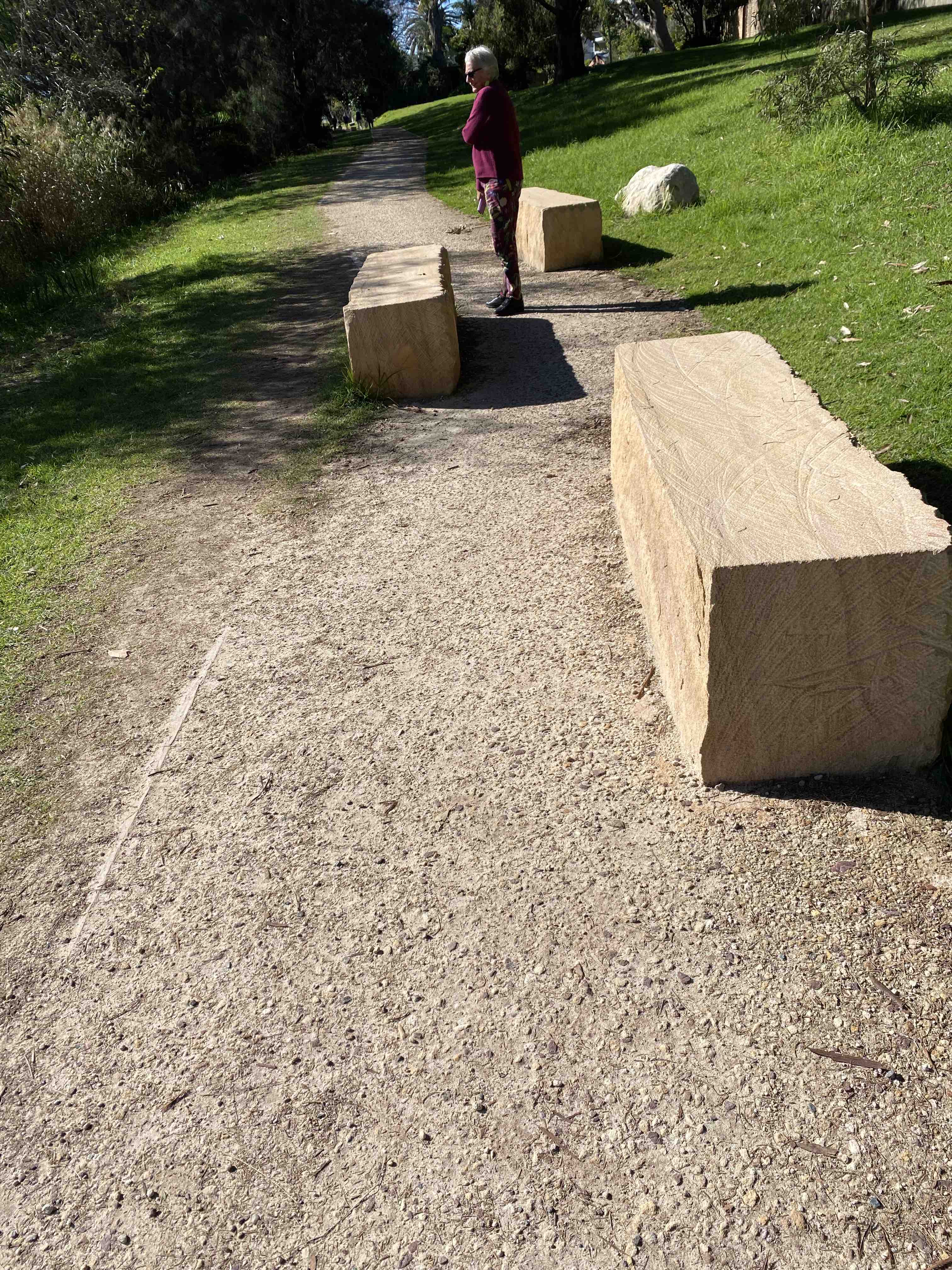
  7. Saturday in the Inner West (Dulwich Hill, Earlwood, Marrickville, Enmore) I kept noticing other drivers being courteous and generous, often with a friendly smile, which was pretty good given how heavy the traffic was. I’m not counting them, but we had a similarly courteous encounter while walking on the Earlwood side of the Cooks River. As we approached a little sandstone-block chicane (see photo) designed to make the path unpleasant for bike-riders, a 60-something man with earbuds approached from the other direction, jogging at an impressive pace. We stopped to let him through, but he also stopped, and waited until I gave an explicit ‘After you’, then ran between the stones and past me with a friendly smile.

Running total is now 151.

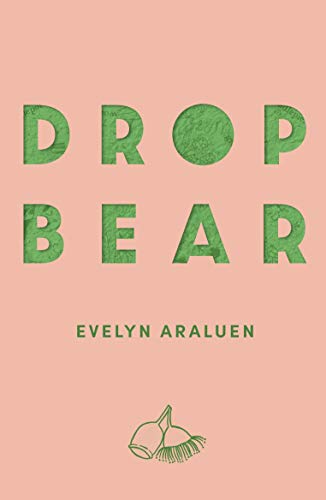
Evelyn Araluen’s Dropbear

Evelyn Araluen, Dropbear (University of Queensland Press 2021)

This is a formidable book. I’d heard Evelyn Araluen read some of its poems, which she always does with a slight, dangerous smile, and was looking forward to reading them. The smile is mostly still in evidence, but the danger doesn’t feel slight. What’s endangered is any hope of emerging with Australian settler colonialist assumptions intact, or at least untroubled. In the book’s generous notes, Araluen spells out her understanding

that the material and political reality of the colonial past which Indigenous peoples inherit is also a literary one. Our resistance, therefore, must also be literary.

(page 99)

What looks like an elegantly designed slim volume of poems is actually a piece of incendiary resistance to colonial attempts at genocide and erasure, from May Gibbs’s cute bush creatures to perfunctory or self-serving acknowledgements of country, by way of a whole gallery of settler-Australian poets and poetic tropes. There are rage-fuelled mash-ups taken from widely read, familiar texts; poems whose ideal readers have PhDs in critical theory or contemporary poetics; and longer prose poems that could just as easily be categorised as essays and short stories. There are poems that turn their gaze away from the colonisers and dwell on family and the natural world.

In her conversation with Tony Birch at the Sydney Writers’ Festival My blog post is at this link), Araluen said. ‘This is not a cancel culture book.’ And that’s an important point to make. ‘For the parents’, one of the longer pieces, is in part an expression of gratitude and appreciation for her parents who read May Gibbs to her and her siblings, which when she first ‘discovered theory’ she thought meant they were ‘losing to the settlers’:

While my siblings and I consumed those stories, we were
never taught to settle for them. My parents ever pretended 
these books could truly know country or culture or 
me – but they had both come from circumstances in which 
literacy and the access it affords was never a given. They just 
wanted me to be able to read.

The acts of resistance in this book are not rants against an easily demonised foe. They involve the poet’s own inner wrestles, and bring a finely tuned, disciplined intelligence to bear on issues that lie at the heart of Australian culture. The book isn’t an easy read, especially for old white men, but it’s not hostile. Speaking as an old white man I felt it as a bracing invitation and a forthright offer of guidance and even help.

Added later: There’s an excellent discussion of Dropbear by Jeanine Leane in Sydney Review of Books, at this link. Here’s a taste:

Dropbear is blunt, biting and beautifully crafted. Although it is those things, it is more than the sum of those things. It’s a radical and timely affront to the history, the myths, the gossip and the stereotypes that still confront us all as the Country’s First Peoples.

Dropbear is the tenth book I’ve read for the Australian Women Writers Challenge 2021.

Journal Blitz 7

Given the lack of government support for the arts in general and literary magazines in particular, it’s no small miracle that so many of them survive and continue to publish excellent work. I do my little bit, subscribing to three and buying an occasional one-off as the spirit moves me. Then I find time to read them, sometimes falling terribly behind.


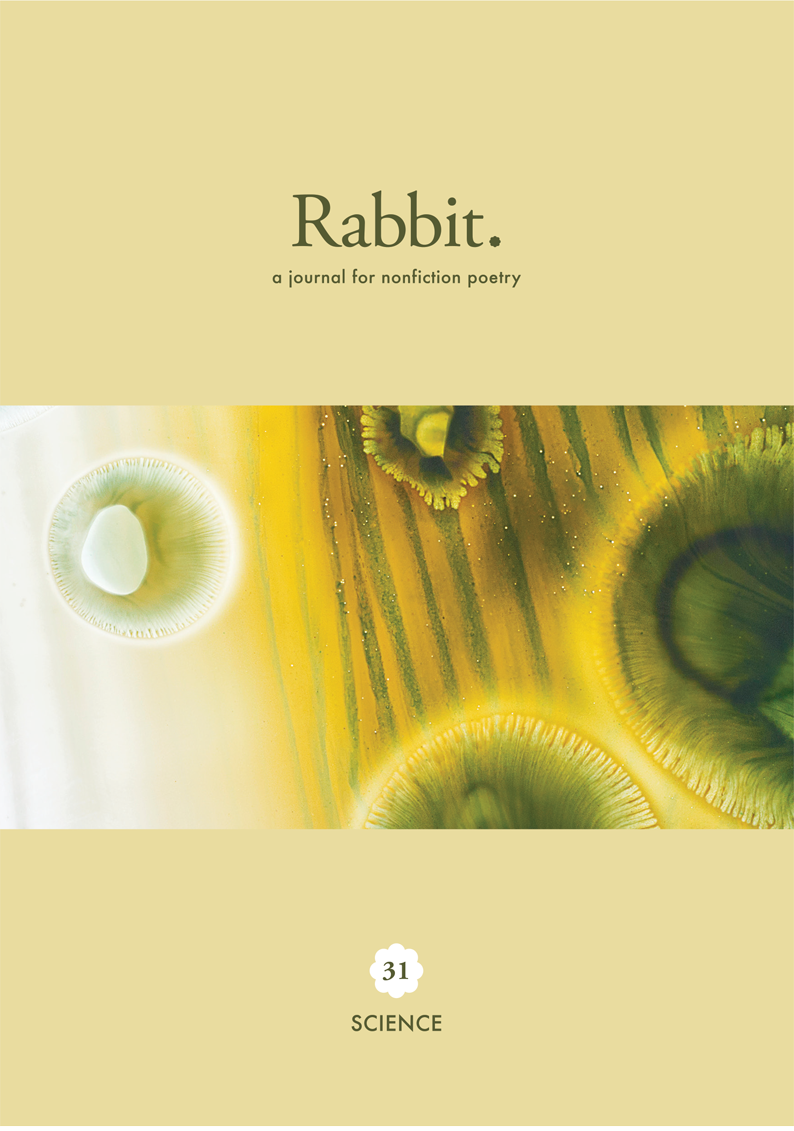
Jessica L Wilkinson (editor), Tricia Dearborn (guest editor), Devika Belimoria (artist), Rabbit 31: Science (2020)

Rabbit is a ‘journal of nonfiction poetry’. I don’t subscribe, and I’ve only read one previous issue, Number 10 (my blog post here). Like that issue, this one is beautifully designed – it features gorgeous images made by Devika Belimoria using a mysterious (to me) process involving acrylic paint and macrophotography.

The Science issue is edited by Tricia Dearborn, whose poetry I love. Whereas Tricia’s own science-related poems tend to be accessible to a non-specialist reader (as I have testified in blog posts here, here, and here), some of the poems she has chosen here are dauntingly technical. But one good thing about anthologies is one can skim, though I didn’t skim very much at all.

To give you a taste, here’s a sampling of opening lines:

From ‘Perpetual Motion’, a series of prose poems by Amit Majmudar:

Amazonian nomads, last studied in the 1940s in Brazil (in that anthropologist's recordings of their dirges, you can hear chainsaws buck alive in the background), had a religion based on the quest for eternal life – only immortality wasn't a quality, as it is for us, but a place they had to keep walking to find

From Jacqui Malins, ‘If you’:

If you are reading this I may be dead
or alive and you have survived past
infancy

Jilly O’Brien, ‘No Laughing Matter’, which is a prime example of what Tricia Dearborn’s editorial describes as ‘science at play – revealing the world, cracking bad jokes and considering the big questions’:

Pierre met Marie in the lab
He had his ion her

Jaya Savige, ‘Starstruck’:

I cannot honestly claim to have met Stephen
Hawking. But once I was skidding down the steepest 
bridge in Cambridge – in the rain, on my rusty BMX 

As well as the science poems, this Rabbit contains the winners of the 2020 Venie Holmgren Environmental Prize, with clear and accessible notes from the judges; a number of articles including one by Tricia Dearborn about her own poetry’s relation to science; a stimulating interview with Astrid Lorange; an essay adapted from a performance piece; and several reviews of recently published books of poetry. All good reading.

I have taken Rabbit 31 into the sauna with me over a couple of weeks. It was ideal reading in that contemplative environment, but alas, it’s bound with glue, and my copy is now pretty much a loose-leaf gathering of poems, images and articles. (Also I was mocked for inappropriate sauna behaviour.)


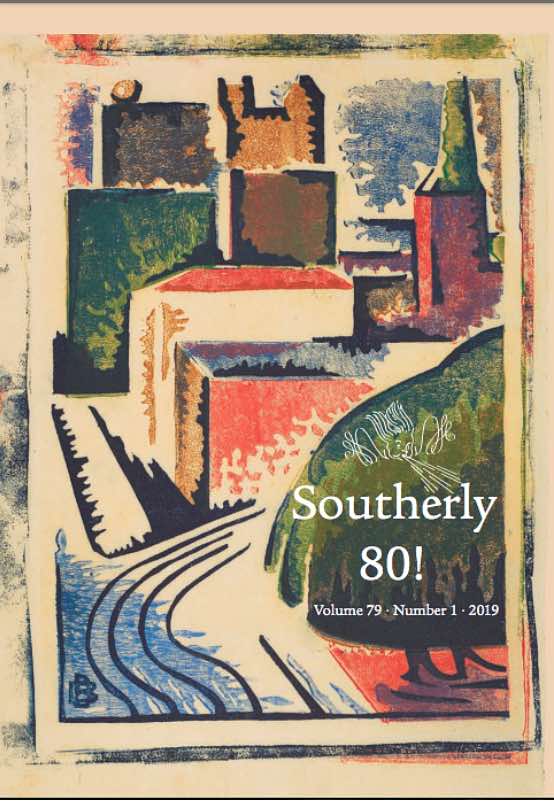
Elizabeth McMahon (editor), Southerly 80!, Vol 79 No 1 (2019)

Southerly, Journal of the English Association, Sydney, has turned 80, and though no issue has appeared since this one came out in 2019, rumours of its death were apparently exaggerated. At least, the website is back up and running.

As befits a journal of such longevity, this Southerly has something for a range of tastes: poems, stories, memoirs, critical articles, notes about literary history, and a substantial number of reviews. A handful of contributors have been around for the majority of the journal’s lifespan, while others are writers appearing in print for the first time.

In ‘A Bell Note’, David Brooks, retiring editor, offers a fascinating account of his years in the chair, including the difficulty of producing the journal with mostly unpaid labour (contributors are paid, but not editorial staff) in an environment that has become increasingly hostile to literary magazines, or at least to the notion of funding them. His account of the role of literary magazines in the funding economy is worth quoting:

The government was using the journals as a means, on the one hand, of arm’s-length funding of writers (through their payments to contributors), so that, at ground level, it did not have to involve itself in deciding which writers to fund, and, at another level, the journals’ decisions as to who was worth publishing and supporting aided the Board in its decisions concerning which writers to give individual grants to. The journals, in other words, were supported because they were a vital filter in the government’s wider program of support for Australian writing. But increasingly, in the last two decades, this ground has shifted. Literary journals continue to perform this same function, but it’s now largely for the publishing industry; to the government they are supplicants, mendicants.

Richard Nile’s ‘Desert Worlds’ is a survey of the way literature has portrayed the Australian soldiers’ sojourn in Egypt in 1916. It’s almost as if the proponents of patriotic myths should be very glad of the disaster of Gallipoli, because without it those gallant men might now be remembered as racist, sexist, drunken hoons.

Alison Hoddinott’s ‘Poetry and Musicophobia’ does a quick tour of distinguished poets and other writers who have been, not deaf like Henry Lawson, but tone deaf – unable to hold or even recognise a tune, even while being extremely sensitive to the musicality of language. There are amusing anecdotes about Hal Porter, Ezra Pound and Sylvia Plath, among others.

’Editing Daniel’ is a brief account of the life and work of Daniel Thomas, art historian and gallery director, written by Hannah Fink, co-editor of Recent Past: Writing Australian art, the first collection of Thomas’s writing.

Jumana Bayeh’s ‘Australian Literature and the Arab-Australian Migrant Novel’ glances at a couple of pages of Patrick White’s The Aunt’s Story where, she says, an Arab-Australian character appears in an Australian novel for the first time, then goes on to a fascinating discussion of two much more recent novels by Arab-Australians, Loubna Haikal’s Seducing Mr Maclean (2002) and Michael Muhammad Ahmad’s The Lebs (2018), with Edward Said’s Orientalism as theoretical backdrop.

There’s a wonderful variety of poems, including: the melancholy ‘wrap’ by joanne burns (whose apparently is reviewed by Margaret Bradstock elsewhere in the journal); the harrowing ‘Explant (caveat emptor)’ by Beth Spencer (I had to look up breast explant surgery to understand this poem); Anne Elvey’s poem in memoriam Deborah Bird Rose, ‘Grevillea Robusta’; and Jaya Savige’s ‘Coonoowrin (Crookneck)’, on which I spent far too much time and still have only deciphered less than a quarter. Just in case my reader shares my love of impossible word puzzles, here’s the opening of that last-named poem:

Hushbound, mountchain, coiled for-kin ache
revenant, calm. Warm hay be stark enigma flags, but cannot 
rarely be sore heart to tune and luck upon your sighin'?

Decoded:

Husband, mountain, [unintelligible] 
[unintelligible], come. We may be [unintelligible], but can it
really be so hard to turn and look upon your son?

If you can fill in the blanks, the comments section is open.

Of the reviews, Michelle Cahill made me want to read David Brooks’s The Grass Library; Toby Fitch reviewing Dave Drayton’s P(oe)Ms offered valuable insight into some contemporary poetics; Oliver Wakelin on Luke Carman’s Intimate Antipodes, perhaps inadvertently, caught me up on some literary gossip.


Jacinda Woodhead (editor), Overland 237 (Winter 2019)

As a marker of how far behind I am in my Overland reading, while I was reading this issue, the last one edited by Jacinda Woodhead, the fourth edited by her successors, Evelyn Araluen and Jonathan Dunk, has landed in my letterbox.

Mind you, Overland isn’t all that committed to timeliness either. The punchiest article in this issue, ‘Crocodile tears‘ by Russell Marks, is a blistering criticism of a book published in 2016, Cathy McLennan’s Saltwater. After noting that the book met critical acclaim and won awards (not to mention modified praise from bloggers such as me, link here), it goes on:

All of this should come as a surprise because Saltwater‘s myriad problems could have excluded from publication altogether.

Drawing on his own extensive experience as a lawyer working with and for First Nations people, he makes a very convincing case that Cathy McLennan’s memoir of her time as a young lawyer working for an Aboriginal legal service in Townsville is full of poor legal practice which the older McLennan seems to endorse, is misleading in many ways and feeds a racist agenda, while distracting readers from its reactionary politics by ‘vivid and shocksploitative descriptions of her clients and their lives’. (I searched online in vain for any rebuttal of the article.)

The only moment that felt seriously dated was a citation of Naomi Wolf’s The Beauty Myth in Hannah McCann’s ‘Look good, feel good‘, an otherwise excellent article about the emotional labour of beauty salon workers. Though The Beauty Myth may well hold up, it’s hard to imagine an article in Overland these days quoting someone who so bizarrely argues against masks and basic contact tracing mechanisms.

My other highlights in this issue were: ‘Only the lonely‘ by Rachael McGuirk, discusses the NSW Special Commission of Inquiry into the Drug ‘Ice’ from the perspective provided by her family’s long-term, harrowing experiences with drugs, mental illness and the justice system, ‘Inspired and multiple‘ by Rebecca Ruth Gould and Kayvan Tahmasebian, who describe their process of co-translating poetry as ‘a dance in chains’; ‘At the crossroads‘ by Con Karavias, a history lesson about the German revolution that raged from 1918 to 1923, but will never be restored to mainstream respectability because to do so would be to acknowledge that conservative forces unleashed Hitler and Nazism in order to crush it.

Of the four short stories, ‘Womanhood‘ by Mubanga Kalimamukwento, a Zambian coming of age story involving female genital modification, had most impact on me. ‘The Sublime Composition‘ by Gareth Sion Jenkins incorporates elements of Microsoft Word’s track changes feature in a deconstruction of an incident recorded in Thomas Mitchell’s journals of exploration, but it’s an extract from a work in progress, a taste rather than a meal.

In the eight pages of poetry, I loved the way ‘Tenor and vehicles‘ by Shastra Deo and ‘Learning‘ by Jini Maxwell resonated with each other. One begins:

Fact: things are like other things. Supposition: liking
tweets is like a simile. 

The other:

There is a very fine line
between writing and just sitting down

Overland has a number of regular features:

  • a guest artist. Number 237 has Matt Chun, who is currently – or was in January 2020 – the Children’s Literature Fellow at the State Library of Victoria, and who brings a children’s illustrator’s sensitivity to these sometimes necessarily grim pages.
  • three columnists: On failure by Alison Croggon; On the school as utopia by Giovanni Tiso; and On writing in water by Mel Campbell
  • the results of at least one competition. This time it’s the 2019 Fair Australia Prize (FAP), an annual prize co-sponsored by the United Workers Union and Maurice Blackburn Lawyers. The winners – two short stories, an essay, a poem and a cartoon – share a fresh directness in the way they address issues facing working people in Australian and, in the general fiction prize winner, in India.

And three more journals are now on the shelf above my desk …

500 people: Week Fifteen

See this post for a brief description of my 500 People challenge. I’m realising that the point of taking note of these mainly probably ephemeral encounters is to pay attention to moments of making connection. Since starting these weekly reports, I’ve remembered my first encounters with people who have been important in my life – which is another story, but not unrelated.

  1. Sunday 23 May, we made an unplanned visit to the Corner Gallery in Stanmore, where there is an exhibition centred around beautiful photographs of Central Australian sites by Philip Bell. The artist was present, and we had an interesting chat about the work: he took the photos some time ago, and has reconsidered them in the light of Mark McKenna’s book Return to Uluru and the story of Bertha Strehlow.
  2. Tuesday morning, as I was heading out to the street when a tiny white dog with a pink collar yapped a furious challenge. I bent down and offered her the back of my hand, which was enough to change her challenge to a warm, bouncy greeting. So of course I got to talk to the human who, it turned out, has just taken on looking after the puppy two days a week. She, the human, lives in a part of our complex that means she rarely has reason to come to the lovingly tended flower gardens, and she was enjoying noticing them. We chatted about dogs and working from home, and then …
  3. Tuesday, immediately after that encounter, I was hailed by a recent acquaintance (Number 4 of Week 14), who introduced me to her partner, who was cleaning the brick wall outside their back door with a high-pressure hose. He apologised for the noise and, as expected, I said it was no bother. Truth be told, I’d barely noticed it.
  4. Tuesday, later in the day, I was in the sauna with an old acquaintance (Number 9 of Week 13) when a third person came in and pretty much ignored my greeting. After we’d been sitting in silence for a while, my old acquaintance started doing stretch exercises, and the newcomer asked, ‘Do you have flat feet too?’ We three then had a wide-ranging conversation, starting with flat feet and achilles tendons, taking in the Indian army’s policy of rejecting applicants with flat feet or no space between their thighs, to the difficulty of making friends in a new city and the possible role that ethnicity (polite word for racism) might play in that. Both my companions were the sons of servicemen. The newcomer had to ask us to repeat some things, so I realised that his initial lack of response may have been because I had mumbled incomprehensibly to a non-native English speaker. Possibly the mumble’s friendly tone helped him to take his later initiative.
  5. Thursday, as usual, was grandfathering day, and being in the company of a three-year-old person makes encounters happen. This Thursday, we had hot drinks at a cafe near the Newtown police station, a table away from a couple of men in suits who were discussing the prices of different sized USB sticks. when one of them went inside the cafe, someone at my table burped loudly. The USB man couldn’t resist. ‘Was that the young lady who did that?’ he asked. The young lady in question hung her head in pure shyness. I said, ‘No, she wouldn’t do a thing like that.’ He said, ‘Not yet.’ Given that everyone involved knew that I was the burper, this was a complex exchange, mostly benign exchange.
  6. Thursday, a little later, we were on a train. A young family – man, woman, baby nearing 12 months – sat opposite us. Out of the blue, the woman produced a shiny white camera and having asked permission took a photo of us. She then handed us the undeveloped polaroid snap, and all six of us watched the image emerge. It turned out they were o their way to the airport, going home to Melbourne. The Emerging Artist and I expressed our sympathy – they were heading back to a week’s lockdown, and there we all were, chatting maskless on public transport.
  7. Thursday, on the train on the way home, a woman sitting opposite us started chatting to Ruby. She responded with bowed-head shyness. The Emerging Artist asked if the woman and her companion were on their way home from work, and that led to a substantial conversation about their decades of employment for the same company, their prospects for retirement, and eventually the woman who had started it said she was sixty-five years old. The EA expressed surprise. Though I had also thought she was in her mid 40s, I thought this was a bit of an ageist gaffe, so I pointed at the EA and said, ‘She’s 35.’ (The EA is brilliant at making connections with new people – she does it by asking a lot of questions. I guess my most comfortable way is to make a joke.)
  8. Saturday morning, we’re spending part of the weekend with friends at Patonga, secluded beach town north of Sydney. On an early walk, the EA and I were behind a family where each adult in turn had something to say about how the teenage girl should dress for the unexpected cold weather. One of the women noticed us drawing even with them and said, ‘Sorry,’ in that Australian way of acknowledging proximity. I said, ‘Nah,’ or something equally articulate, then pointed to the EA and said to the teenager, ‘She’s been trying to figure out what I should be wearing too.’
  9. Saturday, later in the morning, we went to buy hot drinks at Cafe du Blueza – a marquee pitched in its owner’s front yard that serves snacks and drinks. I noticed some Girrakool Blues Fest merchandise and asked about his connection with it. It turns out he was the director of the Festival, but had to make a Covid pivot when it was cancelled – and is now doing quite well as a weekend front-yard barista.

Running total is now 144.

500 people: Week Fourteen

See this post for a brief description of my 500 People challenge.

Here’s another week’s worth of apparently almost meaningless encounters. I say apparently because I can feel my general attitude changing when I’m out in public. Where I used to be content inside my bubble, either alone or with my companions, perhaps enjoying people-watching, I’m now tending to notice possibilities for connection – and notice how generally people welcome a friendly word out of the blue. It may not be the beginning of 500 beautiful friendships, but it changes the feel of public places.

Click on the image to see its source
  1. Sunday 16 May, early afternoon, walking with the Emerging Artist in Sydney Park on another beautiful late autumn day, I passed a man and a woman who, like us, were in their couple bubble. The man’s T-shirt caught my copy-editor’s eye. In a beautiful cursive, it read, Theiyr’re. ‘Excuse me,’ I said, and by their startled reaction I may have said it in a tone of great urgency, ‘where did you get that fabulous T-shirt?’ They both laughed, and he said, ‘Google it.’ It turns out, of course, that the joke is everywhere, but none of the T-shirts I found on line did it as beautifully as that one. The pic above came closest.
  2. Sunday, on the same walk, near the skate park, I was similarly awe-stricken by a birthday cake sitting on a low wall. It was shaped as a blue skateboard, with wheels made of chocolate-topped cupcakes and candles shaped as the numeral 10. Such art cried out for an appreciative audience. After a moment of polite, silent appreciation, I caught someone’s attention and asked, ‘Who did that?’ ‘The mother,’ someone said, and the mother came back from a short distance away. ‘That’s fantastic,’ I gushed – sincerely. ‘It was a rush job,’ she said, in the classic ploy to avoid the evil eye. And she laughed.
  3. Monday morning, I bought a soy and linseed sourdough loaf at our local artisanal bakery. The masked man behind the counter, whom I hadn’t met before, said, ‘There must be a Spanish joke in that.’ Replying to my raised eyebrow, he went on, ‘Soy is I am, so Soy latte means I am milk.’ Being a smarty-pants, I said, ‘It would have to be Soy leche.’ Then as I was leaving, I said, ‘It needs work but you may have the makings of something there.’ (Arguably this exchange doesn’t qualify for inclusion here, because I did nothing to provoke it, but on the other hand I’ve had nice casual friendships with other people in that bakery, and who knows about this one?)
  4. Tuesday morning, setting out to visit the physiotherapist, I passed a woman wiping down the wrought iron fencing in front of part of our complex. I stopped to chat, we told each other which units we lived in – hers, obviously, was the one whose fence she was cleaning (‘Spring cleaning,’ she said, even though it’s late autumn). She asked if I was an owner or a renter, and when I said, ‘Owner’, she told me her name. I reciprocated.
  5. Tuesday, on the way home, in the back streets of Newtown, near the back of Camdenville Public School, a woman called to me from her car. ‘Can you tell me the way to Newtown Public School?’ Embarrassingly, I couldn’t. ‘I can tell you where Newtown High School is,’ I said, and offered to look up the primary school on my phone. ‘It’s OK,’ she said, indicating her own phone, and drove off. I’m still not sure where Newtown Public School is, but about five minutes later I passed her on foot in King Street looking as if she’d found what she was looking for. I don’t think she recognised me.
  6. Tuesday, at the vegie shop later in the afternoon, the woman ahead of me at the cashier was leaving with a wide open zip on the bag slung over her shoulder. I called out to warn her. She said, ‘Yes, I usually leave it open because I’m always in and out of it.’ When I’d finished checking out, she was still outside the shop with her two or three young companions (sons?). I kind of apologised. She said she usually has the bag at the front. I confessed that I’m regularly told that my backpack zip is wide open, and I was just passing on the favour. (Actually I have a new backpack whose zip isn’t broken, so those encounters are generally in the past.)
  7. Wednesday afternoon in the sauna, clearly a good place for talking to people, I had an actual conversation when there were just two of us there. I can’t remember how it started, but I know it was my doing. I learned a lot about how saunas are done in Finland: in particular I now have a mental image of my sauna companion gasping for breath in the ice-cold pond he plunged into after his first Finnish sauna, barely able to gasp out the word English so the nice man who was trying to help him could switch from Finnish to impeccable English to advise him to slow his breathing right down. We talked about life as a paramedic; I recommended Benjamin Gilmour’s movie Paramedico, though sadly couldn’t remember Benjamin’s name; my companion had read the book of the movie; he had suggestions for where there might be a sauna better suited to the Emerging Artist’s needs and preferences.
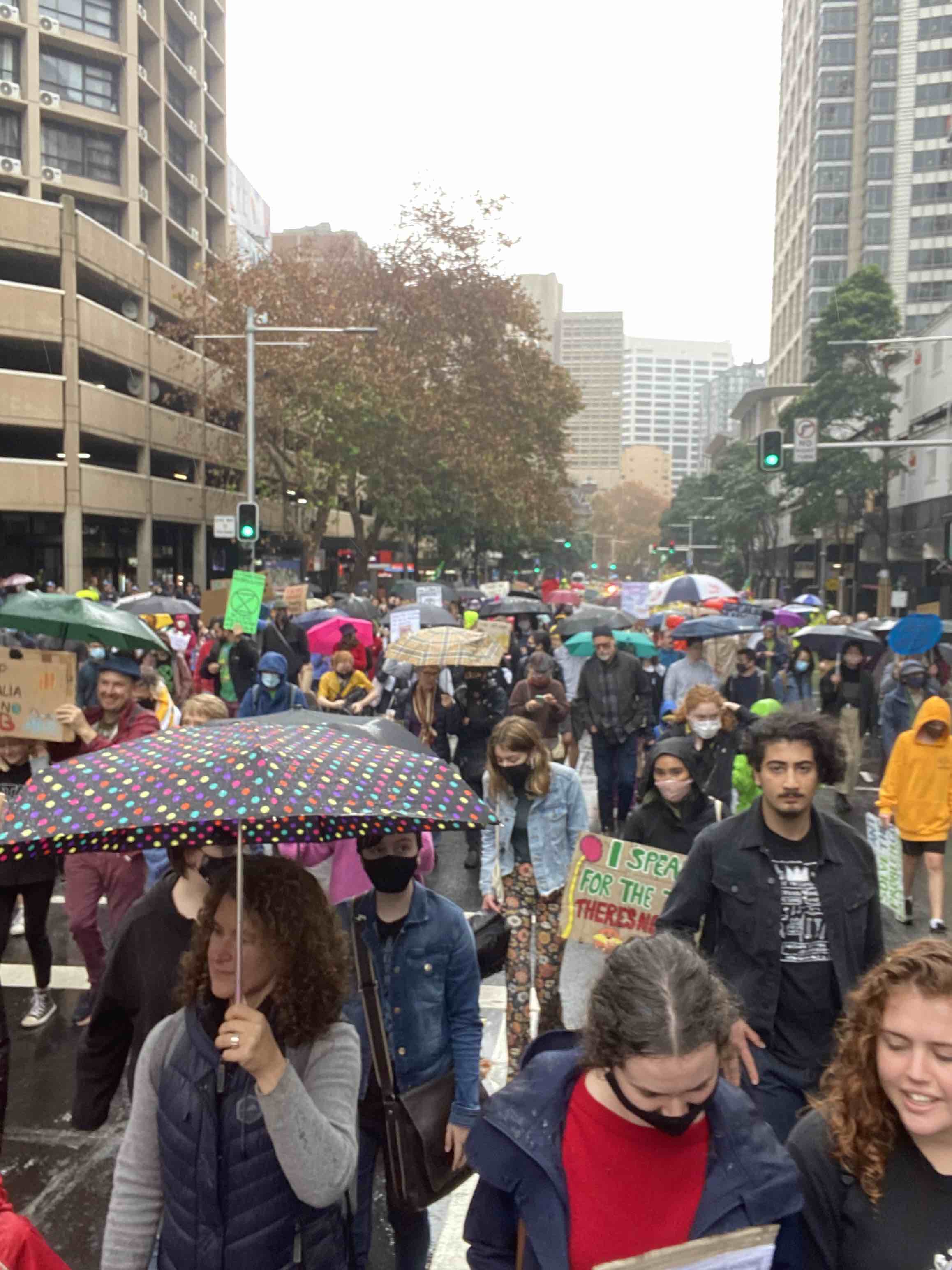
  8. Friday early afternoon at the School Strike for Climate, I was impressed by the row of policemen who marched beside the demonstration about two metres apart, keeping us to our side of the street (alas, not shown in the photo below). Remembering a moment fifty years ago at my first demonstration – a moratorium march against the war in Vietnam – when I said something to a policeman and received a punch in the head, I decided to see what happened this time. I don’t remember what I said in 1970, but in 2021 I said, ‘Thanks for doing this.’ The young policeman smiled and said, ‘You’re welcome.’ Emboldened, I said, ‘This must be a change of pace for you guys.’ ‘No,’ he said, we do this most Fridays and Saturdays. There’s usually a demonstration about something, not always climate change.’ I went back to chanting, ‘Stand up, fight back!’
  9. to 11. Friday, a little later, we were about to be organised to spell out a message – ‘Invest in the future, not gas’ – for a drone shot and a commercial TV helicopter. A woman standing next to me asked nobody in particular what letter we were standing next to. I was able to tell her that we were standing on the edge of the E. Someone joined the conversation and said we were at the end of the future, and a small group of three or four people bonded over the dark joke.
    12. Friday about 5 o’clock, in the thick of King Street, a young man with a scruffy beard (not an unusual sight in Newtown) was shucking a big and evidently heavy backpack. A long white arm stretched from the top of the backpack. Instead of just noting this as a colourful detail of the street, I stopped and asked him about it. ‘It’s my travelling companion,’ he said, with what may have been a British accent. ‘When I’m asking for a lift, I hold it out.’
    13. Saturday lunchtime, we were in a small Lebanese cafe where the owner said the kafta burgers were made using her mother’s recipe. I asked if she’d seen the recent episode of The Drum on ABC TV where they talked about vegetarianism. ‘I never get to watch TV,’ she said in the familiar sorrowful tone of the small cafe owner. I told her: ‘They were saying that a lot of men won’t give up meat because it would somehow affect their masculinity, and a man on the panel said, “I’m Lebanese, and if I stopped eating meat my mother would kill me.”‘ Our host laughed and told a story of what happened in her family when she tried to go vegetarian temporarily. ‘Oh yes,’ her father said, ‘have some of this delicious lamb.’

Running total is now 135. There are 32 weeks to go and I’m 365 short of the 500 goal. So about 12 encounters a week should get me to the goal. I reserve the right to shift the goalposts

Christos Tsiolkas’ Damascus

Christos Tsiolkas, Damascus (Allen & Unwin 2019)

I’m not a Christos Tsiolkas fan. I read most of The Slap aloud on a long car journey and it wasn’t a pleasant experience – the sex scenes were embarrassing and the characters’ misogyny repugnant. But I knew I had to read Damascus.

Like two other novels that come to mind – Mary’s Testament by Colm Tóibín, and The Book of Rachel by Leslie Cannold (links are to my blog posts) – this promised to explore the stories I received in childhood as containing the deep and enduring meaning of life; to explore them, interrogate them, reimagine them. Those other novels told the stories of Jesus’ mother and imagined sister respectively; the central character of this one is the man most responsible for shaping the Jesus story, St Paul, once known as Saul of Tarsus.

Damascus delivers on the promise, in spades. I’m not equipped to comment in any detail on Tsiolkas’ use of the sources. I have only read excerpts from Paul’s epistles, I couldn’t say for sure whether I’ve ever read the book of Acts, and I know nothing about the apocryphal gospel of Thomas except that it exists. Tsiolkas has immersed himself in these documents, and emerged with a story stripped of holy-card or gold-leaf piety, about a man, and a nascent community, coming to grips with a transforming way of understanding what it is to be human.

The world of the novel is callous and often violent. Israel and the rest of Western Asia is under brutal Roman occupation. It’s a place where divisions between free and enslaved, male and female, Jew and Stranger, Roman and non-Roman are rigidly enforced. For a man to touch a woman, or a free person to touch a slave, is a shocking transgression, and in the wrong time and place can meet with shocking punishment. Anyone born disabled or with a physical abnormality, or even sometimes a person born female, would be dumped alive in a cave outside the city and left to starve or be killed by wild beasts. The novel doesn’t draw a discreet veil over any of this horror: the opening scene is a graphic account of a stoning; the fate of rejected babies is realised in nightmarish detail; a man is seen breathing his last after days suspended on a cross, pecked at by carrion crows; a young Jew is castrated and has his tongue plucked out for desecrating a Roman shrine, and then is killed and buried unceremoniously by his brothers because of the shame. Pagan practices involving animal sacrifice that are familiar enough to us are described in stomach churning bodiliness.

In this world, the people who follow Jeshua, as he is called, believe in the brotherhood and sisterhood of all. Slaves and free, women and men eat and drink and embrace together. They are reviled as a death cult because they revere someone who was subjected to the ultimate humiliation of crucifixion, but they are tender and affectionate with each other. Their ritual greeting – ‘He is risen’ ‘Truly he is coming’ – sounds a little Handmaid’s Tale-ish, and foreshadows the way that community was to harden into an institution, but in the present time of the novel we see a genuine striving to live the truth of loving all.

At the beginning, Saul is a zealous, scholarly Jew who supplements what he earns as a tent-maker by hunting down Christians, entrapping them and handing them over to the authorities for execution. He’s also riddled with guilt and self-hatred because of his compulsive sexual attraction to men, and has a troubled relationship with his family because he is unmarried. According to Acts, he was struck down on the road to Damascus where he heard a voice saying, ‘Saul, Saul, why do you persecute me?’ and that moment marked his dramatic conversion to Christianity. The book handles that moment beautifully. it’s told from Paul’s point of view, and we’re never completely sure what happened. There is a lot of light. He is brutally beaten, incurring permanent injuries, and it’s the days of care he received from a Christian group, even though they know he is their persecutor, and even though he repudiates them, that brings about his conversion. Part of the care is warm intimate connection with another man – and though we’re never told whether any actual sex is involved, a strong homoerotic tenderness pervades his relationships with other male followers of Jeshua: much kissing on the lips, sleeping in each other’s arms, bathing each other and so on. Paul is loving with the women members of the community as well, but never with this kind of intimacy.

Paul wants to expand the community to include non-Jews – Strangers. He takes on a young man, Timothy (who is there in Acts), whose mother was a Jew and father Greek. Acts tells us that Paul circumcised him. Damascus gives us the detail of that – the gore (this is a Christos Tsiolkas novel, after all), but also the religious dilemma: Paul is going against his own preaching that is the coming kingdom there is neither Jew nor Greek, but the emotional and social demands of the moment overwhelm the correct line.

The Biblical Paul’s injunction, ‘Slaves be obedient to your masters,’ is the basis for a major narrative thread. Consistent with the rest of the novel, the horrors of slavery and the terrible implications of that injunction are realised.

As anyone who has read even a little about the beginnings of Christianity knows, those early years were full of controversy. The first Christians were Jews, and what now reads as antisemitism in the gospels was written as one group of Jews attacking others. The story of Mary Magdalen meeting the risen Jesus is a vestige of her role as a leader in the early community. The story of doubting Thomas, who said he wouldn’t believe that Jesus had risen unless he saw him with his own eyes, is polemic against the real-life Thomas who preached a different version from the one that became canonical. One of the terrific things about Damascus is the way it includes the controversy: a body of belief is in the process of forming, and the proponents of different positions have enormous difficulty staying loving with each other, and can fail spectacularly. Realistically, none of them shake off the religious world-views they inherited as children: conversion is always a work in progress.

Thomas is a major character. In this novel he, not John, is the disciple most beloved of ‘the Lord’. He is the one who witnessed the crucifixion. And he doesn’t believe in the resurrection. He and Paul – and the other leaders, mainly James in Jerusalem, whom we don’t meet – clash, and he is expelled from the community. By the end of the novel, there are four generations of Christians, the belief that Jeshua will return in triumph imminently is wearing thing, and there is a groping towards a different way of understanding the meaning of his life and death. We – or at least I – feel it is unbearably sad when Thomas, who is every bit a generous, forgiving and loving against the odds as Paul or any of the others, is rancorously dismissed, when his understanding – that the kingdom of heaven is to be found in how we can be with each other, not in any supernatural intervention – is perhaps the richest of all.

So, it’s a terrific book. I don’t know what Christos Tsiolkas’ devout Orthodox relatives will make of it, but it helps this lapsed Catholic look back on his roots with fresh respect, even awe. I hope it’s not pushing the Biblical allusions too far to say that in this book the word of the Christian New Testament is made stinky, fluid-emitting, blistered, burned and suffering flesh.

500 people: Week Thirteen

Almost all the encounters I’m recording in this series are pretty much hit-and-run. That doesn’t mean they’re insignificant, of course – some of them are the first salvoes in what might go on to become something substantial. But who can tell? See this post for a brief description of my 500 People challenge.

  1. Sunday 9 May, as we came home from somewhere, a young man with a lot of tattoos and a part-shave haircut was opening the door of our small block of flats. We introduced ourselves, and he volunteered that he’s moving in with a downstairs neighbour, or perhaps just visiting.
  2. Wednesday evening, we had our annual fire services inspection. This meant a man with a ladder came into our flat and set off the smoke alarms. After the minimal transactional exchanges, I said, ‘It must be hard on your ears doing that a hundred times a day.’ ‘Yes,’ he said, ‘I think I’m deaf.’
  3. Thursday at GymKidz, in order to deal with a bit of social awkwardness among the young gymnasts, I asked a man for his daughter’s name. He wasn’t her usual escort, and she had been having a great time showing off her balancing skills to him. He had tried a couple of times to encourage her to pay attention to the instructor, but given up with cheerful resignation. We swapped the names of our young charges, but not our own names. It was his birthday, and he said that spending it at the gym was a lot better than being at work.
  4. Thursday lunchtime at Sydney Park slippery-dips, a young woman in a hijab was playing on the slides with her two young children while a man I took to be her husband sat under a tree and filmed some of their activities. As we were moving away, I said to him, ‘You’ve got the easy job.’ ‘Yes,’ he said. ‘I try not to fall asleep.’ (I should say there was no hint from anyone that he wasn’t just as active as she on other occasions.)
  5. Thursday a couple of minutes later, I spoke to the woman in the hijab who was then watching her daughter walk across a rickety bridge. When I admired the little girl’s fearlessness, the mother smiled broadly and amplified my comment. We chatted a little about our young people’s relative ages and sizes.
  6. Thursday, still in Sydney Park, Ruby and I were riding our scooters around one of the ponds when a big dog came bounding over to us. He was friendly enough, but given that he was more than twice Ruby’s size it’s not surprising she backed off in alarm. In the nick of time, the dog turned his attention to a middle-aged man in lycra who came jogging by at a pace. The man saved himself from falling, and turned indignantly to a woman sitting on a bench nearby nursing a dog lead: ‘You have to put him on the lead, that’s the second time he’s nearly tripped me up.’ She made a compliant gesture with the lead and he jogged off. A couple of seconds later the dog, still not on the lead, got underfoot with another jogger, who went on his way discombobulated but without saying anything. At that point I said, in what I hoped was a friendly tone, ‘You really should put him on the lead.’ ‘It’s an off-leash area,’ she said. ‘That’s why we come here.’ And she and the dog, still off-leash, went off, leaving me and Ruby to our negotiations with our scooters. We passed the cranky man a little later, but by then the offending dog and its owner had left his circuit.
  7. Thursday about a quarter of an hour later again, we were playing in a sandpit near a small boy and his mother. (Only the young ones were actually in the sandpit.) The mother spoke to her son in some English but mostly in another language. I broke the ice by asking what language she was speaking – Polish. Every time Ruby or our friend’s little boy went near the little Polish boy, he would clutch his big yellow tractor and say, ‘Mine!’ His mother was embarrassed, and said he had only become possessive like that since gong to childcare. We chatted about the possibility that he would keep both languages into adulthood. As we left, I refrained from saying Dasvidaniya in case a) it was Russian, and b) it meant something other than goodbye. It turns out it does mean goodbye but it is Russian. The Polish, I now know, is Do widzenia.
  8. Thursday evening, when I took our recycling out, there was a new man going through the bins for cans and bottles. We chatted briefly. I rescued my single Heaps Normal can from our small bin and handed it to him.
  9. Friday afternoon, I had the sauna mostly to myself. When a young man wearing a small cross on a gold chain came in I asked, conventionally, ‘How are you?’ and it turned into a conversation: he was having ‘a bit of a wild time’. We chatted for a bit about his not-very-wild dilemma (choosing between almost identical job offers) before he turned on his ear buds and I went back to my book. I couldn’t swear that this was the first conversation he and I have had. Certainly it felt as if some groundwork had been done on previous occasions. But I’m counting it as part of the challenge anyway.

Running total is now 123.

Proust Progress Report 21

Marcel Proust, À la recherche du temps perdu (text established under the direction of Jean-Yves Tadié ©1987–1992): Book 7, Le temps retrouvé, pp 2273–2334

If I’d kept to my original plan of five pages a day, or even my second plan of three a day, I would have finished À la recherche du temps perdu by now. But I’ve slowed down and had a couple of gaps, so I’m only just entering the strait.

Not that the pace is picking up, but this last month’s reading has had a definite end-is-nigh feel. As I mentioned last month, a sequence of tiny experiences – standing on some uneven paving, hearing a spoon click against a plate, feeling a starched cloth against his lips – send the narrator into complex rumination about the nature of memory and art.

I won’t even try to summarise his reflections on art, but he has a lot to say about the importance of drawing on one’s own experience, and on paying attention to one’s own idiosyncratic (not his word) responses to the material experiences. The specifics of this, remembered, half-remembered, retained only in the unconscious, are what make a work of fiction live. ‘A book’, he says, ‘is a great cemetery where we can no longer read the eroded names on most of the tombs.’

Un livre est un grand cimetière où sur la plupart des tombes on ne peut plus lire les noms effacés

Having earlier given up on his pretensions to be a writer, he now decides to write a book based on his fresh understanding of a certain kind of memory as a way to transcend time. It’s fabulously self-referential, and it does make me want to start all over again to see how the book lives up to his stated intention.

All that thinking happens in the library of a house where he has turned up for a social event. The musical piece in the next room finishes and he goes into the salon, which is full of people he hasn’t seen for years while out of town at health establishments. And they’re all in fancy dress: the men have stuck white moustaches and beards on their faces and most people are wearing white wigs; one young man has put on ingenious fake wrinkles; a glamorous woman has made herself look overweight … which leads into reflections on old age. Just as he as decided to write a work about transcending time, he is confronted with evidence of time’s inexorable effects on human beings.

Individual humans age, some more devastatingly than others. Some people disappear from society altogether – they may have been the subject of scandal, or they may have been Germans. Some who were barely on the fringes of le monde now have great prestige. Others have swapped dubious reputations for status as men of high moral standing. The same title is now inhabited by a different person altogether. The young have no idea of the origins and history of the people who now shine on the social scene. And who but the old now remember that the still-beautiful Duchesse de Guermantes – Oriane – could once make or break a social occasion by deigning to appear for half an hour, or staying home.

Proust’s contrast between the virtues of solitude and the emptiness of social life is here the clearest it has ever been.

Through all this, there’s what amounts to a roll call of the novel’s characters alive and dead: the devious Morel now gives character references in court; Mme Verdurin is now the Princesse de Guermantes; Bloch is a prestigious man of letters; no one quite remembers how Gilberte became a Guermantes; Oriane is as commanding a presence as ever, but in a flash-forward of three years we see her in sad decline.

The loose ends are being tied up. I have 70 pages to go and am missing Proust already.