So many books in Ruby’s house, so little time. I may be doing a weekly blog post for a while to come. Given that the projected life of a children’s book is alarmingly short, it’s heartening to see so many relatively ancient books here.
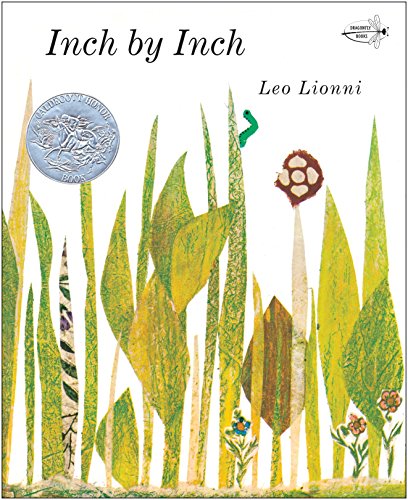
Leo Leonni, Inch by Inch (1962)
This was Leo Lionni’s first picture book. Not as spectacular as Swimmy, perhaps, it’s still splendid. The tiny inch worm saves itself from being eaten by offering to measure parts of various birds, and finally by rising to the challenge of measuring the nightingale’s song. For small readers, there’s a bit of a Where’s Wally thing going on as the tiny worm appears in every spread. For big ones (including grandparents) there are more sophisticated joys in the spare text and elegant paintings.
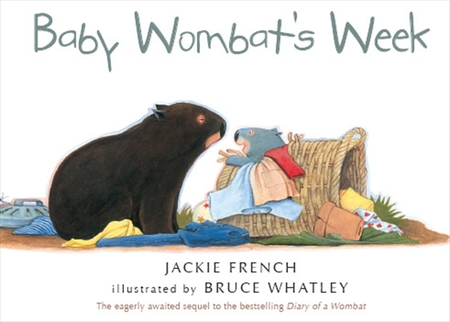
Jackie French and Bruce Whatley, Baby Wombat’s Week (Angus & Robertson 2009)
This is a sequel to Diary of a Wombat that won hearts and prizes all over the place in 2002. Who doesn’t love a wombat? And this one’s a baby. Again, the images are probably too complex and the humour too sly for tiny people. But this is wonderful.
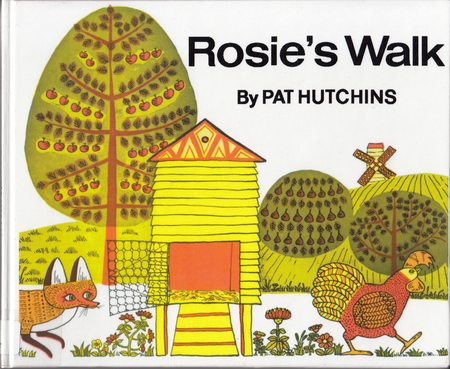
Pat Hutchins, Rosie’s Walk (Macmillan 1967)
This is a board book supplied by us grandparents. Its place in our affections is at least as firmly established as The Very Hungry Caterpillar‘s. It’s a classic example of illustrations telling a story of which the verbal text pretends to be oblivious. The bright, patterned illustrations are, of course, gorgeous.
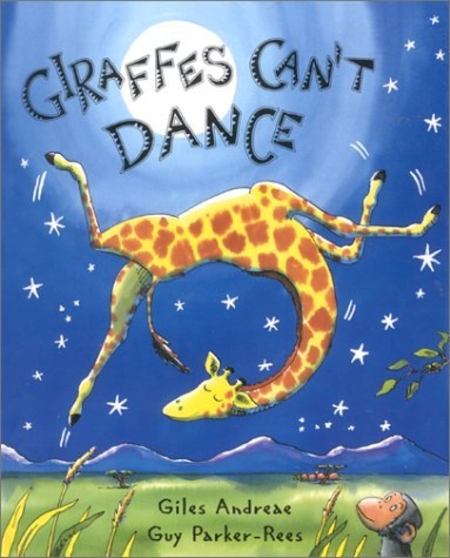
Giles Andreae and Guy Parker-Rees, Giraffes Can’t Dance (2001)
This one doesn’t appeal to me so much, but it’s on high demand in Ruby land, possibly because one of her favourite toys has been a squeaky giraffe named Sophie. The Giraffe in the book is mocked by the other animals because it can’t dance. It wanders off a communes with the moon and the wind, and soon is dancing spectacularly: given how very ungainly the giraffe is in the first part of the boo, there’s something dispiritingly unrealistic in the moral is that everyone can dance if the music is right.
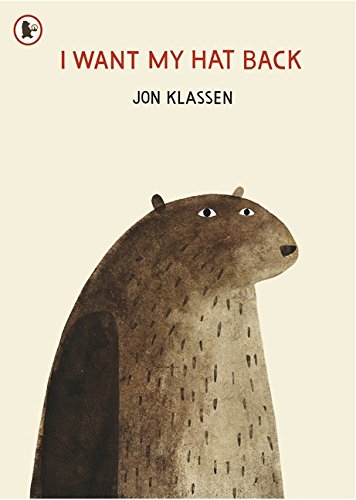
John Klassen, I Want My Hat Back (Walker 2011)
Jon Klassen is a Canadian minimalist picturebook maker. As far as I can tell this is the first of a trilogy about a bear and his beloved hat. The bear, who doesn’t change much from page to page, asks a number of other animals, some of them of indeterminate species, if they’ve seen his hat. We see the hat long before he does (another example of an illustration alerting the reader to something the text is unaware of), and there’s a bloodthirsty and punitive but funny twist in the tale, which I hope young readers generally miss.
Bob Graham, Vanilla Ice Cream (Walker 2014)
Bob Graham! Evidently he’s even more popular in France than in his native Australia. This picture book is the work of an assured master – possibly in his Late Style. A sparrow accidentally hides away in a bag of rice loaded onto a ship in an Indian port. When the ship arrives in a southern land (a non-specific Australian city), the sparrow emerges and flies to a nearby park. There, a dog leaps up towards him and knocks an ice cream out of someone’s hands. The ice cream lands in the lap of a baby in a stroller, and that’s the first time that baby tastes vanilla ice cream. A weird non-plot, you might say. But he pulls it off!
Julia Donaldson and Axel Scheffler, The Snail and the Whale (Puffin 2006)
A strange tail of a snail with an itchy foot who hitches a ride to exotic places on the tail of a whale and comes back to inspire the other snails to go adventuring, having saved the whale’s life by writing a message in slime on a classroom blackboard. Surrealism is alive and well in children’s picture books. This one is way too old for Ruby, but she has two copies, one in the profusion of books and toys in a corner of the living room and one beside her cot.
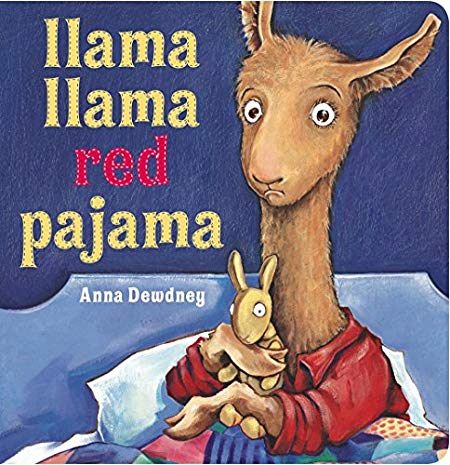
Anna Dewdney, Llama Llama Red Pajama (2005)
A gauge of the success of this book is that Mr Blue Pencil didn’t notice the US spelling in its title until I wrote it for this bog post. It’s a bedtime story with bright colours, bouncy rhymes (as long as you pronounce mama to rhyme with llama). There’s a fear-of-the-dark moment that might be a bit suggestive for some children. But the relationship between ht young llama and the llama mama is warm and loving, even if she does answer the phone when the young one needs her desperately at the bedside.
Baby Wombat’s Week is the seventh book I’ve read for the 2019 Australian Women Writers Challenge.






 Me fail? I fly!