Tag Archives: Anna Funder

Sydney Writers’ Festival 2025: My day four, part two

The young woman who was my neighbour at the launch of Ritual was just at the festival for the one day. She said she planned to go to ‘all the Palestinian sessions’. My next two sessions would have been on her radar.


1 pm: Peter Beinart: Being Jewish After the Destruction of Gaza

Peter Beinart is a New York journalist, commentator, substacker, and professor of journalism and political science.  He was in conversation with ABC journalist Debbie Whitmont.

He began by saying that he hoped there would be people in the packed room who disagreed with him. If there were any such, he made no attempt to placate them, but left us in no doubt about his views. He spoke fast (and at times furious), so please don’t take this as a summary of his whole presentation, but here are some things I jotted down.

The Jewish community in the USA and elsewhere is painfully divided over current events in Israel-Palestine. He begins his book Being Jewish After the Destruction of Gaza with a letter to a former friend: speaking from a position of love and Jewish solidarity, he says that something has gone horribly wrong, that the current action of Israel is a profound desecration, the greatest spiritual crisis of Judaism since the Holocaust.

There has been a great sustaining story for Jews. They are the world’s perpetual victims. In line with that narrative, Hamas’s horrific attacks on 7 October 2023 are seen in the context of the Holocaust and, before that, the centuries of pogroms and persecution. But placing the attacks in that narrative is to dehumanise Palestinians. To understand 7 October we need to look to different analogies – the example he gave was of a group of Native Americans who broke out of virtual imprisonment to perform a horrific massacre. In the case of 7 October, the Israeli Jews weren’t a marginalised group – it was horrible that they were killed but they were members of the oppressing group.

The narrative behind the creation of Israel is that Jews need a safe place. But supremacy does not make you safe. In South Africa it was widely believed that the relinquishment of white supremacy and Apartheid would lead to a bloodbath because whites would no longer be protected from the armed resistance. It didn’t happen(whatever the current president of the USA might say). Similar fears in Northern Ireland proved to be illusory. When structures of supremacy were taken down, the violence pretty much ended.

Yet the fear persists. Jewish Israelis fear to visit Gaza or the West Bank – while going to hospitals where there are many Palestinians among the doctors and nurses. Rather than argue, one needs to ask, ‘What are the experiences that led you to that belief?’

The answer is partly that the Holocaust is not ancient history. There are still fewer Jews in the world than there were in 1939. He is not suggesting that we should forget the past, but it matter what stories we tell. In his early 30s he went (as a journalist, I think) to spend time with Palestinians on the West Bank. Nothing in his life had prepared him for the brutality and terror he witnessed there. He realised then that the story of the persecution of the Jews was not the only story, and not the main one to tell in Israel-Palestine.

Among some circles there is a new definition of what it means to be a Jew. To be a real Jew, you must unconditionally support Israel. This, he says as an observant Jew, is a form of idolatry – the worship of something human-made. States are meant to support their citizens. Under this new definition, the state of Israel is to be worshipped: it’s not a relationship of support but of adoration. Likewise there’s a new definition of antisemitism that includes anti-Zionism: this would mean that any support of Palestinians is antisemitic. Again he quoted Edward Said, ‘Palestinians have been denied permission to narrate.’ This would make that denial absolute.

In fact, Jews are disproportionately represented in pro-Palestinian activities in the USA. These are not ‘self-hating’ Jews, but Jews acting in keeping with longstanding cultural values.

The last sentence of my notes: ‘Jews need to be liberated from supremacy.’


4.30: Plestia Alaqad: The Eyes of Gaza

Plestia Alaqad is a young Palestinian woman who has defied the lack of permission named by Edward Said. On 6 October 2023, a recent graduate, her application for a job with a news outlet in Gaza was rejected: local journalists weren’t needed. On 9 October, after the Hamas attack on Israel and the beginning of Israel’s response, she received a call saying things had changed. So she began an astonishing period of reporting. (At least, this is what I gathered from this conversation; the Wikipedia page tells a slightly different story.) For six weeks, she published first-person eye-witness accounts as Israel’s attacks on Gaza became more intense. She also published her diary on Instagram, giving millions of followers what Wikipedia calls ‘an unfiltered glimpse into the harrowing realities of life under siege’. And she wrote poetry. Her book, Eyes of Gaza, is a memoir built from her Instagram diaries.

At the beginning of the session, Sarah Saleh stepped onto the stage and sat beneath the huge screen to tell us who Plestia Alaqad was. Being completely ignorant, I assumed Plestia Alaqad was about to be beamed in from the Middle East, like Ittay Flescher and Raja Shehadeh. In fact, she is currently living in Australia, having left Gaza in November 2023 in fear for her family’s safety. Sara was alone on the stage so her guest could make an entrance: our applause was accepted, not by a stereotypically dour, hijab-wearing Palestinian refugee, but by a glamorous, vivacious, long-haired young woman.

The entrance wasn’t just a nice piece of theatre. Like Flescher and Shehadeh, she sees her work as being in large part to counter the dehumanisation of Palestinians – and she made us see her as human. This is why she writes about shopping as well as the outright horrors. ‘People don’t expect to see me shopping. They want to donate clothes to me.’

‘I knew how to be a journalist,’ she said, ‘but not how to be a journalist in the middle of a genocide.’

‘You have to deal with the genocide,’ she said, ‘and then you have to deal with the media’s treatment of it.’ Once she had come to public notice, mainstream journalist wanted to hear from her. She told us of one interview, with an Israeli news outlet I thnk, where the interviewer kept asking her leading questions, wanting her to say something like, ‘Kill all Jews.’ But this is not her position, and she referred constantly to the perpetrators of atrocities specifically as the IDF, not even ‘the Israelis’ in general. The interview was not published.

Children in Gaza grow up afraid of the sky.

About her book, she said, ‘I want people of the future to not believe that this book is non-fiction.’


5.30: Anna Funder, Closing Address: Bears Out There (click for podcast)

It was a hard transition from Plestia Alaqad to the formalities of the festival’s closing address. The CEO Brooke Webb (wearing a Protect the Dolls t-shirt), Artistic Director Ann Mossop and the NSW Minister for the Arts John Graham each spoke in justifiably self-congratulatory mode. What remains tantalisingly in my memory from all three speeches is an unexplained image of Jeanette Winterson being pursued by three stage managers. Apparently it was funny and made sense, but I guess you had to be there.

Anna Funder’s speech was terrific. The bears of its title came from an incident in her childhood. At a campsite in a Claifornian redwood forest, she needed to go to the toilet. Her mother, who was breastfeeding little Anna’s baby sister, told her to go to the toilet block by herself. When she came back and said she couldn’t go alone because, ‘There’s a bear down there,’ her mother, like the mother in Margaret Mahy’s classic children’s book, A Lion in the Meadow (it’s me, not Anna Funder, making that comparison), told her to stop making things up. The third time little Anna came back she was accompanied by a burly man who wanted to know who kept sending this small child to the toilet block when there was a bear there.

She went on to offer a range of perspectives on that story. Her mother told it often as a humorous story against herself as a neglectful mother. It could be read as showing the importance of the kindness of strangers. And so on.

I’m writing this at least ten days after the event, from very scanty and mostly unreadable notes, but where the story landed in the end was to make an analogy with the work of a writer, to go to places where there are bears – in Anna Funder’s case, the world of secret police, patriarchy, and like that. In these days, with the advent of AI under a global surveillance oligarchy, we need to recognise the importance of human beings writing and reading, daring to go where the robots cannot.

For the podcast of this address, clink on the title above. [Added later: An edited version was published in the July 2025 issue of the Monthly.]


And that’s it for another year, bar the events scheduled outside the week in May and of course the podcast series (I’ll add links to them as they appear). The Festival had an official blogger, Dylin Hardcastle. You can read his blogs at this link.

The small fraction of the Festival that I saw was terrific. At least four people, from different perspectives, spoke of the importance of countering the dehumanisation of Palestinians. There were lots of Readers against Genocide t-shirts, but any fears that there would be displays of antisemitism proved to be unfounded. There were wonderful poetry events – curated as part of the First Nations program, featuring a spectacular international guest, launching a landmark anthology of Muslim poets. I missed the intimate poetry sessions that were a feature of the Festival when it was held at the Walsh Bay wharves. Maybe next year we could have Pádraig Ó Tuama, or Judith Beveridge, or Eileen Chong, or a swag of poets from Flying Islands, Australian Poetry, or Red Room.

I gained new insights into books I’d read, and was tantalised about books I hadn’t. I’ve come away with a swag from Gleebooks, and have added to my already vast To Be Read shelf. I’ve already read a book by Raja Shehadeh from the Newtown library and am part way through a book by Emily Maguire.

Normal blogging will resume shortly.


The Sydney Writers’ Festival took place on Gadigal land. I have written this post on Gadigal and Wangal land, where the days are growing shorter and colder beneath, at this moment, a cloudless sky. I acknowledge Elders past, present and emerging and warmly welcome any First nations readers of this blog.

Sydney Writers’ Festival 2024: My day two

After just one session on Tuesday and nothing on Wednesday or Thursday, Friday was all systems go for me at the SWF, with five sessions, starting at noon and ending just after 7 in the evening. Please excuse the length of this post.


12 pm: The Gift of Greek Myth

I first heard Kate Forsyth talk back in the day when she mainly wrote for children (starting with Dragonclaw in 1997). More recently she has appeared on radio and podcasts as a writer of historical fiction. She has always been good value on fairytales and myth. In this session she chatted with playwright Tom Wright about her most recent book, Psykhe.

If Psykhe is as interesting as this talk, then it’s a brilliant novel. Here are some scraps I gleaned.

Kate Forsyth describes herself as playing in the borderland between myth and history. She is concerned to reclaim ancient stories from their patriarchal interpretations. Fairytales, she says, are myths drained of their sacred meanings, because they are mostly concerned with women’s issues.

In this book, the dividing line between gods and humans is porous. It tells the story of Psyche/Anima and Cupid/Eros/Amor as a historical fiction – Psyche becomes Psykhe and Amor becomes Ambrose.

I’m not sure how much of this is from the original myth and how much from the novel, but here’s a broad plot outline: Venus’ son Ambrose falls in love with Psykhe, a human woman; he keeps her in luxury in his palace, but as a prisoner; he comes to her bed every night, where she is not permitted to see his face. One night as he is sleeping, she looks at him by the light of a candle, and spills wax on him. For the first time he feels pain, and flees. Having broken free of her imprisoned state, she now can love him, and goes searching for him.

Forsyth says this is the only ancient myth that is gynocentric – woman-centred. Whereas in androcentric myths the hero breaks, kills, and conquers (and, I’d add, rescues), in gynocentric myths the female protagonist sets about healing, repair and recovery. This story is about the importance of consent, the transformative potential of pain, the need for love to be more than physical (the reductiveness of that is mine, not Kate Forsyth’s or Tom Wright’s).

Kate Forsyth has a lovely phrase for her creative process. She says she spends a lot of time ‘daydreaming a story to life’. In this talk, she allowed us to witness part of that daydreaming.  


2 pm: Abdulrazak Gurnah: Afterlives

I’ve read and loved two of Abdulrazak Gurnah’s ten novels, Gravel Heart and Afterlives.

This urbane and amiable session focused on Afterlives. Gurnah kicked it off with a reading. Though he read beautifully, it was a strange passage for the occasion as very little happens in it: there is a boat and a harbour town, the sun sets, the main character has trouble sleeping because of unspecified pain. This from a book where there is so much wonderfully dramatic or tender writing he could have picked (see my blog post for an example).

Sisonke Msimang, his interlocutor, asked the pertinent question: why this passage? He said it was the first part of the book that he actually wrote. He knew that Hamza had been wounded and was returning to his childhood home after fighting for the Germans in World War One: what came before and after that was yet to be imagined.

After that insight into the book’s origins, we learned that Gurnah had wanted to write about the German schutztruppe for a long time. (Not quite right to call them ‘the German schutztruppe‘, he said, as only the officers were German, the troops were African.) He had known from his childhood about the ferocity of these soldiers, who fought for the colonisers – his grandfather (or more precisely his mother’s uncle) had been one of them. But when he got to the UK and had access to books, he found that there was nothing written about the way Africans were drawn into the wars between the colonising European nations. He had intended his fourth novel, Paradise (1994), to be on the subject, but he realised then that he didn’t know enough to write about it. It was nearly two decades before the time was right.

A question animating the book is: Why did people join a force that was going to end up dominating them/Why fight in a war that will determining who will be your coloniser? ‘That’s how we put the question now,’ he said. The book offers no simple answer, but a lot of what the two speakers had to say echoed what I have heard and read about the Queensland Native Police: apart from the attraction of being part of a new, powerful force, or various kinds of of coercion, it’s important to remember that people didn’t think of themselves as African, any more than the Germans and French identified each other primarily as fellow-Europeans: many of the African nations had been at war with one another for centuries.

The conversation roamed over the more personal elements of the book. These are the things that Gurnah says he likes writing about most – the everyday, the interior, the domestic, the intimate – and it’s them that gives the book its power as it tackles broader issues. All of this brought the pleasures of the book back to me – I hope it inspires people who haven’t read it to pick it up.

One final question from Sisonke Msimang: Was he expecting the Nobel Prize? Writers don’t work with the hope of winning the Nobel Prize, he said. They’re in for a hard time it they do. And he did a quick impersonation of someone responding to the phone from the Nobel Committee by exclaiming, ‘Well, at last!’


3 pm: Nam Le: 36 Ways of Writing a Vietnamese Poem

This wasn’t a session for the faint-hearted. Felicity Plunkett, herself a poet, set the ball rolling with an opaque quote from ‘On the line’, an essay by Kasim Ali, and things only got more erudite, recondite, convoluted and polysyllabic from there.

When someone at a session later in the day half apologised for the comparatively straightforward terms ‘methodological’ and ‘epistemological’ by adding ‘as we’d say in the academy’, I realised retrospectively that this conversation was being conducted as if in a specialist academic context.

For instance: ‘The line can put things into differences of ordinality … You can have a chiasm … ‘ I managed to note down terms like ‘autofictive’, ‘metafictive’, ‘preambular’, ‘the trauma plot’ (which is ‘too easy’). All of this has meaning, but I found it impossible to keep up.

What emerged is that Nam Le’s poems are ‘destabilising, elliptical, constantly questioning’. ‘How is it possible to say anything at all,’ he asked at one stage,’without being undermined by your own self-consciousness?’

There was a lot of talk of violence, which may or may not have a technical meaning. I think Nam Le was joking when he asked, ‘What is more violent than meiosis?’ (Meiosis is the process by which cells split.)

As a counterbalance, Le read four poems to us – or more accurately he read four parts of what Plunkett said is the long poem that constitutes the book 30 Ways of Writing a Vietnamese Poem. It was wonderful to hear his performances. The one with which he wound up the session, a lullaby with the title ‘Matri-Immigral’, was all anyone could have hoped for.

That broke through my exasperation with the session’s obscurity and recursiveness and convinced me to buy a copy of the book.


4 pm: Feminist Firebrands

Each of the day’s earlier sessions featured one author talking to one other person about one book. This session was a panel of three plus a facilitator.

A panel is a hard gig: you run the risk of only half-hearing each of the participants, and hearing no one’s thinking in depth. If the subject is books, you can get some idea of whose writing you might want to follow up, but this panel barely mentioned the participants’ books. All the same, it worked.

Hannah Ferguson, who is in her late 20s, abandoned her law career soon after graduating and is now a podcaster and person in charge of something on the internet called Cheek. Sisonke Msimang, among other things, writes a regular column in the Guardian offering wisdom about racism and related issues. Jennifer Robinson has offered legal advice in high profile cases of alleged sexual abuse. Jo Dyer, among other things former CEO of the SWF, facilitated.

The conversation revolved around issues raised by the Brittany Higgins and Bruce Lehrmann court cases, the allegations of historic rape against Christian Porter, Grace Tame’s advocacy, a little of Amber Heard’s case against Johnny Depp, and a sulphurous whiff of Donald Trump. That is, the way the criminal justice system here, but also in the USA and Britain, treats women, specifically when they allege sexual abuse or rape. And not just the criminal justice system, but the media and the culture generally.

The first thing that struck me was the stark contrast with Nam Le’s approach. Here there was no uncertainty, no self-undermining, no painful self-consciousness. Everyone spoke forcefully, definitely, and – alas for my note-taking – fast. I couldn’t possibly give a decent summary, but here are some gems:

Jo Dyer on recent news about the Queensland police force: ‘How many bad apples do you have to have before you cut down the f*ing orchard?’

Hannah Ferguson (I think): ‘Men are 230 times more likely to be raped than to be falsely accused of rape.’

Hanna again, on the ‘If you don’t know, say no’ slogan: ‘Everything I do is to fight the notion that you should back off if something is hard.’

Jennifer Robinson: Only 2% of rape cases arrive at a guilty verdict, but the current defamation laws in Australia mean that only those 2% of survivors can talk about their experience without being sued. A not guilty verdict in a rape case does not mean that the woman lied.

All the panellists agreed that it is important to have conversation about these issues. I think it’s right to say they all felt that it was a mistake to pile on Scott Morrison for framing his empathy for sexual assault victims as resulting from his wife asking how he would feel if it was his daughter. The conversation is important, and it doesn’t move things forward to attack imperfect contributions that are still in a good direction.

I learned about the ‘Man or Bear’ meme on Tik-Tok. Women are asked if they would rather be alone in a cave with a man or a bear. A typical witty answer is: ‘The bear, because at least I know what it would do.’ There was some dark humour about how some men have responded – one teenage boy asked (the question I’m embarrassed to say came immediately to my mind), ‘What kind of bear?’


An hour’s break to attend to bodily needs and get from Newtown to the City, and then off to:

6pm: Richard Flanagan and Anna Funder on Writing

Given that Richard Flanagan was scathing about writers’ festivals in Question 7 (a book I didn’t warm to), it’s interesting that he still agrees to appear at them. I came to this session mainly for Anna Funder. The Emerging Artist read quite a lot of Wifedom to me last year.

Clare Wright was in the chair. As a historian, she was interested in the way both books move around in genres, part history, part novel, part memoir, part autofiction. Both writers resisted any attempt to classify, saying they had followed where the books took them. Funder, for example, said she wasn’t writing autofiction in the parts of Wifedom when she wrote about her own life: it was a device to bring the questions about how women were seen in her subject’s time into focus.

Richard Flanagan was entertaining. My impression is that he came armed with a number of set pieces. He told us, for instance, that the history of publishing in Australia differs from the history in Britain and the USA in that key roles have been played by strong, intelligent women. He didn’t mention the fabled Bea Davis, but he named others, including the woman who had edited both books featured in the session: he asked her to stand up to take a round of applause, and though I couldn’t see her from my seat up in the gods she apparently complied, I can only imagine how reluctantly. Later he told his version of the story of being mistaken for a different writer in a signing queue – he duly signed the proffered book as Bryce Courtney.

In the long and interesting conversation, Clare Wright asked Flanagan two questions about Question 7 that touched directly on my issues with the book. Did he introduce Rebecca West as a way of countering the all-male patriarchal narrative of the origins of the atom bomb? Nothing so programmatic, he said, and went on to talk about how remarkable Rebecca West was. Then he reminded us that for the last 20 years or so women’s writing has been front and centre in western literature, so our collective sense of history has changed – so not programmatic, but responding to the zeitgeist. Wright framed the other question by asking him to read a short passage (sadly, this was the only reading in the session) describing the bomb being dropped on Hiroshima. As a historian, she was not interested, as he first thought, in whether he had got the number of people killed right, but the origins of his image of survivors walking the streets calling for their mothers, juxtaposed poignantly with the fact that plane that dropped the bomb, Enola Gay, had been named after a crew member’s mother. He was able to say that both those images came from historical records.

Wifedom has 400 endnotes: ‘If you want to destroy patriarchy you have to have endnotes.’

The patriarchal manifestation she attacks in the book is the erasure from history of George Orwell’s wife, Eileen O’Shaughnessy by Orwell’s many biographers. She had a number of Eileen’s letters and some few other sources, so she had to resort to ‘making shit up’, to use the words Clare Wright put in her mouth. The made-up bits are clearly indicated in the book, being set to a narrower width. Before she made this controversial decision, the writing was flat and dead on the page. Her writing about her own status as wife played a similar role.


And so out into the crowds in George Street, possibly there for the Vivid Festival, to dinner and eventually home.

End of Year List 4: Books

From the Emerging Artist, in her own words (links to the LibraryThing pages or, at her request, to my blog post when there is one):

Non fiction

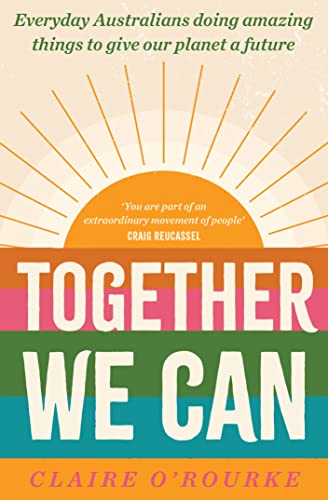
Claire O’Rourke, Together We Can (Allen & Unwin 2022)
I read this after hearing Claire talk on a Sydney Writers’ Festival panel on how to have hope in relation to climate change. It’s a good read, mixing specific examples of everyday Australians tackling what’s happening with broader theory on how to bring about change. It does fulfil its title, giving a real sense that “together we can”.

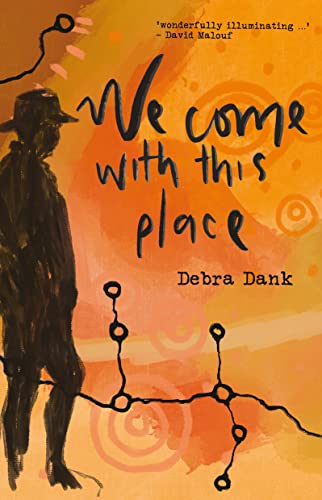
Debra Dank, We Come With This Place (Echo Publishing 2022)
We watched this book win four awards and heard Deborah Dank’s speech at NSW Premier’s Literary Awards 2023. We immediately went out to buy it. The writing is beautiful, a slow evocation of country and its connection to the author, while filled with story. I think it’s the must read of the year.

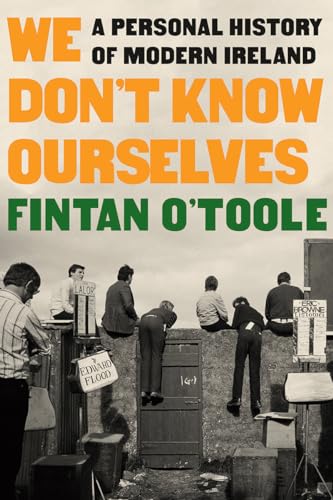
Fintan O’Toole, We Don’t Know Ourselves, a personal history of Ireland since 1958 (Head of Zeus 2021)
Hearing Fintan on the ABC’s Conversations, I immediately placed an order and waited patiently for four months for it to arrive. I’m glad I did. It’s written in short chapters in chronological order, but often picking up themes from chapter to chapter. It’s funny while documenting the appalling state of Ireland from 1958 through personal history, statistics and other sources. The incredible poverty (no running water in homes or sewage, no education for 80% of the population past primary school) made worse by the stranglehold of the Church and corruption in keeping poverty in place and the changes brought about by the impact of globalised capitalism all come alive in riveting storytelling.

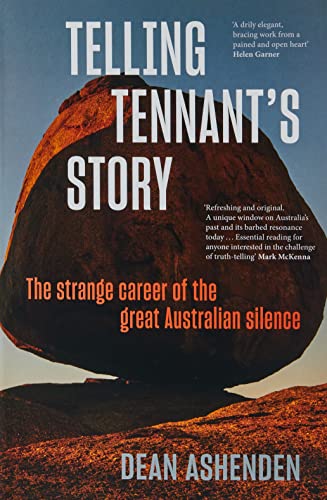
Dean Ashenden, Telling Tennant’s Story: The Strange Career of the Great Australian Silence (Scribe 2022)
A very readable history of post WWII Australian policies in relation to First Nations people where the impact of the policies on Aboriginal people in a specific area – Tennant Creek – are made clear. It tells how the policies of assimilation and later self determination came about and how far-reaching their effects have been. It would have been good for all those voting no to have been made to read this as a requirement for having a say.

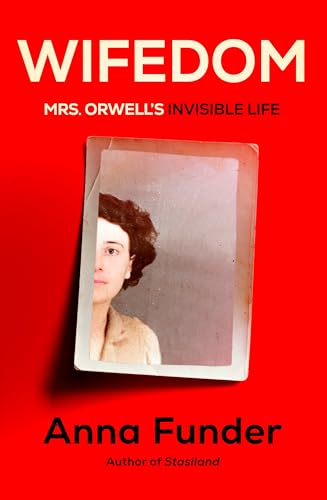
Anna Funder, Wifedom: Mrs Orwell’s Invisible Life (Penguin 2023)
So much has been written about this book already I don’t need to give a summary. I found it gripping. 

Fiction
I read 62 books this year, from quick comfort ‘junk’ reads to harder literary tomes. I take a photo of each book to prompt memory, and going through them all, it’s clear I have had an excellent selection to choose five favourites from. I’ve ended up deciding by level of enjoyment, not on some literary merit criteria.

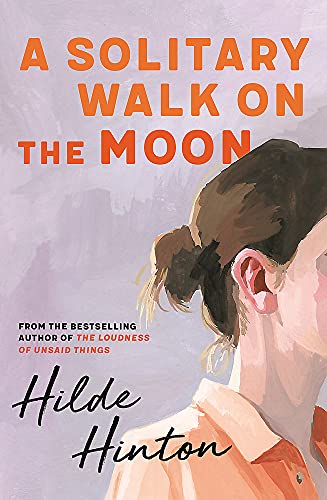
Hilde Hinton, A Solitary Walk on the Moon (Hachette AUstralia 2022)
A totally enjoyable read while disquieting in its simplicity. This is a second novel by an Australian author who seems to slipped under the radar. I found it in my local library. 

Annie Ernaux, The Years (Fitzcarraldo Editions 2018)
This was also an entrancing read, covering a similar time period to my own life. It conjures up the similarities and immense differences between growing up in middle class France and Australia.

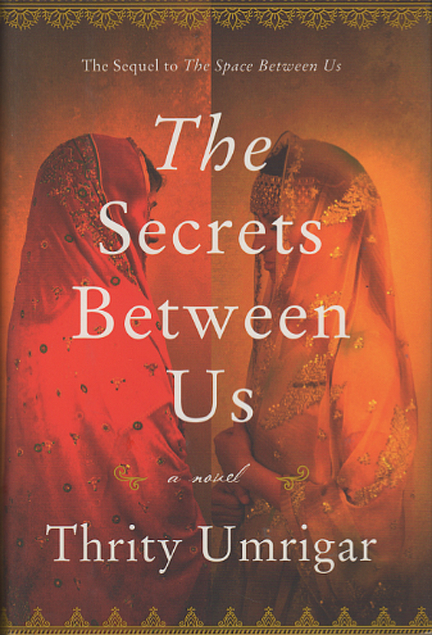
Thrity Umrigar, The Secrets Between Us (HarperCollins 2018)
Another library chance find. I loved the three strong old women protagonists, the exploration of caste and how this is/isn’t changing in modern India.

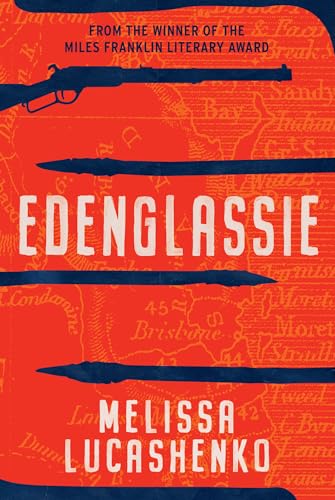
Melissa Lucashenko, Edenglassie (University of Queensland Press 2018)
This was gripping rather than straight out enjoyable, with a sense of what was to come on every page. I loved the imagined world of life at the point where the strangers are staying and growing in number, while keeping your own way of life intact.

Richard Russo, Somebody’s Fool (Allen & Unwin 2023)
Jonathan hasn’t yet been lured into the wonderful world that Richard Russo writes about, but I expect that to change soon. This is the latest in a series that includes Everybody’s Fool and Nobody’s Fool, all set in small town east coast USA. The books follow a number of interconnected characters over a few generations recording the process of change as late capitalism, racism and gender are played out in the town of Bath. He writes with affectionate humour about all of his characters. We see their frailties and appalling behaviour (between white and black, men and women, different generations) but in a number of cases we see how their connections with each other bring a shift in perspective. I love them. 


From me

I read 83 books (counting journals but not children’s books). I finished my slow read of Middlemarch and read St Augustine’s Confessions, a little each morning, but didn’t start another slow read in September because I was doing the Kelly Writers’ House course in Modern and Contemporary American Poetry (ModPo), which was great fun and probably taught me a lot.

I read:

  • 21 books of poetry
  • 26 novels
  • 4 comics
  • books in translation from Chinese (2), Spanish (3), French (2), Danish (1 or 3, depending on how you count), Russian (1) and Latin (1), and bilingual books containing Greek (1) and Maori (1)
  • counting editors and comics artists, 44 books by women, 39 by men
  • 12 books by First Nations writers, and
  • 15 books by other writers who don’t belong to the White global minority.

Biggest serendipity: Four books spoke powerfully to each other and to me in the wake of the referendum on the Voice: Debra Dank’s We Come with This Place, Melissa Lucashenko’s Edenglassie, Dean Ashenden’s Telling Tennant’s Story and David Marr’s Killing for Country (no blog post yet). Unlike Voice and Treaty, the third proposal from the Uluṟu Statement from the Heart – Truth – doesn’t have to wait for government action. These books, and so many others with them, are moving that project forward brilliantly and unsettlingly.

The most fun was probably two novels about poetry, which also spoke to each other: Chilean Poet by Alejandro Zambra and The Anthologist by Nicholson Baker.

Most interesting new discovery of someone who has been writing for decades: 2022 Nobel Prize laureate Annie Ernaux. I read Les années and Mémoire de fille, both of which mine her life story in ways that make most memoirs seem dull. Though I read them in translation, it seems right to name them in French.

Most imaginatively huge was Alexis Wright’s novel Praiseworthy, which incidentally is set in some of the same localities as Killing for Country.

Most memorable poetry: Sarah Holland-Batt’s Jaguar, with Ken Bolton’s Starting at Basheer’s (no blog post yet) a close second, the first for its precise, compassionate treatment of the poet’s father’s final illness, the latter because it filled me with joy about the everyday.


Happy New Year to all. May 2024 see the rejection of authoritarianism in elections and an end to mass killings everywhere. And may fossil fuels at last be left in the ground. Failing that, may we all keep our hearts open and our minds engaged.

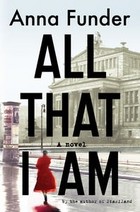
Anna Funder’s All that I Am

Anna Funder, All That I Am (Penguin Australia 2011)

1atia I read the first of this book’s three sections to the Art Student on the car trip from Airey’s Inlet in Victoria to Sydney. Given my proofreader past, this can be a punishing way to encounter a book – few things disrupt a book’s spell more than a reader-aloud complaining about misspellings, malapropisms, mixed metaphors, misquotes, or awkward turns of phrase. Embarrassing sex scenes will do it too (we may never get over The Slap). All That I Am stood up to the ordeal well, and we both enjoyed the trip. Mind you, the reading wasn’t disrupted by tears or cries of joy either. And I couldn’t tell at that stage whether hearing myself reading it all aloud made the different narrators’ voices sound much the same.

As everyone probably knows by now, the novel’s main characters were part of the left opposition to Hitler. Alternate chapters are told by Ernst Toller, a playwright and activist, dictating additions to his memoir in a New York hotel room in 1939, and Ruth Becker, a retired school teacher experiencing vivid memories in Bondi Junction in 2001. As both of them think back over their lives and their relationships, their shared story unfolds. Ruth, we are told in a note at the back, is based on a friend of the author. Ernst Toller was a real person, and so are the other main characters: Hans Wesemann, Berthold Jacob and the woman at the heart of the story, Dora Fabian.

Dora is a brilliant, charismatic, passionate revolutionary. She is Ruth’s adored cousin and intimate friend, and she is Toller’s assistant and the love of his life. Our narrators don’t have much to do with each other, but Dora has been central to both their lives. Through Ruth we see snatches of her childhood and later those parts of her activism that don’t revolve around Toller. Toller is very much the centre of his own world, both as the public figure Dora calls the Great Toller and as the private ma prone to depression and self doubt, but in 1939 he is acknowledging how important Dora has been to him in both spheres.

It’s a gripping yarn that takes us from the immediate aftermath of World War One to the brink of World War Two, with Ruth’s old age as a kind of integrated coda. I learned a lot about the resistance to Hitler in Germany and elsewhere, particularly  England. I can’t say that I was swept away by the story itself, but a slow burning emotional truth comes through about the importance of resistance, even in the face of apparently sure defeat: one of the characters says that they will all be forgotten by history, and it’s true that the Germans who opposed the rise of Hitler at huge cost to themselves tend to be ignored in popular versions of that history. The book captures brilliantly the gradual transformation of a group of revolutionaries who see their conflict with the Nazis, not necessarily as evenly matched, but at least on a scale that allows for cheerful awwbadge_2013derision, to their final condition as a dispossessed, demoralised group crying out from the margins and betrayed by those they held dearest. (I’m not giving you any spoilers there: most people know how that panned out.)

So that’s my second book in the Australian Women Writers’ Challenge. So far, so very good.