Peter Temple, Truth (Text Publishing 2009)
The Book Group decided we wanted a page turner for this meeting, and a couple of people were keen on Peter Temple’s Truth, the second of his detective novels. So Truth it was. Attempts to get it from the library made it pretty clear that other people were keen on it as well, and at least one of us, it turned out, had to go to the airport to buy a copy.
Here’s the first sentence:
On the Westgate Bridge, behind them a flat in Altona, a dead woman, a girl really, dirty hair, dyed red, pale roots, she was stabbed too many times to count, stomach, chest, back, face.
It takes a bit of work to figure out the internal relationships in this congeries of phrases. You may go down dead ends in which the flat in Altona is on the Westgate Bridge, or the girl was stabbed too many times to stomach, but once you’ve done the work the meaning is unambiguous:
[They were] on the Westgate Bridge. Behind them [in] a flat in Altona [was] a dead woman, a girl really, [her] dirty hair dyed red [with] pale roots[.] She was stabbed too many times to count, [in the] stomach, [the] chest, [the] back, [the] face.
In effect, then, the sentence gives fair warning that this won’t be a lazy read – there will be many sentences requiring at least a little backtracking if their meaning is to be extracted. But the difficulty is not arbitrary, representing as it does a particular laconic spoken English, the kind spoken by almost all the male characters and one or two of the females. The sentence also gives fair warning, amplified by the reference a couple of paragraphs later to the 1970 collapse of the Westgate bridge, that non-Melburnians and people who don’t know their Melbourne may have extra work to do in the comprehension stakes.
Having said that, Peter Temple’s Villani belongs to that distinguished international fraternity of ageing homicide detectives committed to bringing criminals to justice, at odds with their superiors, and in trouble with what’s left of their families: Rebus, Montalbano, Zen, Wallander, and now Villani, with his own distinctive line in introspective self-blame and self-criticism beneath a hardboiled surface, his own reluctant corruption. I enjoyed the book, much as I enjoy very good TV detective shows – I’d place it at the level of Silent Witness or NYPD Blue rather than up there with The Wire. On the whole, though, I think I prefer my television on the screen rather than in novel form, even when it’s as well written as this unarguably is.
My main difficulty was related to elliptical language. Not that it was difficult, because the difficulty, such as it was, was fun. But the speech patterns of most of the male characters tended to be indistinguishable from each other, so the characters themselves tended to blur. This didn’t matter very much until the perpetrators of the various crimes were revealed and the effect (for me at least) wasn’t much more specific than: ‘One of the characters did this crime, another did that one, and their reasons had to do with revenge or corruption or something of the sort.’ I’m happy to report that there was plenty to hold my interest on the way to that unsatisfactory destination: Villani’s relationships with his wife, his daughters, his father and brothers are as complex as anyone could wish – and if it wasn’t for the demands of the policier genre they might have been fleshed out to become fully three-dimensional; the language is full of delights as well as provocations; there are plenty of richly detailed observations of street life and the life of the mind (‘These thoughts had begun to come to Villani in the small moments of his life – at the traffic lights, in the haunted space before sleep, in the wet womb of the shower’ is a nice instance).
Just as I finished reading the book the long list for the Miles Franklin Award was announced. I’ll be surprised if Truth wins the award, but I haven’t read any of the other contenders.
I wrote the preceding paragraphs before the group met last night. There were only four of us. I don’t think it was lack of enthusiasm for the book that brought the numbers down – one man had a lecture, another’s plane from Brisbane was late, and so on. We had a pleasant discussion, mainly swapping Bits We’d Liked – one guy had jotted down clever bits of dialogue, and often as not someone else would be able to say what the next line was. We agreed there were longueurs. We agreed that it was a fine bit of genre writing (more confined by the requirements of genre than Shane Maloney’s novels, one guy thought). We reflected that none of us saw Melbourne as quite as grim as the book, though one guy told us of a Sydney experience involving four big policemen running onto the street in front of his car and pointing guns at the driver of the car next to him. We resonated with the awkwardness of the male characters in attempting to give and receive whatever it is one gives and receives in moments of great pain (though as I write that, I realise that I appreciated those moments cerebrally rather than responding to them emotionally).
And we talked about Djan Djan, Reinventing Knowledge, Mawson’s huts, the excellent food, how a career as an assistant director in the movies affects one’s reading habits, regulations for backyard ponds, etc etc etc.
-33.875184
151.172380

 I’m sorry, this book and I just didn’t hit it off, though we both tried. At page 50, the thing that had most engaged my mind was worry over whether the verb ‘propelled’ can be used as a synonym of ‘towed’, or whether the thing propelling has to be pushing from behind. There’s also a use of ‘eke’ that stirred me emotionally. I did read on, but stopped at page 152, just short of half way. Perhaps I’ll come back to it when I’m in a different mood – a mood where I’m not wanting story. I’m not saying there’s anything wrong with the book, just that I wasn’t drawn to it. I’m not even close to the irritation inspired by the last Tasmanian novel I failed to finish.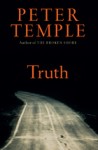


 Me fail? I fly!