Tag Archives: Claire O'Rourke

End of Year List 4: Books

From the Emerging Artist, in her own words (links to the LibraryThing pages or, at her request, to my blog post when there is one):

Non fiction
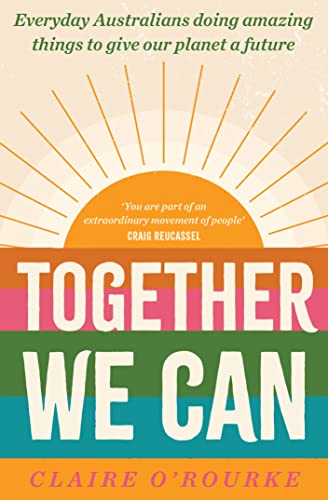
Claire O’Rourke, Together We Can (Allen & Unwin 2022)
I read this after hearing Claire talk on a Sydney Writers’ Festival panel on how to have hope in relation to climate change. It’s a good read, mixing specific examples of everyday Australians tackling what’s happening with broader theory on how to bring about change. It does fulfil its title, giving a real sense that “together we can”.

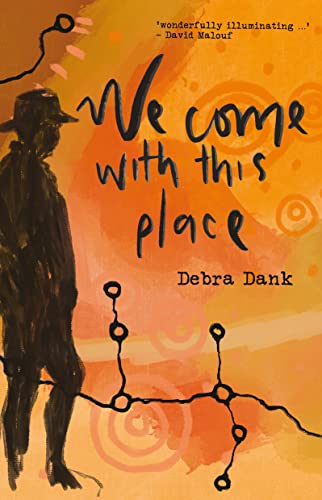
Debra Dank, We Come With This Place (Echo Publishing 2022)
We watched this book win four awards and heard Deborah Dank’s speech at NSW Premier’s Literary Awards 2023. We immediately went out to buy it. The writing is beautiful, a slow evocation of country and its connection to the author, while filled with story. I think it’s the must read of the year.

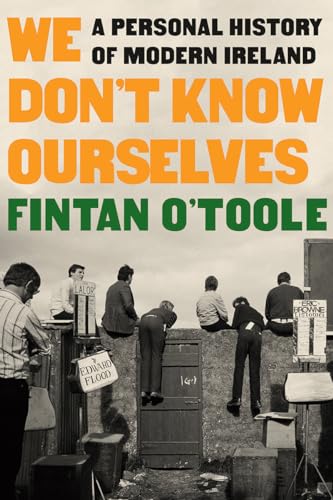
Fintan O’Toole, We Don’t Know Ourselves, a personal history of Ireland since 1958 (Head of Zeus 2021)
Hearing Fintan on the ABC’s Conversations, I immediately placed an order and waited patiently for four months for it to arrive. I’m glad I did. It’s written in short chapters in chronological order, but often picking up themes from chapter to chapter. It’s funny while documenting the appalling state of Ireland from 1958 through personal history, statistics and other sources. The incredible poverty (no running water in homes or sewage, no education for 80% of the population past primary school) made worse by the stranglehold of the Church and corruption in keeping poverty in place and the changes brought about by the impact of globalised capitalism all come alive in riveting storytelling.

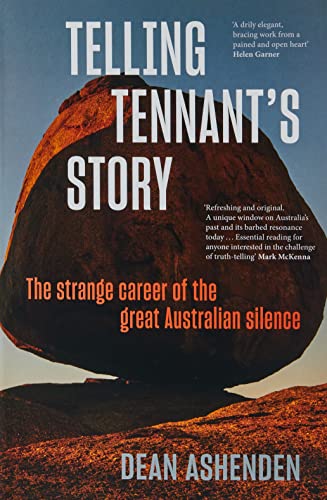
Dean Ashenden, Telling Tennant’s Story: The Strange Career of the Great Australian Silence (Scribe 2022)
A very readable history of post WWII Australian policies in relation to First Nations people where the impact of the policies on Aboriginal people in a specific area – Tennant Creek – are made clear. It tells how the policies of assimilation and later self determination came about and how far-reaching their effects have been. It would have been good for all those voting no to have been made to read this as a requirement for having a say.

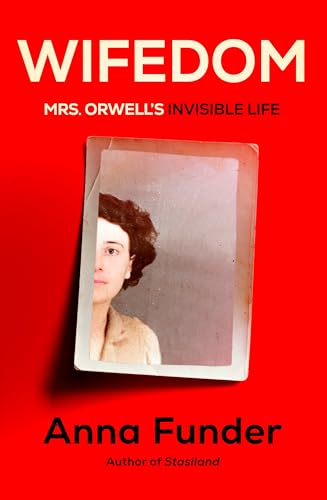
Anna Funder, Wifedom: Mrs Orwell’s Invisible Life (Penguin 2023)
So much has been written about this book already I don’t need to give a summary. I found it gripping. 

Fiction
I read 62 books this year, from quick comfort ‘junk’ reads to harder literary tomes. I take a photo of each book to prompt memory, and going through them all, it’s clear I have had an excellent selection to choose five favourites from. I’ve ended up deciding by level of enjoyment, not on some literary merit criteria.
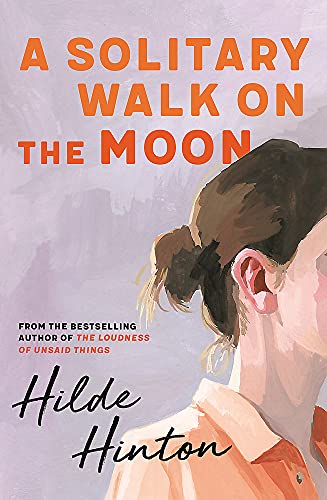
Hilde Hinton, A Solitary Walk on the Moon (Hachette AUstralia 2022)
A totally enjoyable read while disquieting in its simplicity. This is a second novel by an Australian author who seems to slipped under the radar. I found it in my local library. 

Annie Ernaux, The Years (Fitzcarraldo Editions 2018)
This was also an entrancing read, covering a similar time period to my own life. It conjures up the similarities and immense differences between growing up in middle class France and Australia.

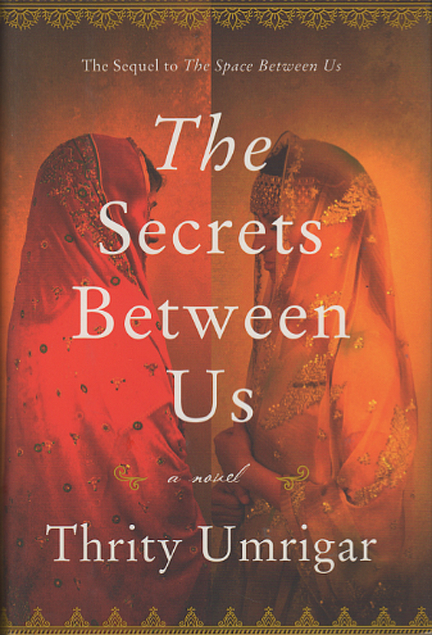
Thrity Umrigar, The Secrets Between Us (HarperCollins 2018)
Another library chance find. I loved the three strong old women protagonists, the exploration of caste and how this is/isn’t changing in modern India.

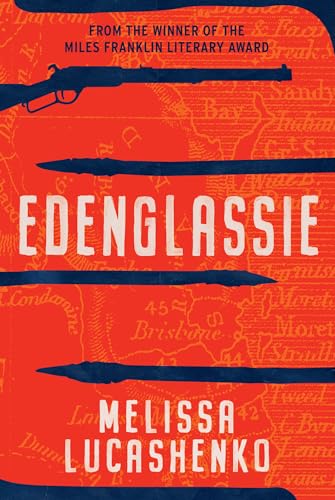
Melissa Lucashenko, Edenglassie (University of Queensland Press 2018)
This was gripping rather than straight out enjoyable, with a sense of what was to come on every page. I loved the imagined world of life at the point where the strangers are staying and growing in number, while keeping your own way of life intact.

Richard Russo, Somebody’s Fool (Allen & Unwin 2023)
Jonathan hasn’t yet been lured into the wonderful world that Richard Russo writes about, but I expect that to change soon. This is the latest in a series that includes Everybody’s Fool and Nobody’s Fool, all set in small town east coast USA. The books follow a number of interconnected characters over a few generations recording the process of change as late capitalism, racism and gender are played out in the town of Bath. He writes with affectionate humour about all of his characters. We see their frailties and appalling behaviour (between white and black, men and women, different generations) but in a number of cases we see how their connections with each other bring a shift in perspective. I love them. 


From me

I read 83 books (counting journals but not children’s books). I finished my slow read of Middlemarch and read St Augustine’s Confessions, a little each morning, but didn’t start another slow read in September because I was doing the Kelly Writers’ House course in Modern and Contemporary American Poetry (ModPo), which was great fun and probably taught me a lot.

I read:

  • 21 books of poetry
  • 26 novels
  • 4 comics
  • books in translation from Chinese (2), Spanish (3), French (2), Danish (1 or 3, depending on how you count), Russian (1) and Latin (1), and bilingual books containing Greek (1) and Maori (1)
  • counting editors and comics artists, 44 books by women, 39 by men
  • 12 books by First Nations writers, and
  • 15 books by other writers who don’t belong to the White global minority.

Biggest serendipity: Four books spoke powerfully to each other and to me in the wake of the referendum on the Voice: Debra Dank’s We Come with This Place, Melissa Lucashenko’s Edenglassie, Dean Ashenden’s Telling Tennant’s Story and David Marr’s Killing for Country (no blog post yet). Unlike Voice and Treaty, the third proposal from the Uluṟu Statement from the Heart – Truth – doesn’t have to wait for government action. These books, and so many others with them, are moving that project forward brilliantly and unsettlingly.

The most fun was probably two novels about poetry, which also spoke to each other: Chilean Poet by Alejandro Zambra and The Anthologist by Nicholson Baker.

Most interesting new discovery of someone who has been writing for decades: 2022 Nobel Prize laureate Annie Ernaux. I read Les années and Mémoire de fille, both of which mine her life story in ways that make most memoirs seem dull. Though I read them in translation, it seems right to name them in French.

Most imaginatively huge was Alexis Wright’s novel Praiseworthy, which incidentally is set in some of the same localities as Killing for Country.

Most memorable poetry: Sarah Holland-Batt’s Jaguar, with Ken Bolton’s Starting at Basheer’s (no blog post yet) a close second, the first for its precise, compassionate treatment of the poet’s father’s final illness, the latter because it filled me with joy about the everyday.


Happy New Year to all. May 2024 see the rejection of authoritarianism in elections and an end to mass killings everywhere. And may fossil fuels at last be left in the ground. Failing that, may we all keep our hearts open and our minds engaged.

SWF 2023: My third day

I’m not exactly live blogging the Sydney Writers’ Festival. It’s now Sunday and my festival is over, but the blog is still at Thursday.

On Thursday, we arrived an hour or so before any of our booked events and caught up with friends over lunch, then we were off.


2 pm: Climate Hope

This was billed as: ‘a trio of environmental experts examine promising developments, signs of hope and viable solutions for a greener, more sustainable future.’ It delivered on that promise.

Simon Holmes à Court, founder of Climate 200 (tagline ‘climate proofing politics’), was the chair. Other panellists were a scientist, an engineer and a community activist: Joëlle Gergis (Humanity’s Moment: A Climate Scientist’s Case for Hope), Saul Griffith (The Big Switch and the Quarterly Essay The Wires that Bind), and Claire O’Rourke (Together We Can: Everyday Australian’s doing amazing things to give our planet a future).

There was an awful lot to digest, or even grasp as it flew by. I hope it will turn up as a podcast – I recommend it.

Here are some of my takeaways:

Jöelle Gergis described how, after helping to write the IPCC report on the state of the climate, she was filled with despair. Technological solutions are pretty much all there, but there is little political will to implement them. This is no longer a scientific problem; it’s a social, cultural and political one. She found hope in looking to history. Many times in the past when there has been a major crisis, people have come together and created solutions. She gave a number of examples, but what I remember is Saul Griffith’s amplification of her point by mentioning Dunkirk: the Allied forces had been roundly defeated, and then Winston Churchill, who can be criticised on many fronts, inspired what could have seemed an irrational hope with his rhetoric (‘We will fight them with teaspoons’ – not an actual quote as far as I know), and the people famously rallied.

The motto ‘Reduce, Re-use, Recycle’ doesn’t point to the way out of the climate emergency. It puts the onus for action at the individual level, when what is needed is systemic change (though individual initiatives are important to achieve that). It can be paraphrased as, ‘If we just sacrifice a little, the world will be a little bit less fucked.’ (Numerous apologies for swearing were made to Saul Griffith’s mother who was in the audience, though if she’s anything like women I know who are mothers of people Saul Griffith’s age, she swears quite a bit herself.) in reality, if we do this right, we can get a good outcome and not sacrifice any of our standard of living.

Claire O’Rourke is already active in the social movement space. She gave example after example of ordinary people who have taken action and organised to bring about change at local and regional levels.

There were some great quotes:

Claudia Rankine (link to my blog post about her Citizen): ‘Every state of emergency is also a state of emergence.’

Bill McKibben (link to my 2007 blog post discussing his Deep Economy): ‘Winning slowly is losing.’

Rebecca Solnit (link to my blog post about her Hope in the Dark): ‘People today will determine the future of humanity.’

Saul Griffith recommended that each of us makes six big decisions about our lives in the next year in order to bring about systemic change: decisions about home heating, cooking, cars, nutrition and so on. Just a handful of major decisions, he means, not the hundreds of decisions involved in ‘lifestyle changes’.

Claire O’Rourke mentioned systems theory, said change happens most effectively through networks and recommended the All We Can Save Project.

Jöelle Gergis had the last word: The missing piece is a social movement.


I rushed off to arrive late and sit at the edge of the space set aside for ‘curiosity Lectures’ and ‘Beginnings’, the latter being sessions where people read the beginnings of books to the audience:

3 pm: Benjamin Gilmour on Taking Tea with the Taliban.

Among other things, Benjamin Gilmour is notable for the extraordinary film Jirga (2019), which he wrote, directed and shot in a tribal area of Afghanistan. He recently revisited Afghanistan for a new film documentary project, which if I heard correctly is to be called Taking Tea with the Taliban. In this Curiosity Lecture he told about interviews with members of the Taliban government and his time with villagers who told him of terrible brutality at the hands of Australian soldiers.

It was disturbing stuff. He relayed the Taliban’s protestations that the way they are portrayed in the western press is self-serving propaganda, that their treatment of women is misrepresented, and that it’s hypocritical for the west to condemn the Taliban for mistreatment of women when USA and Australian forces have destroyed so many Afghan lives, of women and children as well as men.

I couldn’t help thinking of those Australians who visited Stalin’s Russia and came back with glowing reports of happy workers at times when, it was later revealed, the gulags were filling up. All the same, he made a strong argument for governments to engage with the Taliban. ‘I did,’ he finished his talk, ‘and I’m just some guy.’

Benjamin Gilmour has a special place in my heart: we published a number of his poems in The School Magazine in the 1990s, when I was editor and he was a teenager. I introduced myself and we had a photo taken together. I’d share it here but I made the mistake of lowering my mask instead of taking it off altogether, and I look mildly deranged.


Then straight on to 4 pm: George Monbiot: Regenesis

A giant George Monbiot on video chatted with Rebecca Huntley. This was a brilliant talk. Monbiot’s ability to marshal facts and present a clear argument is breathtaking.

His central message was that the global food supply system is at risk of catastrophic failure. Not only that, but farming is contributing hugely to global warming. Second only to the urgent need to keep fossil fuels in the ground is the need to stop farming animals. It’s as if the scientists who have been researching this area have been shouting and waving their arms about, but have been doing it from behind plate glass, inaudible to the rest of us.

Although world hunger fell steadily from about 1960, in 2014 it began to rise again, and has been rising steadily ever since – even before the shocks to the food supply system that were Covid-19 and Russia’s invasion of Ukraine. This is because the food distribution system now works in such a way that even small shocks to the system can cause disproportionate price hikes in vulnerable communities.

He gave us a brief introduction to systems theory. Complex systems, such as the climate or the global food supply system, take a lot of understanding (and after this talk, I’m keen to learn more). There are six elements required for a complex system to be resilient:

  • diversity
  • asynchronicity
  • redundancy
  • modularity
  • circuit breakers (in this case regulatory constraints)
  • back-up systems

I imagine his book Regenesis spells out how the food system scores on these elements. From the talk I understood that concentration of the control of food in about four massive corporations makes for low resilience. Industrial farming likewise. Redundancy is so limited that if the Ever Given had been stuck in the Suez Canal a year earlier, when Covid was at a different stage, the result would have been disastrous.

It’s not a question of tightening our belts. He sees hope in technology, in what he calls a technoethical shift: when something becomes amendable it becomes intolerable. That is to say, if a food can be developed that has the nutritional value of meat and it’s flavour, texture and general appeal, we will be able to face the reality of what our meat-eating has been doing to our relationships with other animals and to the planet.

The technology that he favours is ‘precision fermentation’, in which single cell organisms are used for food: we already do it with yeast, and many other species are being explored. A naturally occurring pink microbe has been discovered in Europe that when grown in a culture looks, feels and tastes like sausage. He himself was the first person to eat a pancake grown from microbes – ‘One small flip for a man’ – and it tasted like a pancake. He surmises that this will lead to a culinary revolution as radical as the one produced by the development of agriculture. And food produced in this way uses a tiny fraction of the earth’s resources.


We went home for a vegan dinner, then caught public transport into town for our one event not at the Carriagework:

8 pm: Storytelling Gala: Letters to the Future

Not to cast shade on any of the readers or organisers but this ‘gala’ was a bit of a dud. A stellar line-up of writers got to read to a packed Sydney Town Hall. They had evidently been given the title ‘Letter to the Future’. Most of them gave us a piece that began, ‘Dear Future’, and too many wrote what could be summarised as: ‘Dear Future, we have fucked up the world. I expect Earth is posthuman/a disaster where you are. Please forgive [or forget] us.’ After hearing someone say in the 2 o’clock session that people find it easier to imagine a disastrous future than one where the problems have been solved, it was dispiriting to hear so many people take the easier path as if they were doing something serious.

There were exceptions.

Anthony Joseph (about whom more tomorrow) read two poems in a form known as the Golden Shovel, where the last words of the lines spell out a quotation. His first one took Kierkegaard’s ‘Life can only be understood backwards; but it must be lived forwards’: I was too busy trying to spot the line breaks to follow the poem, but it sounded great.

Shehan Karunatilaka spoke elegantly about the impossibility of the task and told a fable about a child refusing a hug to her father, thereby setting of a chain of events leading to disaster.

Nguyễn Phan Quế Mai wrote an imaginary letter from her ten-year-old self, bookended by fabulous a cappella song.

Jason Reynolds also read a letter from his past self: I found it hard to follow, but his performance was fabulously musical.

Nardi Simpson rejected the idea of the future, saying that as a First Nations person she has responsibilities to Now. It was striking how she echoed Alexis Wright’s talk on the opening night.

Tabitha Carvan got the only laughs of the evening with a comic bit about a leadership course where on the first meeting the participants wrote a letter to their future selves.


It was a day full of excellent things, and things that will bear thinking about and acting on for some time.