Tag Archives: David Malouf

2015 favourites

Each December we – that is, me and the Emerging Artist formerly known as the Art Student – compile a list of our favourite books and films of the year. We’ve been caught this year with minimal internet coverage (and maximal sun, sand, beach, bush and rain, especially rain) so we’re running a bit late.

Three movies made both our top five lists:
ToY

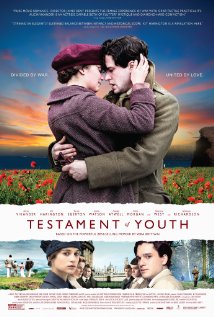
Testament of Youth (directed by James Kent), from Vera Brittain’s memoir, screenplay by Juliette Towhidi: A World War One film in the year when idealising  Gallipoli  was big in the headlines, it doesn’t focus on the battlefield but on the effects of the war on the combatants and their families and loved ones. It makes a powerful pacifist argument.
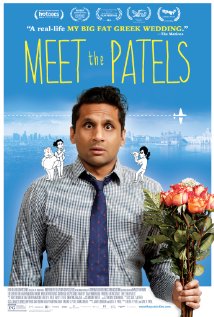
Meet the Patels (Geeta Pavel, Ravi Patel 2014): We saw this at the Sydney Film Festival. It’s unlikely to get a theatrical release, but it’s a very funny documentary about match-making among first generation Americans of Indian heritage. It’s really about intergenerational relationships. The EA says it’s a must-see for every parent.
hnmm

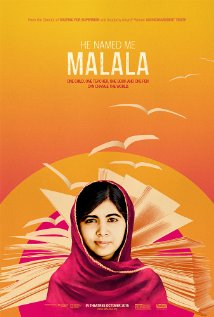
He Named Me Malala (Davis Guggenheim 2015): Another documentary, this one could be seen as hagiographic, but Malala Yousafzai is a remarkable young woman. I loved the way she spoke with the absolutism of teenagehood from a position of influence to tell the president of Nigeria to do his job and ensure the safety of the girls abducted by Boko Haram.

The Emerging Artist’s other two:
selma

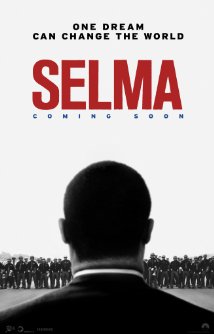
Selma (Ava DuVernay 2015): A flawed movie, but it conveyed the experience of ordinary people taking part in Civil Rights marches. The leadership of the march across the bridge was particularly interesting: how to think strategically, resisting the push to be seen to take ‘decisive action’. The filmmakers weren’t given permission to use Martin Luther King Jr’s actual speeches, but the ones written for the film caught his style brilliantly.
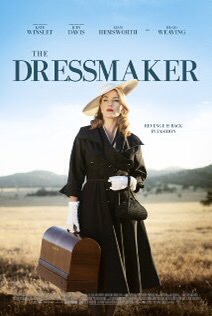
 The Dressmaker (Jocelyn Moorhouse 2015): The humour, the flamboyance, the over-the-topness of it. Kate Winslett was marvellous. So was Hugo Weaving. In fact, there were no weak performances.

My other two:
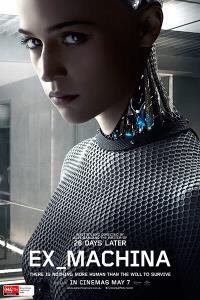
 Ex Machina (Alex Garland 2015): The thing that stays in my mind is the image of the artificially intelligent creations – a fabulous effect where we see the cogs and wheels whirring away inside what is otherwise a human head. The story worked very well too.
ffm

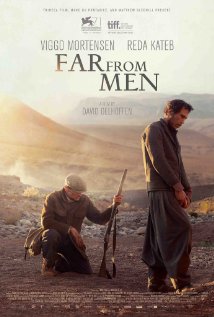
Far from Men (David Oelhoffen 2014): Apart from enjoying the easy irony that there were only men in most of the film (should it have been called Far from Other Men?), I was transfixed by this slow, beautiful film of a pied noir (Algeria-born white Frenchman) escorting an Arab prisoner through the austerely photogenic Atlas Mountains.

The EA’s top five books:

The EA’s reading year was bookended by titles that brought home the harshness of the oppression of gay men and lesbians, even in times and places where one might think it was comparatively mild. Damon Galgut’s Arctic Summer deals with novelist E M Forster’s agonising life in the closet, and the part of Magda Szubanski’s memoir, Reckoning, that tells the story of her coming out is genuinely harrowing.

But those books are in addition to her actual top five. Here are those, with her comments:
1846145066

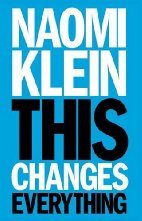
Naomi Klein, This Changes Everything: This is a bracing book that everyone needs to read. We all know about climate change in a general way, and we know that powerful vested interests fight attempts to respond effectively. Naomi Klein gives detail and challenges us not to look away.
ioc

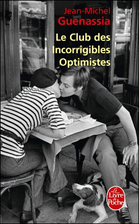
Jean Michel Guenassia,  The Incorrigible Optimists Club: A novel about Soviet bloc refugees in Paris at the time of the Algerian War of Independence, this includes a coming of age story.
1743319118

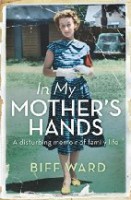
Biff Ward, In My Mother’s Hands: Excellent memoir of a 50s childhood. Buff Ward’s father was prominent left wing historian Russel Ward, so the domestic story includes elements of red-baiting. But the real power of the story is in her mother’s intensifying irrationality and the family’s attempts to deal with it.
1408703483

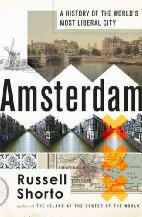
Russell Shorto, Amsterdam: A History of the World’s Most Liberal City: The birth of liberalism without the US-style individualism. This is not a travel book. It’s very accessible, thoroughly researched history that compelled at least one person to read big chunks aloud to her partner. The history of Europe looks different after reading this .

9781742232430

Vivien Johnson, Streets of Papunya: Vivien Johnson has been involved with the Western Desert artists for decades. An earlier book told the story of the great Papunya Tula artists. This book tells the story of Papunya itself, especially after many of those artists left. Art is still being made there, by a new generation, mostly women.

My top five books:

I read at least 12 books in 2015 that did what you always hope a book will do: delighted, excited or enlightened me, changed the way I felt and/or thought about the world. I whittled the list down to five by selecting only books that touched my life in explicit ways. Here they are i order of reading:
1781251088

John Cornwell, The Dark Box (2014): A history of the rite of Confession in the Catholic Church. The confessional was a big part of my childhood. I’ve dined out on a story of going to confession with Brisbane’s Archbishop Duhig when I was about thirteen. He asked in a booming voice that I was sure could be heard by everyone in the cathedral outside, ‘Would these sins of impurity have been alone or with others?’ Cornwall’s book felt like a very personal unpicking of that moment and the whole cloth it was spun from.
1555976905

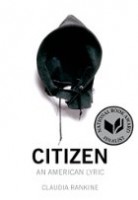
Claudia Rankine, Citizen: An American Lyric (2014). What can I say? I’m white. In laying out the way a word or phrase between friends or strangers can disrupt day-to-day life, so that the ugly history of racism makes itself painfully present, and linking those moments to the public humiliations of Serena Williams and the violent deaths of so many young African-American men, the book is a tremendously generous gift. It and Ta-Nehisi Coates’s Between the World and Me share this generosity of spirit.
dmfp

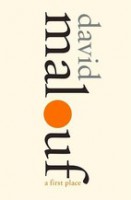
David Malouf, A First Place (2015): I haven’t blogged yet about this collection of David Malouf’s essays. It feels personal to me because David lectured me at university, but also because he is a Queenslander, and these essays explore what that means. Even though he is from what we in north Queensland used to call ‘Down South’, these essays fill a void I felt as a child – I was a big reader, but the world I read about in books only ever reflected the physical world I lived in as an exotic place.

talking-to-my-country

Stan Grant, Talking to My Country (2016): I was privileged to read this ahead of publication. Stan Grant is a distinguished Australian TV journalist. This book, part memoir, part essay, gives a vivid account of growing up Aboriginal. It includes the most powerful account of a ‘mental breakdown’ I have ever read, not as a medicalised episode of ‘depression’, but as the result of generations of pain inflicted by colonisation refusing to stay at bay.
The-Fox-Petition

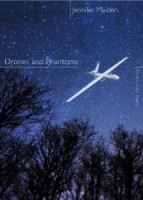
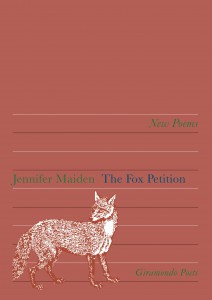
Jennifer Maiden, The Fox Petition (2015): I love this book in all sorts of ways. I love the way the image of the fox recurs – a literal fox, a fox as in Japanese folk lore, Whig politician Charles Fox. I love the chatty voice, and Jennifer Maiden’s trademark linebreaks after the first word of a sentence. I love the argumentativeness. I love the playful, almost silly, resuscitation of the distinguished dead to confront those who claim to be inspired by them. I love the way Jennifer Maiden makes poetry from the television news the way some poets do from flowers.

And now, on to 2016! I’m already about eight books behind in my blogging.
David Malouf’s Being There

David Malouf, Being There (Knopf 2014)

1bt

David Malouf could write about the phone book in a way that held his readers rapt. He is a master of what Steven Pinker calls the classic style: his readers are invited into conversation with him as he shows us something about the world. He is a brilliant, warm, generous conversationalist; the ‘something’ in this book is the world of art.

Being There is the third collection of Malouf’s writing published by Knopf in 2014 to mark his 80th birthday. Almost half of it is devoted to essays (including reviews, lectures, one-off newspaper columns and catalogue essays) on other people’s creations. Part II consists of the librettos of two operas, Voss and Mer de Glace. Part III is a playscript, a ‘free version’ of  Euripides’ Hippolytus.

A strong theme in the first part is the importance of our physical presence to the appreciation and enjoyment of art. Malouf articulates this theme most clearly in the 1989 essay that lends its title to the collection. Referring to orchestral music, he writes that after being ‘in love with the perfection of a great performance on record’ we have come back to ‘gloomy old concert halls’, to

share as fellow citizens an experience that is only available in the big city, as unique a product of our civilisation as the skyscraper or the cantilever bridge. An orchestra, in the person of its conductor and each of its ninety to 120 players, performing one of the great works of our heritage, making music, but in an environment that has not been bled of all those elements of noise out of which organised sound arose – the street noises we have just stepped away from, voices in the foyer, the whispers and shuffling before the conductor is quite ready, the slight disturbance of the air that is created by 2000 men and women breathing, even the occasional cough; that substratum of undifferentiated sound against which made music has to assert itself, and against which we bring ourselves to attention. Somehow, to experience the fulness of what music offers we have to be there. Presence is everything.

I love that. My most enjoyable night ever at the opera (not that I’ve been to the opera all that often) is a far cry the one Malouf describes, but I think he would have enjoyed it. It wasn’t in ‘the big city’, but in the Innisfail Shire Hall on a sweltering tropical night in the 1970s. All the windows of the hall were open, so the street noises, though distant, weren’t left behind; and the air in the hall was more than slightly disturbed by hundreds of fans wielded by audience members, who weren’t above an occasional comment. I don’t think anyone considered the performance to be perfection. The costumes looked as if they’d been scrounged from the combined storage rooms of every choral society in north Queensland, and the cast had a similar catch-as-catch-can feel. But from the Grand March from Aida that began proceedings to the final moments of the main event, Bizet’s Carmen, it was exhilarating. It was impossible not to be aware of the physicality of the event – David Malouf’s word ‘presence’ is right on the button.

The sixteen essays of Part I give accounts of Malouf’s presence at, among other places, a ‘happening’ in London in 1965, Barrie Kosky’s much-derided 1995 production of Nabucco (which he defends brilliantly), the Sydney Opera House (‘a single building … providing a city almost overnight with what it lacked, a defining centre’). He responds to the work of architect Glen Murcutt, photographer Bill Henson (long before Kevin Rudd pronounced his work ‘absolutely revolting’), painter William Robinson, and others. He is always interesting.

I haven’t seen Voss or Mer de Glace, and unsurprisingly found the librettos pretty inscrutable. I say ‘unsurprisingly’, because essays in the first part of the book have prepared the ground. Part of Malouf’s point about the importance of presence is the idea that a play, an opera or a piece of music is more than its script or libretto. In ‘Opera’ (1988), he writes:

That what is sung in opera shares with speech the use of words ought not to confuse us into believing that what the music expresses is what is in the words. The music has a drama and a purpose of its own. What it gives voice to, beyond mere social exchange or the expression of highly charged particular emotions – devotion, doubt, desire, jealousy, pity, anger, resolution, triumph, grief – is the spirit in action.

The Hippolytus, commissioned by the Bell Shakespeare Company and first performed in 2002, is a wonderful read, and for my money is a standing reproach to the domesticated versions of the Greeks that have been appearing on Sydney stages in the last few years. I’m sorry to have missed the production – maybe I can live in hope of a revival.

I met David Malouf in the street recently, and he referred to himself as ‘very old’. May we all age so gracefully, and so creatively.

Are rules really like bread, meant to be broken?

At the end of my last post, after whingeing about things that slipped past the copy editor, I said I was reaching for ‘a collection of essays by the impeccable David Malouf’ as an antidote. I’ll write about the collection – Being There – in good time, but right now I want to share a lovely bit of rule-smashing from ‘Questions on the Way to an Exhibition’ on page 77. The subject is what happens when we encounter a work of art, whether it’s a piece of sculpture, a poem, a play or novel, a music or dance performance:

Our spirit soars. We are enlightened, made lighter. The old distinction between body and spirit is resolved in us, and at the same time, in losing ourselves so completely in what is outside us, we feel the resolving of a second distinction – between subject and object, I and the world.

That I couldn’t be me, no matter what the syntactical rule says. The I has to be a subject or the whole sentence loses its meaning. The terrible thought struck me that maybe a similar thing is happening when people say ‘between you and I’: the sense is that the person speaking is a subject, not an object. And then comes the dread possibility that I will never again be able to correct, or even secretly curl my lip at, someone who says ‘between you and I’.

Sydney Writers’ Festival 2015: My Day 2

My Friday at the Festival was a long day. Also wet. Anticipating queues, I arrived early for my first event, and turned out to be one of three people sheltering under the long marquee for a good half hour. Sadly, attendance was pretty sparse for an excellent session:

10 am: Australia in Verse
As is often the case, this event’s title was irrelevant. With poetry events at the SWF, it’s the who that counts rather than the what.

Sam Wagan Watson and Ali Cobby Eckerman were in conversation with Ivor Indyk. Jennifer Maiden’s name was in the program but back trouble kept her away, that and her wish that the two Indigenous poets should have the floor. I was sorry not to see her, but it was wonderful that we got so much of the two who were there.

The poets spoke about their backgrounds. Sam’s south-east Queensland childhood was full of story-tellers, writers and artists, solidly Aboriginal though not in denial about European heritage as well. He described himself as a child of popular culture. Ali’s mother was taken from her family when very young; Ali herself was taken; and she relinquished her own baby son. Their paths to becoming poets were vastly different, as is their poetry.

Both read a number of poems, and spoke about what their poetry meant to them. Ivor Indyk was wonderful in the chair. When Sam said something about his early poems being well received, Ivor said that was because they were good: ‘And I’ll say what was good about them in a minute.’

There was a lot of laughter, and some tears.

And on to:

11.30: Writers on Writers: Rilke
I know very little about Rilke. I read his Letters to a Young Poet when I was a young non-poet, and I love this passage from Etty Hillesum‘s diaries, written on her way to Auschwitz, which makes me want to know more:

I always return to Rilke.
It is strange to think that someone so frail did most of his writing within protective castle walls, would perhaps have been broken by the circumstances in which we now live. […] In peaceful times and under favourable circumstances, sensitive artists may search for the purest and most fitting expression of their deepest insights so that, during more turbulent and debilitating times, others can turn to them for support and a ready response to their bewildered questions, a response they are unable to formulate for themselves, since all their energies are taken up in looking after the bare necessities.

So I was interested.

There was a lot to absorb. All four panelists knew an awful lot about Rilke, which they were enthusiastic to share: much more than could possibly fit into an hour. Luke Fischer, enthusiastic young scholar–poet, fell over his own words as he gave us three trains of thought at once. Lesley Chamberlain, a learned Englishwoman in jeans, made sure we knew how to pronounce Brancusi properly. Peter Morgan, from Sydney University’s German department, was in the chair and had interesting things to say about translating Rilke. Elder poet Robert Gray seemed to rise every now and then from the depths of abstract thought to make a brief contribution. It was fascinating theatre, and pretty good as an impressionistic introduction to a poet who, they said, sits at the beginning of modernism.

Not that it was like a fish and chip shop, but I had three takeaways:

  • Rilke is the one who ended a short poem describing an ancient sculpture with a phrase that seemed to come from nowhere and go everywhere, ‘You must change your life.’
  • He regarded his letters as part of his literary output. (This was a relief, because if the Letters to a Young Poet were dashed off there’s no hope for the rest of us.)
  • Something that came up in response to a question at the very end, that seems relevant to to Etty Hillesum quote is Rilke’s concept of the reversal. As far as I could understand, the idea is that if you set out to experience any pain and painful emotion fully rather than numbing them out or seeking distraction from them, then at some point a reversal happens, and the pain is in some way transcended.

Time for lunch, in what was now a beautiful sunny day by the Harbour, and then:

1.30: The World in Three Poets

3 poets

This was a wonderful session. Kate Fagan (not pictured), herself no mean poet, did an amazing job of introducing poets Ben Okri, David Malouf and Les Murray. That is, she said just a few extraordinarily well crafted words about each of them, leaving most of the hour for them to read to us, followed by a short question time. It was an almost overwhelming combination of talents.

The woman sitting next to me said she was there mainly for Ben Okri – she’d read some of his novels (‘if you can call them novels’) and hoped that hearing him read in person would help to understand them. As if he’d heard her, his final reading was from his current novel, which he introduced by saying that his novels had often been described as poetic. My transitory companion was pleased.

Les Murray read nothing from his most recent book, which of course was because he had a whole session on that book – Waiting for the Past – the next day. What he did read was marvellous. And when David Malouf read, Les was a picture of concentration – as if he was in training for an Olympic event in Listening to Poetry.

David began with his ‘Seven Last Word of the Emperor Hadrian’. Heard in the context of the previous day’s session on the classics, this revealed itself more clearly: the speaker, anticipating death, bids a tender farewell to his soul, the reverse of what we would expect in the Judaeo-Christian mindset, and there is something deeply moving about that.

All three of these extraordinary poets shone in the question time.

3  pm: Australia’s Oldest Stories: Indigenous Storytelling with Glen Miller
It’s 51 years since Jacaranda Press published a children’s book, The Legends of Moonie Jarl by Moonie Jarl (Wilf Reeves) and Wandi (Olga Miller), which has been described as the first book written by Aboriginal people. The Indigenous Literacy Foundation have re-published it this year. Glen Miller, nephew and son respectively of the authors, talked to Lydia Miller about his own very interesting life – as very young worker in the coal mines, public servant, cultural tourism entrepreneur, and now as elder and activist in the Maryborough Aboriginal community – and about the origins of the book as he remembered them. He was very good value, but I can’t have been the only person in the audience who was hanging out to be read to. Eventually, he did read us one story – almost apologetically, as if an audience full of adults wouldn’t want to be read a children’s story. There were no complaints.

It being Friday, I was joined by the Art Student for:

4.30: The Big Read
The Big Read is where a big theatre full of people, mainly adults, sits back to be read to. This event used to be for ninety minutes, but it’s sadly been cut back to just an hour, and that hour has to accommodate the presentation of the Sydney Morning Herald Best Young Australian Novelist Awards.

This year the awards presentation featured some unscheduled theatre. The set-up has always been a little awkward, as one by one the young novelists stand silently off to the side of the stage while their novels are described, and then again while the others have their turns. This year, the first recipient, Michael Mohammed Ahmad, clearly feeling the awkwardness acutely, sat down in a spare chair while his book (The Tribe) was being described. When he was shepherded away from that chair after receiving his award, he looked around and saw that there wasn’t a chair (Beatles reference intended), so sat on the floor. His successors – Maxine Beneba Clarke, Ellen van Neerven and Omar Musa (Alice Pung, the fifth recipient, was in Melbourne with a small baby) – each made the decision to join him. Linda Morris from the SMH said it was like a sit-in. Perhaps next year there will be chairs, and the young novelists may even have a moment each at the microphone.

On to the show itself: Camilla Nelson read from Alice Pung’s book; Kate Grenville read from One Life, a kind of biography of her mother; Steven Carroll read an extended passage about a guitar from his novel, Forever Young; Damian Barr gave us a snippet of Glaswegian childhood from his memoir Maggie and Me. Annette Shun Wah was as always a warm and charming host.

It’s probably telling that when we went to Gleebooks on our way to dinner to buy Damian Barr’s book it was sold out. After a dinner up the hill at the Hero of Waterloo, we uncharacteristically returned to the Festival for an evening session:

8.00 Drafts Unleashed + Slam
MCd by Miles Merrill, mover and shaker on the Australian spoken word scene, this featured an open mic plus a number of featured guests, all of whom were invited to read something completely new. Benjamin Law read us the opening scene of the TV series currently in production based on his memoir The Family Law. He did the voices and the accents, and it was a wondrous thing to see this slight, mild man transformed before our eyes into a big, loud, wildly inappropriate woman. The rest was fun too, but we were weary and left before the show was over, walking back to Circular Quay through the spectacle and crush of the Vivid festival.

Sydney Writers’ Festival 2015: My Day 1

I arrived at the Sydney Theatre (recently renamed something else in honour of a member of a media dynasty) yesterday morning without a lot of time to spare before my first event at this year’s Writers’ Festival.  In the absence of electronic ticketing I had a whole swag of cardboard to collect and the foyer was jam packed with milling sex- and septuagenarians. Luckily the system was working smoothly and within minutes I was settled in my seat next to a couple of women who had come down from Brisbane for the Festival, and for Vivid (which starts tonight).

11:30 Writers on Writers: Malouf and Mendelsohn on the Classics (click for the podcast)
Daniel Mendelsohn, memoirist and literary critic from the USA, was in conversation with David Malouf. They spent minimal time praising each other’s writing – Mendelsohn reviewed Malouf’s Ransom very positively in, I think, the New Yorker. They launched straight into stories of how they first became interested in classical culture – that is, the culture of ancient Greek and Rome. Mendelsohn, master of the witty remark, quoted John Winkler (I think): ‘What’s not to love about the Greeks? Naked statues and bad behaviour!’ They were both drawn to Greek culture when young as an alternative to the ones they were brought up in. The classics allowed exploration of aspects of existence that were forbidden in their own cultures – including but not limited to sex, and, as David Malouf put it, ‘the flesh as a good place’.

There was a seamless shift from their early attraction to classical images and stories to their serious engagement with the same as adults. Mendelsohn is a classicist, and Malouf put a case for polytheism as a sophisticated way of thinking about the world, certainly more interesting than the worship of what William Blake called Nobodaddy.

I hope that some of our current adapters of ancient drama for the Australian stage get to hear this conversation. Both men agreed that it is a mistake to strip away all the things that make the Greek characters different from us. Mendelsohn described a Medea in which the lead character was pretty much a New York housewife on the edge of a nervous breakdown. This, he said, completely missed the point of Euripedes’ play: that Medea was a granddaughter of the Sun, possessed of uncanny powers, and the Greek male audience would have been afraid of her because she was a woman who acted like a man – that is, destroyed her enemies. To make the play a domestic drama about a pill-popping neurotic is to drain it of its power. Likewise, they talked about how most modern adaptations take the Chorus out – but to do that is to radically change the nature of the play. Among other things, the Chorus underlines the nature of those plays as concerned with public events. In ancient Greece, you could never be alone. That may be why Achilles is so hard to grasp: he had almost figured out how to be an individual, and everyone freaked out because no one had ever tried that before.

There was a lot more: western poetry owes a huge debt to Ovid, the first flâneur; drama owes a similar debt to Aeschylus, who was the first to have woman characters give voice rage against the state of things, a tradition that led directly to Ibsen and Tennessee Williams; balance is central to ancient Greek culture (what is the Bacchae about if not the importance of stopping at three drinks?). Mendelsohn mentioned Edith Hamilton a number of times: I’m guessing she introduced generations of US children to the myths of ancient Greece and Rome – the way the Queensland School Reader did for David Malouf (and me), and the Argonauts Club for many of us as well. Oh, and my parents gave me a copy of Kingsley’s heroes when I was about ten.

Then out into brilliant sunshine and more milling bodies, to catch  a bus home. Back into the city in the evening, to the fabulous Eternity Theatre, where I met up with a number of friends for:

6.00 Readings of Matchbox Theatre
Michael Frayn, every inch the British literary gent, explained that while writing his many plays, novels etc, he also writes tiny plays that just accumulate in his files with nowhere to go. His wife, without consulting him, suggested to his publisher that these little doodles could’ve gathered into an anthology. The publisher agreed, and the book exists. It probably helped that his wife is the brilliant biographer Claire Tomalin.

Frayn then left the stage to four actors who read no fewer than eleven of these plays: a David Attenborough account of the shy species of scene changers that lurk in the theatre; a mobile phone conversation between two people who turn out to be in the same supermarket; an irritable dialogue between tomb sculptures that could have been inspired by Philip Larkin’s ‘An Arundel Tomb’; a torturer-tortured Pinter parody.

It was all good clean fun. Which is more than I can say for the Wok On Inn where we had a quick and unpleasant dinner before getting back to the Eternity for:

8.00 Dalloway
A bravura one woman performance by British actor Rebecca Vaughan of an adaptation by Elton Townend Jones of Virginia Woolf’s Mrs Dalloway. My companions enjoyed this a lot more than I did. I responded to it as an actorly reading of the novel, which just made me want to read the novel itself without abridgement and without someone else’s insistent emotions being imposed on it. Others saw it as an engaging theatrical rendition of the substance of the novel.

And so home to the lonely dog.

NSW Premier’s Literary Awards night, 2015

The New South Wales Premier’s Literary Awards were presented last night at the State Library. At one stage I thought I might be able to go as a handbag, but it turned out handbags had to pay their own way, so you won’t see a pic of me in cocktail attire on Twitter. But speaking of Twitter, it’s now possible to participate in such events by proxy and non-simultaneously. Here’s my version of the evening.

The earliest interesting tweet was from someone worrying about the dress code. I could have told her not to worry. This is an event for writers, and though some of the pics that began to appear at hashtag  at about 6 o’clock were decidedly glam, there were plenty to put the worrier’s mind at ease.

Uncle Allan Madden did the welcome to Country, playwright Ross Mueller delivered the Address (in which, as well as saying some wise things about the arts he made an AFL joke or two and commented, amicably I hope, on recent events to do with literary awards in Queensland), Acting Premier and Arts Minister Troy Brampton spoke briefly, so did Richard Neville the Mitchell Librarian, and the show was on the road.

John George Ajaka, NSW Minister for Multiculturalism, announced the winner of the biennial Prize for Translation and the inaugural NSW Early Career Translator Prize. Brian Nelson won the former, and Lilit Zelukin the latter. Few if any other literary awards include prizes for translation, so these are a win for all translators.

Multicultural NSW Award. I saw Donna Abela’s Jump for Jordan at the Griffin Theatre Company last year with the wonderful Alice Ansara, and would have been happy to see it win. The winner, Black and Proud: The story of an AFL photo by Matthew Klugman and Gary Osmond, is a book I hope to read.

Of the Nick Enright Prize for Playwriting shortlist I’d only seen Brothers Wreck by Jada Alberts, featuring Hunter Page-Lochard’s terrifying performance of a young man on the edge of self-destruction, at Belvoir. The smart money was on Tom Wright’s Black Diggers, about World War One’s Aboriginal soldiers. The smart money had it right.

The Betty Roland Prize for Scriptwriting was taken out by The Babadook by Jennifer Kent. I’m glad on two counts: it’s good to see a genre piece being gonged, and this film in particular has been much more honoured abroad than at home. Jennifer Kent’s acceptance remarks were recorded on Twitter as mentioning the joys of libraries.

The Patricia Wrightson Prize for Children’s Literature was shared by Tamsin Janu’s Figgy in the World and Catherine Norton’s Crossing, both published by Scholastic Omnibus.

The Ethel Turner Prize for Young Adult Literature went to The Cracks in the Kingdom by Jaclyn Moriarty, who shared some letters from her readers..

(At about this point in the evening, the ABC Book Club’s Twitter account decided that the embargo was lifted and revealed the remaining winners. This would have been the moment to lay bets on David Williamson.)

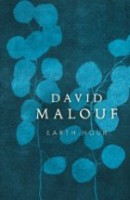
The favourite for the Kenneth Slessor Prize for Poetry was surely David Malouf’s  Earth Hour, which happens to be the only shortlisted book I’d read. It won. David was described on Twitter as ‘wonderful’, ‘amazing’ and an ‘Australian icon’. A text sent to me from the room described him as ‘ever gracious and lovely’.

How do people possibly choose among the range of books shortlisted for the Douglas Stewart Prize for Non-Fiction? Intimate memoir, passionate court reporting, grand history, cultural essays: it’s a lot harder than apples vs oranges. However, choose the judges did, and gave the gong to Don Watson’s The Bush. In accepting the prize he said, no doubt with his usual gloomy demeanour: ‘You need encouragement when you’re young, but also when you’re old.’

The UTS Glenda Adams Award for New Writing: I’ve just finished reading Omar Musa’s Here Come the Dogs (blog post to come after the book group meets) and was backing it to win. The actual winner, An Elegant Young Man by Luke Carman, is a worthy recipient of whom I am a fan, though I expect the judges did some soul searching when they realised he was the only white man on the shortlist. Omar Musa congratulated Luke on Twitter within minutes.

The Christina Stead Prize for Fiction, generally regarded as the big prize of the night, went to The Snow Kimono by Mark Henshaw, who compared writing a novel to running a marathon.

The special award was given to David Williamson. The State Library’s tweeter described his work as laconic. Is that the sound of pedants writhing? Laconic or not, the tall man is giving his prize money to the Ensemble Theatre to ensure the production of new Australian work. [Later: My mistake. The tweet in question said iconic, not laconic. I’m not sure how DW is iconic, but that description fits him better than the other.]

The book of the year went to Don Watson for The Bush, who Twitter said was dumbstruck.

Voting for the People’s Choice Prize, which is restricted to the grown-up novels – so Helen Garner and Biff Ward aren’t in the running – closes at midnight on Thursday. The prize will be announced on Friday.

So there you have it. Congratulations all round. People in the room acknowledged the Auslan signers. I acknowledge the tweeters. It was almost like being there.

NSW Premier’s Literary Awards Shortlist announced

A bit late for anyone who wants to read the whole short list before the winners are announced next month, but the (very long) short list for the NSW Premier’s Literary Awards has been announced. You can see the full list with judges’ comments on a pdf press release from the State Library.

Here’s most of it – all except the translator – with links to my blog posts on the few I’ve read, all of which have me nodding my head in agreement with the judges. (Maybe it will take grandchildren to bring me back up to date on children’s lit.)

Christina Stead Prize for Fiction
Only the Animals, Ceridwen Dovey (Penguin Australia)
In Certain Circles, Elizabeth Harrower (Text Publishing)
Golden Boys, Sonya Hartnett (Penguin Australia)
The Snow Kimono, Mark Henshaw (Text Publishing)
The Golden Age, Joan London (Random House Australia)
A Million Windows, Gerald Murnane (Giramondo Publishing)

UTS Glenda Adams Award for New Writing
The Tribe, Michael Mohammed Ahmad (Giramondo Publishing)
Foreign Soil, Maxine Beneba Clarke (Hachette Australia)
The Strays, Emily Bitto (Affirm Press)
An Elegant Young Man, Luke Carman (Giramondo Publishing)
Here Come the Dogs, Omar Musa (Penguin Australia)
Heat and Light, Ellen van Neerven (University of Queensland Press)

Douglas Stewart Prize for Non‐fiction
The Europeans in Australia, Alan Atkinson (NewSouth)
Citizen Emperor: Napoleon in Power 1799‐1815, Philip Dwyer (Bloomsbury)
This House of Grief, Helen Garner (Text Publishing)
The Reef: A Passionate History, Iain McCalman (Penguin Books Australia)
In My Mother’s Hands, Biff Ward (Allen & Unwin)
The Bush, Don Watson (Penguin Books Australia)

Kenneth Slessor Prize for Poetry
A Vicious Example, Michael Aiken (Grand Parade)
Devadetta’s Poems, Judith Beveridge (Giramondo)
Kin, Anne Elvey (Five Islands Press)
Wild, Libby Hart (Pitt Street Poetry)
Unbelievers, or The Moor, John Mateer (Giramondo)
Earth Hour, David Malouf (University of Queensland Press)

Patricia Wrightson Prize for Children’s Literature
The First Voyage, Allan Baillie (Puffin Books)
Rivertime, Trace Balla (Allen & Unwin)
Figgy in the World, Tamsin Janu (Omnibus/Scholastic Australia)
The Duck and the Darklings, Glenda Millard & Stephen Michael King (Allen & Unwin)
Crossing, Catherine Norton (Omnibus/Scholastic Australia)
The Adventures of Sir Roderick the Not‐Very Brave, James O’Loghlin (Pan Macmillan Australia)

Ethel Turner Prize for Young Adult’s Literature
Book of Days, K.A. Barker (Pan Macmillan Australian)
The Road to Gundagai, Jackie French (HarperCollins Publishers)
Are You Seeing Me? Darren Groth (Random House Australia)
Razorhurst, Justine Larbalestier (Allen & Unwin)
The Cracks in the Kingdom, Jaclyn Moriarty (Pan Macmillan Australia)
Cracked, Clare Strahan (Allen & Unwin)

Betty Roland Prize for Scriptwriting
The Code Episode 1, Shelley Birse (Playmaker Media)
Upper Middle Bogan Season 1, Episode 8: The Nationals, Robyn Butler and Wayne Hope (Gristmill)
The Babadook, Jennifer Kent (Causeway)
Fell, Natasha Pincus Story by Kasimir Burgess and Natasha Pincus. (Felix Media)
Please Like Me Season 2, Episode 7: Scroggin, Josh Thomas
Once My Mother, Sophia Turkiewicz (Change Focus Media)

Nick Enright Prize for Playwriting
Brothers Wreck, Jada Alberts (Currency Press)
The Sublime, Brendan Cowell (Melbourne Theatre Company)
Jasper Jones, Kate Mulvany (adapted from a novel by Craig Silvey) (Barking Gecko Theatre Company)
The Trouble with Harry, Lachlan Philpott (TheatreofplucK Belfast/MKA New Writing Theatre)
Kryptonite, Sue Smith (The Sydney Theatre Company)
Black Diggers, Tom Wright (Queensland Theatre Company)

Community Relations Commission for Multicultural NSW
Jump for Jordan, Donna Abela (Griffin Theatre Company)
Black and Proud: The story of an AFL photo, Matthew Klugman and Gary Osmond (NewSouth Publishing)
Refugees, Jane McAdam and Fiona Chong (UNSW Press)
I, Migrant: A Comedian’s Journey from Karachi to the Outback, Sami Shah (Allen & Unwin)
The Tainted Trial of Farah Jama, Julie Szego (Wild Dingo Press)
Once My Mother, Sophia Turkiewicz (Change Focus Media)

Congratulations and good luck to all of them, and may the judges’ eyes and brains enjoy a rest.

Southerly 74/2

David Brooks and Elizabeth McMahon (editors), Southerly Vol 74 No 2 2014: Australian Dreams 1

southerly-74-2

When Dorothea Mackellar was living in England a little over a century ago, she dreamed – and versified – about a sunburnt country, rugged mountain ranges and sweeping plains. Times have changed. When David Brooks sent out an invitation for an issue of Southerly on Australian dreams, he wrote of ‘a mounting dismay and shame at seeing the cruel place we’ve become’, and though in his editorial he protests that he doesn’t want to deliver a jeremiad, that editorial will do the job quite effectively until an actual jeremiad comes along.

So there’s not a lot of singing about the wide brown land here.

Rowena Lennox’s ‘Timor Dreaming’, about a friend who was killed in the East Timor massacre of 1976, pokes at the open wound of the Australian government’s silence then and its bullying more recently. JH Crone’s three-part ‘Elegy to Giants’ mourns Australians killed in the Bali bombing while ambivalently celebrating their ‘binge Bintang, root, vomit’ lifestyle (and in the third part, a jarringly unrhymed parody of CJ Dennis identifies them as descendants of Dennis’s Ginger Mick).

Jim Everett, a plangermairreener man of the First Nations of north-east Tasmania, refuses to identify as an Australian citizen in a fiercely polemical article, ‘Savage Nation: First Nations’ Philosophy and Sovereignty’. Mudrooroo Nyoongah, citizen of the world, faces old age, illness and the prospect of death in two powerful lyrics, ‘Wisps of Delightful Desire’ and ‘Old Fella Poem’.

Joshua Mostafa’s ‘Against Progress: Dreams, Nightmares, and the Meaning of Abbott’ probes the state of the Australian political culture (don’t be put off by its citing of a contemporary French philosopher, which often foreshadows pages of heavily academic prose, but not here): crudely summarised, he argues that public debate is too often limited to a contest between those who play on people’s fears and those who play on the fear of having one’s fears played on.

A number of the poems could have been written in direct response to David Brooks’ Claytons-jeremiad, touching on asylum seekers’ deaths at sea, environmental degradation and the parlous state of currently existing democracy. The poems that resonated with me most strongly, though, didn’t have an obvious connection to the theme: travellers’ tales from Laurie Duggan – ‘A short history of France’ and ‘New York Notes’ (not the only travellers’ tales by any means); a snowy expatriate winter from Kevin Hart – ‘February’; and a long piece by Sian Ellett, ‘Chopin & Friedric’, in which the top part of each page has a slam poem by a teenager with multiple sclerosis while at the bottom his mother gives her point of view.

The closest thing to a good old-fashioned bush yarn is Frank Moorhouse’s ‘I, initiation’, which starts out, ‘At the age of eight as a cub scout, with a never before experienced delight, I cooked and ate my first lamb chop barbecued on a green forked stick at my first camp fire in the bush,’ and goes on to talk about his regular eight-day solitary sojourns in the bush. But we are taken way out of our – and his – comfort zone with the story of an accident involving his scrotum and the years of psychoanalysis that followed.

The closest thing to a good old Aussie family story, and the piece if fiction that most wrung my withers, is Cecelia Harris’s ‘All That is Left Behind’, a father–daughter story that is full of snow rather than sunburn.

Michelle Borzi’s ‘David Malouf, Earth Hour‘ provides what I’m always hoping for when I read literary criticism. She quotes generously, and helps us see the poetry with fresh eyes.

There are signs that some items were written – and edited – in haste. It’s hard to take seriously an article about Gough Whitlam that misspells Malcolm Fraser’s surname and the name of the Labor Party (especially given that Southerly follows US spelling conventions elsewhere). A reference in one article led to a critical response to the piece it was supposed to refer me to. One story ends so abruptly that one wonders if a couple of pages have dropped off or, more likely, it’s an undeclared excerpt from a longer work. And, fascinating though it is, I do wonder if Frank Moorhouse mightn’t have put his memoir through another draft to take some of the awkwardness out of his discussion of Aboriginal initiation ceremonies and the TMI discussion of his therapy.

Evidently a further Australian Dreams issue is in the pipeline. Good!

Best of 2014 in 3 lists

List 1. Movies (with links to the movies’ IMDb pages):

The Art Student and I gave each of the 50+ movies we saw in 2014 a score out of 5. There was a respectable number of 4s and 4.5s. Here are the seven with a combined score of 9.5 or more, in no particular order:

17_d

Disruption (Kelly Nyks & Jared P. Scott): we broke our tacit rule about not including movies we saw on the small screen for this one. It’s a brilliant presentation of the situation we face, made in preparation for the Climate Mobilisation in August, but still powerful and useful.

17_bh

Boyhood (Richard Linklater). This does miraculous things with filming in real time. The actors actually age as the characters do. Towards the end, someone says, ‘I thought there’d be more,’ and we feel her pain.

17_L

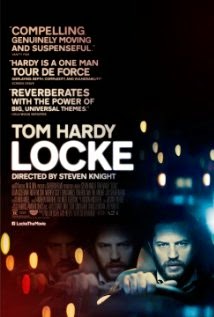
Locke (Steven Knight). Another film that does wonders with real time. One man drives in a car through the night, and is spellbinding. The spell is greatly helped by the beauty of Tom Hardy’s voice.

14_CC

Charlie’s Country, Rolf De Heer’s brilliant collaboration with David Gulpilil is just superb. That it to some extent reflects Gulpilil’s own story gives it a depth of feeling.

12y

12 Years a Slave (Steve McQueen). Nothing much needs to be said, except that this is a wonderful movie.

17_c4

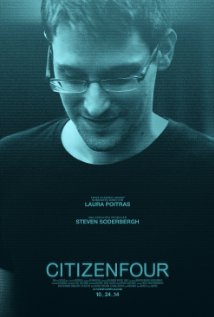
We saw Citizen Four (Laura Poitras) as part of the DOC NYC film festival. It’s a stunning documentary that plays out like a thriller, complete with grim comic relief, about Edward Snowden’s revelations of government surveillance.

tgs

Nick Broomfield’s Tales of the Grim Sleeper, which we also saw as part of DOC NYC, makes a mockery of most fiction movies about serial killers, and peels back the cover from race relations in the US.

Our worst movie
This prize has to go to the only film we walked out of: Woody Allen’s shouty, silly, predictable and unfunny Magic in the Moonlight. (To be quite honest, the Art Student predicted the reveal; I just didn’t care.)

List 2. Books

The Art Student’s best five (with comments taken from my notes of a chat about them):

144477963X

Siri Hustvedt, The Blazing World: The Art Student particularly loved how convincingly this novel describes the artworks created by its protagonist. [We heard Siri Hustvedt read from The Blazing World to about 30 people in Brooklyn last month. She read beautifully and answered questions generously. Memorably, she told us she had found Kierkegaard to be great fun since she first read him as a teenager.]

1400066026

Alan Furst, The Spies of Warsaw: a novel of espionage in eastern Europe in the 1930s. Strong on atmosphere and suspense, it manages to tell its story without contriving a catastrophe.

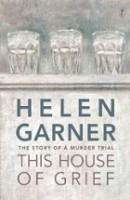
Helen Garner, This House of Grief: The Story of a Murder Trial (Text 2014)

Helen Garner, This House of Grief: Everyone who likes this book seems to give different reasons. The Art Student liked its tight, almost domestic focus on its characters.

1594486344

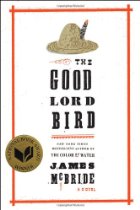
James McBride, The Good Lord Bird: a novel about John Brown, the anti-slavery activist, from an African-American point of view.

0316322407

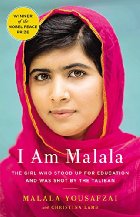
Malala Yousafzai, I am Malala: a fabulous, fabulous book that combines a History 101 of the Peshawar Valley with an account of two extraordinary people, Malala and her father.

I’m not going to list a best five books, but here are six that delighted, challenged and enlightened me, or did that thing of putting into words things I dimly felt or perceived. The images link to my blog entries.

A note on gender and diversity: The Art Student announced proudly that she had read more books by women than by men (as she usually does). I read 25 by women and 32 by men. Up against recent Viva statistics on literary journals on reviews by women or about women writers, I’m doing pretty well. I’ve read 6 books in translation, from Chinese, Japanese, Bengali and Hebrew.

List 3. Best ‘Me Fail I Fly!’–related headline:

5ip

Onward to 2015!

David Malouf’s Remembering Babylon and the Book Group

David Malouf, Remembering Babylon (©1993, Vintage 1994)

009930242X Remembering Babylon is an A-Stranger-Comes-to-Town story. The Stranger is Gemmy, who was thrown overboard as a boy from a ship somewhere off the Queensland coast in the first half of the 19th century. Already not quite the full quid after an impoverished early childhood in London, and traumatised further by his near death by drowning, he was taken in by a group of Aboriginal people. The Town is a tiny community of white settlers who arrive in the area some years later. As Gemmy observes them, his half-remembered previous life stirs in memory, and on encountering a group of children he stammers words David Malouf has appropriated from the historical Gemmy Morrell (or Morril), ‘Do not shoot. I am a B-b-british object!’

Although we have some access to Gemmy’s inner life, the book is mainly about the small settler community, about their range of responses to this part white, part Aboriginal man, and more broadly about the process of British settlers accommodating to the new Australian reality. Malouf would never put it this crudely, but it’s as if Gemmy, for all his addledness, has adapted to the new world more fully than any of them, so his presence becomes a catalyst for their differences and tensions to be exposed.

In Gemmy’s early days in the settlement, for example, a number of the men try to extract information from him about ‘the blacks’, but he resists:

And in fact a good deal of what they were after he could not have told, even if he had wanted to, for the simple reason that there were no words for it in their tongue; yet when, as sometimes happened, he fell back on the native word, the only one that could express it, their eyes went hard, as if the mere existence of a language they did not know was a provocation, a way of making them helpless. He did not intend it that way, but he too saw that it might be true. There was no way of existing in this land, or of making your way through it, unless you took into yourself, discovered on your breath, the sounds that linked up all the various parts of it and made it one.

Yet while this theme is being explored, the narrative adopts one character’s point of view after another – two of the three children who first meet Gemmy, their parents, the young school teacher, the minister – and each time on feels one is meeting a real person, someone Malouf knows well, perhaps even someone he in some way is or has been.

I read Remembering Babylon as part of a body of work by non-Indigenous writers, including Inga Clendinnen’s Dancing with Strangers (2005), Ross Gibson’s 26 Views of the Starburst World (2012) and David Brooks’ essay ‘Origins of Modernism in the Great Western Desert‘ (2008), which explore ways the encounter between these vastly different cultures plays out in non-Indigenous minds. It’s not really a historical novel: I doubt if any part of the Queensland coast was settled as peacefully as this fictional one apparently was, or if there would have been so little contact (ie, none apart from Gemmy) with the local Aboriginal people if it had. It’s surely symbolic rather than historical that an aristocratic woman lives in a beautiful Queenslander just a little way off in the bush from the rudimentary dwellings of the other settlers.

I’m sorry it’s taken me so long to read this book, but it’s interesting to see that some of the themes of Malouf’s recent poetry – particularly the idea of humans as creating a planet-wide garden – were being developed 20 years ago.

The group is meeting tonight. I can’t go because there are things happening in my family that have priority. It’s a pity, because there’s a lot to discuss.