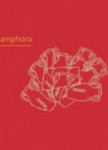
In the question time at a poetry session of this year’s Sydney Writers’ Festival a member of the audience complained that ‘most modern poetry’ is deliberately obscure, doesn’t use rhyme or rhythm, and is generally not reader-friendly. He might have had Joanne Burns in mind: apart from infrequent commas and an occasional dash or semicolon she mostly eschews punctuation, she rarely writes metric verse (presumably what the questioner meant by ‘rhythm’), she uses big words, makes frequent reference to other poets and (in this book at least) religious arcana, and she often wanders down trails of seemingly random association. But, you know, spend a bit of time with her poems and chances are you’ll come away feeling oddly refreshed.
For example, the third of amphora‘s seven sections, entitled ‘streamers’, is described in a subheading as ‘a series of koannes’. I imagine everyone knows what a koan is – or at least, like me, knows that ‘What is the sound of one hand clapping?’ is one. Almost idly, I went to Google to check my initial assumption that ‘koanne’ was an alternative spelling. Apparently not, said Mr Google. Then I realised that the word was a playful invention, combining the poet’s first name with the zen challenge to the rational mind: so the reader is given fair warning to expect some kind of idiosyncratic almost-sense, not to struggle to make sense, but to let the non-sense play around in one’s brain. Some of them work brilliantly:
you miss the bus
before it arrives how easy
to change the lightbulb
(Incidentally, the lack of punctuation here doesn’t really cause difficulty; it just slows the reading down.)
I found the whole book engaging, but it was the second section, ‘soft hoods of saints’, that spoke to me: a Catholic child’s perspective on stories of the saints nostalgically recalled, overlaid with adult erudition, mashed up with high and low cultural references and approached with a wry, mostly affectionate, probing intelligence. From ‘haggle’:
saints show us who we aren’t. impossible to imitate. our prayers too fast. impatient. saints and their trust in their god. slow and endless. wearing belief like soft hoods. invisible protective. we can only gawk at their images, legenda. in the holy cards many saints are accompanied by floral arrangements. flowers. do saints have flaws. once they are officially saints surely all flaws must hit the floor to be swept away in the giant hagionic broom
This is fun, but something serious is happening as well.
My blog posts about the books I’ve read don’t pretend to be responsible reviews. If you want to read an excellent, exploratory discussion of amphora, I recommend Martin Duwell’s review posted on 1 June this year.
I approached this anthology with suspicion. Does it really make sense, I wondered, to read David Malouf’s or Pam Brown’s poetry in a context that draws attention to the poet’s sexuality? Wouldn’t it skew, and narrow, the reading? My suspicion wasn’t allayed by having recently read editor Michael Farrell’s ultra-skewing assertion in Jacket Magazine 39 that he has ‘always read Judith Wright’s “Woman to Man” as referring to the experience of gender transfer’. But … well, once again the Book Club has dragged me from the path of least resistance.
Of Michael Farrell’s introduction and its use and abuse of the Concise Oxford Dictionary, I can reasonably say I didn’t find it congenial, and his readings of poems strayed too far into hip idiosyncrasy for my taste. Jill Jones, his co-editor, gives a nice potted history of identified gay and lesbian writing in Australia since the late 70s, and provides some useful orientation to the lesbian poems – I mean of course the poems written by identified lesbians, because as the book’s subtitle makes clear it’s the poets, not the poems, that have sexual identitites.
The poems are wonderfully diverse. They belong together not because of shared themes or concerns or formal qualities, but because their creators are contemporary (ie, alive?), Australian and gay or lesbian. A number of the poems are outed by the context – that is, poems I would elsewhere have read as heteroerotic I here read as homoerotic. That’s probably a good thing – my heteronormative mentality is being challenged. Others shrink: Pam Brown’s ’20th Century’ (‘And as we were the tootlers / we tootled along’) here tends to read as referring to the Gay and Lesbian Mardi Gras rather than something more global. I don’t know that that’s so good. At times I caught myself approximating a Beavis and Butthead snigger: ‘Hur hur! He said fist!’ Definitely not cool, though I plead in mitigation that Michael Farrell’s introduction does something of the sort more than once, and a handful of poems seem to be intent on a kind of high-culture gay Beavis-and-Buttheadism.
A good bit of the time while reading these pages, I got to feel very straight – not necessarily in the sexual sense, but in the sense that I prefer my language syntactical, don’t warm to commas at the start of sentences or parentheses that don’t close, and hate it when I can’t tell whether something is a typo or deliberate wordplay (when Javant Biarujia’s ‘MappleTROPE’ gives us Mapplethorpe’s deathbed utterance as, ‘I just hope I live long / enough to see the frame’ – has he inserted that r into the last word as a piece of witty surrealism or is it just bad proofreading? I genuinely don’t know, and it bothers me).
There are wonderful poems by David Malouf (‘A History Lesson’), Dorothy Porter (‘The Ninth Hour’), Pam Brown (‘Peel Me A Zibibo’), Martin Harrison (‘About the Self’), Peter Rose (‘Plague’), Kerry Leves (‘the escape’ – I’ve known Kerry mainly as a children’s writer, and he is definitely not that here) and joanne burns (‘aerial photography’), among others. I was delighted to be introduced to Stephen J Williams (‘Museums of beautiful art’), Andy Quan (‘Oath’, possibly the single poem that touched me most directly) and Tricia Dearborn (‘Life on the Run’) among others.
It probably doesn’t make sense to talk about a book of poetry without quoting any, but every poem I wanted to quote turns out to feel like an all or nothing proposition. I guess if you’re interested you’ll just have to find the book.
In the last week and a bit I’ve been to a workshop in the US, which involved large slabs of time in planes and airports and close to 24 hours in a Golf Country Club in Taiwan, the latter because my Taipei–Sydney flight had vanished from the schedule. I’ve had lots of bloggable adventures, but for now, here is What I Read:
Sydney–Taipei: I first met When the Sergeant Came Marching Home years ago in the form of four short stories submitted to The School Magazine. We published them with the series title, ‘Scenes from a Canadian Childhood’, and reprinted them more than once. Now, in hard covers and with an overall narrative arc, they’re still a joy: two boys come to terms with their father’s return from killing Nazis and almost immediately uprooting them and their mother from their suburban lives to take on the life of a struggling farmer. For the book, someone has decided to transplant the farm from rural Canada to US-book-buyer-friendly Montana, but other than that the stories are as fresh, their ironic comedy as laugh-out-loud as ever. (The mother is called ‘Mum’ once, and it’s a rare case of a proofing error – if it is one – that gave me pleasure, providing as it does an archaeological trace of the family’s past life as Canadians.)
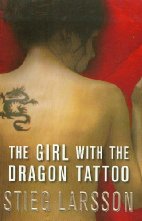
Taipei–Los Angeles, Los Angeles–Boston:The Girl with the Dragon Tattoo was recommended to me as ideal plane reading. It’s a Closed Island Murder Mystery that morphs on its way to a predicable surprise ending into a Hunt for a Serial Killer. The original Swedish title translates literally as something like ‘Men Who Hate Women’, which as you might expect reveals a good bit of the plot. The English title has the virtue of focusing the reader’s attention on the novel’s most interesting character; sadly, the alluringly feminine Quercus paperback cover gives a radically false impression of her. But spiky hair, piercings, and a hint of the sociopath probably wouldn’t have sold as many books. It’s the first of three books, will almost certainly be made into a movie, and was in fact perfect plane fare, and the right length for this trip. I finished it soon after arriving in Boston.
Boston, then Boston–Salt Lake City, Salt Lake City– Los Angeles: I also packed two slim vols of poetry, which also turned out to be perfect travel fare: taking up hardly any room, they provided satisfyingly complete short reads before sleeping the sleep of the sleep-deprived and jetlagged; they were excellent for quelling panic when I turned out to have been booked on a non-existent flight with nothing to do but wait for my name to be called on the hastily found alternative; and when on this flight and in Taiwan I found myself bookless, they bore rereading.
So I consider myself in Jacob G. Rosenberg and joanne burns’s debt, even though many of the former’s poems, despite giving the initial impression that they are a sonnet sequence, read like fairly prosaic notes on the way to his wonderful memoirs East of Time and Sunrise West(as if the gruelling subject matter made attention to anything much more than bald narration seem pernickety), and I read a number of the latter’s offerings with bemused incomprehension. Inspired by Jeanette Winterson on The Book Show, however, I spent a good bit of this leg of my travels memorising poems, and they richly repaid the effort. For the record, I can recite number xii of jb’s ‘diversions’ (beginning ‘The wall longs to be rubble’) and her lovely elegaic ‘ecce’. From JGR’s book, I have taken possession of ‘My Sister Pola’, one of the Holocaust poems.
Los Angeles–Taipei: I don’t suppose Los Angeles Airport is anyone’s favourite place in the whole world, but it’s just moved down a peg or two in my affections. After queuing for maybe a total of an hour to check in, to have my check-in baggage x-rayed, to pass through immigration and to submit to a shoeless personal security check, I discovered that if I wanted a book to read over the next 25 or possibly (and as it happened, factually) 49 hours, I had a grand total of 16 books to choose from. The spanking new collection of David Sedaris essays was the only one that beckoned to me, and it proved to be a diverting read. Sedaris’s charming self deprecation and irony sometimes makes it hard to hear his more serious voice, but it is there, and the book offers meditations on death and lyrical celebrations of his beloved partner Hugh without becoming unreadably earnest. The long section on giving up smoking while holidaying/vacationing in Tokyo is full of delights. I decided two things, however: if possible, I’ll take any future Sedaris aurally, because he’s much funnier and more moving that way; and I’ll read some essays by Montaigne, originator and master of the form.
Taipei: The search for something to read continued in my enforced 24 hour layover: nothing but golf magazines and a 14 year old tourist booklet in the Miramar Golf Country Club, which was also miles from the nearest shop of any kind, let alone English-language bookshop. An anguished email home (thank heavens there was an Internet nook) gave rise to much merriment.
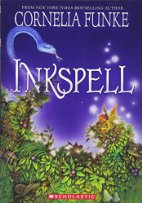
Taipei–Sydney: It was a relief on arriving at Taipei International Airport to discover there was a bookshop, even though it had only a couple more English-language books than LAX: the choice boiled down to The Kite Runner for 530 new Taiwan dollars or Inkspellfor 350. I opted for the children’s book, sequel to the marvellous Inkheart. I’ll write about it when I’ve read more than 50 pages (because, yes, I slept, and even watched a movie).

 In the question time at a poetry session of this year’s Sydney Writers’ Festival a member of the audience complained that ‘most modern poetry’ is deliberately obscure, doesn’t use rhyme or rhythm, and is generally not reader-friendly. He might have had Joanne Burns in mind: apart from infrequent commas and an occasional dash or semicolon she mostly eschews punctuation, she rarely writes metric verse (presumably what the questioner meant by ‘rhythm’), she uses big words, makes frequent reference to other poets and (in this book at least) religious arcana, and she often wanders down trails of seemingly random association. But, you know, spend a bit of time with her poems and chances are you’ll come away feeling oddly refreshed.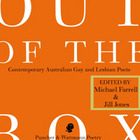





 Me fail? I fly!