Tag Archives: Movies

2013 in review (lazily)

Many good things happened in my life this year. Possibly the biggest was that Ngurrumbang, the short film whose screenplay I co-wrote with my elder son, was screened at three festivals in Australia and one in Europe, with Flickerfest still to come. But here are three relatively lazy looks at the year that’s just finishing.

One: The first sentence (or sometimes the first two sentences) of the first blog post for each month:

January: Whatever the ghost of Rembrandt might think about the state of Dutch art in the early 21st century the arrival of Florentijn Hofman’s magnum opus in Darling Harbour today was a hit, even after the seeming endless and mostly lame concert and tumbling act that preceded it.

February: I heard Paul Ham speak about this book [Hiroshima Nagasaki] at Gleebooks early last year.

March: Geoff Lemon, co-editor, was surely tempting fate and the critics when, as soon as the 32nd issue of Going Down Swinging was complete, he nicknamed the impending Nº 33 the Jesus Issue.

April: I recently heard a distinguished novelist claim that she grew up believing New South Wales was mostly settled peacefully and that damage to the original inhabitants was largely unintended, caused by infectious diseases and the like.

May: The launch of this book [Pam Brown’s Home by Dark] last weekend was a convivial affair in an Erskineville pub.

June: Sydney has Vivid. Wellington has Lux.

July: I was extremely lucky in the timing of my university studies. I started at Sydney Uni in 1967 when, because of an overhaul of the New South Wales school system, only a very small cohort had graduated from high school the year before.

August: After Karl Ove Knausgaard’s mountains of mundane detail, we wanted our next book to be one that spins a great yarn.

September: It’s about two and a half years since we moved home. About a year ago, the grass tree (Xanthorrhoea) that had stood outside our kitchen window in the old house was ailing in its new location – most of its fronds were brown or browning.

October: This book [Contemporary Asian Australian Poets edited by Adam Aitken, Kim Cheng Boey & Michelle Cahill] seems to be part of a current efflorescence of attention to Asian Australian writing, and of Australian attention to Asian writing.

November: It’s November, and once again, while all over the world people with stamina take on NaNoWriMo, I’m setting myself the modest goal of 14 sonnets in the month – LoSoRhyMo (Local Sonnet Rhyming Month).

December: As Vagabond Press’s beautifully crafted Rare Objects series of chapbooks approaches its hundredth and final title, Jennifer Maiden makes her debut at Nº 95.

Two: Top Ten Movies (in no particular order)

Me The Art Student
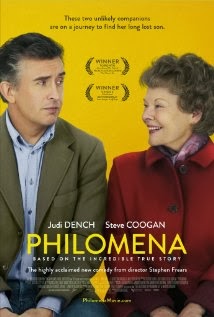
Philomena (Stephen Frears) 1p
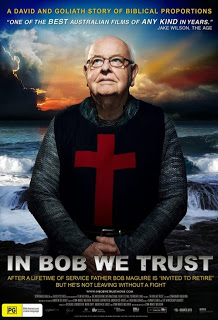
In Bob We Trust (Lynn-Maree Milburn)
130_ibwt
Blue Jasmine (Woody Allen)
140_bj
Stories We Tell (Sarah Polley)
140_swt
The Rocket (Kim Mordaunt)
1r
A Gun in Each Hand (Cesc Gay)
1geh
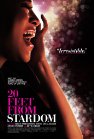
Twenty Feet from Stardom (Morgan Neville)
140_20f
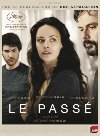
The Past (Asghar Farhadi)
136_past
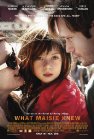
What Maisie Knew (Scott McGehee and David Siegel)140_wmk
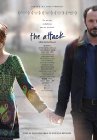
The Attack (Ziad Doueiri)
140_a
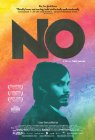
No (Pablo Larrain)
140_no
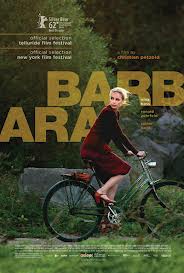
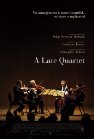
Barbara (Christian Petzold)1barbara A Late Quartet (Yaron Zilberman)
140_p

Three: Notes on the year’s reading

Rather than single out some books as the best, let’s see how I went in reading diversely.

I’ve listed 63 books in my ‘Reading and Watching’ column. I didn’t finish at least five of them and quite a few were journals, not books at all. It looks as if I read 53 books as such.

  • 31 were by men, 22 by women
  • 6 were translations – two from Norwegian, one each from Bengali, Russian, German and Catalan
  • 32 were Australian
  • 24 were poetry books, including substantial anthologies as well as tiny chapbooks
  • 7 were Book Group books
  • not necessarily the best, but 3 books that enriched my sense of what Australia is were Heather Goodall’s Invasion to Embassy, Noel Beddoe’s The Yalda Crossing and Contemporary Asian Australian Poets, the anthology edited by Adam Aitken, Kim Cheng Boey & Michelle Cahill
  • the Art Student’s pick from her year’s reading were Michael Chabon’s Telegraph Avenue, Eleanor Caton’s The Luminaries and her crime fiction discovery, Martin Walker’s Bruno xx series.

That’s it. Happy New Year, all!
Martha Ansara’s Shadowcatchers

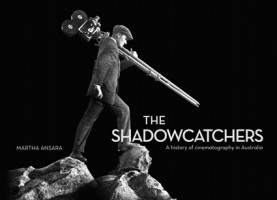
Martha Ansara, The Shadowcatchers (Australian Cinematographers Society 2012)

This book’s subtitle – ‘A history of cinematography in Australia’ – might lead you to expect a dry narrative of technological change with perhaps some discussion of industrial issues, economics and politics thrown in. The dramatic cover image of cinematographer Lacey Percival shouldering a Model 2709 Bell & Howell camera while picking his way over rocky terrain does, however, suggest something else.

Fortunately, the image is more truthful. There is plenty of text, including ample technical information (how else would I have known that was a Model 2709 Bell and Howell?). There are essays on the history of movie making in Australia (based on extensive interviews as well as documentary records), biographies of a number of significant figures, eloquent quotes from some of the key players. But this is actually a gorgeous, exuberant picture book. In her introduction, Martha Ansara, herself no mean cinematographer, says that the photographs were generally chosen not because of the ‘importance’ of their subjects but ‘because of the expressiveness of the image itself’. If this meant that some highly acclaimed cinematographers didn’t make the cut, I guess she was prepared to live with the fallout. From my perspective, the decision has paid off brilliantly: page after page, image after image, the book is a delight.

I’d heard of Frank Hurley (the first person to film Antarctica), Damien Parer and Neil David (war cinematographers, who died on the job), John Seale and Russell Boyd (whose names keep tuning up in credits of great mainstream movies), but would have been pressed to name many more. From the dedication page, with its list of 20 Australian cameramen who ‘lost their lives catching shadows’, presumably covering conflict, the book was a revelation and an education. There’s an image from 1906 of the Salvation Army Limelight  Department Staff, complete with slouch hats. There’s a naked ABC film crew, backs discreetly to the camera, shooting on a nudist colony in 1971. Another news crew wades, water up to their armpits, through a Papua New Guinea swamp in 1974 carrying a salvaged reconnaissance camera.

Plenty of TV news is here, and some commercials, but I was most captivated by the images from film shoots – Withnail and I (DOP Peter Hannan) or Driving Miss Daisy (DOP Peter Jannes), say – where the actor in full character  exists in a parallel world with the person focused on the task of making the image work. Or the ones from movies like The Tale of Ruby Rose (DOP Steve Mason) where the landscape was such a powerful presence, and here we see the crew, or perhaps just the director and DOP, going about the business of capturing it.  The effect is not so much to demystify the magic of the movies as to extend it.

I haven’t read the whole thing yet — I bought it as a birthday present for my son, and now I’m tempted to splurge and buy a copy for myself. It’s a wonderful book, but don’t take my word for it. It has its own web site, complete with sample pages. If that doesn’t whet your appetite,  I guess you haven’t got a pulse just aren’t into the movies

Five audiences

The Art Student doesn’t blog, except by remote control, as in saying to me, ‘You should write on your blog about…’ This is one of those posts.

In the last week, in spite of my otherwise debilitating head cold, we’ve been to five cultural outings. This is a brief review of the audiences. (Distances in brackets are from our house to the theatre.)

1. The Drama Theatre of the Opera House: Nina Conti’s Talk to the Hand (7.9 km)
We got a pretty good look at the front row of this youngish, well-heeled crowd, as Nina and her monkey held them up to ridicule one after another. The foul-mouthed monkey made a series of outrageous remarks, shocking sweet, well-bred Nina. ‘Are you married to her?’ the monkey asked one man, indicating the woman next to him. ‘Sometimes,’ the man said, which I think you’ll agree is a pretty good response. ‘What do you mean, sometimes?’ Nina asked. ‘Well, at other times she’s [insert your own misogynist end to sentence].’ Even the monkey was taken aback, and moved on quickly. The joke was in danger of failing as the audience promised to be even more obnoxious than the monkey. The same man called out further insults about his wife later in the evening. Of course, it would be wrong to tar the whole audience with his brush, but whenever Ms Conti or one of her dummies called for suggestions, the replies were mostly sex- or bum-themed. The show was fabulous, but the audience had a significantly vocal leavening of misogyny and middle-class yobbery.

2. Gleebooks: Gerard Windsor and Giulia Giuffrè in conversation about the latter’s book, Primavera (3.7 km)
The smallest, most serious and most mature of the five audiences. When we arrived, the two performers were mingling with the audience-to-be. Someone asked me, ‘How do you fit in?’ and told me Giulia had commented with pleasure when she saw some strangers arrive. (I probably count as a stranger: I met Giulia a couple of times in the early 70s, but she didn’t remember me.) Someone from Gleebooks  introduced the event in 10 seconds flat (‘perfunctory’ doesn’t begin to cover it), leaving Gerry to say who he was. This only deepened the sense that we were at an intimate gathering – friends, family (Giulia’s 20-something daughter was there, and spoke briefly), colleagues.

3. Seymour Centre: iOTA’s Smoke & Mirrors (3 km)
In many respects similar to the Nina Conti audience, this crowd were hip rather than heeled. An older woman in the front row opposite us kept her face fixed in a scowl the whole time except for one brief smile. She applauded politely at the end of most items, and winced when the stage lights fell on her, as they did often. But the great bulk of the audience applauded enthusiastically not only the songs, acrobatics and magic tricks, but also iOTA’s sexually ambiguous clown-crying-on-the-outside musical performance. When the lyrics got, as they say, explicit, the crowd was unfazed, but when a decorous striptease ended with the unveiling of the stripper’s beard there was no noisy clamour for more intimate exposure. This audience, with nothing to prove, seemed happy to be entertained and challenged.

4. Dendy Cinema Newtown: special advance screening of Sunshine and Oranges (1.6 km)
This was a 6.30 screening for Club Dendy members, of a movie about Margaret Humphries exposing the secretive deportation of 130 000 children from the UK to Australia. There was a lot of silver hair in this packed house and, at least near us, a smattering of English accents. The Art Student thought there was a preponderance of women, not young, but not yet of a certain age, who could have been social workers. I was struck by the number of phone screens that stayed lit up until the last possible moment, by which I mean several seconds after the film began.

5. The Factory: Fear of a Brown Planet Attacks (.7 km)
Another packed house. My guess is that the vast majority of the audience were young Muslim Indians or Pakistanis.Here we were definitely in the minority, as white people and also as people over 40. There were plenty of hijabs and other headscarfs, but I didn’t see any older women in saris or salwar kameez. Aamer Rahman’s performance of a Bollywood song in (I’m guessing) Hindi provoked a lot of recognising laughter. And when Nazeem Hussain, the other half of Fear of a Brown Planet, did a caustic impersonation of a white Australian calling him ‘Zeemo’, ‘Nazzer’ and so on, he had the audience right there with him. Racism was mocked. A child ran about noisily at the back of the large auditorium for most of the show’s second half, and no one got into a state about it. Perhaps the White People were a little more subdued than usual as we left, but my impression is we were among people who not only had been entertained but also had had significant issues named out loud.

All but the first of the events happened within walking distance of our house. It’s as if we live at the junction of different worlds. Ah, city life!

How to direct a movie

I subscribe to the podcast of Mark Kermode and Simon Mayo’s film reviews on the BBC’s Radio 5 Mark and Simon being away on their summer holidays at the moment, their replacements, known as Floyd and Boyd, have been doing a sterling job. On Friday’s show they interviewed Stephen Frears and Tamsin Greig about the coming film Tamara Drewe, which they respectively directed and acted in. I loved this exchange:

Stephen Frears: There was this wonderful book written by Posy [Simmons]. There was Moira Buffini’s wonderful script. It was like, you know, robbing your kid’s bank. It was just a goldmine of jokes and funny things.
Floyd or Boyd: Now Tamsin, this is Stephen’s standard line – I’ve interviewed him once or twice before. His position basically is, Well, there’s this marvellous screenplay, then I came across these marvellous actors, like Tamsin Greig, then I just sort of turned up and they did it all really, while I just stood around. Now I’m guessing he probably has a little more input than that.
Tamsin Greig: It’s a little bit like — You know when you have a family gathering and there’s somebody there that everybody loves, and everybody trusts, and something just happens. Well, that’s the difference with Stephen Frears. When he’s not there, things don’t happen. But him just being there, and people trusting him, and having that relationship … I mean a lot of the crew have worked with him ten fifteen, twenty years or some more than that. There’s something palpable in the room, and you just get caught up in that. He just stands there and allows you, and so you do, and you never feel like a tit.

Yes, I know, from one point of view they were blowing smoke, but there’s something to it, just the same. It describes, for example, a good part of what I tried to do when editing the School Magazine: to allow the illustrators, editors and writers, so they did, and very rarely felt like tits.

Animal Kingdom

We’re largely giving the Sydney Film Festival a miss this year. Again. We had two disappointing years in a row a while back, and now the Writers’ Festival seems to have filled the need for a bit of festive culture as winter comes on. What’s more, the big hits of each year’s festival mostly turn up in the picture theatres pretty soon anyhow. I do miss the fabulous State Theatre picture palace, especially that moment where a guest director steps out onto the stage and gasps at the sheer OTTness of it all.

Tonight my Movie-Going Companion was otherwise engaged, so I set off to the Palace Theatre in Norton Street, which is palatial only in name, for a 6.45 screening of David Michôd’s Animal Kingdom. At ten past seven, the lights hadn’t dimmed. People in the front rows started a slow clap, but it didn’t develop any steam, though there were mutterings – a movie starting 25 minutes late is a rarity in these fast turnover days. A young man stepped out into the space in front of the screen, walked up to a microphone that was standing there minding its own business and started complaining abut the traffic. ‘I’m in such a state,’ he said. It took me an hour to get here from Bondi. But you don’t really want to know about that.’ He was right of course. But who was he? ‘I really am all jittery. Maybe I should just sit down.’

‘It’s all right,’ called out a woman’s voice from the now darkened auditorium. ‘We’ve all been there. Take a minute to calm down.’

‘Thank you,’ said the man at the mike, who looked a bit like he’d been sent by Central Casting to play a hipster in a Tina Fey sitcom, only with an Australian accent. ‘Thank you. I can feel the sharing.’ And the chance to deploy some benign irony seemed to restore his equilibrium. ‘But really, it took so long to get here, and I don’t just mean the traffic. I finished the first version of the script for this in 2000.’ Now we knew he was David Michôd.

When he left film school and heard that Lantana and other films had taken ten years to get made, he thought those people must have been weird But now he understands. He thought this script was ready to shoot in 2000, and told us to be glad that we weren’t about to watch a movie made from that script. You just keep chiselling away, a bit here, a bit there. You try to get someone to direct it and are gracefully rejected. And then you make it, and expect every screening to be the one where people hate it. ‘Please don’t let this be the one,’ he pleaded in conclusion. ‘Please like it.’

He fuffled around putting the mike away and walked out through the audience.Whether by design or by chance he had charmed us to pieces.

The lights went down, the movie came on without any ads, and there was no point at all trying to reconcile all that self deprecation with the confident story-telling that followed. All the performances were marvellous: the marvels included Ben Mendelsohn better than I’ve ever seen him, and Jacqui Weaver as a personification of the wolf mother: protective of her cubs and heaven help anyone who threatens them.

I came home one satisfied punter.

Fantastic and not so fantastic Mr Fox

Roald Dahl, illustrated by Jill Bennett, Fantastic Mr Fox (1970, Puffin 1974)

I came out of  Wes Anderson’s Fantastic Mr Fox wondering if I oughtn’t reconsider my devotion to the cinema. The film is brilliant, witty, beautifully performed all round, and – for me – a totally pointless experience. Was this like the moment when a 12 month old child decides that the breast is history? (That moment in the life of one of our sons, incidentally, happened in the cinema: he wouldn’t accept his mother’s breast and insisted on crying loudly. The movie was The Turning Point. True.) Then I remembered my last five outings to the pictures, and I’m looking forward to the next sip of mother’s milk. I did, however, feel the need to read Roald Dahl’s book on which the film was based.

Though in my days as a young parent I was a Dahl fan, I hadn’t read Fantastic Mr Fox, but we have a copy stashed away. I dug it out. Sure enough, it seems to me that Wes Anderson kept the story outline, elaborated it with myriad Hollywood tropes, and missed the point. Specifically, the movie completely missed that Dahl’s story is deeply and deliciously ironic. It takes place in rural England, and depends on the reader knowing that farmers are generally decent people who work hard to provide food for our tables: farms are benign places, and foxes are pests who savagely murder poultry that’s meant for us to eat. With that basic assumption in mind, underlined in this Puffin edition by Jill Bennett’s drawings of a classic idyllic countryside, Dahl opens his narrative with pen portraits of three physically grotesque, gluttonous and generally vile farmers, and a fox whose nightly depredations are portrayed as the behaviour of a responsible, loving husband and father. He draws on the folk tradition of the fox as clever, and uses the sneaking sympathy for foxes that is all through children’s literature as a lever to turn the moral order on its head. The book is subversive, shocking in a delicious way and, as the farmers become more murderous and the fox cleverer in outwitting them, it’s also jolly good fun. It’s like a vulpine Peter Rabbit.

Maybe in these days of vast chicken factories it just doesn’t make sense to demonise small farmers, even as ironically. or maybe that irritating commonplace that Americans don’t do irony (that link is to a particularly irritating example) has some truth to it after all, given that I would have thought Wes Anderson was one of the best counter-examples. Whatever the explanation, the farmers in the movie are not only grotesque, gluttonous and generally vile, they are immediately recognisable as representing rapacious industrial capitalism: their ‘farms’ look like combination gasworks and concentration camps. These are awfully familiar villains. Dahl’s fox talks and wears clothes, but his behaviour is fox-like – he lives in a hole, has four barely differentiated cubs – so that there’s an appeal to the (young and other) reader’s knowledge about actual foxes and their actual status as pests. Anderson’s fox lives in a tree with all mod cons, writes a newspaper column, has to deal with a ‘different’ adolescent son. He’s as much as fox as Mickey is a mouse.

All this doesn’t necessarily matter in itself. If Fox and his underground friends are trapped in a sewer with archways and electric light rather than a deep hole they’ve dug themselves, and find their salvation in a vast supermarket filled with frozen and canned food rather than among the living or freshly killed poultry on the farms themselves, it’s just a different story, isn’t it? Well, yes. Different, and duller. Much of the original text survives, but in my opinion it loses everything, its ironic lifeblood drained out and replaced by clever-dick formaldehyde.

If you’re planning to go to this movie, and especially if you’re planning to take a young person to see it, I urge you to read the book, or read the book to the young person, first.