
Jennifer Maiden, Tactics (UQP 1974)
Selected Poems of Jennifer Maiden (Penguin 1990)
Jennifer Maiden, Play with Knives (Allen & Unwin 1990)
Friends of mine who met and married in their 40s discovered during their courtship that twenty years earlier they had moved in the same circles, shared similar enthusiasms, gone to the same demonstrations, once even posed in the same group photo, but never actually met. They speculate that if they had met back then, they might never have fallen in love, might not even have liked each other.
It can be like that with readers and writers. I may have heard Jennifer Maiden read in the early 1970s, and almost certainly read some of her poems in magazines and anthologies, but I didn’t engage with her poetry until her 1999 collection, Mines, and – as dedicated readers of this blog will have noticed – I now can’t get enough of her new work. In the last little while I’ve journeyed back in time to read three of her early books: her first poetry collection, a selection she got together after eight books, and a novel. I’ve enjoyed all three (though ‘enjoyed’ may not be quite the right word for some of the more gruesome bits), but I’m not sure I would have embraced the work of that 20- and 30-something writer when I was a 20- and 30-something reader.
 It’s clear from Maiden’s first book, Tactics, why she was included in significant 70s anthologies like Kate Jennings’s Mother I’m Rooted (1975) and John Tranter’s The New Australian Poetry (1979), in which she was one of only two women. This early poetry is more compressed and elliptical, and in that way much more difficult, than more recent work, but it’s recognisably the same mind: grappling with issues of violence, holding a public event or abstract concept up against an intensely private perception or intimate moment, refusing easy answers. From the perspective of 2012, it’s interesting to read in the cover blurb, ‘She is interested in the Labor party, and married,’ two subjects that don’t get an obvious look-in in the poetry in 1974, but are addressed head-on by the more relaxed older woman in poem after poem (that is, if the notion of being married can be taken to include being a mother).
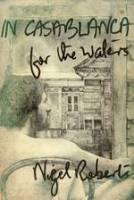
Reading the book at about the same time as Nigel Robert’s In Casablanca for the Waters, which hails from the same era, led to some interesting juxtapositions. Take Roberts’s ‘As Brian Bell said‘ and Maiden’s ‘Isolde and the Censor’. Both poems are about works of art that assert female sexuality, the former using what these days would be called explicit language about a Modigliano nude (the link saves me from risking my PG rating, though I should advise you there’s a typo – it should be ‘crap’ not ‘crab’), the latter describing a censor, ‘complacent Arbiter’, obliviously applauding a Wagnerian soprano who ‘carols the meltwater of her “heart”‘. Both poems, I realised, were written in the context of a struggle against repressive censorship: Maiden’s narrative celebrates euphemism as an evasive tactic, Roberts’s refusal of euphemism is a direct challenge to the censorious. I don’t think I would have understood the political seriousness of either poem if I hadn’t read them more or less together.
 The 1990 Selected Poems includes ‘The Problem of Evil’, alluded to in ‘Sphinx on Legs’ in this year’s Liquid Nitrogen. It’s a narrative but, possibly typically of its time, is not at pains to make itself understood. (I thought of Dr Jim Tulip’s saying that a certain poet’s work was like the pre–Vatican II Catholic Mass, where the priest kept his back to the audience and mumbled the ritual inaudibly in a foreign language.) It’s still worth reading even if, like me, you decide not to make the mental effort required to disentangle it. As the book progresses through the six books published between Tactics and 1990, there’s a lovely sense of the poetic voice relaxing, becoming more open.
There’s a lot to enjoy. One thing that struck me was the continuing exploration of evil, which reaches something of a climax in The Trust, a long poem in which a story-teller addresses a character in a story she is making up, a story that involves violent death and a suggestion of necrophilia (and incidentally makes it clear that the valuing of euphemism in ‘Isolde and the Censor’ doesn’t imply a rejection of blunt language). It’s not so much violence and evil that is being explored, as our fascination with it. Certainly there’s a lot in these poems that enriches my reading of more recent work: in them, violence is not only something out there, in other people, but something to be worried at in one’s own heart as well. Take these lines from ‘The Mother-in-Law of the Marquis de Sade’ (from Birthstones, 1978):
To sit people on gas-stove jets,
to plug them into light-sockets,
to prod with sparklers, stand
them barefoot in buckets of dry ice:
_____I remember I devised
all these things in the bored
South Africa of childhood,
________the shrill
Brazil that still entrances
the clean children next door
The Soweto uprising was recent when the poem was written, and Brazil was a brutal military dictatorship. The invocation of these regimes in the context of children’s cruel imagining could be read as trivialising them, but I think the poem works the other way, against the trivialising of childhood: the big public violence that fills the news and the private unspoken and unacted violent imagining are part of the same phenomenon. ‘Tiananmen Square’, one of the seven previously uncollected poems at the end of the book, prefigures the way recent poems respond sharply and personally to what Martin Duwell calls ‘media-experienced public events’: it begins, ‘I’m forty now.’ Two of these seven poems, ‘Aptly’ and ‘Chakola’, mark the debut appearance of a major character in the Maiden oeuvre, identified in the latter poem as ‘my three year daughter’.
 I wanted to read Play with Knives because its two main characters, George Jeffreys and Clare Collins, have reappeared many times in the last three books. Jennifer Maiden said in her recent fabulous interview with Magdalena Ball on Blog Talk Radio that it’s part of the conceit of the George Jeffreys poems that the reader knows these characters from previously, but it doesn’t really matter if she/he actually does know them. All the same, when I saw the book listed on the internet for a reasonable price I decided to buy and read.
If you avoid stories where terrible things are done to women, then stay away from this one. It’s a pretend genre piece involving a serial killer in Western Sydney, which reaches a truly nasty and unexpected climax. I say ‘pretend genre piece’ because the serial killer scenario is secondary to the story of a gossipy, slightly sleazy group of public servants and professionals involved in the release and return to civilian life of teenager Clare Forster/Collins who had killed and mutilated her three younger siblings when she was nine years old. At the heart of this story is Clare’s relationship with the narrator, probation officer George Jeffreys.
As I read the conversations between these characters, first as George is determining whether he will recommend Clare’s release, and then as he is her mentor while on parole, I was reminded of Gitta Sereny’s Cries Unheard, in which Sereny tries to get inside the mind of child murderer Mary Bell, through long and exhausting conversations with her as an adult. The Sereny book was published nine years after this one, so it’s not a source, and the books have very different angles on the subject of child murderers: Sereny asks how a child could have come to commit such an act; Maiden is interested in what life is like for the perpetrator afterwards – and what it means to be fascinated by such a person.
The broad outline of the George–Clare back-story is given in a note in Friendly Fire, and it’s true that even that much information might not be necessary for an understanding of the poems. But it’s clear to me that, having read the book with all its ethical creepiness, outright horror and high romance, I can read the poems better. It’s not as necessary as Shakespeare is to Eliot’s The Wasteland, but it helps.


 Me fail? I fly!