Monthly Archives: Sep 2009

Merde

Stephen Clarke, A Year in the Merde (2004, Black Swan Books 2005)

A year in the merde

My travelling companion read three of Stephen Clarke’s Merde books in quick succession between Paris Gare de Lyon and La Grande Motte on the Mediterranean. Not only did she laugh frequently, but she would read bits out prefaced with phrases such as, ‘Ah, this is what was going on the other day.’

We were in France at the start of September and the phrase la rentrée is everywhere. We’d gathered that it signified the equivalent of our Back to School, with added intensity gained from the fact that an awful lot of enterprises shut down for les vacances d’été and open their doors again at this time. But this book explained it from the point of view of someone working in Paris, and certainly enriched our grasp of its meaning – a time for resolutions and new beginnings, etc.

Then there was the mysterious siren we heard exactly at midday in a small village during our walk on the Loire. Completely mystifying until – in Merde actually – we learned that at midday on a certain day every month all the airraid sirens of France have a practice run and are completely ignored by everyone except ignorant tourists. (We can vouch for the ignoring bit.)

I was confirmed in my impression that one asks for un carafe d’eau rather than simply de l’eau at a café unless one wants to pay for mineral water.

Apart from these useful snippets of information, and interesting bits of language artfully disguised as comedy, the book is a well-executed romp. I don’t plan to read the others, but if you’re travelling to France you could do a lot worse by way of preparatory or companionable reading.
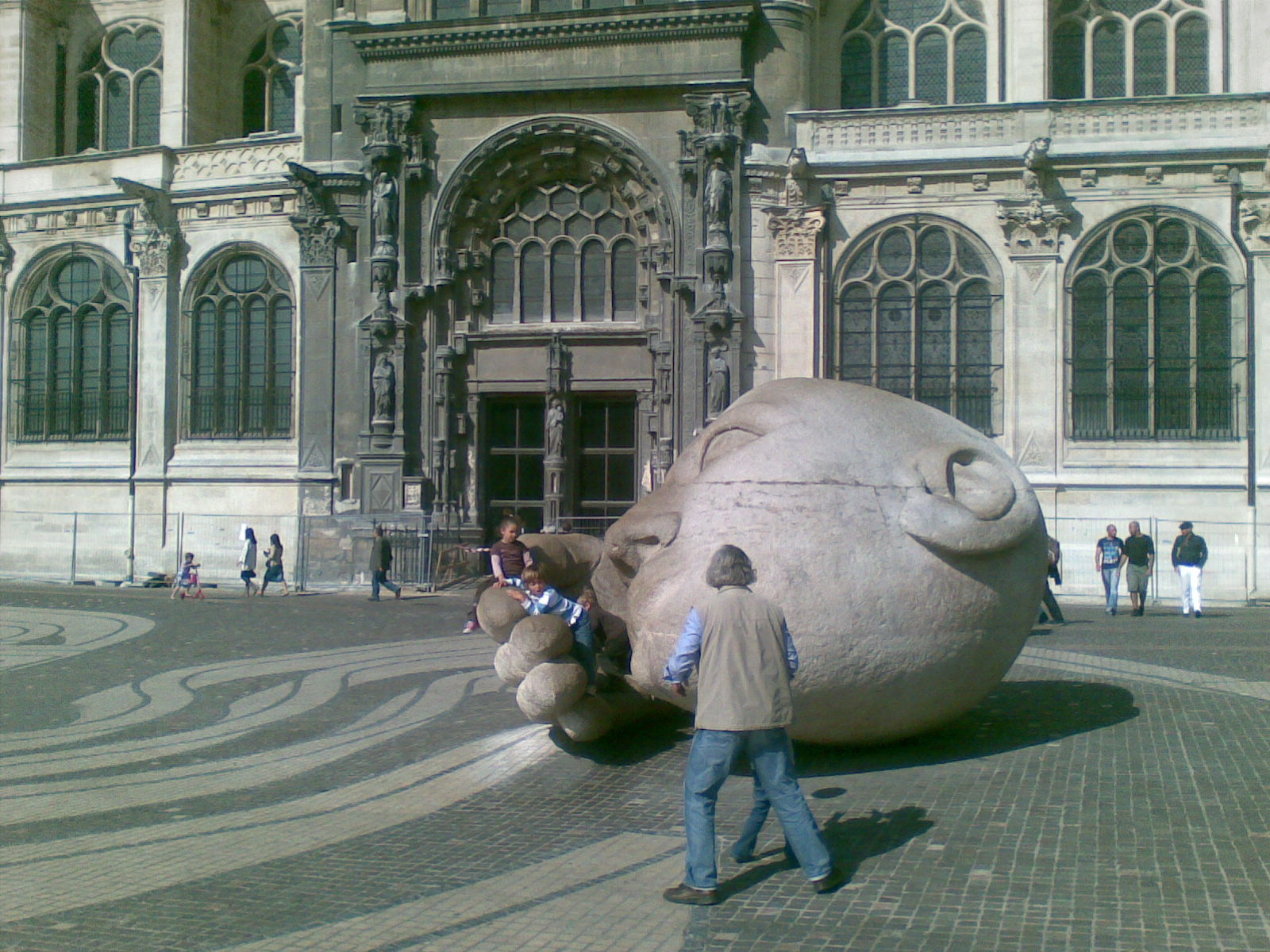
Near les Halles

12092009004

Landscape of Farewell

Alex Miller, Landscape of Farewell (Allen & Unwin 2007)

It pains me to say it, but the best thing about this book as far as I am concerned is that it’s short. I read it in a day.

In the first couple of pages, it seemed to hit wrong note after wrong note. Just two examples, tiny in themselves, but part of a cumulative effect that left me simply not believing in the characters: an elderly German professor, meditating on the notion of honour, remembers that somewhere in the bible, probably in the New Testament, we are told to honour our father and our mother; a young Australian History professor asks that same man what his father did in the war, and when he reacts with shock says it was just a piece of Australian humour. Just what planet do you have to be an academic on not to know the Ten Commandments, or that Germans of a certain age might not like to be asked by complete strangers about their family’s relationship to Nazism.

In spite of encountering some fine prose and being invited to confront difficult realities, I never recovered from the blow my trust received in those first pages. The book’s centrepiece is a powerful account of a meticulously planned massacre of white settlers in North Queensland by Aboriginal men in reprisal for the unwitting violation of a sacred site. Everything else seems to be there to justify this piece of writing. It didn’t work for this little white duck. I was left with an uneasy feeling that some kind of equivalence was being proposed between the Aboriginal action and unnamed actions taken by German operatives during the Second World War. I’m sorry, but my response, in a word, is ‘Ewww!’

My Book Group is to discuss this book at our next meeting. Since the meeting is on the evening of the day I get home from a month in France, I may not make it. If I do, I’ll let you know what other people thought.

What Is America?

Ronald Wright, What Is America?: a short history of the new world order (Text Publishing 2008)

20130730-230738.jpgThis is a book that promises great things and, in the first half at least, delivers. Here, from page 13, is what I read as the promise:

Seen from inside by free citizens, the young United States was indeed a thriving democracy in a land of plenty; seen from below by slaves, it was a cruel tyranny; and seen from outside by free Indians, it was a ruthlessly expanding empire. All these stories are true, but if we know only one without the others, what we know is not history but myth. And such myths are dangerous.

Only one of the three stories features strongly here, the story of ruthless empire. And at times it’s very hard to read, not because it’s poorly written – on the contrary, the writing is clear, passionate, engaging – but because the story is so hideous. The murderous double talk of George Walker Bush, Dick Cheney and their comrades in arms (and even at times, I say this in sorrow, of Barack Obama when he talks of Afghanistan) has a long pedigree. We have been lied to about who lived in North America before the first Puritans arrived there – systematically lied to, and evidence contradicting the lies has been systematically destroyed.

We white Australians have finally recognised that though Aboriginal Australians may not have done much of what our predecessors recognised as farming the land, they still lived here and had natural rights that were trampled. North America in the fifteenth century was dotted with farms, towns, and an established civilisation. Smallpox and to a lesser extent technological superiority enabled the invaders to take over a land that had been prepared for them, and they did it with a nauseating confidence that this is what God intended, then lied about who had lived there before them.

It felt to me that the book kind of lost its way towards the end, turning into an all too familiar analysis of the crimes and sins of successive US administrations from Nixon to Bush the younger. The end comes much sooner than you expect, as more than a third of the book is taken up by notes and a bibliography. I wonder if Ronald Wright had to finish it quickly, hearing a probable Obama win at the polls coming ever nearer.  Whatever its shortcomings, it’s a richly informative background to the Bush era, and to the challenges faced by Obama.

Ronald Wright is Canadian. Though he quotes a number of Australians, he doesn’t draw a parallel with the Australian history of dispossession and genocide, but it’s hard not to observe the difference that a couple of centuries made: as far as I’m aware no one seriously tried to claim that the Australian atrocities were done at the direct instruction of God. And it seems that the practice currently prevalent in Australia of acknowledging the traditional owners of the land, however token it may be, is a long way from making an appearance in the US.

(I bought this book almost a year ago, at a talk given by Roland wright in the Sydney Ideas series.)

Déjeuner sous les épines

10092009001

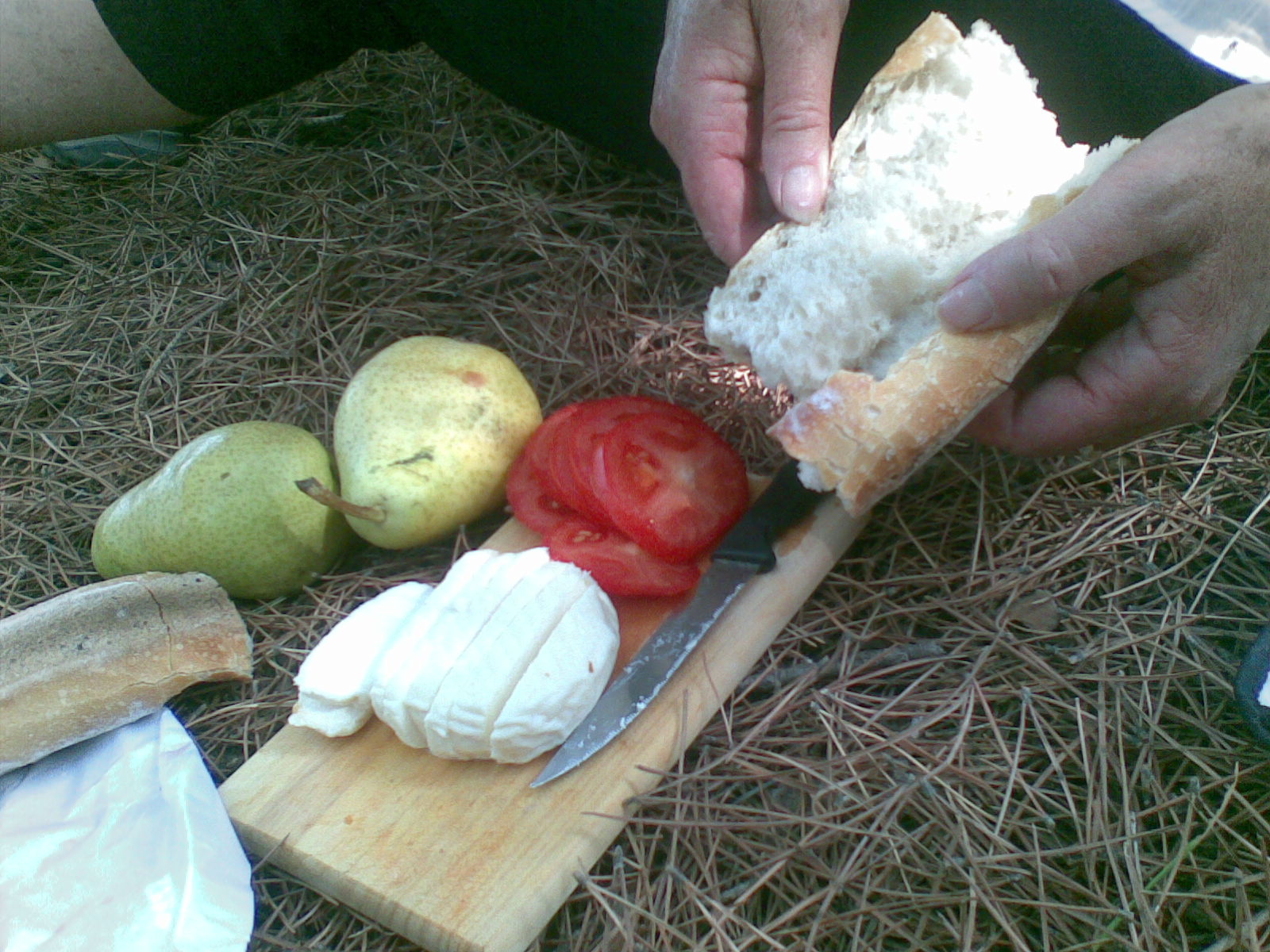
Pain de campagne, tomate, St Marcellin, tomate, des poires et – hors d’image – un pacquet de tranches de dinde plastique.

Wolf Hall

Hilary Mantel, Wolf Hall (4th Estate 2009)

This is a truly engrossing historical novel – I hope it wins the Booker Prize.

Written in beautiful, slightly quirky and so captivating prose, it’s full of vividly realised scenes and characters to care about, of engrossing argument in which the stakes couldn’t be higher. For me the main pleasure was of historical revisionism. In taking Thomas Cromwell as its hero, it effectively challenges the version of the English Reformation – indeed of the Protestant Reformation as a whole – that I absorbed from the nuns and brothers and, I’m embarrassed to acknowledge, remained pretty much intact under the assault of an undergraduate course in Reformation History. I’m consoled somewhat by having the great Erasmus as an offstage character who pretty much shares my understanding, and by a sense, especially toward the end, that it’s Robert Bolt’s A Man for All Seasons rather than my young self that Hilary Mantel has in her sights. Thomas More – that’s Saint Thomas More to me – is portrayed here, among other things, a pitiless torturer and a misogynist a***hole. I suppose my younger self might have read this as Protestant propaganda. I hope I would have checked the evidence, and come to the conclusion that if it is propaganda, what it’s propagating is the view that rigid and intolerantly held religious views are an abomination, and that there is great virtue in devoting one’s self to making things go well.

I can’t read historical fiction these days without sensing Inga Clendinnen reading over my shoulder. I think she would approve of this.

Greetings from La Grande Motte

06092009001

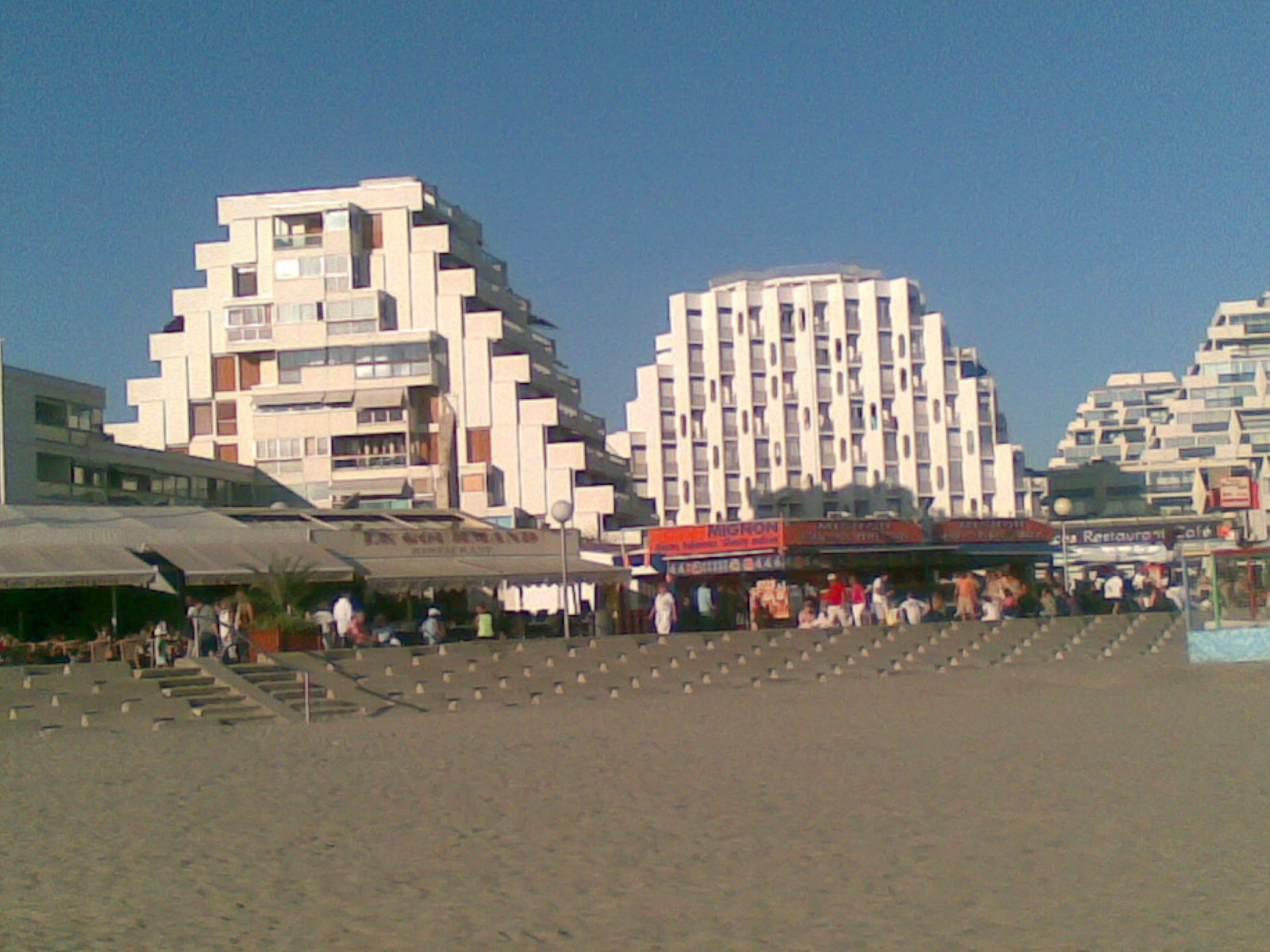
In Egypt people were buried in them. The Aztecs killed people on them. At La Grande Motte, people go to them to wait for death.

Travel despatch 5

04092009

Travel despatch 4

I haven’t exactly managed a daily post as we walked through the Loire Valley: points d’internet aren’t exactly common and those I have found, when they functioned at all, have had keyboards that drive me crazy. But here I am in beautiful Orléans, having now walked for 20+ kilometres four days in a row, with just one day to go. I’m sore of foot but it’s been fabulous. There have been mysteries, such as the siren that blared out at midday in one village, or the row of adult-sized high chairs made from tree branches, ten metres apart, along the side of a ploughed field (the latter probably something to do with hunting). There have been sublime moments, such as hearing the monks of Fleury sing Vespers at the magnificent church in St-Benoit. And horrible moments, as in the same St-Benoit where neither of the two restaurants was open the night we were there. We’ve got lost, but then been given directions by a kind boulangère. We’ve had wonderful meals, ranging from the one we scraped together that night to any number of lovely restaurant meals. We’ve had a salade avec grésiers, which tasted great, but looked like gobs of flesh that might crawl off their bed of lettuce any second.  The company who organised it for us, Sentiers de France, have done a lovely job, and the French system of walking paths is meticulously mapped.

I’m off to bed for an early rise to croissants, hot chocolate and a long walk.