Yearly Archives: 2021

Matt Nable’s Still at the Book Group

Matt Nable, Still (Hachette 2021)
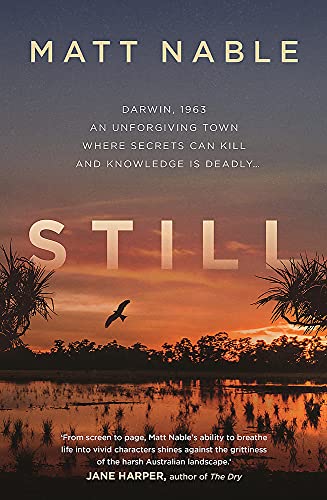
Before the meeting: The Chooser for this book was strangely apologetic: a page-turner that he’d really enjoyed, he said, but he could easily find a second option … No one objected to a page-turner, especially as the 1960s Darwin setting made it a logical follow-up to Return to Uluru. The chat on WhatsApp brushed his apologetic tone aside.

Then came the book’s opening sentences, and my heart sank:

The long tufts of spinifex curled over on a gust of warm wind. Whispered voices broke with a gravelled edge and the sounds of violence disturbed a brown snake resting in a tight coil on the corner of a steep embankment.

This isn’t meant to be read word by word. Every adjective except ‘brown’ is unnecessary (‘tight’, ‘steep’), feeble (‘warm’) or off kilter (‘long’, ‘gravelled’). Where are an embankment’s corners, and what does it mean to be on one of them? Why are the two parts of the second sentence linked by ‘and’ rather than being separate sentences? But none of that matters if you read it fast and just take in ‘spinifex … wind … whispers … gravel … violence … snake’.

Sadly what follows needs to be read in the same careless, abstracted way: don’t linger over any sentence; don’t think too hard about any plot developments; don’t concern yourself with probability; just go with the flow. It’s Midsomer Murders in print, transposed to 1963 during the NT build-up, minus any self-mockery, mystery or nuance.

Maybe this is peculiar to me as a copy editor, but consistently, several times a page, I was yanked out of the narrative by a malaprop, a run-on, an Americanism, a non-sequitur, a physical impossibility, a roaring cliché, or glaringly unnecessary words … I wonder who made the decision that this book was good to go.

To test my feeling that the badness was pervasive, I asked the Emerging Artist to pick a number between 1 and 375, and another between 1 and 30. This would give me a page and a line. The first time, she picked page 34 line 2, which falls in the middle of this sentence:

Ned could smell Riley’s aftershave, the same one he always wore, it was sweet and, though pleasant initially, Riley wore too much of it and it invariably became overpowering and distracting.

Apart from the run-on, the hanging modifier, and the odd use of ‘distracting’, why not just, ‘Ned could smell Riley’s overpowering aftershave’ or, ‘Riley’s aftershave was as overpowering as ever’? Or maybe just delete the sentence, because like many references to smell in this book it feels as if it’s there because the author was told to include appeals to all the senses.

The EA’s second pick, page 105, line 5, turned out to be the final line of the one episode that I enjoyed, where the white policeman hero Ned Potter tries to catch a barramundi with his bare hands, as he has been taught by an Aboriginal man, and fails. The first words are what Ned imagines the victorious fish saying as it swims away:

Fuck you, Ned. He resolved to try again, to win, to catch a barramundi by hand.

On first reading, the second of these sentences felt like dead wordage. Why not let the fish have the last word? Or if we must have Ned making a resolution, why not end the sentence with ‘win’? The last phrase is only necessary if you don’t trust the reader to have read the previous three pages. It turns out – spoiler alert – that this sentence is there to foreshadow emphatically that Ned will indeed try again before the book ends, and there are no prizes for guessing whether he succeeds.

The book’s cover features high praise from Jane Harper – which is enough to make me decide not to read any of her novels.

I came to the meeting hoping others would be less unforgiving and find joy in the novel, which they’d be able to communicate – and dreading it as well, as it would confirm that I’m a joyless pedant.

Just before the meeting: We decided to meet in person. In the online deliberations leading up to the decision, we all disclosed our wide range of vaccination statuses. Possibly on no interest to anyone but copy-editors, here’s the range: double vaxed, double vaxxed, double vacc’d and double vaccinated.

After the meeting: I enjoyed this meeting hugely.

Most people enjoyed the book, as I’d hoped and feared. I guess I’m a joyless pedant, and a literature snob. No one was unkind enough to say either of those things in so many words, though the word ‘pedant’ was used. At least one person couldn’t believe that I was unmoved and unconvinced by the plight of the main female character. Even those who sympathised with the gist of my rant (and yes, I did have a rant, but only after a number of people had spoken positively about the book) had trouble seeing that I wasn’t swept along by the sheer pace of the narrative.

Our resident retired assistant film director said the book works very well as a fleshed-out treatment for a movie, and I’d say the majority of us concurred. Various people referred to the convincing dialogue, the back and forth of the narrative, the occasional sex scene, the violence, the narrative drive, the attention to place, and indeed the predominantly visual, scene-based nature of the writing. The cliche elements are acceptable because it is after all a genre piece. Someone thought I was being snooty about it because it’s an unpretentious page-turner, but I deny the charge. Dervla McTiernan’s The Ruín is a page turner, but it’s literate, and just look at Peter Corris or Peter Temple.

One man felt that the book was in many ways similar to Return to Uluru, and even superior in its treatment of racism. That’s a view so far from my own that I can’t begin to understand it.

I tried my party trick of asking someone to pick two numbers. The line that turned up was the last paragraph in this exchange between Ned and Ron Thompson of the coroner’s office, which takes place in the morgue:

Ned walked toward Thompson, settled beside him and looked over the bodies again.

‘That’s Lionel Frazier.’ Ned pointed to the body.

‘The white fella?’

‘Yep.’

Thompson looked over the body of the larger man. ‘He’s a Kanaka.’

‘What?’

‘The big one here.’ Thompson nodded at the larger corpse.

A punctilious copy editor would query the ambiguous phrase ‘looked over’ even if it only occurred once, and the awkward repetition of ‘larger’ might attract the blue pencil, but the narrative moves along, and there’s nothing outstandingly terrible in this writing. My party trick failed to make my point.

A degree of consensus was reached on the notion that the author had a story to tell, which he imagined in cinematic terms rather than in words; the book is a stepping stone to the complete work, which will be a film or TV series whose script will have passed through several more drafts and then be interpreted by a director and actors. Someone has heard that a TV series is already in the works. There was also a degree of consensus that I got i my own way as a reader of this book. (I disagreed, but not strongly.)

Did I mention that we met in person? We shook hands and even rubbed shoulders. We ate and drank together: I even shared a can. Excellent gossip was exchanged about the rich, famous and powerful, and toward the end of the evening we contemplated the terrifying inanity of the Prime Minister’s plan to take a PowerPoint presentation to Glasgow. We learned from Google that Opus Dei is an institution of the Catholic Church. We learned that Alex Buzo’s Norm and Ahmed is due for another short season in Parramatta and that Girl from the North Country is worth seeing.
Journal Blitz 10

‘Blitz’ is a misnomer. My progress through my backlog of subscribed journals has been at anything but lightning speed. One of the journals has gone into a troubling hiatus, which has had the silver lining of reducing my pile of obligation, but I’ve filled the gap with a couple of one-off purchases, so the pile continues to grow at least as fast as I can read. The reading itself, of course, is largely a pleasure.


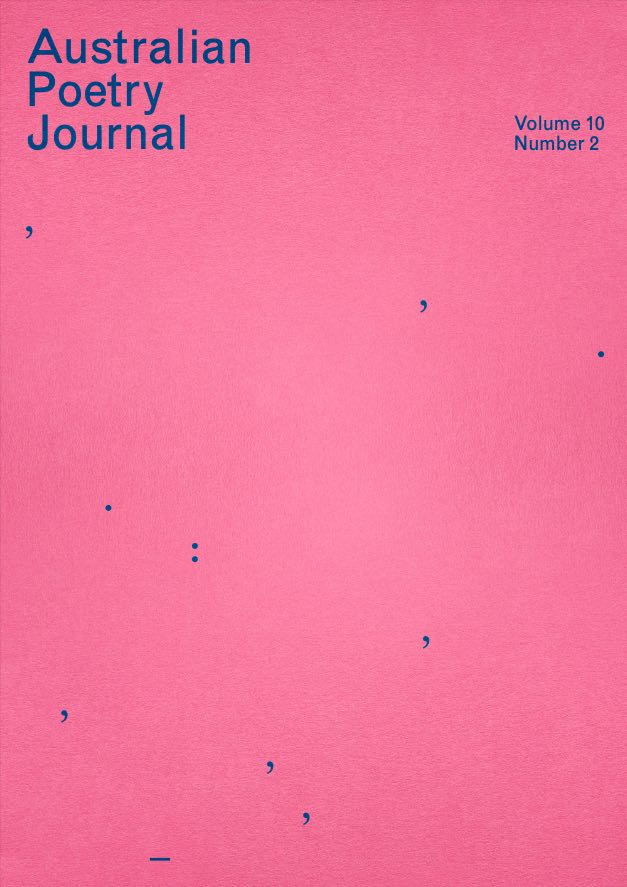
Jacinta Le Plastrier (editor), Australian Poetry Journal Volume 10, Number 2: tribute, observations (2021)

For this issue of APJ, Jacinta Le Plastrier commissioned 29 poets and poetry-connected people to choose a poem by another poet and write a response to it and to the collection it appeared in. It’s a terrific idea. Much as I love Francis Webb’s description of a poem as ‘a meeting place of silences’, I’m delighted by this project’s invitation to read poems in the company of other thoughtful and engaged readers.

The resulting collection of poems and ‘commentaries’ lives up to the hope. Jan Colville’s poem ‘Emily Dickinson’s Herbarium’, for example, was chosen and commented on by Kristen Lang, whose book Earth Dwellers I loved. The poem is a response to a collection of herbs made by Emily Dickinson when she was a girl. It begins:

words slip off the page 
paste_ more than a century old 
_____ barely there_  cracked with age
_ and still
_____ here is the light through the forest
_____ her young hands 
_____ choosing stems, bare feet 
_____________________ in the dirt

Kristen Lang’s commentary sheds light and warmth even from her first words:

It is difficult to force a gap between the name ‘Emily Dickinson’ and the word ‘poet’. [This poem] not only prises the two apart but embeds there the warmth of an absorbed and absorbing child. There’s a contagious tenderness in this poem …

After a few more words that (for me) open the poem right up, she describes the book it came in – Journey (Walleah Press 2019). I immediately put Jan Colville and that book on my To Be Read list.

The rest of the poems vary richly in form, tone and content. There are poems by award winners and by people you’ve never heard of; poems by people whose work I love and have blogged about and people whose work is thrillingly new to me.

The commentaries are just as varied – including close, but not too close, readings like Kristen Lang’s; intensely personal prose poems; scholarly abstraction; and general advocacy for particular kinds of poetry.

There’s a translation from Bahasa Indonesia: ‘Termination Letter’ by Norman Erikson Pasaribu, translated by Tiffany Tsao, whose commentary on translation as creative collaboration is fascinating.

There’s a bilingual poem, ‘BIGGER THAN SCHOOL STUFF’ by Arrente poet Declan Furber Gillick, accompanied by the poet’s note on the incomplete poem as ‘a glimpse into the process of language revival’, and then a commentary from Jeanine Leane, who edited the anthology in which it appeared, Guwayu – For All Times (Magabala Books 2020).

As a lively, challenging and enjoyable introduction to the thriving, multifaceted contemporary Australian poetry scene, this would be hard to beat.

And then there are items that aren’t part of the main project, including an essay on poetry and science by Alicia Sometimes, tributes to Melbourne poet Ania Walwicz who died in 2020, and a blurb on Poetry Sydney, an independent literary organisation founded in 2019.


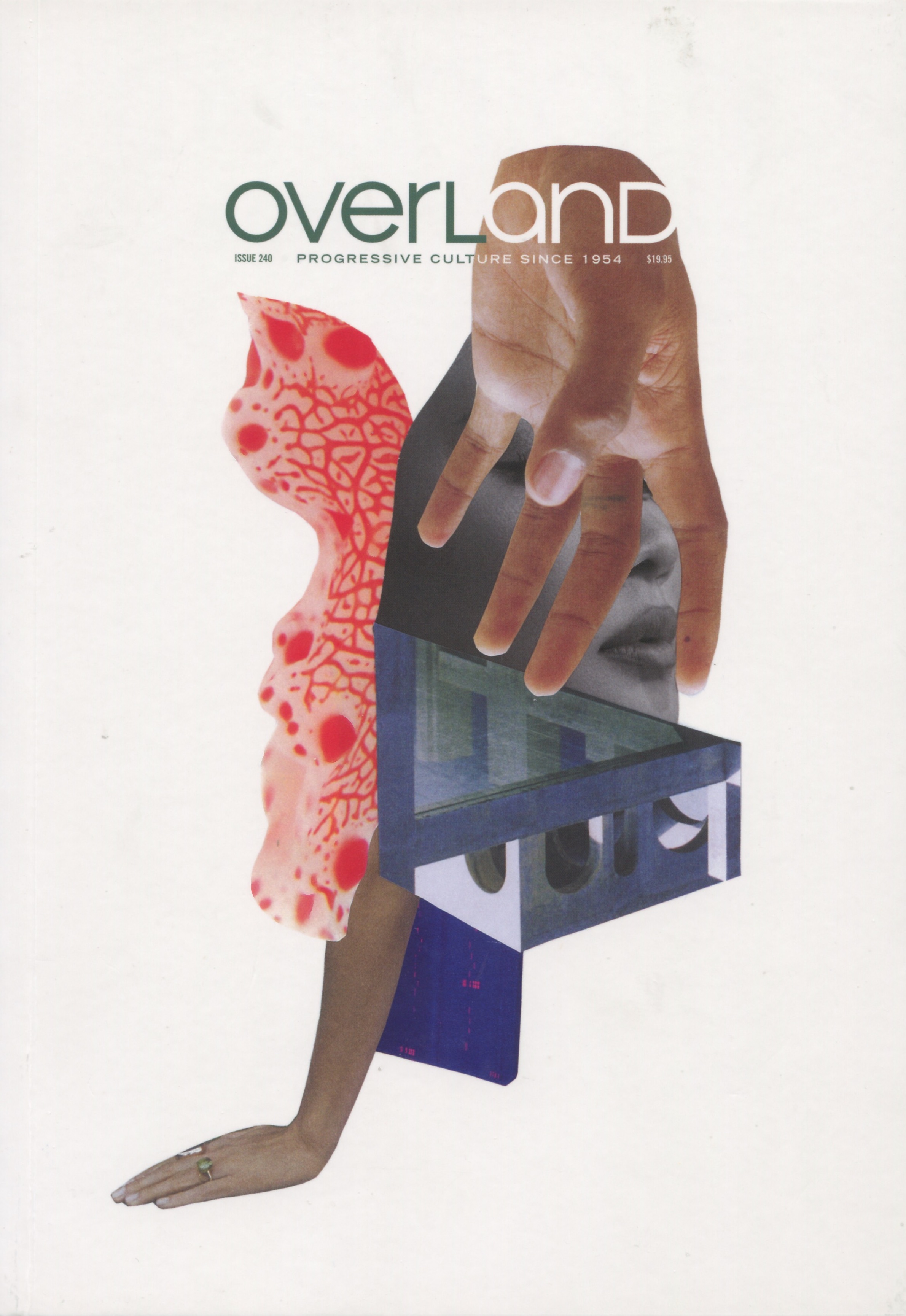
Evelyn Araluen and Jonathan Dunk (editors), Overland 240: Activism (Spring 2020), with links to the articles at overland.org.au

Here’s Adrian Burragubba on the alliance between Indigenous activists and non-Indigenous environmental activists in the context of the Stop Adani campaign:

Wangan Jagalingou’s case overlaps with the fact that large numbers of Australians oppose the Adani mine, and want it stopped.

The positive is that many people also support First Nations rights, and are joining forces with us. They know that by standing with us they can help protect the Galilee Basin, the natural springs, the Carmichael River. We welcome them. The negative is that support for our rights is not extended unconditionally and may therefore evaporate when the common goal is no longer an issue …

This is dangerous ground.

We call upon people to stand with us, but it’ll be our walk, our path, and it’ll be under our circumstances. 

That’s from his essay ‘When I speak I speak for the land‘ in this issue of Overland. It’s one of a stunning line-up of First Nations voices from the Activism @ the Margins Conference held in February 2020 at RMIT in Melbourne. Others range from Warlpiri story-teller Wanta Jampijinpa (‘Say sorry to the land‘) and longtime activist Puralina Meenamatta Jim Everett (‘An open letter to the next generation‘), to historian Victoria Grieve-Williams (‘Oodgeroo: Breaking the iron cycle of settler colonialism‘) and Sir Hilary Beckles, Vice-Chancellor of the University of the West Indies, whose ‘An Epistemic museum for modernity‘ calls for the thinkers and writers who legitimised white supremacy and slavery to be ‘identified, tracked down and held to account’. Taken together, the articles amount to an impressionistic history of Australian Indigenous activism from the 1960s Referendum campaign and the Gurindji walk off from Wave Hill to Blak Lives Matter and Indigenous hip-hop.

As always this Overland has rich selections of short fiction and poetry, edited by Claire Corbett and Toby Fitch respectively.

The poetry section includes stellar poets Omar Sakr, Samuel Wagan Watson, Ouyang Yu and Pam Brown. Jessica L Wilkinson has a beautiful historical poem, ‘Loïe Fuller entertains M. and Mme Curie at Boulevard Kellerman‘, and Zenobia Frost’s prose poem ‘sandwiches‘ is a powerful narrative of the loss of a parent.

Of the four sort fiction pieces, ‘Here comes the flood‘ by Perth writer Belinda Hermawan stands out for me. It’s a complex impressionistic tale of growing up with anti-Asian racism in Australia.


Vern Field (editor) Island 158 (2019)

As with the only other issue of Island that I’ve read, this issue is lavishly presented, with glorious full-page colour illustrations throughout. In fact, there’s hardly a page that doesn’t have some kind of image or colour effect behind the type, which is not always an advantage when a reader with deteriorating rods and cones is reading in artificial light.

This issue has a focus on the climate emergency, which is definitely a Good Thing, though maybe because I’ve been reading and brooding an awful lot about that subject I found more joy in the non-themed parts of the journal’s mix of creative nonfiction, essays, poetry, short fiction, excerpts from novels, and visual art.

Carmel Bird’s ‘Dr Power’s Prescription for the Fabrication of a Tasmanian Imagination’ is a nice piece of promotion for a work in progress, in which she discusses Colin Johnson’s largely forgotten historical novel Dr Wooreddy’s Prescription for Enduring the End of the World and its importance in the history of Australian, particularly Tasmanian, literature.

Angela Rockel’s ‘Rogue Intensities’ is an excerpt from a forthcoming work that gives us three months out of five years of ‘sensations and thoughts arising from a life in place’. Its combination of personal observation and scientific information about the flora and fauna of her place is full of charm, though I don’t know how I’d go with a whole book.

Dominic Amerena’s story ‘Just Maybe’ has just two full stops. The first comes at the end of a four-page sentence that loops back and forward in time telling a slightly creepy story of seduction from the seducer’s point of view. Then there are two words and the story is over. It’s like watching a juggler on a high wire: will he lose control and have innumerable clauses come clattering to earth?

I read Ken Bolton’s long poem ‘Letter to John Forbes’ with undiluted pleasure. Writing 20 years after Forbes’s death, Bolton identifies himself as a fan, and as a fellow poet. In semi-formal seven-line stanzas and a disarmingly informal tone, he brings the departed Forbes up to date on developments among their community of poets and in the world in general – our recent run of prime ministers, the careers of Forbes’s poetic friends and enemies, speculating on how Forbes would have responded. You probably need to know a bit about all that history to enjoy the poem, but it’s full of life and wit. Here’s a taste:

__________________________________ Our foreign ministers
___you'd have cherished – Downer & his air of stammer, of blithering,
Julie Bishop's show-pony, best-girl competence
 _ _(the earrings & tailored clothes), Bob Carr – how he rose 
___ to the occasion – & Rudd, after years of talking down to us, 
was about to, patiently, talk down to the United Nations. Look at me, Ma! 
They must've objected, or seen it coming.

The Prelude Progress Report 4

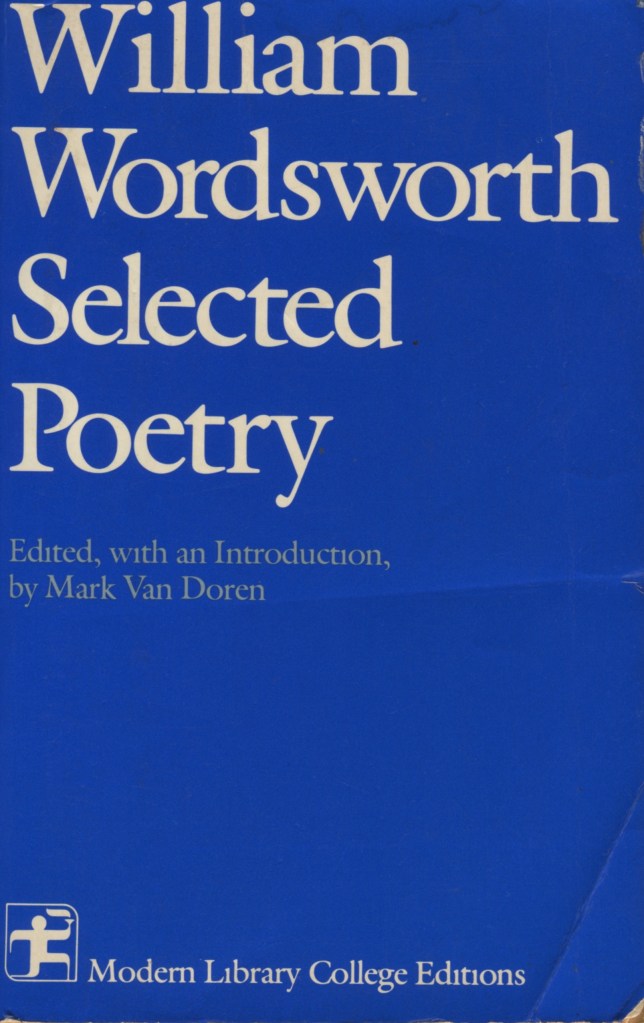
William Wordsworth, ‘The Prelude, or, Growth of a Poet’s Mind’, in William Wordsworth Selected Poetry, edited, with an Introduction, by Mark Van Doren (Modern Library College Edition 1950), Book Eleventh, line 152 to end Book Fourteenth

Last month, I read the Books of ‘The Prelude’ that told of youthful enthusiasm and hope for social change, and ended my blog post with the hope that we weren’t being set up for disillusionment.

Wordsworth’s youthful enthusiasm was stirred by the French Revolution. Then came the Terror and the British war backing the ancien régime. The French moved on from a war of self-defence to ‘one of conquest, losing sight of all / Which they had struggled for’. The rest of Wordsworth’s story is how his faith in humanity reeled from this blow, and after some setbacks was gradually restored in a new, deeper, more mature form.

I’ve read many exhilarating passages this month, and quite a few moments of serendipity, that is, moments when Wordsworth seemed to be commenting on the news of my day. For example, a journalist (I think it was Katharine Murphy in The Guardian) wrote about Prime Minister Scott Morrison’s pragmatism, saying that he responded to events rather than acting on principle. Shortly after reading that, I came on Wordsworth’s use of the same word – ‘events’ – when describing how he dealt with his disappointment with the French Revolution (Book Eleventh lines, 194–205):

____________________________⁠But when events
Brought less encouragement, and unto these
The immediate proof of principles no more
Could be entrusted, while the events themselves,
Worn out in greatness, stripped of novelty,
Less occupied the mind, and sentiments
Could through my understanding's natural growth
No longer keep their ground, by faith maintained
Of inward consciousness, and hope that laid
Her hand upon her object – evidence
Safer, of universal application, such
As could not be impeached, was sought elsewhere.

Sorry if that’s a bit dense. Basically, part of what it’s saying is that you’ve got a pretty feeble mind if events are your only guide to action: you need principles. He does go on to describe how for a time he became what we would call an ideologue. Opinions clung around his mind ‘as if they were its life, nay more, / The very being of the immortal soul’. Which speaks directly to a whole other part of current political debate (I’m looking at you, some parts of Twitter).

The subtitle of ‘The Prelude’ is ‘Growth of a Poet’s Mind’. Interestingly Wordsworth doesn’t mention the French mother of his child, or Mary Hutchinson, his wife and mother of four. He credits his sister Dorothy as a kind of muse and Samuel Taylor Coleridge as a beloved Friend: evidently sexual intimacy and married life weren’t crucial to his poetic development. His early encounters with nature in the Lake District, and later on his walking trip to the Alps and his climb of Mount Snowdon were crucial. His notion of ‘spots of time’, what later writers would call epiphanies, is wonderful, and it can’t be a coincidence that during the last couple of months, as I read 70 pages from this long poem each morning, I would often have tiny flashes of memory from my own early life: a particular guava tree, a walk along a beach, the sound of our old horse Jill galloping in the night …

Here’s how the poem ends, addressing to Coleridge his hope for what their poetry might achieve:

____________________________⁠what we have loved,
Others will love, and we will teach them how;
Instruct them how the mind of man becomes
A thousand times more beautiful than the earth
On which he dwells, above this frame of things
(Which, 'mid all revolution in the hopes
And fears of men, doth still remain unchanged)
In beauty exalted, as it is itself
Of quality and fabric more divine.

I’m so glad I’ve now read this poem. The only thing I’ve read that’s remotely like it is John Henry Newman’s Apologia Pro Vita Sua, which I read in my late teens. I could feel ‘The Prelude’ trying to reawaken that impressionable youth.

Andy Jackson, Human Looking

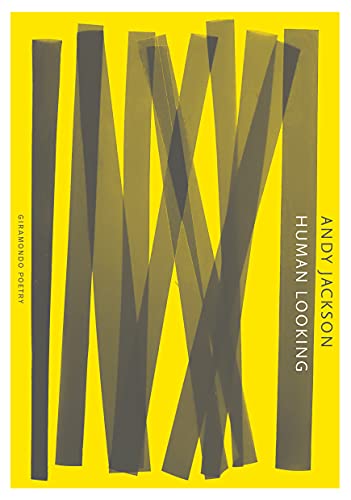
Andy Jackson, Human Looking (Giramondo 2021)

Human Looking has changed the way I see the world. More accurately, it has changed the way I experience myself as a body among other bodies in the world.

Trying to describe it, I can’t do better than the Author Note that came with my review copy:

There are two ways of saying ‘human looking’: one with a hyphen, the other with a comma. In other words these poems are about how we judge others to be human yet not-quite-human. They’re also about the humanness of the gaze, the vulnerability of the person doing the looking …

Since puberty, I’ve live with a visible disability, and have had to carry around the weight of other people’s looking. Wrestling with this is Sisyphean; simply putting it down isn’t an option. In a sense, this is my fifth poetry collection about deformity and the fault-lines of human community, though I’ve never written poems quite like this.

There are poems about Andy Jackson’s own experience with the medical profession, and his own experience of ‘other people’s looking’. There are poems about many people whose bodies fall outside the normal, through birth, accident or human intervention: conjoined twins, people with BID (Body Identity Integrity Disorder – you can look it up if you’re interested), pillow angels (you can look them up too), injured soldiers, images from ‘museums of deformity’.

A number of poems engage with other works of art. ‘Song not for you’ responds to Rainer Maria Rilke’s ‘Song of the Dwarf’; ‘No Lament’ is a sonnet replying to Judith Beveridge’s sonnet ‘Quasimodo’s Lament’. ‘Not a performance’ is a response to a self-mutilating performance work by Mike Parr. There are responses to painter Francis Bacon, and Joel Peter Wilkin’s photograph ‘Art Deco Lamp, New Mexico’ (again, you can look it up, but I recommend that you read Andy Jackson’s poem ‘Light which acts as a mask’, at this link, if you do). ‘In Itself’ is a homage to actor Javier Botet, who has the same genetic condition as Andy Jackson, Marfan’s Syndrome.

Many poems make creative and/or destructive use of other texts. The first poem in the book, ‘Operations’, comprises words and phrases from Jackson’s own childhood medical file. ‘Borne away by distance’ is an erasure poem taken from the last chapter of Mary Shelley’s Frankenstein. ‘Unhomely’ creates an extraordinary synergy by having alternate lines taken from ‘The Handicapped’, an essay by Randolph Bourne published in 1911.

My usual practice when blogging about poetry books is to look closely at one poem. Here, I want to discuss ‘The Change Room’, which is possibly the most straightforward, least confronting poem in the book. You might say I’ve picked it because it lets me stay in my able-bodied comfort zone, and you could be right, but it’s also the poem that surprised me most, perhaps for that very reason. You can read it in Cordite Poetry Review, 4 May 2016, at this link. I’m assuming approval from Andy Jackson and Giramondo to quote it in full:

The change room

This morning, walking almost naked
from the change room towards the outdoor heated pool, 
I become that man again, unsettling

shape to be explained.
Such questions aren't asked to my face. Children
don't mean anything by it, supposedly, so I 

shouldn't feel as I do, 
as my bones crouch into an old shame I thought
I'd left behind. Chlorine prickling 

my nostrils, a stranger 
compliments me on my tattoos and shows me hers – 
a dove in flight over a green peace sign – 

as if the canvas was unremarkable.
She turns and limps away, 
and something makes a moment of sense.

I lower myself into our element 
and swim, naturally
asymmetrical and buoyant. Quite some time 

later, showering, the man beside me 
is keen to chat – how many laps we've each done, 
how long I've lived in this town, the deep 

need for movement. 
Speaking, our bodies become solid.

In a seamless narrative told in eight short stanzas, three strangers initiate encounters with the poem’s speaker. It may feel like a casual anecdote, but every word counts.

The first line, ‘This morning, walking almost naked’, raises questions: why almost naked? where were you? where were you going? The questions are answered right after the line break, but they have been raised. The phrase ‘almost naked’ isn’t necessary as information. If someone is walking from the change room to go for a swim, it goes without saying that they’re in a state of undress. So the first line makes sure that the reader has the speaker’s body in mind, which prepares us for what happens next.

When ‘the change room’ is first mentioned it doesn’t feel as if it’s carrying any non-literal weight. But a slight shift in its meaning comes with the third line: ‘I become …’ Without disrupting the conversational surface, the change room has taken on a metaphorical dimension: it’s not just a place where the speaker has changed his clothes; it has changed him by exposing his body to an othering gaze, articulated in a child’s question, which we assume to be something like, ‘Mummy, what’s wrong with that man?’

‘Such questions aren’t asked to my face.’ That’s the key to this encounter: it’s not person to person, but person to person-seen-as-thing. The poem pulls back from blaming the child, but can’t shake off the hurt of being objectified. When a girl shouted a racial slur at Adam Goodes on the football field, the same line of logic applied: she didn’t mean any harm, so it’s wrong to be hurt by it. But the impact is there regardless of intention, and the word ‘supposedly’ leaves the question of blamelessness open. An ‘old shame’, from a history of encountering such attitudes, is felt in the body (‘my bones crouch’), and is compounded by the thought that I / shouldn’t feel as I do’, and anyway it’s something he thought he’d outgrown. So much complexity is contained in these few lines.

As the whiff of chlorine calls us back to the present enterprise, the swim, there’s a second encounter – the kind of inconsequential encounter I’ve been documenting in my 500 people posts. The other person is introduced as an abstraction, ‘a stranger’. We learn details one at a time – first her gender, then her tattoos and by implication perhaps something of her anti-war, pro-environment politics, and finally her limp. The three lines of this conversation raise questions: isn’t it a bit odd for a stranger to approach you at the pool and chat about your tattoos? what is going on that she shows her own ‘as if the canvas was unremarkable’? She is putting her attention to the speaker’s body and drawing his attention to hers, but in a way that seems to assume that the skin and bodies aren’t of much interest. It’s not exactly a denial of the body, but it’s the opposite of ogling. It’s also, crucially, an opposite to the gaze of the first encounter.

Only when she walks away, and we see that she limps, ‘something makes a moment of sense’. Along with the speaker, we understand that she has been acting on the basis of shared disabled status – an equivalent, perhaps, of the ‘nod’ that brown and black writers describe – but he hasn’t understood the nod until she walks away.

This is the only stanza (apart from the final one) that ends with a full stop. Elsewhere the transition between stanzas is, to use a key word from earlier in the poem, unsettling. The lack of carry-over here suggests that something has been resolved.

The sixth stanza is a moment of respite, the swim. Here too the language is alive with possibility. Water is ‘our element’. I once met a man whose PhD thesis was on the use of pronouns in political speech, in particular we, us and our. He would love this our. It most obviously refers to the speaker and the ‘stranger’: he has accepted the fellowship she offered. In water their various asymmetries can be natural. But water is also everyone’s element, including the child and parent from the start of the poem. The ‘our’ here is an assertion of common humanity. Asymmetrical bodies are also natural, and no less buoyant than symmetrical ones.

In the third encounter two men are showering, possibly completely naked – at least that’s how it would be at my local pool – and they chat, unselfconsciously, about what they have in common. They have swum in the same pool, they live in the same town, and moving to a slightly more philosophical and self-disclosing level, they share a ‘deep / need for movement’.

Though I find the last line – ‘Speaking, our bodies become solid’ – completely satisfying, I have trouble saying why. The earlier encounters focus each in its own way on the speaker’s body as different. The man in the shower, ‘keen to chat’, isn’t interested in that difference at all. It’s not that he’s strenuously ignoring it, he’s just not interested at that moment. Paradoxically, not paying attention to the difference enables the speaker (who we can assume reciprocates the chat, as he probably doesn’t in the earlier encounters) to think in terms of ‘our bodies’. Here, in this moment, he is not that man, nor a member of a particular group, but an embodied human talking to another embodied human. The line contains an echo of a powerful moment in the Catholic Latin Mass, when the priest would genuflect as he intoned, ‘Et verbum caro factum est‘ / ‘And the word became flesh.’

Speaking can rob us of our humanity, can express solidarity, can affirm that same humanity. The humble change room has become a metaphor for a place where transformation is possible.

I am grateful to Giramondo for my complimentary copy.

More Lies from Richard James Allen

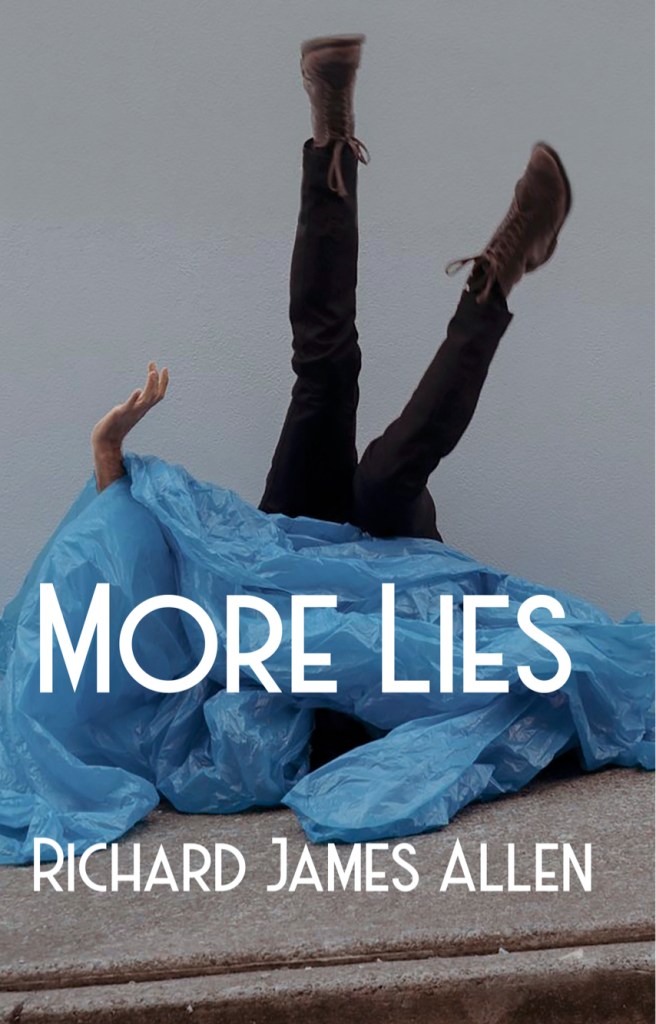
Richard James Allen, More Lies (interactive Press 2021)

Rae Desmond Jones, poet and one-time mayor of Ashfield, is quoted on the back cover of More Lies saying it was ‘like swallowing a tab spiked with speed – with Raymond Chandler’s spook dealing and watching from the corner’. It’s a clever way to encapsulate the weirdly surreal noir, high-velocity, trippiness of the book, and perhaps there’s a hint of the narrator’s intrinsic unreliability in the inconvenient fact that Rae Jones died four years before the book was published.

It turns out, according to Richard James Allen’s unusually informative Acknowledgements, that though this slim volume can be read and enjoyed in a single sitting, it has been a long time in the making: a first draft was written in the 1990s; a version was performed as a monologue at the 2000 Sydney Writers’ Festival; adaptations for stage and screen were created but never made it to performance. Rae Desmond Jones had plenty of opportunity to read it after all.

In the first of 34 short chapters, the unnamed narrator is strapped to a chair, being forced to keep typing by a ‘divine creature’ to whom he has just made love, and who is now holding a gun to his head. He tells us that he’s been caught up in a planned assassination and a drug-running scheme, that he has to keep typing because the noise provides a cover for his criminal captors. But soon he admits that he’s lying – or perhaps not. Anyhow, his situation changes dramatically, and improbably, and soon he’s typing on a laptop in a jail cell. And so it goes: localities change; characters change names, motives, identities and gender. The narrator is a self-confessed liar caught up in a Kafka-esque nightmare, or is it a Dada-esque dream? Occasionally he breaks into verse. Through all his vicissitudes – sometimes he seems to be in a hard-boiled detective novel, sometimes an episode of Breaking Bad, sometimes a dark existential tract, sometimes a spoken word event – he keeps typing, reasonably sure that none of the other characters will read his text, but not at all sure he can trust the reader – that’s you or me – whom he addresses with deep suspicion.

You can see why I had my doubts about the blurb from Rae Desmond Jones.

Confused? Well, read the book. It won’t clear up your confusion, but it will amuse, and while it’s at it, it may stir up some thinking about the nature of fiction.

The book was launched in a cheerful, well-attended zoom event, where Richard James Allen read the first couple of chapters. You can see a recording at this link.

I’m grateful to Interactive Publications for my complimentary copy.

500 people: Week 33–34

See this post for a brief description of my 500 People challenge.

As we reached the end of lockdown and got out into the parks to picnic in groups of (mostly) the legal five or fewer, we seemed generally even less likely to talk to random strangers. However, I had some genuinely warm transitory encounters in those last two weeks.

1. Monday 27 September. The Emerging Artist and I were exploring Pyrmont, at the edge of our permitted 5 k radius. We were about to climb a short flight of stairs signposted ‘Cliff Walk’, when a woman who was busy with a trowel in a small vege garden beside the stairs called to us: ‘Going up to the windy place, are you?’ So we stopped to chat: it transpired that she is a little older than I am, has lived in the area for 10 years or so, and manages the hilliness with some difficulty; she cultivates this little garden as a community service as well as the windswept one in her own back yard; her husband, older than she is, is active in a community recycling project.

2. Thursday. We were back in Pyrmont with Ruby, where she frolicked among water spouts and we had leaf-boat races in a shallow waterway. Between activities, the EA asked Ruby if she’d like a snack. A young masked man sitting just within earshot spoke up: ‘Oh, what snacks are there?’ Not that he wanted to know – this was clearly an invitation to chat. But I told him what I knew of what was on offer at the little kiosk. The conversation expanded, so soon we knew he lives in Camperdown, and that we have places in common where we go with our young ones (his daughter was asleep in a stroller next to him). He gave us a number of tips about good places elsewhere in the Inner West. When he and his daughter headed off, it was with the possibility of meeting again.

3. Monday 4 October. On our morning walk by the Cooks river, we passed a man and a woman picking mulberries – or rather, he was reaching up into the branches looking for ripe mulberries while she was eating one he’d found earlier. I picked one from the opposite side of the tree, and gave it to the EA, saying, ‘I hope they haven’t been poisoned.’ The young man didn’t catch my exact meaning (I was masked and I’m guessing English wasn’t his first language). He said, ‘Oh no, they are mulberries.’ The young woman stepped in: ‘We ate some yesterday, and we’re still here!’ This is a different tree from the one in Week 32.

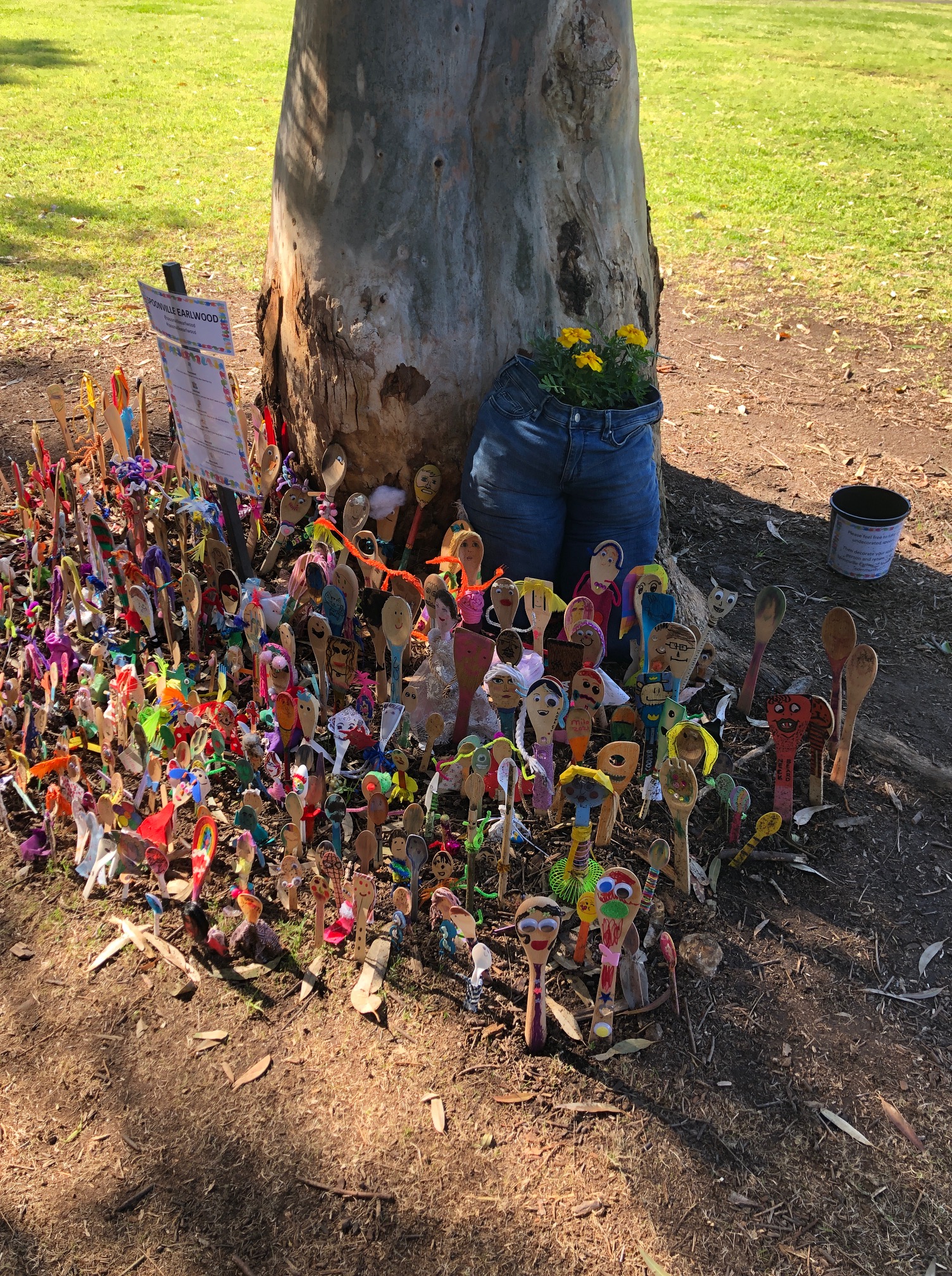
4. Monday, on the same walk, we passed the Earlwood Spoon Project. People are invited to decorate wooden or plastic spoons, make them into characters of some sort, and add them to this installation. There’s another, smaller installation along the Wolli Creek section of the Two Valley Trail. The recent heavy rain and wind had laid the spoons low, but someone had rendered them upright and orderly. Two youngish women were bending over the display, exclaiming: ‘Look at the bride!’ ‘There’s Wally!’ and so on. I inserted myself by telling them of the recent devastation, and then all four of us spent a little while pointing out clever creations: Homer Simpson, Chuck Norris (?). Someone apologised for swearing. A brief good time was had by all.

Photo by Penny Ryan

5. Tuesday evening, I was walking through our underground garage, maskless though we’re supposed to be masked in the common areas, and listening to a podcast – the Thoroughly Modern Mozart episode of Christopher Lydon’s Open Source. To prevent further ear damage I don’t use ear buds, and I was filling the garage airwaves with the sound of a classical piano. When a masked man with a shock of black hair appeared, I hastily turned the podcast off and fumbled for my mask. We nodded to each other – frostily on his part, I thought. Then he called back over his shoulder, ‘Whose is that piece?’ I could tell him it was Beethoven, but I was way out of my depth, so the conversation couldn’t go much further.

6. Sunday morning. We were helping some friends scope out an apartment they are considering putting an offer on – they’d done their inspection, this was just the environment. A woman emerged from a ground-level apartment and we bailed her up and plied her with questions: strata arrangements, rules about pets, use of the swimming pool, public transport, most convenient shops, development proposals for the nearby green space …

7. Sunday afternoon, it started to rain a few moments into our regular Cooks River walk. We persevered, and a couple of minutes later overtook a large woman who was walking with a stick. As we passed her with the usual nod and smile, one of us said, ‘Wonderful, isn’t it?’ She managed a wry grin: ‘Sort of!’

Running total is 228. Let’s see if I manage to be any more sociable with strangers now that the Sydney lockdown is officially over.

Ruby Reads 27: Tashi

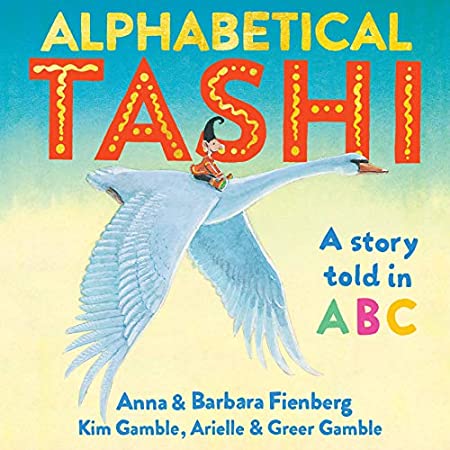
Anna & Barbara Fienberg, Kim Gamble, Arielle and Greer Gamble, Alphabetical Tashi: A story told in ABC (Allen & Unwin 2020)
Anna Fienberg, Barbara Fienberg and Kim Gamble, Tashi (Allen & Unwin 1995, 2018)
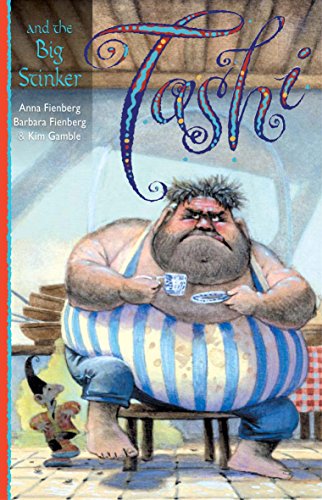
Anna Fienberg, Barbara Fienberg and Kim Gamble, Tashi and the Big Stinker (Allen & Unwin 2000)

The Tashi books are a great success story of Australian children’s literature. They had their beginnings in stories that Barbara Fienberg told to her little daughter Anna in the bath. When Anna grew up to be a children’s author – editor of The School Magazine for some years, and creator of a string of picture books including The Magnificent Nose and Other Marvels – she and her mother decided to make some of those childhood stories into books. Kim Gamble, who had worked with Anna on a number of earlier projects, joined the project and created a charming and distinctive visual presence. Tashi was born.

Each of the Tashi books includes two stories told by Tashi to his friend Jack, who usually relays one of them to his father. Tashi comes from a land far away where he had amazing adventures and triumphed over aseemingly endless line-up of monsters and villains. There’s excellent comedy in the telling, as Jack’s father consistently exasperates his son by asking the wrong questions. Jack’s friendship with Tashi has a sweet, unforced subtext about the enriching possibilities of immigration.

Anna and Kim (full disclosure, I have worked with both of them and think of them as my friends) did magical school visits where Anna would read a story while Kim created a chalk image of one of its key moments. Many schools around New South Wales treasure the works created on those occasions.

So, how did Ruby, like many others of her age group obsessed with Elsa of Frozen, take to Tashi?

Not that well.


This gorgeous alphabet book was Ruby’s first encounter. After Kim’s untimely death in 2017, the Fienbergs and Kim’s daughters Arielle and Greer teamed up to make a kind of memorial using some of his original art created for the 16 books in the series.

We progress through the alphabet, as Tashi (A boy) confronts a series of foes, starting with Baba Yaga and ending with fierce Zeng and his army. Every page is striking and there are some spectacularly beautiful spreads featuring rural south-east Asian landscapes with karst mountains, ornate bridges, buffaloes and thatched roofs.

The verse narrative is sparse, and none of the encounters with baddies is spelled out in any detail. It’s meant to remind readers of past reading pleasures rather than provide new ones.

Ruby was generally unimpressed. She’s not interested in scary stories: she covers her ears during some bits of Catwings, or asks us to skip those pages altogether. So she took no pleasure in the wonderfully scary pages here. The one page that stirred her interest was V: ‘Very Big Stinker, who farted and fumed.’ This fitted very nicely with her current opinion that saying ‘Poo-poo’ is the height of wit.


So we bought a copy of Nº 7 in the series, Tashi and the Big Stinker, whose cover shows Tashi recoiling from a cloud of greenish gas at the rear of a very large man.

Oh dear! The farting pages were a long time coming and when they did they were far too graphic for our almost-four-year-old. The playing around with narrative point of view, which I have found delightful, went right over our young one’s head. And then the second episode, a dramatic retelling of the pied piper story, is far too scary for her: there’s a brilliant moment when all the children of the village are about to plunge over ‘a steep drop, down, down, a hundred metres down to the rushing waters of a mountain gorge’, led there by a pied piper figure who is as genuinely frightening as Heath Ledger’s Joker.


Perhaps we needed to go back to the beginning. We got hold of the original, Tashi, with an unstinky, elegant swan on the cover. But oh dear! The action that leads up to Tashi’s splendid flight on the swan had our little listener rigid with horror. Tashi’s parents sold him to raise money to travel. Never mind that they sold him to a war lord – we don’t care what that is, but we do care that parents can sell their children!

The second story in this book has a dragon – the last dragon – who, instead of turning into a good dragon which happens a lot in Ruby’s games, is killed by Tashi. Perhaps some of our extinction-averse zeitgeist has helped form Ruby’s sensibility. The fact that there is a benign grandmother was no help. Nor was the almost complete absence of female characters apart from her.


It was like introducing two dearly loved friends, only to have them take an instant dislike to each other, and being able to see why.

Maybe we’ll try again in a couple of years.


Tashi and the Big Stinker and Tashi are the 12th and 13th books I’ve read for the Australian Women Writers Challenge 2021.

George Megalogenis’ Exit Strategy

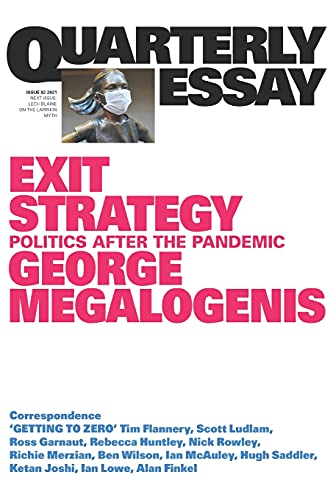
George Megalogenis, Exit Strategy: Politics after the Pandemic (Quarterly Essay 82, 2021) – plus correspondence in QE 83

In the opening pages of this Quarterly Essay, George Megalogenis, veteran of the Canberra press gallery, describes the way trust in the Australian government was eroded over the Rudd–Gillard–Rudd–Abbott–Turnbull–Morrison years. The key question for the essay, he writes, is:

Can Australia restore faith in good government? Are we doomed to repeat the farce of the last decade, when we avoided the worst of the GFC only to succumb to policy gridlock and American-style electoral polarisation in the recovery? Or will the visceral experience of the pandemic allow us to reconceive the political economy of the nation?

(Page 4)

It may be the key question, but as far as I can tell the essay makes no real attempt to answer it.

What it does do, with considerable flair, is spell out the history that defines the present moment. Megalogenis compares the Covid recession with previous recessions, and describes the way relationships between governments and the heads of treasury have changed and developed over the decades since World War Two. He also describes the way the economists advising governments finally learned that government spending worked better than restraint as a response to economic recession.

The essay revisits, among other things, the Global Financial Crisis and the pink batts beat-up. It covers familiar ground, such as the way Prime Minister Morrison was slammed for taking a secret holiday during the 2019-2020 bushfires meant that he was less cavalier about the Covid crisis. It discusses the way universities were left out of Covid rescue packages.

It tells these stories in prose that makes us uninitiated readers feel as if we’re understanding something afresh, with the kind of gossipy personal touches that remind us that government decisions are made by fallible human beings, who are advised by other fallible human beings, but that fallibility is substantially decreased if public servants aren’t sacked wholesale by incoming governments, as they were by Tony Abbott.

The essay is dated 7 June 2021. By the time it was published a couple of weeks later, the next Covid-19 outbreak had begun. By the time I got to read it three months after that, a sizeable proportion of the Australian population was back in lockdown, there were weird demonstrations in Melbourne, and the prospect of the Federal Government offering the kind of leadership that would restore faith in good government seemed remote. But the essay’s final paragraph – read in the light of fresh submarine deals and more bloviating about climate change – has lost none of its force:

Morrison has yet to accept responsibility for the future. The longer he waits, the greater the risk that the rest of the world, led by a reinvigorated United States, imposes its own terms on Australia.


Quite a bit of the correspondence in Quarterly Essay 83 – Lech Blaine’s Top Blokes – responds specifically to Megalogenis’ discussion of the Morrison government’s treatment of universities. Megalogenis discussion is interesting – they did it because they hate universities, because universities produce Labor-voters, and because they hate Victoria and Victoria specialises in higher education. There’s a lot of nuance in the discussion, but the Morrison government doesn’t emerge from it smelling any more like a rose.

For me, the most telling response to the essay’s main thesis came from Richard Denniss, chief economist at the Australia Institute and author of Quarterly Essay 70, Dead Right (my blog post here). He laments that this essay didn’t contain ‘a lot more on possible exit strategies and the political forces that will determine which options are placed on the democratic menu and, ultimately which dish is selected’. I love this departure from the usual calm tone of QE correspondence, in which he quarrels not so much with George Megalogenis as with his source – an economist calling out an economist rather than the journalist who may be simply innocent meat in the sandwich:

George quotes former Treasury secretary Ken Henry saying [successive governments’] hostility to government spending ‘was not something that the Australian Treasury had dreamt up … The academic consensus around fiscal policy was basically: “It’s too hard to use” … The best thing to do is sit on your hands and let the private sector work it out.’

What utter crap. No such academic consensus ever existed, and it’s not at all clear from the essay whether George believes it did. But what is clear … is the tendency in Australia for powerful people to source advice, economic or otherwise, from those they agree with.

(QE 83 page 123)

The most telling additional piece of information comes from Travers McLeod, chief executive officer of the Centre for Policy Development. The National Covid-19 Coordination Commission (NCCC), he tells us, was established by Scott Morrison in March 2020 to ‘coordinate advice to the Australian government on actions to anticipate and mitigate the economic and social effects of the global coronavirus pandemic’. Then, on 3 May 2021, ‘with Australia at the bottom of global vaccination rates, and the Delta strain having just been used to justify a ban on Australians returning from India’, it was disbanded.

It does look as if any hope for a reasoned response in Australia to the ongoing pandemic crisis (not to mention the climate emergency) must lie with the states, or with any luck, a change of government.

The Prelude Progress Report 3

William Wordsworth, ‘The Prelude, or, Growth of a Poet’s Mind’, in William Wordsworth Selected Poetry, edited, with an Introduction, by Mark Van Doren (Modern Library College Edition 1950), Book Seventh line 619 to Book Eleventh line 152.

After averaging 70 lines a day for three months now, I’m past the three-quarter mark in ‘The Prelude’, still surprised by the joy of it. Most of this month’s reading has been about Wordsworth’s response to the French Revolution.

Book Eighth, subtitled ‘Retrospect – Love of Nature Leading to Love of Man’, revisits his childhood in the Lake District and his early time in London. There’s a wonderful set piece describing a country fair at the start of this Book, and there are some descriptions of shepherds at work which I suppose could be read as treating those working men as picturesque features of the landscape, but they reminded me of James Rebanks’s A Shepherd’s Life in their appreciation of the difficulty of that work. He goes back over his time in Cambridge and in London, looking at these times with more mature eyes. This section is sometimes a bit opaque and abstract, but it’s fascinating as an account of a young man finding his way in an increasingly complex and morally compromised world.

Books Ninth, Tenth and Eleventh are a revelation to me. I don’t think I’m the only person who has thought of Wordsworth as the ‘Daffodils’ guy, or – slightly more seriously – the guy who wrote some great sonnets and the Lucy poems. That’s what it meant to be a Romantic. I suppose I’d vaguely heard about his sympathy for the French Revolution, but when I ‘did’ him at university in the early 1970s there was no hint that that sympathy had anything to do with his poetry. But of course the Romantics weren’t wafty, apolitical nature-lovers: Byron went off to fight in Greece, Blake railed against the human damage caused by industrialisation, and Wordsworth as a young man was hugely invested in the French Revolution, appalled that England sent young men to do battle against the revolutionaries, horrified at the Terror, and overcome by relief at Robespierre’s death.

Mind you, one line from ‘The Prelude’ did emerge into the general culture in the 70s. I don’t remember whether it was referring to the ‘alternative society’, women’s liberation, or opposition to the US-led war in Vietnam, but someone quoted these lines (Book Eleventh, lines 108–109) that struck a strong chord with me:

Bliss was it in that dawn to be alive,
But to be young was very Heaven!

What follows makes it clear that he’s not talking about a dawn of affluence or a youth of indulgence, but a revolutionary dawn. Then there are these wonderful lines:

Why should I not confess that Earth was then 
To me, what an inheritance, new-fallen 
Seems, when the first time visited, to one 
Who thither comes to find in it his home? 
He walks about and looks upon the spot 
With cordial transport, moulds it and remoulds
And is half-pleased with things that are amiss
’T will be such joy to see them disappear.

I imagine these lines resonate with many in younger generations just now who are challenging rigidities around gender, race and other identities.

That’s pretty much where my reading is up to: the world is on the brink of miraculous transformation. I do hope we’re not being set up for disillusionment.

Aravind Adiga’s Amnesty

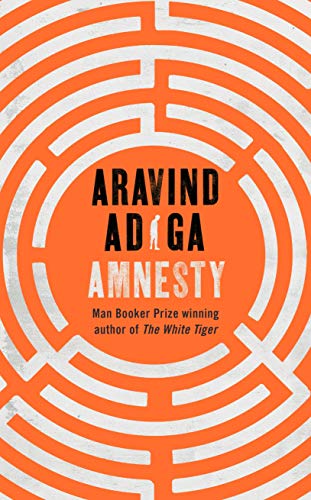
Aravind Adiga, Amnesty (Picador 2020)

Danny is an illegal immigrant working as a cleaner in Sydney. Like the thousands of undocumented workers discussed on The Drum on the ABC the other night, he came to Australia on a student visa and then stay on beyond the visa’s expiry date. He arrived by plane, so he’s not one of the visible–invisible ‘boat people’ who are held indefinitely in detention. His application for refugee status was rejected (being a Tamil from Sri Lanka who has been tortured wasn’t enough to qualify him), and now he has now spent four years working cash in hand, observing Sydney customs so as to pass unnoticed, and reading books on Australian law in a local library so he and his fellow illegals can better understand their options.

His precarious equilibrium is shaken when a previous client is killed, and – mild spoiler alert – he knows who did it. But the murderer knows that he knows, and threatens to dob him in as an illegal immigrant if he goes to the police. Should he do the right thing by the murdered woman, or should he opt for self-preservation? This moral quandary and the cat-and-mouse game with the murderer play out in short sections time-stamped from 8.45 am to 7.03 pm on a single day. During the day we learn details of Danny’s story: the circumstances of his torture and migration to Australia, his exploitative work set-up, his history with the murdered woman and her murderer. We also get to see Sydney through his eyes, as he wanders erratically around the inner suburbs.

I was less than enthralled.

Danny’s dilemma doesn’t become any more complex as the novel progresses. We know from early on what the stakes are; there’s no mystery, no intensifying danger, no real suspense. The interest lies in the way the novel shows Sydney and Australia from a different point of view. In the episode of The Drum I mentioned earlier, the panellists all agreed that the visa overstayers were beneficiaries of a well-known scam. That’s not how it appears in this book. There’s a scam all right, but Danny, like others we glimpse through his eyes, is trapped, living precariously, and vulnerable to exploitation. He lives in a room above a convenience store in a kind of indentured servitude to the owner of the store. He has a girlfriend but hasn’t dared tell her about his illegal status.

Danny knows that you don’t pronounce the p in receipt. When he hears another brown man pronounce it, he knows that that man is a legal immigrant who doesn’t have to worry about such things. Several times in the course of the day, there is the look of recognition between brown men that happens in a white-dominated place like Sydney, but for Danny it’s not a simple matter of like recognising like. He is more vulnerable than legal immigrants, and he needs to be wary of them as much as of anyone.

This could have been compelling. But I was yanked out of the narrative too often by things that were weirdly wrong.

Some, I think, are the result of intrusive and culturally arrogant copy-editing. Though my copy of the book says it was published in London, North American spelling prevails, most egregiously for Sydney Harbor and the Sydney Harbor Bridge. (I would find it just as jarring to find a reference to the Kennedy Centre in Washington DC.) This is almost certainly not Aravind Adiga’s doing.

Some of the weirdly wrong things may be Danny’s mistakes, part of the characterisation. For example, ibises are near-ubiquitous in the inner suburbs of Sydney in real life. Here they are called jabirus, completely different birds, though a Google image search might not make that clear. When there’s a mention of sulphur-breasted cockatoos, a kind reader would think Danny had misheard ‘crested’ (until the name turns up correctly 100 pages later). These errors took the shine off the pleasure given by Danny’s nice observations about ‘Aussie mynas’, which until recently Australians called Indian mynas.

Most disturbingly wrong are a number of geographic impossibilities. There are several references to ‘the cliffs that rise up at Pyrmont’ –  it’s a huge stretch to describe the cuttings in Pyrmont as cliffs. There are palm trees down the middle of William Street. Parramatta seems to be awfully close to Erskineville. Danny stands at Hyde Park looking east, and has the Harbour, which in real life would be on his left, on his right. And there’s this:

He turned around and looped back aimlessly, down into the area known as East Sydney, which had a view of Sydney Harbor [sic] … Through a vista of palm trees, he saw blue ocean and, near it, the white opera house.

(page 92)

You can’t see the Harbour from East Sydney; he probably means Woolloomooloo. But no matter how you slice it, the Sydney Opera House is nowhere near the ocean. And what are these palm trees Danny keep seeing? It’s like Saving Mr Banks‘s version of North Queensland.

It’s easy to see how these things can happen: it looks as if the author didn’t get to revisit Sydney when the novel was in manuscript, and depended on friends with no experience as proofreaders to correct any errors. And none of it would matter, except that the narrative meticulously names places, even down to street numbers, and when the geography doesn’t work, the whole world of the novel begins to feel untrustworthy. In the end I struggled to take any of it seriously.