
This is my sixth post on books I took with me on my escape from Sydney’s winter, focusing as usual on page 76.
Kevin Smith, Another Day (Flying Islands Books 2023)
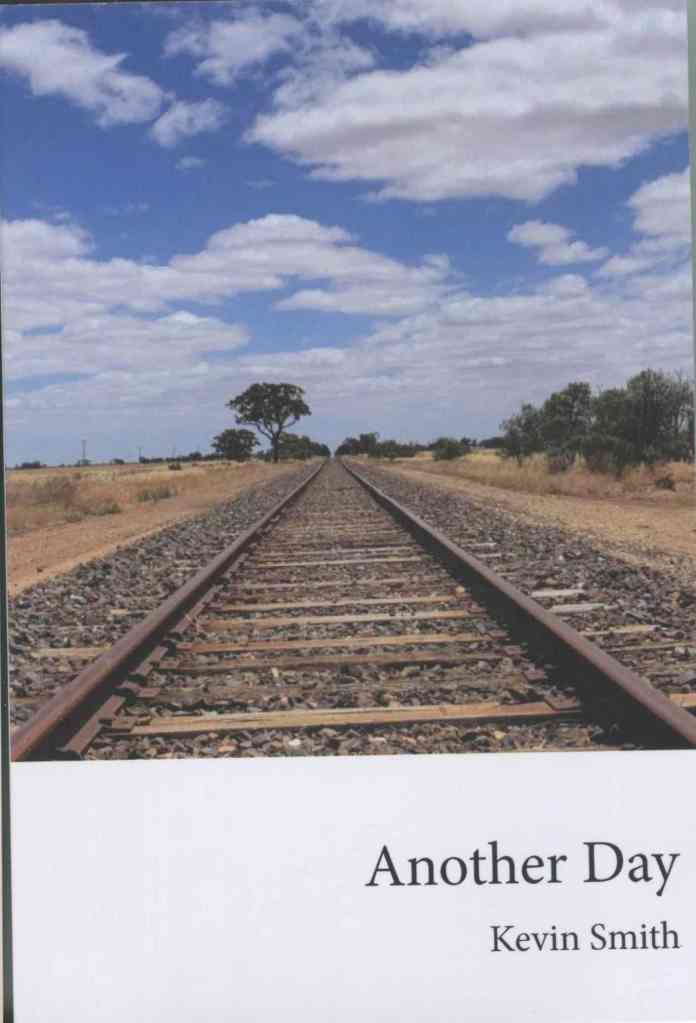
It was exquisitely bad timing that I read Another Day concurrently with Nicholson Baker’s novel The Anthologist. Baker’s protagonist Paul Chowder detests enjambment, even in such hallowed places as the opening lines of Keats’s ‘Ode to a Nightingale’, and Kevin Smith’s poems fairly bristle with enjambments.
But the poetry got me over that hump fairly easily.
It’s a collection of 38 poems, many of which have been long- or short-listed for literary prizes in Australia and elsewhere. There are enjoyable travel poems and people-watching moments; sex, birth, fatherhood and grandfatherhood. If I had to pick one poem that put unexpected words to experience similar to my own it would be ‘At Once Father and Son’, in which the poet speaks to his son who has just become a father himself. These lines also, incidentally, illustrate the poet’s attachment to enjambment:
And when I watch you look
___into his face – your own face –
full of wonder that you

and he were meant to be –
___so it was I used to think
that this would never end.

But time – travelling on
___a one-way ticket –
won't return. And so we've drifted.

You've grown into a man
___as I had done – as surely
as your son will do. And my hands,

empty of you all these years,
___tell my time has passed,
my station done.
One striking thing about the collection as a whole is the powerful poems about the cancer treatment and eventual death of a loved one. These are scattered through the book, with the disconcerting effect that these terrible things are somehow just part of life – just another day, perhaps – until they come to a grim conclusion in the final pages
Page 76 is parts 3 and 4 of the book’s only prose poem, ‘More Soft Than Water’. It’s a narrative – a short short story. In the first two parts the narrator recalls how as a young man he accompanied his sisters on their volunteer nights at an unidentified institution. A baby girl is placed in his arms, with skin ‘more soft than water’.
3.
Each week, I came back to her and walked the
corridors again. Through a window, she caught
the light at play among the eucalyptus leaves
brought to life by a breeze; her eyes fixed on
them as I cradled her in my arms. Then some-
one told me she was dying. Her mother had to
let her go, they said, or her husband would have
left her too. So she became a ward of state. Some
weeks later, I stood outside the facility door and,
despite the cold, I could not make myself go in.
On the way home my sisters fixed their eyes on
the road.
So much in so few words! According to the ‘About the author’ at the back of the book, Kevin Smith ‘has worked primarily in drama and theatre, as actor and writer’. I think a reader might have deduced that from these lines. The narrative beats are so clear: his slow bonding with the baby in the first two sentences. The seven-word bombshell. A quick backflash in the next two sentences, then the main action of the poem: the young narrator’s failure. And his sisters’ implied condemnation of his cowardice.
All the narrator’s emotion is conveyed by action and objects. We see the baby’s face as she watches the leaves. The bald statement of her expected death is left without commentary. There’s no judgement on mother’s past decision. We’re left to make our own interpretation of the narrator’s inability to enter the facility and of his sisters’ fixed gaze. This is letting the actions tell the story; it also creates a sense that the emotion of the moment is still too painful, possibly too shameful, to name.
4
For a long time I wondered if you'd died, and
when. Sometimes I imagine I'm still standing at
the door – the wind like a knife in my back – as
I remember how comfortably you fitted into my
arms. Once, you looked at me, and galaxies of
stars kindled in the darker regions of my heart.
In the end, the poem isn’t concerned with a possible moral reading of the incident, but with an opportunity missed. There are probably hundreds of poems about what happens when you look into the eyes of a small baby. I think of Francis Webb’s sublime ‘Five Days Old’, though the echo here of these lines doesn’t mean Kevin Smith was necessarily thinking of them:
The tiny, not the immense
Will teach our groping eyes
So the absorbed skies
Bleed stars of innocence
The poem is full of regret, but also gratitude. If that young man had moved away from the wind’s knife, perhaps the baby’s look would have kindled more than stars.
You can find out more about Kevin Smith at his website, https://www.kevinsmithpoetry.com/.
I’m grateful to Flying Islands Books for my copy of Another Day.


 Me fail? I fly!