Category Archives: Books

NSW Premier’s Literary Awards Night 2021

For the second year in a row, the NSW Premier’s Literary Awards Night has been an online event. I was one of 65 people watching it at the beginning, an audience that grew to 68 near the end. Not exactly the Oscars.

Here’s how it went:

After a number of introductory speeches – by State Librarian John Vallance who quoted Aristotle in the State Library’s Shakespeare Room, Wiradjuri woman Yvonne Weldon who welcomed us to Gadigal land, President of the Library Council of NSW George Souris, Minister for the Arts Don Harwin who promoted the government’s support for literature, Premier Gladys Berejiklian who came out as a passionate reader. We then went on to the winners, presented by John Vallance except where I note otherwise:

Multicultural NSW Award presented by Joseph La Posta, CEO of Multicultural NSW: Throat, Ellen van Neerven (UQP) – my blog post here. Ellen van Neerven skyped in. ‘This book has been more than just a book. It has been a chance to write alongside my mum among others …’

NSW Premier’s Translation Prize (awarded every second year) also presented by Joseph La Posta, to two winners: Imminence by Marian Dimópoulos, translated by Alice Whitmore (Giramondo) and Autumn Manuscripts, Tasos Leivaditis, translated by N. N. Trakakis (Smokestack Books). Both spoke beautifully; Nick quoted a poem.

Nick Enright Prize for Playwriting: Milk, Dylan van den Berg (The Street Theatre). In true theatre style, the winner thanked many many people, including ‘the Mob’ in the ACT.

Betty Roland Prize for Scriptwriting: Freeman, Laurence Billiet (General Strike and Matchbox Pictures). Laurence Billiet acknowledged her subject, Kathy Freeman. The novel was made during the Melbourne lockdown, ‘or should I say the Melbourne lockdowns’.

Patricia Wrightson Prize for Children’s Literature: The Grandest Bookshop in the World, Amelia Mellor (Affirm Press). ‘I was a broke student when I started writing this book.’ She thanked libraries for making the book possible.

Ethel Turner Prize for Young People’s Literature: The End of the World is Bigger than Love, Davina Bell (Text). ‘I am honoured and humbled and genuinely shocked.’ Among other people, she singled out her editor to thank.

Kenneth Slessor Prize for Poetry: Ellen van Neerven again.

Douglas Stewart Prize for Non-Fiction: The Warrior, the Voyager, and the Artist: Three Lives in an Age of Empire, Kate Fullagar (Yale University Press). Thanked the army of scholars who helped her write it. ‘I will donate some of the prize money to two scholarly organisations.’ One is a Cherokee organisation. The other is Pacifika Student Organisation.

UTS Glenda Adams Award for New Writing: Cherry Beach, Laura McPhee-Browne (Text). Interestingly, she thanked the judges by their first names. Her editor also got a big plug.

People’s Choice Award: The Dictionary of Lost Words, Pip Williams. when she has enjoyed a book she goes to the acknowledgements page and offers up a silent prayer of thanks to the author.

Christina Stead Prize for Fiction: A Room Made of Leaves, Kate Grenville (Text Publishing). ‘There is no best book, but the judges had to pick one, so thank you.’ She thanked the descendants of John and Elizabeth Macarthur for their generosity in depositing papers in the State Library, and spoke of Elizabeth Macarthur as a foremother.

Book of the Year, presented by the senior judge, Jane McCredie: Throat, Ellen van Neerven (UQP). They were stuck for words on their second prize, and even more so here. [Added later: But they did manage one glowing sentence: ‘It gives me a boost to continue doing what I’m attempting to do, which is to write as gently and as considerately as possible.’]

The Special Award: Melina Marchetta. Wow, and also Yay! Usually this prize goes to someone who is nearing the end of a career, possibly with death around the corner. Hopefully, Melina Marchetta has many years of creativity and literacy activism ahead of her. She spoke of how stories came into her life around a table during meals, and she wishes she could be with us in person. ‘I feel so much pride that I wrote my first novel on Gadigal land.’ And she expressed gratitude to her family who allowed her – ‘I don’t know if they allowed me, but I did it anyhow’ – to use their stories. She dedicated the award to her daughter.

That was it.

You can watch the whole ceremony at:

Jeff Sparrow’s Fascists Among Us

Jeff Sparrow, Fascists Among Us: Online hate and the Christchurch massacre (Scribe 2019)

The central character of this book is the man who murdered 51 people in Christchurch mosques in March 2019. He is never referred to by name, but is called ‘Person X’ throughout. This is partly in deference to Jacinda Ahern Ardern’s plea, ‘Speak the names of those who were lost, rather than the name of the man who took them.’ But it is also a strategy to turn the reader’s attention away from the murderer’s personal psychology and towards his broader social and political context, to see him not as some kind of lone madman, but as part of a small but thriving fascist movement, ‘an anonymous young man who emerges from the shadows, gun in hand, already committed to an evil ideology.’ To use the terms of Jennifer Maiden’s The Cuckold and the Vampires (my blog post here), Jeff Sparrow is interested in the macrocosm rather than the microcosm.

Person X (as I will also call him) wrote a 74-page manifesto that was (and probably still is) available on the internet, linked to the video he made of his rampage. Journalists mostly dismissed this manifesto as unhinged ravings. Jeff Sparrow has read it, and argues that it expresses ‘with stark clarity’ a distinctive political platform. I don’t have even the slightest urge to read the manifesto; I’m grateful to Sparrow for reading it for us.

Sparrow argues that Person X’s manifesto wasn’t intended for a general audience, but was/is part of a conversation and a culture which this book sets out to explicate. Person X is a real fascist – not a generic right-wing extremist, but a follower of actual fascists, particularly Oswald Mosley, who unlike Hitler and Mussolini survived the Second World War and preached a Europe-first fascism for the post-war era.

One of the distinguishing features of fascism is the upholding of violence not just as an acceptable means to an end, but as a good thing in its own right. Sparrow gives a fascinating account of the repellent debates among the online fascist groups, mainly in the USA but also in Australia. After the Unite the Right rally in Charlottesville in August 2017 in which men with tiki torches chanted, ‘Jews will not replace us,’ and anti-racist Heather Heyer was killed, most of these groups decided that their movement wasn’t ready for mass action in the streets. Donald Trump’s famous ‘fine people on both sides’ comment wasn’t enough to fortify them – and Trump himself was no fascist, though he provided a favourable context for fascism to grow. Many of the keyboard warriors weren’t up to having their photos made public, and the sheer size and energy of counter-demonstrations whenever they planned a further demonstration made them look ridiculous.

So they generally withdrew to the internet, where they infiltrated – or rather coalesced with – troll culture and ‘shitposting’. They would post horrific things in a way that you couldn’t tell if they were serious or just joking, aiming to ‘own the libs’. They became expert in developing and circulating memes. This was Person X’s home ground, and – Sparrow argues – the stuff in his manifesto that some commentators took to be incoherent ravings was really in the vernacular of The Daily Stormer and 8chan. He wasn’t prominent in Australian fascist groups, but he was known as an active participant. (Sparrow’s account of Australian fascism should bring a blush to the cheeks of many journalists who have described key fascists as activists and given them a platform.)

Person X’s murderous spree was a deliberate intervention in the debates among fascists. Acknowledging that the time was not ripe for organised action, he offered a model of ‘lone wolf’ terrorism. He took the form of the ‘autogenic mass killing’ – a lone man with a gun who lashes out – and recast it as a political act. It’s not violence against significant political targets, like assassinations or even the 9/11 attacks, but it sets out to intensify the existing sense of crisis (including the climate emergency crisis), and push towards total destabilising of society and the recovery of some sort of ethnic purity:

Person X presents a systematised manifesto calling for racist terror in the name of a social disruption he thinks will culminate in ethnic cleansing and genocide.

It’s an evil program, the wickedness of which is not diminished by its self-evident impossibility. But impossible programs still attract followers, irrespective of their wickedness.

(page 92–93)

And already when Sparrow was writing this book there had been a number of imitators who explicitly mentioned Person X and his manifesto in their own utterances.

Fascists Among Us was written and published well before the events in Washington on 6 January this year. It seems that the strategy of organised street violence hasn’t been relinquished as thoroughly as Sparrow believed. But his warning that it’s important to understand people like Person X stands. This is a short book, a quick read, and though Person X has been tried and sentenced, Donald Trump is no longer President of the USA, and almost certainly the debates and practices of fascists in Australia and worldwide have moved on, it offers important insights into a clear and present danger.

The Book Group and David Williamson’s Removalists

David Williamson, The Removalists (Currency Press 1972)

Last night the Book Group had an extracurricular outing to see David Williamson’s play The Removalists at the New Theatre (which is about as new as the Pont Neuf in Paris).

Written before the outing: I have a soft spot for this play. I saw the first Sydney production at the Nimrod Theatre in 1971, an astonishing 50 years ago, as part of the exhilarating resurgence of Australian theatre at the time. In early 1973, the first copies of the book arrived in the Currency Press office soon after I started working there in my first real job – it was a big seller for them, and as far as I can tell is still selling well. I visited the set of Tom Jeffreys’ film in 1974, and was in awe of the intense inner focus of actor John Hargreaves as he waited for the cameras to roll.

Before our theatre outing I revisited the book – a first edition, stiff and yellowing on a shelf near Alex Buzo’s Macquarie and Dorothy Hewett’s The Chapel Perilous. In a successful bid for the educational market, Currency’s founders, theatre critic Katharine Brisbane and her scholar husband Philip Parsons, prefaced the text of the play with two essays, ‘Reflections on Violence’ by historian Ian Turner, and ‘Authority and Punishment’ by eminent defence lawyer Frank Galbally (who is mentioned in the play) and Kerry Milte (who was soon to become the subject of interesting dramas of his own). John Bell, who directed the Nimrod production, has an afterword, and the front and back covers fold out to reveal cartoons by Bruce Petty. I haven’t seen the current edition of the book, but the image of the cover on Currency’s web site mentions Galbally and Turner, but not Petty.

This prefatory material is all about violence and authority. Ian Turner sums it up well:

The Removalists raises three questions: one sociological (is Australian society violent of its essence?); one political (do the forces of ‘law and order’ rest on violence?’); one psychological (do all of us have the kinds of aggressive instincts or behaviour patterns which Williamson depicts?).

The essays talk about the streak of male violence in Australian culture (what would today be called toxic masculinity), and they talk about historic violence against First Nations peoples and Asians, especially the Chinese on the goldfields. The domestic violence at the heart of the play is barely mentioned. John Bell does offer an early version of what has become a common observation abut Williamson’s writing: strong women actors are necessary to stop the female characters from ‘degenerating into stilted, unconvincing types’. The edition of the book currently on sale may have been updated. Certainly, in 2014 Currency published ‘The Unexpected Feminist’, a feminist reading of the play by Van Badham (online here).

In case you don’t know the plot: two women, sisters, turn up at a two-man (sic) police station asking for a document establishing that the younger woman has been assaulted, in order to legitimise their plan to move her and her baby out of the marital home while her husband is out at the pub; the older policeman, with sleazy motivation, offers to come and help the move; the younger policeman, fresh out of training, goes along unwillingly; at the home, the husband comes home unexpectedly, and the situation escalates into lethal violence.

Reading the text, I imagine that a successful staging in 2021 would have to take into account our much better understanding of domestic abuse and violence, and our (I hope) intolerance of having it minimised. Though the play doesn’t endorse the way the sergeant and the husband make light of the DV, it isn’t much interested in it except as precipitating violence among the men. Some of the minimising language could have come from the pages of Jess Hill’s See What You Made Me Do (my review here). John Bell’s comment about how much depends on the women actors has become much weightier with age.

The outing: Nine of us, including two ring-ins, had a cheerful Thai dinner across the street from the theatre. When we crossed over 15 minutes or so before lights down, fate decreed that the third row from the front, in my opinion the best seats in the house, was empty. There was a sizeable audience, almost all of whom I’d guess were high school students who have the play as a set text. It was exhilarating to be in a big live audience full of youthful energy – for some of the Book Group it was the first time they’d sat shoulder-to-shoulder in a theatre since the beginning of Covid days.

I had been wondering how the play would deal with #MeToo. It turned out that Johann Walraven, the director, was more interested in how it relates to #BlackLivesMatter. This was announced in the first moments. As the lights come up, while the two policeman are seen in the shadowy police station on stage right, an Aboriginal man watches a flickering TV screen in his living room on stage left. He turns off the television and walks out of the room, the lights come up on the police station, and the play as written, in which all the other characters are white, begins. The production doesn’t take any liberties with the script, but the power plays of the other characters in relation to Kenny, the husband (Alfie Gledhill), are now seen through a racialised lens. In a climactic moment there’s a George Floyd reference that feels absolutely integral to the play, and is gutting.

The misogyny was still unsettling. It’s there from the opening scene in which the Sergeant gives voice to the myth of false rape claims, through Kenny’s minimising of his violence against Fiona (Eliza Nicholls), to a sleazy discussion of sex-workers towards the end. It’s meant to be unsettling: it’s the thing about the Sergeant that makes us realise he’s something much uglier than a harmless scallywag who plays the system. And Kenny’s talk of ‘love-taps’ is echoed by the Sergeant later in reference to his own ferocious assaults on Kenny – no minimising possible there, as we’re seeing it for ourselves. I imagine it would have to be written differently today, but the audience is left in no doubt that this is a scene that the two women are smart to be getting out of.

My abiding impression from the 1971 production at the Nimrod Street Theatre is of Max Phipps as Ross, the young constable. It was his transformation from gormless innocence to rage, violence and cunning that burned the play into my memory. Last night, the play belonged to Laurence Coy as the Sergeant. Lecherous, self-righteous, bullying, vicious, self-pitying, out of control, blustering, I’d thought of the character as little more than a crucible for Ross’s transformation, but in this production he’s a tortured human being, and Ross (Lloyd Allison-Young) is pretty much collateral damage. Possibly the most powerful moment last night wasn’t in the big, horrifying violence, but a small moment that almost didn’t happen. In the middle of a rant about self-control as the test of manhood, the Sergeant shouts that his wife had twenty-seven kidney fits after childbirth. Kate (Shannon Ryan), the obnoxious older sister, moves towards him, and says gently, ‘Twenty-seven kidney fits. That’s terrible.’ In a fleeting moment of humanity, the Sergeant says, ‘Yes. We gave her up at one stage.’ In classic David Williamson style, the moment is undercut with some rough humour, but the actors caught this tiny wisp of tenderness and vulnerability and made sure we saw it.


Full disclosure: Laurence Coy is a member of the Book Group – but he really is that good in this play.

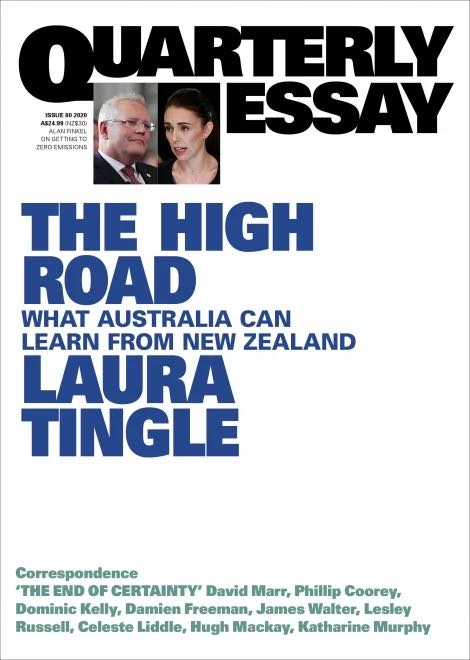
Laura Tingle’s High Road

Laura Tingle, The High Road: what Australia Can Learn from New Zealand (Quarterly Essay 80) – and correspondence from Quarterly Essay 81.

The High Road is Laura Tingle’s fourth Quarterly Essay, making her possibly the series most frequent contributor. Great Expectations (QE 46 2012) dealt with Australian expectations of government, Political Amnesia (QE 60 2016) with failing institutional memory, and Follow the Leader (QE 71 2018) with political leadership in the modern world (links are to my blog posts). The High Road presents an abridged comparative chronology of Australia and Aotearoa New Zealand: both began as colonies of England, and both were cut adrift when the UK joined the EU, and they have taken very different, though parallel paths since then, while for the most part doing their best to ignore each other.

The essay begins with the stark contrast between Jacinda Ahern’s decisive response to the Covid crisis and Scott Morrison prevarication and ambiguity, and goes on to make broader comparisons between the two leaders that are all unflattering to Morrison. But when the essay goes back to sketch the histories of the two nations, the comparisons don’t always favour Aotearoa New Zealand.

Aotearoa New Zealand doesn’t have a written constitution. It does have the Treaty of Waitangi, which laid the basis for a mutually respectful relationship between Māori and Pākehā. The treaty was largely ignored by settler society until the second half of last century, but it has been since taken seriously and provided a basis for major advances in Māori status and conditions, and for compensation for past injustices. Compare this to Malcolm Turnbull’s offhand dismissal of the Uluru Statement from the Heart’s call for a makaratta and a Voice to Parliament. In Aotearoa/New Zealand politicians of all stripes speak of ‘honour’ in relation to the Treaty, a word we will wait some time to her in the Australian Parliament.

Neo-liberalism has come like a plague to both countries. It hit Aotearoa New Zealand harder. Because there is only one house in their Parliament, and there are no states, a Prime Minister with a majority can override opposition to an economic program, which is what happened with ‘Rogernomics’ – a ‘deregulatory frenzy’ in the 1980s, which has made New Zealand ‘a stellar example for those wanting less government, less tax and more markets ever since’, and has also brought about a huge amount of human suffering. On this side of the Tasman, when Hawke and Keating set out with similar aims they had to compromise and set up a certain level of protection for the vulnerable.

On the other hand, because Aotearoa New Zealand has an electoral system that makes it less likely than in Australia that any one party will have a clear majority, and though Jacinda Ahern has one currently she chooses to work collaboratively in the manner to which she has been accustomed. Their electoral system means that parties that appeal to the centre are more likely to gain power – unlike in Australia, where the major parties (especially the LNP?) can be held captive by their extreme elements.

Laura Tingle’s starting point is that most Australians are fairly ignorant about the history of our most similar near neighbour. She’s certainly right about me, and I’m less ignorant for having read the essay.

The correspondence in the following Quarterly Essay, Alan Finkel’s Getting to Zero – from historians and journalists from both sides of the Tasman, economists, lawyers and politicians – largely amplifies the thesis of this one, with some minor disagreements and several pointed anecdotes. Historian Frank Bongiorno, for instance, reminds us of the underarm bowl by Australian Trevor Chappell in a 1981 cricket match, saying this ‘ugly’ tactic was ‘the emblematic event in the trans-Tasman relationship’ of his childhood, even after New Zealand took a stand against US nuclear weapons and Australia remained supine.

The most telling pieces of correspondence are from First Nations writers.

In particular, Bain Attwood from Monash University and Miranda Johnson from the University of Otago argue ‘that relations between white settlers and Indigenous people in Australia and New Zealand did not actually follow a significantly different course after their beginnings’, that in both cases Indigenous people lost their resources or autonomy or both. As to the difference in the degree to which each country has sought to address historical injustice:

Rather than simply attributing this to the presence or absence of normative, moral, legal, philosophical and political forces in the governments, as Tingle does, it makes more sense to take note of the role played by material factors – for example, the fact that Māori are a much larger minority in New Zealand than Aboriginal and Torres Strait Islander people are in Australia or that there was less post-war non-British migration to New Zealand than to Australia. Unforeseen consequences of government policies and practices must also be taken into account. For example, the New Zealand Labour government in 1985 had no inkling that granting the Waitangi Tribunal the authority to hear cases about historical breaches of the treaty dating back to 1840 would lead to a veritable flood of claims and the compensation of many Māori iwi (tribes).

In her reply to the correspondence, Tingle focuses on the Covid pandemic and the difficulty of landing ‘a definitive portrait of my fleet-footed and shape-shifting subject, Australia’s prime minister’. Someone said journalism is the first rough draft of history. Laura Tingle is a top-ranking political journalist, and this essay is an excellent draft of significant history.


The High Road is the eighth book I’ve read for the Australian Women Writers Challenge 2021.

Jenny Blackford’s Fil and Harry

Jenny Blackford, with illustrations by Kristin Devine, Fil and Harry (Christmas Press 2021)

Christmas Press is a small, Armidale-based publishing house set up about seven years ago, initially intending to publish ‘beautiful picture books for children, featuring traditional tales — folk tales, fairy tales, legends, myths — retold by well-known authors and stunningly illustrated in classic styles that reflect the cultures the stories come from’. Since then their list has expanded, and in 2018 they began to publish chapter books/junior fiction. The world of Australian children’s literature is all the richer for their existence.

In the chapter book Fil and Harry, Fil has to negotiate the perilous world of primary school relationships, deal with an oblivious older brother, resist an over-zealous quasi-stepmother named Elspeth, and cope with life in general. Then her cat Harry starts talking to her. He not only talks, but he lends a sympathetic ear (not something I would expect of a cat, but I suppose I’m more of a dog person). And then he intervenes in ways that are definitely catlike – accidentally on purpose making life hard for those who deserve it and seemingly effortlessly make things go better for the afflicted.

The pencil drawings by Kristin Devine that are scattered through the text add depth to the tale’s sweet warmth. I especially like the double spread of Fil’s empty room with light and breeze billowing the curtains.

It’s a quiet, companionable tale that is just the wrong age for any of my young friends and relatives, so I get to enjoy it just for myself.


Fil and Harry is the seventh book I’ve read for the Australian Women Writers Challenge 2021. My copy of the book is a gift from the author. Full disclosure: when I was editor of The School Magazine we accepted a short story, ‘Barry’, that was published in the magazine in May 2006. Since then the cat’s name has changed and the story has grown longer and deeper to become this chapter book..

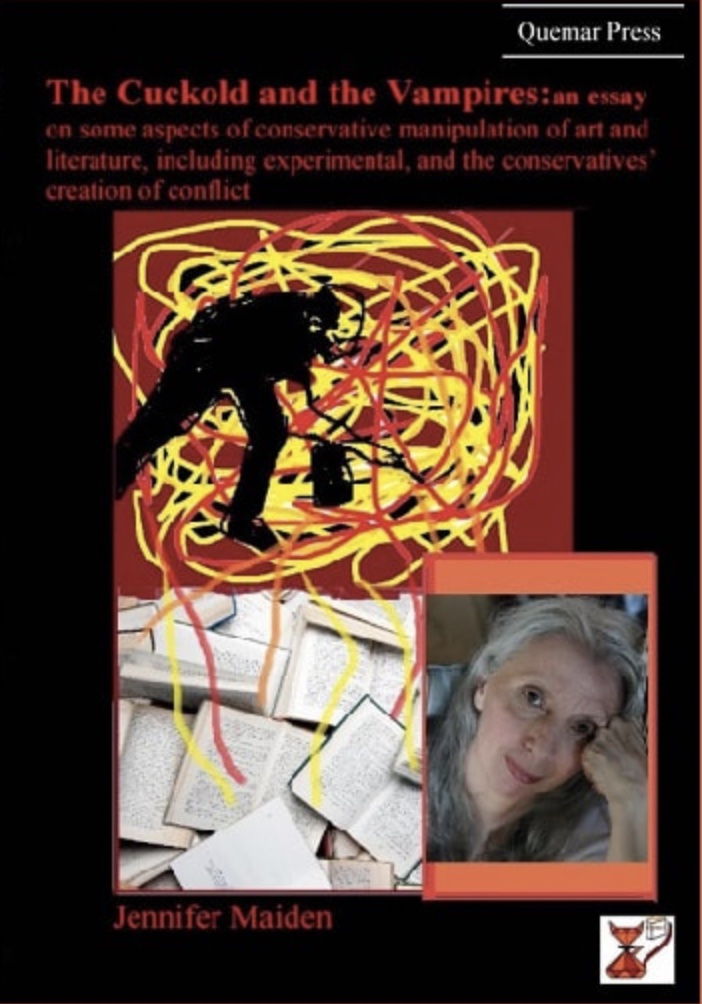
Jennifer Maiden’s Cuckold and the Vampires

Jennifer Maiden, The Cuckold and the Vampires: An essay on some aspects of conservative manipulation of art and literature, including experimental, and the conservatives’ creation of conflict (Quemar Press 2020)

This essay opens with a story about the great Colombian novelist and Nobel laureate Gabriel García Márquez:

When Márquez realised that the new avant-garde periodical that was serialising his novel was a project of the CIA, he wrote to his friend, the editor, that he was withdrawing the work and felt like a ‘cuckold’. *

Hence the cuckold in the essay’s title. The titular vampires come from a traditional tale in which a visitor to a village suspects the presence of a vampire, only to discover that all the villagers are vampires. For Márquez, as Maiden spells it out, the ‘betrayal was not confined to that particular incident, but continued to pervade his sense of hope and his sense of self-trust for the rest of his life’.

That opening does three things. First, it provides a striking and incontestable example of reactionary political forces exerting influence and having a destructive effect on creative enterprise. It’s one of many in the essay. Others include the funding of Australia’s Quadrant and the promotion of abstract expressionist art during the Cold War. The body of the essay gives many examples of less tangible kinds of manipulation as well, including the CIA’s Cord Meyer’s injunction to ‘court the compatible left’ – that is, to win leftist and liberal artists and writers over as propagators of the CIA’s positions.

Second, the opening provides a gloss on one of Maiden’s poems, in this case ‘What if all the village were vampires?’ from The Espionage Act (Quemar 2020, my blog post here). It’s one of many such glosses that I expect will make the essay indispensable to scholars of Maiden’s poetry. Several of Maiden’s poems are quoted in part or in full in the body of the essay..

And third, in the manner of its telling, it helps to define the tone and the ideal readership of the essay. Márquez appears without personal names or any orientating descriptors. We are expected to know who Márquez is, or rather which Márquez is meant – the Wikipedia disambiguation entry for ‘Márquez’ lists hundreds of people. It’s an essay for people who are reasonably well read in modern literature and, given that the first page mentions, in passing, the United Fruit massacre, Simón Bolivar and Fidel Castro, they are also reasonably well informed about Latin American (and by implication other) struggles against capitalism.

The essay that follows ranges widely, and sometimes wildly, over the cultural landscape and over the centuries. It covers personal experiences that writers generally don’t talk about in public: books pulped without the author’s permission, outrageous copyright arrangements, duplicity on the part of critics. Many of the stories are told without naming names, but in most of these cases the anonymity is skin deep. There are plenty of AustLit anecdotes, including a personal spin on well known ones such as A D Hope’s famous dismissal of Patrick White’s The Tree of Man, and direct reports of Maiden’s own experience. There are excursions into literary criticism – including of Joseph Conrad, Graham Greene and Henry James. The essay takes issue with some strands of feminism, going back to fifteenth century France for an example of a proto-feminist whose writings served the interests of the ruling class, and is troubled by conservative patronage’s current ‘predilection for ostentatiously supporting Indigenous and Women’s art, often both together’.

One of the essay’s key points is the need to look beyond the ‘microcosm’ to the ‘macrocosm’. The microcosm is the detail of interpersonal relations; the macrocosm is the broad political forces behind the personal interactions. For example, when talking about the early death from substance abuse of John Forbes, an outstanding Australian poet whom Maiden classifies as of the left, she rejects the romantic notion of the self-destructive poet:

The suicidal depression in substance addiction of some left-wing artists … seems to me clearly related to their internalisation of right-wing social pressures to succeed, and an inability to disentangle those pressures from the valuation of their art – and, indeed, their lives. It’s a lethal business. The nature of competition and criticism in capitalist art has the characteristics of a battlefield, and drugs can seem the only method to tolerate it. There appears to the artist no issue of long-term survival, only a short-term negotiation and acceptance of the microcosm. Drugs provide the conflicting comforts of temporary transcendence, tunnel-vision and indifference all at once. They are a short-cut to the creation of the type of intoxicated persona that the Right Wing insists is the hallmark of art. And they also destroy the artist’s own critical faculty, making the artist more dependent on external right-wing critical criteria.

(pages 36–37)

That phrase, ‘It’s a lethal business’, recurs often. The microcosm–macrocosm shift is crucial, Maiden argues, when we look at conflict among artists and writers. How much of it is encouraged, if not confected, by the forces of reaction in order to defang creativity? The essay sails close to just that sort of conflict at times, though even when Maiden is describing how a particular artist or art movement has been used by the right-wing, she generally makes it clear that it’s not the artist or the movement she is criticising.

I doubt if anyone will read this book nodding agreement all the way. I was perplexed by the argument that only right-wingers invoke Marx any more, and though I’m interested to learn that the term ‘conspiracy theory’ was first developed by the right to dismiss concerns abut the assassination of John F Kennedy, I can’t agree that the term isn’t appropriate for, say, Pizzagate and the Great Replacement.

But for anyone who agrees with Jennifer Maiden’s contention that writers and readers who think of themselves as ‘non-political’ are very likely to be conservative or reactionary, this essay is a lively and challenging read. For anyone interested in her poetry and/or the circumstances in which poets have worked and been published in Australia over the last half century, it’s richly informative.


A small gripe: I was desperate for some white space as I read The Cuckold and the Vampires. I need an indent or a half-line space between long paragraphs. I need white space to mark a new phase of an essay-argument. If poetry is quoted at length, I need the actual line breaks rather than slashes to show where they ought to be. My eyes need these occasional rests, and my (ageing) brain works better when my eyes are rested.


The Cuckold and the Vampires is the sixth book I’ve read for the Australian Women Writers Challenge 2021.

Bitter Root One and Two

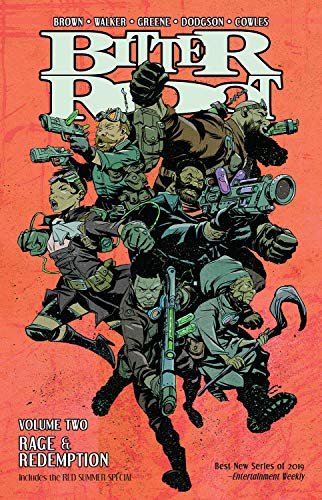
Chuck Brown, David F Walker & Sanford Greene (creators), Rico Renzi & Sanford Greene (color artists), Clayton Cowles (letterer), Sanford Green (cover artist), Heather Antos (editor), plus backmatter by John Jennings, Kinitra Brooks, Regina N Bradley, Qiana Whitted, Stacey Robinson, Ceeon D Quiett Smith and fan artists, Bitter Root Volume One: Family Business (Issues #1–5, Image Comics 2020)

Chuck Brown, David F Walker & Sanford Greene (creators), Sofie Dodgson & Sanford Greene (color artists), Clayton Cowles (letterer), John Jennings (backmatter), Shelly Bond (editor), Joe Hughes (editor), plus Daniela Miwa, Lisa K Weber, Kelly Fitzpatrick, Daniel Lish, Chris Brunner, Rico Renzo, Khary Randolph, Matt Herms, Dietrich Smith and Anthony George as artists and color artists for individual stories, Bitter Root Volume Two: Rage & Redemption (Issues 6–10, plus Red Summer Special, Image Comics 2020)

You probably have to be a horror fan to enjoy this Eisner Award winning comic series. I’m not one. I find the award-winning art by Sanford Greene repulsive, as I’m meant to, but I’m also meant to enjoy it, which I don’t. I’m not the target audience.

But there’s a lot to appreciate. The storytelling is richly complex.The opening spread shows a nightclub in Harlem, 1924, at the height of the Harlem Renaissance, where a crowd of African Americans are dancing exuberantly to jazz. A young couple head home across a park. In the final frame of the spread they are terrified by a pair of nasty claws looming over them. And we’re away.

If you plan to read these comics and prefer to let them unfold the story for you in their own intriguing way, stop reading now.

In this world, when people are infected by greed and hate, especially race-based hate, they become monsters called Jinoos. The central characters, the Sangeryes fight them, try to subdue them and where possible use compounds prepared by Ma Etta to cure them. There are other monsters, perhaps even more dangerous, created by pain and misery, and demons that come outside this world. We have no doubt of the goodness of the Sangeryes, but they too are vulnerable to infection, and one of them, a huge man with a penchant for big words, is flicking back and forth between being a monster and a decent human by the end of this book.

So there’s complex play of good and evil, characters you can feel for, plenty of violent action and horror gore, and underlying it all a non-too-subtle perspective on racism. Then there’s the ‘backmatter’. John Jennings, a Professor of Media and Cultural Studies at the University of California at Riverside, kicks it off with a learned article on Afrofuturism and the EthnoGothic, placing this comic in a context that includes Octavia Butler’s Kindred and Jordan Peele’s Get Out. There are articles on African American history, folk traditions and popular culture, and on key figures from the Harlem Renaissance, Alain LeRoy Locke and Zora Neal Hurston. Some might find this serious discussion to be awkwardly inappropriate for a comic – you know, ‘Can’t we just enjoy a bit of gore without being told how worthy it is?’ Tastes will differ. For me the backmatter made the gore almost enjoyable. John Jennings’s first piece ends:

The Bitter Root team should be very proud. Not just because they’ve created this ‘cool’ cultural artefact but because they’ve created a new thread in the ever growing and evolving tapestry of the American story, as told through the veiled and weary eyes of the black American citizen.

I find it reassuring that among the fan art that proliferates on the back pages is a powerful image of the matriarch Ma Etta by the scholarly John Jennings. He’s not writing from arm’s length.


I persevered with Book Two mainly because I’d been given these books as a birthday present and felt a kind of obligation to the giver.

I’m still not enamoured of the story, and I still find the artwork and colouring almost unreadably horrible. (The awards that these things have won indicate that my distaste says more about me than it does about the books.)The back cover informs us that there’s a movie in development with Ryan Coogler and Zinzi Evans, who have Black Panther in their show reel. Maybe the movie can transcend the horror genre just as Black Panther pretty much transcended the superhero genre. Maybe I’ll even go to see it.

Again, this volume has copious backmatter, thanks to which I know that the fantastical world of this comic has its basis in historical events: the Red Summer of 1921 and the Tulsa Race Massacre of 1921. These events included not just lynching, arson and general violence against African Americans, but the destruction of 35 city blocks in Tulsa when incendiary devices were dropped from planes. The unleashing of hideous demonic forces makes a lot of sense as a metaphor for those events, and the struggles of the Sangerye family to deal with the consequences. (In this volume, Chinatown in New York City has a similar demonic invasion.)

I can imagine a horror devotee picking up these books and being launched on a journey of discovery by the historical and literary information packed into the back pages. They might explore rootwork and conjure; Zora Neale Hurston, Virginia Hamilton and W E B DuBois; the Harlem Renaissance and the Tulsa Race Massacre. That can’t be a bad thing.

Proust Progress Report 20: Getting to the point

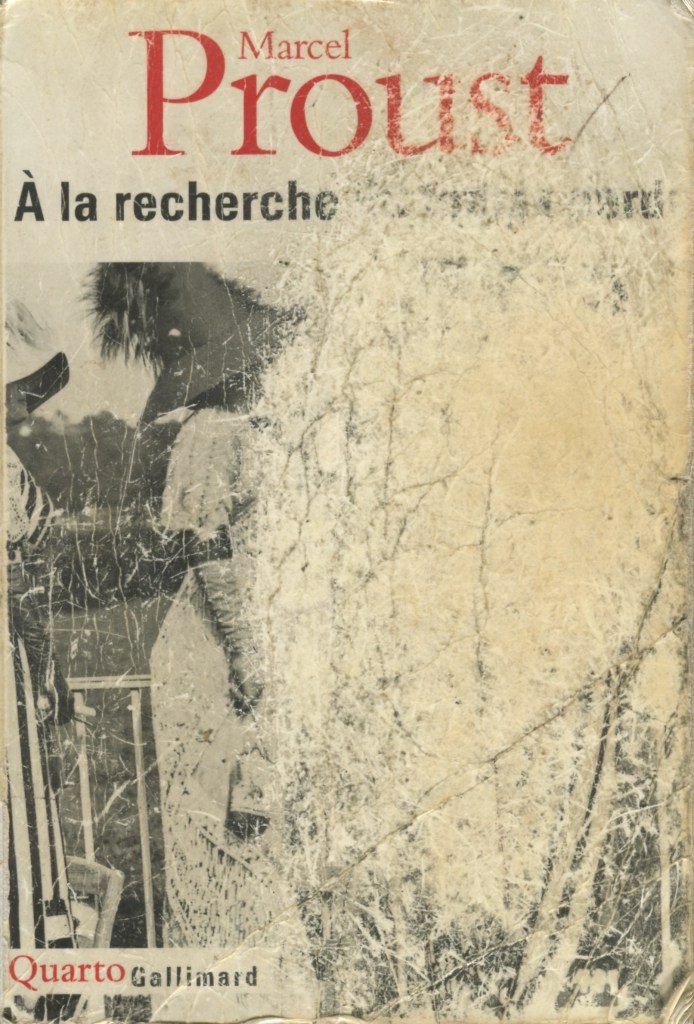
Marcel Proust, À la recherche du temps perdu (text established under the direction of Jean-Yves Tadié ©1987–1992): Book 7, Le temps retrouvé, pp 2217–2272

I was away for a couple of weeks over Easter and didn’t take my whopping great copy of À la recherche with me. On top of that, I’ve been reading fewer pages at a sitting because, well, eyes. So I’m slowing down as I approach the end. All the better to savour it (le goûter), I suppose.

At the end of last month’s report I wrote:

According to the IMDB, a movie has been made of this book – either it’s a monumentally tedious movie in which people buttonhole each other on street corners or something is about to change in the next pages.

Well, something changes. Once M De Charlus goes on his way, the narrator is left to wander the dark wartime Parisian streets alone and with a fierce thirst. He enters a seedy hotel, the only building that shows signs of life, and there he overhears a group of young men speak of beating a chained captive. So of course, suspecting that a crime is in progress, he joins them for a chat. His suspicions confirmed, he goes snooping and fairly improbably gets to witness some consensual S&M that, if I grasped the tone accurately, has a broadly comic shock effect. Assuming that I don’t need to worry about spoilers nearly a hundred years after the book was published, I’ll just say that we get to see the dark side of M De Charlus at a ludicrous extreme, and at the same time feel compassion for his misery.

Then, after a time slip, the narrator has what I’m guessing is his final encounter with M De Charlus, who is at an even further and more pathetic extreme, having had a stroke.

At the point I’ve reached this month, three more things have happened: avoiding a carriage in the street, the narrator has stepped on two paving stones of unequal height; he has pressed a starched cloth to his lips; and he has heard a spoon tapped against a plate. Each of these events has triggered a spontaneous, vivid recall of a moment from the past, and has flooded him with intense, joyful emotion. He has been experiencing an overwhelming sense of failure and gloom at his impending death; these three tiny events completely change his mood and restore his confidence. On his way to a social engagement, he pauses to reflect on this transformation, and I guess these pages contain the heart of his thinking about memory and creativity. These triggered memories, quite different in kind from those that are like flicking through the pages of a picture book (feuilleter un livre d’images), allow one to transcend time and make contact with eternity, if only, paradoxically, for a brief moment. It speaks volumes that I’m no longer impatient with Proust’s longwinded and repetitive expositions: I’m now following their twists and turns with avid concentration.

Such unbidden flashes of complete recall, he muses, are like the things one finds in ‘the internal book of unknown signs’ (livre intériieur de signes inconnus), and it is the work of a writer to decipher these signs. This is where today’s reading ended:

Seule l’impression, si chétive qu’en semble la matière, si insaisissable la trace, est un critérium de vérité, et à cause de cela mérite seule d’être appréhendée par l’esprit, car elle est seule capable, s’il sait en dégager cette vérité, de l’amener à une plus grande perfection et de lui donner une pure joie. L’impression est pour l’écrivain ce qu’est l’expérimentation pour le savant, avec cette différence que chez le savant le travail de l’intelligence précède et chez l’écrivain vient après. Ce que nous n’avons pas eu à déchiffrer, à éclaircir par notre effort personnel, ce qui était clair avant nous, n’est pas à nous. Ne vient de nous-même que ce que nous tirons de l’obscurité qui est en nous et que ne connaissent pas les autres.

Here’s my translation, leaning heavily on Stephen Hudson’s first translation:

Intuition alone, however insubstantial it seems, however hard to grasp, is a criterion of truth and so it alone deserves to be seized by the mind because it alone is capable, if the mind can extract its truth, of bringing it to greater perfection and of giving it unalloyed pleasure. Intuition is for the writer what experiment is for the learned, with the difference that in the case of the learned the work of the intelligence precedes and in the case of the writer it follows. That which we have not had to decipher, to clarify by our own personal effort, that which was made clear before our arrival, is not ours. We ourselves produce only what we extract from the darkness within us which is unknown to others.

Things like the Dreyfus affair or a world war are just excuses for writers to avoid this hard work of figuring out what is actually going on in their own minds.

I imagine whole PhDs have been written about that contention. I’m just going to note it as an interesting and provocative author statement about this massive novel. Or I should say, the beginning of a complex, labyrinthine author statement which I will be reading over the next couple of days.

Kristen Lang’s Earth Dwellers

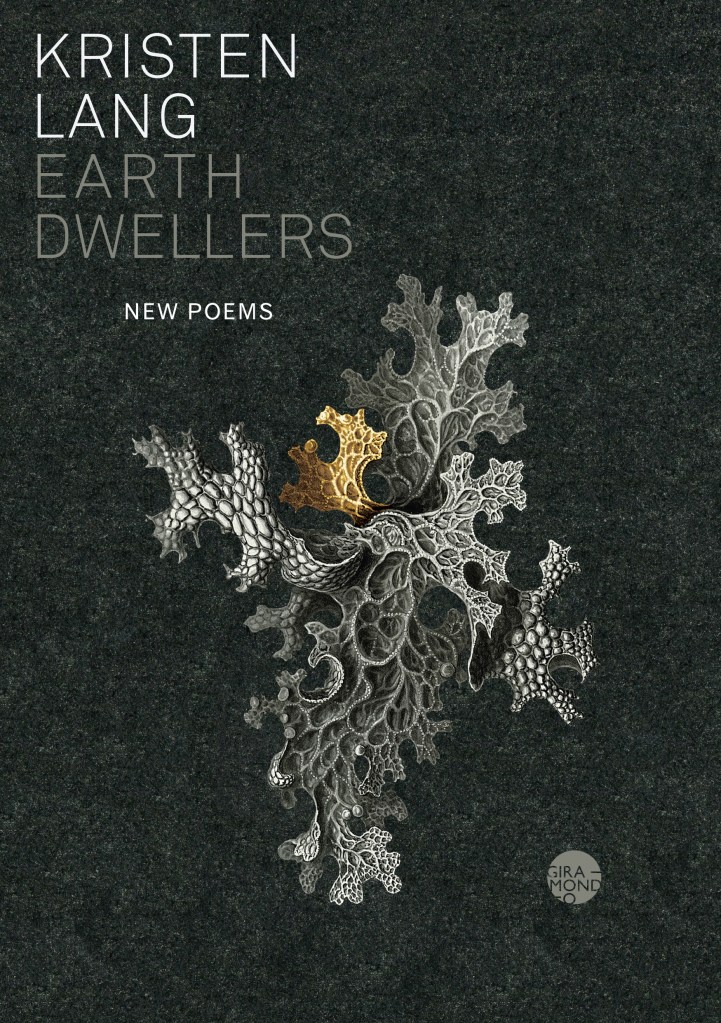
Kristen Lang, Earth Dwellers (Giramondo 2021)

I started reading Earth Dwellers when coming up for air during the horror stories of Jess Hill’s See What You Made Me Do. and then again during those in Colum McCann’s Apeirogon. Each of those books included its own relief from the horrors – one by cool-headed analytic journalism, the other by an intriguing structure and a seemingly inexhaustible capacity for digression – but I can’t begin to tell you what a relief Kristen Lang’s poetry was, what balm for the soul, right from the dedication:

For the wombats and the slime moulds ...

And for all who work to protect the entanglement, the networks of lives, billions of years in the making, by which the earth is more than stone.

These poems take us away from the troubled world of humans harming humans to intense, specific, tactile engagement with the non-human world. They take us to the tops of mountains, in Kristen Lang’s home state Tasmania and in the Himalayas; they take us on bush walks and visits to the ocean; to caves and the stars. They deal with the sublime and the intimate, sometimes in the same brief poem. They grieve and rage for the damage being inflicted on the planet by human activity, but always with a deep love and respect for this world. In these poems, the non-human world isn’t there as a metaphor or a mood indicator: there’s a consistently humble attempt to be present, to be aware of being part of it all: ‘We were never alone’ is how she puts it in ‘Wading with horseshoe crabs’.

As usual, I want to talk about just one poem. I’m picking ‘A small child finds a ladybird’:

(page 62)

This poem must surely strike a chord with anyone who has spent attentive time with a small child. Certainly I’ve been privy to many moments like this one, and felt a similar appreciative, possibly envious, awe at the intensity of a child’s gaze.

‘A small child finds a ladybird’ may be the only poem in this collection that focuses on a human character. Other poems have people in them, but they are companions to the speaker, neither addressed nor looked at directly, experiencing, observing, and being part of the natural world along with her. Here, it’s as if the poem’s speaker takes a step back, to observe the person experiencing, observing and being part of something.

The title of the poem sets up a strong mental image. A web image search on “small child ladybug” (‘-bug’ rather than ‘-bird’ in deference to US cultural dominance) gets you a cartload of cuteness, much of it cloying. That might be attractive to some readers but, for me and probably you, it establishes a central challenge for the poem: how to put words to that image that don’t regurgitate the pre-digested cutesyness. You might say that that’s a version of the central challenge for any poem, something to do with T S Eliot’s ‘tradition and the individual talent’, and I wouldn’t argue. This one meets the challenge like this in its opening lines:

Her squat-bodied
walk
crumbles under her –

Three things snag my attention: the words ‘squat-bodied’ and ‘crumbles’, and the way ‘walk’ has a line to itself. each of these things is sightly jarring, but if you hover over them you discover how well they communicate: the shape of a toddler, the kind of attention a toddler brings to the act of walking, and what happens when that attention goes elsewhere. It’s the walk that crumbles, not the child herself. This poem observes the child with the same precision that other poems in the book observe a platypus or floating filaments of gum blossom. If the reader wants to go down the cuteness path, the poem won’t stop them, but nor does it require them to go there.

In the next nine lines, the child is absorbed in the ladybird. She doesn’t simply have it on her fingertip. She is ‘all’ there with it. She hasn’t just stumbled when she sees the insect, she has taken on its qualities: the fall is red/ and black-spotted’. The way ‘fall’ has a line to itself, and gets extra emphasis from its rhyme with ‘all’ in line 4, prepares us for that interesting word ‘crux’ – as in crucial. This crumbled walk, this fall, hasn’t been an accident: it’s as if the rest of the day has been moving towards this crucial moment, and will emanate from it. ‘Bug-eyed’ takes on a richer meaning in this context: not just wide-eyed, but with eyes filled with the fascinating bug.

And then there’s ‘We’ – the poem’s speaker and us, the readers. We’re behind her, at a distance from the ladybird. And the last three lines are the second reason I wanted to write about this poem: it’s a kind of ars poetica. The wish expressed here, to have

________ even
half
of her gaze

is what Kristen Lang’s poems in general strive for. I know that as a reader I sometimes (often?) miss the metaphorical dimensions of poetry. So when someone writes that the world is grey in the moonlight, I take them at their word and have to be told if they’re talking about a terrible betrayal. But I don’t think I’m missing that kind of thing in these poems. In these poems, a mountain is a mountain, an iceberg an iceberg, a ladybird a ladybird. And there’s something profound in that


Earth Dwellers is the fifth book I’ve read for the Australian Women Writers Challenge 2021. I’m grateful to Giramondo for my copy.

Jeff Lemire’s Ascender Vol Three

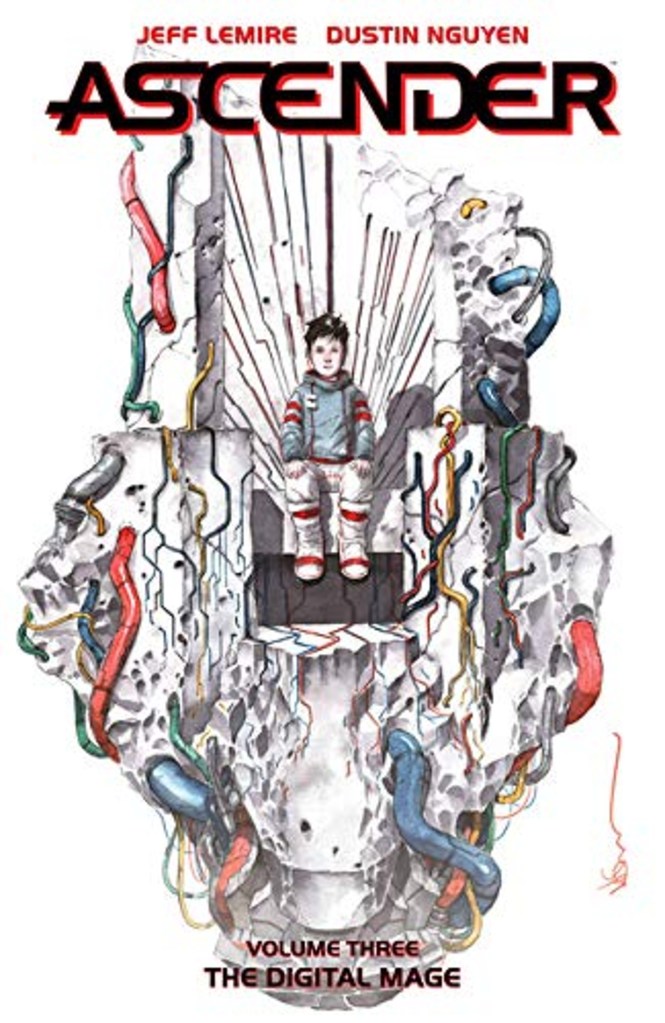
Jeff Lemire & Dustin Nguyen (storytellers), Steve Wands (lettering and design), Will Dennis (editor), and Tyler Jennes (assistant editor on issues 13 and 14), Ascender Volume Three: The Digital Mage (Image Comics 2020, from issues 11–14 of the comic)

A quick Duck Duck Go reveals that Volume 3 was published in December, so it may well arrive in Sydney in time to be a March birthday gift.

That was my January wish. In March it was granted.

I don’t have a lot to say about Volume Three of this space saga that wouldn’t be simply repeating what I said about the first two volumes (here, if you’re interested).

Suffice it to say the forces of evil become more formidable, and close in our fugitive bands; more of the original group of bickering good guys are reunited; new good guys turn up and spill a lot of vampire blood; the quest that has animated these three volumes is completed; and at the heart of it all is a vulnerable little girl. What’s not to like?

Among many good things, Jeff Lemire and Dustin Nguyen have a great gift for final moments. At the end of this volume, the little girl and her companions arrive in a new place, and one they have recognised the people they find there, this dialogue happens in the last three panels:

You're just in time?

Time? Time for what?

Time to save the universe

It will probably be at least six months until Volume 4 appears. Maybe I can wait until Christmas.