Category Archives: Books

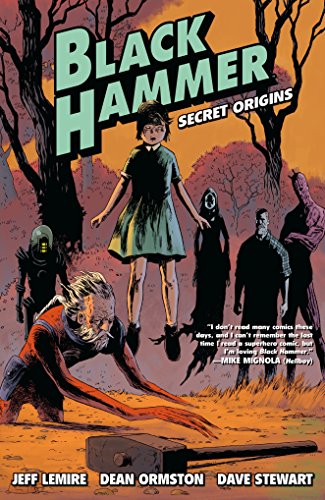
Jeff Lemire and others’ Black Hammer

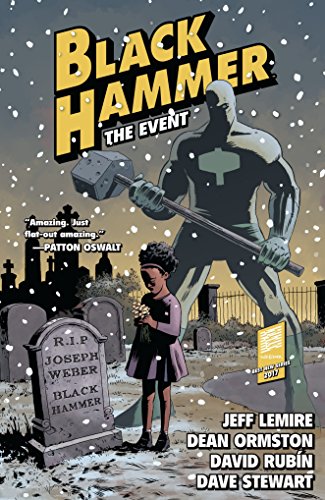
Jeff Lemire (writer), Dean Ormston (pencils), Dave Stewart (colorist) and Todd Klein (letterer), Black Hammer Volume 1: Secret Origins (Dark Horse Books 2017)
———————, plus Dean Rubin (artist, colorist and letterer for 22 pages) Black Hammer Volume 2: The Event (Dark Horse Books 2017)

Having enjoyed Jeff Lemire’s Descender (my blog posts here, here and here), I was happy that my Christmas gift from my Comic Supplier included the first two books in a new series by him. It’s shaping up to be quite a story.

The first volume sets up a superheroes-in-retirement scenario. There are six of them, in order of appearance: Abraham Slam, strong man, who is more or less content with his life in exile as a farmer; Golden Gail, a 54 year old woman trapped in the body of her child superhero identity; Barbalien, a Martian master of disguise who struggles with unfulfilled desire; Colonel Weird, who spends a lot of time in the para-zone, where past, present and future are jumbled up together, and whose mind appears to be pretty jumbled as a result; Talky-Walky, a robot who does all the household chores and keeps building probes to try to find a way to escape; and Madame Dragonfly, a dark witch figure with dragonfly wings who keeps herself apart from the others and is generally disliked by them.

The nature of their exile isn’t clear. All we really know is that they are confined to a limited space including their farm and the small town nearby, and that they’ve been there for 10 years. We learn snippets of their past lives fighting crime and saving the occasional cat from a tree, beating supervillains, and joining forces to combat the greatest of all supervillains, the daringly named Anti-God. We also learn that there was a seventh superhero, a leader of sorts, called Black Hammer. The first volume – which collects numbers 1 to 6 of the comic series – ends with the arrival at the farm of a young reporter named Lucy, Black Hammer’s daughter.

In the second volume, things develop in a most satisfactory manner. We get more detail of all the back stories, and of the struggle against Anti-God (he had destroyed a whole other world before attacking their former home, Spiral City, and many other superheroes died at his hands). Our understanding of the nature of their exile grows less fuzzy as Lucy snoops around (and incidentally one of her discoveries echoes a climactic moment in Joyce Carol Oates’s Hazards of Time Travel, confirming my sense that what JCO treated as a major unexpected twist can be an unremarkable plot point in genre fiction). Romantic and other relationships with the townsfolk develop, none with outright happy results. One member of the band commits a shocking act of violence against another.

The final moment of this volume echoes the end of the first. Lucy once again dominates the moment, and it may well be that the story is about to head off in a completely new direction.

One last comment. The art by Dean Ormston, colouring by Dave Stewart, and lettering by the legendary Todd Klein (who must be legendary because I’ve heard of him) are wonderful, and then there is a 22 page section in a completely different, gaudy and ebullient style, by Dave Rubín. This section is ‘The Ballad of Talky-Walky’, and though I probably wouldn’t have persevered with a whole book in that style, here it brilliantly enacts the bizarre circumstances in which Colonel Weird and Talky-Walky became close friends and allies.

I’m patiently awaiting Volume 3.

Ruby Reads III

Though Ruby likes to have the same book read to her over and over, she has still managed to accumulate quite a library, and casts her reading net wide. Here are some more titles from her bookshelf (and floor).

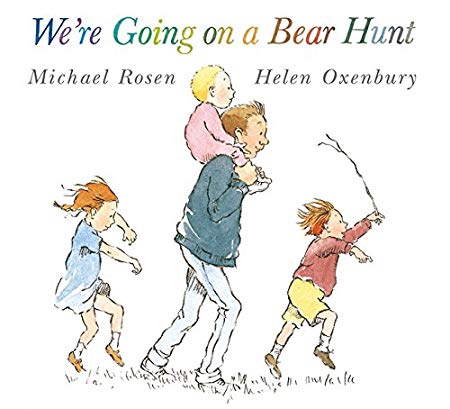
Michael Rosen & Helen Oxenbury, We’re Going on a Bear Hunt (Walker Books 1989)

Many people, in Australia at least, might be forgiven for thinking this is a spin-off from the Play School song with the same words, but I think I’m right in saying that the book came first. It’s a brilliant ear-worm of a read-aloud, complete with sound effects of grass, mud, forest and other obstacles that must be gone – not over, or under, or around, but through.

Jill McDonald, Hello World! Birds (Doubleday 2017)

I promise I’m not going to mention in my log every board book in Ruby’s collection. Let this one stand in for a dozen, including Cats and Kittens (a favourite).

It’s a thrill to be with a small child as she learns to turn the pages of a book, and to indicate which images excite her attention. This is a book that allows that to happen. (And there are plenty of board books that don’t judge their readership as well as this one.)

Julia Donaldson and Axel Scheffler, Monkey Puzzle (Alison Green 2009)

Here’s a terrific ‘onion book’ (thanks to Ann Knight Bell in the comments for the term). I love the fabulous drawings of the little monkey who goes looking for his mother, and the range of animals who don’t make the grade, and the wit of the text as each candidate has some feature of the mother, but none of the essential quality, finally revealed, that she must look like the little monkey. Ruby loves the book, but turns the page once that page’s candidate has been named.

Matthew Van Fleet, with photographs by Brian Stanton, Moo (Simon & Schuster/Paula Wiseman Books (2011)

Matthew Van Fleet has a whole string of beautifully produced, hefty picture books with pop-ups and moveable parts. This is the first one I encountered. There are also Dance, and Dog (in which a cat appears under the very last flap, and certain presenters of the book make sure it’s a very noisy appearance.)

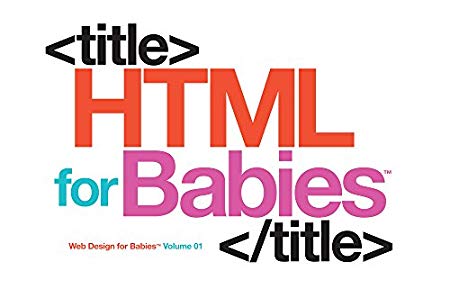
HTML for Babies (Sterling Children’s Books, 2016)

I really don’t get this. The web description website says, ‘These concept books will familiarize young ones with the kind of shapes and colors that make up web-based programming language and give them the head start they need.’ (It seemed appropriate to leave the US spelling unchanged.) It’s impossible to read aloud, as nothing in it makes sense. I guess it’s for browsing and taking in the visuals

Margaret Wild and Ann James, Lucy Goosey (Little Hare Books 2008)

Oooh! Another perfect picture book. Ann James’s little geese (goslings doesn’t seem the right word) are very sweet, and the story about Lucy, who is enjoying her life but doesn’t want to go flying because it’s so scary, is suitably reassuring: in the end she finds the courage because her mother reassures her she will always be there. So far Ruby seems to like pointing at the pictures most, but I like the word ‘whiffling’, for the sound made by the wings of grown-up geese.

Lucy Goosey is the eighth book I’ve read for the 2019 Australian Women Writers Challenge.

Brian K Vaughan’s Paper Girls Book 4

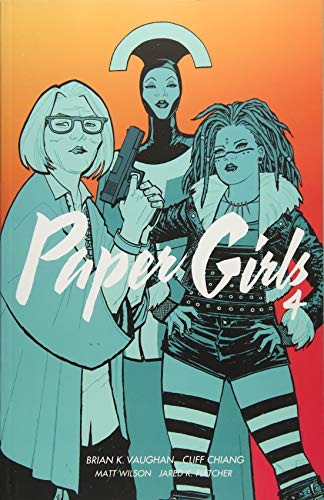
Brian K Vaughan (writer), Cliff Chiang (artist), Matt Wilson (colorist) and Jared K Fletcher (letterer), Paper Girls, Volume 4 (Image 2018)

I wasn’t enthralled by Volumes 1 and 2 of this Girl-Goonies-meet-War-of-the-Worlds comic series, but when my Supplier gave me Volume 4 as a Christmas present I wasn’t unhappy.

Our time-travelling twelve-year-old girl heroes have left their newspaper delivering days well behind them, though there’s an occasional reminder that the skills and smarts acquired on their rounds come in handy when you’re caught up in a great war being fought wherever there are weird folds in the space time continuum. In Volume 3 the girls dealt with dinosaurs (I missed that instalment). Now it’s New Year’s Day 2000, and Y2K is a lot more dangerous and dramatic than it was in real life (always assuming that we haven’t all had our memories wiped, as happens to some of the characters here).

What can I say? I’m warming to it.

NSW Premier’s Literary Awards Shortlist 2019

The 2019 NSW Premier’s Literary Awards were announced this week. The State Library of NSW has the full list on its website, but you have to do a lot of clicking back back and forth to read it. Lisa at ANZ LitLovers has listed most of the categories in easily readable form – just click here.

I haven’t read any of the books shortlisted for the Christina Stead Prize for Fiction or the UTS Glenda Adams Prize for New Writing, though more than one are on my TBR list. None of the contenders for the NSW Premier’s Prize for Translation show up when I search my blog for their names.

I’ve done marginally better on the Douglas Stewart Prize for Non-Fiction. I’ve read Tracker by Alexis Wright (my review here) and I’ve listened to most of an audio book of Saga Land by Richard Fidler & Kári Gíslason (review to come when I listen to the rest of it).

Of the Multicultural NSW Award, I’ve read only Rainforest by Eileen Chong (my review here).

The biennial Indigenous Writing Prize lists two works I’ve read/seen: Taboo by Kim Scott, which we read for the Book Group (my review here), and Leah Purcell’s play The Drover’s Wife, which I was completely blown away by at the Belvoir.

Then there are the categories not blogged by Lisa (and mostly unread by me, sadly). I’ve commented where I have more than nothing to say:

People’s Choice Award:
If you live in New South wales you can vote for any of the titles on the Christina Stead Prize shortlist (click here).

Kenneth Slessor Prize for Poetry:
Interval by Judith Bishop
I Love Poetry by Michael Farrell (my review here)
Things I’ve Thought To Tell You Since I Saw You Last by Penelope Layland
Wildlife of Berlin by Philip Neilsen
Blindside by Mark Reid
Rondo by Chris Wallace-Crabbe

Ethel Turner Prize for Young People’s Literature:
Between Us by Clare Atkins
Small Spaces by Sarah Epstein
I Am Out With Lanterns by Emily Gale
Amelia Westlake by Erin Gough
Stone Girl by Eleni Hale
The Art of Taxidermy by Sharon Kernot

Patricia Wrightson Prize for Children’s Literature:
Shine Mountain by Julie Hunt
Maya and Cat by Caroline Magerl
Leave Taking by Lorraine Marwood (I haven’t read this but I did blog about her Downhill all the Way, Five Islands Press 2005)
Dingo by Claire Saxby and Tannya Harricks
Nevermoor: The Trials of Morrigan Crow by Jessica Townsend
The Dog with Seven Names by Dianne Wolfer

Nick Enright Prize for Playwriting:
The Almighty Sometimes by Kendall Feaver
Oil Babies by Petra Kalive
Going Down by Michele Lee
Lost Boys by Lachlan Philpott
The Long Forgotten Dream by Howard Lawrence Sumner (I saw this in the Sydney Theatre Company, and though the performances were terrific there was something unresolved about the play itself,
Barbara and the Camp Dogs by Ursula Yovich and Alana Valentine (I saw this at the Belvoir, and loved it – but I’d love anything that had Ursula Yovich in it, and this had Elaine Crombie as well)

Betty Roland Prize for Scriptwriting:
Picnic at Hanging Rock, Episode 4 by Alice Addison (Has this been screened yet?)
Jirga by Benjamin Gilmour (I saw this at the Sydney Film Festival, and it was one of my favourite films of 2018.)
Seoul City Sue by Noëlle Janaczewska
Mystery Road, Episode 5 – ‘The Waterhole’ by Timothy Lee (I loved this series, more than the first series, but I never remember individual episodes.)
Mystery Road, Episode 1 – ‘Gone’ by Michaeley O’Brien (Ditto)
Riot by Greg Waters

The winners will be announced on 29 April, on the eve of the Sydney Writers’ Festival.

Marilynne Robinson’s Lila

Marilynne Robinson, Lila (Virago 2014)

This is the third book in Marilynne Robinson’s superb Gilead trilogy. I wouldn’t be sorry to learn that the series will continue.

The first book, Gilead, is narrated by John Ames, an ageing Congregationalist pastor in the small US town that the book is named after, trying to explain his life of faith to his alienated son. A main strand of that book is Ames’s intense relationship with the Reverend Boughton, another pastor in Gilead. They both are devoted to their God, to their calling as clergymen, to each other, and to a rigorous thinking through of their Calvinist faith. I don’t know that I’ve ever read theological discussion that was so warmly human.

The second book, Home (which I’ve blogged about here and here), covers ground already traversed in the first, but from a different points of view: it’s mainly the story of Boughton’s disgraced son Jack, coming home with a new wife. Lila is named for Ames’s second wife, and tells the story of her radically deprived childhood and life on the margins leading up to the moment when she improbably but convincingly finds a home with the one she thinks of as ‘this good old man’.

I regret reading this so long after its predecessors. We only get what Lila overhears of Ames and Boughton’s conversations, and Boughton’s adult children have tiny, non-speaking roles, so there’s a sense of so much happening outside the scope of the narrative , some of which I’m fairly sure was explicit in Gilead. My impression is that the action of Home takes place after the action of this book, but I wouldn’t swear to it. And I don’t suppose it really matters. Lila’s story is compelling in its own right.

She was saved from probable death from neglect as a small child by a vagrant woman named only Doll. She grew up under Doll’s fiercely protective care in Depression USA, joining a group of itinerant workers, going to school enough to learn to read, always moving on when Doll feared they were about to be found by Lila’s vengeful kinfolk or other enemies. Doll’s life ends in violence – after she stabs to death a man who may be Lila’s biological father.

Lila manages to survive a time working in a brothel and the hardships of life on the road until almost by accident she walks into the church in Gilead. Before that, her minimal literacy has led her to the Bible, and phrases from Ezekiel about a baby weltering in its blood somehow struck a deep chord in her imagination.

Interspersed with this story, the story of Lila growing up, coming to Gilead and proposing marriage to Ames, there is the story of her emotional journey towards deciding to stay with him. Virtuous characters are notoriously difficult to create, and once created they are difficult to make interesting. From one point of view, Lila exists as a device to allow us to see Ames as interesting: her every interaction with him is informed by the violence and deprivation that have formed her, as well as her fierce love and loyalty to Doll.

We no longer hear the intricate theological discussions of Ames and Boughton. Instead, Ames is challenged to examine the basic nature of his faith. It’s a good bit of the power of the book that he rises to the challenge with humility, affection, even delight. It’s evangelical Christianity, but not as we have come to know it in the age of Trump.

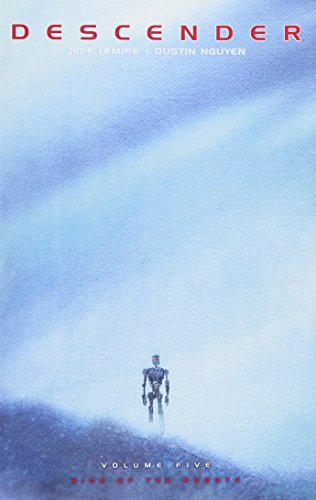
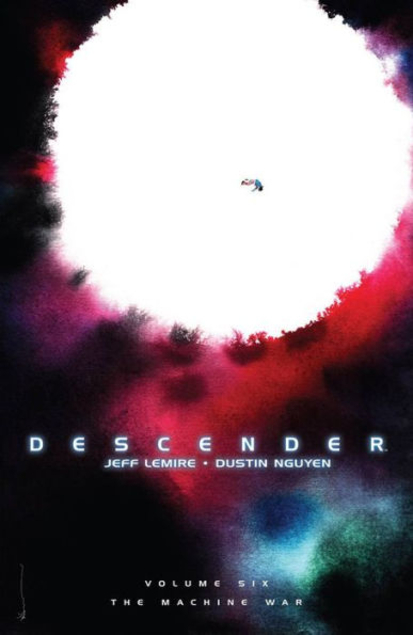
Lemire and Nguyen’s Descender, Books 5 and 6

Jeff Lemire (words), Dustin Nguyen (images), Steve Wands (lettering and design) and Will Dennis (editor), Descender Volume Five: Rise of the Robots (Image Comics 2018)
––––  Descender Volume Six: The Machine War (Image Comics 2018)

For a Story So Far on this ripping revenge-of-the-robots space opera, you could do worse than clicking through to my blog post on Books 2, 3 and 4, by clicking here.

At the end of Volume 4, things were looking grim: Telsa, staunch but compromised ally of our robot hero child Tim-21, was left to drown by evil clone Tim-22; powerful destructive codes were about to fall into the wrong hands, and the galaxy as we know it was threatened with destruction; the Hardware were about to destroy Tim-21’s human ‘brother’ Andy, when Tim–21 recognised him on a screen and cried out, ‘That’s my brother!’

In Volume Five, the full complexity of the space wars is laid out.

Telsa is saved and evil Tim-22 comes to a ghastly end. Not to be too spoilerish, it turns out that ripping the head off a boy-like robot doesn’t disable it. You have to go a step or two further, and they need to be heavy steps.

Meanwhile, I don’t recommend that anyone read this book without reading the earlier instalments – and a quick reread of the earlier volumes would certainly have helped me. It’s a very complex world that Jeff Lemire and Dustin Nguyen have created here: the main conflict is between humans and machine, but there are individuals in both camps who ally themselves with the other side, some as opportunists, others working for peace. It’s not at all clear that the humans are the goodies: in fact, the mysterious descenders of the title – the ones from whom all sentient machines are descended – make a good case for eliminating humans from the universe.

This volume ends with the appearance of yet another group of robot beings, who seem to offer some hope for peace (and who are keeping company with a benign human we met and assumed dead in the first volume, and whom I had completely forgotten).

Like all good space operas, this one ends with an all-out battle to save the universe. Dustin Nguyen’s images don’t always make it clear who is blasting whom, but it doesn’t seem to matter terribly, and his watercolours manage to convey both the intensity of the conflict and the vulnerability – I was going to say vulnerable humanity, but the character we care about most is Tim-21, a robot – of the beings involved, including the most authoritarian of humans and robots. There are huge moral dilemmas as characters have to choose whether to obey orders or follow their deepest values.

Just in case you assume that a cosmic war has to be won by the side that wants to save the universe from destruction, be warned, the final chapter begins with an irregular title card in the middle of a dark page: ‘This is the way the universe ended.’

On the other hand, the final page is a beautifully optimistic promise of a new series, Ascender. I’m looking forward to it

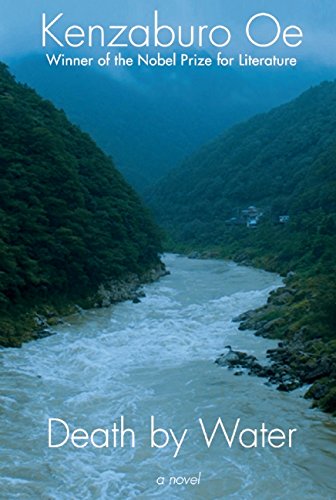
Kenzaburō Ōe’s Death by Water with the Book Group

Kenzaburō Ōe, Death by Water ( 2009, translation by Deborah Boliver Boehm 2015)

Before the meeting: In flagrant disregard for established practice, our current Designated Chooser nominated two titles, to be read for successive meetings. The first, Edward Said’s On Late Style, was not exactly a triumph (the link is to my blog post), though it has been working away in the back of my mind ever since I read it. This is his second pick.

Kogito Choko is a writer in his eighties who revisits his childhood home with the intention of writing a novel about his father’s death by drowning when he was a child. What he thinks of as ‘the drowning novel’ had been one of his earliest projects, which he had laid aside because his mother wouldn’t give him access to the red trunk that his father had with him on the fateful night. Now, ten years after his mother’s death, the chest is released to him. An experimental theatre group who are passionately interested in his work are developing a project that will involve a dramatisation of his complete works, and hope to incorporate the process of writing the long awaited drowning novel. The theatre group has a signature audience-participation process featuring soft toy dogs and vigorous disagreements.

That’s the set-up. Nothing goes to plan. At one stage a character describes Mr Choko’s recent novels as ‘serial slices of thinly veiled memoir’, and that isn’t a bad description of some aspects of this one.

Kanzburō Ōe has a lot in common with his protagonist: same age, same childhood locality, same artistic medium (though Mr Choko doesn’t seem to have won a Nobel Prize as Ōe has), several novels in his back-catalogue with the same names. According to Wikipedia, Death by Water is Ōe’s sixth novel featuring Kogito Choko and his brain-damaged son Hikari (Ōe’s own brain-damaged son is named Akari). The novel’s imagined reader probably knows all this: I’m coming in very late, so shouldn’t complain if I feel disoriented at times. Which I do.

The novel progresses in an apparently haphazard way. The drowning novel is abandoned (a development it took me many pages to accept) and Mr Choko is persuaded to help write the script for the theatre group’s new project. A different theatre production is described in great detail. His wife is hospitalised and pretty much disappears from the book. He has a terrible falling out with Hikari and the problem of how to provide for Hikari’s needs remains on the agenda until the end. Key characters turn up well after the midpoint of the novel. The final movement deals with historical and remembered rape, incest and abortion – issues that have hardly even been hinted at earlier. It feels like one damned thing after another.

We learn about much of the action by way of letters to Mr Choko or conversations with him. Many words are spent describing theatrical performances and interpreting dreams and poems, though some of the dreams, we’re told, may actually be memories even though they involve a flying boy. Other characters tend to talk at Mr Choko, often offering him unflattering analyses of his personality or work, and they keep on talking in the absence of any verbal response, even one meant only for the reader. Mr Choko is asleep during the dramatic climax, and when his sister tells him (and us) what has happened she can only infer the action from what she has heard and overheard. The very final moments are Mr Choko’s imaginings of what might be going to happen.

At times it was like watching one of those Japanese movies that you can’t take your eyes off but which leaves your Western mind floundering.

My ignorance of Japanese history is part of the problem. Two historical uprisings feature strongly. The theatre group’s project is a stage play based on a film about an uprising during the Meiji Restoration, led by weeping children and warrior women. And Mr Choko’s father was involved in an ultra-nationalist plot to kill the emperor after the end of World War One. The incest-rape-abortion theme is linked to the first of these, and has a definite, though unclear to me, political meaning.

There’s also something about the tone of the writing that doesn’t travel well. For example, Masao, the artistic director of the theatre group, asks Mr Choko to reply to a questionnaire to help with the theatre project. What follows is several pages in which Masao delivers a series of monologues expounding on Mr Choko’s creative intentions and mental states at various points of his career. At the end of each monologue Mr Choko replies briefly to say, ‘Yes, that’s correct,’ ‘That’s exactly right,’ ‘You may very well be right about that, too,’ and so on. In a movie, no matter how deadpan the performance, this would be comic. But it’s just not funny on the page. Something isn’t translating.

But I’m not blaming the translator. I was disconcerted by a number of US-isms: a mention of a character’s ‘trail of tears’, for example, had me wondering why Ōe was referring to that terrible event from US history, until I realised he probably wasn’t. But other unsettling language is most likely just as unsettling in the original. I had to return my copy to the library so can’t give examples, sorry.

Mr Choko plans to write a book in a ‘catastrophic late style’ à la Edward Said (who was a friend of his), and perhaps this is Ōe’s version of the same. Perhaps this is Ōe’s ‘drowning novel’.

Having written a first draft of this blog post, I re-read the last ten pages of the book before returning it to the library, and realised that for all the book’s opacity and apparent incoherence, it does hang together. It comes back again and again to the main image of Choko’s last contact with his father, just before the father drowned. The boy’s unresolved feelings about that moment are the novel’s engine, echoed by a young woman’s need for resolution about her experience of rape and incest: it’s a tortuous, and tortured, path for both of them, but in very different ways they each find some sort of resolution.

After the meeting: There was a terrifying moment when it seemed out host, who was also the Designated Chooser, wouldn’t be able to come to the meeting because of a family crisis. Happily – both in terms of the crisis and for the good of the group – he did turn up, and was able to deal with our general bafflement with lucidity and grace.

But first: my bafflement was generally shared. One man said that he had never experience so strongly a sense that he and a book were travelling along separate, parallel lines. His partner got exasperated with his moaning and told him to abandon it and read A Gentleman in Moscow by Amor Towles instead – advice he was happy to follow. He wasn’t the only one to jump ship.

Our host agreed that some elements of the book were mystifying, but they didn’t determine his response. For him it worked as a comedy – the protagonist is an unreliable narrator, who thinks of himself as a distinguished novelist, perhaps a national treasure, but is in fact pretty much a has-been: the theatre group, which he thinks of a celebrating his legacy, is actually using his work as a springboard for something very different – devoted though they may be. He is managed by the women in his life – his mother, his sister and his wife; is useless at dealing with his son’s difficulties. And alongside this comic aspect, our host was enthralled by the way the images of forest and water are woven through the book, so that he was thrilled by the final moments (which I felt were clumsy and arbitrary).

I don’t know that he persuaded any of us to go back and reread the book, but it was a wonderful to have someone lay out a very different response to a book. One of us would say, ‘But what do you make of [blah blah]’. ‘Oh that,’ he’d say, ‘that’s something from Japanese culture.’ It’s no good argung about taste, as my Latin teacher used to say (but in Latin, De gustibus non est disputandum), but you can definitely learn a lot from talking about where different tastes take you.

More Ruby reads

So many books in Ruby’s house, so little time. I may be doing a weekly blog post for a while to come. Given that the projected life of a children’s book is alarmingly short, it’s heartening to see so many relatively ancient books here.

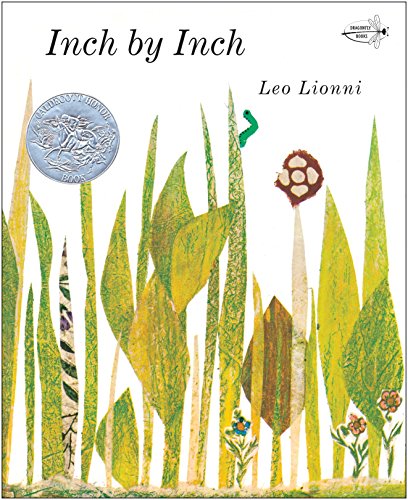
Leo Leonni, Inch by Inch (1962)

This was Leo Lionni’s first picture book. Not as spectacular as Swimmy, perhaps, it’s still splendid. The tiny inch worm saves itself from being eaten by offering to measure parts of various birds, and finally by rising to the challenge of measuring the nightingale’s song. For small readers, there’s a bit of a Where’s Wally thing going on as the tiny worm appears in every spread. For big ones (including grandparents) there are more sophisticated joys in the spare text and elegant paintings.

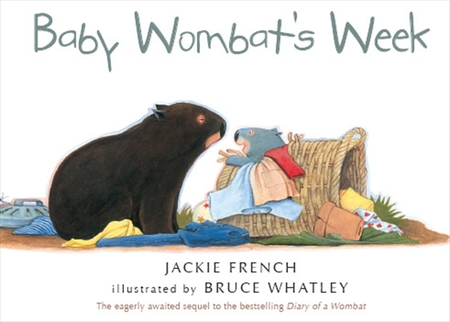
Jackie French and Bruce Whatley, Baby Wombat’s Week (Angus & Robertson 2009)

This is a sequel to Diary of a Wombat that won hearts and prizes all over the place in 2002. Who doesn’t love a wombat? And this one’s a baby. Again, the images are probably too complex and the humour too sly for tiny people. But this is wonderful.

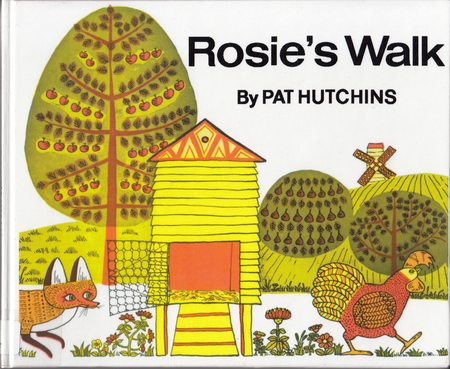
Pat Hutchins, Rosie’s Walk (Macmillan 1967)

This is a board book supplied by us grandparents. Its place in our affections is at least as firmly established as The Very Hungry Caterpillar‘s. It’s a classic example of illustrations telling a story of which the verbal text pretends to be oblivious. The bright, patterned illustrations are, of course, gorgeous.

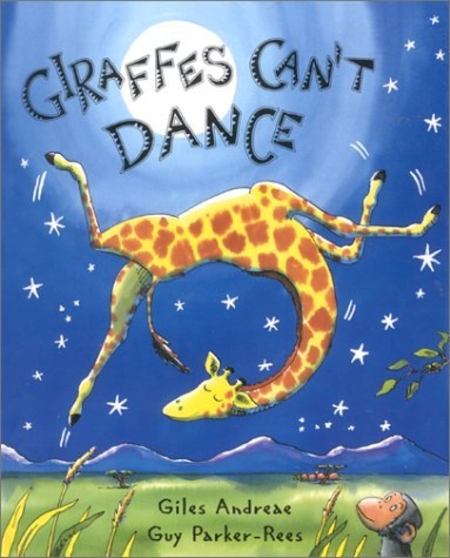
Giles Andreae and Guy Parker-Rees, Giraffes Can’t Dance (2001)

This one doesn’t appeal to me so much, but it’s on high demand in Ruby land, possibly because one of her favourite toys has been a squeaky giraffe named Sophie. The Giraffe in the book is mocked by the other animals because it can’t dance. It wanders off a communes with the moon and the wind, and soon is dancing spectacularly: given how very ungainly the giraffe is in the first part of the boo, there’s something dispiritingly unrealistic in the moral is that everyone can dance if the music is right.

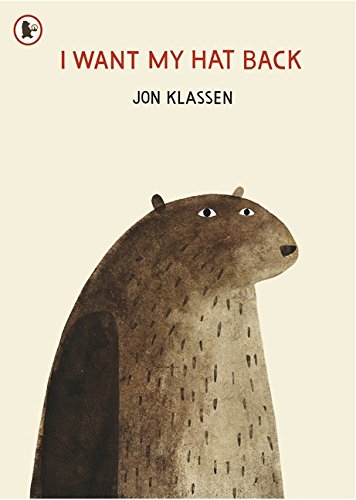
John Klassen, I Want My Hat Back (Walker 2011)

Jon Klassen is a Canadian minimalist picturebook maker. As far as I can tell this is the first of a trilogy about a bear and his beloved hat. The bear, who doesn’t change much from page to page, asks a number of other animals, some of them of indeterminate species, if they’ve seen his hat. We see the hat long before he does (another example of an illustration alerting the reader to something the text is unaware of), and there’s a bloodthirsty and punitive but funny twist in the tale, which I hope young readers generally miss.

Bob Graham, Vanilla Ice Cream (Walker 2014)

Bob Graham! Evidently he’s even more popular in France than in his native Australia. This picture book is the work of an assured master – possibly in his Late Style. A sparrow accidentally hides away in a bag of rice loaded onto a ship in an Indian port. When the ship arrives in a southern land (a non-specific Australian city), the sparrow emerges and flies to a nearby park. There, a dog leaps up towards him and knocks an ice cream out of someone’s hands. The ice cream lands in the lap of a baby in a stroller, and that’s the first time that baby tastes vanilla ice cream. A weird non-plot, you might say. But he pulls it off!

Julia Donaldson and Axel Scheffler, The Snail and the Whale (Puffin 2006)

A strange tail of a snail with an itchy foot who hitches a ride to exotic places on the tail of a whale and comes back to inspire the other snails to go adventuring, having saved the whale’s life by writing a message in slime on a classroom blackboard. Surrealism is alive and well in children’s picture books. This one is way too old for Ruby, but she has two copies, one in the profusion of books and toys in a corner of the living room and one beside her cot.

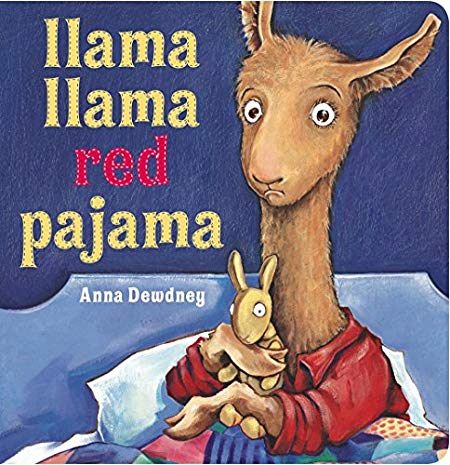
Anna Dewdney, Llama Llama Red Pajama (2005)

A gauge of the success of this book is that Mr Blue Pencil didn’t notice the US spelling in its title until I wrote it for this bog post. It’s a bedtime story with bright colours, bouncy rhymes (as long as you pronounce mama to rhyme with llama). There’s a fear-of-the-dark moment that might be a bit suggestive for some children. But the relationship between ht young llama and the llama mama is warm and loving, even if she does answer the phone when the young one needs her desperately at the bedside.

Baby Wombat’s Week is the seventh book I’ve read for the 2019 Australian Women Writers Challenge.

Ruby reads

My granddaughter, Ruby, is now nearly 14 months old, and I have re-entered the world of books for very young people. This is a catch-up on books I’ve read to her or listened to while someone else read to her – some fondly remembered, some new to me. Ruby’s parents and the people who give them books have very good taste. I mean no disrespect to the many brilliant board books featuring photos of African animals, sometimes with rudimentary rhymes, whose pages she loves to turn, but I’ve only included books that give me pleasure as well. In no particular order, then:

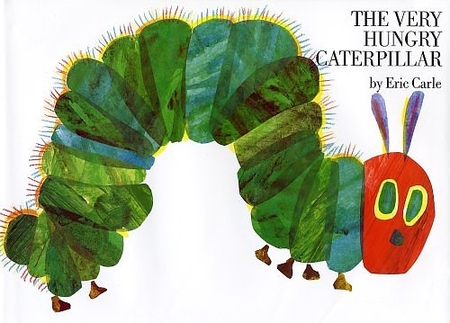
Eric Carle, The Very Hungry Caterpillar (1969)

This book is 50 years old this year, and its place in the canon is firmly established. I know the last page when the caterpillar is transformed into a butterfly is supposed to be the great visual thrill, but I love the transformation before that into a very big, round caterpillar.

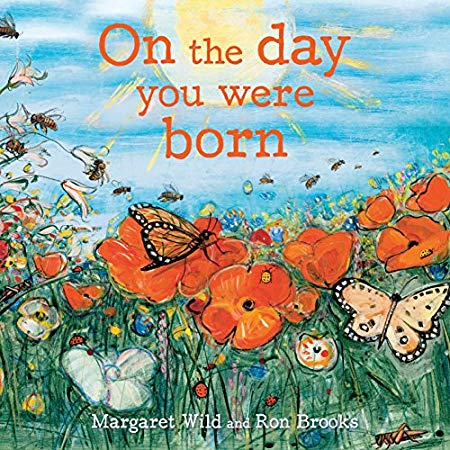
Margaret Wild and Ron Brooks, On the Day You Were Born (Allen & Unwin 2018)

Margaret Wild is one of the greats of Australian children’s literature, and her collaborations with Ron Brooks are legendary. The title of this book might lead you expect a story of mother and baby cuddling in bed, but no, here the baby’s father takes ‘you’ on a walk out into the wonders of the world, and returns in the last words to the mother. None of the humans is seen – just the gorgeous world.

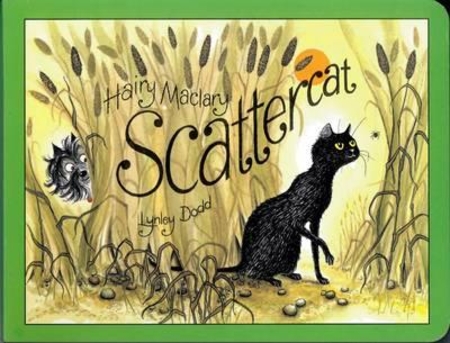
Hairy Maclary Scattercat (Puffin 1983), and other brilliant books by Lynley Dodd.

This book first appeared the year Ruby’s father was born. In case you don’t know, Hairy Maclary from Donaldson’s Dairy is a scruffy and scrappy little New Zealand dog whose adventures are told in rollicking rhymes. Here he monsters a series of cats until finally the tables are turned by Scarface Claw, whose name says it all. Dachshund Schnitzel von Krumm isn’t in this book, but he’s in at least one of the others we get to read.

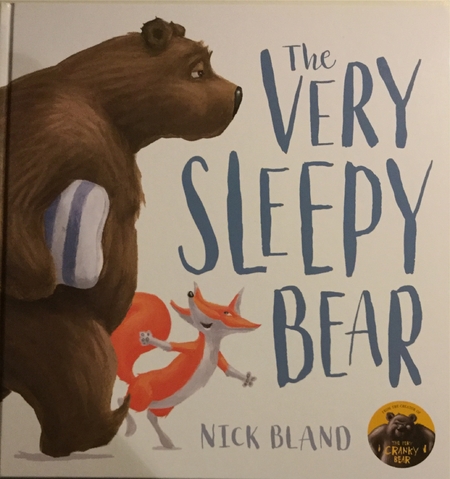
Nick Bland, The Very Sleepy Bear (Scholastic Australia 2017)

 This bear has a series of books, in which he is variously Very Cranky, Itchy, Brave, and so on. This one is a kind of trickster tale – a fox tricks the bear into leaving his cave with a promise of somewhere better to sleep. After inspecting a series of unsatisfactory possibilities, the bear insists on returning to his home, where he discovers the fox has installed a gang of his friends. Particularly relevant to adults who are trying to manage a baby’s sleep.

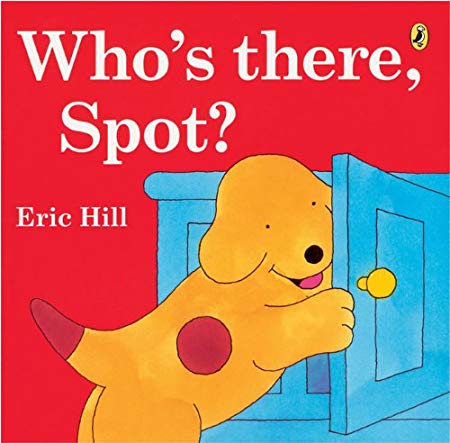
Eric Hill’s Spot series, in particular Who’s There, Spot? (Puffin 2013)

Along with the mouthless Miffy (whom I haven’t seen on Ruby’s bookshelves), Spot is a standout memory from my own early parenting days. The original was the lift-a-flap book Where’s Spot (1980). Who’s There, Spot, complete with flaps under which lurk a series of animals, is one of a vast number of sequels. Every baby I know has loved lifting the flaps on Eric Hill’s books, and as an adult, I’ve always enjoyed giving the hissing, trumpeting, barking, meowing hints beforehand.

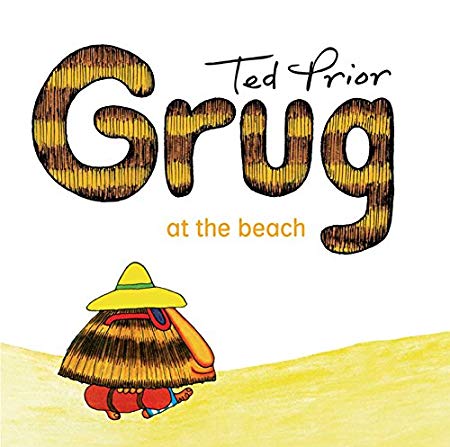
Ted Prior, Grug at the Beach (Simon & Shuster 2009)

Grug is the animated grass-tree hero of his own series of 26 tiny books (I just found that out from Wikipedia, where I also learned that he may not be a grass tree after all, but I’m sticking to my story). The first book, Grug, appeared in 1979, and though the series finished in 1982, he lives on in treasured old copies and new editions. Grug at the Beach is charming propaganda for sunscreen, but don’t let that put you off.

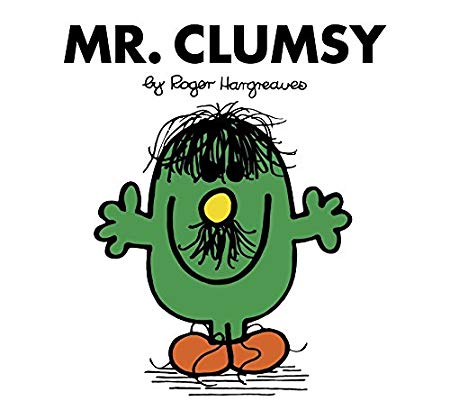
Roger Hargreaves’ Mr Men series, in particular Mr Clumsy (Budget Books 1987)

I’m not all that keen on the Mr Men series, but there’s no doubting their appeal and longevity. Maybe the cheerful acceptance of idiosyncrasy and imperfection is the secret of their success. The gender specificity is a bit problematic, and was only made worse, in my opinion, by the Little Miss series. Girls can be clumsy too! Like the Grug books, these have the advantage of being small enough to fit very young hands.

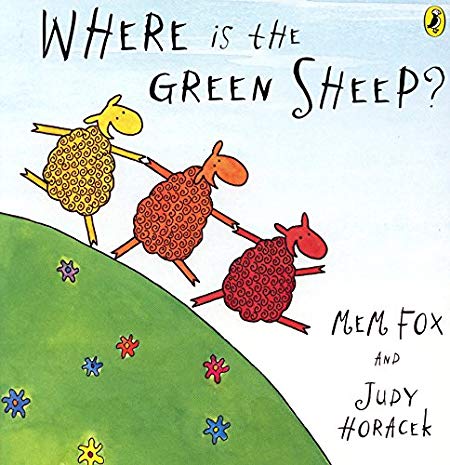
Mem Fox and Judy Horacek, Where Is the Green Sheep? (Puffin 2006)

The text, which otherwise might be mistaken for a didactic exercise in naming colours, provides a perfect platform for Judy Horacek’s brilliantly silly illustrations. We haven’t got to Mem Fox and Julie Vivas’s great classic, Possum Magic, yet. In fact, no Julie Vivas at all – a gap that will definitely be closed before too long.

That’s enough for now. I’ll save Leo Lionni and others for another post.

I wasn’t going to mention any of these texts in relation to the Australian Women Writers’ Challenge, but then I remembered how children’s literature, especially picture books for the very young, tends to be seen as lesser creations than even the most lackadaisical work for older people, even while some picture books and books for very young people are works of genius. So here you are: On the Day You Were Born and Where Is the Green Sheep? are the fifth and sixth books I’ve read for the 2019 Australian Women Writers Challenge.

Katharine Margot Toohey’s Vera Rudner

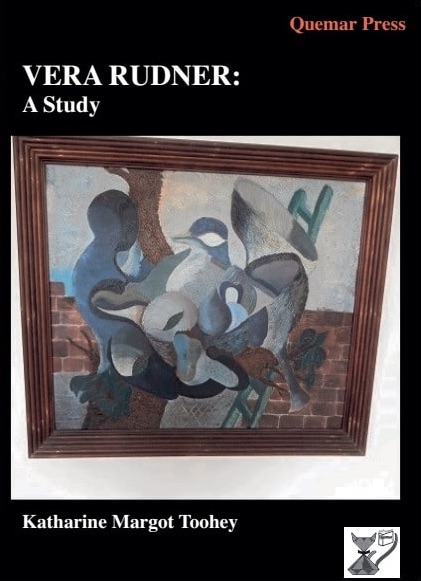
Katharine Margot Toohey, Vera Rudner: A Study (Quemar Press 2018)

A friend of mine (and no, this isn’t urban legend) recently attended a lecture on Australian modernist art at a mainstream tertiary institution in Sydney. The lecturer managed not to mention a single woman. When my friend protested, and rattled off a list of women who were crucial to the history, the lecturer was unapologetic.

Early this year at a prestigious Melbourne gallery, the same friend was lamenting the almost complete absence of women painters in a large exhibition of 20th century Australian art. Then we walked into one of the smaller rooms, and there they were, scores of them, crowded onto the walls four or five high without space for so much as a descriptive label: if you wanted to see who painted that sock knitter or that bridge in curve you had to consult an iPad chained to a seat in the middle of the room and scroll through the list. So the ladies had a room to themselves, all hugger mugger, and the real male artists, were shown as individuals.

It seems our institutions may have some trouble giving Australian women artists their due.

This tiny, almost zine-like book from Quemar Press is doing its bit to kick against the trend.

Vera Rudner, born in Berlin in 1922, fled the Nazis with her Jewish family and arrived in Australia in 1938. She studied painting at the aforementioned Sydney tertiary institution, among others, and painted a number of striking surrealist works before she stopped painting in 1948.

Two of her paintings are held in the National Gallery of Australia. Four are in the artist’s possession. One is known to have been destroyed – actually burned – because, according to the woman who inherited it, it ‘scared her grandchildren’. She hasn’t been completely ignored in the literature of Australian art, but she remained in relative – almost complete – obscurity until Jennifer Maiden’s poem ‘Sacrilege’ appeared in her collection, Appalachian Fall (Quemar 2017, link is to my blog post). It introduces Vera as a friend of some decades, and focuses on her painting for which the poem is named. It begins:

                I fear not doing her justice; however,
for a long time I've wanted to write a poem about Vera
Rudner.

That poem, and ‘Be Back in the Morning or Diary Poem: Uses of Toys’, named for another of Rudner’s paintings and published in Maiden’s brookings: the noun (Quemar 2019), are reprinted in this book, evocative amplifications of Katharine Margot Toohey’s prose.

The text of the book is in three parts. First is a brief biography presented as an extended captions to a series of photos – snaps of Rudner as a child movie actor (the movies were all destroyed by the Nazis), of a framed wedding photo; an exhibition catalogue; the cover of a book that mentions her work; and a recent shot of her with Jennifer Maiden. The second is a short general essay, and the third an explication of the six paintings that Katharine Margot Toohey has access to.

There are two colour photographs of each of the paintings, and a number of details in black and white. These are enough to whet the appetite to see the actual paintings, but because of the perennial problem of reproducing paintings as tiny illustrations and getting the colour right, it’s hard to feel they do much more than that. For example, the cover photograph of Suburbia (1945) has a predominantly blue-grey pallet; both internal reproductions are mainly warm yellows and oranges.

Some sections of the book are available online at Quemar’s website (click here), where the images seem much less problematic. If, like me, you’re vaguely aware of an ache in your brain where the history of women artists should be stored, I recommend you have a look.

Vera Rudner: A Study is the fourth book I’ve read for the 2019 Australian Women Writers Challenge. I’m grateful to Quemar Press for my copy.