Overland 205

Jeff Sparrow, editor Overland 205, Summer 2011

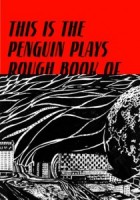
Someone in the offline world told me recently he was reading a book called The Left Isn’t Always Right. It must be one of the least controversial book titles of all time: how could ‘the Left’ be always right when lefties are forever fiercely, even violently disagreeing with each other? I mean, hadn’t the author heard of Trotsky? This issue of Overland continues in that fine tradition (of debate, I mean, not of violence). And although recent comments on this blog have described it as increasingly right wing, I think it does a nice job of bringing to bear a perspective that challenges the view that all can be well in a capitalist society.

It kicks off with Swedish scholar Mattias Gardell’s ‘Terror in the Norwegian woods‘, which places the recent killing spree in Norway in the context of the return of fascism to Europe. He moves well beyond the easy but still telling point that when the news of the killings broke, many pundits pronounced that it was the work of Muslim terrorists, but when the identity and beliefs of the killer were discovered, the same pundits said it was clearly the work of a lone madman, and not in any way connected to their hate speech – he moves beyond that point to a chilling account of the increasingly vocal and co-ordinated anti-Muslim movement in Europe and in the US, which would be an oddity if it weren’t for their influence on political leaders.

Next, Robert Bollard’s ‘ Who was Bet B?‘, tells the story of his own discovery of Aboriginal ancestry, and explores its implications. Among other things it provides a multidimensional, nuanced context to the brutish attacks on ‘light skinned Aborigines’ we’ve been hearing a bit about recently.

Xavier Rizos’s ‘Will the market save us?‘ could well be subtitled ‘The carbon tax for dummies’, and I mean that in a good way.

Brad Nguyen’s ‘Morality begone!‘ does a neat job of exposing the inadequacy of moral outrage as a tool for understanding, especially in relation to events like the riots in London in August last year. He doesn’t argue that morality has no place, but that relationships of power needs to be taken into account. ‘We can all agree,’ he writes, ‘that events such as 9/11 are the results of acts of evil. But why shouldn’t we let ourselves locate such events within the totality of global capitalism?’ He goes on, ‘If you so much as mention [US] imperialism, you open yourself up to charges of justifying the atrocities of 9/11.’ In a fabulous twist, he invokes Jesus, with a challenging reading of the injunction to turn the other cheek. (This isn’t the journal’s only surprise for those who confuse secularism with hostility to religion: Peter Slezak’s ‘Silence resembling stupidity‘ argues forcibly that the anti-Islamic stance of the ‘new atheists’ – Hitchens, Harris, Dawkins – actually plays into the hands of  those who would wage neo-imperialist and -colonialist wars.)

There are a couple of debates – Stephanie Convery and Katrina Fox on PETA’s use of pornography in its animal rights activism, Ali Alizadeh and Robert Lukins on Australian Poetry, the new peak industry body for poetry. The poetry one, as you might expect, is the more heated (‘Robert Lukins’ is … devoid of almost any substance with which to engage,’ says Alizadeh, unfairly in my view). The animal rights one has the higher moral tone (‘Let’s get our priorities right,’ says Fox, arguing that we shouldn’t object to PETA’s obnoxiousness when other people do much worse things – I guess you can tell where I stand on that one). And there’s a profound panel discussion about language and politics in Indigenous writing, featuring John Bradley, Kim Scott and Marie Munkara.

There are stories and poems, notably an excerpt from Alexis Wright’s forthcoming novel, Eileen Chong’s ‘Mary: A Fiction‘, and Angela Smith’s ‘Jennifer Maiden woke up in The Lodge‘, which I persist in seeing as a tribute to Jennifer Maiden rather than an attack.

Notice all those links! The thing about Overland  is that most of its content is online, and the Overland blog has follow-up interviews and discussions. This interview with Robert Bollard is a fine example. Still, reading it in hard copy has its pleasures, not least of which is the sense of righteousness that comes from sending money their way.

Robert Whitaker’s Anatomy of an Epidemic

Robert Whitaker, Anatomy of an Epidemic: Magic Bullets, Psychiatric Drugs, and the Astonishing Rise of Mental Illness in America (Crown Publishers 2010)

When I told my ENT surgeon I was reading a book about science and the use of psychiatric drugs, he said, ‘One of those books about evil psychiatrists, is it?’ I was only about a third of the way in at the time, and replied, ‘No, I think the villain of the piece is the drug companies defending their huge profits.’ ‘Ah,’ he said, shocking me just a little, ‘psychiatry is about a hundred years behind the rest of medicine in terms of being evidence based.’

In fact, this book mounts a convincing case that psychiatry is not a hundred years behind at all, but is in a whole different paddock. Basically Robert Whitaker has done a meticulous survey of the scientific literature about ‘mental illness’ (my quote marks) and the effects of psychiatric drugs, and holds up to the light the startling difference between the received wisdom on one hand and what the science shows – or fails to show – on the other. In fact, it seems, the evidence indicates that drugs used to deal with anxiety, depression and schizophrenia are not only ineffective, but do more harm than good and in the long run are causing widespread devastation. Towards the end of the book he lists no fewer than sixteen major studies conducted since 1990, all contradicting the mainstream version the efficacy of psychiatric drugs, and says he can find no mention of any of them in any US newspaper. In such matters, of course, newspapers depend on press releases from professional organisations and government agencies, and it seems that the US psychiatric profession has thrown its lot in with the big pharmacological companies. Likewise the relevant government body, the National Institute of Mental Health, and the major patient advocacy group (which, like opinion leaders among psychiatrists, receives staggering level of funding from big business). The websites of neither the NIMH nor the advocacy group make any mention of the uncomfortable science.

Whitaker writes well. He appears to be meticulous in his reporting of the science. I’ve taken a while to blog about it because I didn’t want to write in a state of rage. But let me say now, calmly, that anyone who has ever been prescribed psychiatric drugs, anyone who routinely or occasionally prescribes them, and especially anyone who is being advised to give them to their children, should read this book. Whether the drugs are for depression, anxiety or schizophrenia, this holds true. The fact that someone is wearing a white coat and has a lot of money and big words at their disposal doesn’t make them a scientist. The fact that people’s lives are made miserable by ‘mental illness’ doesn’t mean that prescribing drugs for them is an act of compassion rather than a way to suppress the symptoms that disturb the rest of us at significant cost to the sufferer. The fact that psychiatric drugs are opposed by Scientologists and people who want to blame the mother doesn’t mean they’re good for you.

The most striking thing about the book for me was something I read after I’d finished it. I was concerned that Whitaker’s argument coincided pretty closely with my own understanding of things before I read it (see final paragraph below). So I went looking for responses and rebuttals. As it turns out, Whitaker has a web site where he provides links to just such writing: the slippery logic and shaky data of the rebuttals delivered by leading psychiatrists provides emphatic confirmation that he is on the money.

There are alternatives. The book and Whitaker’s web site include examples of projects that have produced very promising results before attack from the psychiatric profession and withdrawal of funds closed them down, and a couple of examples where the projects managed to gain funds not controlled by the forces of darkness (oh dear, I obviously haven’t calmed down quite enough! but really, the Alaska Mental Health Trust Authority, with 200 million dollars in its pocket, was able to successfully challenge the iron-clad assumption of the courts that anyone who objected to being given psychiatric drugs was ipso facto incompetent, where elsewhere no one has had the resources to challenge the expert witnesses for the status quo). There’s a region in Finland where schizophrenia has virtually been wiped out by an approach that involves (I’m simplifying) open dialogue with someone with signs 0f psychosis and caution in prescribing drugs.  In Australia, the Personal Helpers Mentors Program, while not antagonistic to psychiatry, has a non-medical approach which goes a long way to helping people to function well and to manage their symptoms.

Some friends of mine are on the way to opening the Pajaro Valley Sunrise Center in California, a residential facility for people wanting to come off psychiatric drugs. Because, of course, you can’t just stop taking drugs that change the functioning of your brain without bringing on terrible reactions (which, according to Whitaker, is used as an argument for keeping people on them for life). I was mildly supportive before reading this book. Now I’m in danger, as my brother in law says, of becoming a proselytiser.

Ruby Blues in the car

Jessica Rudd, Ruby Blues (Text 2011)

This was our read-aloud on the car trip from Melbourne to Sydney, and it served well enough. I had a sinking feeling at first, as I was required to deliver a number of strained comedy routines that didn’t quite work, but by about page 20 I found I was laughing aloud quite a lot. It’s a genre piece, chick lit: much description of clothes and make up, a touch of Feminism 101, quite a bit of embarrassment of the heart and loins (I was reminded of Marieke Hardy’s TV creation Laid). The eponymous Ruby is the chief adviser to an Australian Prime Minister whose popularity is plummeting, and the chick lit adventures are supplemented by a plot involving political intrigue and blackmail, which manages – just – to provide a central thread.

One of the selling points of this book is that the author is Kevin Rudd’s daughter. This creates an expectation that though it’s manifestly fiction, the book will build on insider knowledge. Well, I wouldn’t put much store by such an implied promise. For example, fairly early on someone reminds Ruby that she has to prepare the PM’s briefings for Question Time, and 30 minutes later she has the folder ready. Um, without wanting to make too much of it, I’ve heard the odd anecdote from a PM staffer, and I’m pretty sure that job takes something closer to four hours. And Ruby’s intern- assistant Bettina, the source of most of the laughs, is a vastly improbable creation.

That, plus little things like poignant being used by Ruby, presumably with Jessica’s approval, where in English we would say pertinent, and a stretch towards the end where nothing is happening except some characters renting fancy dress, makes me slow to recommend the book. But we did laugh. And we did read the whole book, which is more than I can say for AC Grayling’s Descartes, a much more substantial text that just couldn’t keep the driver awake and was discarded after about 30 pages.

Why would Jeanette Winterson be normal when she could be happy?

Jeanette Winterson, Why Be Happy When You Could Be Normal? (Jonathan Cape 2011)

20111227-185519.jpg I read this aloud to the Art Student (who insists, in the face of mounting pressure, that her nom de blog not progress to ‘the Artist’) on a leisurely drive from Sydney to Melbourne. We made it through all but 30 pages. It was a good choice for the gig.

The book is in two unequal parts. In the first, longer part Jeanette Winterson revisits territory she covered in her novel Oranges Are Not the Only Fruit: her relationship with her adoptive mother, a terror to Jeanette as a child but a gift beyond price to a novelist. The title of the book quotes the response of Mrs Winterson, as she is often called here, when teenaged Jeanette told her she was in love with a woman. Another of her striking utterances may have been almost as attractive as a title: ‘The trouble with books is you don’t know what’s in them until it’s too late.’ The experiences recounted in this section have clearly been thought about long and deep. I haven’t read the novel, and don’t know what’s distinctive about this version. There are some colourful bits about her mother’s response to the novel, but at the end of this section, roughly two thirds of the way through the book, there was no obvious reason why it had been written at all.

And then, after a two-page ‘Intermission’, it takes off. In the second section, which a note at the end tells us was written as the events it describes unfolded – that is, without knowledge of the outcome – the author tells of a period of severe mental distress that followed the break-up of a long-term relationship and her discovery of some papers that seem to be her birth records. This leads to a search for her birth mother, which is eventually successful. The whole long first section provided necessary background and orientation: we need it to grasp the force of the emotional turmoil and the extraordinary effect of some key phrases, which might otherwise seem to be ordinary, even platitudinous. What we get is a revelation about the powerful feelings that can attach to an adopted person’s search for birth parents. We also get an account of an experience that in another person might have been medicated, but here is an extraordinary, if painful, process of discovery and blossoming.

This is a marvellous book.

Compare and contrast

I’m way behind in my book-blogging. Here’s a little thing that may amuse you, but you’ll have to work for it.

In April 2010, when Kevin Rudd was still Prime Minister, I posted a wistful piece of unrhymed doggerel, ‘Open Letter to Jennifer Maiden‘, in which I pleaded with JM to write about Kevin and Julia, and played around with some rhymes for Rudd and Abbott.

A month or so ago, Overland 205 included Angela Smith’s poem, ‘Jennifer Maiden woke up in The Lodge‘. Infinitely superior to my effort, it mimicked JM’s voice, and implied a similar yearning to read what she would write about the Prime Minister.

And then, in Black Inc’s Best Australian Poems 2011, edited by John Tranter, Jennifer Maiden herself answered our prayers with ‘A Great Education’, which swoops from indignation and something that could look like contempt to exactly the kind of insight you would expect from JM. I can’t give you a link to the poem. You could buy the book (I haven’t yet, I thought I might get it for Xmas so settled for reading this poem in the shop – I think this poem alone would justify the expense). Or you could:

Step 1: go to the book’s page on the Black Inc site
Step 2: click on the Google preview button
Step 3: search for “A Great Education”
Step 4: click through to the second result.

It turns out the poem was published in the Age roughly a year ago. Perhaps Angela Smith was commenting on it rather than pleading for it to happen. Either way, I doubt if you’ll see these three poems mentioned in the same breath anywhere but here.

Maybe not so lucky

Having been encouraged by the MelbourneAge recently to believe I was lucky not to be a Victorian, I had my new optimism crushed by the weekend’s Saturday Age, in an otherwise unexceptional article by Adrian Franklin on how cities differ from one another:

20120102-141055.jpg

I case you can’t see it in the photo, the bit that made the scales fall from my eyes goes like this:

Some cities have a buzz, a vibe, an aliveness that makes you feel great to be a part of, others barely raise a smile… Relaxed Melbourne is atmospheric day and night; try-too-hard Sydney is soulless, invariably.

Sydneysiders, we’ve been told!

2011 in review

The WordPress.com stats helper monkeys prepared a 2011 annual report for this blog. They certainly give value for money, especially given that it’s a free service

Here’s an excerpt:

The concert hall at the Sydney Opera House holds 2700 people. This blog was viewed about 21 000 times in 2011. If it were a concert at Sydney Opera House, it would take about 8 sold-out performances for that many people to see it.

Click here to see the complete report.

Stevie Smith

Stevie Smith, Selected Poems (edited by James MacGibbon 1975, Penguin 1978)

My first boss, who had met Stevie Smith in his youth and been enchanted by her, once delighted his staff, all three of us, with an expressive recitation of the final of pages of her Novel on Yellow Paper, beginning something like, ‘I will now tell the story of the death of the lion Aunt.’ On another occasion he treated us to her best known poem, ‘Not Waving but Drowning‘, and her lines about death being the only god who comes when he is called. I’ve been a kind of fan by proxy ever since.

But I don’t seem to have actually read much of her poetry. At least just now this book felt like a fresh encounter rather than a revisiting. I had a mental image of Stevie Smith as English-eccentric with a quirky take on the world, witty, whimsical and self-deprecatingly wise. This impression had been helped along by two poems we published in the School Magazine when I was editor, ‘My Tortoise’, which verges on baby talk, and sublimely silly ‘The Galloping Cat‘. But though there are a number of whimsical poems about animals toward the end of the book, the dominant tone is much, much darker than I expected. Death and a longing for death are pervasive; there’s quite a bit that’s moralistic, snobbish and outright misanthropic; and she wrestles resolutely with her Anglican heritage. Even the cat that ‘likes to / gallop about doing good’ seems unsettlingly satirical. Yet I enjoyed the book a lot, and had to restrain myself from reading much of it aloud.

It’s hard to say quite what it is that I find so enjoyable. These lines from ‘A Soldier Dear to Us’ help:

But you taught me a secret you did not perhaps mean to impart,
That one must speak lightly, and use fair names like the ladies
They used to call
The Eumenides.

Stevie Smith seems to have been an excellent student of that old soldier. She certainly speaks lightly of serious things, in satirical squibs, in a verse essay on Christianity that ends with a warning of religiously rationalised mass murder, in a denunciation of cruelty to animals, in cryptic narratives of love denied or lost or twisted out of shape, in many lyrics that echo the ‘Come, Death’ sentiment, and so on. Casting about for words to describe her characteristic tone I come up with ‘chirpy’. It’s more complex and interesting than merely cheerful, suggesting something like courage and humility in adversity, not denying anything but refusing to be overwhelmed or melodramatic.

‘The Lads of the Village’ is a poem that struck a chord with me strongly enough that I memorised it, which turned out to be a rewarding process (see earlier post about memorising verse). Here it is:

The lads of the village, we read in the lay,
By medalled commanders are muddled away,
But the picture that the poet makes is not very gay.

Poet, let the red blood flow that makes the pattern better,
And let the tears flow, too, and grief stand that is their begetter,
And let man have his self-forged chain and hug every fetter.

For without the juxtaposition of muddles, medals and clay,
Would the song be so very much more gay,
Would it not be a frivolous dance upon a summer day?

Oh sing no more: Away with the folly of commanders.
This will not make a better song upon the field of Flanders,
Or upon any field of experience where pain makes patterns the poet slanders.

If I had read that aloud to the Art Student I expect she would roll her eyes, but let me try to explain how it gets to me, and some of what I found as I did my learning by heart.

The first two lines promise us a poem in strict meter, like one of the lays they refer to, and then in the third line the rhythm breaks up to become much more conversational, while the rhyme scheme stays intact. The metric shape is increasingly disrupted, so that the rest of the poem is of playful struggle between natural speech – perhaps chatty, perhaps angrily ranting – and songlike formality. It’s almost as if the poem’s sense has been shoe-horned into its shape: the unexpected ‘slanders’ at the end of the long final almost McGonagallesque line could be a desperate ploy to end the poem with a full rhyme. The alliteration in the second line and elsewhere has a similar effect – at first blush it feels as if ‘muddled’ is there purely because it echoes ‘medalled’. I think this apparent arbitrariness is what creates the feeling of lightness.

And yet, and yet, just how arbitrary is it really? When you come to think about it, ‘muddled’ is satirically precise, and ‘slanders’ arrives with tremendous denunciatory force, like a stone hurled from a sling. And the sling isn’t such a bad simile: in this poem tiny Stevie-David takes on the Goliath tradition of poetry that celebrates war and delivers a killer blow. Blood flows, grief stands, generals are foolish, the lads go into clay, and the poet exploits the whole cruel mess for aesthetic purposes. ‘Slander’ justifies its status as the last word, and the disruption of the form enacts in a way the repudiation of the kind of song that is deemed suitable for memorial ceremonies at Flanders.

There are other felicities that I didn’t notice till I did the memorising: the repetition of ‘upon … field’ in the final stanza, the reappearance of the ‘ay’ rhyme in the middle of the third last line, the patterning of the p words ‘poet’, ‘picture’, ‘pattern’ and ‘pain’, and more. But that’s all I’m writing here.

Luckily we’re not Victorians

We’re New South Welsh on an interstate trip. It seems to be safe for us, but we were alarmed by this headline in today’s Age:
20111228-085050.jpg

Wilson

Daniel Clowes, Wilson (2009, Drawn and Quarterly 2010)

20111226-124107.jpgOne of my joys at Christmas these days is that my family give me comics. This year I received a grand total of six hefty hardbacks, all by people I haven’t read anything by. Wilson is the least daunting, appearing at first glance to be made up of 80 or so single-page strips about the unkempt, misanthropic Wilson. In one strip he asks a woman to help him out by estimating the weight of a small parcel he plans to post, and then tells her it’s full of fresh dog poop. In another he tries to start up a conversation in a cafe with a man who politely indicates that he’s working on a laptop, and eventually delivers the punchline, ‘Hey asshole, I’m talking to you!’

That sort of thing is amusing in its own depressive way, and then the apparently unrelated strips come together into a coherent story arc. There’s a satisfying payoff to both the dog poop and the laptop man, and in the end it’s a kind of love story.