Books I read in May [2007]

[Originally published in May 2007 in my now defunct earlier blog, Family Life. I’ve retrieved it because a friend was looking for information on Jeff Sparrow’s book.]

Ivor Indyk (editor), Heat 13: Harper’s Gold (finished)
Jeff Sparrow, Communism, a Love Story (Melbourne University Press 2007)
Jackie French & Peter Sheehan, Rotters and Squatters (Scholastic Press 2007)
Frank O’Hara, Selected Poems (finished)
Susanne Chauvel Carlsson, Pitcairn: Island at the edge of time (Central Queensland University Press 2000)
John Tranter, Urban Myths: 210 poems (University of Queensland Press 2007) (started)
heat13

Heat was, as always, a solid read. And as always it’s a bit of a puzzle how the title was arrived at: in this case it’s a phrase from one of the stories, with no obvious overarching thematic relevance. But it doesn’t matter. Even if there is no theme that makes the book hang together, the pieces in this issue, as in others, are free to resonate with, echo and comment on one another, so that the whole is pleasingly more than the accretion of its parts — and I did read and enjoy this issue cover to cover.

Beverley Farmer visits her former husband’s village in Greece in ‘The House on Rebirth Street’ (dropping a few too many untranslated Greek words for my comfort); Greece brings some respite to the heroine of Stephen Edgar‘s pseudo ghost story in verse, ‘The Deppites’. There are a number of nostalgic visits to family homes, and frequent references to migration.

Nostalgia for religious belief bubbles to the surface in a number of pieces. Gillian Mears is visited by the rumtitum rhythms of Edward Lear’s ‘Pelican Chorus‘ as she’s wheeled in, near death, to the operating theatre; Felicity Plunkett‘s wonderful sequence of poems ‘The Negative Cutter: An Introduction to Editing’, also deals with surgery, playing with a cinematic metaphor; Mark Rappaport, documentary film maker, has fun riffing on his connections to Catherine Deneuve, as fan and appalling collaborator. I love all this.

When I edited a literary magazine not so very long ago, it was regularly proposed to us that each issue should be organised around a Theme. Just as regularly, I resisted the proposal, as it seemed to me that it was based in a misunderstanding of what kind of creature a literary magazine is. My pleasure in Heat confirms me in my belief. Instead of corseting, regimentation, control, there is a sense of organic relationship, of many minds independently but harmoniously making story, or seeking truth, or singing, or doing whatever it is that literature does.

communism

In his introduction to Communism: A Love Story, Jeff Sparrow writes:

Communism provided an alternative. It was, in many ways, the alternative, the most important indicator that society could be remade. Between 1917 and 1989, its star shone bright and its star shone dim, but its continuing sparkle in the political firmament allowed millions to believe in a world beyond the free market. Even those who despised communism felt that while it existed, change – whether they wanted it or not – was a possibility.

Today, that feeling is gone.

The book is a biography of Guido Baracchi, a well-heeled, literate bohemian and committed Marxist/Communist who lived from 1887 to 1975, described by Stuart Macintyre as ‘the knight errant of Australian communism’. He’s a terrific subject for biography: he worked for the cause in Weimar Germany and the 1930s Soviet Union; he had intense relationships with a number of poets and playwrights (Lesbia Harford, Katharine Susannah Prichard, Betty Roland), each of whose accounts this biography has drawn on; he was widely read and wrote a lot himself, also supplying a wealth of material to his biographer.

I was telling some friends about the book, and one woman was prompted to talk of her youthful romance with a son of a leading Communist family: when they were about to go out on a date, he would say, ‘Let’s stay home tonight – the old coms are coming around and there’ll be lots of tales.’ I suspect Jeff Sparrow had a background something like that, because while this book meticulously cites its written sources (discreetly, up the back, not interfering with the flow of the narrative), and doesn’t hang back from quoting T S Eliot and James Joyce to good effect, it’s also bursting at the seams with ‘tales’, with the lore of Australian Communism: clever ploys, bastardry, romance, betrayal, nobility (like Guido’s wife Neura’s principled reaction to the news that he had taken up with another woman, from which she seems never to have wavered), tragedy (which is too pallid a word for what Stalin and Stalinism did to the hopes of the world). You can almost hear the stories being told with suitable embellishment at a smoke-wreathed kitchen table far into the night.

As the story unfolds, what today is called the mainstream media is relegated to commenting from the sidelines: for example, during the travails of the tiny Australian Marxist movement of the early 20s, bitterly divided within itself, devoting most of its energies to self-education, and discouraged at the prospect of ever being effective, we learn that Prime Minister Bruce gets headlines by accusing the Labor Party of pandering to Bolshevism, and succeeds at a stroke ‘in elevating communism into a public issue in a way that the communists themselves found impossible’. Sadly, the MSM version has become received wisdom, and a whole dimension of our history has been largely forgotten. Those who deplore ‘black-armband history’ would no doubt equally deplore this, perhaps as ‘red-tie history’. I can’t recommend it enough – for that worthy reason, but also because it is a ripping good read, another example of history written with the verve and imaginative force that some think is the exclusive domain of the novel.

An extra pleasure of the book for me was encountering a number of people I have actually met: Betty Roland, the Currency Methuen edition of whose play The Touch of Silk I edited in 1974; Eric Aarons, ‘the young branch secretary’ who banned Guido from lecturing in 1939, whom I met as a gentle old man, a sculptor and caretaker of a workshop site (and whose own memoir What’s Left sits on my bookshelf unread); Nick Origlass, Trotskyist, who seems to have used the long boring speech as a weapon just as consistently in youth as in age; Bob Gould, shambolic bookshop proprietor, who appears here as a fiery youth; a friend’s mother gets a guernsey as one of two students who defied pressure to reject Guido’s teaching in 1939. And a final personal note: one of my dearest friends and teachers, a US communist in the 30s and 40s, still preserved his hatred for Trotskyism intact 40 years after leaving the party; I wonder what he would make of Jeff Sparrow’s implied contention that it was the Trotskyists who kept the flame of communism burning clearest during Stalin’s era.

rotters

Rotters and Squatters is the third in the Fair Dinkum Histories series, and takes the story of the Australian colonies from 1820 to 1850. I’ve already raved about this series. Consider it raved about again. They’re children’s books, but only a bizarre age-based separatist mentality would prevent an adult from enjoying them. Maybe you need an appreciation of juvenile humour to enjoy the deliberately appalling puns in some of Peter Sheehan’s cartoon illustrations, but this book communicates without condescension or chalk-dust or scatology, and strikes a wholly attractive balance between the general and the particular, the comic and the very serious, the personal and the (discreet cough) political.

Like the previous books in the series, it doesn’t attempt sanitised ‘balance’: no doubt it will irk the haters of black-armband or red-tie history. I reckon the series, and this book as part of it, makes a significant contribution to historical writing about Australia, not least by being a quick read with an occasional laugh-out-loud moment. One of several idiosyncratic reasons for my enjoying it is that its short Recommended Reading list includes just one book by an explorer: Edward John Eyre’s Journals of Expeditions of Discovery, the subject of my aborted MA thesis in the 1970s, which in my opinion richly deserves its recommendation here. (If my thesis supervisor – you know who you are! – is still alive and reads this, I’d like my copy back, please).

0394719735

After a break, I went back to the Frank O’Hara. I still don’t think it’s my cup of tea, but I decided to read the poems as play – instead of puzzling over what he means by an obscurity, I’ll just take it that it’s there because it’s what popped into his head and sounded cool – or in some way captured the emotion of the moment. And I decided not to worry about his name-dropping and hi-falutin’ allusions. In other words, I stopped trying to understand what was going on and just let it flow. No doubt I missed a lot – because of his hurling words at the page like Jackson Pollock creating a painting, and because of the references and allusions that went past me – but I also enjoyed a lot. There are some outright reader-friendly bits like this piece of New-York patriotism from ‘Meditations in an Emergency’:

I can’t even enjoy a blade of grass unless I know there’s a subway handy, or a record store or some other sign that people do not totally regret life.

I gather he’s as hip as ever: people even use phrases from his poems as novel titles.
pitcairn

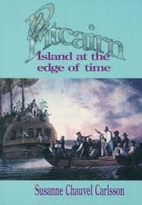
I read the Pitcairn book in preparation for an editing job (which seems, alas, to have fallen by the wayside – in Pitkern, it es ay los’ bawl). Susanne Chauvel Carlsson is the daughter of Charles and Elsa Chauvel. Her interest in Pitcairn Island grew from her parents’ relationship with the island, beginning with their 1932 visit to film parts of In the Wake of the Bounty. The book is a mix of fascinating potted history, family lore, personal reminiscence and observation, and travel log.

People who read the newspapers more carefully than I do, and that’s probably most people, may already know a lot of the Pitcairn story, but even if I’m coming in late, I’m compelled to say the story is riveting. Pitcairn was settled in 1790 by a party of Bounty mutineers led by Fletcher Christian and accompanied by a number of Polynesians: nine mutineers, six Tahitian men, nine Polynesian women (all but one of them from Tahiti) and one baby girl. The first decade was rough, with quite a bit of drunken rioting and mayhem (ears bitten off and so on), murder, a suspicious suicide. After a failed escape attempt, some of the women murdered the remaining Tahitian men. By 1800 the population comprised one man, the mutineer Aleck Smith (who later changed his name to John Adams); ten women (I don’t know where the extra one came from – the book is plagued with such inconsistencies ); and about 23 children. It was another eight years before the Pitcairners had any contact with the outside world, and isolation has been a major factor in the Island’s cultural, economic, linguistic and political development ever since.

It’s a story that reads like a lost-in-space fiction: the language developed as a mixture of rough English and Tahitian; the religion grew from the one semi-literate man’s determination to read and then communicate to the women and children what he found in the Bounty‘s bible. Susanne Carlsson makes no bones about having fallen in love with the place and the people – it’s one of those unfathomable complexities that the object of her affection has also been the site of a history of sexual assault and of sanctioned sexual practices that in most other places would be condemned as paedophilia.

All that news was bad enough already. It becomes much worse when you’ve read accounts of these people playing a cheerfully innovative version of cricket (you have to innovate when your total population is about 50), sharing out Christmas presents in the town square, praying in their Seventh-day Adventist chapel, rowing longboats out to meet the still infrequent visiting ship. I imagine we’ll never know whether the evidently widespread sexual abuse has been there from the beginning or whether it is a symptom of the recent breakdown of the stern religious glue that held the community together.

Oh, and this book had an excellent addition to the Little Known Facts file: in 1838, when the Pitcairners persuaded a visiting Royal Navy ship’s captain ‘to draw up a constitution and code of laws suitable to their needs’, Pitcairn became the first place where women had the right to vote, 46 years ahead of South Australia.

Baby Boomer Reminiscence Alert. Skip to the end if BBRs drive you nuts.
0702235571

(OK, they’ve gone, but I’ll assume I’m not talking only to myself.) Back in the early 70s there were a lot of poetry readings in Sydney: there were Moratorium readings, Balmain readings, Sydney University Great Hall readings; at the 1972 Aquarius Festival in Canberra, the year before the much more famous Nimbin Aquarius Festival, there were a number of serious group poetry readings. I was a keen poetry-goer in those days. There were dramatic moments: Roland Robinson once shouted something like ‘This is muck!’ during a Chris Wallace Crabbe poem that began ‘To f**k is to move through grooves of time’. The dignified cadences of A D Hope shared the stage with the precision of Dave Malouf, the raffishness of Bob Adamson, the heady intellectualism of Martin Johnston, the drugged waifishness of Michael Dransfield, the hypnotic incantations of Les A. Murray … and so on. If I remember correctly, John Tranter was a regular at these events, but for some reason I’ve never really got his poems: back then, and on my occasional attempts to read him since, I found them intriguing but it felt as if they existed in a thicket of references and allusions and associations that were outside my experience. I thought of him as a poet’s poet.

Afflicted as I am with an indefensible, irrational and unfillable greed to know and read everything, I used one of my 60th birthday vouchers to buy Urban Myths, which includes selections from his previous books dating back to 2000. I’m now about a third of the way through it. Those early poems are still intriguing but almost completely opaque. It’s not just the allusiveness; in some way that’s hard to articulate, I can’t hear a human voice in the poems, even one I don’t understand. I’m pleased to report that we’re getting on much better by page 80: I’ve laughed, I’ve been close to tears, I’ve reread some poems a number of times until I feel I understand them, because they promised to repay the effort. The book won the NSW Premiers Literary Award for poetry a couple of nights ago. John read the poem that opens the book, ‘After Hölderlin’, and I couldn’t remember what my problem was. That poem is dated 2002 in Urban Myths, so I’m expecting the best as I read on.

NSW Premier’s Literary Awards Dinner [2007]

The Sydney Writers Festival is under way. I kicked off my personal festival yesterday with a workshop led by Patti Miller. The workshop was billed as ‘Memoir – Random Provocations’, which anyone who had read Patti’s book would have recognised as incorporating the title of her chapter on the personal essay. The rest of us signed on for what we thought was three hours looking at approaches to memoir. Heigh ho! It was an excellent three hours regardless, and probably useful. Then last night I went to a screening of Ten Canoes preceded by a conversation between Julianne Schultz and Rolf de Heer, for which the microphones were turned up far too loud for my comfort (I really must post about my tinnitus and booming ears some time). The conversation was interesting, if a little gossipy, and the film was even more wonderful the second time around.

This evening, though, was the real start of my festival. The great court of the Art Gallery of New South Wales was overrun once more by literary types, some who’ve had their likenesses on the walls, but mostly humble key-tappers and pen-wielders. I was at a table with, among others, my friend Madam Misrule, children’s literature activist Bernard Cohen, academic John Stephens, editor-writer-politician-parent Peter Coleman and a charming woman who lives in my street and is often walking her dog when I am walking mine – this was the first time we’ve exchanged names and discovered we have friends and interests in common. The meal was excellent, though I didn’t see anything that would have thrilled a vegetarian. There’s something wonderful about a conga line of waiters weaving between sculptures and tables with plates of beautifully arranged meat and what looked like a dainty caponata.

But on to the business of the evening. Geoffrey Atherden’s address and the award citations are, or soon will be, up on the Ministry for the Arts web site [links all dead in 2020]. I recently bought a microphone for my iPod, and took it for a trial run tonight, so I can give you verbatim bits of the acceptance speeches. But first, I can tell you, nerdishly perhaps, some of the differences between Geoffrey Atherden’s excellent speech as written and as spoken. He cut out about a third of it. In fact he cut out the parts where he argued his case against User Generated Content: someone, talking to me recently about the User Generated Content business model, said that mindless consumerism is being replaced by mindless producerism, and Geoffrey makes a similar argument. He also left out interesting reflections on the Free Trade Agreement, and on the argument that ‘the exciting new multi media, multi platform, new age of digital technology’ will increase the demand for good writing. Presumably these omissions were in order to save time. More interesting than the omissions was an insertion right at the end. Where the written speech, having lamented the current lack of opportunity for young writers in Australia, ends by inviting us to imagine ‘if we had an environment of artistic and cultural activity here that was so stimulating that all those talented young Australians would want to come back,’ and says, with something approaching a non sequitur:

You see, I’m only pretending to be gloomy. Deep down, I’m still hanging on to a last, thin shred of optimism.

The address as spoken ended like this:

… all those young Australians would come flooding back. I seem to remember it happened once before. I seem to remember it happened just after a federal election. Indeed, I’m only pretending to be gloomy.

Gough Whitlam, to whose election in 1972 he was of course referring, was in the room. On the tape I hear myself saying, ‘Stay gloomy, Geoffrey, stay gloomy. It’s not going to happen.’ I hope he’s a better prophet than I am. Given the company I was keeping, I was a little embarrassed when the premier later seized on Geoffrey’s remarks to be fairly crudely party political.

One other nice moment to do with the opening address. As a warm-up remark, Geoffrey said that Maggie Beare in Mother and Son was not based on his mother, and Geoff Morel’s political wheeler-dealer in Grass Roots was not based on Frank Sartor, Minister for the Arts and presenter of all but the final award. In thanking Geoffrey for his address, Frank said, in a welcome departure from his generally ill-at-ease manner, ‘You may not have known this, but Geoff Morel followed me around for two days before he started filming Grass Roots.’

I can’t offer an opinion on any of the awards, because I’ve read so few of the works on the shortlist, but I can tell you a little of what happened.

The first award, the NSW Premier’s Translation Prize and PEN Medallion, went to John Nieuwenhuizen, who has translated from Dutch and Flemish. ‘I’m actually invisible,’ he said. ‘At least that’s what a review of one of my books said, and the judges for this prize agreed. This is of course a huge compliment for a translator. But here I am.’ He also accepted the award as a validation of writing for children – many of the books he has translated have been for children, and this award counterbalances the times he has been asked when he was going to move on to ‘real’ books.

The UTS Award for New Writing was won by Tara June Winch for Swallow the Air. With lovely self deprecation, she said that she’d spent the week practising walking up and down in high heels instead of writing a speech. She made it to the dais and back without stumbling.

Gideon Haigh won the Gleebooks Prize for Critical writing for Asbestos House: the secret history of James Hardie Industries (Scribe). ‘Some books you want to write. Some books just have to be written. This was one of the latter. I couldn’t have turned it down and still considered myself a proper journalist.’

Community Relations Commission Award was won by Shaun Tan’s The Arrival (Hachette Livre Australia), a wordless graphic novel. A friend told me later that she’d nearly hit someone in the ladies’ who was mouthing off about how wrong it was to give a literary award to something that didn’t use words. Well, it’s a paradox I suppose, but it’s a marvellous book, and as Shaun said in his acceptance speech, it’s being read by people who don’t normally read graphic novels, or anything at all – older migrants, for whom the book was really written. I’d cheerfully predicted that this book would win three awards. It won two: it also won the Book of the Year Award. Ms Misrule leapt to her feet and cheered. ‘I love it when one of ours wins,’ she said, encapsulating the esprit de corps that prevails in the children’s literature mob at events like this.

The Scriptwriting Award went to Tony Ayres for the script of The Home Song Stories, a movie we haven’t seen yet. He explained that the story had started out as a memoir but turned into a film script because that’s what he knew how to do.

The Play Award was won by Tommy Murphy for Holding the Man. Impeccably dressed in suit and tie, he told of nervously reading his initial list of ideas for the play to his director: ‘This play might open on the moon. Perhaps the Grim Reaper will appear at some point. And when the character John gets sick he will become a puppet.’ He talked of the importance of collaboration. And he did a gracious thing, which you’ll understand better if you bear in mind that in the play the family of the dying John treat his lover Tim, devastatingly, as having no valid place at his bedside. Tommy, in contrast, thanked his family for teaching the seventh of eight children to embrace sharing, and said his family were represented in the hall by his boyfriend Dane. He went on with some high romance: ‘You can’t win a prize for a love story unless you love someone as deeply as I love Dane.’ He also paid tribute to Tim Conigrave, author of the memoir the play was based on: ‘Tim has taught me that writing is sharing too much. There’s no avoiding that, and I embrace it.’

The Patricia Wrightson Prize went to Narelle Oliver, a Queenslander, for Home (Omnibus), a picture book about peregrine falcons who built a nest high up in a building in Brisbane. She thanked, among many others, the falcons Freda and Frodo: ‘They are probably bedding down right now on their nest of stones upon which I did lie with my camera to capture their home a couple of years ago. I saw my city afresh, in a new and exciting way, through the eyes of falcons, and I hope to share that with children and adults in the book.’

The Ethel Turner Prize for young people’s literature was won by Ursula Dubosarsky’s The Red Shoe (Allen & Unwin). Ursula had had a dog accident in the morning, resulting in a broken wrist and her absence from the dinner. Her father, Peter Colemen, read her acceptance speech. ‘You may well ask what on earth does a six year old girl [the book’s heroine Matilda] make of something as weighty as the Petrov affair [A Soviet defection that made headlines in the 1950s]. What indeed do six year old children make of the current images of public fear – the Twin Towers, Saddam Hussein, global warming? Well, in reply, as the late Ted Hughes has observed, just remember, your first six years shape everything.’

John Tranter won the Kenneth Slessor Prize for poetry with Urban Myths: 210 Poems (UQP). He read a poem (which someone objected to as inappropriate, but I appreciated: it was ‘After Holderlin’, and John’s brief explanatory notes were illuminating). He then contributed to the political theme of the evening by thanking ‘the working men and women of New South Wales who elected this generous government and whose tax dollars went to make up this wonderful cheque’.

The Douglas Stewart Prize for non-fiction was won by Robert Hughes’s Things I Didn’t Know: a Memoir (Random House Australia). Bob wasn’t there but his acceptance speech was read by his publisher. His first remark – ‘The last time I won any sort of prize in Australia was a dismaying number of years ago: I won it for building a control line model aeroplane and flying it in Centennial Park’ – enraged one of my dinner companions: ‘That man is incapable of telling the truth. Everything he says is a lie.’ Be that as it may, the acceptance speech went on to a gracious tribute to Douglas Stewart, his nature poetry and his verse drama, in particular The Fire on the Snow, ‘much of which I still find I know by heart’.

Probably the most prestigious prize apart from book of the year, the Christina Stead Prize for fiction, went to Peter Carey for Theft: A Love Story (Random House Australia), another New Yorker, whose speech was read by the same publisher. After some nicely-turned complaints about a back injury and dental problems, this speech too paid tribute to the person who gave the prize its name. Christina Stead spent 46 years away from Australia; Peter Carey has been away for 16:

I can now understand Christina Stead as one part of that endless stream of Australian travellers most of whom come back in a year or two – most, but not all. Hundreds and thousands of us have become waylaid, up some foreign creek, some foreign road among people who cannot imagine who we are, or that our dreams each night are of Australian landscapes with those smooth, lovely trunks and the vast khaki canopy tossing in the wind showing the silver undersides of its fragrant leaves. I probably don’t need to say this to anyone who has read my work … but I am not only pleased that Theft has been read with pleasure and intelligence by its first true readers, people who do not need a footnote to know what a Blue Heeler is; but also deeply moved that it is the Christina Stead award I am receiving. The award this year is for Theft, but every year it makes us honour a brave artist who swam against the current, worked away from home for 46 years, and bequeathed us novels that are among the greatest works of Australian literature.

Special Award winner was Gerald Murnane. On the tape, when Frank Sartor mispronounces the name of the journal and enduring feature of Australia’s literary landscape Meanjin as ‘Minnajin’, it sounds as if the whole assembly murmurs in amazed disapproval. Frank hesitates, then realises that whatever he’s done wrong can’t be mended and ploughs on. Mr Murnane gave a curmudgeonly speech about receiving the award late in his career.

Shaun Tan was called back to the podium, this time to shake hands with the Premier, Morris Iemma (who seems to be winning people over, to the extent that I heard him referred to as Morris Yummy). One of the great things about the Book of the Year prize is that the recipient doesn’t necessarily know about it in advance, so we get some unprepared remarks. After muttering that there must have been a mistake and thanking the people he’d forgotten in his first trip up front, Shaun talked about his long campaign to have picture books recognised as being for adults as well as children: ‘Part of my success with this book may have been children getting their parents to read it. I’ve got this huge support base among children.’ He thanked independent booksellers for supporting the book, ‘and seeing its inability to be categorised as a blessing rather than a curse’.

And it was all over bar the tart, the chocolates and the schmoozing.

Crotchety note added later: The Sydney Morning Herald‘s report, headlined ‘Big Names Take Book Awards’, doesn’t even mention the Book of the Year or the Special Award, possibly because the sub-editor didn’t deem Shaun Tan or Gerard Murnane to be Big Enough Names, or because the money is the story, and the combined monetary value of Shaun’s two prizes amounts to $17 000 and Gerard raked in a measly $5000, whereas the Big Names each won $20 000. But then John Tranter and Ursula Dubosarsky each got a guernsey – perhaps as token poet and children’s writer, or to flesh out the subtext of resentment of expatriates by indicating that, unlike the judges, the Herald knows about non-expatriate talent. It’s a mystery.

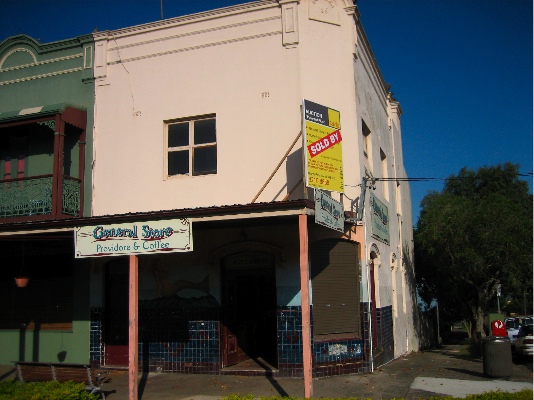
Progress at the corner

[Because the older version of this blog has become unreachable, I am retrieving at least occasional posts from it that I see people trying to click on. This is one from April 2007.]

Our corner shop continues its transformation into something possibly rich and strange.

IMG_1808.jpg

Spleen (retrieved from 2007)

I started writing notes for my end-of-month entry about books I’ll have read, but realised that one book stirred me to such spleen that it needed an entry all to itself. This is not a review, so I’m not going to even name the novel: my aim is to get the thing out of my system rather than to protect you from it (though I’m leaving in enough clues for you to figure it out). Since it has received high praise in some quarters, you may well enjoy it. But here goes anyhow.

It’s probably a commonplace among Cultural Studies cognoscenti that different texts are meant to be read in different ways: the kind of attention you bring to a novel by Jane Austen is different from the way you take in information from an advertisement on the back of a bus in traffic. If you bring to either of them the kind of attention that is appropriate for the other, you’re likely to get cranky one way or another. The advertisement will insult your intelligence; Jane will go on about not very much. I met this idea in Meaghan Morris’s excellent and challenging Too Soon Too Late, and it came in handy when I was trying to understand the success of the book I’ve just finished reading. Read with anything like close attention, the book is atrocious. Hardly a page goes by without the kind of error that an attentive copy editor would surely have picked up, let alone an author who cared about detail. My favourite example isn’t printable here because I aspire to a PG rating. Suffice to say there’s a cleft in a most unusual place, and the word ‘soul’ is used twice in a sentence along with three anatomical words that are definitely not PG. But take these little gems:

The Doll followed a small monsoon of Asian tourists pouring into the hotel’s lobby, the eye of their storm a woman with a long stick topped with a plastic sunflower.

If you don’t object to a pouring monsoon with an eye, presumably borrowed from a cyclone, then how about this:

Wilder said nothing. Wilder knew nothing drove him madder than saying nothing. She changed the topic, knowing that made him angrier still.

Of course anyone can make mistakes like this. But they’re not supposed to get into print, at least not in books that are touted as being by internationally prestigious novelists, and certainly not with the frequency they occur here. And I’m not counting the occasional genteelly aspiring ‘and she’ where ‘and her’ would be correct.

Then there are things that don’t lend themselves easily to quotation. The main character is set up with a verbal habit of calling people ‘my friend’, a habit which disappears altogether until it is suddenly brought back into play about 200 pages later. There’s a chapter early on where a male character broods on the parlous state of his marriage (if you can get past the narrator’s clumsiness enough to register this sort of thing as brooding: ‘The sex was absurd, pointless; an affirmation only of what they didn’t have – the affection, tenderness, hope and dreams that had once been theirs’) and on how deeply he loves his sons – but the sons don’t even get names, and although the chapter starts with him standing in the doorway of his youngest son’s bedroom, we discover four pages later that there are only two of them. It’s for all the world as if the writer didn’t know at the start of the chapter how many sons there were, made up his mind after four pages, and didn’t care enough to go back and make that ‘youngest’ a ‘younger’. I don’t think this is just me being a pedant: it’s as if no one bothered to make the world or characters of the book convincing, as if the actual imagining of the story is left to the reader.

It occurred to me that I’d read this kind of writing before. This book has been compared to Peter Corris‘s Cliff Hardy books – unfavourably by Germaine Greer, bless her old-fashioned literary sensibility, favourably by others. Wrong comparison! This book strives to emulate, not the taut, hard-boiled prose and pose of Corris (though the statement on the first page that ‘the innocent heart of Jesus could never have enough of human love’ is probably best read as a gesture towards a tough-guy voice), but that paradigm of successful writing of our time, The Da V i n c i Code (spacing to avoid giving it even more Google-juice). The narrator here throws words at his idea in the same way Dan Brown does there, evidently hoping that enough of them will stick to get the general effect he’s after. Back to the idea I picked up from Meaghan Morris: the book isn’t meant to be read carefully with attention to the words. There’s no room here for the pleasures of the text. It’s meant to be skimmed: the reader isn’t meant to care about the words on the page, but to take in enough of them to allow a satisfactory story to be extracted. So syntax doesn’t matter, nor do precise meanings. A first draft will do. I’m not saying that the book is written without research or passion, or even without ambition to move its readers, just that attention to detail isn’t considered necessary: there are enough rude words for spice and an accurate enough presentation of a corrupt society, especially a corrupt press, to satisfy the like-minded. There’s a scene in which the provisions of Australia’s recent anti-terrorism laws are spelled out laboriously. As one of my sons said, ‘It’s badly written, but it’s got some good ideas.’

None of this would matter so much. I mean, when you find awful writing in a novel by Lynda La Plante, or Steven Bochco, you probably shrug like me and go on enjoying their television offerings. But the publicity machine accompanying this book wants it both ways. On the one hand, there’s a note on the back cover telling me where I can download reading group notes, and the prelim pages inform me the author is regarded ‘internationally as one of Australia’s pre-eminent novelists’. On the other hand there’s a web site featuring a ‘trailer’ with close-ups of large breasts and fluorescent knickers bumping and grinding away, and a high-adrenaline slogan that actually doesn’t reflect the content of the book at all. No doubt there will be a movie. Maybe it will be good. Meanwhile the passionate heart of the book is ostensibly a denunciation of lazy, venal or corrupt public discourse in which people’s reputations and even lives are shredded in the service of the greedy, the ambitious or the politically expedient, while the majority of people acquiesce out of laziness, gullibility or unreflective cynicism. The book, in its Dan-Brownishness and its marketing hooha, is part of the thing it pretends to denounce.

It’s published by the company who publish Tim Winton. I imagine that makes them serious publishers. (And either Tim Winton is a bloody good reviser of his own drafts or they treat his work with less haste and more respect than this.) No wonder there are people who say they don’t like Australian fiction. I did read to the last page (a gracious though possibly defensive note on sources), and now I need to reclaim my mind. If I didn’t have work to do I’d get out the video of the excellent German film it claims to have stolen its plot from.

The corner store makes a comeback

[Because the older version of this blog has become unreachable, I am retrieving at least occasional posts from it that I see people trying to click on. This is one from January 2007.]

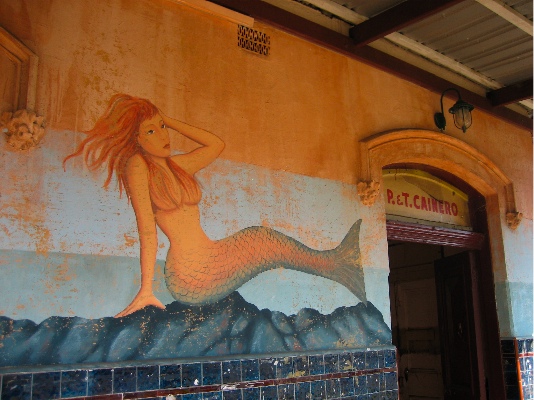
mermaid.jpg

First a little history.

When Penny and I came to live at this end of Annandale Street about thirty years ago there was a fully-functioning mixed-goods business on the corner owned and run by the genial Pavan brothers, former sugarcane cutters originally from Veneto, or maybe Friule. (I don’t know who P & T Caneiro were whose name appear above the door in the photo: they appeared when the Pavans’ name was recently scraped off.) There was a butcher shop next door, which closed down maybe fifteen years ago and made the apparently irreversible transformation into someone’s home. Not long after that, the Pavans retired and sold the business, though not the building, to Zorin and Margaret, a couple who live five or six doors down from us. The unremitting work proved too much for them after some years, and they were succeeded by a man we didn’t know, who installed an espresso machine and had the mermaid and a flash “Providore and Coffee” sign painted. Alas, he became addicted to online games, the stock ran down severely and he never achieved his goal of having a genteel, lucrative haven under his dominion. He was succeeded by a family from the next block – led by Lynn, the materfamilias who had been the mainstay of the school tuckshop for years. They did well and were much loved.

As Mollie’s dementia intensified Lynn kept an eye out for her, not only extending her credit but regularly reminding her, for example, that she had already bought a loaf of bread that morning. They instituted a book exchange – no money involved, just a community service. There were often a couple of people sitting at the little table out the front with coffee and cake. But sickness in the family took its toll, and in September when the Pavans decided to sell there was no way Lynn’s family could buy. Amid much lamenting, the fittings were auctioned and the doors were shut. Penny and I came home from our European trip to a shopless neighbourhood.

The building was sold and no more was heard for some months. Given how the last three proprietors had struggled, I don’t think I was the only one who assumed our block would remain a shop orphan.

IMG_1714.jpg

Then today as we walked past we noticed signs of destruction, signs of life.

IMG_1713.jpg

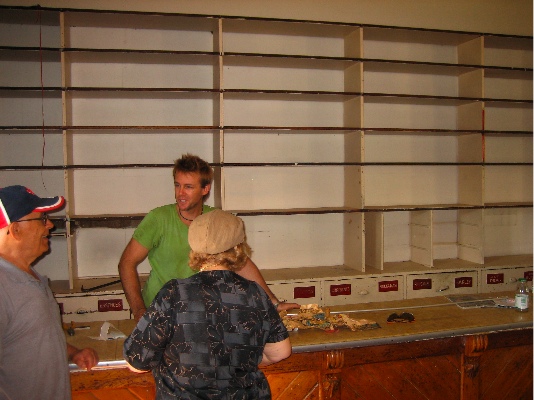
So we popped in to see what was happening, and lo, a young man who introduced himself as Rod was pulling the place apart, ripping down walls, generally exposing the filthy, smelly nooks and crannies to the harsh light of day. It turns out he has run six cafes before. He’s shying away from calling this a cafe – he wants it to be a community hanging out place where people can sit and eat good cheap food as well as buy basics and some deli stuff: armchairs and sofas and nice old tables, a separate room opening out to the eastern light, home made jams, locally grown produce. He gave us the guided tour and when I went down again to take some photos he was chatting with another couple who were as enthusiastic as we had been. The crumpled mass on the counter near Rod’s left hand is a 1943 newspaper from behind the wall lining. He plans to frame a page of it.

IMG_1712.jpg

Rod told me he had been doing a bit of work there in the first week of the year and had found three Christmas card shoved under the door when he arrived one morning. Assuming they were mail for the previous occupants he had been about to throw them out when he noticed that one of the envelopes was addressed, ‘Rodney.’ It turned out that all three cards were for him and his girlfriend-partner. The neighbourhood is happy he’s here.

I’ll keep you posted.

Candy, The Wild Things and Baba Yaga

Retrieved from my old blog, 20 December 2006.

My friend Candy, now a formidable office manager, was once the director of a childcare centre. Today she told me that she used to read Maurice Sendak’s Where the Wild Things Are to her young charges, and when Max said, ‘Let the wild rumpus begin!’, she would play a tape of Mussorgsky’s Baba Yaga’s Hut on Hen’s Legs from Pictures at an Exhibition, and the young ones would go wild until Max made them stop.

I hope you find the image as charming as I do.

Posted: Wed – December 20, 2006 at 03:58 AM

November books

Shlomo Ben-Ami, Scars of War, Wounds of Peace (Weidenfeld & Nicholson 2005)(finished)
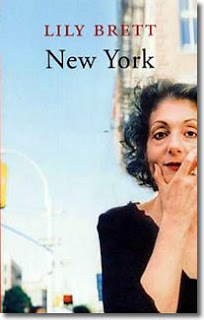
Lily Brett, New York (Picador 2001)
Simon Leys, The Wreck of the Batavia and Prosper (Black Inc 2006)
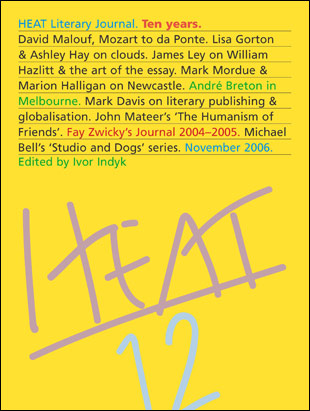
Ivor Indyk (editor), Heat 12: Ten years (2006)

Years ago, when he was in his teens, Alex explained why he wouldn’t read Terry Pratchett: ‘If I’m going to make the effort to read a book, it needs to be about something important.’ He made sense, but I’ve never felt that way myself, not in the slightest – until I picked up a detective story at the start of this month and couldn’t see the point. After books on climate change, Arab-Israeli politics, the nature of history, etcetera, I wanted something that was either very meaty or no effort at all.

new_york

I found this Lily Brett book on my friend Judy’s shelves – a collection of short pieces, each one exactly three pages long, and staying resolutely at the level of observation and wry, reflexive commentary. (Unsurprisingly, mentioned nowhere in the book itself but prominent in its description on Lily Brett’s web site, the 52 pieces were commissioned as weekly columns for a newspaper, Die Zeit – a provenance which also explains the frequent German references.) Perfect, elegantly insubstantial bedtime reading, which morphed into perfect read-aloud in the car on the drive from Melbourne to Sydney when my reading of Shlomo Ben-Ami’s syntactically challenging sentences threatened to send driver my to sleep by the time we’d reached 1967 (roughly a third of the way through). We arrived home safely and in buoyant spirits ten minutes after the end of Lily’s last piece.

batavia

Once home, I didn’t immediately pick up Scars of War as a solitary read. I took a break, and knocked over Simon Leys’ book on the Batavia in a couple of days. He starts out saying he had planned to write on the subject for a long time, but given up when he read Mike Dash’s Batavia’s Graveyard, a book he recommends. I don’t think I’m up to the long book, and might not have read this one had I not received it as a freebie when I re-subscribed to the excellent The Monthly. But it’s a fascinating subject: a hideous reign of terror on a coral atoll off the coast of New Holland in the mid 17th century. I was impressed to find that the murderous teenage boy who was part of the events comes across as just as horrifying in this brief account as he does in Gary Crew’s young-adult novel, Strange Objects. The impression created by the novel that it is based in something real is borne out by this book. Simon Leys’ Batavia isn’t really book-length, and the volume is filled out with another essay, this time an account of the author’s tuna-fishing trip on a sailing boat in 1958.

heat12_new

After that bracing dip into two very different seas, I was about to return to the dryness of war and peace in Israel, when Heat 12 arrived in the post. It turned out to be right on theme – I’ve written a separate post.

shlomo

Then I got  back to Shlomo Ben-Ami‘s book. The author is a self-described Zionist of the Left, a one-time member of the Knesset and chief negotiator in Israeli–Palestinian negotiations, an activist for peace, and clearly a passionate historian. The book is a superb history of the diplomatic, political and military tactics and strategies, coups and blunders in the Middle East. Its emphasis is on the negotiations, ‘the peace process’; wars and violence feature only as they impact on the politics. The Munich Olympics, for instance, don’t rate a mention, and one searches in vain for a detailed account of any of the many violent episodes. As a know-next-to-nothing reader, I would have loved an easy-reference timeline up the back, and perhaps a glossary giving key dates, events and outcomes for each salient episode. In the absence of such kindnesses, I felt my ignorance acutely at times, but if that minor discomfort was the price of admission, the show was well worth it.

There are wonderfully sharp portraits of the main players, David Ben-Gurion, Golda Meir, Moshe Dayan, Yitzak Rabin, Yasser Arafat – not the kind that seizes on colourful details but rather evokes the characters as complex human beings and political operators: no mention at all of Dayan’s eye patch, but a brusque sketch of him as a man who inspired many people but was completely incapable of being close to anyone, a fierce Zionist who despised Judaism and had a kind of pagan belief system. The pages on Arafat are devastatingly brilliant (I wouldn’t have a clue if they’re accurate, but they explain a lot).

The early chapters delineate the complex interplay of imperial aggression and Zionist aspiration that led to the first Jewish settlements, are unflinching in their account of the dispossession and abandonment of the Palestinians, and anatomise the complexities of the politics in the region, including the roles and objectives of the superpowers. As the book comes closer to the present, and the author’s own direct observations and even interventions become part of the story, it might easily have lost its way in the detail of personalities and politicking; instead it becomes absolutely engrossing. Little bits of gossip enliven the narrative – Arafat had such difficulty renouncing terrorism that he also had difficulty pronouncing it: at the Camp David peace talks he three times promised to renounce ‘tourism’.

The book’s real strength is that this is an insider’s view, and the whole story is presented on a human scale – not that the narrative reduces the stakes and complexities to the level of personality; more that it explores the huge dimensions of the persons involved: the myths that sustain them and undermine them, their capacity for generosity and humiliation, their relationships as political leaders with their constituencies, their skills as negotiators …

No doubt this book has its detractors, and it may well have got it wrong on any number of counts. But reading it has put me within cooee of understanding why the Middle East goes on defying attempt after attempt at peace. It has also given me tantalising glimpses of Advanced Negotiation (it’s salted with gems like, ‘The weakness of your rival is a reason to reach an agreement with him, not the trigger to humiliate him further’) and of Leadership With or Without Megalomania. Although its subtitle, ‘The Israeli-Arab Tragedy’, is thoroughly justified by the amount of death and destruction contained in this narrative, by the hubris of some players (mostly Israeli) and the opportunities culpably missed (spectacularly, but not at all exclusively, by Yasser Arafat), it manages all the same to end on a note of cautious but plausible optimism:

The time has finally arrived to assume that the complete satisfaction of the parties’ respective dreams or presumed rights will only lead them both to perdition. Here it is incumbent upon each to devise realistic ways that would heal without opening new wounds, that would dignify their existence as free peoples without putting into jeopardy the selective security and the particular identity of the other. The moment has come for the creative energies of the parties to this most protracted of conflicts to be put, at long last, to work in the service of a durable peace.

Dinner at the Art Gallery

I love the Premier’s Literary Awards dinner. It’s a night when writers who aren’t Neil Gaiman get to be stars: all these people who spend much of their lives tapping away in the quiet of their rooms emerge into the limelight and a chosen ten or so get to stand up at the podium and say something witty or profound or incoherent and shake a politician’s hand to great applause. I was going to say it was like a literary Oscars, but it’s more of an anti-Oscars: a celebration of the inward, the thoughtful, the critical, the gentle, the impassioned and the incisive.

Tonight was the fourth time I’ve been to the dinner. This year it moved down the road from the Strangers Room in Parliament House to ‘The Grand Court’ at the Art Gallery of New South Wales. It’s a pleasant space, and there wasn’t the hurry to get us out by 10 pm that marked the event at its old venue.

The address was given by Neil Armfield, not himself known as a writer, but a director in the theatre and now in film. I subscribe to the Belvoir Street Theatre, his home, and love his work in spite of being goaded to sarcasm by his penchant for having at least one male actor take off all his clothes, or at least urinate on stage, in every play – though come to think of it, no one disrobed in Waiting for Godot or anything I’ve seen since, so perhaps that signature motif is in the past, at least on stage (Heath Ledger drops his daks in Candy). Anyhow, tonight he spoke with tremendous passion and humour, starting with the moment on an Aer Lingus flight when he realised the plane seats were covered with elegantly written quotes from Irish writers: ‘Oh to live in a country …’ he started before being interrupted by applause.

Last year I had the unexpected and scary honour of being seated next to Ruby Langford Ginibi, ‘a national treasure and an icon of the survival and power of Aboriginal people’, who won the Special Award. This year I was flanked by people I know.

My predictions, unsurprisingly, were largely incorrect: I picked only two of the winners, though one of them won two prizes. I haven’t read any of the winning books, and very very little of the poetry of the Special Award recipient, of whom more later.

  • Tim Flannery won the Gleebooks Prize and the Book of the Year Award for The Weather Makers, which I had tipped to win a different prize. Tim moved straight to the microphone and delivered an urgent reminder of the importance of climate change. Since the book was published, he said, new research has indicated that things are even worse: a study soon to be published calculates that the northern polar ice cap will melt in the summer by the year 2016. We are blighting our children’s future for our own comfort, and there are alternatives to hand. Called back to the podium without warning to receive his second prize at the end of the evening, and clearly unprepared, he leaned into the mike and said – no time wasted in thank-yous or by-your-leaves – ‘Go out and buy a solar panel.’
  • Kate Grenville’s The Secret River won the Community Relations Commission Award and the Christina Stead Prize for fiction. She said in her second speech that she had expected to be attacked because of the book, which explores some uncomfortable Australian history, based on her own forebears’ story. She was so frightened, she said, that she took her name out of the phone book. But instead of attack she finds that people are hungry for what the book has to offer.
  • The UTS award for New Writing – Fiction was won by Stephen Lang, An Accidental Terrorist.
  • Script Writing Award was won by Chris Lilley, We Can Be Heroes, who gets the prize for shortest acceptance speech ever. He didn’t say much more than ‘Thank you’. Bob Debus, Minister for the Arts, who was handing out the prizes, bemusedly muttered, ‘Terrific,’ and moved on to the next winner.
  • Play Award was won by Tommy Murphy, Strangers In Between. ‘We’d love to do your play,’ the director of the Griffin Theatre had said to him, ‘if only it was better.’ They worked on it and it obviously got better.
  • Prize for Literary Scholarship was won by Terry Collits, Postcolonial Conrad: Paradoxes of Empire (as tipped by me). He gave a very funny speech, in which he spoke about ‘pollies’ and ended by suggesting that John Howard might consider ‘The Life of Mr Polly’ as a possible title for an autobiography.
  • Patricia Wrightson Prize won by Kieren Meehan, In the Monkey Forest.
  • Ethel Turner Prize for young people’s literature won by Ursula Dubosarsky, Theodora’s Gift. She thanked the Premier, the Minister and the government for the award, for the words about the importance of children’s literature with which the Premier had opened the evening, and then went on to thank the government and all the governments of New South Wales for the last 90 years for creating and sustaining The School Magazine, an institution readers of this blog will know is dear to my heart. This was my Stendhalismo moment.
  • Kenneth Slessor Prize was won by Jaya Savige, a young man from Brisbane with his hair tied back in a rough bun, for Latecomers. He thanked his mother – ‘Writing this book was one of the things I promised her I’d do’ – and ‘Ken’, who turned out to be Kenneth Slessor. He then did a lovely recitation of Slessor’s ‘South Country‘.
  • Douglas Stewart Prize for non-fiction was won by Jacob G. Rosenberg for East of Time, a memoir which he described as a festival of ideas and people.

The Special Award went to Rosemary Dobson, who had to be helped up onto the podium, and looked terribly frail. She too read us a poem, ‘Museum’, which ends:

What then to do?

Learn still; take, reject,
Choose, use, create,
Put past to present purpose. Make.

No fewer than seven people thanked their editors by name. You find this ordinary, I find it lovely. (Slessor is obviously on my mind.) Tim Flannery also thanked his two principal researchers, his poorly paid children.

All the usual suspects were there, by which I mean most of the shortlisted writers, a number of publishers and agents, eminent politicians who know how to read (not a huge number of those), previous judges (of which I am one), booksellers, bloggers (though I only know of three counting me), shadows and perhaps a stalker or two. As usual I left soon after the speeches were over, but I did have fun doing a bit of catching up, garnering gossip, chatting, congratulating, commiserating. I bought two books, sadly not including the Terry Collits book, a fairly slender hardback priced at $170 odd: academic publishing ain’t cheap.

Two Mrs Williamses

[31 August 2023: I originally posted this on 10 February 2006. I’m making it public now as it’s relevant to a piece I’m writing about the Voice Referendum.]

In E. J. Levy’s essay, ‘Mastering the Art of French Cooking’ in The Best American essays 2005 (edited by Susan Orleans), I was astonished to read this, about Mrs Williams, the ‘cleaning lady’ who came to her childhood home once a week:

I felt ashamed when I saw my mother and Mrs Williams chatting over coffee at our kitchen table. I saw their silhouettes against history, and they made an ugly broken line. I read in it patronage, condescension, exploitation, thwarted rage.

I thought at the time that it was misapplied gentility that prompted my mother to sit with Mrs Williams while she ate lunch. Their conversations seemed to me a matter of polite routine. They spoke generally. Of the latest space launch, Watergate, the price of oil. When Mrs Williams was dying of breast cancer, she told my mother that my mother had been her best friend. Her best friend. My mother told me this with wonder, as if she were amazed that anyone had ever considered her a friend. Now I wonder if the declaration moved her too because she understood its corollary, that Mrs Williams had been her best, perhaps her only, friend.

I was astonished because there are so many points of contact with my own experience. When I was a child on a sugar farm in Innisfail, North Queensland, in the 1950s, a long way from E. J. Levy’s Watergate-era Minnesota, an Aboriginal woman, also named Mrs Williams, would come to our home at least once a week to clean. She and my white, blue-rinse-genteel mother would sit at the breakfast-room table – right next to the kitchen – drink coffee and chat about generalities, of which the only one I remember is the One People of Australia League. The spectres of ‘patronage, condescension, exploitation and thwarted rage’ may have belonged in that room too, though I can’t claim to have been aware of them on my days home from school with asthma – I was more drawn to the mystique of the coffee they drank (Bushell’s non-instant coffee boiled in a saucepan of milk), and the Milk Arrowroot biscuits they had with it.

I have often reflected, though, on the friendship that grew from such (you would think) unpromising soil. When my parents left the farm and moved to a smaller house, Mrs Williams would still come once a week to clean, even though Mum didn’t need the help any more. After my father died and Mum moved into a tiny house close to town it became impossible to keep up any pretence of needing a cleaning lady: Mrs Williams kept coming once a week, to drink coffee and chat. I think it was about then that they stopped calling each other Mrs Shaw and Mrs Williams and became Esme and Pearl.

In her seventies my mother lost confidence as a driver – she would drive a very long way anti-clockwise to avoid having to make a right hand turn – but she she still drove regularly to the Williamses house to take Mrs Williams to the shops, or her husband (Mr Williams) to a hospital appointment.

I doubt if anyone would say that they were each other’s best friends, but they were real friends.

Postscript: The internets tell me I am mistaken to think Mrs Shaw and Mrs Williams talked about OPAL in the 1950s: it wasn’t founded until 1961, and I had already left for boarding school by then. My mother must have told me about Mrs Williams’s involvement in it when I cam home for holidays.

A couple of firsts

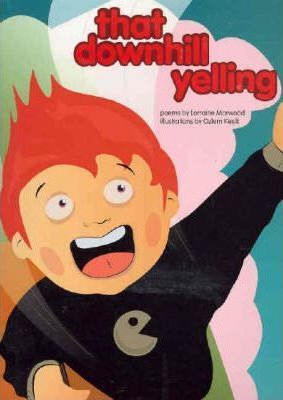
I’ve had my name on the front of at least one book; I’ve been mentioned on the inside of at least one; but yesterday a book arrived in the mail that has my name on its back. Yep, I’ve made it into the ranks of those who supply cover blurbs. The book is Lorraine Marwood’s collection of poetry That Downhill Yelling, published by Five Islands Press.Not only that, but my blurb is used as the promo on the Five Islands Press web site, where incidentally: a) my first name is misspelled (the book has it right); b) they have me still at my old job (so does the book, but that’s fine as I was in the job when I gave the quote, though I wouldn’t have given it if I’d been going to be still there when the book was published, because of Public Service ethics and all that); and c) they don’t quote the bit of the blurb I like best (‘If I ever use the phrase “downhill all the way” again, it will inevitably have a new, exuberant meaning’), though arguably I should be grateful that someone murdered that particular darling.

Anyhow, don’t buy it just for the blurb, but do buy it. It’s a terrific book, for older children and younger adolescents. Again I lament that those annual ‘best of’ collections apparently exclude children’s poetry from their pool.
——-
No sooner had I finished writing that than I found in the mail my first rejection slip since leaving my job. It’s just two short paragraphs on a letterheaded third-of-A4 slip of paper. After dropping the bad news, the second paragraph goes on:

Please don’t despair. Our judgement is well-schooled, but inevitably subjective.

Posted: Thu – December 15, 2005 at 03:01 PM