Vaughan and Harris Ex Machina

Brian K Vaughan and Tony Harris (creators), Tom Feister (inks), JD Mettler (colors) and Jared K Fletcher (letters), Ex Machina, Book One (Vertigo 2013) – originally published in 11 single magazines in 2004 and 2005

Having decided – several times – not to read any more superhero comics, here I am again. But this one is written by Brian K Vaughan, who was to go on to write the wonderful comic series Y: The Last Man, Paper Girls, and Saga (currently on hiatus).

What if the world’s first real superhero had been jetting around New York City on 11 September 2001, and had managed to intercept the second plane, saving thousands of lives? What if he realised that superhero vigilantism was of limited effectiveness and decided that he could probably do more good by running for Mayor of New York City? And what if he won the election as an independent candidate?

Ex Machina begins when civil engineer Mitchell Hundred, having decided to end his brief career as superhero The Great Machine, has indeed been elected New York’s mayor, bound by promises not to discuss publicly the origins of his superpowers (biggest of which is the ability to communicate with machines) an not to use those powers to do things best left to the police.

It goes without saying that things don’t go smoothly. Hundred inherits the New York mayoral burden of being blamed for everything. (Seth Meyers made hay with this tradition in his first Closer Look after Eric Adams became Mayor earlier this month.) He also has to deal with the burning issues of the early 2010s: terrorism, of course, but also same sex marriage, racism and the ongoing culture wars. And it wouldn’t be a superhero comic, even a retired one, without an overall arc involving mysterious possibly-alien graffiti and hideous serial killings … to be continued.

I don’t know that I’d recommend the book to serious lovers of fine literature, but I enjoyed it, and look forward to the subsequent five volumes. If nothing else, I enjoy Brian K Vaughan’s regular info-gems. For just one example, when his chief of staff points out that by officiating at a same-sex marriage he has alienated a huge segment of the population, he answers: ‘When Johnson signed the Civil Rights Act, he turned to one of his aides and said, “I believe we’ve just lost the south forever.”‘ This isn’t the Marvel universe.

Margaret Atwood’s Hag-Seed

Margaret Atwood, Hag-Seed: The Tempest Retold (Hogarth Shakespeare 2016)

2016 was the 400th anniversary of Shakespeare’s death, which led to a flurry of novels retelling his plays. Apart from the seven titles in the Hogarth Shakespeare series, of which Hag-Seed is one, there were at least Ian McEwan’s Nutshell (a take in Hamlet read by my Book Group on a date I couldn’t attend) and Abdulrazak Gurnah’s Gravel Heart (which includes a deft retelling of Measure for Measure, and which I read recently).

Hag-Seed relocates the story of The Tempest to contemporary Canada. Felix Phillips is sacked as Artistic Director of a Shakespeare festival in the small town of Makeshiweg. He goes into solitary exile with the ghost of his young daughter, hoping, Prospero-like, to take revenge on the men who usurped his position. His hope comes to fruition through a production of The Tempest that he directs as part of a literacy program in a men’s prison. He plays the deposed and vengeful Prospero himself.

I’m a sucker for stories that revolve around theatrical productions of classic texts. Theres’s the Canadian TV series Slings and Arrows (2003–2006), and Kenneth Branagh’s In the Bleak Midwinter (1995). Two of my favourite films seen this last year were Ryûsuke Hamaguchi’s Drive My Car (2021), which features Uncle Vanya, and Emmanuel Courcol’s Un triomphe (2020), which features En attendant Godot, each of them illuminating its respective play as well as gaining heft from it. If the theatrical production happens in a prison or similar institution, my suckerness intensifies: Un triomphe is in that catergory; I still remember the joy of seeing Peter Brook’s movie of Marat/Sade in the late 1960s, and the different joy of a high-school production of Louis Nowra’s Cosí directed by and starring the late Jesse Cox. In real life, my first copy-editing task at The Currency Press was to mark up two short plays, The Chocolate Frog and The Old Familiar Juice, written by prisoner Jim McNeil and staged by the Resurgents Debating Society in Parramatta gaol, a group not completely unlike Margaret Atwood’s Fletcher Correctional Players.

This may be the first novel I’ve read that both retells a classic and has the Let’s-Put-on-a-Show story-line. Mansfield Park is as close as I’ve got. (I haven’t read Thomas Keneally’s Playmaker – maybe I should.)

So it was inevitable that I’d love this book.

The story of Felix’s revenge is cheerfully improbable fun, involving hi-tech jiggery-pokery, hallucinogen-spiked grapes and a convenient confession, but the real interest of the book is in the production of The Tempest. For someone with my superficial knowledge this is a joyous introduction to the complexities of the play and its potential for interpretation.

For just one example, none of the the prisoners in Felix’s ‘class’ is going to risk playing Ariel. Caliban, fine – everyone signs up for him. But everyone knows they’ll never survive being seen as a fairy on TV by the whole prison population (the prison won’t allow the play to have a live audience). Felix does a brilliant job unpacking the nature of the role, to the extent that more than half the group now want to play Ariel as a possible alien, super-powered force of nature – it works at the level of story, but it also offers fascinating insights into the play.

The role of Miranda doesn’t allow for such persuasion. There’s nothing for it but to cast a real woman – and the presence of a young woman who is a dancer and a champion in martial arts is the source of some good clean anti-sexist fun.

In a couple of chapters towards the end, the members of the class present their ideas of what happens to their characters after the play ends. At this stage it occurred to me that this book would be an excellent teaching aid for a high school class studying The Tempest. The prisoners are doing just the kind of exercise that such a class might be assigned. And you know what? That thought didn’t dim my enjoyment one bit.

End of year lists 2021

The Emerging Artist and I have put our heads together for our traditional end-of-year list-making.

Best Movies:

We got to the pictures surprisingly often this year, and we watched a lot of movies at home. We saw roughly 50. We managed, painfully, to whittle the list down to four that we agreed on. Three of the four we saw at the Sydney Film Festival. They are, in no particular order:

We each chose one more to make five each. I’ll leave you to guess who added which:

And then we picked four documentaries, all from the Sydney Film Festival except the absolutely brilliant Summer of Soul:


Theatre:

We subscribed to Belvoir Street and Griffin, but Covid–19 meant we didn’t actually see much. We agreed, however, that our top theatre experience lay elsewhere, in commercial musical theatre:


Books:

The Emerging Artist read 35 books in hard copy and roughly 10 on her device. She read 25 books by women and 20 by men. She has given me a list of her five best books in non-fiction and fiction categories (art books were important but not for listing). Here they are then:

Fiction

Ayad Akhtar, Homeland Elegies (Headline 2020)

This is my outstanding book of the year: funny, serious, filled with ideas. It’s a biting commentary on where the USA is now, written while Trump was still president, but it’s still relevant. It’s a novel that reads uncannily like a memoir. (Link to Jonathan’s blog post)

Susan Abulhawa, Against the Loveless World (Bloomsbury 2020)

Completely engrossing story of the Palestinian diaspora in the Middle East and life in an Israeli prison.

Elizabeth Strout, Oh William! (Random House 2021)

What can you say about Elizabeth Strout? She’s such a delight to read. Beautifully written, this follows on from Lucy Barton.

Jonathan Franzen, Crossroads (HarperCollins 2021)

I’m not always a Franzen fan, but I loved the way this captures a period in one family’s life that echoes across US cultural life in the 70s

Richard Russo, Nobody’s Fool (Allen & Unwin 2017)

I’ve become a fan if Richard Russo. Nobody’s Fool needs to be read in conjunction with Everybody’s Fool. Like Elizabeth Strout and Jonathan Franzen, this examines small town life, where people do bad things but are recognisably human – no big villains.

Non-Fiction

Mark McKenna, Return to Uluru (Black Inc 2021)

A beautifully written, meandering history of a particular moment. (Link to Jonathan’s blog post)

Grace Karskens, People of the River (Allen & Unwin 2020))

This should be read in conjunction with Grace Karsken’s The Colony. Both are large volumes of brilliantly-written history. The river of the title is the Hawkesbury–Nepean / Dyarubbin, and the book covers the geology, flora and fauna, and human history, both before and since settlement.

Jonathan Bardo, A History of Ireland in 250 Episodes (Gill Books 2009)

It’s hard to find a general history of Ireland in bookshops and libraries in Sydney. This is a great introduction, originally created as 250 five-minute radio programs broadcast over a year in Ireland. Ireland’s history is much bloodier than I knew from when it was first inhabited, and the English are not the only source of the violence.

Bart Van Es, The Cut Out Girl (Penguin 2018)

Prompted by an interview with the author in a Conversations podcast, I borrowed this from the library. It’s a memoir about family secrets and silences that tracks the missing links in a Jewish woman’s childhood hiding from the Nazi regime.

As for me, I read 77 books (counting journals but not every children’s book). I can’t pick bests. Most successful scratching of a longstanding itch was Wordsworth’s The Prelude. Most fun was Bernadine Evaristo’s Mr Loverman. Most mind-altering was Andy Jackson’s Human Looking. Most reader-friendly Nobel laureate was Abdulrazak Gurnah’s Gravel Heart. Most likely to produce lasting behavioural change was Joe Keohane’s The Power of Strangers. Most magical revisit was Ursula K LeGuin’s Catwings. The one that made me wish I was writing my own memoirs was Brendan Ryan’s Walk Like a Cow. The one that made me think my memoir would get it all wrong was Evelyn Araluen’s Dropbear.


Happy New Year, everyone. Please add your own treasured movies, plays or books from 2021 in the comments.

#aww2021 Challenge Completed

This is my round-up post for the Australian Women Writers Challenge 2021, my eighth year of participation, and the final year of the challenge’s existence.

The challenge was established in 2012 to raise awareness of Australian women’s writing. I signed up for 2014, and I’ve recorded a total of 165 books read since then as part of the challenge. This year, I read 15 books by Australian women writers, well over my goal of ten. Here they are, with links to my blog posts:

6 books for children and young people

4 books of poetry

3 essays

1 historical novel

1 collection of essays edited by a woman

1 art book

The list doesn’t include journals or anthologies.

On a related topic, I’ve done a quick gender check on books I read this year. Counting comics, but not journals, anthologies or most picture books, I read:

  • 27 by women
  • 34 by men

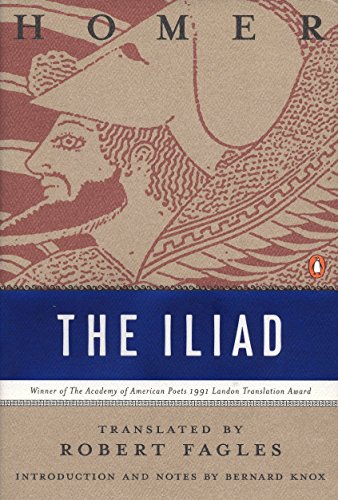
I read 1 book in translation (from Homeric Greek), and 2 in their original French. I read two books by First Nations writers, and 10 by People of the Global Majority (a term I’m using at the recommendation of friends who prefer it to ‘People of Colour’). These stats make me realise that apart from anything else the journals I read are a great source of diverse voices.

I’ll do a separate post where the Emerging Artist and I pick our favourite books and movies of the year.

Ruby Reads 29: Gift

It’s the time of year when Ruby comes into possession of many new books, first for her birthday, and then for Christmas. This is one I gave her, and which she took time to enjoy in the midst of things. (I love it.)


Ursula Dubosarsky and Tohby Riddle, The March of the Ants (Book Trail 2021)

Full disclosure: Ursula Dubosarsky and Tohby Riddle are friends of mine.

They’re also both geniuses, who have collaborated on a number of books for children. This gorgeous picture book is the latest. The text was read by Ursula at her launch as Australian Children’s Laureate in February 2020. Neither she nor Tohby could have known that its message about the importance of story had a prophetic relevance for the two years that lay ahead.

A group of ants set out on an excursion. Every one of them carries something important for the enterprise. When one little ant shows up with just a book, there is much mockery. But the little ant persists. Later when all the others are tired from their exertions and the food and drink have run out, the little ant reads to the others, and they are revived by the story.

Tohby’s images are masterly, full of odd details without being at all crowded.

Here’s a video of a laurel-crowned Ursula reading the book, from the Australian Children’s Laureate Foundation webpage


The March of the Ants is the 15th and final book I’ve read for the Australian Women Writers Challenge 2021.

Lemire Endings: Gideon Falls 6 and Ascender4

Among my welcome gifts of comics this Christmas are the final instalments of two series that have been going for a couple of years. Though they share a principal author, they evoked vastly different responses in me: I was just relieved that one of them was over at last, and the final pages of the other had me welling up.


Jeff Lemire (writer), Andrea Sorrentino (artist) and Dave Stewart (colorist), Gideon Falls, Volume 6: The End (Image Comics 2021, originally published as issue 27 of the comic)

This has been a brilliant piece of complex story telling, matched by superbly challenging art work. There’s a kind of zombie apocalypse with hideous grins, happening in at least three time periods but all in the same place. There’s endless confusion about which people and institutions are on the side of good, and which in thrall to evil. There’s a weird blend of scientism and the occult, and an abundance of surgical masks that belies the story’s pre-Covid-19 beginnings (and don’t make any obvious sense without the Covid–19 reference).

Horror is a genre whose appeal is lost on me. That, and the sense on page after page that I had to work hard just to figure out what was going on, means I was pretty cool about the series, and this final instalment didn’t warm me up. The occasional page is upside down, for a start, and to my eye at least the characters never take on clear individual qualities. Interestingly, among the included extras is the script of the original comic: reading it would be an ideal way of sorting out who everyone was, and what was happening on the pages where the images were indecipherable to me. I was tempted, but in the end I decided I’d rather live with being too stupid to follow the story than expend any more effort on it.


Jeff Lemire & Dustin Nguyen (storytellers), Steve Wands (lettering and design), Will Dennis (editor), and Tyler Jennes (assistant editor), Ascender Volume Four: Star Seed (Image Comics 2021, from issues 15–18 of the comic)

This volume brings an end to six years of space opera – the six-part Descender. and the the four-part Ascender. This also has been a brilliantly complex story-telling, whose visual complexity sometimes tipped over into incomprehensibility. Here too several distinct stories have occupied the same space in a vertigo-inducing manner.

But at the heart of this saga are two small children under threat, one of whom is a robot, so the reader has an emotional grounding. We know who to barrrack for when they flex their great powers (the robot), and who to fear for when the forces of empire and magic and machinery are out to destroy them (the flesh and blood girl).

Dustin Nguyen’s watercolour paintings, which I didn’t care for at all at first, turn out to serve the story beautifully. The scenes of violence are just as chaotic as anyone could wish. The bad guys, rather than being softened by the pastel colours, take on a kind of deliquescent vileness. And the children stay softly vulnerable throughout.

Among tying off of narrative threads, there’s a twist in the final moments that got to me. It takes real genius to set up a narrative tension that the reader is barely aware of, to let it simmer for years (years in the telling, and decades in the story itself), to lay careful last-minute groundwork for a resolution that the reader (this one anyway) sees as pure decoration, and then spring the resolution in just a single frame. I hope that’s abstract enough to leave the story unspoiled should you choose to read it.

Given my own widely divergent responses to these two series, I hesitate to recommend either of them without qualification. But if I was running a comic shop and you walked in off the street asking for recommendations, Jeff Lemire’s name would spring to my lips.

Bernadine Evaristo’s Mr Loverman

Bernadine Evaristo, Mr Loverman (Penguin 2013)

Bernadine Evaristo won the 2019 Booker Prize for her novel Girl, Woman, Other. Mr Loverman doesn’t have such a weighty status, but it’s wonderful. The narrator, Barrington Jedidiah Walker is seventy-four (same age as me, which may be why the book was insistently recommended to me), living unhappily married in London. It’s 2010 and he has been in love with his friend Morris since they were children, and having an active, clandestine sexual relationship with him.

He’s a great character, and the story of his coming out – a term he dislikes – is told with enormous charm and energy, in language inflected with the rhythms of his native Antigua and filled with sparkling wordplay.

While our sympathies are firmly with Barry, the book doesn’t let us forget how badly his deception has affected his wife and daughters. The ending is almost Shakespearean in the way it ties off everything in neat bows. Speaking of Shakespeare, the largely self-educated Barry loves to quote the Bard, to terrific effect and in my case a serendipitous similarity to the last novel I read, also by an English of African heritage.


No reflection on the books, but my blog posts for the next couple of weeks will be short and – hopefully – to the point. I don’t imagine an explanation is needed but it’s summer-time, my extended family are in Christmas–New Year mode, the Emerging Artist and I will soon be crossing state borders to spend a couple of weeks away, and on top of all that I’ve got a very painful hamstring (don’t ask!) and a non-Covid coronavirus infection.

Lech Blaine’s Top Blokes

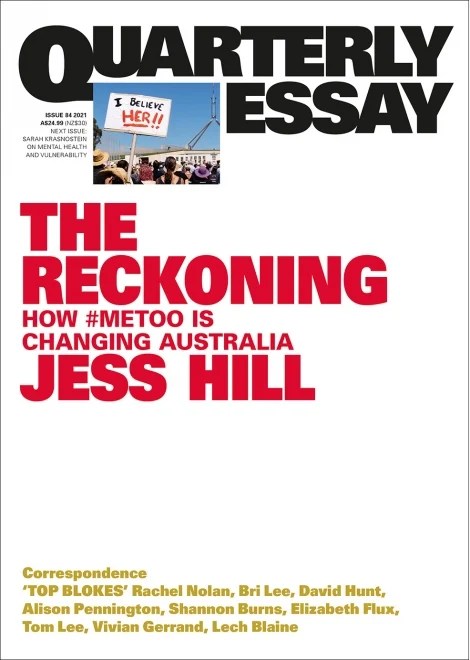
Lech Blaine, Top Blokes: The larrikin myth, class and power (Quarterly Essay 83, 2021)
– plus correspondence in Quarterly Essay 84

About the time this Quarterly Essay was published (13 September 2021), two other books appeared on Scott Morrison: The Accidental Prime Minister (15 September 2021), a biography by Annika Smethurst; and The Game (1 November 2021) by Sean Kelly. Given that Quarterly Essay 79, The End of Certainty (September 2020) by Katharine Murphy, was in part a portrait of Morrison, no one could say Scott Morrison has avoided scrutiny. Judith Brett has a brief, elegant piece in the November issue of Australian Book Review discussing all four publications. It features on the ABR podcast, at this link.

The main thrust of this essay, as I read it, is that whereas in earlier times the ALP and unions were powerful voices to defend and promote the rights of working class people, they no longer serve that function, and working class voices in Australia – the voices of people involved in direct production and basic service work – have been marginalised. Instead, members of the political class take on cultural signifiers of working-class culture: there’s symbolic representation rather than participation. Memorably, the essay describes Matt Canavan’s selfies in soot-covered face and yellow jacket as the class equivalent of blackface. The argument is important, and urgent in its implications for the resistance to climate change action among mine workers: people who have the most at stake in the short term are unlikely to be persuaded by high moral argument, or even arguments about intergenerational justice, from people whose livelihoods and lifestyles aren’t obviously at immediate risk.

That argument is graphically presented in a history of Australian parliamentary politics since Howard, interspersed with commentary from Blaine’s unreconstructed working-class friends and family on both sides of politics.

The issue is muddied by the whole larrikin thing. It’s one thing to describes Scott Morrison’s construction of an artificial persona that would appeal to a certain part of the electorate: ditching his love of Rugby Union and becoming a League fan, having his photo taken with a meat pie and a beer, etc. It’s quite another to say that this is larrikinism: on the contrary, the ‘daggy dad’, ‘ordinary bloke’ persona smacks of suburban conformity rather than nose-thumbing disruptiveness, which I would have thought was a defining feature of larrikinism.

I went back through the essay looking for Blaine’s definition of the term. I found this:

In the beginning, larrikins sinned on the streets of Australian cities. They lusted not after power but for moral condemnation from coppers. The capitalist class was trolled for sport. That didn’t mean the larrikin was impervious to the seduction of money and media spectacle. Life revolved around get-rich-quick schemes and dreams of widespread notoriety. ‘The term “larrikin” was used as a handy way for journalists and the authorities to label any apparently lowborn young person … who engaged in uncouth behaviour,’ wrote Melissa Ballanta in Larrikins: A History. ‘At all times larrikinism had a profound connection to unskilled labour.’

(page 13)

That seems clear enough, but once the essay moves away from definitions, the word seems to be applied to any person, usually a man, who is solidly working class, and possibly raised in poverty. The essay discusses a wide range of individuals as exemplifying aspects of the larrikin, real and fake, including: Melissa Lucashenko’s father, an itinerant Russian migrant who was ‘extremely violent’; John Willey, who grew up in an orphanage, fought in World War II, was a solid unionist and helped build the Railways Rugby League Club in Ipswich; Anthony Albanese, at least in his early life, who was raised in public housing by a single mother on a disability pension; Bruce, a FIFO electrician on a gas mine; movie-star and tax evader Paul Hogan; First Nations senator Lidia Thorpe; poet Omar Sakr; artist Abdul Abdullah; Indigenous All Stars captain Joel Thompson. The term becomes wide enough to embrace anyone who is anti-authoritarian: Grace Tame, Behrouz Boochani and Adam Goodes. That is to say, the word becomes close to meaningless.

The muddled larrikinism discussion aside, the essay offers important insights into the One-Nation-voting working people who feel themselves, with justice, to be ignored and silenced by the mainstream media and politicians.


Six of the eight correspondents in Quarterly Essay 84 – Jess Hill’s The Reckoning – are women.

Rachel Nolan, a former Queensland MP, notes that Lech Blaine identifies strongly with his family’s Ipswich connections, and she gives a brief, fascinating political history of the town.

Bri Lee amplifies the essay’s description of the way people with university degrees condescend to those who don’t, the way some people on the left believe in ‘the stupidity and wholesale inferiority of the right’.

Economist Alison Pennington does a sterling job of outlining the origins of larrikinism in the success of enormous struggles by working people, and having done some of the work that was missing from the essay, she gives credit where it’s due, calling it ‘one of the most engaging analyses I’ve read of Australian contemporary class relations’.

Of the men, literary critic Shannon Burns offers some fascinating reflections on ‘authenticity’, and somehow includes a description of Bogan Bingo, an entertainment in which white-collar workers have fun pretending to be ‘bogans’. [She] He draws attention to an element of larrikinism that is missing from Blaine’s account: ‘He knows how to have fun and invites you along for the ride. A larrikin is playful when she is serious and serious when she is playful.’

Historian David Hunt challenges the essay’s identification of solid unionists with larrikins – historically the two groups have loathed each other.

Lech Blaine’s response to the correspondence is brilliantly un-defensive – a textbook example of how to respond to disagreement and criticism. He writes:

Flicking somewhat flippantly between historical scenes was meant to convey the mess of Australian national identity, and the way we frequently use the same descriptions and categories for people who are spiritually and politically opposed. I definitely should have provided a more succinct definition of what it means to be a larrikin, then and now, especially in a positive sense.

(Quarterly Essay 84, page 106)

The Marrickville Mattress Poet again

It’s almost a year since I saw any of Marrickville Mattress Poet C.L’s work (last sighting here), but she’s still going, and I saw this this morning. It looks as if she’s feeling the strain of living with a climate-action-delaying bloviator as Prime Minister.

500 people: Week 44

See this post for a brief description of my 500 People challenge, and also my post on Joe Keohane’s The Power of Strangers for an ex-post-facto rationale.

1. Saturday 11 December. I’m not sure if this counts as a warm encounter. I was waiting on the platform at Town Hall Station when I saw a young man in the train about to leave the station throw a piece of rubbish on the floor of his carriage. I somehow caught his eye and gestured my dismay. Beneath my mask, I muttered, ‘Pick it up, you little [expletive],’ but he couldn’t hear or even read my lips. He gave me the finger, removed his mask, took a puff on his vape and blew it in my general direction. I made a number of gestures in his direction that could have meant anything. I got out my phone and took a photo, threatening (inaudibly) to post it on TikTok. He cocked his fingers like a pistol and shot me a few times. Then the train left. I choose to believe all this was in fun, that we were each entertaining himself with these little performances.

2. Sunday. I was in my favourite bookshop, Gleebooks, buying gifts for, it turned out, eight greatnieces/nephews. A silver-haired woman commented as she passed me, ‘You’re doing well!’ A niece had given her a list of books her children might like, but without authors’ names or other helpful details. We had a pleasant little chat as we attempted to sort out whether it was great-great-nieces we were buying for, or just one great, and swapped book anecdotes. (She got help from a staff member and was delighted to find what she was looking for. I did well too.)

3. Monday morning at the swimming pool, we were greeted at reception by a woman who I’ve seen around but never in that role. As I was leaving I decided to have an actual conversation with her: ‘I’ve seen you around,’ I said, ‘but not here. Have you been working here long?’ She has worked at the pool for a long time, she said, but in the office (vague upward gesture). Covid lockdown meant that everyone had to take a turn at reception. So of course I asked after the three sisters who worked there for years before Covid, and got some of the story of how they got trapped in Queensland.

4. Tuesday. The other person in the sauna was a young woman. I made a small opening gambit – something about the wall clock having stopped – and we chatted for close to half an hour, the kind of chat that Joe Keohane says increases the wellbeing of participants. She’s a musician. I asked if I should have heard of her. ‘Not yet,’ she said modestly. But she told me her professional name and I visited her website later. When she’s famous I’ll be able to say I knew her when.

5–7. Saturday, middle of the day. An in-person birthday party for a four-year-old. I didn’t keep track of how many new people I engaged with, but I estimate at least three. Most memorably were two young parents who left Australia a bit over three years ago for one of them to work in Dublin. They got caught there by Covid–19, and returned just a couple of weeks ago, now with two young Irish-born children. I initiated the contact by advocating for their three-year-old daughter who was too shy to assert herself in the rush for a slice of the teddy-bear cake (a splendid creation of the Emerging Artist).

8. Later on Saturday. I was in the local bottle-shop’s coolroom looking for my preferred non-alcoholic drink. Two young men sauntered in, one of them lifted two cartons from the top of a pile of beer cartons, and the other picked up the two cartons below them , and they both walked out, all done smoothly and wordlessly as if they shared a brain. As I left the coolroom after them, one said to me, ‘Pretty smooth, eh?’ I said, ‘You must have done it once or twice before.’ I added, ‘I have one criticism, though. You should have taken the [brand name of top two cartons redacted].’ He was momentarily shocked. The cartons they took were also [redacted], but a different colour logo: ‘It’s a good drop, eh?’ ‘I don’t drink,’ I said, ‘but my old next-door neighbour is the brewer.’ ‘You don’t drink! You’re in the wrong place then.’ I laughed and said, ‘I can still look, can’t I?’

Running total is now 270.