Tag Archives: Alejandra Zambra

End of Year List 4: Books

From the Emerging Artist, in her own words (links to the LibraryThing pages or, at her request, to my blog post when there is one):

Non fiction
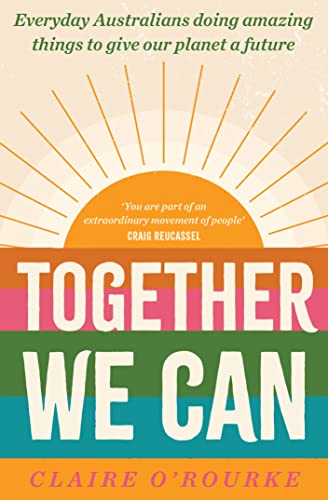
Claire O’Rourke, Together We Can (Allen & Unwin 2022)
I read this after hearing Claire talk on a Sydney Writers’ Festival panel on how to have hope in relation to climate change. It’s a good read, mixing specific examples of everyday Australians tackling what’s happening with broader theory on how to bring about change. It does fulfil its title, giving a real sense that “together we can”.

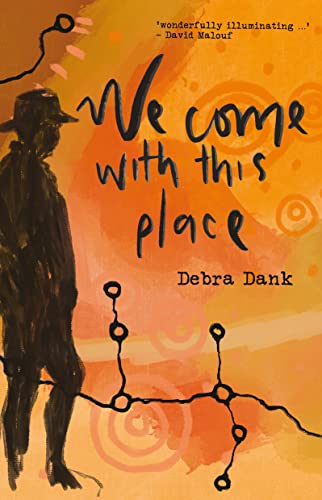
Debra Dank, We Come With This Place (Echo Publishing 2022)
We watched this book win four awards and heard Deborah Dank’s speech at NSW Premier’s Literary Awards 2023. We immediately went out to buy it. The writing is beautiful, a slow evocation of country and its connection to the author, while filled with story. I think it’s the must read of the year.

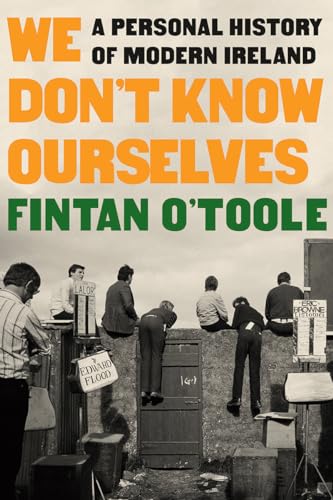
Fintan O’Toole, We Don’t Know Ourselves, a personal history of Ireland since 1958 (Head of Zeus 2021)
Hearing Fintan on the ABC’s Conversations, I immediately placed an order and waited patiently for four months for it to arrive. I’m glad I did. It’s written in short chapters in chronological order, but often picking up themes from chapter to chapter. It’s funny while documenting the appalling state of Ireland from 1958 through personal history, statistics and other sources. The incredible poverty (no running water in homes or sewage, no education for 80% of the population past primary school) made worse by the stranglehold of the Church and corruption in keeping poverty in place and the changes brought about by the impact of globalised capitalism all come alive in riveting storytelling.

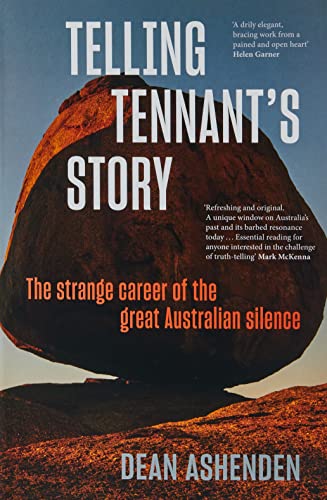
Dean Ashenden, Telling Tennant’s Story: The Strange Career of the Great Australian Silence (Scribe 2022)
A very readable history of post WWII Australian policies in relation to First Nations people where the impact of the policies on Aboriginal people in a specific area – Tennant Creek – are made clear. It tells how the policies of assimilation and later self determination came about and how far-reaching their effects have been. It would have been good for all those voting no to have been made to read this as a requirement for having a say.

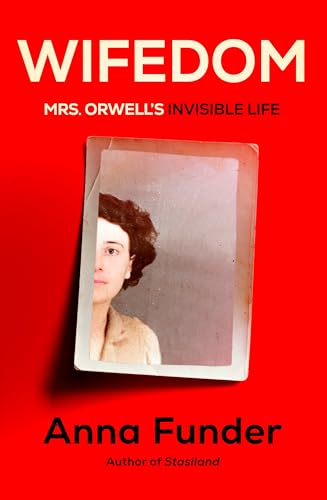
Anna Funder, Wifedom: Mrs Orwell’s Invisible Life (Penguin 2023)
So much has been written about this book already I don’t need to give a summary. I found it gripping. 

Fiction
I read 62 books this year, from quick comfort ‘junk’ reads to harder literary tomes. I take a photo of each book to prompt memory, and going through them all, it’s clear I have had an excellent selection to choose five favourites from. I’ve ended up deciding by level of enjoyment, not on some literary merit criteria.
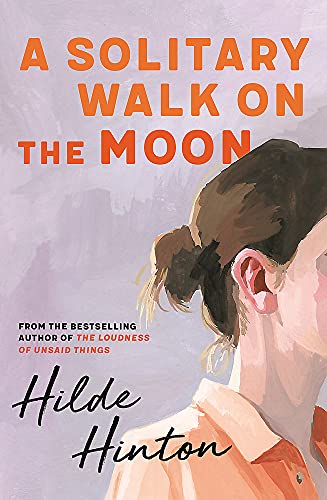
Hilde Hinton, A Solitary Walk on the Moon (Hachette AUstralia 2022)
A totally enjoyable read while disquieting in its simplicity. This is a second novel by an Australian author who seems to slipped under the radar. I found it in my local library. 

Annie Ernaux, The Years (Fitzcarraldo Editions 2018)
This was also an entrancing read, covering a similar time period to my own life. It conjures up the similarities and immense differences between growing up in middle class France and Australia.

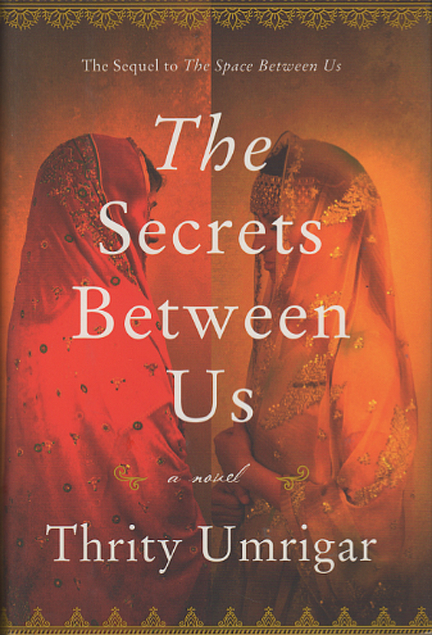
Thrity Umrigar, The Secrets Between Us (HarperCollins 2018)
Another library chance find. I loved the three strong old women protagonists, the exploration of caste and how this is/isn’t changing in modern India.

Melissa Lucashenko, Edenglassie (University of Queensland Press 2018)
This was gripping rather than straight out enjoyable, with a sense of what was to come on every page. I loved the imagined world of life at the point where the strangers are staying and growing in number, while keeping your own way of life intact.

Richard Russo, Somebody’s Fool (Allen & Unwin 2023)
Jonathan hasn’t yet been lured into the wonderful world that Richard Russo writes about, but I expect that to change soon. This is the latest in a series that includes Everybody’s Fool and Nobody’s Fool, all set in small town east coast USA. The books follow a number of interconnected characters over a few generations recording the process of change as late capitalism, racism and gender are played out in the town of Bath. He writes with affectionate humour about all of his characters. We see their frailties and appalling behaviour (between white and black, men and women, different generations) but in a number of cases we see how their connections with each other bring a shift in perspective. I love them. 


From me

I read 83 books (counting journals but not children’s books). I finished my slow read of Middlemarch and read St Augustine’s Confessions, a little each morning, but didn’t start another slow read in September because I was doing the Kelly Writers’ House course in Modern and Contemporary American Poetry (ModPo), which was great fun and probably taught me a lot.

I read:

  • 21 books of poetry
  • 26 novels
  • 4 comics
  • books in translation from Chinese (2), Spanish (3), French (2), Danish (1 or 3, depending on how you count), Russian (1) and Latin (1), and bilingual books containing Greek (1) and Maori (1)
  • counting editors and comics artists, 44 books by women, 39 by men
  • 12 books by First Nations writers, and
  • 15 books by other writers who don’t belong to the White global minority.

Biggest serendipity: Four books spoke powerfully to each other and to me in the wake of the referendum on the Voice: Debra Dank’s We Come with This Place, Melissa Lucashenko’s Edenglassie, Dean Ashenden’s Telling Tennant’s Story and David Marr’s Killing for Country (no blog post yet). Unlike Voice and Treaty, the third proposal from the Uluṟu Statement from the Heart – Truth – doesn’t have to wait for government action. These books, and so many others with them, are moving that project forward brilliantly and unsettlingly.

The most fun was probably two novels about poetry, which also spoke to each other: Chilean Poet by Alejandro Zambra and The Anthologist by Nicholson Baker.

Most interesting new discovery of someone who has been writing for decades: 2022 Nobel Prize laureate Annie Ernaux. I read Les années and Mémoire de fille, both of which mine her life story in ways that make most memoirs seem dull. Though I read them in translation, it seems right to name them in French.

Most imaginatively huge was Alexis Wright’s novel Praiseworthy, which incidentally is set in some of the same localities as Killing for Country.

Most memorable poetry: Sarah Holland-Batt’s Jaguar, with Ken Bolton’s Starting at Basheer’s (no blog post yet) a close second, the first for its precise, compassionate treatment of the poet’s father’s final illness, the latter because it filled me with joy about the everyday.


Happy New Year to all. May 2024 see the rejection of authoritarianism in elections and an end to mass killings everywhere. And may fossil fuels at last be left in the ground. Failing that, may we all keep our hearts open and our minds engaged.
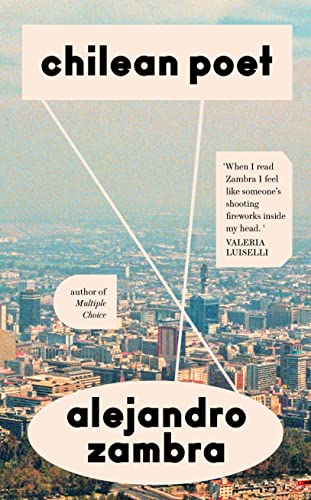
Alejandro Zambra’s Chilean Poet and the book group

Aalejandro Zandro, Chilean Poet: A novel, translated by Megan McDowell (Granta 2022)

Before the meeting: I enjoyed this novel enormously. I expect people who know Chile, and especially the Chilean poetry scene, would enjoy it even more.

In the freezing Chilean winter of 1991, teenagers Carla and Gonzalo curl up night after night under a magnificent red poncho watching television in her mother’s house and manage to do ‘everything except for the famous, the sacred, the much feared and longed-for penetration’. Just as the nights are beginning to warm up and remove the excuse for the poncho, they get an opportunity, but the famous etc event turns out to be less than absolutely pleasurable, at least for Carla.

The story goes on from there. In my innocence, I was surprised by the turns of events, so I won’t go into detail, except to say that Gonzalo as a teenager is an aspiring poet, and we get to read one of the atrocious sonnets he writes for Carla; and some years later Gonzalo becomes stepfather to Carla’s son Vicente.

The second half of the book begins with an echo of the opening of the first half. Vicente, now a teenage aspiring poet (probably more promising than Gonzalo), is in explicit sexual action with Pru, an older woman visiting Chile from the USA, using alarmingly explicit English he has picked up from porn.

It may be a spoiler, but I’ll risk it: the relationship between the two poets Gonzalo and Vicente is the heart of the book and its narrative spring. Carla and Pru, and Vicente’s natural father León, are vivid secondary characters. Chile, in particular Santiago, and most specifically the Chilean poetry community, provide the charming, engrossing, at times hilarious, always lively milieu.

Pru is visiting Santiago on her first major journalistic assignment. Her editor wants a ‘human interest’ story about stray dogs, but she persuades him to let her explore the poetry scene, and Alejandro Zambra has a lot of fun describing her interviews with poets.

I have no idea if poets and poetry have the prominent role in Chilean life that these poets claim. One of them says that for Chileans the Nobel Prize in Literature is as significant as the World Cup, and it’s a matter of huge pride that Chilean poets have won it twice: Gabriela Mistral (1945) and Pablo Neruda (1971). Not that any of the living poets care too much for Neruda or Mistral – the living are much more interesting and important, and their mutual competition, championing and denigration make Australia’s so-called poetry wars look … well, I was going to say tame, but really it makes them look normal.

I’ve read two other novels with poet protagonists recently: Edwina Preston’s Bad Art Mother and Niall Williams’s A History of the Rain. Unlike the former, we believe that the characters in Chilean Poet actually write poetry of varying quality; unlike the latter, these poets are part of a thriving scene rather than slightly deranged, isolated mystics. One of the joys of the book is the way their alertness to language features strongly in all their relationships. The account of Vicente’s wooing of Pru, for example, is full of the joys and perils of communicating across a language barrier.

There’s a terrific scene in the first part, when Gonzalo is a hands-on father to Vicente. He breaks one of Clara’s rules by allowing Vicente to sit in the front seat of the car – and accidentally reveals his crime to her. She explodes, using the word betrayal, which sets him off:

‘I’m so sorry for taking care of Vicente every single day,’ said Gonzalo.
‘It’s times like these it’s clear you’re not his father,’ retorted Carla.
Gonzalo looked at her with astonishment and contempt. He grabbed his hair with his left hand, and with his right he tore up an abundant clump of grass.
‘I’m a much better father than that lame-ass, ugly, mediocre motherfucking pusillanimous sack of balls who stuck his dick in you.’

(Page 75)

Rather than continue with the fight, the narrative stops there, and the poet-mind kicks in. Gonzalo spends two pages mentally critiquing his own sentence. It ‘felt a bit ungrammatical and was a pretty stupid outburst, but …’ He ponders the accuracy of ‘ugly’, acknowledges that pusillanimous doesn’t apply, and wonders if he used that word ‘for the mere pleasure of saying a word that León would have to look up in a dictionary’. He quite likes sack of balls because it’s not only hurtful but original. And before pouring himself a double whisky and stomping off to his writing-room he indulges in this final piece of poetic analysis:

The truly damning part was definitely that grand finale, who stuck his dick in you, which brought jealousy to the forefront and insinuated that Carla was some kind of whore. Still, the accusation held a trace of childishness, as if Gonzalo had only just found out how babies are made.

(Page 76)

Megan McDowell’s translation is terrific. At many moments, the narrative turns on the use of language, as in the passage I’ve just discussed. At a key moment, when Vicente is quite young, he and Gonzalo discuss the Spanish word for ‘stepfather’ – padrastro. Gonzalo is reluctant to take it on because astro at the end of a word has negative connotations. McDowell does a brilliant job of putting this into English as a completely plausible conversation for a poet to have with a young boy, and manages not to feel as if she is winking at English readers over the characters’ heads.

The meeting: After an hour of convivial catch-up and organising of food, we settled down to the book. Unusually, the Chooser explained how he had made his choice: he started out thinking of something by Annie Ernaux, in deference to the Nobel Prize committee, but as none of her books were easily available he sought advice at from his local bookseller, who suggested this – which turned out, he said, to be a perfect summer read. One chap who usually doesn’t say much, and usually speaks softly, immediately grabbed the floor and disagreed vehemently: not an ideal summer read at all; for that he’d recommend Richard Osman’s Thursday Murder Club series; this author was too intent on displaying his knowledge of poetry and poets to keep his narrative alive and engaging.

And it was on!

No one, it turned out, had done the work of checking which poets in the book are real and which imagined. A number of us, including a late-comer who had missed the opening salvo, just loved the bit where Pru interviews a range of poets and leaves the main narrative on hold. There’s a disorderly poet’s party that got a lot of love.

The bits that might have been irritating, where the author breaks the fourth wall to comment on his decisions, were pretty universally enjoyed. We were sorry to see the end of Pru, the gringa journalist over whose shoulder we get to know the poetry scene. One chap felt that Carla, Vicente’s mother, was a bit two-dimensional. No one contradicted him, but no one seemed to mind terribly. One man said he’d read the book very soon after last meeting and could barely remember it, which he took to mean it is pretty forgettable – though he did remember that it lacked any strong sense of place. Not everyone agreed – perhaps not the physical place, but we felt that there was a strong feel for the cultural milieu, and the food.

One man brought a bottle of pisco and made pisco sours (of which many are drunk in the book), plus a sour-without-pisco for the non-drinker. He also brought a selection of holiday photos from Santiago and Valparaiso, including one of Pablo Neruda’s home, now a museum.

Favourite passages about poetry were read and enjoyed all over again, including one in which a poet says he doesn’t know whether what he writes is any good, but he writes because of what it achieves for his own mind. (That definitely rang a bell for me and my own adventures in rhyme).

As usual, the conversation dissipated, though this time it stayed roughly on topic: there were anecdotes about meeting famous poets and other famous people (including two stories about David Malouf that cemented his status in my mind as a spectacularly kind person), ruminations on the comparative respect in which poets are held in Chile and Australia, an invitation for personal reflections about step-parent experiences that went unaccepted because none of us had been there, stories of young men getting excited when they realised they were talking to an older man who reads books, some excellent ribaldry. Unrelated: George Pell’s faulty theology, Lydia Thorpe’s stand in relation to the Voice, the complexity of some post-Holocaust Jewish family histories.

Towards the end of the evening, the man who had set the ball rolling with vehement negativity announced with equal vehemence that he realised he had actually enjoyed the book. We took this as vindication of the group as a way of taking the solitary act of reading into a shared experience.

After the meeting: Someone mentioned having seen a YouTube conversation with Alejandro Zambra and Megan McDowell. I dutifully watched it during my grandson’s afternoon sleep the next day. It’s full of good things about the translator–novelist relationship – if you watch it and are strapped for time, you could start at the 10 minute mark and skip all the charming introductory stuff. I particularly love their discussion (from 13’00” to 19’05”) of the Spanish word for ‘stepfather’, padrastro, including Zambra’s comment that as a poet Gonzalo is fighting with that word. Poets are always fighting with words, intensely, he says, ‘which is beautiful’.