Tag Archives: Alexis Wright

Spell the Month in Books – September

Spell the Month in Books is a linkup hosted on Reviews From the Stacks. We’re invited to find a book title, on a given theme, that starts with each letter in the month’s name, make a list, and share the link. It’s a nice way to look back over one’s reading.

This month, the theme is Back to School. Reviews from the Stacks is a Northern Hemisphere blog, where the theme is seasonally appropriate – but it’s full of possibilities for us in the planetary south as well. Here I go. Links on the book titles are to my blog posts.

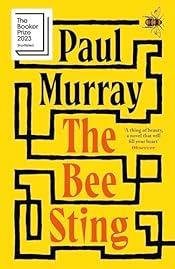
The Bee Sting by Paul Murray (Hamish Hamilton 2023). Two of this book’s characters, a generation apart, have their lives transformed when they leave their home in rural Ireland to go to university in Dublin.

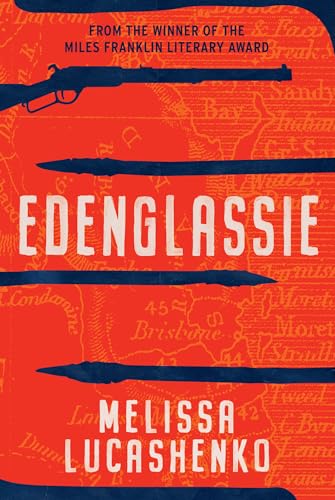
Edenglassie by Melissa Lucashenko (University of Queensland Press 2023). It may be stretching it a bit, but this novel, along with a lot of First Nations writing, amounts to an invitation to unlearn some Australian history, to go back to school and develop a different, richer understanding of our past. In this case, it’s the early history of what is now south-east Queensland. Sue at Whispering Gums has an excellent review.

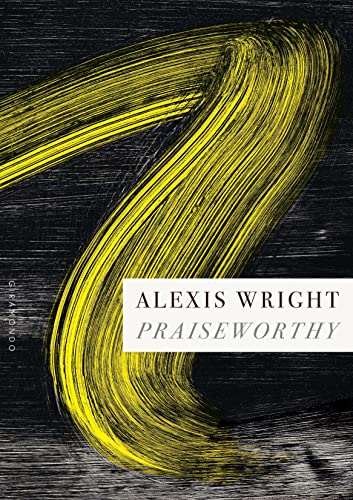
Praiseworthy by Alexis Wright (Giramondo 2023) is another example of First Nations writing that amounts to an invitation to go back and learn different ways of looking at the world. At its heart there’s a mad scheme to cope with climate change by using the donkeys that roam wild in the Northern Territory. There are clouds of butterflies and a boy who lives in a whale’s skeleton. You see the world differently once you’ve read it.

Small Things Like These by Claire Keegan (Faber & Faber 2021) actually centres on a school. It’s hardly more than a short story, in which an Irishman faces a huge moral challenge when he discovers that terrible things are being done in the convent school just outside his village.

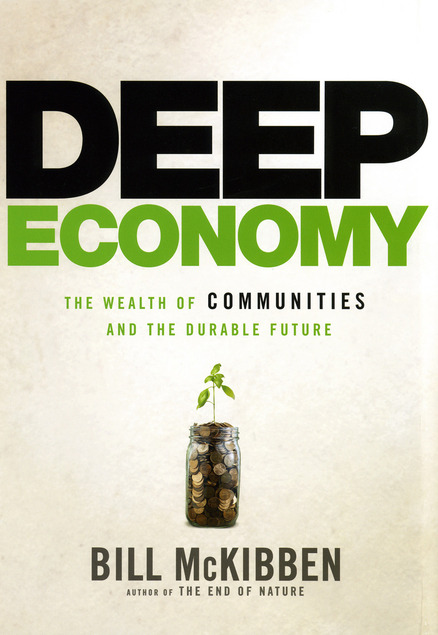
Deep Economy: The wealth of communities and the durable future by Bill McKibben (Henry Holt 2007). For me at least, this book was a tremendous learning experience about economics and the environmental crisis. In my 2007 blog post I described it as ‘a substantial, reasoned, systematic move towards an alternative way of thinking about these things’.

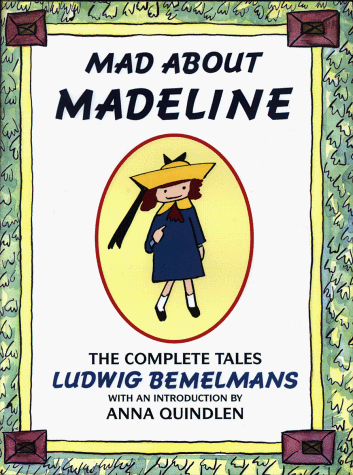
Madeline (Ludwig Betelmans 1939). How good it was, recently, to go back to this book, which I must have first read when I was at school, or perhaps when nieces and nephews were. ‘In an old house in Paris that was covered in vines …’

Blue Mars (Kim Stanley Robinson, 1996) Kim Stanley Robinson’s Mars trilogy is a terrific yarn. It’s also an education in the scientific, engineering, social and political challenges that would face an attempt to settle on Mars. I first encountered the word katabatic, among many others, in these books.

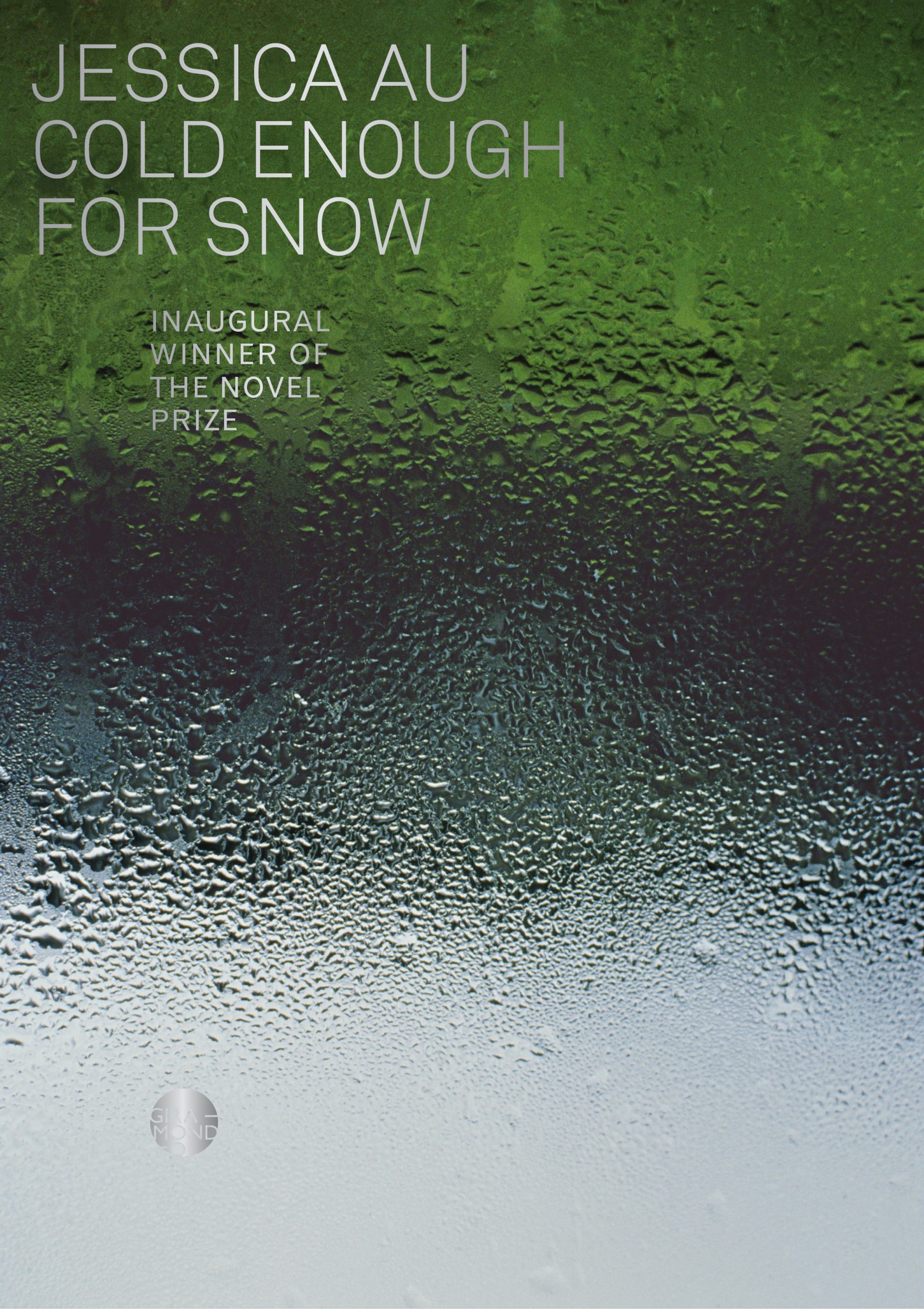
Cold Enough for Snow by Jessica Au (Giramondo 2022). The section in this slim book where the narrator goes to university and encounters a whole new world struck a chord with me, even more so than the similar experience described in The Bee Sting, because this one happens in Australia.

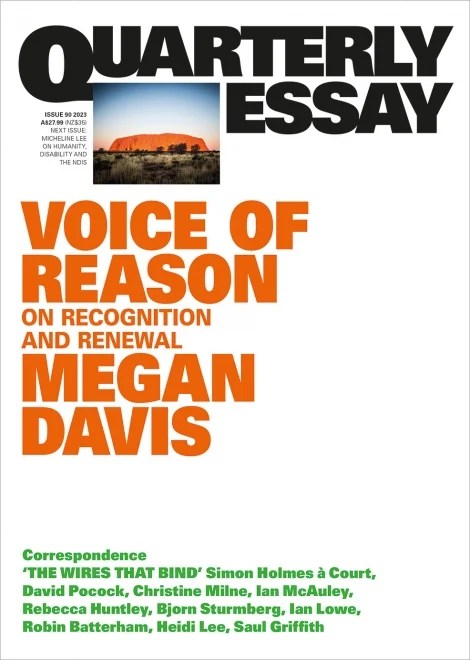
Voice of Reason: On Recognition and Renewal by Megan Davis (Quarterly Essay 90, 2023) is another piece of First Nations education, in this case about the recent referendum on an Indigenous Voice to Parliament. Especially in the face of the No campaign’s ultimately successful slogan, ‘If you don’t know, vote no,’ the schooling provided by this essay was salutary and continues to be.

End of Year List 4: Books

From the Emerging Artist, in her own words (links to the LibraryThing pages or, at her request, to my blog post when there is one):

Non fiction

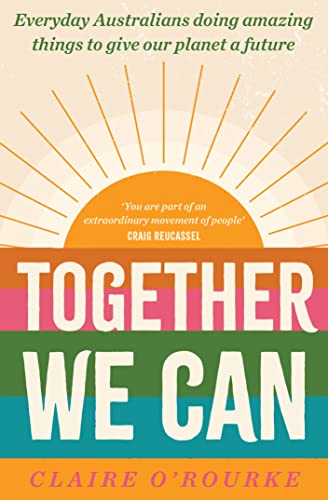
Claire O’Rourke, Together We Can (Allen & Unwin 2022)
I read this after hearing Claire talk on a Sydney Writers’ Festival panel on how to have hope in relation to climate change. It’s a good read, mixing specific examples of everyday Australians tackling what’s happening with broader theory on how to bring about change. It does fulfil its title, giving a real sense that “together we can”.

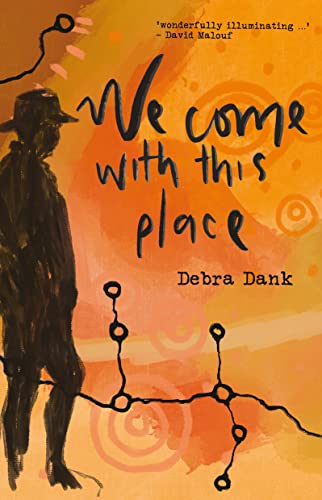
Debra Dank, We Come With This Place (Echo Publishing 2022)
We watched this book win four awards and heard Deborah Dank’s speech at NSW Premier’s Literary Awards 2023. We immediately went out to buy it. The writing is beautiful, a slow evocation of country and its connection to the author, while filled with story. I think it’s the must read of the year.

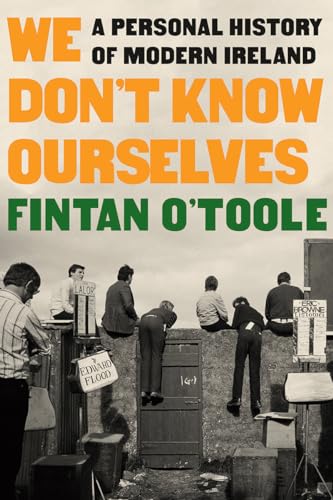
Fintan O’Toole, We Don’t Know Ourselves, a personal history of Ireland since 1958 (Head of Zeus 2021)
Hearing Fintan on the ABC’s Conversations, I immediately placed an order and waited patiently for four months for it to arrive. I’m glad I did. It’s written in short chapters in chronological order, but often picking up themes from chapter to chapter. It’s funny while documenting the appalling state of Ireland from 1958 through personal history, statistics and other sources. The incredible poverty (no running water in homes or sewage, no education for 80% of the population past primary school) made worse by the stranglehold of the Church and corruption in keeping poverty in place and the changes brought about by the impact of globalised capitalism all come alive in riveting storytelling.

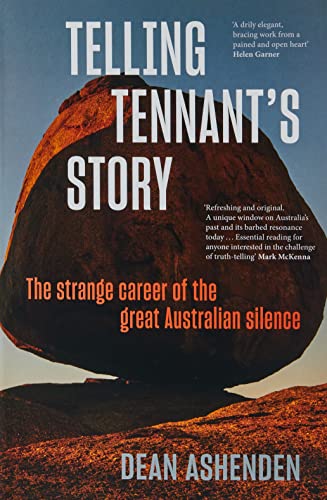
Dean Ashenden, Telling Tennant’s Story: The Strange Career of the Great Australian Silence (Scribe 2022)
A very readable history of post WWII Australian policies in relation to First Nations people where the impact of the policies on Aboriginal people in a specific area – Tennant Creek – are made clear. It tells how the policies of assimilation and later self determination came about and how far-reaching their effects have been. It would have been good for all those voting no to have been made to read this as a requirement for having a say.

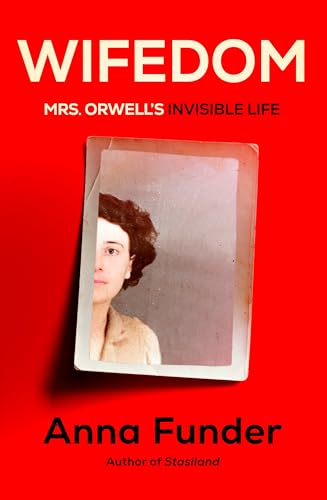
Anna Funder, Wifedom: Mrs Orwell’s Invisible Life (Penguin 2023)
So much has been written about this book already I don’t need to give a summary. I found it gripping. 

Fiction
I read 62 books this year, from quick comfort ‘junk’ reads to harder literary tomes. I take a photo of each book to prompt memory, and going through them all, it’s clear I have had an excellent selection to choose five favourites from. I’ve ended up deciding by level of enjoyment, not on some literary merit criteria.

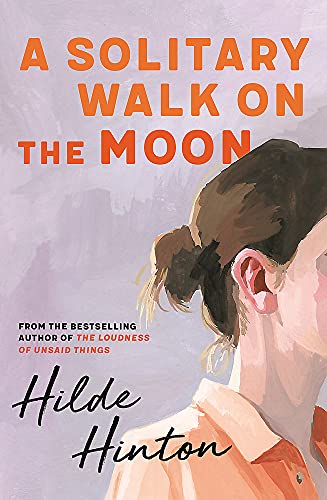
Hilde Hinton, A Solitary Walk on the Moon (Hachette AUstralia 2022)
A totally enjoyable read while disquieting in its simplicity. This is a second novel by an Australian author who seems to slipped under the radar. I found it in my local library. 

Annie Ernaux, The Years (Fitzcarraldo Editions 2018)
This was also an entrancing read, covering a similar time period to my own life. It conjures up the similarities and immense differences between growing up in middle class France and Australia.

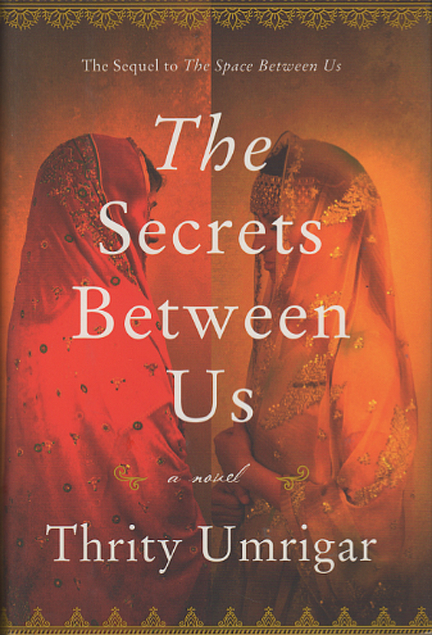
Thrity Umrigar, The Secrets Between Us (HarperCollins 2018)
Another library chance find. I loved the three strong old women protagonists, the exploration of caste and how this is/isn’t changing in modern India.

Melissa Lucashenko, Edenglassie (University of Queensland Press 2018)
This was gripping rather than straight out enjoyable, with a sense of what was to come on every page. I loved the imagined world of life at the point where the strangers are staying and growing in number, while keeping your own way of life intact.

Richard Russo, Somebody’s Fool (Allen & Unwin 2023)
Jonathan hasn’t yet been lured into the wonderful world that Richard Russo writes about, but I expect that to change soon. This is the latest in a series that includes Everybody’s Fool and Nobody’s Fool, all set in small town east coast USA. The books follow a number of interconnected characters over a few generations recording the process of change as late capitalism, racism and gender are played out in the town of Bath. He writes with affectionate humour about all of his characters. We see their frailties and appalling behaviour (between white and black, men and women, different generations) but in a number of cases we see how their connections with each other bring a shift in perspective. I love them. 


From me

I read 83 books (counting journals but not children’s books). I finished my slow read of Middlemarch and read St Augustine’s Confessions, a little each morning, but didn’t start another slow read in September because I was doing the Kelly Writers’ House course in Modern and Contemporary American Poetry (ModPo), which was great fun and probably taught me a lot.

I read:

  • 21 books of poetry
  • 26 novels
  • 4 comics
  • books in translation from Chinese (2), Spanish (3), French (2), Danish (1 or 3, depending on how you count), Russian (1) and Latin (1), and bilingual books containing Greek (1) and Maori (1)
  • counting editors and comics artists, 44 books by women, 39 by men
  • 12 books by First Nations writers, and
  • 15 books by other writers who don’t belong to the White global minority.

Biggest serendipity: Four books spoke powerfully to each other and to me in the wake of the referendum on the Voice: Debra Dank’s We Come with This Place, Melissa Lucashenko’s Edenglassie, Dean Ashenden’s Telling Tennant’s Story and David Marr’s Killing for Country (no blog post yet). Unlike Voice and Treaty, the third proposal from the Uluṟu Statement from the Heart – Truth – doesn’t have to wait for government action. These books, and so many others with them, are moving that project forward brilliantly and unsettlingly.

The most fun was probably two novels about poetry, which also spoke to each other: Chilean Poet by Alejandro Zambra and The Anthologist by Nicholson Baker.

Most interesting new discovery of someone who has been writing for decades: 2022 Nobel Prize laureate Annie Ernaux. I read Les années and Mémoire de fille, both of which mine her life story in ways that make most memoirs seem dull. Though I read them in translation, it seems right to name them in French.

Most imaginatively huge was Alexis Wright’s novel Praiseworthy, which incidentally is set in some of the same localities as Killing for Country.

Most memorable poetry: Sarah Holland-Batt’s Jaguar, with Ken Bolton’s Starting at Basheer’s (no blog post yet) a close second, the first for its precise, compassionate treatment of the poet’s father’s final illness, the latter because it filled me with joy about the everyday.


Happy New Year to all. May 2024 see the rejection of authoritarianism in elections and an end to mass killings everywhere. And may fossil fuels at last be left in the ground. Failing that, may we all keep our hearts open and our minds engaged.

Alexis Wright’s Praiseworthy

This post continues my experiment of taking page 76 – because it happens to be my age – and writing whatever comes to mind. For a book as vast and challenging as Praiseworthy the approach would be inadequate for a thorough review of the book but it’s appropriate for a modest blog post.

Alexis Wright, Praiseworthy (Giramondo 2023)

Page 76 of Praiseworthy is almost exactly a tenth of the way into the book. If this was a movie, it would be the moment for the first turning point, the ‘opportunity’. And maybe it is.

Tommyhawk has just been introduced. He is a pudgy eight year old, the youngest member of the family at the centre of the story. His father, Cause Man Steel (also known as Planet and Widespread), has a vision of ensuring that Aboriginal communities and culture thrive in the climate catastrophe by creating a global transportation conglomerate using feral donkeys (the book gets pretty surreal). His mother, Dance (called ‘moth-er’ for the first time on this page), has a mystical connection with moths and butterflies, and is often surrounded by millions of them. His older brother, Aboriginal Sovereignty, is to take on a weird allegorical significance as the tale unfolds.

Depending on your point of view, Tommyhawk is the book’s villain or its tragic hero. The real villains are the colonisers, who are described on the very first page as ‘land-thief criminals’ and referred to frequently as ‘the national Australian government for Aboriginal people’, but who are almost completely offstage. (All but two ‘onstage’ characters are Aboriginal.) Assimilation is the great moral evil in this book. Other characters, including the albino Major Mayor of the community of Praiseworthy, have assimilationist goals, but for Tommyhawk, as we begin to understand on page 76, it’s personal.

Tommyhawk has done well at school and has been given a bunch of electronic devices, which he uses to listen to mainstream media, and becomes entranced by the version of Aboriginal people he hears, especially a much repeated assertion that Aboriginal men are paedophiles.

On this page:

Tommyhawk became convinced that these good white righteous people were speaking to him in particular, and not to other Aboriginal children, because he was special, and this made him most at risk. He believed they were speaking directly to him, and what they were saying ran through his mind in sleepless nights this way and that while he tossed and turned in the heat until he became wholeheartedly convinced that he had not been placed on this Earth to be stuck with dangerous people. Even!

Even like his parents. They were a danger to him. That Cause Man Steel person could kill him. And Dance, the moth-er, she only noticed him, took pity when she had mistaken him for a butterfly, or as a cocooned baby being cared for by butterflies flying among the reeds, pandanus fronds, mangrove leaves, drifting in from the sea, like the story of Moses. Hatred was not a word strong enough for how he felt about his parents.

The radio voices are Tommyhawk’s equivalent of Macbeth’s witches. Where Macbeth is tempted to kill the king, Tommyhawk is called away from his Aboriginal family and culture. He decides, soon after this page, that he wants to be adopted by the Minister for Aboriginal Affairs (whom he sees as an apparition in the sky) and be taken to live in the palace of Parliament House in Canberra. It’s absurd, comic and tragic all at once. I won’t spoil it by saying if he succeeds.

I can imagine a Reader’s Digest Condensed version of Praiseworthy that was about a third as long. Such a version would capture the whole plot and and lose almost everything that makes the book interesting. The same can be said of this page. If you read it simply for what moves the story forward, what follows the paragraphs I just quoted adds almost nothing.

But you don’t read this book just for the story. Alexis Wright appeared at the recent Sydney Writers’ Festival in conversation with Ivor Indyk, her publisher. For me, the most revelatory moment of the session was when she talked about the relationship between her writing and music. While writing, she listens mostly to classical Indian music and yidaki. Both those musics have a kind of pulse to them, and she tries to create something similar in her prose. It’s the pulse of country, she said: ‘We say that we’re of one heartbeat with the country.’

The second half of page 76 is far from the most ecstatic passage in Praiseworthy. It doesn’t defy punctuation conventions or twist language in a way that so discombobulates people like me who can’t lay their internal proofreader aside (see my blog posts on Carpentaria and The Swan Book), but it’s a good example of the way Alexis Wright’s prose circles around itself in long, looping sentences, repeating motifs (‘the Australian government for Aboriginal people’), using words that aren’t technically accurate but create the right effect (‘smithereens’), tossing in an awkward cliché (‘plain as day’), making an acute observation (‘passionately, or indifferently’), all in a seemingly unstoppable flow. It’s prose that needs to be heard.

Try reading this aloud, exclamations and all. What I hope you’ll hear is the rhythm of the prose, its weirdness, and – now that Wright has given me the word – its pulse.

So! Very well then! Tommyhawk’s endless deciphering of the barrage of voices on the radio went on through the night and continued as relentlessly as the haze-loving mosquitoes buzzing around him, but neither the activity of squashing blood-bloated mosquitoes to smithereens, or growing his monstrous brain from listening to what was being said on the radio passionately, or indifferently, about the Aboriginal world, was without success. All was gained, and while Tommyhawk had initially wondered why these people were talking the way they did about Aboriginal people like himself, he finally broke the code. He knew the plan as plain as day, that his national Australian government for Aboriginal people was actually speaking directly to him through the voices of random bigots on talkback radio, or in the news, or whatever running commentary he was listening to where anyone was having a good go, giving it all about what they thought of Aboriginal people. This was how he always found the message that the government was trying to get to him. Mostly it was about how the government was trying to tell him, You must escape your black parents

Added on 16 June: Mykaela Saunders has a brilliant long review of Praiseworthy, ‘Think of the Children!’, in the Sydney Review of Books, which you can read at this link.

SWF 2023: My fifth day

12–1 pm: Crime and Justice

This session demonstrated the strengths of a two-person panel. It was progressing quite nicely, as Sarah Krasnostein (my blog post about her Quarterly Essay Not Waving, Drowning here) introduced the talent, Helen Garner (my relevant blog post here) and Hedley Thomas (creator of the podcast Teacher’s Pet), and asked about their writing process.

When Helen Garner is embarking on a long project, she buys a spiral bound A4 notebook and keeps a kind of diary of everything related to the project: not transcripts of interviews, but odd details, what she did, and thought, and felt. When it came time to marshal the material she had accumulated for Joe Cinque’s Consolations she was at a loss where to start, looked to the notebooks for inspiration and discovered that they contained the skeleton of the book.

Hedley Thomas was in the middle of answering a similar procedural question, when Garner was visibly excited by something he said. With a quick look at Sarah Krasnostein, half asking permission and half apologising, she interrupted to take the conversation off in a whole new direction: the way footballers tend to have a degree of immunity from police investigation because of their almost hallowed status in Australian society. From then on we were treated to a lively conversation between two people who had deep appreciation for each other’s work and were swapping stories and genuine compliments.

Sarah Krasnosteiin made a couple of attempts to restore order, but I think she could tell things were going swimmingly. This session is sure to appear on the SWF podcast during the year.


5–6 pm Alexis Wright: Praiseworthy

Alexis Wright’s third massive novel, Praiseworthy, was published just a couple of months ago. Ivor Indyk, director of Giramondo Publishing, stepped in at short notice to discuss it with her, replacing Sisonke Msimang, who had been called home to Western Australia unexpectedly. So, in this session, an author discussed her novel with her publisher and editor – that is to say, with a reader who had some influence on how the book turned out.

I was one of the few people in the room to have read the book. I was keen to lap up any guidance from either Ivor or Alexis on how to make sense of the experience. I’m glad to report that I got plenty.

For a start, it was reassuring that Alexis mentioned some of the more bizarre plot developments with a wicked smile, and the audience laughed quite a lot as the two of them named odd characters and moments. Ivor said towards the end of the conversation that the comedy of her work was often overshadowed by its epic qualities. For me, the issue was more how seriously to take the epic qualities when, as summarised by their author in this conversation, they had such absurd qualities.

Asked about the original idea for the book, Alexis Wright said she didn’t remember – she’d have to look up her notebooks. Perhaps it had to do asking what Aboriginal people are to in the new era of global warming and climate change. She started writing it when she was working on her multivocal biography of Tracker Tilmouth in 2017 (my blog post here), and the visionary at the heart of the novel ‘Cause Man Steel, Widespread or Planet, whatever you want to call him’) is in part based on Tracker. Widespread’s plan for a global transport conglomerate using Australia’s five million feral donkeys, though, is all hers: it’s absurd to the point of surrealism, but there’s something true in the way it leads to a cycle of vision and disappointment.

The book is in part a celebration of Aboriginal people’s will to survive, manifested in many ways, tainted by 240 years of living in the coloniser’s world. The enemy in this book is the project of assimilation.

Perhaps most interesting to me was the exchange about music. Referring to the Ice Queens – grotesque, larger-than-life women who appear toward the end of the book – Ivor wondered about the influence of opera. Alexis agreed that she loved opera, but seemed nonplussed at Ivor’s suggestion that these characters are operatic. The music she listens to most while writing is classical Indian music and yidaki (didgeridoo). She tries to capture the tone and rhythm of that music – the pulse, the heartbeat: ‘We say that we’re of one heartbeat with the country.’

‘You hear what you’re writing,’ Wright said. ‘Then it gets recorded and you want it to be the voice you heard, but it can’t be that voice.’

There was a lot more. Ivor touched on the way Wright defies conventions, at times inventing words that look like mistakes, but which are anything but.

I’ll be attempting my own blog post about Praiseworthy in the next couple of days. Wish me luck!


We made a quick dash to a smaller venue for 6–7 pm State of the Art

Kate Evans of ABC’s The Bookshelf presided over another panel. This time it was Eleanor Catton, Richard Flanagan, Tracey Lien and Colson Whitehead invited to discuss the state of the novel and the future of fiction.

I haven’t read anything books by any of these authors, apart from one novel that I hated, which I’m told is completely unrepresentative of their work. I enjoyed the ebb and flow of conversation, but didn’t have anything to ground myself in.

Kate Evans asked if ChatGPT and other AI content producers spelled the end of novelists. Tracey Lien, the youngest on the panel and the only one without a string of awards to her name (and not at all intimidated by that, she said smiling bravely), said she used ChatGPT as a research assistant, but it couldn’t do the writing. On the one hand, it doesn’t have a brain, but produces word after word by complex algorithms, and the act of reading is a back-and-forth between minds. On the other hand, ChatGPT lies.

Richard Flanagan, whose scowl occasionally gave to an appreciative grimace at another panellist’s point well made, said he didn’t care about AI. He’d just keep writing.

The subject of decent recompense for the work of writing, and of all creative work generally, provoked more interest. Digital publishing changes the landscape significantly. They all agreed they weren’t in it for the money, but money would be nice. Eleanor Catton said that working as a scriptwriter was hugely more remunerative. Responding to a question at the end about how to become a writer and also earn a living, Flanagan said he had decided to be a writer when he was very young and in order to achieve it he lived in poverty for years. There was no other way. Colson Whitehead said something similar: after a significant number of successful novels he was at least temporarily able to live on his earnings as a writer. He implied that this is precarious.

Whitehead, Flanagan and Catton spoke interestingly about not repeating themselves, each new novel being a whole new challenge.


Sydney Writers’ Festival 2023: My first day

At the end of one of the cool, cloudless autumn days that makes you love Gadigal-Wangal land in the Sydney Basin, we headed to the Carriageworks for the Sydney Writer’s Festival. We took our seats in Bay 17 and remembered too late that if you allow the booking office to give you the ‘best available seats’, they’ll put you right up the front on the very end of a row, so you risk a stiff neck from watching everything in profile. Next year I’ll remember! My grumpiness evaporated when the show started.

6.30 Opening Night Address
(link is to the SWF website blurb on the event, as I plan to link event titles for the rest of the Festival)

After a huge, loud ad for the City of Sydney, Uncle Michael West did an eloquent welcome to Country, pointing out that the Carriageworks was once an important source of employment for Aboriginal people who came to Redfern from far and wide.

Then we had a number of necessary speakers, who all managed their curtain-raiser status with grace. Brooke Webb, the festival’s CEO, thanked its many partners. John Graham, the NSW Minister for the Arts, by his mere presence demonstrated that the ALP values art and literature more than the other side of politics, and in a well crafted speech managed to quote appositely from Frank Moorhouse, Sarah Holland-Batt, and Shehan Karunatilaka (who we’re going to hear tomorrow night). Edward Federman, Executive Chair of ARA, the construction company that is the festival’s principal partner, won my heart by talking about bringing his granddaughter to Children’s Day ten years ago, and every year since. Ann Mossop, Artistic Director, was mercifully brief and introduced the speakers.

As has been the custom recently, the address was a multivocal affair. Four writers were invited to address the theme, ‘How the Past Shapes the Future’.

Bernadine Evaristo, author of Girl, Woman, Other and Mr Loverman (links to my blog posts), began with a quote from Oscar Wilde: ‘The one duty we owe to history is to rewrite it.’ She then said a lot of things that need to be said again and again – about the way the ruling class and the dominant culture tell a narrative, inculcate a timeline that negates the experience of women, conquered peoples, etc. She spoke mainly of England, and had fun with the notion that Cheddar Man, the earliest human remains found in England, has recently been discovered to have black skin: the great grandfather of England and possibly of Europe was Black. Now, she said, the marginalised are moving the centre towards them. We need to know and honour multiple timelines.

Alexis Wright currently looms large in my reading life with her mammoth novel Praiseworthy. I won’t try to summarise her talk. She began by saying that she has tried to write about living in the all times. Aboriginal culture doesn’t have linear time in the way western culture does. ‘We live in the eternal clock of country.’ ‘We cannot step out of or apart from the pulse of country.’ She spoke with wonderful gravitas, sometimes stumbling over her words, as she tried to communicate across a great cultural divide. My companion observed on the way home that not so long ago when white people spoke as allies to Aboriginal people the discourse was about alleviating the harshness with which these oppressed people were treated. Now, thanks to Alexis Wright and other people doing this mammoth labour, we white people are coming to understand that we have a lot to learn from First Nations people – a lot we need to learn.

Benjamin Law, creator of The Family Law and author of the Quarterly Essay Moral Panic 101, had a hard act to follow. He managed it with wit and charm and intelligence. Ten years ago he was thrilled to be invited to his first Sydney Writers’ Festival. When a volunteer asked him how he was enjoying the festival, he said how delighted he was. The volunteer said, ‘Enjoy it while it lasts. It won’t last forever.’ Ten years later, he knows he belongs here, knows he belongs in writers’ rooms for TV shows, and when he encounters shocking (to me) dismissiveness of his presence as a token non-white, he takes comfort from that volunteer’s words. Things are changing. This stuff won’t last forever.

Madison Godfrey (pronouns they/them) put a similarly personal spin on the Past-Future theme. They read a medley of poems from their second book, Dress Rehearsal, asking us to imagine them as a young emo in the first poems, and as an older emo (not so old from my perspective) in the later ones. There was a memorable image of wanting to press one’s face into the tattoo on a loved one’s back like an old woman smelling a mango before putting it in her shopping basket. And they finished up with a glorious ode to their kneecaps – at one stage inviting the audience to join in on a kind of refrain.

The place was buzzing as we all headed out into the brisk night air.

Books I read in July [2007]

[I originally posted this in my old blog on 31 July 2007, but didn’t retrieve it when I moved to the WordPress platform. I’m republishing it now because I’m about to blog about Alexis Wright’s Praiseworthy, and what I wrote about Carpentaria here is true of Praiseworthy as well. Retrieving the post is also a tiny way of having the blog mark Robert Adamson’s death on 16 December last year.]

Robert Adamson, The Goldfinches of Baghdad (Flood Editions 2006)
Alexis Wright, Carpentaria (Giramondo 2006)
Marjane Satrapi, Chicken with Plums (Jonathan Cape 2006)
J K Rowling, Harry Potter and the Deathly Hallows (Bloomsbury 2007) (begun)
Harold Bloom’s Best Poems (continuing)

goldfinches

The Goldfinches of Baghdad includes an elegy for Arkie Whitely, thereby providing a smooth segue from the last book I read in June, Another Country, which is dedicated to her. Bob Adamson’s book is published by a US company. Couldn’t he find an Australian publisher? Or does this give him a crack at a larger readership? Or is it just an an example of globalisation with no subtext at all?

The book is in three sections, of which I expect to reread the first two many times. Maybe it was just a trick of the light, or the music that happened to be playing as I read, but these poems, almost all of them featuring birds, the Hawkesbury River and/or fishing by night, just picked me up and took me with them: the word that comes to my mind for the interplay of real birds, the real river and what the poet’s mind makes of them is ‘charming’, as in having magical force. Without a hint of appropriation of Aboriginal stories or images, it seems to me, Adamson manages to create a sense of sacred involvement with his country.

After been immersed, as it were, in whitefella Robert Adamson’s Hawkesbury, it felt quite natural to move on to Carpentaria, which starts with a river. This is from page 2:

Imagine the serpent’s breathing rhythms as the tide flows inland, edging towards the spring waters nestled deep in the gorges of an ancient limestone plateau covered with rattling grasses dried yellow from the prevailing winds. Then with the outward breath, the tide turns and the serpent flows back to its own circulating mass of shallow waters in the giant water basin in the crook of the mainland whose sides separate it from the open sea. To catch this breath in the river you need the patience of one who can spend days doing nothing.

The book is like nothing else I’ve ever read. I suspect that my decades of working as an editor, mainly of things written for children, have set me up for a quite distinctive relationship to it. It matters to me that words are used with their correct meanings (I hate ‘discomfit’ being used to mean ‘make uncomfortable’, for instance), that punctuation and spelling are correct (though I yearn for spelling reform and love George Bernard Shaw’s spelling of ‘fish’ as ‘ghoti’ and, truly, am not a rule-bound comma-curmudgeon), and that writing makes syntactical sense (I cringe when ‘none’ is used with a plural verb, but I acknowledge that no meaning is lost and don’t see it as absolutely incorrect). Mixed metaphors, stock phrases, tautologies, inconsistencies, all are guaranteed to turn me off or – if I’m so empowered – to make me reach for the blue pencil. I think of these attitudes as constituting a passion for the language, and of myself in my small way as a defender of its integrity. Well, Carpentaria is like a grenade lobbed into the middle of that way of reading.

It’s a wonderful book, richly poetic (I defy anyone to read it quickly), passionate, and funny. There are extraordinary, surreal set pieces, a stunningly original cast of characters and a plot full of surprising turns. But the most striking thing about it is the language. Alexis Wright has said that she based the narrator’s voice on a conversation she overheard between two old Aboriginal men in the street in Alice Springs. I don’t doubt it. But this isn’t Aboriginal English, or a literary equivalent of it, as the language of Beasts of No Nation suggests an African English. It’s pretty standard English, but as used by someone coming at it from outside: it contains every one of the things that make my editor’s heart shrink and fingers twitch, with the possible exception of the greengrocer’s comma: a dog lies with its belly belly-up; something has ‘flown the coup’. I had been shocked to read Ivor Indyk, redoubtable editor-in-chief of Giramondo, quoted in the newspaper as saying that the manuscript when he first saw it was ‘woolly’. But I now think he was misquoted, or at least misunderstood. He was most likely referring to the peculiar challenge this book must have posed to any copy editor: what in almost any other manuscript would have been errors to be corrected, in this one are integral elements. Here’s a passage, chosen at random:

Initially, on that eventual morning, on the eleventh hour of the eleventh day of the month of November, when Gordie did not play the remembrance bugle, everyone thought: Alright! Something is astray. Something smells mightily funny to me. Although, at first, everyone had thought very little about it. Perhaps Gordie was sick with the summer flu. Nothing to be done about that. Life went on as usual. Desperance was a normal town where even the bugle player had as much right as everyone else to get sick with influenza and stay home in bed. Normal people knew how to tell the time without depending on a clock, or a signal, and had enough decency, unlike the rest of the country, to stand for a minute’s silence in respect of the fallen on the eleventh hour, even without the bugle of the returned, to remind them.

There are some changes that a competent copy editor would make almost automatically to this: change ‘mightily’ to ‘mighty’, delete the comma between ‘returned’ and ‘to remind them’ (this kind of mis-comma-ing is rampant in the book, often rendering the sense very difficult to determine), change ‘on the eleventh hour’ to ‘at the eleventh hour’. One who had slavishly subjected his or her will to the style manual would ruthlessly make other changes: fix the fragments ‘Although … about it’ and ‘Nothing to be done about that’, amend ‘Alright’ to ‘All right’. Someone with an eye for redundancy and consistency would suggest fixes for the contradiction between what ‘everyone thought’ initially and what ‘everyone had thought’ at first; would query the assertion that ‘normal people’ were ‘unlike the rest of the country’; would circle ‘flu’ and ‘influenza’ and the repeated ‘on the eleventh hour’. This tidying up would make the passage read more smoothly, and make its meaning easier to access, but what it would lose is exactly the thing that is so distinctive about the prose: its outsider quality. The narrator loves language. The words come tumbling out, alliterative, onomatopoeic, idiosyncratic … and in some sense out of control.

In one of her many appearances at the Sydney Writers Festival this year, Inga Clendinnen said that whereas essayists invite the reader to come on a companionable walk with them, writers of fiction are always playing Catch Me If You Can. That may be true of some, even most, novelists: they build worlds which they invite us to enter. Reading Carpentaria, one feels that the author is running as hard as anyone else trying to catch up with her own creation. I mean no disrespect when I say that the book is less a raid on, than a prolonged campaign by, the inarticulate. The language is out of control and refuses to be tied down to the rules of ordinary discourse. It might seem that I’m talking about a trivial aspect of the book, and perhaps I am. But I found it profoundly challenging; it invaded my dreams. And the constantly unnerving play with language is a key part of that challenge.

[Added 7 August 2005:
Ivor Indyk was quoted in Thorpe’s Weekly Book Newsletter as saying of Carpentaria:

It was quite an intellectual challenge for me as an editor: there are ungrammatical moments that you wouldn’t want to cut out, even though your training tells you to ‘fix’ them.

Which says elegantly a lot of what I was trying to say.]

0224080458

Marjane Satrapi’s stark black and white comic strips provided a brief holiday from Alexis Wright’s tumultuous ride. The plot of Chicken with Plums has been unkindly summarised on LibraryThing: ‘a man without his musical instrument is depressed.’ Which is like ‘old man gets dementia’ as a summary for King Lear. It’s a fine romantic tale about true love lost twice over. I’m glad to see that Satrapi can move on from her powerful autobiographical Persepolis, and tell this touching, complex tale so elegantly. (All the same, I’m eager for the English version of Persepolis, tome trois, in which Marjane goes to Austria.)

bloom

I continue to make my meditative way through the Harold Bloom anthology, and I’m mostly enjoying it and getting an education. For someone who has a reputation as being a great upholder of the canon of great writers, he’s remarkably idiosyncratic in his selection of ‘the best poems in the English language’, and in his annotations on the selection. I think I already mentioned that he disparages Edgar Alan Poe, but includes a poem or two because he’s so popular. Well, when he gets on to Ezra Pound, our Harold makes no bones about despising the Fascist anti-Semitic montageur, and he takes eight pages ripping into him, followed by one poem, a translation from mediaeval French, included because Pound is an excellent translator. At least that’s why Harold says he included it; it’s pretty darned obvious that the poem’s there because without it he wouldn’t have been able to include his extended anti-Pound bile. Of course the publisher probably came up with the book’s title: Shorter English and United States Poems I Feel Like Anthologising, with Some Notes on Poets I Hate would have been more accurate, but isn’t as catchy.

0747591059

Given Professor Bloom’s feet of clay, I don’t feel any need at all to defend myself against his judgement on the Harry Potter books: ‘Can more than 35 million book buyers, and their offspring, be wrong? Yes, they have been, and will continue to be for as long as they persevere with Potter.’ I did, however, have to overcome other sources of reluctance – I’ve not been totally grabbed by what I’ve read of the saga previously; I had an unpleasant exchange of emails with JKR’s agent nearly a decade ago; and I’m moderately disgusted by the way the press piles onto the Potter bandwagon, heaping lazy and ignorant generalised scorn on the extraordinary wealth of other works written for children. But I joined the 35+ million, and bought the children’s edition at the recommended retail price, of which Gleebooks assures me a certain amount will go to the Fred Hollows Indigenous Literacy Program. I wanted to read for myself HOW IT ENDS. I’m half way through it as I upload this, and so far, I have to say, it’s also like no other book I’ve read – in this case because of the constant sense that I’m not just reading a book but taking part in a major cultural event, being just one of millions of people absorbing these very words at roughly this very time. Having found out ten minutes ago what the Deathly Hallows are, I still want to know what happens next.

Alexis Wright’s Tracker

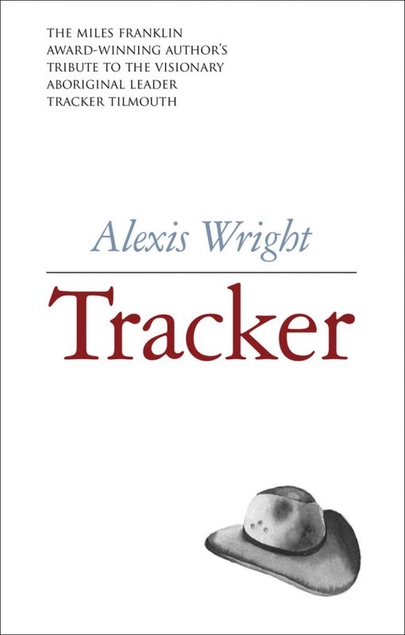
Alexis Wright, Tracker: Stories of Tracker Tilmouth (Giramondo 2017)

This is a book of yarns. I’ll start this blog post with one of them.

In the mid 1990s at the Gulf of Carpentaria, Murrandoo Yanner was involved in negotiations with Ian Williams, the general manager of a major mining company. Recently introduced Native Title legislation required that the mining company negotiate with traditional owners about plans for a zinc mine. One of the issues under discussion was the proposed mine’s proximity to sacred sites in the Lawn Hills–Boodjamulla National Park. The Queensland Premier, Wayne Goss, had given assurances about the National Park, but word was that he had reneged. Just before Yanner’s scheduled meeting with Williams, Tracker Tilmouth suggested a strategy for using the meeting, where there would be no government representative, to influence the government. Here’s Yanner’s account of what happened:

So we go through hours of negotiations and I hear [Tracker] suddenly cough, bloody when I least expected it – it was in something interesting that I wanted to listen to, so I go, Ian, by the way, what happened with Lawn Hills National Park? Do you know if Goss has gazetted it yet? There was a big silence, and things were going so well and Williams did not want to tell me, and then he said, Actually he made a decision not to. And Tracker, I was still trying to get him to play bad cop but he had me play it, and when Williams tells me that I jump up and I bang the table. Tracker made me do all this, and bang the table. He had said: Make it bloody genuine or they won’t believe you. They have seen a lot of blokes put acts on. So I bang the table and say, Fucking ridiculous, you can’t trust you bastards. I told you, Tracker, you can’t trust these bastards. I go outside and Tracker told me the next part later. I jump in my car and do big figure eights and spinning gravel, and off I go swearing. Ian Williams shits himself and the mob too because everything was going so great, and he says, Oh! Well! Shit what are we going to do? Tracker says, This is what you do. State parliament was sitting that day and he says, Ring Gossy now, get him out of parliament for a second. Boom, boom, boom.

And bugger me, there is a historical fact. If you go to the transcript or Hansard or whatever of the state parliament, you’ll see it was gazetted that afternoon, late afternoon, that day. That very day Goss got pulled out of parliament, got spoken to on the phone from Burketown by Ian Williams, and went straight back into parliament and gazetted it after publicly saying he wouldn’t. And I was blown away, not just the fact that it was done, but the fact that they really do run the state government at times, and that his mad trick worked.

(Pages 207–208)

If that doesn’t grab your attention, then you’d probably be impervious to the charms of this book.

Tracker Tilmouth was a member of the Stolen Generations of Aboriginal children. The picture that emerges from this book is of a big thinker, a man of entrepreneurial spirit, committed to the project of establishing economic independence to the Aboriginal peoples of central and northern. He was a significant figure in the history of the Central Land Council, and enormously influential beyond there. He came close to standing for the Australian Senate as a member of the ALP, and had friendly and mutually respectful relationships with Bob Katter. His sense of humour was legendary, and not always diplomatic (when he met Jenny Macklin for the first time shortly after she had failed to end the Intervention in the Northern Territory, he called her ‘Genocide Jenny’), but he was a frequent presence in Parliament House in Canberra, and regularly visited the United Nations in New York. He could rub people up the wrong way, and the book doesn’t completely dispel the charges of misogyny, but the overwhelming impression created here is that he was a great Australian.

The book includes a photo of the front page of Murdoch’s NT News for 13 March 2015: a photo of the man himself with the huge headline ‘TERRITORY FAREWELLS ‘TRACKER” and nothing else except a line across the bottom about football.

Alexis Wright has done a brilliant job of capturing dozens of voices (all chosen by Tracker himself) and organising them: Tracker’s own voice, the voices of his brothers, of Aboriginal people who worked with him or benefited from his wisdom, of whitefellas who fell under his sway, of politicians, pastoralists, mine managers. There are some glaring absences – people whose names occur often, but whose stories would probably take a very different hue. I’ll mention only Tony Abbott, but not all these absences are whitefellas.

Having learned to be suspicious of hagiographies, I asked a friend who had lived in the Northern Territory for decades what he thought of the book. He hadn’t read it, but he said, ‘I know some whitefellas who worked with him, and they worshipped him.’

The result is not a biography: the first chapter gives wonderful accounts of his childhood on Croker Island Mission, where his ‘house mother’ Lois Bartram read Alan Paton’s Cry the Beloved Country to the children, but, though his wife Kathy is mentioned often, she remains hardly more than a name – there is no account of how they met or of their wedding. What we do get is a compelling mosaic portrait.

Alexis Wright’s own voice is heard only in her Introduction, that is if you leave aside the couple of instances where one of her questions makes it onto the page. Some people have found the introduction hard going; at least one person I know gave up on the book part way through it. I think the reason is that Wright struggles to justify her decision not to write a conventional biography, and to somehow summarise something that the book itself demonstrates cannot be easily summarised.

The book’s longest section (more than 150 pages), ‘The Vision Splendid’, is dominated by the voice of Tracker himself spelling out his analysis of the situation of Aboriginal peoples, arguing about priorities, lamenting the lack of unity among Aboriginal leadership (while being harsh about other Aboriginal leaders), mapping out future directions. I imagine it would repay careful rereading, but it assumes so much prior knowledge (and my ignorance was only partly countered by Alexis Wright’s occasional footnotes) and spins off in so many directions – like the rest of the book, it captures the feel of the spoken word, of a mind that is thinking, revising, repeating, contradicting itself as it goes – that it is hard to follow.

But that’s not even a complaint. I became increasingly aware of my own whiteness as I read this extraordinarily generous, multifaceted book – at times hilarious, at times tragic, at times profound. As a whitefella, my response is overwhelmingly to be grateful.

Added later: I recommend Kathy Gollan’s review at Newtown Review of Books, which gives a much fuller sense of the book than my blog post, and uses quotation brilliantly.

Tracker is the first book I’ve read for the 2019 Australian Women Writers Challenge. I am very grateful to Giramondo for my complimentary copy.

Sydney Writers’ Festival 2015: My Day 2

My Friday at the Festival was a long day. Also wet. Anticipating queues, I arrived early for my first event, and turned out to be one of three people sheltering under the long marquee for a good half hour. Sadly, attendance was pretty sparse for an excellent session:

10 am: Australia in Verse
As is often the case, this event’s title was irrelevant. With poetry events at the SWF, it’s the who that counts rather than the what.

Sam Wagan Watson and Ali Cobby Eckerman were in conversation with Ivor Indyk. Jennifer Maiden’s name was in the program but back trouble kept her away, that and her wish that the two Indigenous poets should have the floor. I was sorry not to see her, but it was wonderful that we got so much of the two who were there.

The poets spoke about their backgrounds. Sam’s south-east Queensland childhood was full of story-tellers, writers and artists, solidly Aboriginal though not in denial about European heritage as well. He described himself as a child of popular culture. Ali’s mother was taken from her family when very young; Ali herself was taken; and she relinquished her own baby son. Their paths to becoming poets were vastly different, as is their poetry.

Both read a number of poems, and spoke about what their poetry meant to them. Ivor Indyk was wonderful in the chair. When Sam said something about his early poems being well received, Ivor said that was because they were good: ‘And I’ll say what was good about them in a minute.’

There was a lot of laughter, and some tears.

And on to:

11.30: Writers on Writers: Rilke
I know very little about Rilke. I read his Letters to a Young Poet when I was a young non-poet, and I love this passage from Etty Hillesum‘s diaries, written on her way to Auschwitz, which makes me want to know more:

I always return to Rilke.
It is strange to think that someone so frail did most of his writing within protective castle walls, would perhaps have been broken by the circumstances in which we now live. […] In peaceful times and under favourable circumstances, sensitive artists may search for the purest and most fitting expression of their deepest insights so that, during more turbulent and debilitating times, others can turn to them for support and a ready response to their bewildered questions, a response they are unable to formulate for themselves, since all their energies are taken up in looking after the bare necessities.

So I was interested.

There was a lot to absorb. All four panelists knew an awful lot about Rilke, which they were enthusiastic to share: much more than could possibly fit into an hour. Luke Fischer, enthusiastic young scholar–poet, fell over his own words as he gave us three trains of thought at once. Lesley Chamberlain, a learned Englishwoman in jeans, made sure we knew how to pronounce Brancusi properly. Peter Morgan, from Sydney University’s German department, was in the chair and had interesting things to say about translating Rilke. Elder poet Robert Gray seemed to rise every now and then from the depths of abstract thought to make a brief contribution. It was fascinating theatre, and pretty good as an impressionistic introduction to a poet who, they said, sits at the beginning of modernism.

Not that it was like a fish and chip shop, but I had three takeaways:

  • Rilke is the one who ended a short poem describing an ancient sculpture with a phrase that seemed to come from nowhere and go everywhere, ‘You must change your life.’
  • He regarded his letters as part of his literary output. (This was a relief, because if the Letters to a Young Poet were dashed off there’s no hope for the rest of us.)
  • Something that came up in response to a question at the very end, that seems relevant to to Etty Hillesum quote is Rilke’s concept of the reversal. As far as I could understand, the idea is that if you set out to experience any pain and painful emotion fully rather than numbing them out or seeking distraction from them, then at some point a reversal happens, and the pain is in some way transcended.

Time for lunch, in what was now a beautiful sunny day by the Harbour, and then:

1.30: The World in Three Poets
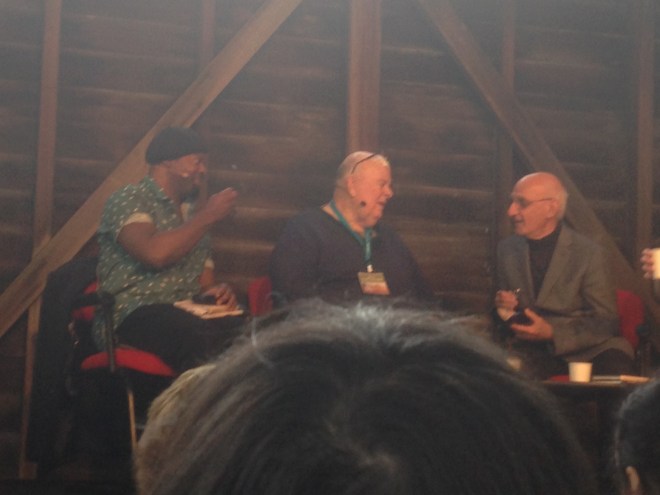
3 poets

This was a wonderful session. Kate Fagan (not pictured), herself no mean poet, did an amazing job of introducing poets Ben Okri, David Malouf and Les Murray. That is, she said just a few extraordinarily well crafted words about each of them, leaving most of the hour for them to read to us, followed by a short question time. It was an almost overwhelming combination of talents.

The woman sitting next to me said she was there mainly for Ben Okri – she’d read some of his novels (‘if you can call them novels’) and hoped that hearing him read in person would help to understand them. As if he’d heard her, his final reading was from his current novel, which he introduced by saying that his novels had often been described as poetic. My transitory companion was pleased.

Les Murray read nothing from his most recent book, which of course was because he had a whole session on that book – Waiting for the Past – the next day. What he did read was marvellous. And when David Malouf read, Les was a picture of concentration – as if he was in training for an Olympic event in Listening to Poetry.

David began with his ‘Seven Last Word of the Emperor Hadrian’. Heard in the context of the previous day’s session on the classics, this revealed itself more clearly: the speaker, anticipating death, bids a tender farewell to his soul, the reverse of what we would expect in the Judaeo-Christian mindset, and there is something deeply moving about that.

All three of these extraordinary poets shone in the question time.

3  pm: Australia’s Oldest Stories: Indigenous Storytelling with Glen Miller
It’s 51 years since Jacaranda Press published a children’s book, The Legends of Moonie Jarl by Moonie Jarl (Wilf Reeves) and Wandi (Olga Miller), which has been described as the first book written by Aboriginal people. The Indigenous Literacy Foundation have re-published it this year. Glen Miller, nephew and son respectively of the authors, talked to Lydia Miller about his own very interesting life – as very young worker in the coal mines, public servant, cultural tourism entrepreneur, and now as elder and activist in the Maryborough Aboriginal community – and about the origins of the book as he remembered them. He was very good value, but I can’t have been the only person in the audience who was hanging out to be read to. Eventually, he did read us one story – almost apologetically, as if an audience full of adults wouldn’t want to be read a children’s story. There were no complaints.

It being Friday, I was joined by the Art Student for:

4.30: The Big Read
The Big Read is where a big theatre full of people, mainly adults, sits back to be read to. This event used to be for ninety minutes, but it’s sadly been cut back to just an hour, and that hour has to accommodate the presentation of the Sydney Morning Herald Best Young Australian Novelist Awards.

This year the awards presentation featured some unscheduled theatre. The set-up has always been a little awkward, as one by one the young novelists stand silently off to the side of the stage while their novels are described, and then again while the others have their turns. This year, the first recipient, Michael Mohammed Ahmad, clearly feeling the awkwardness acutely, sat down in a spare chair while his book (The Tribe) was being described. When he was shepherded away from that chair after receiving his award, he looked around and saw that there wasn’t a chair (Beatles reference intended), so sat on the floor. His successors – Maxine Beneba Clarke, Ellen van Neerven and Omar Musa (Alice Pung, the fifth recipient, was in Melbourne with a small baby) – each made the decision to join him. Linda Morris from the SMH said it was like a sit-in. Perhaps next year there will be chairs, and the young novelists may even have a moment each at the microphone.

On to the show itself: Camilla Nelson read from Alice Pung’s book; Kate Grenville read from One Life, a kind of biography of her mother; Steven Carroll read an extended passage about a guitar from his novel, Forever Young; Damian Barr gave us a snippet of Glaswegian childhood from his memoir Maggie and Me. Annette Shun Wah was as always a warm and charming host.

It’s probably telling that when we went to Gleebooks on our way to dinner to buy Damian Barr’s book it was sold out. After a dinner up the hill at the Hero of Waterloo, we uncharacteristically returned to the Festival for an evening session:

8.00 Drafts Unleashed + Slam
MCd by Miles Merrill, mover and shaker on the Australian spoken word scene, this featured an open mic plus a number of featured guests, all of whom were invited to read something completely new. Benjamin Law read us the opening scene of the TV series currently in production based on his memoir The Family Law. He did the voices and the accents, and it was a wondrous thing to see this slight, mild man transformed before our eyes into a big, loud, wildly inappropriate woman. The rest was fun too, but we were weary and left before the show was over, walking back to Circular Quay through the spectacle and crush of the Vivid festival.

Best of 2014 in 3 lists

List 1. Movies (with links to the movies’ IMDb pages):

The Art Student and I gave each of the 50+ movies we saw in 2014 a score out of 5. There was a respectable number of 4s and 4.5s. Here are the seven with a combined score of 9.5 or more, in no particular order:

17_d

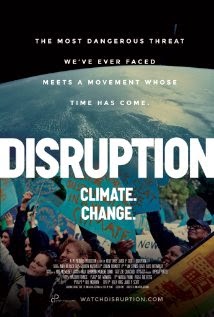
Disruption (Kelly Nyks & Jared P. Scott): we broke our tacit rule about not including movies we saw on the small screen for this one. It’s a brilliant presentation of the situation we face, made in preparation for the Climate Mobilisation in August, but still powerful and useful.

17_bh

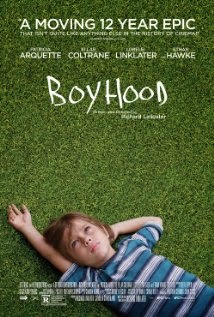
Boyhood (Richard Linklater). This does miraculous things with filming in real time. The actors actually age as the characters do. Towards the end, someone says, ‘I thought there’d be more,’ and we feel her pain.

17_L

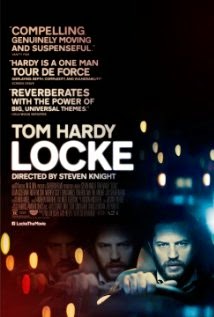
Locke (Steven Knight). Another film that does wonders with real time. One man drives in a car through the night, and is spellbinding. The spell is greatly helped by the beauty of Tom Hardy’s voice.

14_CC

Charlie’s Country, Rolf De Heer’s brilliant collaboration with David Gulpilil is just superb. That it to some extent reflects Gulpilil’s own story gives it a depth of feeling.

12y

12 Years a Slave (Steve McQueen). Nothing much needs to be said, except that this is a wonderful movie.

17_c4

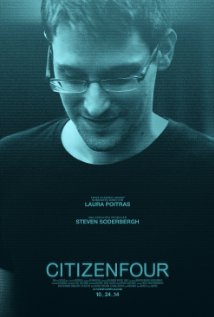
We saw Citizen Four (Laura Poitras) as part of the DOC NYC film festival. It’s a stunning documentary that plays out like a thriller, complete with grim comic relief, about Edward Snowden’s revelations of government surveillance.
tgs

Nick Broomfield’s Tales of the Grim Sleeper, which we also saw as part of DOC NYC, makes a mockery of most fiction movies about serial killers, and peels back the cover from race relations in the US.

Our worst movie
This prize has to go to the only film we walked out of: Woody Allen’s shouty, silly, predictable and unfunny Magic in the Moonlight. (To be quite honest, the Art Student predicted the reveal; I just didn’t care.)

List 2. Books

The Art Student’s best five (with comments taken from my notes of a chat about them):

144477963X

Siri Hustvedt, The Blazing World: The Art Student particularly loved how convincingly this novel describes the artworks created by its protagonist. [We heard Siri Hustvedt read from The Blazing World to about 30 people in Brooklyn last month. She read beautifully and answered questions generously. Memorably, she told us she had found Kierkegaard to be great fun since she first read him as a teenager.]

1400066026

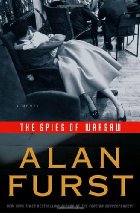
Alan Furst, The Spies of Warsaw: a novel of espionage in eastern Europe in the 1930s. Strong on atmosphere and suspense, it manages to tell its story without contriving a catastrophe.

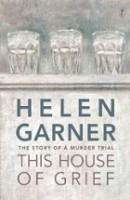
Helen Garner, This House of Grief: The Story of a Murder Trial (Text 2014)

Helen Garner, This House of Grief: Everyone who likes this book seems to give different reasons. The Art Student liked its tight, almost domestic focus on its characters.

1594486344

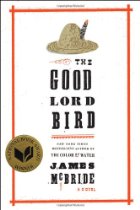
James McBride, The Good Lord Bird: a novel about John Brown, the anti-slavery activist, from an African-American point of view.

0316322407

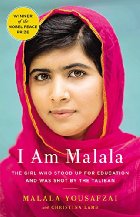
Malala Yousafzai, I am Malala: a fabulous, fabulous book that combines a History 101 of the Peshawar Valley with an account of two extraordinary people, Malala and her father.

I’m not going to list a best five books, but here are six that delighted, challenged and enlightened me, or did that thing of putting into words things I dimly felt or perceived. The images link to my blog entries.

A note on gender and diversity: The Art Student announced proudly that she had read more books by women than by men (as she usually does). I read 25 by women and 32 by men. Up against recent Viva statistics on literary journals on reviews by women or about women writers, I’m doing pretty well. I’ve read 6 books in translation, from Chinese, Japanese, Bengali and Hebrew.
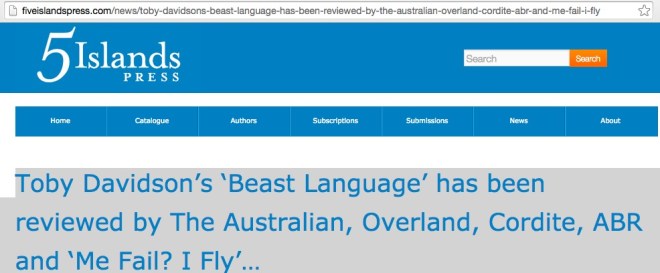
List 3. Best ‘Me Fail I Fly!’–related headline:

5ip

Onward to 2015!

Southerly 74/1

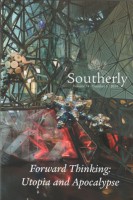
Elizabeth McMahon and David Brooks (editors), Southerly Vol 74 No 1 2014: Forward Thinking: Utopia and Apocalypse

southerly741If I read  the editorials in journals at all, I generally leave them until last, so I read without regard for any theme. I did read enough of this Southerly‘s editorial to gather that it was anticipating the 500th anniversary of Thomas More’s Utopia, but in the rest of the journal I mostly registered mentions of Utopia or utopianism as peripheral to what I found interesting. Some of my highlights:

  • Rozanna Lilley’s memoir, ‘The Little Prince, and other vehicles’, would be wonderful reading whatever her parentage: it’s very funny on the subject of inter-generational bad driving and builds to bitter-sweet reflections on her relationship with her father. But as Lilley’s parents were Dorothy Hewett and Merv Lilley (a fact coyly avoided in the Editorial and Notes on Contributors, but explicit in the memoir itself), it makes a substantial addition to the lore about that magnificent couple. For example, the passing mention that Rozanna had hidden her father’s rifle away from him in his erratic old age is particularly chilling in the light of Merv’s book, Gatton Man, which argues plausibly that Merv’s father was a serial killer, and convincingly that he was capable of murder.
  •  ‘Exile on Uranium Street: The Australian Nuclear Blues’, by Robin Gerster, author of the brilliant Travels in Atomic Sunshine about the Australian occupying force in Hiroshima after the bomb, is a sprinting survey of Australian responses to the nuclear age. Wilfred Burchett’s famous report from Hiroshima, Neville Shute’s novel On the Beach and Stanley Kramer’s film of it have overshadowed other responses, from Helen Caldicott’s activism to protests about Maralinga’s murderous tests. This essay fills out the picture in a way that makes one hope there’s a book on the way. It has a disconcertingly jaunty self-deprecating tone, but occasionally moves in for the kill, as when it challenges our current complacency about nuclear weapons: ‘There is no cause for panic, then – unless one ponders the possibilities.’
  • ‘And in our room too’ by Liesl Nunns starts from the experience of being woken by an earthquake in the middle of a storm in Wellington, New Zealand, and ruminates interestingly about the unexpected, weaving together stories of Maori gods and taniwha, personal experience, and scientific data in true essayist style. I am uneasy about her telling Maori stories in a way that makes them sound like Greek myths, but they powerfully evoke the instability of that part of the world, as does her recurring phrase, It never occurred to me that this could happen.
  • A number of pieces deal with individual mortality. Nicolette Stasko’s poem ‘Circus Act’ deals with the stark unreality of death in a hospice. Susan Midalia’s short story ‘The hook’, in which a woman goes travelling alone two years after her partner’s death, captures the way grief persists but life eventually begins to reassert itself.
  • As always, there’s a satisfying range of poetry. Apart from ‘Circus Act’, I most enjoyed Andy Jackson’s pantoum ‘Double-helix’, Margaret Bradstock’s ‘The Marriage (1823–1850)’ (another of her fragments of colonial history) and Ben Walter’s ‘Joseph Hooker’s Hands’. Geoff Page’s review of books by Tim Thorne and Chris Wallace-Crabbe made me want to read them both.
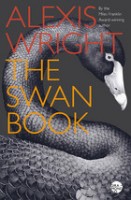
  • I skipped much of the scholarly content (Southerly is, after all, a scholarly journal), but Jessica White’s ‘Fluid Worlds: Reflecting Climate Change in The Swan Book and The Sunlit Zone‘ was worth persevering with for its interesting insights about Alexis Wright’s work. Danny Anwar’s ‘The Island called Utopia in Patrick White’s The Tree of Man‘ may do the same for Patrick White, but the near-impenetrable technical language proved too daunting for me. My prize for impenetrability goes, though, to A J Carruthers’ review of Melinda Bufton’s Girlery, which isn’t so much densely technical as splendidly uncommunicative, not to mention disdainful of the need for consistent punctuation or the workings of the French language, as in this snippet (because I can’t make WordPress show non-itals in quotes, words that should be in italics appear here as red):

Think of Girlery as a sociostylistic and amorous liaison with girlish grammar. Around each coquine clause the female reader eyes the book, “Hitherto unwritten”, knowingly participating in a kind of ‘quixotica,’ an erotics of reading where “a little grin does that thing only read in books / Plays on our lips / Tout les deux” (27).

Someone in these pages talks about the role of the creative writer in helping us to bring our minds to bear on frightening or otherwise potentially numbing realities. It’s important work, and this Southerly is part of it.