Tag Archives: Amy Wilentz

End of Year Lists

The Art Student proposed that I post about my best five books, best five movies and worst three movies for 2010. And hers. Being an obliging fellow, and at the risk of exposing myself as a philistine, here they are. Do nominate your own favourites in the comments.

The five movies most enjoyed in 2010 (in no particular order):

By me:
Animal Kingdom, David Michôd’s first feature, so human and yet so vile. (When Jacqui Weaver was being made much of in the US for this performance, Michôd reportedly said to himself, ‘About time.’ To which I cry Amen!)

Made in Dagenham, directed by Nigel Cole, what some people would undoubtedly see as a fundamentalist left feminist feelgood movie – and what’s wrong with getting to feel good about a victory?
Peepli [Live], directed by Anusha Rizvi & Mahmood Farooqui, a wonderfully ebullient satire on the way the media in India, just like here, makes spectacle out of misery – a comic commentary on P Sainath’s Everyone Loves a Good Drought.
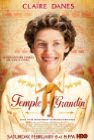
Temple Grandin, made for TV by Mick Jackson, starring Clare Danes as Temple Grandin, the woman with Asperger’s Syndrome who revolutionised the treatment of cattle in US slaughterhouses.
In the Loop, exuberantly enraged, foul mouthed satire directed by Armando Iannucci and starring Peter Capaldi, which I found cathartic.

By the Art Student:

City Island, a genial comedy directed by Raymond De Felitta, starring Andy Garcia, and Julianna Margulies playing a very different character from Alicia in The Good Wife on TV.
The Yes Men Fix the World, featuring culture jammers Andy Bichlbaum and Mike Bonanno, and any number of corporation representatives being taken for a ride.
Me and Orson Welles, directed by Richard Linklater.

Peepli [Live]. At last we agree on one.

Fair Game, the pic about Valerie Plame, directed by Doug Liman.

The film that most cried out for a thumbs down from both of us

Rob Marshall’s Nine. At least they had the good taste to wait until Fellini was dead before defiling his work in this way. The fault lines in our unanimity of taste showed when the Art Student had trouble choosing between this, Inception and Scott Pilgrim vs the World, both of which I enjoyed.

Five favourite books read in 2010

By me:

I listed 121 books in my Reading and Watching blog during 2010. I didn’t finish all of them, but picking five favourites is necessarily pretty arbitrary because so many of them delighted and enlightened me. However, here goes.

China Miéville, The City and the City. Science fictional policier, marvellously taut and convincing us to believe in an impossible world.
Charles Happell, The Bone Man of Kokoda. Written by an Australian, this tells the story of a Japanese man who fought against and killed Australians in the jungles of New Guinea, and his resolve to honour his comrades who died there.
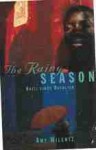
Amy Wilentz, The Rainy Season. I read this in the aftermath of the terrible earthquake in Haiti. It is a very rich introduction to the culture and recent history of the nation created by the first successful black slave revolt of modern times.
Jennifer Maiden, Pirate Rain. This may not be the best book of poetry published this year. Many people would probably give precedence to Les Murray’s Taller When Prone or Seamus Heaney’s Human Chain. But Jennifer Maiden gets my gong.

Marilynne Robinson, Home. If I ever convert to stern Presbyterian Protestantism, it will be because of this book and its predecessor, Gilead. I love the characters’ unrelenting quest to love with integrity.

By the Art Student, in her own words:
While I have read quite a bit of fiction that I enjoyed, the books that stand out are all non fiction.
Reza Aslan, How to win a cosmic war. I heard him speak at the Sydney Writers’ Festival this year. The book is a clear and compelling account of the past and current drivers of religious fundamentalism – Islamic, Jewish and Christian. It shows the common threads in religious fundamentalism while focusing on Islamic fundamentalist terrorism. What is interesting is Aslan’s description of the difference between Islamic nationalist groups (which the West should learn to love) and internationalist jihadism. By fighting the former, Aslan argues, we are pushing alienated young western-born Middle Eastern  Muslims into joining the latter and terrorism.
Carol Duncan,  Civilizing Rituals, Inside Public Art Museums. This includes a fascinating account of the development of public art museums after the French Revolution liberated the Louvre. It mainly focuses on the development of public galleries in the USA and England, but links these developments to a popular movement to have art galleries in all major western cities (including Sydney). But most interesting are the struggles about what galleries were and are for, how they should be funded and what they should show. In the USA, private philanthropists were the driving force in establishing galleries, allowing them to build spacious monuments to benefactors. The down side was that those benefactors wanted control beyond death, so that many galleries are filled with replicas of ballrooms and indifferent art that are never to be changed. Duncan’s final chapters critique current public galleries’ approaches to their art and audiences, making it clear why many people find the experience of visiting galleries unsatisfying and alienating.

John Hirst, Sentimental Nation, the Making of the Australian Commonwealth. Federation? Surely the dullest topic in Australian history. But to my surprise this book was a wonderful read about the decades-long fight for federation. Depressingly familiar in some respects (the Murray–Darling debate, immigration, taxes, mining, Commonwealth–state power sharing) it was also a wonderfully inspiring account of democratic processes that gave Australia a constitution. There were three Constitutional Conventions, with 60 men voted from  the colonies to draft, debate and redraft the constitution over 12 weeks each time. Once agreed on, the constitution was subject to two referenda before being passed. Town hall meetings were held in every suburb and town in the country, each meeting often taking four hours while every section of the draft was read aloud,  explained and debated. Hirst makes the back and forth of politics come alive with a contemporary feel.

Patricia Hill, Alice Neel. Alice Neel (1900 to 1984) was a US artist who painted mainly portraits of ordinary working people over from the 1920’s until her death. She was a socialist and worked as part of the Federal Art Project (a New Deal initiative) during the Depression. She only received recognition of her work in the 1970s, partly because portraiture was out of fashion in Modernist American art circles,  partly because of her left-wing views and partly because of her gender. I love her work. Her portraits are often distorted yet capture absolutely a sense of the person and their context. She saw herself as painting ‘definitive pictures with the feel of the era’, pointing to her portrait of her son in a business suit, ‘Richard in the Era of the Corporation’, as a good example.The book is largely Neel’s own words taken from interviews conducted by Hill. An inspiring read for someone at the very beginning of an art career as she approaches 60.

Do tell us your bests of 2010 in the comments

Haiti After Duvalier

Amy Wilentz, The Rainy Season: Haiti Since Duvalier (Simon and Schuster 1989, 1994)

When the recent earthquake struck Haiti, I’m sure I wasn’t the only one who was dismayed by the spectacle of poor Black people, sometimes visibly despairing, sometimes raging, being helped out by calm, compassionate Europeans and USers, usually accompanied by a narrative about Haiti’s lack of infrastructure and the international community’s concern – that is to say, a spectacle that seemed to confirm racist stereotypes: African heritage people emotional, dangerous, incompetent etc; European heritage people efficient, kind, well organised etc. I realised my ignorance about Haiti was vast: from Jared Diamond’s Collapse I knew that its part of the island of Hispaniola was an ecological disaster resulting from poverty and political corruption; on a good day I could have told you that Papa Doc and Baby Doc were vicious dictators named Duvalier; I was dimly aware that it was the home of voodoo, about which my main source of information was the novels of William Gibson and the obviously misleading zombies of popular culture. It wasn’t going to help the earthquake survivors, but I felt the need to do them the basic honour of finding out about them. This book was recommended by a friend.

Amy Wilentz, a New Yorker, first went to Haiti in 1986, as a journalist covering the last days of Jean-Claude Duvalier (Baby Doc) and his wife Michèle. She returned a number of times in the next couple of years and then moved there to live. The book traces events from the ousting of Jean-Claude to just before the elections in 1989: military coups, violent popular actions and non-violent demonstrations, two bogus elections, army-backed massacres, arson, random killings. It’s quite a story, with a great cast of characters: a Well Placed US Embassy Official (who gives Wilentz transparent disinformation), a senatorial candidate, a dark haired photographer (eye witness and near casualty of one of the massacres), and a host of Haitians: politicians, well off mulattoes, shanty-town dwellers, voodoo celebrants, artists, street children, and – who becomes the main protagonist – Jean-Bertrand Aristide. Aristide is a priest, a member of the Salesian order, who speaks out against oppression, becomes a figurehead for the  popular resistance, and survives a number of attempts to kill him, discredit him or send him into exile.

The 1994 edition – which is what I have read – includes a foreword that briefly covers the intervening four or five years: Haiti had had its first genuinely democratic elections, in which Aristide was elected president by a huge majority. Aristide had been ousted by yet another military coup, US-backed like its predecessors, and was the subject of CIA-assisted smears.  A quick look at Wikipedia tells me that the turbulence has continued.

Haiti was founded at the turn of the nineteenth century, the only nation to be born of a slave revolt and the first Black republic. Haitians fought off an invasion by Napoleon’s forces, and in effect saved North America from invasion, paving the way for the Louisiana Purchase. Not that this kindness has been acknowledged by the US: Haiti  was invaded and occupied by US forces from 1915 to 1937, and continues to be dependent on US aid, which of course comes with strings attached. Reading this book makes the ‘donor nations’ look a lot less benign.

Because Wilentz actually lived in Haiti for some time, and developed relationships there, she can give a richly detailed account of life there. There’s a beautiful passage on Aristide’s theology, for instance (‘I believe the Resurrection is an ongoing process … In order to continue being a force, [the Apostles] had to believe that Jesus, their leader, was still a force. … In order to survive the shock of Jesus’ death, they imagined him coming and eating with them, the simplest thing, you know, the simplest human act, breaking bread together’). The narrative is sprinkled with linguistic pleasures in the form of frequent snippets of Haitian Creole: Aristide’s nickname was Titid, as in petit Aristide; I enjoyed teasing out the French connection in sentences such as, Se lè koulèv mouri, ou konn longé-l, which translates to English as ‘Only when the serpent dies can you take its measure’, and which I had fun figuring out would translate into French as something like C’est quand le coulèvre mourit, on connaît longer-le. The countryside, and the weather, come alive in frequent passages like this:

Smoke ascended from lean-to kitchens along the way. A truck piled high with charcoal bags rumbled by, stirring up dust. A peasant sat on top of the grey load, holding his machete; a piece of plastic was wrapped around his head against the approaching rains. The road twisted on; for all my travelling, I had not left Papaye far behind. I passed down a hill and through a small stream, where a great white pig was lounging on a rock, waiting for rain. Farther on, more people seemed to be about. Peasant men were standing at their doors, while the women made smoke in the kitchen. Two boys squatted in a yard, playing marbles.

She’s been there, and she does a good job of taking us with her. The book is firmly located in a particular moment in Haiti’s history, and the author’s understanding of the meaning of things has been challenged by subsequent events – in a recent op-ed in the New York Times, she herself refers to Aristide’s own ‘little-d Duvalierist tendencies’ as having contributed to the destruction of his presidency. But it’s not dated. Wilentz’s attention to detail, to the textures and smells and rhythms of daily life in Haiti make engrossing and illuminating reading. That post-earthquake New York Times op-ed piece concludes with a passage that possesses those same qualities:

This is what I saw as I travell00ed around the country on foot and on motorbike a week after the quake struck: families and neighbourhood groups putting up shelters; people cooperating with aid organisations to get food for their flattened neighbourhoods; teacher’s assistants hired by parents in the newly built shantytowns to teach and amuse children whose schools fell down (about 300 teachers at a conference died during the earthquake when their meeting hall collapsed). Men working in teams to remove reusable construction materials from the wreckage. Women sweeping debris from the roads with their graceful, primitive brooms. Young people caring for the wounded in makeshift clinics. Maybe utter destruction concentrates the mind. In these conditions, do-it-yourself democracy simply works best. The quiet president, operating behind the scenes with the international community, instead of strutting before the foreign press and claiming he’ll fix everything, is perhaps at this moment not such a bad leader for Haitian democracy, after all.

When you stand in the rubble of Port-au-Prince – so recently an affecting and even a heart-tugging city that functioned on a complicated, hypercharged fuel of chaos, exposed wiring, pig slop, smog, gingerbread turrets, hot cooking oil, rum, cockfights and bougainvillea – you begin to see that Haiti’s soul resides in its people. Out of this horror, maybe they will finally be released. That is, if the rains or another quake doesn’t stop them in their tracks.

‘Haiti’s soul resides in its people.’ That might look like easy rhetoric in the pages of a newspaper, but it’s not a bad six-word summary of what The Rainy Season carefully, passionately, intelligently ends up saying.

[Note: I’ve Australianised the spelling in the quotes.]

Another fortuitous incident

From page 257 of Amy Wilentz’s book on Haiti, The Rainy Season (about which I’ll write more very soon):

When Duvalier fell, movements like Chavannes’, which had maintained a fairly low profile under Duvalier, burst out into the open and grew rapidly, only to discover that the network of power they thought had been undone by the Dechoukaj [literally ‘uprooting, as of a tree’, of the old regime] was still in place and ready to strike back at them when the time should prove fortuitous.

Amy Wilentz is no slouch as a writer. Her prose is finely tuned, her feel for language strong. The word as used here, as by any number of other thoughtful writers, just doesn’t mean – can’t mean – what the dictionary says it means: ‘happening by chance’. But I don’t recall seeing it used quite this way before, as a synonym for ‘opportune’.

This is why I’m fascinated by the word: it’s in such a state of flux that its meaning wanders all over the place: providential, lucky, opportune. It has an almost wild-card quality.