Tag Archives: Australian Women Writers Challenge

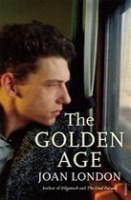
Joan London’s Golden Age

Joan London, The Golden Age (Random House 2014)

IMG_1188

There are any number of ways a novel about children with polio could go wrong. There’s sicksploitation, in which the children are reduced to pity objects, their carers to embodiments of a heartless or incompetent medical system, and their parents to hand-wringing bystanders. There’s documentation, in which treatment is described in painful detail, and criticised in the light of what is now known to be effective. There’s advocacy, in which a longish final sequence shows the children, now in their sixties, dealing with post polio syndrome. And I’m sure there are others. Joan London avoids them all in The Golden Age.

When the book opens Frank/Ferenc, a thirteen year old boy, son of Hungarian Jewish immigrants, has newly arrived in a polio convalescent home named The Golden Age (a home of that name actually existed in Perth in the 1950s, and the novel draws on the reminiscences of people who were patients there). Frank has already decided his vocation is to be a poet, and he is drawn to Elsa, another patient about his own age. His growing love for Elsa and his development as a poet, both treated with respectful restraint, are delicately intertwined with the story of their rehabilitation and provide the novel’s central narrative thread.

In the other characters, especially Frank’s parents and Sister Olive Penny, the nurse in charge of the home, the moral and emotional world of post-war Perth is brought to life with apparent effortlessness. Even the sketchiest of characters – the gardener, say, or the ex-patient with whom Olive has an unconventional relationship, or the people who live across the road from the Golden Age – are deeply imagined. Big scenes – a piano concert in the quadrangle, the queens’ visit to Perth – unfold naturally and without ever losing sight of the main game.

For me, the emotional heart of the book lies in the relationships between the young people and their parents. Different parents’ emotional reactions to their children’s illness are deftly captured, ranging from scenes of operatic intensity to tiny, deeply intimate gestures. Anyone who has been in hospital or boarding school as a child will recognise the children’s ambivalence about their parents’ visits, as the institution comes to feel more like their real home and they realise that their parents don’t understand their new lives. The final major turning point, which I’m not going to reveal, emerges from the middle of this complexity as a surprise that is also, in the Nero Wolfe sense of the phrase, most satisfactory.

aww-badge-2015This is the second book I’ve read for the Australian Women Writers Challenge for 2015.

joanne burns’s brush

joanne burns, brush (Giramondo 2014)
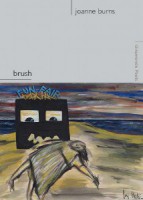
brush In a recent blog post my friend Will tells of a friend’s advice on how to visit a gallery:

Don’t try to see everything … When you walk into a room, scan the walls quickly, and then decide which painting you’d like to spend time really looking at. You’ll come away with a richer experience, and you’ll probably discover more.

That sounds like a good strategy for blogging about a book of poetry.

So, to start with a quick scan, joanne burns (this is how her name seems always to be written) is one of the stand-out Australian poets of the 1968 generation. Her poetry is generally witty, minimally punctuated, and not always immediately accessible. brush (again, my shift key isn’t broken) is in six sections:

  • bluff: where there is much play with the language of the share market
  • in the mood: prose poems, all interesting, with no common thread I could discern
  • brush – day poems: I understand these to refer to Frank O’Hara’s lunch poems, and they have elements of what Wikipedia calls O’Hara’s ‘characteristically breezy tone’ and ‘spontaneous reactions to things happening in the moment’
  • road: 21 poems, again with no common thread as far as I can tell – maybe they’re the non–prose poems that don’t fit into the other sections
  • delivery: poems related to a Bondi childhood
  • wooing the owl (or the great sleep forward), which could be subtitled ‘night poems’: poems with the feel of dreams or half-waking insomniac reveries.

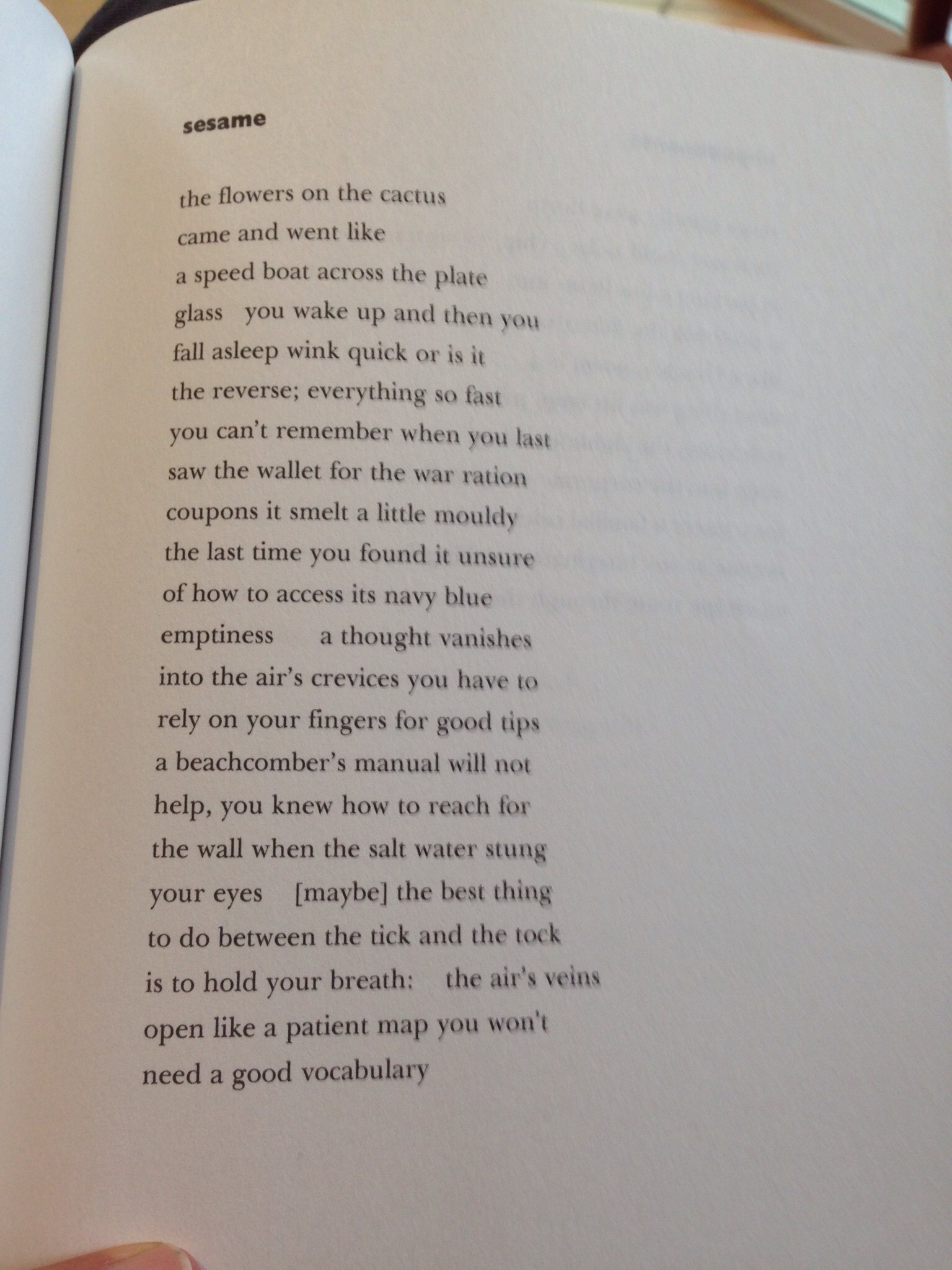
Choosing just one poem to spend time with ain’t easy. I did a quick scan of poems I’d snapped with my phone on first reading (it’s a friend’s book, and phone-snapping was a non-damaging equivalent of turning down page corners), and settled on one that was outside of my comfort zone – that is to say, no obvious argument or narrative. Here’s a pic of it, and you can read it online at Best American Poets (not a misprint – they had a series featuring modern Australian poets).

2015/01/img_1148_2.jpg

I have no idea what initially drew me to ‘sesame’: perhaps it was a tantalising sense of a coherent argument just beyond my grasp; perhaps the play of images struck a chord in me; perhaps it just liked the sounds it made. It doesn’t really matter. I’ve now spent quite a lot of time with it.

Spending time with the poem wasn’t a matter of trying to decipher a ‘meaning’ as if it was a cryptic crossword. I did work out where sentences began and ended; and incidentally noted that the obvious punctuation – the extra spaces on lines 4, 12 and 18, the comma and the semicolon – are not indications of the poem’s turning points, but highlight the enjambed orphans that precede them. I learned the poem by heart. I recited it to the dog, to a paddock full of cattle, to the long-suffering Art Student, to the dark room when I woke in the night (though the effort of recall tends to send me back to sleep wink quick). I wrote it out from memory (and every mistake was a discovery). I went away and read other poems in the book and other books, and came back to it. I wrote a number of drafts of this blog post that went into great and (for any reasonable reader) tedious detail. Basically, I let the poem wash over me again and again. I’m pleased and relieved to report that I didn’t get bored. Here’s a bit of what I found.

First, the unconventional punctuation doesn’t create any real ambiguity. The poem just takes a little longer to decipher than it would with normal marks: the reader has to slow down, to pay attention, even on first reading.  (It does allow for some playfulness: the line break after ‘plate’, for example, conjures up a surreal image of a speedboat zooming over a dinner plate, which evaporates as soon as you realise that ‘plate’ belongs with ‘glass’, and we’re talking about the view.)

Then there’s the amount of patterning in the poem’s apparently casual language. There’s line-end rhyme (‘fast’/’last’), and buried partial rhymes that put stress at the start of lines (‘glass’/’reverse’; ‘access’/’emptiness’; ‘vanishes’/’crevices’). Definite articles – ‘the flowers’, ‘the cactus’, ‘the plate / glass’, ‘the wallet’, ‘the wall’ – communicate a sense of a particular room, a particular life. There are many times: the recent past of the cactus flowers; the distant past that the wallet comes from; the childhood past of touching the wall (of the rock pool at Bondi?); a generalised present (‘everything so fast’); the future (‘will not / help’).

Most interestingly, amid the apparent impulsive hopping from one subject to another, there is something very like a question raised and answer proposed. First a series of on/off moments: cactuses bloom, speedboats come and go, we wake and sleep. Then the longer term: the emblematic wallet is forgotten, goes mouldy, becomes inaccessible. In both these ways, we lose our grasp on things. The problem crystallises at the midpoint when ‘a thought vanishes [‘wink quick’?] into the air’s [wallet-like?] crevices’.

And now, the dominant sense of sight yields to the sense of touch. If you don’t remember how to open the wallet, your fingertips can find a way; when the salt water stung your eyes you groped your way to the pool’s edge. A beachcomber’s manual is close to a contradiction in terms. The next lines move further, leaving not just sight but also speech:

__________[maybe] the best thing
to do between the tick and the tock
is to hold your breath

The ‘tick and the tock’ harks back to the on/off motif, and also possibly takes us back to the room with the cactus and the plate glass, which also evidently has a big clock. The air’s crevices have become veins, as in veins of ore, which yield a patient map: not on/off, not corroded by time, and quite different from an external manual. The thought that vanished into the air returns in a new, useful form, in response to a silent, groping approach. (The stinging salt water also suggests tears, and the air’s veins suggest blood – so perhaps as well as silence and groping the approach involves suffering.)

The poem reaches a climax with the word ‘open’ in the second last line, which arrives with even more force if you have the poem’s enigmatic title in mind. Only at this point does the title settle into place, assuming the reader knows the Ali Baba story (and just in case you don’t: that’s the story from The Arabian Nights where a treasure cave opens in response to the magic phrase, ‘Open sesame’). In effect the title announces that the poem is about opening up some metaphorical cave of riches.  The last sentence might mean ‘you’ll only need the one magic word, not a whole vocabulary’ or ‘contrary to the story, you won’t need words at all – the secret to getting access to these treasures is silence.’ I prefer the latter reading.

So what’s the poem about? Jeez, I dunno, he said, meaning it in the nicest possible way. The Art Student thought it was about dementia. I think the first half is about memory, and perhaps about the mythical process we’ve been told to call ‘age related cognitive decline’. But the whole strikes home for me as a meditation on creativity, on thinking of any sort, on how wisdom grows from concrete experience, perhaps from facing pain rather than pretending it doesn’t exist. What I’m left with, though, isn’t the ‘meaning’ so much as the beautiful, intricate, apparently casual but actually carefully structured play of mind.

Peter Kirkpatrick launched the book at Gleebooks. His illuminating launch speech is online at the Rochford Street Review site.
aww-badge-2015This is the first book I’ve read for the Australian Women Writers Challenge for 2015. I plan to read and blog about ten this year.

Australian Women Writers Challenge 2014 Wrap Up

awwbadge_2014

The Australian Women Writer’s Challenge is an initiative aimed to address the gender imbalance in our literary culture by having people undertake to read a certain number of books by, as the name of the challenge suggests, Australian Women Writers. I signed up for the Franklin level challenge, which meant I was committed to reading 10 books and reviewing at least 6. One of the requirements of completing the challenge is to write a completed challenge post. This is that post.

The books I have read so far are:

The book of Chinese poems in translation is probably borderline, but Mabel Lee is definitely an Australian Woman Writer, and editors surely count for something. I’m also not sure I should claim that my blog entries are actually reviews, but if you put 11 blog entries maybe they can count as six reviews.

So, two hefty novels, one non-fiction work, a collection of essays and seven books of poetry; seven books published in 2014 and nothing earlier than 2009; one e-book; one expat, a couple of people born elsewhere and one Indigenous woman.

I may read some more by Australian women writers before the year finishes in two weeks’ time,  but that will be outside the challenge.

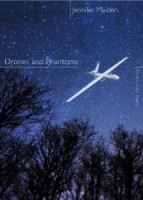
Jennifer Maiden’s Drones and Phantoms

Jennifer Maiden, Drones and Phantoms (Giramondo 2014)

D&P cover pic

With each new book Jennifer Maiden continues a long-running conversation, or rather several conversations. Here’s a list of those that either continue or begin in Drones and Phantoms:

  • Clare Collins and George Jeffreys appear in 3 poems, bringing their total to more than 16 (not counting the novels where they first appeared). All a new reader needs to know is that the white-haired Clare was a child-murderer and George, her former parole office, is now her part-time lover. You don’t need to know about their past encounters with a Somali pirate or a Beijing dissident to enjoy the poems in this book, which find George in Iceland and Clare hiding in a tree on Manus Island. The pair’s adventures don’t constitute a single narrative: they turn up in hot spots on the slimmest of pretexts and, while the characters are much more than cardboard cut-outs, their conversations with each other and the figures they meet are also a vehicle for what Gig Ryan has called Jennifer Maiden’s ‘dialogic enquiries’.

Maiden’s dialogic enquiries also include a string of public figures, most of them in conversation with resurrected/awakened figures for whom they have expressed admiration in real life, and many of them addressing the complex relationship between the living characters’ actions and their proclaimed ideals:

  • Hillary Clinton and Eleanor Roosevelt are up to their tenth conversation, full of consolation, admonition and – could it be? – flirtation
  • Tony Abbott and Queen Victoria costar in four brief poems, at the end of which VR appears to give up on TA (which is perhaps the poet relinquishing her attempt to enter Tony Abbott’s mind sympathetically)[*]
  • Tanya Plibersek and Jane Austen get on very well
  • Kevin Rudd seeks reassurance from Dietrich Bonhoeffer who observes silently in one poem and soothes indirectly in another (‘Numbers / you know are always deadly’)
  • Nelson Mandela is reluctantly drawn into conversation with Barack Obama about drones, justice and reconciliation
  • Mother Teresa and Lady Diana (who died on the same day) renew their acquaintance
  • Julia Gillard tells an unnamed disk jockey that riding in his Rolls Royce Phantom convertible would make her hair uncontrollable (the reference is to an interview with Kyle Sandilands). I think it’s fair to say that Jennifer Maiden is not a fan of Julia Gillard, whose previous relationship with Nye Bevan seems to have come to an end..

These dialogue poems are a means for the poet to offer reflections on current events, on the nature of power and violence, and state sanctioned evil. (It’s a measure of their success that when I watched our elected leaders struggling to find words in the wake of the Martin Place siege this week, I wanted instead to eavesdrop on George and Clare, or perhaps Mike Baird and Winston Churchill.) But – call me shallow – the poems are also good, eccentric fun. While Tony Abbott is working as a volunteer bushfire fighter, Queen Victoria fans herself with a copy of his book The Minimal Monarchy. Tanya confides to Jane:

Jane, sometimes the need for tact
disconcerts me so much that I grin
like a guilty schoolgirl, then try to make
it seem deliberately charming.

Eleanor Roosevelt’s hand

seemed much larger than Hillary’s now, had
stilled and covered it like the pod
around a seed.

There are other dialogues:

  • LM Montgomery, creator of Anne of Green Gables, wakes up in the modern museum version of Green Gables and alarms a tourist
  • There are real, remembered conversations that Jennifer Maiden has had with Judith Wright and with her daughter Katharine; and an imaginary chat with Frank O’Hara, a poet whose work she has never read.

The conversation in this book isn’t limited to the imaginary or remembered dialogues. In a number of essay poems (some of which Maiden labels ‘Diary Poems’ in ironic response to a critic who dismissed some of her earlier poems as diary excerpts), the conversational tone is marked, and occasionally the reader is addressed directly, as in this, from ‘Diary Poem: Uses of Silence’:

I often value my lack of audience (except
for you, of course) in that one
can speak freely in a poem because
no one will read it, which is like
being silent, but with almost none
of the corollary frustration.

Closely related to this pervasive use of dialogue is another kind of interactivity. Maiden increasingly flies in the face of the truism that no good can come from a writer responding to critics or dissing editors. There’s the mild amusement in ‘Diary Poem: Uses of Frank O’Hara’ at a reviewer who ‘said I’d learned a lot from Frank O’Hara’ and then ‘professed shock that I had never read O’Hara’, and in the opening of ‘Diary Poem: Uses of Judith Wright’:

After a couple of reviewers who decided
I was not Judith Wright’s successor, I
began to recall my encounters
with Judith herself

But there’s less amusement, something closer to rancour, when she tells of a row with an editor (in ‘The Sweet Sheep Gone’), when she refers in ‘Diary Poem: Uses of Ethiopia’ to feminists who are ‘well in favour / of ethical security’ and ‘a hostile magazine site’ ‘now given / to ethical self-security’, when she gets stuck into ‘The Director of a Writers’ Society [who] tweets / flatly that my book is not her “thing” / because it is too political with only / a “niche” of poetry’ (in ‘In Proportion’ ). I find it hard to know what to make of these responses to critics, especially because, as a bit of a fan, I often recognise the reviews and have read the relevant comments threads. It is interesting, though, that she speaks back from within the poems – resulting in a kind of vertiginous cross-referencing within her body of work.

You probably have to be interested in the political news to enjoy this poetry. Or maybe not. I’m at home with references to Forbes and Hope, Christmas Island, Fukushima, Run-Over-the-Bastards Askin, Santamaria. But there are a lot of references that I don’t get. I generally enjoy the play of language and mind enough anyway, but when I decide to let Google be my friend, the results invariably enrich the reading experience: I had to reread Hopkins’s ‘Elected Silence’, find out who Frieda Hughes is, and learn about the killing and ‘autopsy’ of the giraffe Marius in Denmark, among, come to think of it, many other things.

There’s more, lots more. But that’s enough for one blog post.

awwbadge_2014Drones and Phantoms, is tenth book I’ve read as part of the 2014 Australian Women Writers Challenge, and with it I have met the quota I accepted at the beginning of the year. I am very grateful to Giramondo for sending me a complimentary copy.

[* Added on 4 July 2015: In today’s Sydney Morning Herald, she comes back for a further barbed but sympathetic conversation]

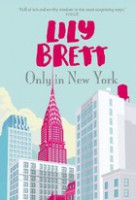
Lily Brett’s Only in New York

Lily Brett, Only in New York (Hamish Hamilton 2014)

1ony

This book is not to be confused with Lily Brett’s similarly titled New York, published in 2001, even though both are collections of essays about New York. There are similarities of course, but whereas New York‘s essays were each exactly three pages long, and geared primarily to a German readership (they were first published as columns in the weekly newspaper Die Zeit, translated by Melanie Waltz), the essays here are much less constrained, ranging from two to 10 pages, and don’t have any sense of the deadline pressure that’s often found in newspaper columns (though at least one of them, ‘Falling in Love in Cologne’, has appeared in Die Zeit). Many of the essays read as if they were partly written in Lily Brett’s head as she went on long walks in Manhattan. Not that she’s a flâneuse, as her opening sentences make clear:

When I go for a walk in New York, I like to have a destination. Actually, I like to have a destination wherever I am when I go for a walk. I am not one of those aimless walkers, people who can stroll around from place to place without a plan.

Many of the essays start with naming a destination: Grand Central Station, Spandex House in the Garment District, Caffe Dante in Greenwich Village, her father’s apartment block. Occasionally, as when her eldest daughter is in labour, there’s no destination, but it’s still not aimless wandering, but walking ‘around and around the block, with increasing speed. For hours.’ Apart from the streets and people of Manhattan (the other boroughs don’t get a look in), the book returns to a number of subjects: Brett’s family – mother, father, husband, children – her Australian connections, her many neuroses and anxieties. Much of the book’s considerable charm comes from the way the essays veer off in unexpected directions – like a purposeful but totally distractable walker.

In an essay that starts out apparently about Brett’s incompetence at sewing, she confides that she  is ‘not the kind of person who can lounge around the house in a sweatshirt’, and goes on:

My mother was well dressed all the time. Even when she cleaned the house. She polished the floor and scrubbed the kitchen in a silk blouse, pleated skirt and high heels.

Then, without missing  a beat:

After her world cracked and splintered when the Nazis invaded Poland, my mother was never the same. She could never relax. She was always on guard. It was as though she needed to be prepared for any eventuality. And I have inherited that need.

We can enjoy the image of Brett’s mother’s eccentricity. But we’re not to trivialise her. And that’s true of the book as a whole. I laughed a lot. Brett’s nonagenarian father is very funny, but he is a triumph of the human spirit. New York is full of absurdities (customers are called ‘guests’, dogs wear shorts, psychics abound) but you never know what you’ll see if you keep your eyes open.

At a Sydney Writers’ Festival a couple of years ago Inga Clendinnen said that whereas a novelist plays Catch-Me-If-You-Can with the reader, an essayist invites the reader to come for a walk. She could have had this book in mind.

awwbadge_2014

Only in New York is the ninth book I’ve read as part of the 2014 Australian Women Writers Challenge,

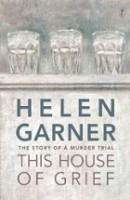
Helen Garner’s House of Grief and my Sonnet 6

Helen Garner, This House of Grief: The Story of a Murder Trial (Text 2014)

1922079200 This is the third of Helen Garner’s courtroom books, and it’s a much tougher read than I remember the others being. Maybe that’s because this one involves a man who drove into a dam in a car that also contained his three young sons, and swam free himself. In four court hearings he is committed and tried for murder, appeals successfully against the guilty verdict, and is tried again. The aim of the legal process is to determine his guilt or otherwise. The book would be as relentlessly painful no matter what the jury finally decided.

The book is beautifully written. It’s subtle, sharp and unremitting. It conveys brilliantly the theatre of the court. It’s brave too: Helen Garner doesn’t back off from offering her own readings, her own judgments, of the many courtroom participants – witnesses, lawyers, judges, journalists, family members of the accused and of the dead children, her own young companion Louise, a bumptious school student drop-in, and at the centre of it all the man himself. I found it gruelling, and ultimately very satisfying, even while it pins a huge question mark on the tail of the whole legal system: so much raking through people’s lives and relationships, so many people put through the horrendous ordeal of cross-examination (much worse here, it seems, than in standard TV fare) – surely there must be a better way than this single-minded quest to find where to apportion blame?

It’s probably central to Garner’s power as narrator and her persuasiveness as interpreter that she dramatises her own emotional responses, so that we’re always aware that this is one person’s perspective and that it’s a perspective with flesh on its bones. She constantly reminds us that the court is dealing with profoundly human events – in this case the violent death of three children. I love the following, for example:

Was there a form of madness called court fatigue? It would have mortified me to tell Louise about the crazy magical thinking that filled my waking mind and, at night, my dreams: if only Farquharson could be found not guilty, then the boys would not be dead. Cindy would drive home from the court and find them playing kick-to-kick in the yard, or sprawled in their socks on the couch, absorbed in the cartoon channel. Bailey would run to her with his arms out. They would call for something to eat. She would open the fridge and cheerfully start rattling the pots and pans. I could not wait to get home, to haul my grandsons away from their Lego and their light sabres, to squeeze them in my arms until they squirmed. Young boys! How can such wild, vital creatures die?How can this hilarious sweetness be snuffed out forever?

Moving on to my obligatory November rhyming:

Sonnet No 5: Magical thinking?
What magic could bestow on juries
the power to undo a crime?
Guilt still would be pursued by Furies,
innocence shine forth in time,
but history, by twelve’s decision,
would undergo benign revision –
the dead would live, the maimed be whole,
and peace suffuse the tortured soul.
Real courts, alas, aren’t made for healing.
Wounds heal elsewhere, if at all.
What magic thinking has us call
to public scrutiny dark feeling –
grief, hate, regret, long festered strife?
No verdict can restore a life.

This House of Grief is the eighth book I’ve read as part of the 2014 Australian Women Writers Challenge.

Added 18 June 2015: Helen Garner appeared at the 2015 Sydney Writers’ Festival. Her riveting talk about her inspirations for This House of Grief was recorded and is available as a podcast.

Jenny Blackford’s Duties of a Cat

Jenny Blackford, The Duties of a Cat (Pitt Street Poetry 2014)

1dcThis tiny book of 12 poems about cats, with seven charming ink drawings, would make an excellent gift for a cat-lover. But, dear reader, before you start thinking about cute internet kittehs, think of Christopher Smart considering his cat Jeoffry:

For he camels his back to bear the first notion of business.
For he is good to think on, if a man would express himself neatly.
For he made a great figure in Egypt for his signal services.

or, much more recently, David Malouf’s ‘Eternal Moment at Poggio Madonna’:

Miss Mischa in her cool
reclusion curls on the mat.
Has a feel for
creaturely comforts and has sniffed out
this spot, though nothing
in nature or that the eye
can see marks it as special.

Cats and fine poetry are by no means incompatible.

Pitt Street Poetry – publishers of, among others, Lesley Lebkowicz, Geoff Page, Eileen Chong, Luke Davies and Mark Tredinnick – have not lost their judgment. Jenny Blackford turns a loving, amused, admiring and sometimes unsettled eye on the creature from another species that shares her home.

It’s not irrelevant that some of these poems have been previously published in The School Magazine (though not yet in my long-ago time as editor) and in science fiction/fantasy magazines as well as literary journals for adults. The cats of these poems have eerie science-fictional qualities, as in this from ‘Their quantum toy’ (the whole poem is online here):

I’ve seen him levitate, I’ve seen him
lift, weightless,
impossible, from lawn to fence,
or rug to bed,
up from the ground without a hair
or muscle moved.

They can have great child appeal, as in ‘Soft silk sack’, which begins:

Cat puddles
against the floor
his body flat as milk

But there are poems that start cutely like that and end, for example, with the cat’s  eyes as ‘ chips of blue-grey glacial ice’. Like cats themselves, the poems can be charming and dangerous in the same breath.

So yes, this would make a great present for someone who loves cats and isn’t allergic to poetry, but also for someone who loves poetry and isn’t allergic to cats.

awwbadge_2014The Duties of a Cat is the seventh book I’ve read as part of the 2014 Australian Women Writers Challenge. Added later: I should have mentioned that we did publish two of Jenny’s ghost stories when I was editor of The School Magazine, that she and I are Facebook friends, and that she gave me a copy of The Duties of a Cat  as a gift.

Hong Ying, Zhai Yongming & Yang Lian edited by Mabel Lee

Mabel Lee (editor), Poems of Hong Ying, Zhai Yongming & Yang Lian (Vagabond Press 2014) – translated by Mabel Lee, Naikan Tao and Tony Prince

1ml This is the second book I’ve read in Vagabond Press’s admirable Asia-Pacific Writing series, and like the first – Poems of Yi Sha, Shu Cai and Yang Xie, edited and translated by Ouyang Yu – it features work by three poets translated from Chinese.

Strikingly, neither Mabel Lee nor Ouyang Yu mentions any of the poets who appear in the other’s book. The only overlap between their respective histories is a mention of Bei Dao, whom Ouyang Yu says is now regarded as ‘uncool, pretentious, even boring’ and whom Mabel Lee honours as a key figure in the post-Mao era. Clearly the story of recent Chinese poetry can contain multitudes.

Mabel Lee’s poets are a generation older than Ouyang Yu’s. Where his introduction discusses the way his poets turned away from the revolutionary zeal and protective obscurity of their Mao-era predecessors, she takes us further back, to the surge of translation of European literature into Chinese at time of the May Fourth movement (1915–1921), then forward through the turbulent decades that followed, the repression of the Cultural Revolution, then the process that began in the late 1970s, of Chinese writing ‘extricating itself from decades of stringent political censorship’.

These three poets were part of that process. They all came of age during the Cultural Revolution and were publishing poetry by the early 1980s. Hong Ying (born in 1962) and Yang Lian (born in 1955) left China soon after the brutal crackdown in Tienanmen Square on 4 June 1989, now live in London and are translated into many Western languages. Zhai Yongming (also born in 1955) lives in Chengdu (where the pandas are) and is something of a celebrity there as an artist and owner of White Nights, a wine bar ‘that functions as a literary and arts salon’.

Hong Ying, Mabel Lee tells us, writes as a form of self-treatment for trauma, and much of her poetry has a dreamlike, painfully introspective feel, like this from ‘Whose Mother?’:

She is linked with all words of grief
In endless gloomy rain
She delivers good fortune to my hands
I see clearly
Black ants crawling all over the road
Dragging along a crowd of silent monks

In the early 1980s Zhai Yongming was thrust ‘into a role model position for other aspiring women poets’. Her poetry is much more outward looking than Hong Ying’s, dealing with social issues, including but not at all limited to issues concerning women. The book’s sole endnote explains that her poem ‘Lament for Scholars’ relates to an incident she witnessed during the Cultural Revolution, in which the renowned actor Feng Zhe was publicly humiliated, later to be ‘tormented to death’. This factual background enriches the poem hugely for the ignorant reader (that is, me) and makes me wish for more. For example, I’d love to know the story behind a sequence of poems about a six-month stay in a village, with lines like this in ‘The Second Month’:

Shouts are heard on Cold Food Day
And to comfort the dead the villagers practise self-restraint
As I search I always wear a faltering smile
My inner wound linked to their eyes in a straight line
How can I enter Jang’an Village?
Though every day there are corpses of drowned infants and of brides who have swallowed poison

Is this telling us about the brutal conditions of village life, or is the speaker projecting something of her own inner suffering onto the villagers? I know I could look it up somewhere, but a note would help with the immediacy of first reading.

Mabel Lee describes Yang Lian’s poetry as possessing an exuberant male sexuality. There’s no sex as such in these poems, but there is a wonderful swaggering energy that carries all before it. here are some lines, picked almost at random, from ‘Dance: Swimming Naked with Li Bai’:

A cup of wine moulds the shape of a throat
A deeply private action _exposed to the public eye
Shakes the body’s _ defects become blindingly beautiful
Once you’ve jumped into the sweet stench of that river you’re drenched
From being submerged in it for a thousand years

I struggled with this book, partly because of my lack of familiarity with cultural/historical contexts, partly because I was constantly aware of the translators’ struggle to do more than paraphrase (though none of it has the English-as-a-second-language feel,of Ouyang Yu’s translation). On the way to writing this post I did some haphazard research (ie, a quick trawl of my bookshelves): I read T S Eliot’s comments on Ezra Pound’s translations from Chinese, in which he writes of the need for a great poet to communicate the poetry of another culture; I reread J P Seaton’s introduction to The Shambhala Anthology of Chinese Poetry, which explains some of the complexity of translating from Chinese to English, and tells the history almost to the point where Mabel Lee’s introduction begins. I decided that my ignorance is profound, and that for me to really grasp the work of these poets would take serious commitment to study on my part, or a translator-poet of genius to hand me something on a platter. For now, I can be grateful for the glimpses I have gained from this little book, and hope to be able to build on them in time.

awwbadge_2014 I’m probably pushing the boundaries to count this as part of my Australian Women Writers Challenge. But Mabel Lee is an Australian woman, and translation is a form of writing (the book doesn’t say it in so many words, but I think she translated Hong Ying and Yang Lian’s poems, while Naikan Tao and Tony Prince translated Zhai Yongming’s), not to mention her lucid introduction. Maybe I should count it as half a title, which means I’m up to 6.5 books. I don’t remember how many books I signed up for. Assuming it was 10 – the ‘Franklin’ level – I’m on track to have completed the challenge by the end of the year.

Michelle de Kretser’s Questions of Travel

Michelle de Kretser, Questions of Travel (Allen & Unwin 2012)

Questions of Travel Cover

A number of my friends gave up on this book, one as early as page 80.

At page 80, by contrast, I was on the edge of my seat. Things had moved slowly, true, as the novel traced the lives of its two protagonists in roughly alternating chapters bearing their names and the decade: ‘Laura, 1960s’, ‘Laura, 1970s’, ‘Ravi, 1970s’ and so on. By page 80 we’ve reached the 1990s. Laura Fraser, an Australian in her 30s, is travelling in Europe and her small inheritance is running out, so something has to give. And devastation surely looms for Ravi Mendis, a young Sinhalese man whose wife is a Tamil activist. It’s not exactly a thriller, and my interest hasn’t really been in plot developments. Nor have the characters grabbed my emotions. What is really keeping me in there is the unfailingly elegant writing, and the way subject of travel has been held up to the light like a multifaceted stone, reflecting endless variations.

The musical play on the theme of travel continues to be the book’s holding power: people travel through time, and markers of the passing decades – in clothes, public preoccupations, communication technology – are carefully noted; they travel in different modes – as tourists, refugees, travel-guide researchers; they walk, ride bikes, fly, catch buses; they travel with joy and ennui and hope of starting over; their motives for travelling are probed – a recurring question for Laura is, ‘What are you doing here?’, a question that resonates ever more broadly as the novel progresses.

I did come close to giving up a little past halfway: where nine full pages are given over to enumerating a days’s activities of someone working in a publishing company, including 52 emails. That, and an accumulation of observations of physical and social Sydney as seen through foreign eyes with no discernible progress of the stories just about did me in. But, you know, many narratives lose momentum just after the midpoint: in a rom com’s soppy montage after the characters have finally had sex, the extended recap in a police procedural, the conversation where the action hero spells out his tragic back story. So I was prepared to weather the doldrums, keep hoping for a breeze.

The breeze came. It’s a very impressive book that I can imagine being read a hundred years from now (if people still read) as a compelling portrait of an age when people travelled as never before, out of desperate need, from heedless self-indulgence, or as a nameless quest, a pilgrimage without a shrine. Especially in the first quarter, there are turns of phrase and observations that made me catch my breath. These were offset by some passages where minor characters are pilloried in what I suppose counts as satire, but comes across as snobbery. And even when terrible things happened to the main characters, the sense that they happen to fill a general schema gets in the way of a direct emotional response. Among all the images of travel, for example, images of flowers, especially flowers in a vase, are deployed brilliantly: and the brilliance has an unexpected effect of creating emotional distance at moments that should pack a huge wallop.

I’m deeply impressed by this book. I completely get why critics and judging panels have lauded it. But it’s already fading from my mind.

awwbadge_2014 Questions of Travel is the sixth and biggest book I’ve read as part of the 2014 Australian Women Writers Challenge.

Eileen Chong’s Peony

Eileen Chong, Peony (Pitt Street Poetry 2014)

1peonyThis is Eileen Chong’s second book of poetry. It’s bigger and more varied than her first, Burning Rice, but is just as lucid, friendly, and resonant.

Between reading it and writing this blog post, I made the mistake of reading comments by other poets on Eileen Chong’s page at Pitt Street Poetry. It was a mistake because, well, what can I say here beyond ‘Go and read what they said’ and then ‘Go and read the poems’?

This is from Rhyll McMaster (the phrases in quotes are, obviously, from the poems):

Displacement, attachment, sweat, warmth and food, communion, aloneness, disquiet and longing – these poems coax shadows out of dark recesses, ‘layered like memory, like grief.’ Their strength lies not in their settings but in their familiarity with the human spirit, ‘at our true selves, so far, yet so close to home’.

Then I read Kim Cheng Boey’s review in Mascara of Chong’s first book, Burning Rice:

The poems here are informed by what James Clifford calls ‘the empowering paradox of diaspora’, which is ‘that dwelling here assumes solidarity and connection there.’ They ride the creative tension between countries, cultures and languages. …

At the heart of Burning Rice are delicately and meticulously crafted meditations on the complex web of attachments, loss and longing, so rich with imagery and narrative that they transcend the poet’s own ethnic, cultural and regional background.

So yes, what they said, it’s still true of this book – diaspora, familiarity, meticulousness, complex web of attachments – though they don’t mention the pleasure these poems bring to the reader.

Eileen Chong came to Australia from her native Singapore in 2007, and her poems are shot through with the experience of migration, with a sense of displacement. To use Kim Cheng Boey/James Clifford’s terms, some look back to there; some burrow into the intimacy of here; others go elsewhere (it’s interesting, the way traveller’s tales, traveller’s poems, have a different weight when written by someone with a history of migration).

The book is divided into four untitled sections. The first deals largely with grandparents, parents and childhood memories. The second, which includes most of the travel poems, is largely addressed to a spouse – and who could resist the comic vision of terror and intimacy in ‘Mid-Air Disaster’? The third section turns to other friends and family, celebrating births and birthdays, reminiscing, cooking together. (Food and cooking loom large all through the book.)

The fourth section is a miscellany – ekphrasis (a word my iPad’s autocorrect doesn’t like, and nor do I much, a hi-falutin way of saying poetry about artworks), history, dreams, Sydney scenes and more. This section sent me off to read Adrienne Rich’s fabulous ‘Love Poems’ and to rediscover Robert Wiles’s famous photograph of Evelyn McHale taken just after she suicided by jumping off the Empire State Building. The book ends with the title poem, whose last lines may be the only place where the notion of diasporic identity is raised in the abstract, only to be challenged, with characteristic equanimity:

——————One lady nods and smiles:
China’s national flower. Is it? Am I? I’ve forgotten.

Here’s a video of Eileen (pronounced Ee-leen, by the way) reading three of her poems.

awwbadge_2014Peony is the fifth book I’ve read as part of the 2014 Australian Women Writers Challenge. Pitt Street Poetry sent me a complimentary copy with a personal – and accurate – note saying it was for my reading pleasure.