Spell the Month in Books is a linkup hosted on Reviews From the Stacks. We’re invited to find a book title, on a given theme, that starts with each letter in the month’s name, make a list, and share the link. It’s a nice way to look back over one’s reading.
This month, the theme is Back to School. Reviews from the Stacks is a Northern Hemisphere blog, where the theme is seasonally appropriate – but it’s full of possibilities for us in the planetary south as well. Here I go. Links on the book titles are to my blog posts.
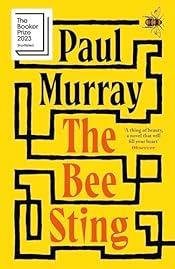
The Bee Sting by Paul Murray (Hamish Hamilton 2023). Two of this book’s characters, a generation apart, have their lives transformed when they leave their home in rural Ireland to go to university in Dublin.
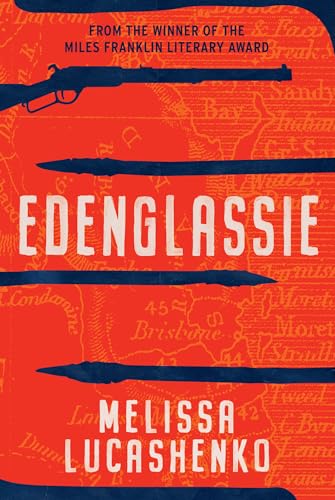
Edenglassie by Melissa Lucashenko (University of Queensland Press 2023). It may be stretching it a bit, but this novel, along with a lot of First Nations writing, amounts to an invitation to unlearn some Australian history, to go back to school and develop a different, richer understanding of our past. In this case, it’s the early history of what is now south-east Queensland. Sue at Whispering Gums has an excellent review.
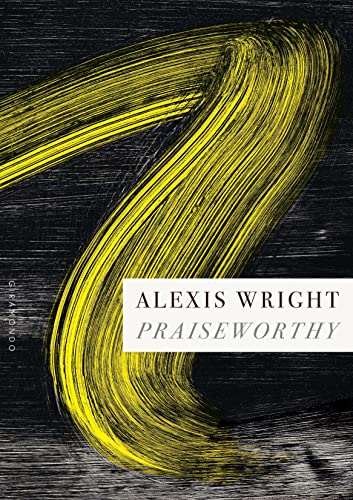
Praiseworthy by Alexis Wright (Giramondo 2023) is another example of First Nations writing that amounts to an invitation to go back and learn different ways of looking at the world. At its heart there’s a mad scheme to cope with climate change by using the donkeys that roam wild in the Northern Territory. There are clouds of butterflies and a boy who lives in a whale’s skeleton. You see the world differently once you’ve read it.
Small Things Like These by Claire Keegan (Faber & Faber 2021) actually centres on a school. It’s hardly more than a short story, in which an Irishman faces a huge moral challenge when he discovers that terrible things are being done in the convent school just outside his village.
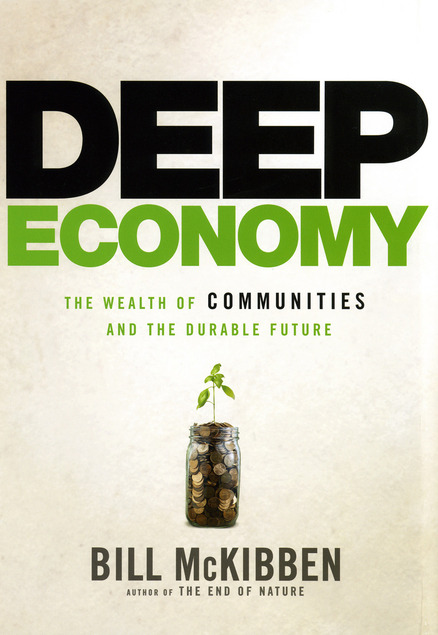
DeepEconomy: The wealth of communities and the durable future by Bill McKibben (Henry Holt 2007). For me at least, this book was a tremendous learning experience about economics and the environmental crisis. In my 2007 blog post I described it as ‘a substantial, reasoned, systematic move towards an alternative way of thinking about these things’.
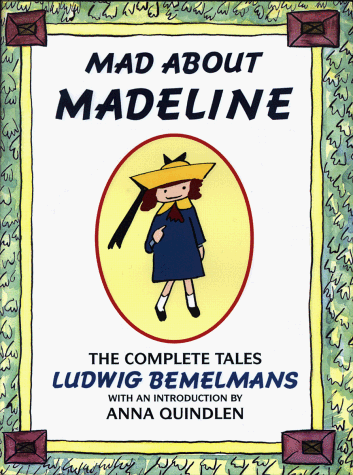
Madeline (Ludwig Betelmans 1939). How good it was, recently, to go back to this book, which I must have first read when I was at school, or perhaps when nieces and nephews were. ‘In an old house in Paris that was covered in vines …’
Blue Mars (Kim Stanley Robinson, 1996) Kim Stanley Robinson’s Mars trilogy is a terrific yarn. It’s also an education in the scientific, engineering, social and political challenges that would face an attempt to settle on Mars. I first encountered the word katabatic, among many others, in these books.
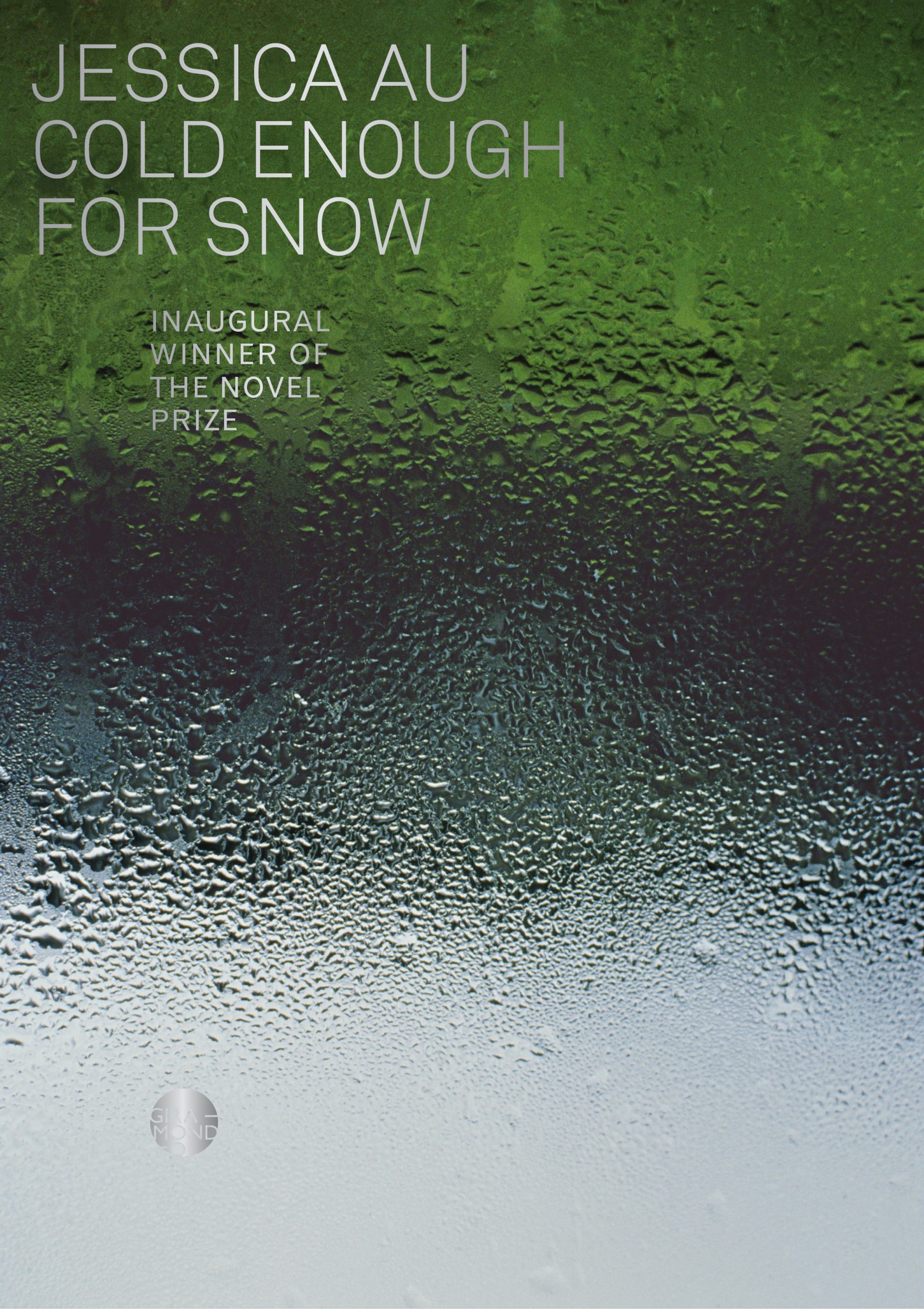
Cold Enough for Snow by Jessica Au (Giramondo 2022). The section in this slim book where the narrator goes to university and encounters a whole new world struck a chord with me, even more so than the similar experience described in The Bee Sting, because this one happens in Australia.
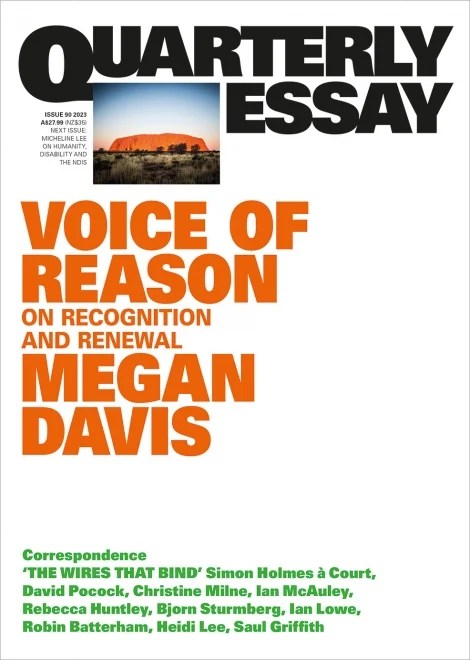
Voice of Reason: On Recognition and Renewal by Megan Davis (Quarterly Essay 90, 2023) is another piece of First Nations education, in this case about the recent referendum on an Indigenous Voice to Parliament. Especially in the face of the No campaign’s ultimately successful slogan, ‘If you don’t know, vote no,’ the schooling provided by this essay was salutary and continues to be.
[27 May 2023: This was originally posted to my old blog on 1 November 2007, and not retrieved when I moved to the WordPress platform. I’m republishing it now because Bill McKibben’s name came up at the 2023 Writers’ Festival, and this blog post is where I made a note of my first impressions of his Deep Economy.]
Charles Firth invented five commentators, basing their opinions on top hits on Google, and set out as an experiment to see if they could make it in US public debate. One of them got a lazy, plagiarised, largely nonsensical article attacking Cindy Sheehan published, and others had moderate success in being taken seriously in Internet conversation. It’s a disturbing and intelligent book, but undermined by the author’s apparent commitment to his comedian identity. Clive James objects to being classified as a humorist. He wants his wit and humour to be elements of his essays rather than their purpose: the essays, he says, are serious attempts to communicate ideas. I’d like to see Charles and Clive get together for a quiet chat some time, and Charles come out from behind his relentlessly Chaserian persona.
Having acquired a BA (Hons) in the 1970s majoring in Eng Lit without ever reading any William Carlos Williams, I thought it wouldn’t be a crime now to read more than ‘The Red Wheelbarrow’ and ‘This is just to say’ … And indeed the book is an education and a joy. I did go hunting for learned commentary so as to deepen my appreciation of the poetry, and had the perverse pleasure of deciding that in some cases I would trust my own reading over that of the scholar. For instance, in an article on WCW’s most anthologised poem – essentially unparaphraseable eight short lines noting the existence of a red wheelbarrow and some white chickens – I found this:
This is a poem about the tension between regularity and irregularity, and it invokes irregularity on many levels: metrical, sexual, racial. Mouth/vulva, this ‘colored’ object beckons ‘white chickens’, which like the satyrs on Keats’s urn, approach but never touch, except in the palpable rhythms and vowels of the lines, which rise – but then fall again. After the phallic assertion of the emphatic iamb ‘upon’, the poem shifts to falling rhythms, and as the speaker and his Lucy roll forward like the wheel of the barrow (a tumulus or mound over a grave) in the twelve months/feet of the year with its four regular seasons/stanzas in their ‘diurnal course’, the speaker stammers in the long i’s of the final stanza: I . . . I . . . chicken out.
I would have solemnly, if disappointedly, accepted the Freudian reading of the wheelbarrow as a female symbol, but really: ‘upon’ as a phallic assertion! ‘barrow’ as tumulus! racial tension! the fantastical invocation of Keats and Wordsworth! I’m glad I don’t have to earn a living writing things like that. In fact the way I read the poem it’s pretty much a dismissal of that kind of discourse.
I came to The sailor who fell from grace with the sea with quite a lot of baggage. Yukio Mishima committed ritual suicide when I was 23. This, along with his extreme right-wing politics and his reported preoccupation with body-building put me off. How could someone who was acclaimed as a great writer, a runner-up for the Nobel Prize for Literature, get things so bizarrely wrong? (I was 23, OK?). Thisis his one novel that I know about without looking, and from its perch on my Reproach Shelf (where it has sat unread with War and Peace and Pride and Prejudice) it exuded a kind of sulphurous glamour.
Without all that foreknowledge I might have thought this was a finely executed exercise in genre horror. It’s certainly well written, capturing beautifully the way people – adults and children, men and women – misunderstand each other’s silences. But it’s not an exercise: in this narrative the writer is fairly evidently struggling with his membership of a death-cult of one: mad, repulsive, deeply horrible, but in the end (for him, apparently) irresistible. It strikes me as being an adult version of the drawings young Mary Bell did in the days before she murdered that little boy: a cry for help. Like Mary’s, it went unheard.
Don’t be put off by the title of Deep Economy. It’s a tremendously readable journey through the hope and terror of our times (not Terror with a capital as in suicide bombs, but lower-case terror as in the world going to hell in a handbasket). Someone once told me of a rule of thumb for comic writers that you need at least three laughs a page to keep up the momentum (a rule which – see above – I wish Charles Firth would ignore). Bill McKibben seems to work to a three-striking-bits-of-information-a-page rule. It was only great self-restraint that stopped me from constantly regaling (or should that be assailing?) companions or passers-by with tidbits.
The subtitle more or less says what the book is about: it challenges the single minded preoccupation with growth as the supreme indicator of economic success, and the ‘hyper individualism’ that that preoccupation involves; and advocates for a durable future as opposed to the likely outcome if things keep moving in the current direction with the current impetus. It’s a passionate, research-based argument for renewed – or brand new – attention to the local: in food production and consumption, and in all other economic activity. It piles up examples of the loss in human terms caused by the ruthless pursuit of economic ‘efficiency’ but it also accumulates a persuasive number of counter-examples, of people forgoing large profits for the sake of the common good.
We assume, because it makes a certain kind of intuitive sense, that industrialised farming is the most productive farming. I mean, if I sit on my porch whittling toothpicks with my Swiss Army knife, I can produce a hundred in a day. If I install a toothpick-whittling machine, I can produce a thousand in an hour. By analogy, a vast Mid-western field filled with high-tech equipment ought to produce more food than someone with a hoe in a small garden. As it turns out, however, this simply isn’t true. If all you are worried about is the greatest yield per acre, then smaller farms produce more food. Which, if you think about it some more, makes sense. If you are one guy on a tractor responsible for thousands of acres, you grow your corn and that’s all you can do: one pass after another with the gargantuan machines across your sea of crop. But if you’re working on ten acres, then you have time to really know the land, and to make it work harder. You can intercrop all kinds of plants: their roots will go to different depths, or they’ll thrive in each other’s shade, or they’ll make use of different nutrients in the soil. You can also walk your fields, over and over, noticing. … Does this sound like hippie nonsense? According to the most recent USDA Census of Agriculture, smaller farms produce far more food per acre, whether you measure in tons, calories or dollars.
It’s very much a US book, and I don’t know how much of the specifics is true of Australia (far too much, I expect); but it also looks at the global picture. It has felt like a lifeline as both major party leaders in the current federal election campaign bang on about upward pressure on interest rates in what is fairly blatantly baby-talk economics. Intuitively, to this uneducated mind the prevailing view that permanent growth is the only way forward looks like a recipe for disaster. Here is a substantial, reasoned, systematic move towards an alternative way of thinking about these things. Not that Bill McKibben is trying to pass himself off as a brilliant innovator; his brilliance lies not only in his throng of memorable stories to flesh out his argument, but also in the mass of telling quotes from an army of researchers, experimenters and thinkers.
I confess that with The Best Australian Poetry 2007 and me it was irritation at first sight. What does it mean to publish ‘best of 2007’ book in September? A quick look up the back of the book reveals that a couple of its poems were first published in 2005 and the rest in 2006.
Ok, that’s my first nitpick out of the way. Then I looked at the list on page 98 of ‘Journals Where the Poems First Appeared’ (the book is subtitled ‘a selection of the best poems from Australia’s literary journals’), and was a bit surprised to see that Quadrant didn’t get a guernsey. But it turns out that there are poems from that venerable right-wing rag, and from the equally venerable left-wing, though less well funded, rag Overland, which also doesn’t rate a mention on page 98.
And there’s more substantial cause for irritation: more than 40 of the book’s 120 pages are devoted to commentary: introductory material by and about the guest editor and the series editors, and then notes from the contributing poets about the poems, which reminded me inevitably of William Carlos Williams’s remark: ‘You should never explain a poem but it sometimes helps nevertheless.’ Some of the poets’ own commentaries here are witty, some are illuminating, but most are plain dull – this is not a criticism of the poets, since the poems themselves are presumably what they wanted to say.
My mounting irritation didn’t put me in a mood to enjoy the forty poems, some of which, it turns out, are very good. Some, of course, left me cold and uncomprehending. Perhaps all the bumph is meant to deal with the all-to-frequent failure of a lot of post-modern poetry to grab the lay reader; sadly, it only adds to the alienation for this one.
Left to my own devices, I wouldn’t have picked up Kickback or Leigh Sales’s Detainee 002 (which I read in September). I’d read enough about both scandals in the newspapers as they were unfolding. But some members of our book club (really a Book Swap) do relish that sort of thing, and recommended these books strongly at our last meeting. I somehow came away with both of them. Caroline Overington’s epigraph, which turns out to be her punchline as well, is a found poem from the utterances of Alexander Downer, who I hope will soon be relieved of the burden of producing such gems:
What you don’t know, you don’t know. And you can’t get to the heart Of what you don’t know.
This is a book about last year’s headlines, but it contains a lot of the news that stays news. It’s largely a blow-by-blow account of shonky dealings – Iraq’s corruption of the UN’s Oil-for-Food program as aided and abetted by a highly reputable Australian company and the subsequent cover-up – involving hundreds of millions of dollars: illegal, immoral, carefully ignored for as long as possible by lily-white John Howard and shameless Alexander Downer (who seem to have people on staff whose job is to make sure they never actually see faxes, emails, cables and other inconvenient communications). This was an excellent follow-up to Deep Economy (which I intend to urge on my co-Book-Clubbers), as an extended case study of collateral damage from a single-minded pursuit of profit. I found myself drawing morals from the story:
For those who sup with the devil, no spoon-handle is long enough
If you have a conflict of interest with the USA, make sure you’re squeaky clean
When top members of your organisation go by nicknames like ‘Slug’, don’t let your guard down
Government organisations that are privatised may not be nastier than long-established capitalist enterprises, they may just be more likely to get caught
Too many Australian journalists take the government at its word too much of the time
Page 2 of the newspaper may contain gems
Not only ladies do protest too much
Seekers after the truth sometimes have vile motives
Seekers after the truth can expect to have vile motives attributed to them
Suppressors of truth sometimes have good intentions
Under the Howard government, the public service tradition of frank and fearless advice has taken a battering.
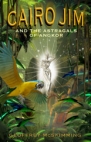
I read Cairo Jim and the Astragals of Angkor in a day, just after the final episode of The Sopranos was screened here, while Tony Abbott was impersonating an arrogant callus in his final days in office. As a finale, Astragals offers less closure but more certainty than the former, and inspires more hope and more sorrow than the latter.
In Cairo Jim’s world words like ‘flabbergast’ are part of normal speech, alliteration runs as wild as jungle creepers, similes (all more original than any I’m offering here) sprout like hairs in a mole, evil never wins the day but life would be much less interesting if it didn’t try. I think Geoffrey McSkimming may be the one who told me the rule about frequency of laughs I referred to above: and sure enough, even though this is a chase story with the fate of the world hanging in the balance, it’s the laugh lines that provide the momentum. These books have captured and sustained a loyal and ever-expanding following among their intended readership with no boost from awards and little notice in the press – quite an achievement.
My yesterday was entirely devoted to the Sydney Writers Festival, and I had a great time, starting out at Walsh Bay, where my choices seemed to keep me away from the monster queues.
10 : 00 Poetry on the Harbour: Adam Aitken, Judith Beveridge and Kim Cheng Boey, with Ivor (‘I know they’re good poets because I published them’) Indyk in the chair.
In general I prefer to hear poets read their own work over having actors deliver sonorous, deeply felt renditions, because actors’ performances tend to narrow the range of possible readings. I also prefer poets’ readings that avoid the incantatory (though I’m delighted by the over the top bits of Yeats and Tennyson I’ve heard). All the same, all three of these poets read their work with such modesty and introspection that I longed for just a touch of the rock star, just a hint that they might be able to hold us in the palm of their hands and wring our withers.
It was an excellent reading nonetheless. Adam Aitken read his ‘Pol Pot in Paris’, and a poem taken from his father’s letters (introduced with, ‘I love my father, but he had colonial attitudes’) got actual laughs. Judith Beveridge began with an anecdote from Robert Creeley: at a school reading a child asked him, ‘Mr Creeley, was that a real poem or did you just make it up yourself?’ Among the poems that JB had made up herself was a lovely piece about a man washing himself at the railway station tap just outside Delhi. Of the extraordinarily cosmopolitan Kim Cheng Boey’s poems, I particularly liked ‘Stamps’, in which the poet converses with his little daughter.
11 : 30 First Nation Stories: Richard Van Camp and Boori Monty Pryor herded ‘like cats’ by Anita Heiss.
In introducing his poets, Ivor Indyk mentioned university positions and awards. In this session, Anita Heiss talked about which Indigenous Nations/mobs people came from, including herself. Both Richard and Boori perform and tell stories in schools. Richard gave us what I took to be one of his school performances; Boori talked about his. Both men were very funny, and Boori gets the Me Fail I Fly nomination for the most charming man on the planet. Yet with all the humour and charm he managed to put some hard truths. ‘This is the only country in the world,’ he said, ‘that mines a culture and sells it off to the world but doesn’t want to know about the people who produce it.’ He told of a group of preschool teachers who asked him for advice on how to tell Aboriginal stories to their charges. ‘Do you know about the 1967 Referendum? The Gurindji campaign? The reserves?’ he asked (though he probably named different specifics). ‘You won’t be able to tell the stories until you know about the fight to keep them alive.’
13 : 00 The Politics of Storytelling: Mike Daisey and William Yang, chaired by Annette Shum Wah.
I’m told Mike Daisy’s story was shattering, but I went to sleep during the loud, bombastic opening section of his monologue, which I guess was meant to be the warm-up (a baby cried, presumably at the sheer loudness, and was incorporated into the rant, to the delight of the fans in front of me but adding to my need to absent myself). William Yang showed a number of slides, and it was reassuring to see that his style worked just as well when taken out of the tightly controlled environment of his shows. The discussion was interesting – Annette asked about their provocativeness (William’s photos can be a bit rude, and Mike uses four-letter words, hardly confronting in Sydney I would have thought, but he did mention a show where a big bloc of the audience stood up and walked out – it’s on YouTube and his response is wonderful). William said that when he first did his shows he was part of an angry community. Now he might put in an occasional naughty photo out of impishness. These were such different men, yet their mutual appreciation was lovely to behold.
16 : 00 David Wessel, Meet Paul Keating with George Megalogenis
Note to anyone doing this kind of gig: it really really helps if you read up on the person you’re appearing with and can refer approvingly to his work. Both these men did that and it was a great leavening to what could have been a dry conversation about economics. David Wessell (economic editor of the Wall Street Journal, was able to drop a number of Keating’s famous phrases into his presentation (‘The recession we had to have’, ‘A shiver looking for a spine to run up’, etc). Wessell explained the causes of the GFC memorably as resulting from two false assumptions in the US: that house prices would never fall, and that extraordinary financial innovations spread risk in such a way as to diminish it to the point of negligibility. Keating, equally memorably described Chinese reserves as a great cloud full of water and electricity floating over the world, and Alan Greenspan building a copper pipe up into the sky to draw down the water. He also talked about Spain, Portugal, Ireland and Greece as having a big one-off party made possible by converting to the Euro and suddenly enjoying German interest rates. Right now we’re seeing the morning-after crash. Questions were probably intelligent, but were well above my head.
18 : 00 Have We All Been Conned?: An Emergency Town Meeting: Bill McKibben, Ross Garnaut and Clive Hamilton, with Tim Flannery as participating Chair, discussing the politics and science of climate change.
A case of false labelling. Of course, we all knew it was a Writers’ Festival event and not a political rally, so it was no surprise that it was, as my son described them, four bald men in glasses talking to an appreciative audience about the current state of affairs. No one was really concerned to plug his own book – it was, as Tim Flannery, said, a bit of a dream team.
Was Copenhagen a success or failure? Too soon to tell, but it has meant that developing countries are now taking on climate change rather than waiting for the developing countries to do their bit first.
How come Australia is the biggest laggard in climate change action, yet it has the most to lose? Ross Garnaut spoke with transparent obliqueness of lack of political leadership. Bill McKibben, I think it was, first mentioned Kevin Rudd by name. Clive Hamilton sunk the boot: Kevin Rudd thinks science is a lobby group, and he’s a manager not a leader.
What about the Greens’ rejection of the CPRS? A lamentable strategic error, seemed to be the consensus, rather than a grievous failure of principle as we have seen from federal Labor. Bill McKibben said wise words here. Coming from afar, he said, he had the luxury of responding without knowing or needing to know the details, but what we have to remember is that any victory, however small, is to be celebrated, and any victory, however large, is only a step forward. This is a struggle that will continue for our lifetimes and beyond.
Perhaps the grimmest note of the evening was the statement from, I think, Bill McKibben, that our challenge now is no longer to prevent climate change but to take action to deal with the new world we now live in.
In question time we reaped the consequences of the false advertising. Person after person took the microphone to tell us what they thought about the subject. One woman, from an outfit called A Hundred Percent Renewable, had even brought a banner, which she trailed after her disconsolately as she left the microphone, having failed to get a taker to hold up its other end.
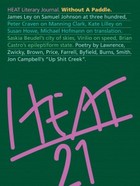
Some of the reasons why you should subscribe to Heat, or at least read it:
1. Worthiness. Your money and attention help to sustain cosmopolitan Australian literary culture.
2. Self-protection. Extracts from works in progress allow you to prejudge the finished work. I’ve decided to avoid a significant number of award winning books on the basis of such advance warnings, and I’m likely to steer clear of one or two foreshadowed in this issue. The poetry provides a similar warning function: poetry is so much a matter of taste, and journals like Heat can play the crucial role of taster. And there are the critical pieces: on the strength of Kate Lilley’s detailed exposition of Susan Howe’s The Midnight, I won’t go looking for it any time soon (far too rich and recondite for my thin blood); Peter Craven’s critical review has put me right off Brian Matthews’s biography of Manning Clark. But it hasn’t enamoured me of Peter Craven: he’s bracingly forthright in his judgements, and even when he’s completely wrong-headed he provokes interesting conversations, but he comes across as too full of himself and too pugnacious for me to actively seek him out.
3. Titillation. Then there are the poems and extracts from works in progress that have the opposite effect. Poems from, among others, Pam Brown, Ken Bolton, Chris Price make me want more.
4. Education. In this issue, Josiane Behmoiras embeds an introduction to the work of Paul Virilio, a cutting edge French thinker, in an account of her recent trip to France (complete with implied travel advisories on the stench of urine by the Seine and problems with Australian Visa cards on the Metro); where her discussion of his work descends from glorious abstraction, it seems to be arrive at important conclusions about how we should live, very close to those of Bill McKibben’s much less abstruse Deep Economy.
The four-colour section in the middle introduces us to the painter Jon Campbell, and offers us a hand in understanding why we should be interested in his work.
5. Base pleasure. Maybe this is only for people who are or have ever been editors, but Heat can be counted on for regular hits of the sour pleasure of Other People’s Gaffes. The best one in this issue occurs in a poem: ‘a woman rides a / pink vesper that you could / park anywhere’. I’m reasonably sure the poet had a chic little Vespa scooter in mind rather than an evening star blazing to the kerb in the sky.
6. More substantial pleasure. This is of course the real reason for reading Heat at all.
Here, Jena Woodhouse interviews Michael Hofmann, poet and translator, and though her introductory paragraphs use rude words like polytropic, once we get to Hofmann himself the prose becomes a joy to read.
Luke Carman’s three prose pieces gathered under the title ‘The Easy Interactions of an Elegant Young Man’ have a wonderful, disturbingly comic cumulative effect. Part way through the second I realised I saw him read similar work at the Sydney Writer’s Festival earlier this year, and described his reading as rapidfire and surreal. It works that way on the page as well.
And then there’s James Ley’s ‘A Degree of Insanity’, a straightforward, intelligent essay on Samuel Johnson that is splendid in itself, not least because it quotes generously from Johnson’s sonorous prose. Its appearance in this journal gives added pleasure, as it seems to send ricochets out, pinging off the rest of the content. Peter Craven, for example, drops a couple of Johnson’s famous quips into his argument for no apparent reason other than to establish his own gravitas. The notion, from Johnson’s Rasselas, that ‘all power of fancy over reason is a degree of insanity’ bounces prettily off the mild derangement of Luke Carman’s pieces and some of the poetry. The excitement surrounding literary journals in eighteenth century London sparks reflections about the role of their descendants in our time, Heat among them.






 Me fail? I fly!