Tag Archives: Claire Keegan

2024 End of year list 5: Blog traffic

In case you’ve had just about enough of my end of year lists, be reassured: This is the last one, and I don’t expect you to read it – it’s mainly so I’ll have a record.

Here are the posts that attracted most clicks on my blog in 2024:

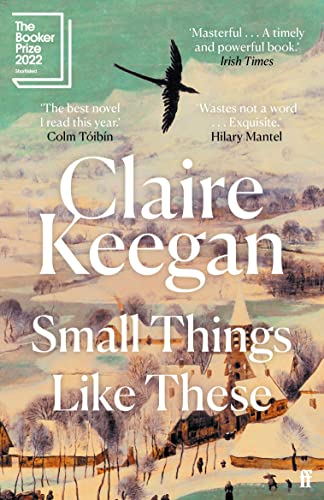
  1. Claire Keegan’s Small Things Like These (October 2023, 1618 clicks)
  2. The Book Club and Paul Murray’s Bee Sting (April 2024, 775 clicks)
  3. Ocean Vuong’s Time is a Mother (March 2023, 744 clicks)
  4. Ellen van Neerven’s Throat (July 2020, 625 clicks)
  5. Mary Oliver’s Twelve Moons (January 2019, 597 clicks)
  6. Anne Enright, The Wren, the Wren, the book club, page 77 (March 2024, 533 clicks)
  7. Trent Dalton’s Boy Swallows Universe (July 2019, 412 clicks)
  8. Robert Alter’s Psalms (September 2020, 365 clicks)
  9. Jenny Erpenbeck’s Kairos and the Book Club (April 2024, 364 clicks)
  10. Rebecca Huntley’s Italian Girl (April 2022, 357 clicks)

Ocean Vuong’s book was at the top of the list for most of the year, and then news of the movie of Small Thiings Like These sent a lot of clicks to that post. Shirley Hazzard’s The Transit of Venus dominated the list for years, but has now dropped off altogether. Mary Oliver, Ellen van Neerven and Robert Alter are the stayers.

One more bit of nerdiness. Here’s WordPress’s list of my all-time top ten posts. Apart from changing positions, the main change from last year is that Philip Larkin got bumped by Claire Keegan:

  1. Travelling with the Art Student (November 2014, 3558 hits)
  2. The Book Group and Shirley Hazzard’s Transit of Venus (June 2018, 2721 hits)
  3. (Re-)reading Kevin Gilbert’s poetry (April 2012, 2430 hits)
  4. Mary Oliver’s Twelve Moons (April 2020, 1841 hits)
  5. Bran Nue Dae (January 2010, 1805 hits)
  6. Mary Oliver’s House of Light (April 2020, 1784 hits)
  7. Claire Keegan’s Small Things Like These (October 2023, 1676 hits)
  8. The book group’s Harp in the South (February 2011, 1431 hits)
  9. Jasper Jones at the Book Group (May 2010, 1352 hits)
  10. Contemporary Asian Australian Poets (June 2013, 1236 hits)

That’s it. Thanks to everyone who has contributed to those statistics. Some of you I know IRL, some I’ve met through email etc, some only in the comments section, some I know only as anonymous clickers. I’m happy that you’ve visited the blog. Come again.

Spell the Month in Books – September

Spell the Month in Books is a linkup hosted on Reviews From the Stacks. We’re invited to find a book title, on a given theme, that starts with each letter in the month’s name, make a list, and share the link. It’s a nice way to look back over one’s reading.

This month, the theme is Back to School. Reviews from the Stacks is a Northern Hemisphere blog, where the theme is seasonally appropriate – but it’s full of possibilities for us in the planetary south as well. Here I go. Links on the book titles are to my blog posts.

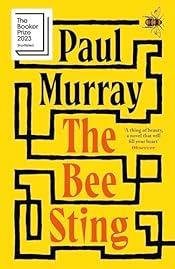
The Bee Sting by Paul Murray (Hamish Hamilton 2023). Two of this book’s characters, a generation apart, have their lives transformed when they leave their home in rural Ireland to go to university in Dublin.

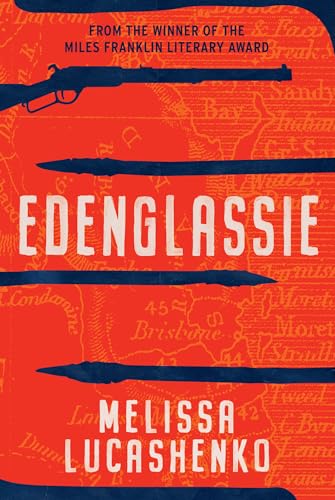
Edenglassie by Melissa Lucashenko (University of Queensland Press 2023). It may be stretching it a bit, but this novel, along with a lot of First Nations writing, amounts to an invitation to unlearn some Australian history, to go back to school and develop a different, richer understanding of our past. In this case, it’s the early history of what is now south-east Queensland. Sue at Whispering Gums has an excellent review.

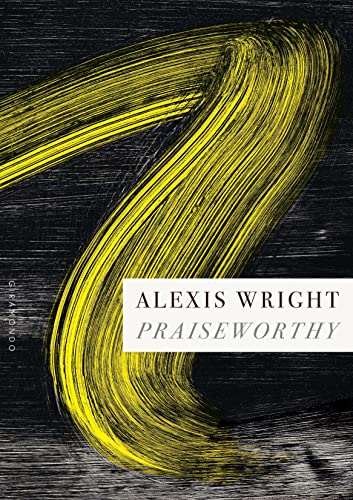
Praiseworthy by Alexis Wright (Giramondo 2023) is another example of First Nations writing that amounts to an invitation to go back and learn different ways of looking at the world. At its heart there’s a mad scheme to cope with climate change by using the donkeys that roam wild in the Northern Territory. There are clouds of butterflies and a boy who lives in a whale’s skeleton. You see the world differently once you’ve read it.

Small Things Like These by Claire Keegan (Faber & Faber 2021) actually centres on a school. It’s hardly more than a short story, in which an Irishman faces a huge moral challenge when he discovers that terrible things are being done in the convent school just outside his village.

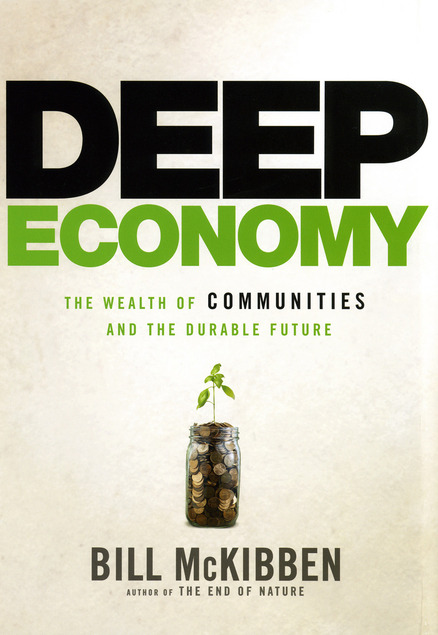
Deep Economy: The wealth of communities and the durable future by Bill McKibben (Henry Holt 2007). For me at least, this book was a tremendous learning experience about economics and the environmental crisis. In my 2007 blog post I described it as ‘a substantial, reasoned, systematic move towards an alternative way of thinking about these things’.

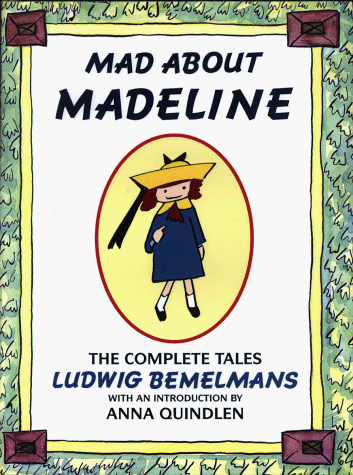
Madeline (Ludwig Betelmans 1939). How good it was, recently, to go back to this book, which I must have first read when I was at school, or perhaps when nieces and nephews were. ‘In an old house in Paris that was covered in vines …’

Blue Mars (Kim Stanley Robinson, 1996) Kim Stanley Robinson’s Mars trilogy is a terrific yarn. It’s also an education in the scientific, engineering, social and political challenges that would face an attempt to settle on Mars. I first encountered the word katabatic, among many others, in these books.

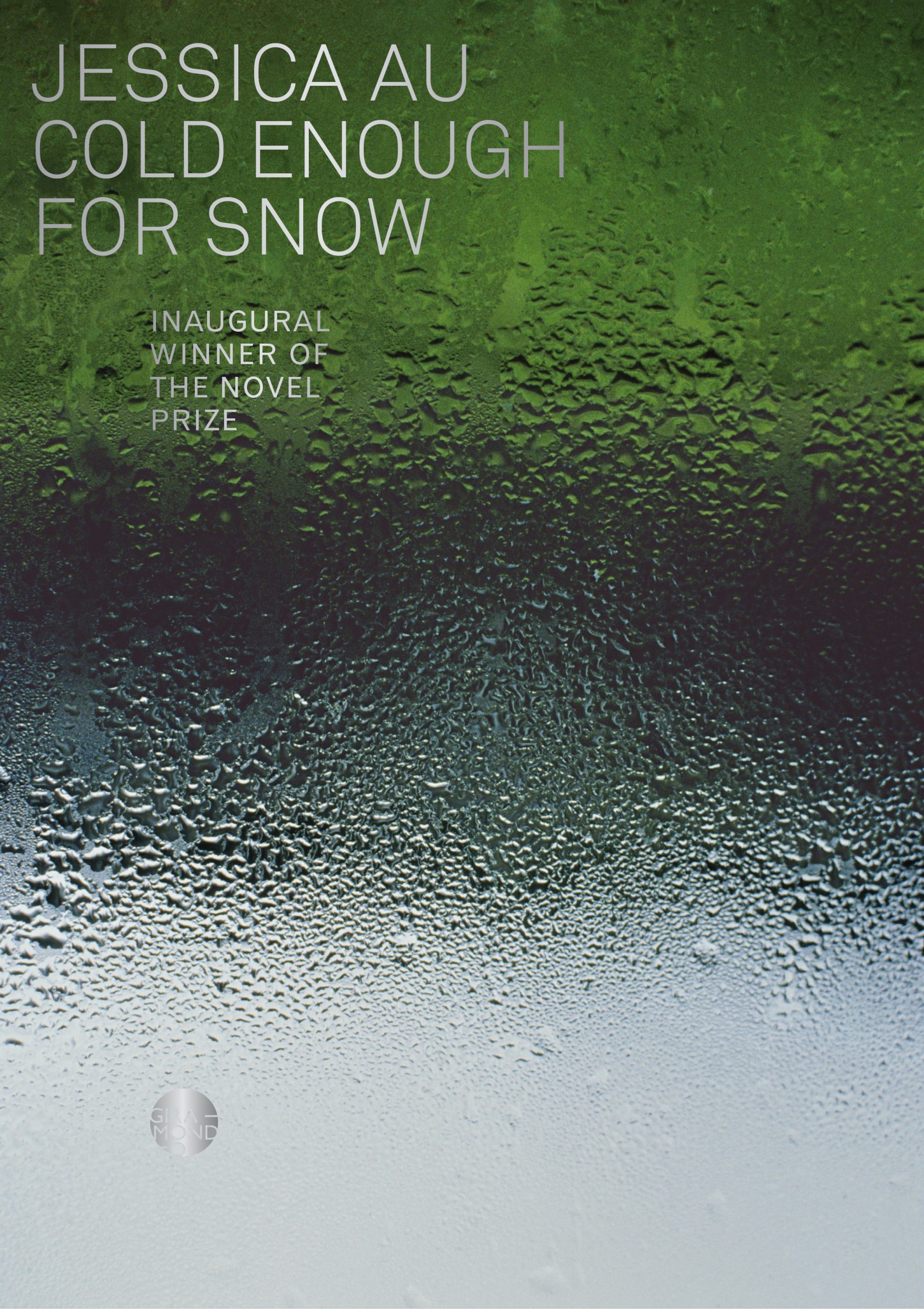
Cold Enough for Snow by Jessica Au (Giramondo 2022). The section in this slim book where the narrator goes to university and encounters a whole new world struck a chord with me, even more so than the similar experience described in The Bee Sting, because this one happens in Australia.

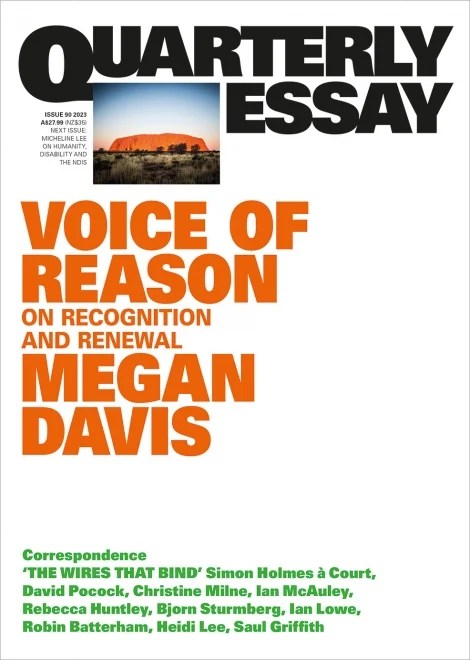
Voice of Reason: On Recognition and Renewal by Megan Davis (Quarterly Essay 90, 2023) is another piece of First Nations education, in this case about the recent referendum on an Indigenous Voice to Parliament. Especially in the face of the No campaign’s ultimately successful slogan, ‘If you don’t know, vote no,’ the schooling provided by this essay was salutary and continues to be.

Claire Keegan’s So late in the day

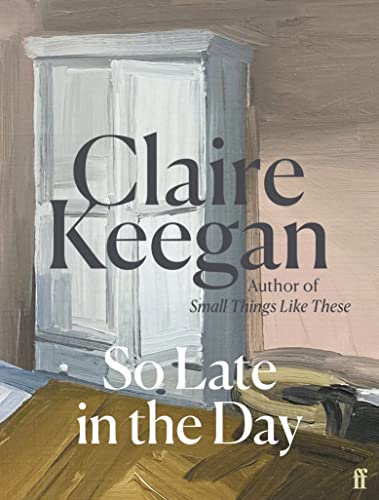
Claire Keegan, So Late in the Day (Faber & Faber 2023)

This book consists of a single short story by Claire Keegan. The story appeared in The New Yorker in February 2020. It was one of four short stories that made up the collection So Late in the Day: Stories of Women and Men (February 2022). Keegan’s French publisher first issued it in standalone form in May 2022 under the title Misogynie. Faber followed suit in 2023 with this attractive little front-counter hardback, perfect for a small gift – and it came into my possession as such a gift.

The story follows its protagonist, Cathal, through a lacklustre afternoon at work in an office in Dublin, the bus journey home, and an evening alone (not counting the cat) with his thoughts and memories, or avoiding them, in front of whatever happens to be on the television (mainly a documentary on Diana Spencer), eating whatever happens to be in the fridge. It’s a picture of desolation, the cause of which gradually emerges. It’s a self-inflicted disaster brought on by habitual and socially endorsed – not a spoiler because the French title gives it away – misogyny.

This isn’t the only fiction created by a woman that purports take us inside the head of a man behaves in ways that enrage women, but few can have done it so elegantly. Claire Keegan does a brilliant job of leaving her own rage out of the picture. (‘The first rule of writing fiction,’ Sebastian Barry said at the Sydney Writers’ Festival on the weekend, ‘is don’t write angry.’) Even the rage of the main female character is left to be deduced from what Cathal remembers of conversations with her. He catches a fleeting glimpse of where he has gone wrong, and even surmises how things might have been different back in his teenage years. Whether that glimpse and that surmise will lead anywhere or sink back into the deadly routine of work and television is a question the story doesn’t go into.

On page 7*:

Cathal is on his way home from work in a bus and all we’ve had is hints that he’s not happy. He sits next to a large woman who slides closer to the window to give him room. She’s on for a chat about the weather, opening brightly, ‘Wasn’t that some day.’ On second reading we know how painful that sentence is for Cathal, but all we get on the surface is, ‘ “Yeah,” Cathal said.’ Each for their own reason, neither Cathal not Claire Keegan needs to spell out the undercurrents.

Further down the page:

‘How about you?’ she said. ‘Any plans for the long weekend?’
‘I’m just going to take it easy,’ Cathal said, threading the speech into a corner, where it might go no further.

He’s civil, and well versed in avoiding real communication. And the unobtrusive metaphor sewing metaphor reminds us that the narrator is seeing more here than the character is showing. The story is full of such quiet, sharply observed moments.

You can hear Claire Keegan reading the story on the New Yorker website. Click here if you’re interested. She reads it beautifully, and it only takes 45 minutes.


I wrote this post on the unceded land of Gadigal and Wangal of the Eora Nation, finishing it on a day when the lorikeets in the gums nearby are still rowdily celebrating the dawn at 8 o’clock in the morning.


My arbitrary blogging practice is to focus on the page of a book that coincides with my age, currently page 77, or for books with fewer pages than that, on the year of my birth, 47. This book ends on page 47 and it would be a bit bad to give away the last lines, so I’m picking page 7.

Claire Keegan’s Small Things Like These

Claire Keegan, Small Things Like These (Faber & Faber 2021)

I first became aware of Claire Keegan through The Quiet Girl (An Cailín Ciúin), an Irish-language film based on her short story ‘Foster’. I saw the film at the 2022 Sydney Film Festival, and was blown away by its portrayal of a small girl’s escape from a terrible situation. The final moment, which I won’t describe because of spoilerphobia except to say that a single, ambiguous word is spoken, is one of the most powerfully moving I’ve seen. The acting (especially Catherine Clinch as the girl), the cinematography (Kate McCullough), the direction (Colm Bairéad) and the script (by Colm Bairéad, closely following Claire Keegan’s prose) are all brilliant. I still haven’t read ‘Foster’ but I was delighted to be given Small Things Like These on Father’s Day.

It’s a tiny book – just 117 pages. It’s set in a small Irish village. Its action takes place over a few days in late December in the time not so long ago when the Catholic Church dominated the lives of most Irish people. Bill Furlong, the coal and timber merchant, is being run off his feet in the pre-Christmas rush. The son of an unmarried woman, he and his mother were able to thrive in spite of the stigma thanks to the patronage of a wealthy Protestant woman – a situation that has uncanny echoes in the Thrity Umrigar books The Space Between Us (which I’m currently reading) and The Secrets Between Us (my blog post here). He is devoted to his wife and five daughters.

A shadow is cast over this benign scene by two pages that precede the beginning of the text proper. First there is the dedication: ‘to the women and children who suffered time in Ireland’s mother and baby homes and Magdalen laundries’. Then, on a page to itself, there is an excerpt from The Proclamation of the Irish Republic, 1916, which declares that the republic resolves, among other things, to cherish ‘all of the children of the nation equally’. Having a rough knowledge of the Magdalen laundries (Wikipedia entry here if you need to look it up), I was prepared for a little book of horrors.

Claire Keegan is a finer writer than that. There is horror, but not the jump-scare, demon-rising-from-the-grave kind, or even the Hanya Yanagihara A Little Life kind. Just outside the village there’s a ‘training school’ for girls of low character and an associated laundry, which ‘had a good reputation’. When Bill delivers a load of coal there on Christmas Eve, he comes upon a young woman who is obviously being abused, and he isn’t reassured by the nuns’ attempts to, well, gaslight him. It’s a small village, and the whispers say that no one can challenge the Church. Aware that his own mother could have found herself in the young woman’s situation, Bill faces a dilemma.

So the book hinges on a small chance encounter, a small crisis of conscience for an ordinary man, who many would say is leading a small life. The title can be read as the beginning of a sentence: Small things like these … pose big moral challenges / … can change the way you see the world / … can disrupt oppressive institutions / …

This blog generally looks at page 76. I might have preferred to talk about the page when Bill sits down to a cup of tea with the Mother Superior, or one of the pages where the abused girl talks to him. But page 76, it turns out, illustrates beautifully the way Claire Keegan tells her story.

It occurs at about the three-quarter point. We have been told very little of what’s happening in Bill’s mind. He doesn’t talk about what he has seen. Perhaps he can’t – he’s a working class Irishman of his era. But his wife, Eileen, can tell he’s ‘out of sorts’. The family go to Mass on Christmas morning. Bill stays back near the door when Eileen and their daughters walk down the aisle and slide into a pew, ‘as they’d been taught’. We’re not told if Bill usually stays by the door, or if this is a sign of new alienation. What follows could easily be a simple description of Irish villagers arriving for Mass in a past era (not all that dissimilar to Mass in the North Queensland town where I was a child in the 1950s):

Some women with headscarves were saying the rosary under their breath, their thumbs worrying through the beads. Members of big farming families and business people passed by in wool and tweed, wafts of soap and perfume, striding up to the front and letting down the hinges of the kneelers. Older men slipped in, taking their caps off and making the sign of the cross, deftly, with a finger. A young, freshly married man walked red-faced to sit with his new wife in the middle of the chapel. Gossipers stayed down on the edge of the aisle to get a good gawk, watching for a new jacket or haircut, a limp, anything out of the ordinary. When Doherty the vet passed by with his arm in a sling, there was some elbowing and whispers then more when the postmistress who’d had the triplets passed by wearing a green, velvet hat. Small children were given keys to play with, to amuse themselves, and soothers. A baby was taken out, sobbing in heaves, struggling to get loose from his mother’s hold.

This may feel like an exercise in nostalgia. But it’s not like, for example, the moment in Robert Dessaix’s Arabesques where he ‘realises’ that the lives of simple Portuguese women at Mass ‘had been redeemed, not by understanding, not by seeing Truth face to Face, but by being gathered up into the Church’ (my blog post here). Neither Bill Furlong not Claire Keegan, observing this gathering, projects visions of redemption onto it. This is an insider’s view. We are told people’s names. We can guess why the freshly-married man is red-faced, we recognise that different people make the sign of the cross differently (I love ‘deftly, with a finger’), there are class differences, children and babies need to be dealt with. It’s a picture of a community coming together that anyone of a certain age with an Irish-influenced Catholic childhood will recognise.

But it’s a critical insider’s view. Bill has a fresh distance because of his moral dilemma, Claire and the reader have perspective created by the seismic shifts in Irish culture since the time of the novel. This is a picture of a surveillance state, benign enough you’d think, but any small divergence from the normal – a sling, a new hat – is noted. It’s characteristic of Keegan’s writing that none of the divergences noted by the gossipers has any moral weight attached to it – we’re left to imagine for ourselves how that would go. We haven’t been told in so many words (this isn’t a Hollywood movie, after all) that Bill is mulling over what to do or not do, but as he looks over this scene, we feel with him the coercive pressure to conform, to accept the authority of the Church, not to rock the boat. The baby, ‘sobbing in heaves’, has to be removed – his mother’s hold is unescapable. Small things like these accumulate so that we understand the pressure Bill faces.

The whole book is a marvel.