Tag Archives: Jessica Au

Spell the Month in Books – September

Spell the Month in Books is a linkup hosted on Reviews From the Stacks. We’re invited to find a book title, on a given theme, that starts with each letter in the month’s name, make a list, and share the link. It’s a nice way to look back over one’s reading.

This month, the theme is Back to School. Reviews from the Stacks is a Northern Hemisphere blog, where the theme is seasonally appropriate – but it’s full of possibilities for us in the planetary south as well. Here I go. Links on the book titles are to my blog posts.
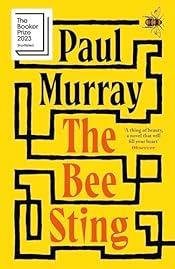
The Bee Sting by Paul Murray (Hamish Hamilton 2023). Two of this book’s characters, a generation apart, have their lives transformed when they leave their home in rural Ireland to go to university in Dublin.
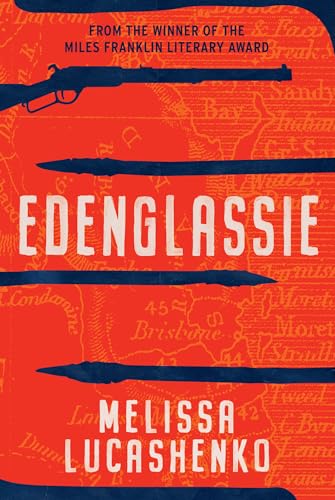
Edenglassie by Melissa Lucashenko (University of Queensland Press 2023). It may be stretching it a bit, but this novel, along with a lot of First Nations writing, amounts to an invitation to unlearn some Australian history, to go back to school and develop a different, richer understanding of our past. In this case, it’s the early history of what is now south-east Queensland. Sue at Whispering Gums has an excellent review.
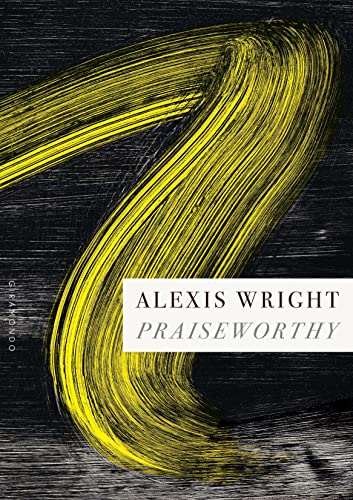
Praiseworthy by Alexis Wright (Giramondo 2023) is another example of First Nations writing that amounts to an invitation to go back and learn different ways of looking at the world. At its heart there’s a mad scheme to cope with climate change by using the donkeys that roam wild in the Northern Territory. There are clouds of butterflies and a boy who lives in a whale’s skeleton. You see the world differently once you’ve read it.

Small Things Like These by Claire Keegan (Faber & Faber 2021) actually centres on a school. It’s hardly more than a short story, in which an Irishman faces a huge moral challenge when he discovers that terrible things are being done in the convent school just outside his village.
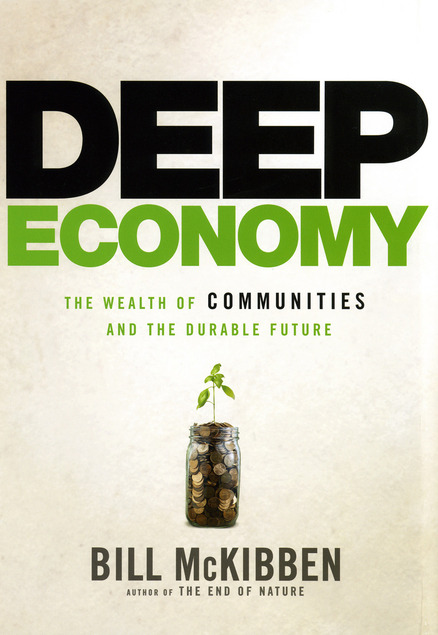
Deep Economy: The wealth of communities and the durable future by Bill McKibben (Henry Holt 2007). For me at least, this book was a tremendous learning experience about economics and the environmental crisis. In my 2007 blog post I described it as ‘a substantial, reasoned, systematic move towards an alternative way of thinking about these things’.
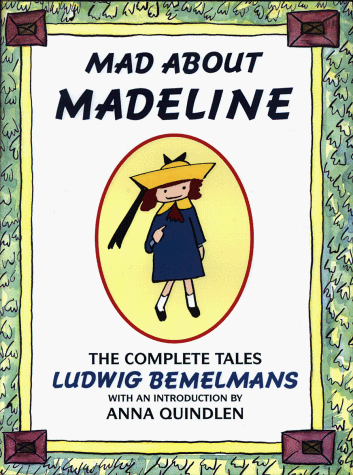
Madeline (Ludwig Betelmans 1939). How good it was, recently, to go back to this book, which I must have first read when I was at school, or perhaps when nieces and nephews were. ‘In an old house in Paris that was covered in vines …’

Blue Mars (Kim Stanley Robinson, 1996) Kim Stanley Robinson’s Mars trilogy is a terrific yarn. It’s also an education in the scientific, engineering, social and political challenges that would face an attempt to settle on Mars. I first encountered the word katabatic, among many others, in these books.
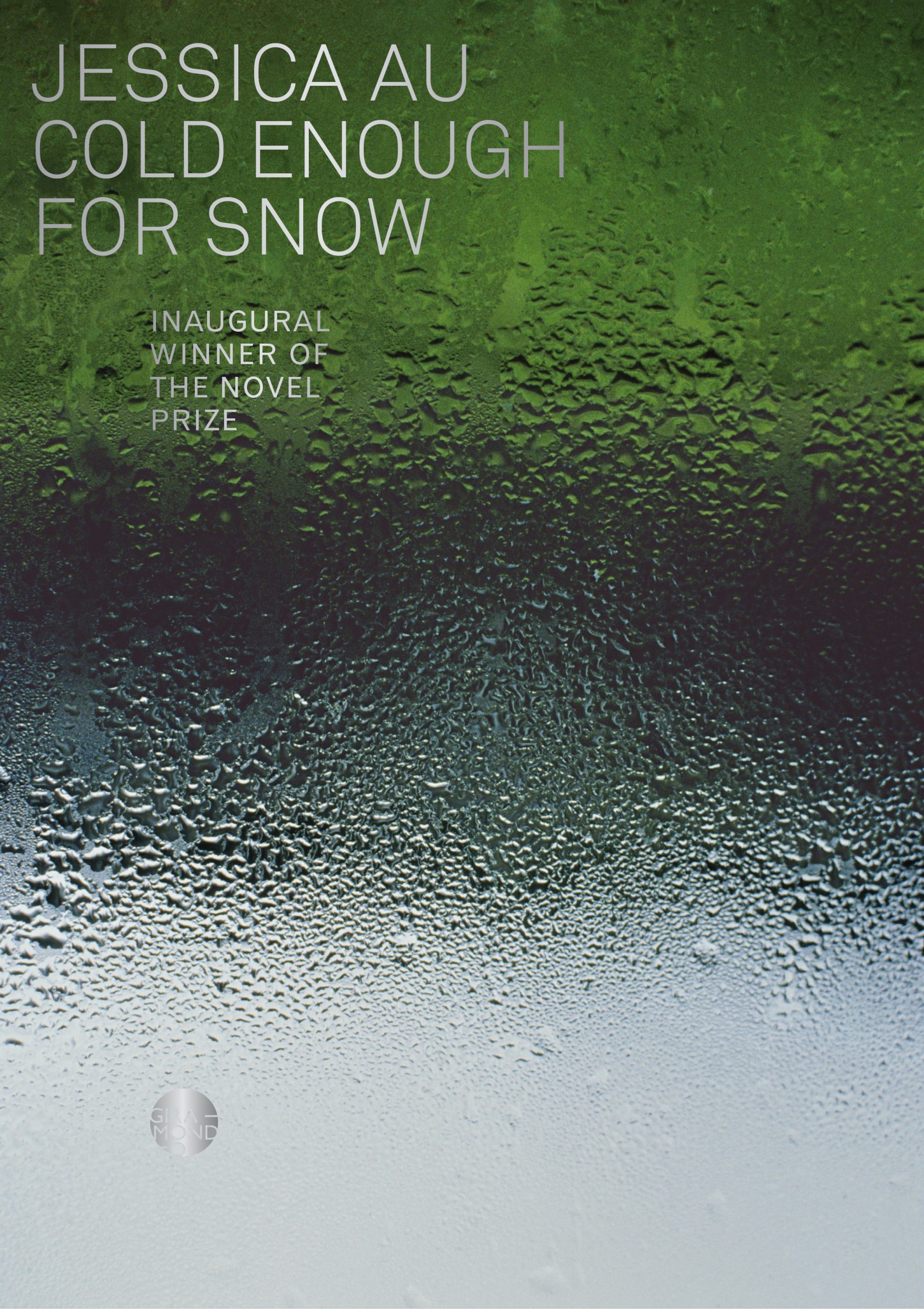
Cold Enough for Snow by Jessica Au (Giramondo 2022). The section in this slim book where the narrator goes to university and encounters a whole new world struck a chord with me, even more so than the similar experience described in The Bee Sting, because this one happens in Australia.
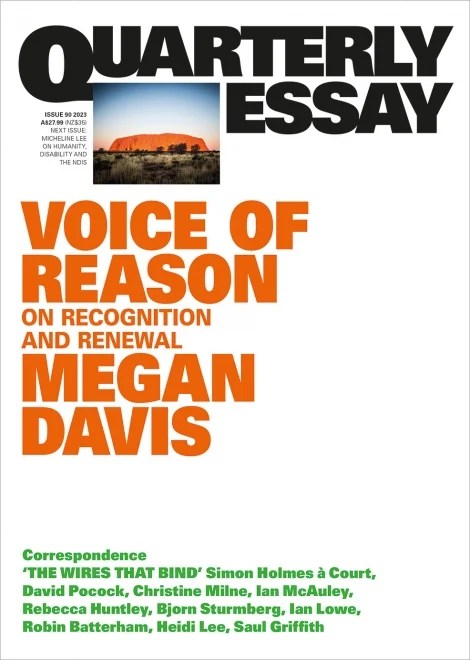
Voice of Reason: On Recognition and Renewal by Megan Davis (Quarterly Essay 90, 2023) is another piece of First Nations education, in this case about the recent referendum on an Indigenous Voice to Parliament. Especially in the face of the No campaign’s ultimately successful slogan, ‘If you don’t know, vote no,’ the schooling provided by this essay was salutary and continues to be.

Jessica Au’s cold enough for snow

Jessica Au, Cold Enough for Snow (Giramondo 2022)

Cold Enough for Snow won the inaugural Novel Prize in 2020. It’s very short, hardly more than a novella. In it, the narrator, a young woman I guess to be in her late 20s, takes her mother on a holiday to Japan. The two women have lived in different cities for some time and this is a kind of reunion. The recount of their holiday is interspersed with the young woman’s memories of family stories, her transformative university experience, an episode from her sister’s life, and a little about a former boyfriend and her husband. No big stormy scenes, no tears or even really any laughter. The biggest drama of the holiday occurs when the mother believes she has lost her passport then finds it in a zipped compartment of her bag.

Yet it’s hard to put the book down.

What is not said looms large. The narrator tells us early in the book that she invited her mother to come on the trip ‘for reasons [she] could not yet name’. She never does name them, but the question has been raised for the reader.

For most of the book the narrator is insufferably patronising to her mother, making all the decisions, telling her what to do, giving her brief lectures about the art they see, generally explaining the world to her, and – on the occasions when her mother does speak – barely managing to be respectful.

We come to understand that this is a migrant story – the mother came to Australia from Hong Kong and she and her husband made great sacrifices so their daughters could have every advantage. In their turn, the daughters grow up in a different culture, unable to speak their parents’ language, relating to them in mutual incomprehension. In my reading, the narrator is lost between two worlds, having been overwhelmed by the attractions of western culture but not quite at home there. Her mother becomes an enigmatic emblem of the culture she has lost: mostly silent, patient, largely unreadable.

None of this is spelled out. It’s conveyed by something unsettling going on beneath the flat, unemotional surface of the writing. There’s no direct speech. Most characters and most places are unnamed. We are often given details but not the general picture or the way the details connect: it’s as if the narrator is a visitor to the world, interested but largely uncomprehending. It’s a book that cries out for some close reading.

Page 75 is a good example of what I mean. The narrator is remembering a visit to the father of her husband, Laurie (Laurie is one of the few named characters):

Laurie had taken a photo of me standing next to the bright yellow car in a field of green sugarcane. As we drove he pointed out his old high school, the house of a childhood friend, the beaten track where he’d trained and competed as a kid. We stopped at a large lake, which seemed to be an almost perfect circle. Laurie explained that the lake had been formed by a crater, and that no one knew how deep it really was. He’d swum across it many times as a teenager, and once, he and his first girlfriend had borrowed a friend’s canoe and taken a tent and camped at the other side.

(Page 75)

This seems straightforward, but there’s a hint of the uncanny valley about it. As the first sentence focuses on the colours of the photograph (a product, perhaps of the narrator’s studies of visual art), you hardly notice that it places the car in a canefield – the reader almost automatically adjusts the image to place the car on the roadside next to the canefield, but the discrepancy has a subliminal effect. Then there’s the lack of names or sense of place. An Australian reader will know they are in North Queensland, probably driving from Cairns airport through sugarcane country, then up the steep climb to the Atherton Tableland, and stopping at Lake Barrine (or possibly Lake Eacham). Stripping out the names could be a matter of avoiding the colonisers’ language, an oblique acknowledgement of Indigenous ownership. In the immediate context, though, it seems to stem from the narrator’s lack of engagement with the world beyond her immediate relationship. She sees only what Laurie draws to her attention.

Once arrived at their destination, there’s this:

Even though he had not lived there for many years, Laurie moved around with a deep sense of familiarity, the kind that could only come from childhood. He went freely from room to room, picking up objects like he owned them, knowing all the paintings on the walls and where everything was kept. In the spare room, he found a shoebox full of old photos, and showed me one of his fifth birthday party, all the boys dressed up as pirates, hanging off a wooden ship his father had built for them, and that had stayed in the garden for many years.

There is very little description of the rooms or the objects that Laurie picks up. It’s as if the narrator isn’t at home enough in the world to name them, or even perhaps see them. By contrast, Laurie has a place, a piece of country, a house, that are full of memories. Even though he now lives in the unnamed city that has a university and trams, he still has this deeply familiar childhood place, a rootedness – exactly what the narrator lacks. Even after years away from his father, there’s a sense of continuity in the relationship. On the following pages it turns out that the father is an artist and can talk to the narrator about art in a way that her mother simply cannot (though once again we are told nothing of the conversation’s content.

This passage appears toward the end of the book. I chose it because of my arbitrary policy of picking page 75 for a little close reading when I blog about books, but also because I’m a North Queenslander. What’s true of the descriptions here is also true of places in Japan, and in Glebe in Sydney (I think). Jessica Au has given us a tremendously subtle portrait of a second-generation immigrant trying to find her bearings, and perhaps – depending how you read the book’s final moment, which I won’t spoil here – succeeding.


I am grateful to Giramondo Publishing for my copy of Cold Enough for Snow.