Tag Archives: Lily Brett

Journal Catch-up 20

My current practice of focusing on page 76 when blogging about books serves me well when the subject is journals. It helps to resist the pull to go on at tedious length about the whole contents.


Alexandra Christie (editor), Heat Series 3 Nº 8 (Giramondo 2023)
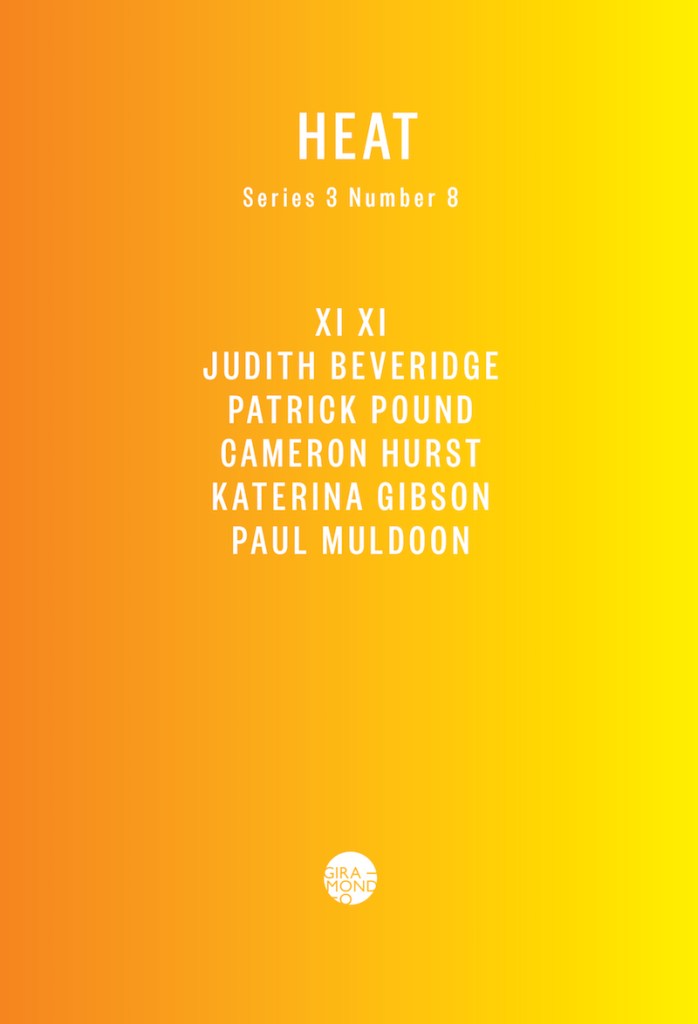
This is a fabulous issue of Heat. A clutch of ‘animal poems’ by Judith Beveridge would have justified the cost of the magazine. ‘Mourning a Breast’ by the late Hong Kong writer Xi Xi, translated by Jennifer Feeley, is an excerpt from a yet-to-be-published novel that includes, among other things, a gruelling account of breast surgery and some fascinating reflections on different Chinese and English translations of Madame Bovary. Send Me a Sign? is a charming essay on Henry Handel Richardson and spiritualism by Cameron Hurst (this one can be read on the Heat website).

Page 76 occurs in the short story ‘Shopping’ by Katerina Gibson, whose collection, Women I Know, won the Christina Stead prize this year. Like Xi Xi’s narrator, the protagonist of this story is interested in translation. She works at a writers’ centre where she is in love with her boss. The story is like an elegant tapestry of twenty-something lostness and finding a way: her work; her relationships, both those at work and her initially unromantic sex life; her compulsive overspending on clothes and her general angst/anomie. I loved it, especially for a key turning point where she reveals her compulsion to a friend and instead of running a mile he laughs and says, ‘But you don’t seem crazy at all.’ (Sorry for the spoiler!)

This seems an appropriate place to mention Giramondo’s promising new online initiative, Re:Heat. It’s a bi-monthly newsletter in which a current contributor to Heat Series 3 encounters an item from the archives. The first of the newsletters features an article by Josephine Rowe on ‘Alive in Ant and Bee’ by Gillian Mears, which was published in Series 2 Number 13, in 2007. You can read Gillian Mears’ piece here, and Josephine Rowe’s response here.


Evelyn Araluen and Jonathan Dunk (editors), Overland 250 (Summer 2022)
(Some of the content – less than in the past – is online at the revamped Overland website, and I’ve included links)
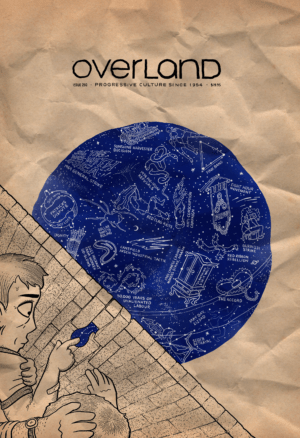
Great editors think alike. Overland is also launching a series in which current writers respond to items from the archives, in their case as part of the print journal. Jordana Silverstein kicks it off with a response to a 1988 story by Lily Brett, which is republished in the journal. Neither piece in online yet, but both are interesting.

At the other end of a readability spectrum is the issue’s first article, ‘Structures don’t go out onto the streets? Notes on John Tranter’s radical pastiche‘ by Louis Armand, which must be the ultimate in poetry insider talk, making no concessions to readers who don’t know their Jacques Lacan from their Ern Malley. Definitely for the spectacularly well read.

Other articles are more accessible and, to me at least, infinitely more interesting: Dallas Rogers on early colonial maps as instruments of colonialism, Jeff Sparrow on elite capture of identity politics, Fiannuala Morgan on colonial literature and bushfires are all worth reading. That’s all before we get to the poetry and fiction sections.

The twelve pages of poetry include the runners-up in the 2022 Judith Wright Poetry Prize (the winner was published in the previous issue). Of these, ‘Camperdown grief junk’ by Wiradjuri poet Yeena Kirkbright spoke most to me in its tour of the Camperdown Cemetery, so beloved of poets. Cameron Lowe’s prose poem ‘Ribbons’ ten pages later also spoke to me. Having just gone on about line breaks in a recent post, I found this phrase just a little squirm-making:

in the rear view mirror there were the back slappers, as usual, jerking off over line breaks.

I’ve been told.

There are 23 pages of fiction, ranging from grim to dystopian, all interesting. The story beginning on page 76, ‘Song and dance’ by Sik Chuan Pua is at the grim end of the spectrum, taking us inside the mind of Clara O’Brien, once a celebrated pianist who is now struggling with physical and mental incoherence in an institution of some kind. Right from the start, the story deftly maintains a double perspective: what Clara sees and what the reader understands in play with each other. It’s no spoiler to say that the story builds towards the word ‘Parkinson’s’. That condition, or something close to it, is there in the first non-bold sentence of this:

She was forty-seven when it began
Her head is locked towards the timber casement windows. Beyond the glass, a lake spreads out. A breeze rattles the shutters. It could be morning. Or late afternoon.
Look, a mysterious orange hue appears. What a hoax, for lakes should be blue as ink. Someone has been up to mischief. Someone has dumped such obnoxious colour, contaminating the lake, transforming beauty into farce. Will someone please restore the lake to its natural colour?

This is Overland‘s 250th issue. Long may it thrive.
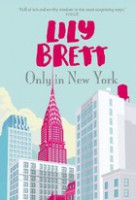
Lily Brett’s Only in New York

Lily Brett, Only in New York (Hamish Hamilton 2014)

1ony

This book is not to be confused with Lily Brett’s similarly titled New York, published in 2001, even though both are collections of essays about New York. There are similarities of course, but whereas New York‘s essays were each exactly three pages long, and geared primarily to a German readership (they were first published as columns in the weekly newspaper Die Zeit, translated by Melanie Waltz), the essays here are much less constrained, ranging from two to 10 pages, and don’t have any sense of the deadline pressure that’s often found in newspaper columns (though at least one of them, ‘Falling in Love in Cologne’, has appeared in Die Zeit). Many of the essays read as if they were partly written in Lily Brett’s head as she went on long walks in Manhattan. Not that she’s a flâneuse, as her opening sentences make clear:

When I go for a walk in New York, I like to have a destination. Actually, I like to have a destination wherever I am when I go for a walk. I am not one of those aimless walkers, people who can stroll around from place to place without a plan.

Many of the essays start with naming a destination: Grand Central Station, Spandex House in the Garment District, Caffe Dante in Greenwich Village, her father’s apartment block. Occasionally, as when her eldest daughter is in labour, there’s no destination, but it’s still not aimless wandering, but walking ‘around and around the block, with increasing speed. For hours.’ Apart from the streets and people of Manhattan (the other boroughs don’t get a look in), the book returns to a number of subjects: Brett’s family – mother, father, husband, children – her Australian connections, her many neuroses and anxieties. Much of the book’s considerable charm comes from the way the essays veer off in unexpected directions – like a purposeful but totally distractable walker.

In an essay that starts out apparently about Brett’s incompetence at sewing, she confides that she  is ‘not the kind of person who can lounge around the house in a sweatshirt’, and goes on:

My mother was well dressed all the time. Even when she cleaned the house. She polished the floor and scrubbed the kitchen in a silk blouse, pleated skirt and high heels.

Then, without missing  a beat:

After her world cracked and splintered when the Nazis invaded Poland, my mother was never the same. She could never relax. She was always on guard. It was as though she needed to be prepared for any eventuality. And I have inherited that need.

We can enjoy the image of Brett’s mother’s eccentricity. But we’re not to trivialise her. And that’s true of the book as a whole. I laughed a lot. Brett’s nonagenarian father is very funny, but he is a triumph of the human spirit. New York is full of absurdities (customers are called ‘guests’, dogs wear shorts, psychics abound) but you never know what you’ll see if you keep your eyes open.

At a Sydney Writers’ Festival a couple of years ago Inga Clendinnen said that whereas a novelist plays Catch-Me-If-You-Can with the reader, an essayist invites the reader to come for a walk. She could have had this book in mind.

awwbadge_2014

Only in New York is the ninth book I’ve read as part of the 2014 Australian Women Writers Challenge,

November books

Shlomo Ben-Ami, Scars of War, Wounds of Peace (Weidenfeld & Nicholson 2005)(finished)
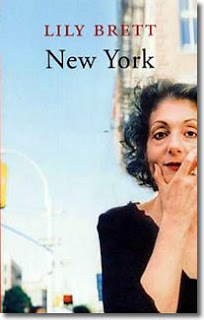
Lily Brett, New York (Picador 2001)
Simon Leys, The Wreck of the Batavia and Prosper (Black Inc 2006)
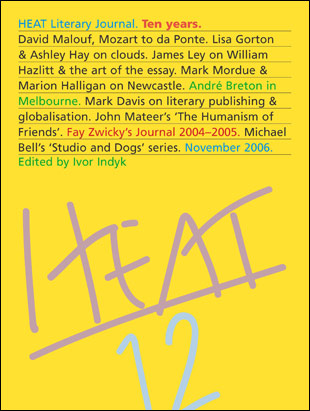
Ivor Indyk (editor), Heat 12: Ten years (2006)

Years ago, when he was in his teens, Alex explained why he wouldn’t read Terry Pratchett: ‘If I’m going to make the effort to read a book, it needs to be about something important.’ He made sense, but I’ve never felt that way myself, not in the slightest – until I picked up a detective story at the start of this month and couldn’t see the point. After books on climate change, Arab-Israeli politics, the nature of history, etcetera, I wanted something that was either very meaty or no effort at all.

new_york

I found this Lily Brett book on my friend Judy’s shelves – a collection of short pieces, each one exactly three pages long, and staying resolutely at the level of observation and wry, reflexive commentary. (Unsurprisingly, mentioned nowhere in the book itself but prominent in its description on Lily Brett’s web site, the 52 pieces were commissioned as weekly columns for a newspaper, Die Zeit – a provenance which also explains the frequent German references.) Perfect, elegantly insubstantial bedtime reading, which morphed into perfect read-aloud in the car on the drive from Melbourne to Sydney when my reading of Shlomo Ben-Ami’s syntactically challenging sentences threatened to send driver my to sleep by the time we’d reached 1967 (roughly a third of the way through). We arrived home safely and in buoyant spirits ten minutes after the end of Lily’s last piece.

batavia

Once home, I didn’t immediately pick up Scars of War as a solitary read. I took a break, and knocked over Simon Leys’ book on the Batavia in a couple of days. He starts out saying he had planned to write on the subject for a long time, but given up when he read Mike Dash’s Batavia’s Graveyard, a book he recommends. I don’t think I’m up to the long book, and might not have read this one had I not received it as a freebie when I re-subscribed to the excellent The Monthly. But it’s a fascinating subject: a hideous reign of terror on a coral atoll off the coast of New Holland in the mid 17th century. I was impressed to find that the murderous teenage boy who was part of the events comes across as just as horrifying in this brief account as he does in Gary Crew’s young-adult novel, Strange Objects. The impression created by the novel that it is based in something real is borne out by this book. Simon Leys’ Batavia isn’t really book-length, and the volume is filled out with another essay, this time an account of the author’s tuna-fishing trip on a sailing boat in 1958.

heat12_new

After that bracing dip into two very different seas, I was about to return to the dryness of war and peace in Israel, when Heat 12 arrived in the post. It turned out to be right on theme – I’ve written a separate post.

shlomo

Then I got  back to Shlomo Ben-Ami‘s book. The author is a self-described Zionist of the Left, a one-time member of the Knesset and chief negotiator in Israeli–Palestinian negotiations, an activist for peace, and clearly a passionate historian. The book is a superb history of the diplomatic, political and military tactics and strategies, coups and blunders in the Middle East. Its emphasis is on the negotiations, ‘the peace process’; wars and violence feature only as they impact on the politics. The Munich Olympics, for instance, don’t rate a mention, and one searches in vain for a detailed account of any of the many violent episodes. As a know-next-to-nothing reader, I would have loved an easy-reference timeline up the back, and perhaps a glossary giving key dates, events and outcomes for each salient episode. In the absence of such kindnesses, I felt my ignorance acutely at times, but if that minor discomfort was the price of admission, the show was well worth it.

There are wonderfully sharp portraits of the main players, David Ben-Gurion, Golda Meir, Moshe Dayan, Yitzak Rabin, Yasser Arafat – not the kind that seizes on colourful details but rather evokes the characters as complex human beings and political operators: no mention at all of Dayan’s eye patch, but a brusque sketch of him as a man who inspired many people but was completely incapable of being close to anyone, a fierce Zionist who despised Judaism and had a kind of pagan belief system. The pages on Arafat are devastatingly brilliant (I wouldn’t have a clue if they’re accurate, but they explain a lot).

The early chapters delineate the complex interplay of imperial aggression and Zionist aspiration that led to the first Jewish settlements, are unflinching in their account of the dispossession and abandonment of the Palestinians, and anatomise the complexities of the politics in the region, including the roles and objectives of the superpowers. As the book comes closer to the present, and the author’s own direct observations and even interventions become part of the story, it might easily have lost its way in the detail of personalities and politicking; instead it becomes absolutely engrossing. Little bits of gossip enliven the narrative – Arafat had such difficulty renouncing terrorism that he also had difficulty pronouncing it: at the Camp David peace talks he three times promised to renounce ‘tourism’.

The book’s real strength is that this is an insider’s view, and the whole story is presented on a human scale – not that the narrative reduces the stakes and complexities to the level of personality; more that it explores the huge dimensions of the persons involved: the myths that sustain them and undermine them, their capacity for generosity and humiliation, their relationships as political leaders with their constituencies, their skills as negotiators …

No doubt this book has its detractors, and it may well have got it wrong on any number of counts. But reading it has put me within cooee of understanding why the Middle East goes on defying attempt after attempt at peace. It has also given me tantalising glimpses of Advanced Negotiation (it’s salted with gems like, ‘The weakness of your rival is a reason to reach an agreement with him, not the trigger to humiliate him further’) and of Leadership With or Without Megalomania. Although its subtitle, ‘The Israeli-Arab Tragedy’, is thoroughly justified by the amount of death and destruction contained in this narrative, by the hubris of some players (mostly Israeli) and the opportunities culpably missed (spectacularly, but not at all exclusively, by Yasser Arafat), it manages all the same to end on a note of cautious but plausible optimism:

The time has finally arrived to assume that the complete satisfaction of the parties’ respective dreams or presumed rights will only lead them both to perdition. Here it is incumbent upon each to devise realistic ways that would heal without opening new wounds, that would dignify their existence as free peoples without putting into jeopardy the selective security and the particular identity of the other. The moment has come for the creative energies of the parties to this most protracted of conflicts to be put, at long last, to work in the service of a durable peace.