Tag Archives: Marilynne Robinson

July Books [2006]

[This was originally posted in my now defunct blog Family Life, on 2 August 2006. I’m retrieving it today because it includes some comments on Kate Grenville’s The Secret River, which recently came in at number 20 in Radio National’s Top 100 Books of the 21st Century.]

Books I bought in July:
Robert Charles Wilson, Spin (Tor Books 2005)

Books read:
Poppy Z. Brite, Liquor (Three Rivers Press 2004) and Prime (Three Rivers Press 2005) Marilynne Robinson, Gilead (Virago 2006)
Tim Harford, The Undercover Economist (Little Brown 2006)
Jared Diamond, Collapse (Penguin 2005) (finished)
Kate GrenvilleThe Secret River (Test 2005)
Philippe Geluck, Le Chat (Casterman 2002)

As this month has been spent travelling, I’ve laid aside a couple of books only partly finished, and mostly started on a whole new swag
liquor

I read Poppy C Brite’s Liquor and most of Gilead on the plane to Europe. It’s hard to think of a greater contrast, one about heavy-drinking chefs in pre-Katrina New Orleans, the other an elegiac look at three generations of austere men of religion. Both of them were infinitely preferable to trying to watch a movie in those circumstances (I gave up when an announcement about duty-free shopping interrupted the opening scene of Candy). Poppy C. Brite’s book strikes me as a thinly disguised love song – love for her city (New Orleans, pronounced with the emphasis on the middle syllable), for the world of restaurant work and I presume for her chef husband, and for lovely bits of the English language. The plot is functional, but that’s not where the interest lies.
1844081486

Gilead is also a love letter, with a lot less disguise: it’s in the form of a letter written from a dying man to his seven-year-old son, in the expectation that the son will be an adult by the time he reads it. The narrator is deeply in love with his little son; Marilynne Robinson clearly loves her narrator, probably the last of a line of passionate preachers in the US midwest. He is a man of profound faith, saturated in bible-awareness, but also acquainted with other intellectual traditions. He is writing the boy’s ‘begats’ – that is to say, he tells the story of his own grandfather, a wild, pistol-wielding preacher called by a vision to fight slavery, of his father, an equally single-minded man of peace, and of himself, struggling with a world where his kind of faith is more and more under attack – by secularism on the one hand and television evangelism on the other. It’s a book full of grace and wisdom.
0316731161

In Amsterdam I moved on to The Undercover Economist. I’d heard Tim Harford speak at the Sydney Writers’ Festival, and been taken as much by his Tin-Tin quiff as by his talking sense about economics. I feel as a result of reading this that I now have a basic grasp of classic market economics, and it was more or less fun to read.
1400050081

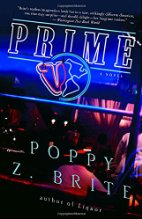
Prime is a sequel to Liquor, and like that book it abounds in glorious descriptions of the joys of cooking and eating. The book gained extra piquancy for me from being read in Ireland, where we had some difficulty finding palatable food (we gave a special award to the lightly spiced salmon patties served up in a posh-looking hotel dining-room and called Thai fish cakes).
0713992867

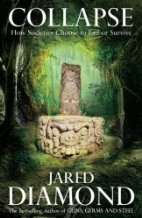
In London, I finished Collapse. Again, this was appropriate, not because it’s a great escapist holiday read (it’s anything but), but because it cast a sharp light on the experience of London’s hottest summer days ever: this wasn’t just a frivolous news story about Poms not knowing how to build cool houses; it was a harbinger of major things to come for all of us. It was good to read his chapter on Australia in London as well, because he argues that our persistent identification with British traditions is one of the things preventing us from choosing environmentally sound directions. I was struck by his articulation of one of the key challenges facing the world:

the challenge of deciding which of a society’s deeply held core beliefs are compatible with the society’s survival, and which ones instead have to be given up.

Before leaving the brick of a book behind on the train to Gatwick (to avoid excess baggage charges), I copied out this from his final section, where he talks about what anyone can do about the current crisis:

an individual should not expect to make a difference through a single action, or even through a series of actions that will be completed within three weeks. If you do want to make a difference, plan to commit yourself to a consistent policy of actions over the duration of your life.
secret

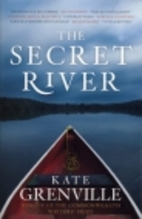
I moved on to The Secret River with high expectations. But whereas recent readings, Neal Stephenson’s Baroque Trilogy and Seamus Heaney’s ‘District and Circle’, had both evoked London localities so vividly that I was constantly being reminded of moments from that novel and that poem during my stay there, I was disappointed that this book’s London remained pretty bodiless. Once the hero, Will Thornhill, arrived on the Hawkesbury with his family, however, my disappointment disappeared: there the book’s true subject emerged, and at the same time the physical world became powerfully present:

When Thornhill jumped over the bow the mud gripped his feet. He tried to take a step and it sucked him in deeper. With a huge effort he dragged one foot out and looked for a place to set it down between the spiky mango roots. Lurched forward into even deeper mud, pulled his other leg up with a squelch, feeling the foot stretch against the ankle, and floundered towards the bank. He put his head down and butted blindly through a screen of bushes, bursting out at last onto dry land. Beyond the river-oaks the ground opened onto a flat place covered with tender green growth and studded with yellow daisies.

His own. His own, by virtue of his foot standing on it.

Will’s first real encounter with one of the people he is dispossessing in this moment occurs within pages, and the book becomes as gripping as the Hawkesbury mud – in which I have no doubt Kate Grenville has had her feet stuck.
220334024X

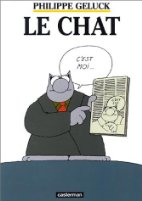
Le chat was my one book in French, a bande dessinée whose measure I found very hard to take. It consists the Steven-Wright-ish monologues of a large, cool, besuited cat. For example:

Le mot ‘long’ est plus court que le mot ‘court’. C’est dingue, non?

And now I return to Romanesque churches and ancient Cathar towers.

Posted: Wed – August 2, 2006 at 03:54 AM

Marilynne Robinson’s Lila

Marilynne Robinson, Lila (Virago 2014)

This is the third book in Marilynne Robinson’s superb Gilead trilogy. I wouldn’t be sorry to learn that the series will continue.

The first book, Gilead, is narrated by John Ames, an ageing Congregationalist pastor in the small US town that the book is named after, trying to explain his life of faith to his alienated son. A main strand of that book is Ames’s intense relationship with the Reverend Boughton, another pastor in Gilead. They both are devoted to their God, to their calling as clergymen, to each other, and to a rigorous thinking through of their Calvinist faith. I don’t know that I’ve ever read theological discussion that was so warmly human.

The second book, Home (which I’ve blogged about here and here), covers ground already traversed in the first, but from a different points of view: it’s mainly the story of Boughton’s disgraced son Jack, coming home with a new wife. Lila is named for Ames’s second wife, and tells the story of her radically deprived childhood and life on the margins leading up to the moment when she improbably but convincingly finds a home with the one she thinks of as ‘this good old man’.

I regret reading this so long after its predecessors. We only get what Lila overhears of Ames and Boughton’s conversations, and Boughton’s adult children have tiny, non-speaking roles, so there’s a sense of so much happening outside the scope of the narrative , some of which I’m fairly sure was explicit in Gilead. My impression is that the action of Home takes place after the action of this book, but I wouldn’t swear to it. And I don’t suppose it really matters. Lila’s story is compelling in its own right.

She was saved from probable death from neglect as a small child by a vagrant woman named only Doll. She grew up under Doll’s fiercely protective care in Depression USA, joining a group of itinerant workers, going to school enough to learn to read, always moving on when Doll feared they were about to be found by Lila’s vengeful kinfolk or other enemies. Doll’s life ends in violence – after she stabs to death a man who may be Lila’s biological father.

Lila manages to survive a time working in a brothel and the hardships of life on the road until almost by accident she walks into the church in Gilead. Before that, her minimal literacy has led her to the Bible, and phrases from Ezekiel about a baby weltering in its blood somehow struck a deep chord in her imagination.

Interspersed with this story, the story of Lila growing up, coming to Gilead and proposing marriage to Ames, there is the story of her emotional journey towards deciding to stay with him. Virtuous characters are notoriously difficult to create, and once created they are difficult to make interesting. From one point of view, Lila exists as a device to allow us to see Ames as interesting: her every interaction with him is informed by the violence and deprivation that have formed her, as well as her fierce love and loyalty to Doll.

We no longer hear the intricate theological discussions of Ames and Boughton. Instead, Ames is challenged to examine the basic nature of his faith. It’s a good bit of the power of the book that he rises to the challenge with humility, affection, even delight. It’s evangelical Christianity, but not as we have come to know it in the age of Trump.

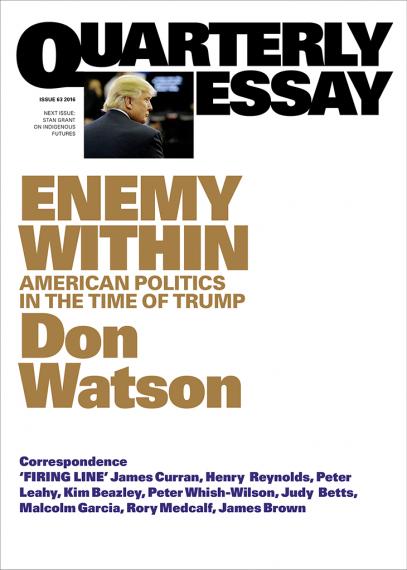
Don Watson’s Enemy Within

Don Watson,  Enemy Within: American politics in the time of Trump (Quarterly Essay 63, September 2016)

qe63.jpg

This Quarterly Essay is closer in form to the classic essays of Addison and Lamb than to the engaged argument of most issues. It doesn’t so much push a thesis as offer a series of ruminations and perspectives.

Don Watson is a lugubrious bemoaner of abuses of the English language, so visiting a US election campaign must have been a melancholy experience for him. One of the joys of this essay is the attention it pays to language – my favourite moment being this comment on Bernie Sanders’ repeated use of the word ‘incomprehensible’:

An election processes reality into platitudes. Even the images become platitudes. It grinds all the tendons and marrow and flesh of history, and all the cultural overlays of Los Angeles, and the ukuleles and ‘You bets’ of Janesville, into something universally digestible. Hearing a word like ‘incomprehensible’ in the middle of it is like finding a bone in a fish finger.

More substantially, Watson is also a historian. Rather than give us a blow-by-blow account of Donald Trump’s tweets and other provocations or Hillary Clinton’s emails, he turns to the past for perspective. He likes Hillary Clinton best when she delivers a history lesson rather than a stump speech at a Planned Parenthood Action Fund meeting. He sees Bernie Sanders’ popularity as a resurgence of ‘a much assailed and greatly debilitated, but unbroken American tradition of democratic socialism’, which he presents to us by way of a sketch of the history of Wisconsin, where Fighting Bob La Follette ‘took on the elites for forty years’ and the current mayor, Paul Soglin, continues in his footsteps. He discusses Trump in the context of twentieth century fascism,  concluding somewhat reassuringly:

[Were] he to win the presidency in ways resembling Hitler’s or Mussolini’s, it’s inconceivable that Trump’s next steps would resemble theirs. His brutish and ingenious destruction of the country club Republicans, and the capitulation of most of the remainder, are shameful and concerning, but even if this means the end of the Republican Party, that is not the same as the end of UIS democracy. The Germans of 1933 had had a decade of democracy. The Americans have had a a lot more than that.

Then, less reassuringly, he asks:

And if Trump doesn’t win, will he walk away? Will his followers? He is telling them if he loses it means the vote was rigged. He doesn’t need to be an actual fascist for the day after election day to be a worrying prospect.

What oft was thought but is here so well expressed.

I’m glad to report that most of the essay is about the US rather than specifically about Trump. Not that Watson is reluctant to repeat witty take-downs of either main candidate, but the ‘time’ of the title was also the moment of Muhammad Ali’s death, of Marilynne Robinson’s writing, of Bernie Sanders’ speaking – about all of which he writes beautifully.


Roughly two thirds of this QE is devoted to correspondence on the previous issue, in which James Brown put a case for greater public engagement and debate in Australia’s approach to the possibility of war. Two elder historians lament young Brown’s apparent historical ignorance, other correspondents take exception to aspects of his argument. But there’s a general consensus that more thought and discussion is needed. Brown acknowledges some criticisms as ‘bracing, but useful’, and utterly rejects others. It couldn’t be more different from the way argument is too often conducted in the social media.

End of Year Lists

The Art Student proposed that I post about my best five books, best five movies and worst three movies for 2010. And hers. Being an obliging fellow, and at the risk of exposing myself as a philistine, here they are. Do nominate your own favourites in the comments.

The five movies most enjoyed in 2010 (in no particular order):

By me:

Animal Kingdom, David Michôd’s first feature, so human and yet so vile. (When Jacqui Weaver was being made much of in the US for this performance, Michôd reportedly said to himself, ‘About time.’ To which I cry Amen!)

Made in Dagenham, directed by Nigel Cole, what some people would undoubtedly see as a fundamentalist left feminist feelgood movie – and what’s wrong with getting to feel good about a victory?

Peepli [Live], directed by Anusha Rizvi & Mahmood Farooqui, a wonderfully ebullient satire on the way the media in India, just like here, makes spectacle out of misery – a comic commentary on P Sainath’s Everyone Loves a Good Drought.

Temple Grandin, made for TV by Mick Jackson, starring Clare Danes as Temple Grandin, the woman with Asperger’s Syndrome who revolutionised the treatment of cattle in US slaughterhouses.

In the Loop, exuberantly enraged, foul mouthed satire directed by Armando Iannucci and starring Peter Capaldi, which I found cathartic.

By the Art Student:

City Island, a genial comedy directed by Raymond De Felitta, starring Andy Garcia, and Julianna Margulies playing a very different character from Alicia in The Good Wife on TV.

The Yes Men Fix the World, featuring culture jammers Andy Bichlbaum and Mike Bonanno, and any number of corporation representatives being taken for a ride.

Me and Orson Welles, directed by Richard Linklater.

Peepli [Live]. At last we agree on one.

Fair Game, the pic about Valerie Plame, directed by Doug Liman.

The film that most cried out for a thumbs down from both of us

Rob Marshall’s Nine. At least they had the good taste to wait until Fellini was dead before defiling his work in this way. The fault lines in our unanimity of taste showed when the Art Student had trouble choosing between this, Inception and Scott Pilgrim vs the World, both of which I enjoyed.

Five favourite books read in 2010

By me:

I listed 121 books in my Reading and Watching blog during 2010. I didn’t finish all of them, but picking five favourites is necessarily pretty arbitrary because so many of them delighted and enlightened me. However, here goes.

China Miéville, The City and the City. Science fictional policier, marvellously taut and convincing us to believe in an impossible world.

Charles Happell, The Bone Man of Kokoda. Written by an Australian, this tells the story of a Japanese man who fought against and killed Australians in the jungles of New Guinea, and his resolve to honour his comrades who died there.

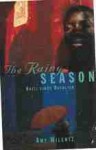
Amy Wilentz, The Rainy Season. I read this in the aftermath of the terrible earthquake in Haiti. It is a very rich introduction to the culture and recent history of the nation created by the first successful black slave revolt of modern times.

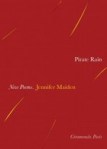
Jennifer Maiden, Pirate Rain. This may not be the best book of poetry published this year. Many people would probably give precedence to Les Murray’s Taller When Prone or Seamus Heaney’s Human Chain. But Jennifer Maiden gets my gong.

Marilynne Robinson, Home. If I ever convert to stern Presbyterian Protestantism, it will be because of this book and its predecessor, Gilead. I love the characters’ unrelenting quest to love with integrity.

By the Art Student, in her own words:
While I have read quite a bit of fiction that I enjoyed, the books that stand out are all non fiction.

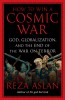
Reza Aslan, How to win a cosmic war. I heard him speak at the Sydney Writers’ Festival this year. The book is a clear and compelling account of the past and current drivers of religious fundamentalism – Islamic, Jewish and Christian. It shows the common threads in religious fundamentalism while focusing on Islamic fundamentalist terrorism. What is interesting is Aslan’s description of the difference between Islamic nationalist groups (which the West should learn to love) and internationalist jihadism. By fighting the former, Aslan argues, we are pushing alienated young western-born Middle Eastern  Muslims into joining the latter and terrorism.

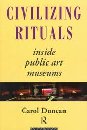
Carol Duncan,  Civilizing Rituals, Inside Public Art Museums. This includes a fascinating account of the development of public art museums after the French Revolution liberated the Louvre. It mainly focuses on the development of public galleries in the USA and England, but links these developments to a popular movement to have art galleries in all major western cities (including Sydney). But most interesting are the struggles about what galleries were and are for, how they should be funded and what they should show. In the USA, private philanthropists were the driving force in establishing galleries, allowing them to build spacious monuments to benefactors. The down side was that those benefactors wanted control beyond death, so that many galleries are filled with replicas of ballrooms and indifferent art that are never to be changed. Duncan’s final chapters critique current public galleries’ approaches to their art and audiences, making it clear why many people find the experience of visiting galleries unsatisfying and alienating.

John Hirst, Sentimental Nation, the Making of the Australian Commonwealth. Federation? Surely the dullest topic in Australian history. But to my surprise this book was a wonderful read about the decades-long fight for federation. Depressingly familiar in some respects (the Murray–Darling debate, immigration, taxes, mining, Commonwealth–state power sharing) it was also a wonderfully inspiring account of democratic processes that gave Australia a constitution. There were three Constitutional Conventions, with 60 men voted from  the colonies to draft, debate and redraft the constitution over 12 weeks each time. Once agreed on, the constitution was subject to two referenda before being passed. Town hall meetings were held in every suburb and town in the country, each meeting often taking four hours while every section of the draft was read aloud,  explained and debated. Hirst makes the back and forth of politics come alive with a contemporary feel.

Patricia Hill, Alice Neel. Alice Neel (1900 to 1984) was a US artist who painted mainly portraits of ordinary working people over from the 1920’s until her death. She was a socialist and worked as part of the Federal Art Project (a New Deal initiative) during the Depression. She only received recognition of her work in the 1970s, partly because portraiture was out of fashion in Modernist American art circles,  partly because of her left-wing views and partly because of her gender. I love her work. Her portraits are often distorted yet capture absolutely a sense of the person and their context. She saw herself as painting ‘definitive pictures with the feel of the era’, pointing to her portrait of her son in a business suit, ‘Richard in the Era of the Corporation’, as a good example.The book is largely Neel’s own words taken from interviews conducted by Hill. An inspiring read for someone at the very beginning of an art career as she approaches 60.

Do tell us your bests of 2010 in the comments

Marilynne Robinson’s Home at the Book Group

Marilynne Robinson, Home (Farrar, Straus & Giroux 2008)

This will be quick as my blogging time this month is mostly taken up with writing what poet and commenter John Malone has called, at least by implication, unremarkable sonnets.

In Marilynne Robinson’s novel, Jack, the black sheep of a midwestern Presbyterian pastor’s family comes home for a couple of months, rebuilds some kind of relationship with his youngest sister, now 38 and home to lick her wounds after being exploited by a cad, and fails to reconcile with his ageing father. Perhaps unexpectedly, it was a great success at the book group. Most of us loved it, and those who didn’t were still interested. Over excellent quiches and salad, followed by ice creams on sticks that our host had bought for his grandchildren, we had some of the most animated discussion we’ve had since I joined the group. Several of us are planning to read or reread the companion novel Gilead.

I was just a little smug to be able to report that I’d picked up early on the clues that Jack’s great, lost love might be Black. My recent reading of W E B Du Bois’ Souls of Black Folk meant that I got the hint when Glory asked Jack what he was reading :

‘W.E.B. DuBois,’ he said. ‘Have you heard of him?’
‘Well, yes. I’ve heard of him. I thought he was a Communist.’
He laughed. ‘Isn’t everybody? I mean, if you believe the newspapers?’ He said, ‘Now I suppose you’ll think I’m up here reading propaganda.’

LoSoRhyMo 5: On reading Home

Marilynne Robinson, Home (Farrar, Straus & Giroux 2008)

I’m intending to write a little more about this book, probably in prose, after the Group meets to discuss it later in the week. But for now, it’s grist to the relentlessly demanding LoSoRhyMo mill. So far my sonneteering attempts have been in jaunty tetrameters. The cadences of Marilynne Robinson’s prose urge the more reflective pentameter.  First, a quote from the book.  This one come close to stating a central theme:

There is a saying that to understand is to forgive, but that is an error, so Papa use to say. You must forgive in order to understand. Until you forgive, you defend yourself against the possibility of understanding.

There are plenty of pearls of wisdom like this, that are even more profound in context than out. Papa spends most of the book struggling to live up to the wisdom attributed to him here. It’s a wonderful book, though perhaps not as luminous as MR’s previous novel, Gilead. But here goes with my sonnet (and I’m afraid this one isn’t so much verse as something less than prose that’s tortured into rhyme):

Sonnet 4: On reading Marilynne Robinson’s Home
At book’s page one, the youngest Boughton, Glory,
betrayed in love, tears ever in her eyes,
returns to father’s home, rejoins his story
where God is love and love won’t compromise.
Soon brother Jack arrives, to hymns of praise
(praise God, for Jack himself’s no saint, but rather
an anti–Seymour Glass, the clan’s disgrace
much loved, lamented, prayed for by his father).
So father, son and Glory join a dance
of careful kindness, trust that’s tentative.
When stern theology allows a chance
the ailing father struggles to forgive
until Jack’s tragic truth is clear to see:
‘Cry if you want to, chum,’ he says. ‘Feel free.’