Tag Archives: Mark McKenna

2024 End of Year List 4: Books

The Emerging Artist now keeps a record of the books she reads so she can easily whip up a list for me at this time of year. Here are her favourite reads from 2024 in her own words (links to LibraryThing pages or, at her request, to my blog post when there is one):

Fiction
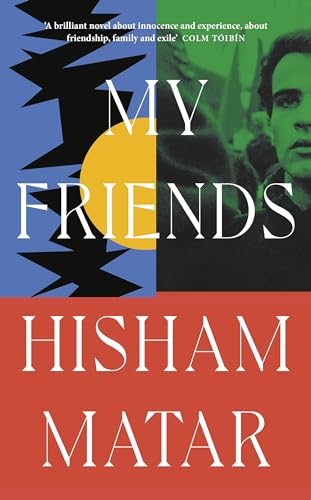
Hisham Matar, My Friends (Viking 2024)
I enjoyed Hisham Matar’s previous books, though I wasn’t enthusiastic about them as they often felt repetitive, and more like unreliable memoir than fiction. My Friends continues to draw on his life, but it feels more like a story that examines what it is to be an exile in a time of radical upheaval.

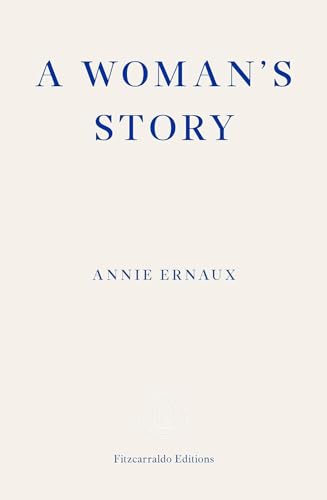
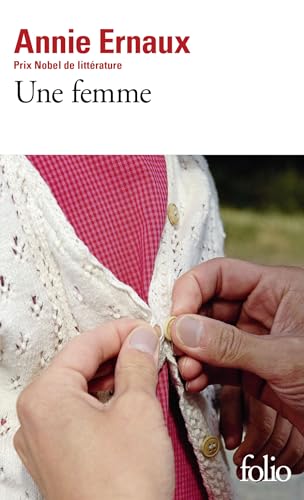
Annie Ernaux, A Woman’s Story (translated by Tanya Leslie 1991, Fitzcarraldo Editions 2024)
I read Annie Ernaux’s The Years before I got to this very slim volume, so I came to it with high expectations. I wasn’t disappointed. In such concise prose Ernaux describes the details of one woman’s life, and iin doing so conjures up a broader world.

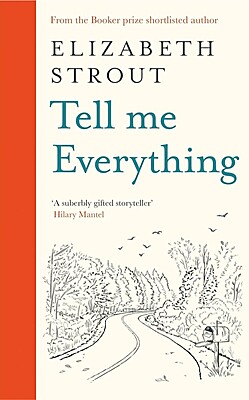
Elizabeth Strout, Tell Me Everything (Viking 2024)
This continues the stories of a number of Elizabeth Strout’s characters, bringing them together as they deal with death, ageing, love and lust. She writes with wit and kindness.

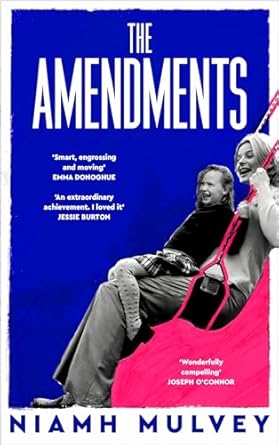
Niamh Mulvey, The Amendments (Picador 2024)
A new Irish writer for me. I hope she writes a lot more. This is a generational feminist tale about a family of women, dealing with the way issues of reproductive rights governed women’s lives before Ireland shifted from Catholic dominance – a shift made because of women demanding change.

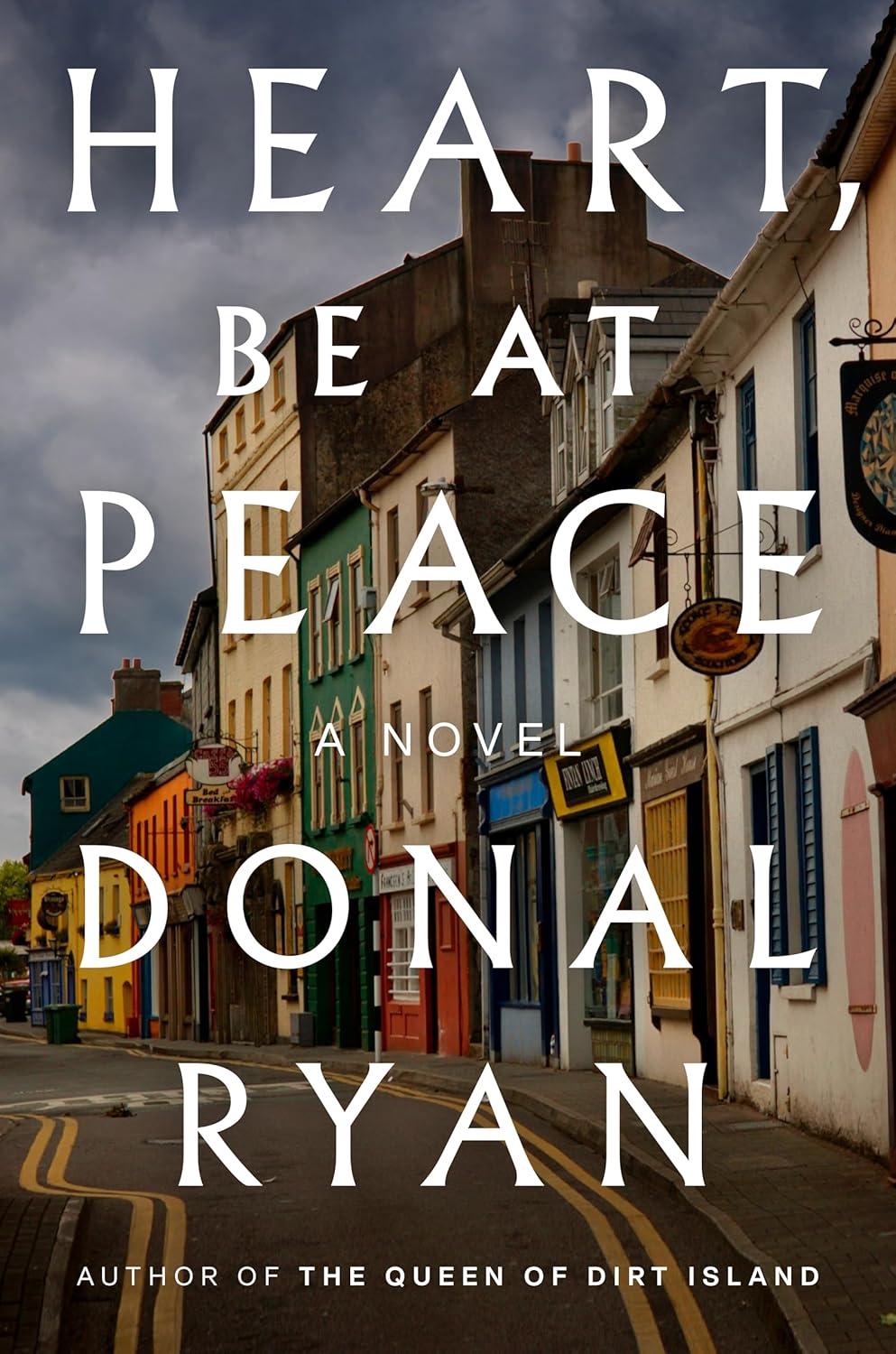
Donal Ryan, Heart, Be at Peace (Doubleday 2024)
I had read two previous Donal Ryan novels, both of which I loved. In this one he continues to create the sense of Irish village community and disunity in the context of the Celtic Tiger and its collapse. Told from multiple perspectives, it builds a picture of complex relationships.

Non fiction
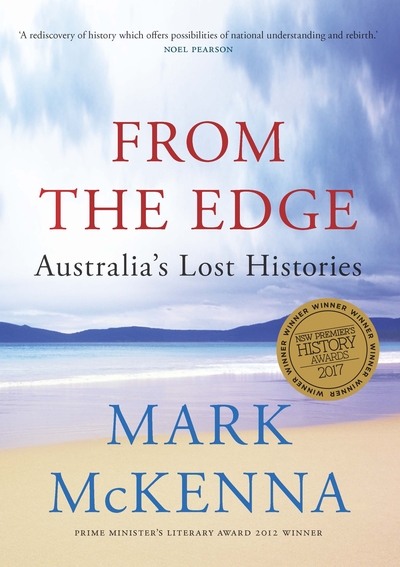
Mark McKenna, From the Edge: Australia’s Lost Histories (Melbourne University Publishing 2016)
Published in 2016, this is still a wonderful way to learn about First Nations and settler interactions. McKenna writes compelling history. These relatively short pieces include the pearl industry in Western Australia, the Barrup Peninsula petroglyphs and mining, early failed attempts to establish a colony in northern Australia, and the brutality of the Palmerston goldfields in north Queensland. They are written with a focus on First Nations agency, and they attempt to understand how colonisation played out in each specific time and place.

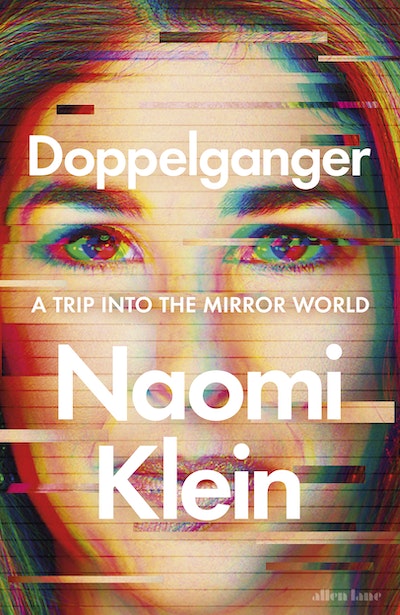
Naomi Klein, Doppelganger: A Trip into the Mirror World (Penguin 2023)
I’m still reading this, having put it down during the US elections as much of what Naomi Klein describes was playing out in the headlines. It’s a fascinating enquiry into the nature of truth, and the way fakery has become entrenched in political discourse.

From me

I can never pick a favourite or best book. My favourite is always the one I’m reading right now, unless the one I’m reading is the book I hate most in the world. Some highlights of 2024 were:

  • Montaigne’s Essays: I have read four or five pages most mornings since the beginning of March, and will have finished the book in a couple of weeks. He has been a great person to start the day with (apart from the Emerging Artist, of course)
  • Blue Mars, the final book in Kim Stanley Robinson’s Mars trilogy has finally made it from my TBR shelf, and it was a most satisfactory experience
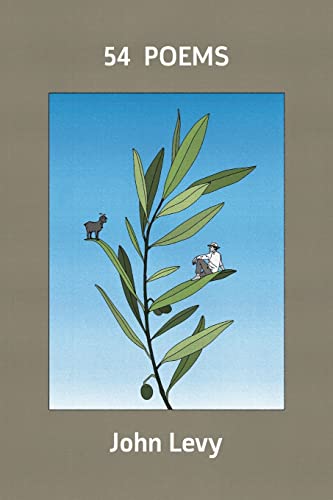
  • the poetry of John Levy, who showed up in my comments to share his enthusiasm for Ken Bolton’s poetry, and offered to send me a copy of his own book. I’m so glad I accepted the offer
  • I read more of Annie Ernaux: if ever I write a memoir, I hope I can manage to be at least slightly Ernauxian
To get all nerdy, I read:

  • roughly 83 books altogether (counting journals but only some children’s books)
  • 34 novels
  • 21 books of poetry
  • 5 comics
  • 6 books in translation – 3 from French (counting Montaigne’s Essays), 1 each from German, Japanese and Chinese
  • 7 books for the Book Group, whose members are all men
  • 12 books for the Book Club, where I’m the only man (two of them to be reviewed after tomorrow night’s meeting)
  • counting editors and comics artists, 45 books by women, 46 by men
  • 3 books by First Nations writers, and
  • 11 books by other writers who don’t belong to the White global minority.

And the TBR shelf is just as crowded as it was 12 months ago.


Happy New Year to all. May 2025 turn out to be a lot less dire than it’s looking at the moment, and (to repeat my wish from last year) may fossil fuels at last be left in the ground. May we all keep our hearts open, our minds engaged, and may we all talk to strangers.
The Book Group and Mark McKenna Return to Uluru

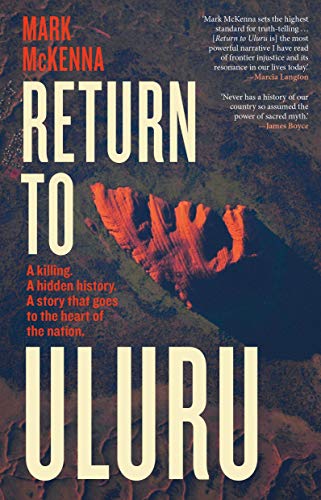
Mark McKenna, Return to Uluru (Black Inc 2021)

This was a very welcome birthday gift in March this year, but somehow I didn’t get around to reading it until it became the September title for the Book Group.

Before the meeting: It’s a terrific, powerful history that reads partly as a thriller and partly as a prose poem.

Mark McKenna has previously written two books that focus on the history of particular places: Looking for Blackfellas’ Point (2002) and From the Edge: Australia’s Lost Histories (2016). His recent Quarterly Essay, Moment of Truth: History and Australia’s future (2018) takes its readers on a visit to Cook’s landing place at Kurnell. Return to Uluru similarly has a place for its main subject. It tells many stories about Uluru: stories from settler Australia that change radically over the decades, stories from Aṉangu culture and from First Nations people more generally, culminating in the Uluru Statement from the Heart.

The central strand is a compelling narrative, what McKenna calls the ‘biography of one moment in one man’s life, a moment that encompassed the entire history of the centre and went straight to the heart of the nation’s long struggle to come to terms with its past’ (page 25).

The man in question is Bill McKinnon, a legendary Territorian policeman, who travelled in the steps of the explorers in the 1930s, taking camels on long journeys through what non-Indigenous Australians saw as the harsh and inhospitable terrain of central Australia, climbing what was then called Ayer’s Rock and adding to the cairn at its highest point, dealing with hostile ‘Blacks’ and doing the heroic work of bringing murderers to justice in the face of enormous odds. He was celebrated in newspaper articles and by writers like Frank Clune. A representative of an heroic Aussie type, a Crocodile Dundee without the comedy, he was also accused of brutal mistreatment of Aboriginal people, and in particular of the unlawful killing of one prisoner.

That killing is the moment that the book revolves around. It happened in a cave near Kapi Mutitjulu, a waterhole at the southern end of Uluru. McKinnon claimed that he fired blind into the cave where an escaped prisoner was hiding, and that he did so in self defence. An official enquiry found that he had done no wrong, but Aṉangu witnesses – and some non-Indigenous people – said different, and in the course of writing this book McKenna stumbled on some damning evidence written in McKinnon’s own hand. The image of the legendary outback bushman evaporates in front of our eyes to be replaced by something much darker. Deeply gruesome details emerge.

There is a story that is left mainly untold: the story of the man shot by McKinnon, whose name was Yokununna. In whitefella versions of the story he was a murderer who was captured by McKinnon, escaped, and was killed while resisting recapture. The murder of which he was accused, we are told, was a matter of tribal law. In an endnote, McKenna explains that he has ‘refrained from reproducing these details due to their ongoing cultural sensitivity’, but we are left in no doubt that Yokununna was no criminal, and that when he died he was drawing McKinnon’s attention away from his fellow escapees. The book ends with some of his remains being returned to his descendants.

My copy is a hardback, and its many photos are reproduced with wonderful clarity. Beautiful though they are, they serve as more than decoration. They including the view of Uluru from the International Space Station on the cover, many photos taken by Bill McKinnon, and others by the book’s author. So there’s a pictorial dialogue that spans the decades. We get a sense of how McKinnon saw himself. We feel the romance of the centre (in 1932, McKinnon commissioned a dozen mulga wood plaques from Albert Namatjira, making him one of the first whitefellas to encourage, and pay, Namatjira for an artwork). And we see the descendants of the men brutalised by McKinnon, now back on country. We see Uluru’s senior custodian, grandson of one of the men arrested along with Yokununna, pointing to the opening in the rock that McKinnon fired through.

At the meeting: I had expected this to be one of those meetings where we are united in appreciation of the book and spend the time reminding each other of bits we made special note of. But it was much more interesting than that.

For some, the central idea of the book – that the killing in the cave could be taken as telling the tale of central Australia in miniature – just didn’t hold up, and the telling of it was irksomely longwinded and repetitive. They would have preferred more about people who made cameo appearances, such as Ted Strehlow, Charles Mountford and Olive Pink, and perhaps more about early non-Indigenous encounters with Uluru in the 19th century.

The descriptions of Uluru and the surrounding countryside, some felt, was uninspired. At times, the reader was expected to share assumptions and accept generalisations that some of us just didn’t accept or share – for example, at one stage ‘the Commonwealth was deeply embarrassed’ by McKinnon’s behaviour, but we aren’t told who ‘the Commonwealth’ was or what the evidence was for their emotional state. (This didn’t bother me, partly because I gave a lot of weight to McKenna’s brief account of the Coniston massacre and subsequent exoneration of the perpetrators, so understood that Canberra administrators of the Northern Territory didn’t want further bad publicity.)

One man said he read the book as a foreword and three short stories, which he enjoyed. The aim, as he saw it, was to write a whitefella myth of Uluru, and while he felt the appeal of that (we’re all whitefellas in our group), he was uneasy – I think I heard this right – that there may be some coopting of Aṉangu culture.

Those of us who had got that far all agreed in being moved and impressed by the passages where McKenna meets with the families of McKinnon and Yokununna. At least one man found the most powerful moment in the book to be when McKenna tells McKinnon’s grandson what he has discovered and says he understands the distress this may cause to the family if he publishes it. The grandson, for whom McKinnon has been a family hero, gives his blessing: ‘All of the family, Mum included, are on board for reconciliation, we wouldn’t want anything else.’ Even those who felt that the ‘reconciliation’ offered by the book is largely illusory (I’m not one of them) were moved by this. The passages where Yokununna’s skull is returned to his family and they have their version of events vindicated are equally powerful.

In an inspired moment this month’s Book Selector had invited us all to bring our own photos of Uluru, so the evening ended with a bit of show and tell. The images ranged from a picture of someone’s friend at the top of Uluru in the early 1980s, a photo very like one of McKinnon’s from the same time, to a photo, also from the 1980s, of the photographer’s family posing cheerfully in a burnt out landscape with a number of old Aṉangu women holding up prize goannas.

Mark McKenna’s Moment of Truth

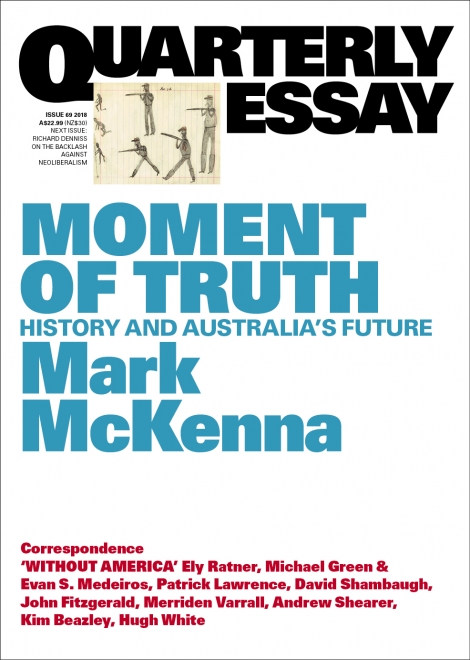
Mark McKenna, Moment of Truth: History and Australia’s future (Quarterly Essay 69, 2018)

verite.JPG

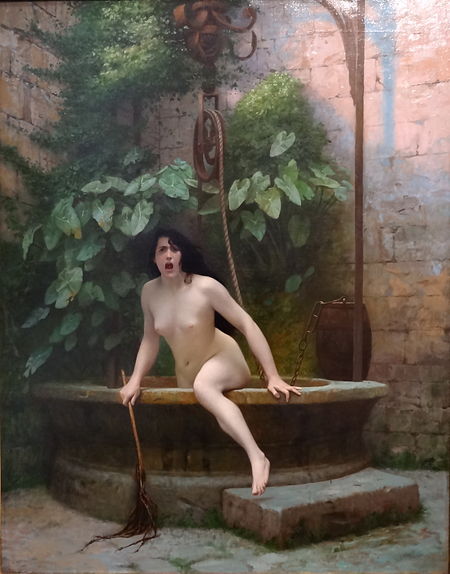
We’ve been talking a bit in my house about Jean-Léon Gerôme’s fabulous 1896 painting La Vérité sortant du puits armée de son martinet pour châtier l’humanité (Truth coming from the well armed with her whip to chastise humankind). I don’t know what Gerôme had in mind when he painted it, but if it had been painted this year one would be tempted to think it referred to either the #metoo movement or the subject of this Quarterly Essay. Mark McKenna’s essay argues strongly that now is the moment for Truth to rise from The Great Australian Silence about the history of First Nations of the Australian continent. There may be no whip in the essay, and McKenna doesn’t scream in rage – he’s a serious, evidence-based historian. But Gerôme’s passionately urgent Truth is surely more appropriate to the occasion than the serene Truths of other painters of his time.

qe69

McKenna begins his essay by quoting the Uluru Statement from the Heart (link is to a PDF). If you haven’t read the full statement, please do. I think it’s worth reading many times, in full, and I hope that enough of us will take it to heart that the Prime Minister’s apparently offhand and certainly duplicitous rejection of its recommendations – for a First Nations Voice to be enshrined in the Constitution, and for a Makarrata Commission to supervise a process of agreement-making between governments and First Nations and truth-telling about our history – will turn out to have been a bump in the road.

McKenna continues to quote Aboriginal and Torres Strait Islander individuals throughout the essay, but his own voice is clear, cogent and eloquent. Here he is, a historian, on the importance of listening to Aboriginal people’s stories of massacres and dispossession:

[Mainstream] Australians have yet to accept that they live in a country with two ways of knowing the past. Our hierarchies of storytelling dictate what we can and can’t see. Documentary sources are accorded more authority and power, Indigenous testimony is more likely to be questioned and interrogated, its findings cast in doubt. This is another reason to hold a truth-telling commission: to hear and understand another way of knowing how Australia was founded and created. For Indigenous Australians, these things are not ‘past’. Taken as one living body of story, they form a mosaic that binds the historical experience of all Aboriginal people from all parts of the continent. It is not the only tie, but it is the one they want other Australians to hear more than any other. And it binds us all. Not as a vehicle for blame or guilt or a means to recoil in moral disgust and denounce the past. In order to understand what happened we have to step outside our own moral universe. History is not a trial of earlier generations, or of the present. The past matters because  we give it life; because we seek to understand both its difference from the present and the traces of commonality that bind us to the lives of those who have gone before us. Until we listen to the voices of Indigenous Australians, we will continue to see the history of the country we share through European eyes.

There’s a lot in that paragraph, and the essay as a whole could be seen as unpacking it. Because, unlike in New Zealand or Canada, the British didn’t make a treaty with the people who were already in Australia when they arrived, and our history has no redemptive moment. So, bizarrely, we are offered as a sacred foundational narrative the story of a losing battle on the other side of the planet, and our leaders say it’s a fascist rewriting of history to want public monuments to acknowledge the undeniable genocidal implications of ‘discovery’.

McKenna gives a fascinating account of his own intellectual shifts, in particular through his 2002 book, Looking for Blackfellas’ Point, and responds to recent hoo-ha about colonial monuments with an account of a visit to Kurnell, the site of Cook’s first Australian landing.

The latter struck a chord with me because I recently went for a walk around Kurnell with a couple of friends. Mark McKenna went there in September, we went in November. You can read my blog entry here. Like McKenna, we were struck by the weather-beaten sign on an old metal post: ‘Welcome to Kurnell, the Birthplace of Modern Australia.’ He explores the history of that sign in a gently comic chronicle of bureaucrats trying to get it right. We were taken with the way Aboriginal perspectives are everywhere around the place of Cook’s actual landing.  As one of my friends put it:

Love the Kurnell monument: ‘Which bit of Piss Off don’t you whiteys get?’

McKenna – presumably because of word limits – doesn’t go into detail about the place, but he does tell the story of how at the local level the understanding of that event and its regular celebration have morphed to include significant input from the Gweagal people. Locally, it’s no longer a story of discovery or birthplaces, but of the meeting of two cultures. This whole discussion puts egg all over the faces of those politicians who insist that to alter monuments would be ‘stalinist interference’ (Malcolm Turnbull’s words):

For as long as we refuse to relinquish the triumphalist and monovocal view of our past, we seal ourselves off from understanding history as anything other than a crude choice between shame and pride.

When this Quarterly Essay was published, in March this year, I was in London. I was there again when the brilliantly multivocal exhibition James Cook: The Voyages opened at the British Library St Pancras. It’s heartening to see that in the British Library Indigenous voices are heard and more than one perspective is given respectful attention.

As I was about to publish this post, the June 2018 Quarterly Essay arrived in the mail, with 50 pages of correspondence about Moment of Truth. There’s the usual mix of interesting additions, observations from different perspectives, civil differences of opinion on some matters, a bit of mudslinging at a straw man, and an intelligent response from McKenna (‘I’ve learnt as much from speaking about my Quarterly Essay as I did from writing it’). There’s also a brilliant contribution from Megan Davis, one of the creators of the Statement from the Heart, which brings home both the huge significance of the Statement and the devastation brought about by its offhand dismissal. She tells us to do ourselves a favour:

Don’t just read McKenna’s fine essay, go and read the referendum Council’s report.

A PDF of the report is available for download here.