Tag Archives: Megan Davis

Spell the Month in Books – September

Spell the Month in Books is a linkup hosted on Reviews From the Stacks. We’re invited to find a book title, on a given theme, that starts with each letter in the month’s name, make a list, and share the link. It’s a nice way to look back over one’s reading.

This month, the theme is Back to School. Reviews from the Stacks is a Northern Hemisphere blog, where the theme is seasonally appropriate – but it’s full of possibilities for us in the planetary south as well. Here I go. Links on the book titles are to my blog posts.
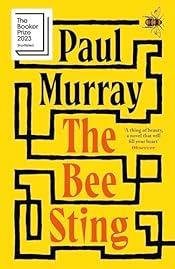
The Bee Sting by Paul Murray (Hamish Hamilton 2023). Two of this book’s characters, a generation apart, have their lives transformed when they leave their home in rural Ireland to go to university in Dublin.
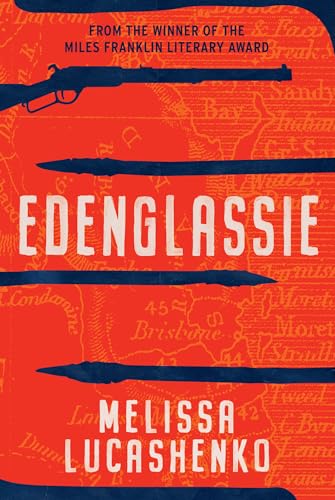
Edenglassie by Melissa Lucashenko (University of Queensland Press 2023). It may be stretching it a bit, but this novel, along with a lot of First Nations writing, amounts to an invitation to unlearn some Australian history, to go back to school and develop a different, richer understanding of our past. In this case, it’s the early history of what is now south-east Queensland. Sue at Whispering Gums has an excellent review.
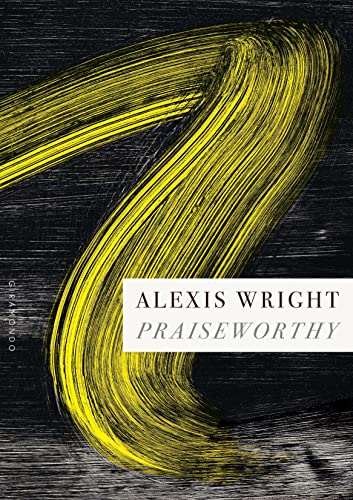
Praiseworthy by Alexis Wright (Giramondo 2023) is another example of First Nations writing that amounts to an invitation to go back and learn different ways of looking at the world. At its heart there’s a mad scheme to cope with climate change by using the donkeys that roam wild in the Northern Territory. There are clouds of butterflies and a boy who lives in a whale’s skeleton. You see the world differently once you’ve read it.

Small Things Like These by Claire Keegan (Faber & Faber 2021) actually centres on a school. It’s hardly more than a short story, in which an Irishman faces a huge moral challenge when he discovers that terrible things are being done in the convent school just outside his village.
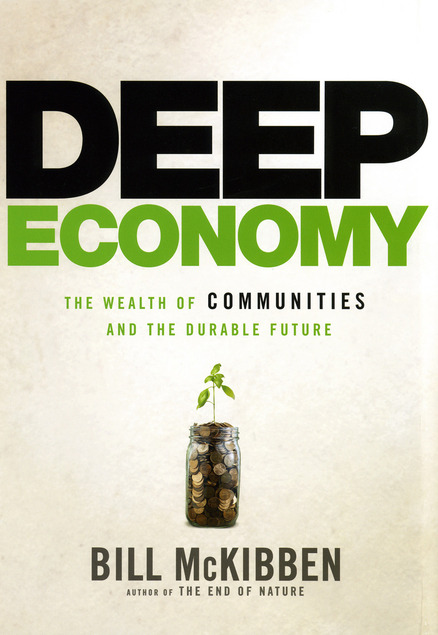
Deep Economy: The wealth of communities and the durable future by Bill McKibben (Henry Holt 2007). For me at least, this book was a tremendous learning experience about economics and the environmental crisis. In my 2007 blog post I described it as ‘a substantial, reasoned, systematic move towards an alternative way of thinking about these things’.
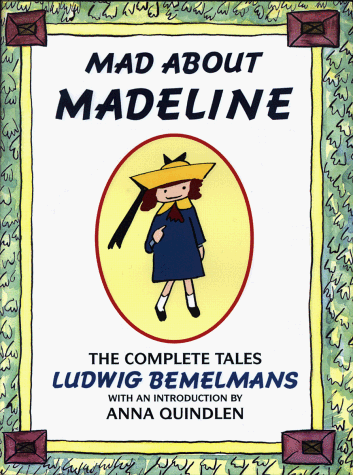
Madeline (Ludwig Betelmans 1939). How good it was, recently, to go back to this book, which I must have first read when I was at school, or perhaps when nieces and nephews were. ‘In an old house in Paris that was covered in vines …’

Blue Mars (Kim Stanley Robinson, 1996) Kim Stanley Robinson’s Mars trilogy is a terrific yarn. It’s also an education in the scientific, engineering, social and political challenges that would face an attempt to settle on Mars. I first encountered the word katabatic, among many others, in these books.

Cold Enough for Snow by Jessica Au (Giramondo 2022). The section in this slim book where the narrator goes to university and encounters a whole new world struck a chord with me, even more so than the similar experience described in The Bee Sting, because this one happens in Australia.
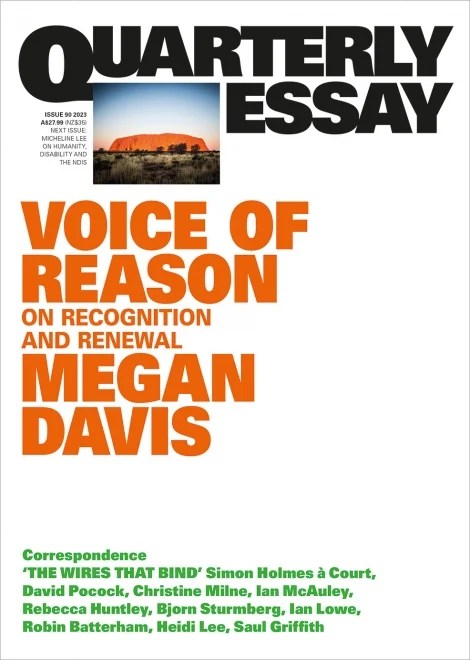
Voice of Reason: On Recognition and Renewal by Megan Davis (Quarterly Essay 90, 2023) is another piece of First Nations education, in this case about the recent referendum on an Indigenous Voice to Parliament. Especially in the face of the No campaign’s ultimately successful slogan, ‘If you don’t know, vote no,’ the schooling provided by this essay was salutary and continues to be.
Megan Davis’s Voice of Reason

Megan Davis, Voice of Reason: On Recognition and Renewal (Quarterly Essay 90, 2023)
– plus correspondence in Quarterly Essay 91

As we approach voting day on the Indigenous Voice to Parliament, bad-faith arguments multiply and I don’t intend to add to the clamour. But I can recommend this Quarterly Essay by Megan Davis, one of the architects of the consultation process that led to the Uluṟu Statement from the Heart.

It’s short – just 66 pages. It’s personal – Ms Davis gives enough of her story that we know who she is. It’s instructive – she tells how the proposal for the Voice evolved through several official processes under several Prime Ministers. It’s respectful – it understands why some First Nations people might vote against the proposal, and argues the case with them. It has heroes and villains – John w Howard and Tony Abbott feature as wreckers; Yunupingu as a leader. It’s not into blame and rage. It has hope. And it’s utterly convincing.

If the referendum fails, as current polls suggest, this essay will bear re-reading for decades to come, though it will have to be read through tears.

You don’t have to buy a copy. At least for now you can read it on the Quarterly Essay website, beginning at this link.

My blog practice is to look a little closely at a single page. Usually it’s page 76 (my age). As there is no page 76 in this essay, here’s a little about page 47 (I was born in 1947).

In 2015, there was apparently bipartisan parliamentary support for constitutional change acknowledging that Australia was first occupied by Aboriginal and Torres Strait Islander peoples, recognising their continuing relationship to the lands and waters, and expressing respect for their ‘cultures, language and heritage’. That is to say, it looked like all systems go for symbolic recognition: nothing about non-discrimination, and no structural change. A group of 40 First Nations leaders met with Prime Minister Tony Abbott and Opposition leader Bill Shorten, and explained that such a change ‘would not be acceptable to Aboriginal and Torres Strait Islander peoples’ (the quote is from the Kirribilli statement). This meeting led to the consultation process that produced the Uluṟu Statement from the Heart and the proposal for an Indigenous Voice to Parliament. (It also proposed a Makaratta / Treaty and a truth telling process, but those aren’t on the table just yet.)

On page 47, Megan Davis hits the pause button in her recount of the history:

The thing I could not shake from my head was watching the prime minister and Opposition leader sit at the head of the table while forty people from forty communities spoke about the structural problems their communities faced. What is it like to be the leader of a nation and encounter a polity that is profoundly unhappy?
At this time, as one of the main Indigenous lawyers working on constitutional reform, I found it difficult to understand why politicians failed to hear what First Nations leaders and community members were saying. I had a textbook idea about how political and law reform work, but none of it applied to our people.
There were two challenges I saw. One is that politicians meet with Aboriginal leaders on a myriad of issues, but often First Nations do not feel heard and politicians and advisers do not listen.
The second is the impact of telling your story over and over again and not being heard – what effect does this have on health and wellbeing?

Which comes close to being the heart of the argument for a constitutionally enshrined Indigenous Voice: it’s not that First Nations people haven’t been speaking, it’s that the necessary people haven’t been listening – because, as Megan Davis argues elsewhere in the essay, they don’t have to.

That’s just a tiny part of the essay. The whole thing is worth reading.


The correspondence in QE 91 includes some big names, in particular historians Mark McKenna and Henry Reynolds, and some brilliant fleshing out of the issues by First Nations and other writers. Megan Davis acknowledges them all as ‘worthy and inclusive commentary on the essay and on this historic moment that we are barrelling towards’. She singles out the joint contribution from Sana Naka and Daniel Bray, a Torres Strait Islander woman and a man of European heritage who write about the way their family is constantly negotiating intercultural complexity. She gives them the last word in her response. Following her lead, I’ll end the blog post with the same quote from them:

Structural injustice exists because that is how our political system is structured. We are getting exactly what the system was designed to deliver. A Voice to Parliament alone cannot specifically redress every injustice, but it will connect people to power in a way that currently does not happen. Democracy demands nothing less.

Responses to Noel Pearson

As I’m sure I’ve said before, one of the best things about Black Inc’s Quarterly Essay is that substantial responses to each issue are published in the next one. I’ll write about Guy Rundle’s essay on Clive Palmer in QE 56 some time soon. For now I just want to draw your attention to the Correspondence section.

There’s a plan for a referendum in 2017 on changing the Australian Constitution to recognise Aboriginal and Torres Strait Islanders. This referendum has been postponed a number of times, at least partly because the subject doesn’t seem to be hitting any kind of nerve with most Australians, and partly because there’s no agreement on what proposal should be put to us.

You might think you know enough now to know how you’ll vote. Well, maybe you’re wrong about that. You really should read Noel Pearson’s Quarterly Essay 55, A Rightful Place and then you should read the responses in No 56. (If you’re pressed for time you could skip John Hirst, who has said elsewhere that Aboriginal matters are out of his comfort zone and demonstrates the truth of that here by creating and then dismissing as unpersuasive a breathtakingly simplistic summary of Pearson’s argument. You might also skip Paul Kelly – definitely not the songwriter – who seems intent on offering advice to Tony Abbott rather than talking to you and me.)

Here are some snippets.

From Megan Davis, professor of law at University of NSW:

Even before the Quarterly Essay went on sale, Pearson’s potentially complementary proposal was dismissed as ‘grandstanding’ and ‘unhelpful’. Having served on the prime minister’s expert panel on constitutional recognition alongside Pearson, I found this an exasperating reminder that although black leaders regularly chant ‘leaders are readers’ to our young mob, Australia’s political leaders are in fact, on the whole, not readers.

From Rachel Perkins, filmmaker and activist:

Noel’s notion of tethering cultural survival to constitutional reform is intriguing. When I grasped the potential of his idea, I realised it may be our best hope – in the short term – of attracting national interest on this issue. It lit a spark for me and gave me hope, for we have only to look back on our history to understand the trajectory we are on. The question is: will our people be able to put their differences aside and unite, as they did in 1967, towards this possibility?

From Celeste Liddle, Arrente woman and trade union organiser:

As a trade unionist, I support a hearty process of negotiation between parties wishing to work together to achieve outcomes. There has never been a negotiated agreement between First Peoples and the government in this country and I feel that it is integral to achieve this before we look at amending the constitution to include Aboriginal and Torres Strait Islander people.

From Henry Reynolds, historian:

Noel Pearson’s powerful advocacy notwithstanding, Australia has regressed on indigenous matters– a generation ago the question of a treaty was seriously discussed, as was the status of traditional law. And this leaves us far behind comparable societies such as New Zealand, Canada, the United States and the Scandinavian countries. Noel argues that we cannot expect any more because, unlike the Maoris, indigenous Australians are only a very small minority. But this carefully avoids comparison with the much higher status of the Native Americans in North America and the Sami in Scandinavia.

From Robert Manne:

During the 1990s, under Paul Keating and Patrick Dodson, there existed an atmosphere of intense hopefulness about the role reconciliation might play in the creation of a better nation. In May 2000, at its climax, hundreds of thousands of Australians walked across the bridges of Australia in support of a reconciliation ceremony at the centenary of federation, an idea which, unforgivably, the Howard government quickly killed. The mood of hope was still not altogether extinguished, as the passions stirred by Kevin Rudd’s February 2008 apology to the stolen generations demonstrated. However, in recent years that atmosphere has faded. Somehow, if the referendum is to succeed it will now have to be rediscovered. Pearson it probably right to believe that unless the movement for indigenous constitutional recognition is led by a rock-solid conservative it is unlikely to succeed. The problem is that a rock-solid conservative is the least likely kind of political leader capable of reigniting the social-justice passions of Australians.

From Fred Chaney:

It is helpful to read this essay alongside a viewing of Noel’s address at Garma this year, published on YouTube. There you get the force of presentation as well as intellect. Following reference to the destruction of Tasmanian Aboriginal people, he posed the question ‘we are still grappling with today’: ‘will European settlement of Australia enable a different people with a different heritage to have space in it?’ He poses it as a question still unresolved. He says that in the 1820s in Tasmania we answered the question by our actions. Then in stark terms he suggests, ‘If we don’t come to a just answer to that question today, that same answer will come about for benign reasons.’ If he is correct in this, and I think he is, it is a matter of great seriousness for all of us.

Really, I recommend you to read the whole thing.