Tag Archives: non-fiction

The Book Group go to the theatre and read the news

This was an unusual meeting of the Book Group, an excursion to see a play in which one of us was performing – The Young Tycoons by C J Johnson, about the heirs apparent to two media empires. In deference to our nominal reason for meeting, we agreed to have a look at a book that’s at least tangentially related to the play. (We also read a fascinating piece of journalistic gossip for which, in lieu of further discussion, here is a link).

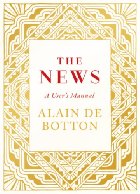
Alain de Botton, The News: A User’s Manual  (Hamish Hamilton 2014)

024114647X

Before the meeting: This is a high-grade self-help book. If there’s an overall thesis, it’s this:

News stories tend to frame issues in such a way as to reduce our will or even capacity to imagine them in profoundly other ways. Through its intimidating power, news numbs. Without anyone particularly rooting for this outcome, more tentative but potentially important private thoughts get crushed.

‘The news’ is discussed in six main categories: politics, world news, economics, celebrity, disaster and consumption. In each category, de Botton discusses the way the news cycle  and the currently widespread addiction to it mitigate against thinking. There are plenty of interesting observations and insights, many of them obvious on reflection, though when dealing with addictions there’s no harm in stating the bleeding obvious. I had an uneasy feeling that ‘I’ the reader was being invited to feel superior to the ‘we’ that de Botton describes as manipulated by the news media. Maybe that, and a tendency to glibness, is something that comes with the territory.

After the meeting: It turned out, unsurprisingly, that I was the only one in the group, apart from the actor, who had read the book. We weren’t going to have much of a discussion in the foyer of the Eternity Theatre anyhow. But the conjunction of the play and the book prompted at least one interesting reflection. In the chapter on disaster, de Botton compares the way heinous behaviour is typically described in the press with its treatment in ancient Greek tragedy:

The plot lines of [ancient tragedies] were unmitigatingly macabre, easily matching anything our own news could provide … But … in order for a horror (a meaningless narration of revolting events) to turn into what Aristotle called a tragedy (an educative tale fashioned from abominations), the philosopher thought it was vital that the plot should be well arranged and the motives and the personalities of the characters properly outlined to us. Extreme dramatic skill would be required in order for the audience to spontaneously reach a point at which it recognised that the apparently unhinged protagonist of the story, who had acted impetuously, arrogantly and blindly, who had perhaps killed others and destroyed his own reputation and life, the person in whom one might at first (had one come across the story in the news) have dismissed as a maniac, was, in the final analysis, rather like us in certain key ways.

C J Johnson is no Sophocles, at least not yet, and The Young Tycoons is a chronicle play rather than a tragedy, but it illustrates the point. The younger generation of the Murdoch and Packer families appear in the news as glossy celebrities, fair game when brawling with old comrades in a Bondi Street or being patted on the hand by a distraught patriarch before a Parliamentary Enquiry. In this play, stylishly delivered by a cast that has no weak links, we catch at least a whiff of just how appallingly constricted their lives are, and how callous they have been shoe-horned into becoming. I was reminded of Jamie Johnson’s extraordinary documentary, Born Rich, made a couple of years before this play was first staged in 2005.

Alan Connor’s Two Girls, One on Each Knee

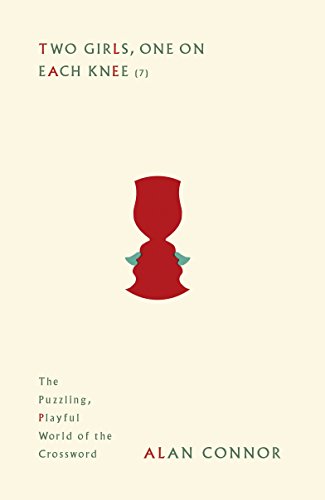
Alan Connor, Two Girls, One on Each Knee (Particular Books 2013)

Let me start with a factoid, a movie anecdote and a memory, all crossword-related:

  • Ronald Knox (1888–1957), Catholic convert scholar and single-handed translator of the Latin Vulgate Bible into English, is said to have completed The Times crossword each morning, first the across clues, then the down.
  • In the 1961 movie Very Important Person (also known as A Coming-out Party) the James Robertson Justice character arrives in a German prisoner-of-war camp and is left alone in a hut while the other prisoners are all on work details. He sees a copy of The Times on the rough wooden table, and turns to the crossword. His hut-mates arrive to discover that in a matter of minutes he has deprived them of their week’s only pleasure.
  • I once did a cryptic crossword in which the answer to each of three clues – referring respectively to a little pig, a village and a Shakespearean drama – was HAMLET.

None of those appears in Two Girls, One on Each Knee. but they could have: Alan Connor gives us a wealth of similar crosswordiana: gossip about famous solvers; scenes from movies, television and novels; great moments in setting. He also tells the history of crosswords, introduces us to some of the outstanding setters, and goes down the kinds of byways you would expect from someone who writes a regular column on crosswords for the Guardian. The book would be a useful guide to someone wanting to find out how cryptic clues work, or a student researching the history of crosswords, but its main mission seems to me to be to communicate the pleasures of the pastime. It fills this mission brilliantly. As something of an addict myself, I found the book immensely enjoyable.

Due homage is paid to The Times crossword, which appears in The Australian. For years I’ve been a fan, and I confess that in the past I have given money to the Murdoch empire in order to enjoy the crossword. These days I frequent a cafe where the staff tolerate me defacing the complimentary copy. I used to wish someone would edit it for Australian solvers, replacing the more parochial London references with more generally accessible ones, but really, it’s not broke so better not fix it.

There’s a chapter on The Listener, the most difficult crossword in the world, which a friend introduced me to in my 20s. The Listener went out of print decades ago but its crossword lives on in The Times each weekend. Though I rarely have access to it, it’s always a challenging pleasure. I’ve even completed it occasionally. The Spectator crossword comes closest to it in my experience, and has the advantage of being available in Australia and closer to humanly possible.

Connor compares UK and US crosswords. I once subscribed to the New York Times crossword online for a couple of months. The difference from English and Australian puzzles was striking. Apart from the shocking way brand names and capitalist enterprises appear with the same nonchalance as cities and famous people, the US puzzles have a very different kind of playfulness. I enjoyed it, but not enough to keep up my subscription.

Just one of the many clues Connor includes is by David Astle (DA), doyen of the Sydney Morning Herald‘s puzzles, and I’m surprised he rated even one, as in my experience when DA and his minions are not being annoyingly imprecise or obvious, they mosyly offer challenging exercises, but little by way of the pleasure that this book celebrates. And what can you say about a quick crossword in which eastern is clued as ‘from the east’ and pensive as ‘nervous’, or a cryptic with surface meaning as awkward and cryptic play as obvious  as ‘Spoil in a mooring site (6 letters)’? David Astle’s book Puzzled may have been as much fun as Two Girls, One on Each Knee. I hope so, but I doubt it.

One startling fact emerges from the book: there is no evidence for the frequent claims that doing crosswords, especially cryptic crosswords, is a way of staving off cognitive decline. The same can be said for the book itself: I doubt if there is any evidence that reading it will improve the reader in any way. But like the puzzles it discusses, it’s fun anyway.

Gitta Sereny’s German Trauma

Gitta Sereny, The German Trauma (Allen Lane 2000)

1gtGitta Sereny (1921–2012) was one of the great non-fiction writers of the 20th century. Holocaust denier David Irving described her as a shrivelled Nazi hunter, but though she may well have worn the insult as a badge of honour it wasn’t accurate. She said of herself: ‘I am interested above all in how individual human beings succumb to, or resist, evil.’ In Albert Speer: His Battle with Truth (1995), and Cries Unheard: The Story of Mary Bell (1998) she digs with empathy and rigour into the minds of one of Hitler’s closest henchmen and a child murderer respectively, and sheds light on very dark places.

This book, retitled optimistically for the US market as The Healing Wound, was her last. It’s a collection of essays and newspaper pieces spanning 30 years, revised and with new interstitial pieces so that something of a coherent narrative emerges, beginning with the Austrian-born Sereny’s childhood and adolescent experience of Nazism (she accidentally attended a Nuremberg rally as an 11 year old schoolgirl and was enraptured; at 15 she shouted at an SS officer who was humiliating some Jews in Vienna soon after the Anschluss), and tracing her engagement with the meaning and legacies of that time up to the turn of the century.

It’s not pretty. She takes us with her just after World War Two on the extraordinarily distressing task of tracking down East European children stolen from their parents years before, and abetting their being torn from home for a second time – she was in the employ of the UNRRA, the United Nations Relief and Rehabilitation Administration, where she might have rubbed shoulders with Edith Campbell Berry if the latter hadn’t been a figment of Frank Moorhouse’s imagination. We encounter Franz Stangl, who was commandant of the Treblinka extermination camp (I haven’t read Sereny’s 1974 book, Into That Darkness, which expanded the Daily Telegraph article included here, though I may one day have the stomach for it) and Albert Speer (in an essay that doesn’t add a lot to her magnificent book, but is well worth reading). We are introduced to children of Nazis who find strength in each other to face the horrors perpetrated by their parents. We follow Sereny’s dealings with a number of odd individuals who are dedicated collectors of Nazi documents and memorabilia. We gain some understanding of the US’s dubious dealings over decades with the question of justice for Nazi criminals. We meet an elderly woman who was one of Hitler’s secretaries, to whom he was always kind and thoughtful.

And through it all Gitta Sereny’s gaze doesn’t flinch. The book is saved from being a catalogue of horrors by the pervasive sense that she is driven by a need to understand. Perhaps the most impressive moment in the book is her response to David Irving’s book claiming that Hitler knew nothing of the ‘final solution’: rather than dismissing it out of hand as incompatible with her own understanding, she was intrigued, and began her fact-checking exercise, which was to turn into a devastatibg debunking, almost hoping Irving was right.

I learned a lot from this book. The Jewish Holocaust was a towering piece of evil, a calculated attempt to kill a whole people that succeeded in killing a full third of them – something way beyond genocide. But the Nazi murderousness wasn’t restricted to Jews. They killed something like 15 million people – homosexual men and women, political opponents, Romany people, eastern Europeans, people with disabilities – not as war crimes but as murders committed under the shadow of war, some with industrial efficiency in the extermination camps, some a bullet in the back of one head at a time, some with hideous callousness and mind-boggling disrespect for the dead. The US’s ‘denazification’ barely scratched the surface, leaving the German courts to prosecute Nazi crimes for at least 30 more years. While most Germans tried to forget and move on with their lives, Sereny says, a small elite made up of writers, artists and lawyers pursued the incredibly difficult task of coming to terms with what was generally known as ‘the recent past’ until well into the 1980s. Next time I hear an Australian shock jock or rabid columnist condemning ‘inner city elites’ or a combatant in our renewing history wars use. Dismissive phrase such as ‘black armband history’, I’ll remember Sereny and gird my loins for battle.

David Denholm’s Colonial Australians and 14 rhyming lines

David Denholm, The Colonial Australians (Penguin Books 1979)

ImageDavid Denholm (1924–1997) wrote fiction as David Forrest. One of the ‘living Australian authors’ profiled in John Hetherington’s 1962 collection, Forty-Two Faces, he is remembered mostly for two novels and a number of short stories. Under his own name, he had a second career as a historian, which, though productive in other ways, produced just this one book and a pamphlet on land use in New South Wales.

It’s a strange book, not – as the title might suggest – a survey of the population of the Australian colonies, but a series of enquiries into what Denholm describes as ‘odd trifles’ to see what general light they might shed on the those people. Many of the trifling questions are conveniently summarised in the Introduction:

How long would it have taken to reload a musket? What on earth possessed surveyors to divide up much of Australia with little regard for the shape of the land and its resources? Why does this brick wall not look like that brick wall? In a land of cheap horses, why did not everybody ride a horse? Why do some Presbyterian churches have steeples? Why is the Monaro in ‘Banjo’ Paterson’s ballads not the real Monaro? Why did some people stack their plates while others had them taken away one at a time?

He does indeed go on in great detail about how to load a musket, about three different bricklaying patterns, and about surveying practices, in each case using them as evidence for persuasive argument against received versions of our history. He also paints an idiosyncratic version of the kind of religion (ie, of Christianity) that dominated the first century and a half of settlement, what he calls determinism as opposed to free-will based orthodoxy – it’s idiosyncratic but rings true and has quite a bit of explanatory power when applied to the Pell and Jensen phenomena. He turns a bit of a blowtorch on romantic versions of ‘the bush’ and writes interestingly about what happened to the idea of a gentry – ‘an historically based manner in which power was projected upon society’ by a class of people possessed of wealth, education and leisure (hint: it was destroyed but lives on).

The chapter ‘Men Bearing Arms’ – about the ‘mutual impotence’ of Aboriginal Australians and their invaders, whose slow loading muskets were  far from making them invulnerable – is a revelation, especially in its discussion of the extent of ‘fraternisation and appeasement’ between the two populations, so that all too often brutal murders and massacres had an element of personal betrayal.

But it’s November, so I have to lapse into rhyme:

Sonnet 3: On reading David Denholm’s The Colonial Australians
How can we know what really happened
a week ago, two hundred years?
Vile things are misnamed on the map, and
victors’ tales besiege our ears.
Historians must play detective,
sniff ash trays, challenge the selective
versions, shift perspectives, ask
what hid behind the public mask.
We want to honour our ancestors:
with courage, ingenuity and toil
they named the land and turned the soil.
But there’s another truth that festers:
a brutal war of conquest here,
sword and musket, club and spear.

Edmund White Flâneur and the Book Group

Edmund White, The Flâneur: A stroll through the paradoxes of Paris (Bloomsbury 2001)

1582341354 Before the meeting: I was very happy when this book was suggested as our next title. I’d come across the idea of the flâneur, the aimless wanderer through an urban environment, as an artist archetype (I think it was at the launch of Michael Sharkey’s The Sweeping Plain in 2007), and had somehow got the idea that Baudelaire and Edmund White were the go-to writers for anyone wanting to understand the archetype.

I was misled, at least about Edmund White. That is, I thought he was going to turn out to be a flâneur like the protagonist of Teju Cole’s Open City (which I suggested as a supplementary title), and that’s not how this book works at all.

It’s a short book, part of Bloomsbury’s The Writer and the City series, in which, according to the back cover blurb here, ‘some of the finest writers of our time reveal the secrets of the city they know best’. Peter Carey’s self-indulgent and forgettable 30 Days in Sydney was part of the series, and New South’s generally excellent Cities series may have been inspired by it.

There are six chapters: a general introduction to the idea of the flâneur and the general complexity of Paris is followed by essays about French (and mostly Parisian) attitudes on race, Jews and homosexuality, with an inserted chapter on eccentric and little known museums, and a final chapter on the weirdness that is the French monarchist and royalist movements. In other words, the bulk of the book is taken up with considerations of French culture through the lens of US-style identity politics, in particular through the lens of US gay culture.  There’s very little wandering the streets, though as the text wanders through its chosen themes it sometimes creates an illusion of appropriate lack of discipline.

I enjoyed White’s mini-essays on Colette, Sidney Bechet and Josephine Baker. He gives a fascinating account of the Club des Hachichins (frequented by Baudelaire, Balzac and Théophile Gautier, if you can frequent something that only happened half a dozen times). His discussion of why AIDS had so much higher an incidence in Paris than in London raises interesting questions about identity politics (big in the US, sneered at in Paris – guess which attitude turns out to be superior!). The stories of a number of individual 19th century Jews are strikingly similar to the story of Charles Ephrussi in The Hare with Amber Eyes – in a good way.

There is all that, and much more that’s enjoyable and illuminating, but more often than not I was irritated. I grew tired of the name dropping (he once dined with Foucault, but that’s only the high point), the preening (his Parisian dinner-party comrades hadn’t noticed until he mentioned it that Paris is no longer a predominantly white city), the false modesty (he once gave a talk on Genet to a Palestinian audience, who surprised him by loving it even though he is white and Western), the persistent essentialising of ‘the French’ and ‘Parisians’, the titillatory titbits (wife-swapping clubs, cruising by the Seine) and the unremitting gay perspective (the most emphatic detail in his description of a mosque is that the Gay men who cruise its hammam on Sundays don’t touch each other out of respect for the religious environment).

After the meeting: It’s Rosh Hashanah, so attendance at the Book Group was down last night. (Memo to selves: Must keep a sharper eye out for High Holidays in future.) The five of us ate a hearty French meal, gossiped, engaged with the problem of an iPhone whose screen had gone blank, and discussed the book.

One man had really loved it. He’d read it when in the south of France, just before going to Paris, and so was much more attuned to its sense of place than I certainly was. He enjoyed the way the text moved between tiny details and broad perspectives. He found himself stopping to re-read paragraphs just for the pleasure of them. Interestingly enough, he loved the first sentence for its elegance and its cheeky wit, while I was irritated by its Americo-Eurocentrism and its snobbish smart-aleckery:

Paris is a big city, in the sense that London and New York are big cities and that Rome is a village, Los Angeles a collection of villages and Zürich a backwater.

One man had surrendered his copy when the library insisted he return it (probably because I was asking for it), but he hadn’t been unhappy about that as he’d had three attempts at the first chapter and been unengaged – because as far as he could tell, all White was doing was quoting a lot of other people about Paris, which is less true of later chapters. One had read it overnight (I’d dropped off that same library copy to him on Tuesday afternoon) and had a similar mix of enjoyment and irritation to mine, though I think with more pleasure and less irritation. Perhaps part of the problem is that we had all read the entry on ‘flâneur‘ in Wikipedia, and then approached the book expecting it to be an example of flâneurism, which it really isn’t.

Geoff Dyer’s Tarkovsky’s Zona

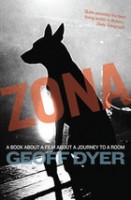
Geoff Dyer, Zona: A book about a film about a journey to a room (Canongate, Text 2012)

1zThis book about Andrei Tarkovsky’s Stalker came with plausible recommendation from the Book Club. Ignoring the back cover’s reassuring assertion that the book ‘fascinates from start to finish – even if you haven’t seen the film’, I decided to fill a yawning gap in my cinema-literacy and watch the movie before reading it. And I was underwhelmed, not to say bored. It may be one of the greatest films ever made, but for this viewer it’s mostly laboured, inconsistent, portentous and yet inconsequential, and dreary. ‘I do know,’ Dyer writes on page 10, ‘that if I had not seen Stalker in my early twenties my responsiveness to the world would have been radically diminished.’ So I guess it’s too late for me in my mid 60s. Admittedly I watched it on a small screen, but I suspect that if I’d gone to see it in the cinema when it was first released I would have quickly and irreversibly nodded off, and only partly because in 1979 I was a sleep deprived parent of a one-year-old.

Still, I’m always fascinated when someone I respect differs wildly from me about a book or movie, so I settled down to read, expecting to have fun. (I’d heard Geoff Dyer read hilariously from his Geoff in Venice, Death in Varanesi at the 2012 Sydney Writers’ Festival – at a time, it seems, when he was going on the Stalker marathon that led to this book.)

Zona isn’t a learned dissertation. It’s pretty much a blow by blow account of the movie, interspersed with making-of anecdotes, snippets of autobiography, descriptions of how other films have been influenced by Stalker or referred to it, comparison to other films (Dyer found Antonioni’s L’avventura intolerably boring, and perhaps this kind of book about that film just wouldn’t work at all), and reflections both serious and self-mocking on his own lifework as a writer. He probes at the reason the film has fascinated him so much: hallucinogenic substances may have something to do with it, though not, in his opinion, because they impair one’s judgement. In true essayist style, he chases off on detours, airs his snobbery (noting that Stalker has been compared to The Wizard of Oz, he tells us he hasn’t seen the latter film and ‘obviously’ has no intention of seeing it now), throws harsh adjectives at films he doesn’t like (Godard’s Breathless is unwatchable, Jim Jarmusch’s The Limits of Control is vacuous, Lars Von Trier’s Antichrist is absolutely repellent and silly), and quotes more or less casually from a vast range of cultural touchstones: Kundera and Wordsworth, Rilke and Billy Collins, Coetzee and Nadezhda Mandelstam, Cate Blanchett and Igmar Bergman, Bob Dylan and Bjork, Christian Marclay’s The Clock and James Turrell’s light sculptures. There’s a very funny account of his idiosyncratic response to Steven Soderbergh’s 2002 remake of Solaris, and an amusing account of some missed sexual opportunities.

I can’t say the book ameliorated my indifference to Tarkovsky in general or Stalker in particular. I don’t know that I’d enjoy going to the movies with Geoff Dyer, and even less watching television with him. But I have enjoyed spending a little more than 200 pages in his company as he engages with a movie that he has watched many times and been fascinated by for more than 30 years.

The Book Group on Karen Armstrong on the Bible

Karen Armstrong, On the Bible (Atlantic Books UK, Allen & Unwin 2007)

1ob Part of the function of a book group, or at least of mine, is to take you (me) out of your (my) comfort zone. So when On the Bible was proposed as the title for our March meeting, I resisted my urge to reach for a proverbial bargepole.

The urge didn’t come from a Dawkinsian disdain for religion. On the contrary, atheist though I am now, I was a member of the Marist Brothers in my teens and early 20s, and I treasure the memory of a series of lectures by nicotine-stained Brother Flavian, who was supposed to be teaching us Catechetics (whatever that is) but instead shared his passion for biblical studies an hour a week for a whole year. I wasn’t keen on revisiting the subject with what sounded like a dry introductory text.

But I’d seen Karen Armstrong’s TED Talk, Let’s Revive the Golden Rule, and the chap who proposed the book was very keen., so what the hell, archie, I thought, and happily supported the proposal..

It turns out that the stuff I remember from Brother Flavian’s lectures – the story of how the Bible was written and compiled, including the varied cultural and historical contexts – takes up just a fraction of the book. Karen Armstrong doesn’t linger on the poetry so much as sketch the politics, and though I miss the poetry, the politics is often fascinating, especially when there is an implied commentary on 21st century readings. For example, she describes P, the priestly strand of the Torah/Pentateuch, as proclaiming that ‘Israel was not a people because it dwelt in a particular country, but because it lived in the presence of God’; or, something that Brother Flavian could never have said but is glaringly obvious once articulated, ‘A thread of hatred runs through the New Testament.’ (Pharisee to Richard the Third: ‘You call that a hatchet job? This is a hatchet job.’)

The US title, The Bible: A Biography, is not only catchier, it also gives a better sense of what the book is: because once it has told the story of how the books of the Bible were written and assembled, it goes on with the process of canonisation (which happened over centuries, and was still being debated in Luther’s time), and then Armstrong’s real subject: how the way they were read changed over the centuries – by Jews, Catholics, Orthodox Christians and Protestants. The Midrash and Talmud, the Platonists, the early Christian Fathers up to St Augustine, the mediaeval exegetes and the Kabbalists all brought different understandings of what the Bible was, and how it should be read, and what one was to make of its many inconsistencies. Then came the Protestant Reformation and capitalism, and Lurianic Kabbalah and tikkun olam, followed by the Enlightenment, which brought Spinoza ‘who studied the historical background and literary genres of the Bible with unprecedented objectivity’ and was the forerunner of the German Higher Criticism. We arrive at last at the mystical reading of the Hasidim, and the extreme literalism of the fundamentalism that came into being in late 19th century USA:

This was an entirely new departure. In the past, some interpreters had favoured the study of the literal sense of the Bible but they had never believed that every single word of scripture was factually true. Many had admitted that, if we confined our attention to the letter, the Bible was an impossible text. The belief in biblical inerrancy … would, however, become crucial to Christian fundamentalism and would involve considerable denial. [The leaders of this approach] were responding to the challenge of modernity but in their desperation were distorting the scriptural tradition they were trying to defend.

And then there’s post-Holocaust Judaic literalism which adopted the until-then secular ideology of Zionism, and came up with a doctrine that was in fact completely novel even while claiming to be based in antiquity:

Unless Jews occupied the whole land of Israel, exactly as this was defined in the Bible, there could be no Redemption.

The blurb tells us Karen Armstrong was a religious sister briefly some decades ago. You can’t tell from this book whether she is still a Catholic or even a believer, but there’s no hostility to religion. What does come through loud and strong is her antagonism to movements that hijack the Bible for political purposes, while disregarding the extraordinary richness of its history.

There are dry stretches, where the treatment of various Kabbalists, say, or different strands of mediaeval Christian hermeneutics amount to little more than annotated lists, potentially useful if one were to go on to further study, but skippable for the drive-by reader. Perhaps, in fact, those dry patches make up most of the book, so that in effect it’s more successful as a reference book than as a narrative. I found the bits that transcended that dryness fascinating, among other things for the way they illustrate that reading, reading anything at all, is a tremendously complex act that can transform the text being read.

I was reminded of Constantine’s Sword, James Carroll’s powerful history of anti-Jewish oppression in Christianity, especially Catholicism, which could almost read as an elaboration of one thread of this book..

The meeting:
In the days leading up to the meeting there was a flurry of emails saying their writers had up after a hundred pages or less, and I wouldn’t have been surprised if the conversation last night had sputtered and died before moving on to the media’s nastiness about Julia Gillard. In fact, we stayed roughly on topic most of the evening – helped by a couple of the chaps having been to Seders the night before. Googling was banned for the evening, so there were interestingly speculative conversations about, among other things, the meaning of the orange on the Seder plate, and the colour and species of the animal that Jesus rode into Jerusalem.

Not many of us had read the whole thing. One had bought his copy of the US edition online from Able Books for 10 cents, no postage. The blurb on that edition referred to the book’s ‘cracking pace’, which we could all agree on, though it may have been precisely the ‘pace’ that made it hard going at times: the historical Jesus is dealt with in a single sentence, and I’m not sure if the historical books of the Hebrew Bible get even that. While a cracking pace is a good thing in a thriller, in an overview of a major element of western culture it tends to be either compacted or superficial. Still, I think there was a general respect for the book’s achievement in indicating the complexity of its subject without being impenetrable. Several of us remembered little, apparently casual observations that opened doors in our minds.

But there seemed to be a general thirst for some fiction as our next book

Crossing Cultures with Owen and Wagner

Stephen Gilchrist (editor), Crossing Cultures: The Owen and Wagner Collection of Contemporary Aboriginal Australian Art at the Hood Museum of Art (Hood Museum of Art, Dartmouth College 2012)
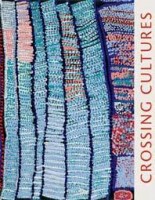
Until now I’ve assumed that exhibition catalogues were basically illustrated lists, of little or no interest to anyone who hasn’t been to the event they relate to. The Crossing Cultures catalogue has made me think again. My rethink was given a serendipitous boost by Mary Beard‘s contribution to TLS Books of the Year lists. She wrote:

Let me put in a plea (not for the first time) that we don’t forget the great contribution of exhibition catalogues, which often goes far beyond a simple record of the show concerned.

Like the esoteric-sounding catalogue she had in mind, Crossing Cultures ‘includes some wonderful essays and entries’. The bulk of the book is devoted to ten substantial essays, while the illustrated list – the ‘exhibition checklist’ – takes up less than a quarter of its pages. Since very few of my readers are likely to visit the exhibition (it’s in New Hampshire) or see the catalogue, I’ll give you a quick guided tour. The Art Student’s words when she first flipped through the book echo my own response and serve very well as a TLDR: At last, something that might help me understand some basics about Aboriginal art.

Will Owen kicks things off with an account of how he and Harvey Wagner created the collection of Aboriginal Art which they are now donating to the Hood Museum at Dartmouth College, and which constitutes the exhibition. People often bemoan the influence of collectors as a key part of the commodification of art and the art scene under capitalism. Will’s essay gives a different perspective. It describes how the urge to collect grew from being captivated by the art, and led him and Harvey to build relationships with dealers and artists, and to a deep engagement with ‘the complex social and cultural elements that informed [the art’s] creation’. Will’s blog demonstrates the intelligence, erudition, and passion he has brought to that engagement. (Will and I met online when I blogged about an exhibition of work from Aurukun, at which he and Harvey bought a sculpture over the internet. I think of him as a friend – and our copy of this catalogue is a generous gift.)

Then comes a trio of general articles:

Howard Morphy’s ‘Aboriginal Australian Art in America’ explores the role that US exhibitions and collectors have played in the process by which the non-Aboriginal art world has come to recognise ‘the value and aesthetic power’ of Aboriginal art, beginning with an image from the New York Times in 1941 that juxtaposed a bark painting from western Arnhem Land with paintings by Dali and Miro: decades before anyone would have thought of doing it in Australia, a US exhibition was suggesting an equivalence between Aboriginal and non-Aboriginal art. An observation that’s relevant to this exhibition:

The building of collections of Aboriginal art with a historical depth has … happened outside art museums, through the activities of private collectors and ethnographic museums.

In ‘In the Eye of the Storm: Issues Facing Contemporary Indigenous Art in Australia’s Remote Communities’ Brian Kennedy, former director of the NGA, summarises the social and political environment of Aboriginal art in recent decades – he doesn’t name John Howard or Mal Brough, but their dark presences are very much there. The general principle:

Each and every non-Indigenous person who hangs a work of Aboriginal or Torres Strait Islander art on the wall of his or her home or office thereby publicises Indigenous culture and sooner or later should contemplate the circumstances in which these works are made.

‘Painting the Law: Understanding the Law Stories in Aboriginal Art’ is an overview by N Bruce Duthu of the notion of the Dreaming and the importance of country in Aboriginal cultures. Duthu, a Professor of Native American Studies, quotes tellingly from a number of Aboriginal people, including this exchange between Aboriginal legal scholar Christine Black and David Mowaljarlai, senior law man from the Ngarinyin people of the Kimberley:

‘What about the areas where there are no Aboriginal people surviving, or at least living traditionally there any longer?’

‘You’re wrong there thinking like that. The land remained, you can’t get away from that. It acts for the people and their imprint is still there. If the land sinks into the ocean, the symbols will still be there. Only if the whole continent is blown to pieces and nothing is left of it, then it will be finished.’

Each of the remaining six essays focuses more narrowly

In ‘Daguerreotypes, Stereotypes, and Prototypes: Reframing Indigeneity’ Stephen Gilchrist, curator of the exhibition and editor of the catalogue, discusses photography. Six contemporary photographers are represented in the exhibition: Christian Thompson, Darren Siwes, Destiny Deacon, Bindi Cole, Ricky Maynard and Michael Riley. The essay takes us from a time when photography was a means for colonisers and anthropologists to define Indigeneity to the present when Aboriginal photographers

manage to push through the burdensome expectations of making racially explicit work and instead speak up against the persistent climate of ideological repression.

As the title suggests, Françoise Dussart’s ‘Mediating Art: Painters of Acrylics at Yuendumu (1983–2011)’ focuses on the work of Warlpiri artists in the Central Desert, particularly Yuendemu. After reprising the history of the beginnings of acrylic dot paintings at nearby Papunya, she draws of decades of conversations with Warlpiri artists, she explores the relationship between the acrylic art and the Dreaming stories it reflects, and pushes at the edge of how non-Indigenous people can read and understand the art:

Rooted in colonial and evolutionist views of exchange 
with indigenous peoples, practices of collecting have relied 
and continue to rely too often on sampling, on finding the
 ‘iconic’, on serial individualizing (concentrating on the career of a single artist), and on ‘preserving’. It may be time 
to instead embrace the truly panoramic representation of 
paintings from a specific time and place. Understanding 
the practices of indexicality articulated by Aboriginal painters will likewise force collectors and museums to think beyond sampling practices and the kinds of power relations
 that such practices generally structure.

Jennifer Deger’s ‘Art + Emergence’ focuses on northeast Arnhem Land. Her concern is to take her readers past looking at Yolngu barks and canvases as ‘elaborate messages in need of decoding’, to find ways to ‘sensually encounter’ the works – which means more than just finding them pretty. At the same time she writes very interestingly about the issue of who has the right to tell the stories that are contained in some paintings.

Sally Butler, Senior Lecturer in Art History at the University of Queensland, ranges from Cape York to Brisbane in ‘The “Presence” of Queensland Indigenous Art’. Queensland is huge, and the range surveyed in this essay is huge – from traditional Aurukun sculpture to the text-based protest art of Gordon Bennett and the extraordinary variety of Vernon Ah Kee’s work. Sally Butler, like most other contributors, quote artists of more traditional work in ways that indicate political / diplomatic intentions. An old man from Aurukun declared about Kugu Law Poles, ‘ I know your laws: now you can know mine.’

Among other things, Henry F Skerritt’s ‘Strange Relatives: Negotiating the Borderlines in East Kimberley Painting’ tells the story of Rover Thomas, and places his art in the context of Keith Windschuttle’s reactionary revisionism, which prompts me to reflect that if you were looking for a beautifully illustrated introduction to Aboriginal culture, history and politics, including the impact of dispossession, massacre and colonisation generally, as well as the integrity, courage and sheer brilliance of the ongoing struggles of Aboriginal people, you could do a lot worse than this book.

In the final essay, ‘Rethinking Western Desert Abstraction’, anthropologist and curator John Carty argues that in the process of claiming Aboriginal art as fine art rather than ethnographic artefact, ‘we have somehow neglected the basic disciplines of formal and art historical analysis’. Western Desert artists have moved on in their use of traditional forms, becoming increasingly abstracted, but art criticism has not kept pace – he traces the process in the works of ‘the incomparable Emily Kam Kngwarray’:

Her artistic trajectory resonated with the broader history of Western abstraction in ‘impossible’ ways, and yet it also expressed what some have come to interpret a a kind of Indigenous modernism. But the effusive proclamations of Kngwarray’s ‘genius’ have tended to obscure the fact that her dissolution of the structural and iconographic aspects of the aesthetic system was part of a broader creative process in much desert art of recent decades. Kngwarray has become the iconic embodiment of that process, yet singular as she was, her work encompassed developments in the abstractions of desert painting that both preceded and followed her own individual career.

He then gets down to cases, and has a fascinating discussion of concentricity, of dots and their relationship to meaning.

So, it’s not Contemporary Aboriginal Art for Dummies by any means. Each of the contributors speaks from deep knowledge, and many Aboriginal voices are quoted. But, speaking as a dummy, I find it hard to imagine how a single book could do a better job of informing me on the subject. Plus, of course, the images are plentiful, and brilliant.

Raimond Gaita after Romulus

Raimond Gaita, After Romulus (Text 2011)

As the title suggests, this is a follow-up to Raimond Gaita’s Romulus My Father and as the cover suggests this time there’s a focus on his mother.

There’s an essay on the process of turning the book into a film, surely be among the most emotionally charged essays of its kind, made all the more poignant by the author’s repeated, convincing assertions that he works hard at avoiding sentimentality. I can’t imagine a better antidote to the world weariness of Radio National’s Movie Show or the consumerism of Margaret and David. The emotion isn’t anything as trivial as authorial pique. This is about passion: according to Gaita, Richard Roxburgh didn’t want to become a film director, he just wanted to direct this film, and the description of the moment when Gaita finally meets Kodi Smit-McPhee, the actor who plays young Rai in the film, comes like a thunderclap.

But that’s just one of five essays. There are two pieces more or less in the manner of the earlier book. One (‘A Summer-Coloured Humanism’)deals with Hora, his father’s close friend and almost a second father to young Rai, and the other (‘An Unassuageable Longing’, the longest essay and the book’s reason for existing) with Christine, Gaita’s mother, who was seen pretty much from his father’s point of view the first time around. Raimond Gaita probably couldn’t write a shopping list without at least alluding to philosophical profundities, and his writing about these two towering figures from his childhood is richly philosophical. But he saves his main philosophical powder for the other two essays, ‘Character and Its Limits’ and ‘On Truth and Truthfulness in Narrative’, in which he expands on and corrects some of the philosophy raised in Romulus My Father or in responses to it. He reflects on his father’s moral behaviour and sees in it the source of key elements of his own philosophical thought.

‘Philosophy always needs to be read slowly and more than once,’ Gaita writes.’ I would happily read these pieces several times, which is also true of his A Common Humanity and The Philosopher’s Dog. I can’t say that I follow his thinking all the time, but I do trust him. What appeals to me most strongly is the way he roots his philosophising in experience: there’s a deep sense throughout the book of each human being as unique and irreplaceable, and of thinking as embedded in a human life.

Some of the philosophy is hard to grasp, but I found it tantalising rather than annoying. He distinguishes between obligation and moral necessity, between affection and desire, between moral inflexibility and moralism, between sentimentality as the cause of error and as the form of the false. He writes of the importance of serious conversation, of the way people who share a life can fail to understand each other, of the difficult feat of responding  to someone who suffers ‘the utmost degradation’  with ‘compassion that is entirely without condescension’.

I read this on a long plane trip. There was something wonderful about reading his careful, deeply felt ruminations on the importance of honouring a child’s need to love and honour (in this case) his parents, even when they have betrayed his trust, and the harm done by disdaining the parents of such a child while the young man next to me had Will Smith waving a gun around on his laptop and the woman on the other side was alternating between a book of sudokus and Rich Dad, Poor Dad.

Coming into the Country

John McPhee, Coming into the Country (Farrar, Straus & Giroux 1977, 1991)

I had no obvious reason to read this book. It’s about Alaska, after all, written more than 30 years ago, originally as three articles spread over eight issues of The New Yorker and dealing with such historical dead ducks as the vote to move the state capital from Juneau to somewhere more accessible1: more than 400 pages of dated journalism about a distant, cold place.  But a discerning friend gave it to me a while back with the implication that it was something I’d enjoy. It turns out he was right.

On a recent Book Show, Philip Gourevitch – himself among other things a writer for The New Yorker – described McPhee as having a ‘wonderfully informative, wonderfully vivid way of conveying knowledge as pleasure rather than as sort of eat-your-vegetables data.’ That’s spot-on: history, politics, geology, geography, climatology, anthropology, zoology – these pages offer a a huge diversity of knowledge for pleasurable absorption. The explorer Roald Amundsen rides into the book as naturally as he rode into the town of Eagle in 1905. The ‘winter bear’ phenomenon, in which a bear gains an armour of ice that makes it invulnerable to spears or even guns (shades of Iorek Byrnison) is mentioned almost in passing. There are helpful hints about how to leave a log cabin in the woods so as to minimise any damage by curious bears – not that you or I will ever need such hints, but reason not the need. The third essay in particular, which gives the book its title and accounts for more than half the pages, explores the intricacies of life in and around the tiny ‘city’ of Eagle, on the Yukon River, near the Canadian border, entirely through McPhee’s relationships with people there, interspersed with forays into history and an occasional string of quotes from the judgemental gossip that thrives there as in any small community. Eagle is divisible into the Christians, the bootleggers, the ‘river people’ (who live, illegally, out in the bush) and the Indians (who mostly live in Eagle Village, a couple of miles down the river). There’s plenty of animosity between these groups, but McPhee seems to have developed strong, trusting relationships in all groups – and the reader is invited to sympathise with them all as well.

Gourevitch said on The Book Show:

Coming into the  Country remains one of the two or three essential books about the nature of Alaska, and by that I mean its character, the people who are there, why they’re there, what it means to be Alaskan, what the state is in America.

I was surprised to read that only a thousand people voted in the 1974 Alaskan gubernatorial elections. Suddenly Sarah Palin’s governorship looks a lot less impressive. Likewise, having shot a moose is less of a feat when you consider that if you live in one of the larger population centres you have to be very well off to be able to afford to go hunting, and we can be fairly sure that the Palins weren’t among the people who choose the extremes of life ‘in the country’, where moose is a staple food.

McPhee evidently lived in Alaska for months if not years on the way to this book, long enough to get to know some of its people well, to learn the peculiarities of language as spoken there, to develop a deep feel for the country, to amass a vast store of fact and anecdote, to ferret out first-person accounts of incidents that had become legendary. This is journalism that’s not so much embedded as immersed.

There’s some wonderful nature writing, combining lyrical description with other perspectives as in this, from a much longer account of Mt McKinley:

The Alaskan Range elevates with a rapidity rare in the world. Its top is about two-thirds as high as the top of the Himalayas, but the Himalayan uplift is broad and extensive. if you were looking toward Mount Everest from forty miles away, you would lift your gaze only slightly to note the highest in a sea of peaks. Forty miles from McKinley you can stand at a bench mark of three hundred and climb with your eyes the other twenty thousand feet. The difference – between your altitude near sea level and the height of that flying white mountain – is much too great to be merely overwhelming. The mountain is a sky of rock, seemingly all above you, looming. Until it takes itself away, you watch it as you might watch a hearth fire or a show in colour of aurorean light. […] The Athapascans are not much impressed that a young Princeton graduate on a prospecting adventure in the Susitna Valley in 1896 happened to learn, on his way out of the wilderness, that William McKinley had become the Republican nominee for President of the United States. In this haphazard way, the mountain got the name it would carry for at least the better part of a century, notwithstanding that it already had a name, for uncounted centuries had had a name, which in translation had been written, variously as The Great one, The Mighty One, The High One. The Indians in their reverence had called it Denali. Toponymically, that was the mountain’s proper name.

Possibly my single favourite passage is about fifty-five-gallon drums:

A fifty-five-gallon steel drum is thirty-four and three-quarters inches high and twenty-three inches in diameter, and is sometimes called the Alaska State Flower. Hundreds of them lie around wherever people have settled. I once considered them ugly. They seemed disappointing, somehow, and I wished they would go away. There is a change that affects what one sees here. Just as on a wilderness trip a change occurs after a time and you cross a line into another world, a change occurs with these drums. Gradually, they become tolerable, and then more and more attractive. Eventually, they almost bloom. Fifty-five-gallon drums are used as rain barrels, roof jacks, bathtubs. fish smokers, dog pots, doghouses. They are testing basins for outboard motors. They are the honeypots of biffies, the floats of rafts. A threat has been made to use one as a bomb. Dick Cook, who despises aircraft of all types, told a helicopter pilot he would shoot at him if he ever came near his home. The pilot has warned Cook that if he so much as points a rifle at the chopper the pilot will fill a fifty-five-gallon drum with water and drop it on the roof of Cook’s cabin. Fifty-five-gallon drums make heat stoves, cookstoves, flower planters, bearproof caches, wood boxes, well casings, watering troughs, culverts, runway markers, water tanks, solar showers. They are used as rollers for moving cabins, rollers to smooth snow or dirt. Sliced on the diagonal, they are the bodies of wheelbarrows. Scavenged everywhere, they are looked upon as gold.

By the time I reached the end I could almost understand what some people find attractive about living in a place that gets to 40 below zero (Farenheit) and stays there for a good part of the year.
—–
1 When the book was first published, the quest for a new capital was still under way, and supplied the backbone for the second essay, ‘What They Were Hunting For’: I had to look up Wikipedia to discover by what chicanery the vote was overturned.

Later: WordPress’s automatic link to possibly related blog posts went to Wickersham’s Conscience,, in which an Alaskan blogger echoes Philip Gourevich’s evaluation:

If you want to try to understand Alaska, its people, its politics and why I live here, this book is the best place to start. This book is a great writer’s greatest book.