Tag Archives: Novel

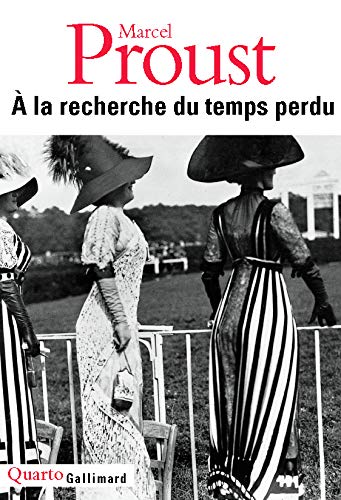
Proust Progress Report 7: more about the Guermantes

Marcel Proust, À la recherche du temps perdu (text established under the direction of Jean-Yves Tadié ©1987–1992): Le côté de Guermantes, seconde partie (originally published as a separate volume in 1921)

I’ve just realised with a shock that it’s time for my monthly Proust Progress Report.

A month ago I ended my post with the hope that the plot, such as it is, might move along soon. The opening page of the first chapter of Le côté de Guermantes Part Two offers hope, beginning with a plot summary:

Maladie de ma grand-mère. – Maladie de Bergotte.
Le duc et le médecin. – Déclin de ma grand-mère. – Sa mort.

In English:

My grandmother’s illness. – Bergotte’s illness.
The duke and the doctor. – My grandmother’s decline. – Her death.

What follows is a moving account of the final illness and death of the narrator’s beloved grandmother. Proust’s sharp, satirical edge is still there in his accounts of the various doctors and visitors of the sick. In particular, this intensely felt episode doesn’t overshadow completely the main concern of this book (or two books, depending on how you count them), which is the narrator’s relationships with the aristocratic Guermantes family and his acerbic commentary on them.

Albertine, with whom he fell into unrequited love in the second book but who no longer tugs at his heartstrings, turns up when he’s sick with grief and it seems she is now in love with him. I may have misinterpreted Proust’s opaque narrative at this point, but I think they have it off, and remain completely at cross purposes about what it means. The plot is definitely thickening.

But then we move on to the main game, and the forward impetus is lost. The duchess Mme de Guermantes, Oriane, with whom the narrator has also been in unrequited love and who also no longer pulls at his heartstrings – invites him to dinner. The plot of the next 100 pages or so can be summarised as: the narrator goes to dinner with a bunch of aristocrats.

The narrator is pretty much a fly on the wall. Every now and then someone speaks to him and he gets a word in edgewise, but he gives us a meticulous, detailed account of the witty, snarky conversation, so that the various personalities emerge sharply. Embedded in the narrative are essays on aspects of the culture and politics of the salons and of the aristocratic class.

When the narrator arrives at the Guermantes home – which is just across the courtyard from his own, though separated by a great social distance – he is greeted by the duke himself, who happily grants him his wish to be left alone in a room with some paintings by the great Elstir. When he tears himself away from the paintings (having given us a richly evocative analysis of them) he realises an hour has passed. A servant takes him to where the other guests are waiting to start dinner. The duke, aware as are all the guests that the narrator has the lowest status of anyone in the room, is at great pains not to make him feel he has inconvenienced anyone. So even though they have all been waiting to eat for at least forty minutes, he makes a point of introducing him to everyone individually, beginning with the Princess, the noblest person in the room. Only after a decent interval does he signal diffidently to the servants to announce dinner.

That tiny sequence is the occasion for a complex meditation on what you might call noblesse oblige, though that’s not a phrase Proust uses. These people who are in the highest social rank will never make a point of their status. In fact the way they demonstrate their superiority is by treating their inferiors (that is to say, just about everyone) with elaborate deference. It’s hard to explain the pleasure given by this essay – and a number of others, such as one on Oriane’s wit and social eminence. It’s something to do with paradox, and the tension between the infectious enthusiasm that Proust has for these people and his clear-eyed perception that they lead largely idle and trivial lives, and generally have appalling politics. And it’s laid out in sentences that you can get lost in, and then miraculously found again.

I’ve still got about a hundred pages of this book to go. The narrator has an appointment to meet the creepy M Charlus – Oriane’s brother – once he can make his excuses from the dinner, and that appointment hangs over the glittering dinner like a livid storm cloud. The title of next volume is Sodome et Gomorrhe, which raises the possibility that things are going to get a lot spicier.

Vicki Hastrich, Charlotte Wood, Night Fishing on the Weekend with the Book Group

Before the meeting: This month’s designated Book Chooser gave us two books to tide us over the summer break, a collection of memoir essays and a novel. The author of the novel makes a brief appearance in one of the essays, and it’s possible that the novel is set in a version of the locality that is the focus of many of the essays.


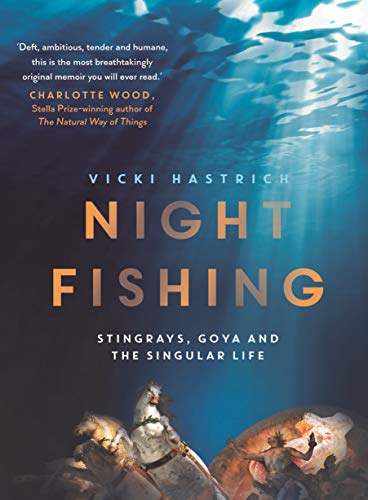
Vicki Hastrich, Night Fishing: Stingtrays, Goya and the Singular Life: A Memoir in Essays (Allen & Unwin 2019)

Before the Meeting: I reserved both books at each of the two libraries I belong to. Night Fishing became available within a day, though I was unable to renew my loan because seven people joined the queue while I was reading it. By contrast, there were 50 and 80 people respectively in the queues for The Weekend, but I was saved by the Emerging Artist, who bought it as a Christmas present to herself.

Night Fishing is a collection of thirteen essays that range from 4 to 34 pages in length. They don’t really amount to a memoir, as the title page claims, but they do have memoir elements. They are personal essays, most of which explore aspects of the waters near Woy Woy, where Vicky Hastrich’s family had a holiday house in her childhood and which she now visits often.

The first essay, ‘The Hole’, is filled with rich childhood memories of the place, and the excitement of rediscovering a favourite fishing spot with her brother. They go out in the author’s much-patched fibre-glass dinghy, the Squid, and are just about to pack up for the day, crowded out by half a dozen fancy, gizmo-laden boats, when she gets a bite:

The rod bent. I pulled the big, slow thing up and Rog got the net. It seesawed, it yawed, it took forever, but finally a dark shape materialised. Rog leant out and the shape nosed serenely into the net, though only its head seemed to fit; simultaneously Rog lifted and in a heavy, dripping arc in it came, landing thickly in the bottom of the boat. A huge flathead. Biggest one we’d ever seen – by a mile. Adrenaline pumping, we whooped and screamed.
 Suck eggs, you plastic heaps! Go the mighty Squid,’ I hollered.
We were grown-ups.

There are many moments like this in the essays. Hastrich’s deep love of that place is infectious, and it’s the best thing about the book – in ‘The Hole’ and ‘From the Deep, It Comes’ (in which Western writer and deep-sea fisher Zane Grey makes a guest appearance). She also writes engagingly about her writing life, including an unfinished colonial gothic novel that seems to haunt her, and about the way her past as a television camera operator affects her way of seeing (both in the same brilliant essay, ‘My Life and the Frame’). There’s a wonderful essay, ‘Amateur Hour at the Broken Heart Welding Shop’, about her grandfather, who was a ‘first-class amateur’ engineer – Hastrich describes herself as an amateur writer.

Less successful for me are the essays that are in effect reports on experiments: going fishing at night with only a non-directional lantern on the dinghy (‘Night Fishing’); taking the dinghy out at low tide to The Hole with a bathyscope (‘The Tomb of Human Curiosity’); filming herself as she sleeps two nights in a row and taking 112 selfies on the day in between (‘Self Portraits’). The contrived set-up of these pieces stops them from quite taking off.


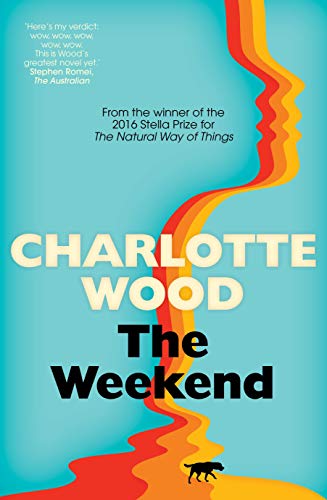
Charlotte Wood, The Weekend (Allen & Unwin 2019)

Three women in their seventies meet at a beach house for a weekend over Christmas, but not to celebrate the holiday. Christmas just seems to be a non-event. None of them has family to celebrate with: Wendy is a widow with alienated adult children, Jude is the long-term mistress (old-fashioned term, but accurate) of a wealthy man who spends the holiday with his family, Adele is a once-famous actress who has become increasingly unemployed, alone in the world, and on the brink of homelessness. Nor have they taken refuge with each other as Waifs and Strays. The beach house belonged to Sylvia, the fourth in their little group of friends, who has died recently. They are there to sort out her stuff and prepare the house for selling – for the benefit of Sylvia’s partner, who has left the country,

We are told that these women have been friends for forty years. We are told they are feminists. But as they arrive at the hut, separately, they barely greet each other. Each is allocated a section of the house to clean up, and they proceed to do it in isolation. No calling out from one room to another – ‘Oh my God, look what she kept!’ ‘What should we do with all these gorgeous clothes?’ ‘That’s my saucepan that she borrowed and never gave back!’ – let alone any shared whingeing about the partner who has skedaddled and left them to do what should be her work. They do think such thoughts, but there’s no commonalty in the task. No sense of solidarity in grief either. And only the sketchiest idea of who the recently deceased woman was apart from the her role in keeping the friendship group together. When the three go for a walk on the beach, no one waits for anyone else but each remains wrapped in her own thoughts.

Not a lot happens in the first two thirds of the book apart from reports on the internal monologues of each of the women, and descriptions of the undignified deterioration of Wendy’s deaf, arthritic, incontinent dog. Towards the end, each of the three is delivered a devastating blow, they stumble into a Christmas midnight mass, and they find some solace and forgiveness with each other, but though there’s a terrific evocation of a storm as the blows are delivered, by then I was past caring.

I was so looking forward to this book, because I loved Charlotte Wood’s The Natural Way of Things (my blog post here). It can’t just be the subject matter that led me not to like it – I’ve been known to be very interested in women aged 70 or thereabouts, and I was enthralled by Elizabeth Strout’s Olive, Again (blog post here). I think it’s something to do with the way the narrative generally works. To take a passage pretty much at random, here’s Jude after she’s realised that Adele has claimed the best bedroom without any discussion:

She didn’t care about the bedroom at all – she wasn’t fussed by trivia like that – but still, a fleck of disdain formed itself: how had Adele not, in all these years, developed a shred of restraint, of self-discipline? It was how and why she was an actress, Jude supposed. They were all children, the men too, as far as she could tell. She could see the appeal, when you were young, the liberation of it. But what did it mean when you were old? What were you left with, still a child at seventy-two?

(page 75)

This is the kind of writing I meant by ‘we are told’ in the earlier paragraph. It’s shaped as if it’s giving us Jude’s internal monologue. I don’t think I’m alone in believing that no one thinks like that. Take the generalisation about actors. It’s mean and judgmental, and absurd, but that’s not my problem with it: why shouldn’t Jude be meanly, absurdly judgemental? My problem is that the omniscient narrator is giving us a rundown, an abstract, as if the writer has figured out what Jude’s character is, and is giving us little snippets to illustrate it. We’re not inside Jude’s head, which is where we need to be if we’re to get lost in the story. Sadly, this is pretty much how the narrator’s voice works for most of the book. It feels as if these characters created no surprises for their creator. This reader remained generally disengaged.

Many people have said The Weekend was one of their favourite books of 2019: Sue at Whispering Gums and Lisa at ANZ Lit Lovers, for example, have both written elegant, well-argued, positive reviews of what’s recognisably the same book but seen through very different lenses from mine. I’m glad, because I don’t want any book to be unloved – well, hardly any book. I’m sorry this one isn’t loved by me.


After the meeting: We met in the carport of our host’s newly purchased and not yet completely habitable house in Balmain with a spectacular view of the Sydney skyline, and had pizza. Once we’d got over the splendour of the setting, and tales of cricket from this summer and summers long past, and one or two fabulous tales of adventure in the city involving weddings and mistaken identity (though not in the same tale), we had an animated discussion of the books.

My sense is that no one was as negative about The Weekend as I am. Where I missed the casual back and forth of old friends, the book’s main proponent said he had read that sort of thing as understood but not part of the book’s focus: that the narrative was interested in the characters’ internal lives. another chap said that the main thing the book did for him was to have him reflect on decades-old relationships that are full of obligation but not much else; in particular, there are people who are nominally his friends but are really his wife’s friends, and if she were to disappear he wold gladly never see them again. He wasn’t saying that the three women in this book were like that, but he certainly read their lack of mutual warmth as having a similar source: Sylvia was the glue that held the group together, and no one was sure it could continue to exist without her. Yet another said he wasn’t fazed by the lack of communal grieving: that had already happened, as he read it, and now each character was withdrawn into her own individual grief.

It’s interesting that my main misgivings – which I’m not sure I even articulated – were addressed from so many fronts.

Night Fishing provoked some interesting discussion. Notably, towards the end of the evening, one chap said he was embarrassed to realise that this was the first thing he’s ever read about a woman fishing. His embarrassment was widely shared, and led to some interesting surmise about fishing and gender: men often fish in order to indulge in reverie, that is to say, be alone and do nothing. Is it the same for women? Or does it tend to be a more practical task for women. Today someone sent us a link to Lyla Foggia’s 1997 book Reel Women: the world of women who fish (link here).

On a more general readerly level, while the word ‘patchy’ evoked some head-nodding, we liked the book. A couple of passages were read out to general approval. One of our younger members said the book tapped into a vein of nostalgia. He didn’t get to enlarge on that thought, and I didn’t get to reply, but I think it’s not exactly nostalgia in these essays: the author revisits a place she loved as a child and explores it in a number of ways as an adult, deepening and enriching her understanding of it, and so of herself.

Someone said that they felt that Night Fishing was written by a person, and The Weekend was written by a writer. Obviously Wood and Hastrich are both writers, but there’s something to what he said. Hastrich describes herself as an amateur, which is a different thing from a dabbler or a learner – it points to the elements of vulnerability and lack of subterfuge that make her writing so attractive. The Weekend is Wood’s sixth novel, and even though I was disappointed in it, I didn’t ever want to give up on it.

One last thing: Charlotte Wood has put up on her podcast The Writer’s Room a wonderful interview with Vikki Hastrich that provides fabulous insights into the kind of beast Night Fishing is. Here’s a link.


Night Fishing and The Weekend are the first two books I’ve read for the 2020 Australian Women Writers Challenge.

Proust Progress Report 6: halfway through the third book

Marcel Proust, À la recherche du temps perdu (text established under the direction of Jean-Yves Tadié ©1987–1992): finished Le côté de Guermantes (1020–1921), première partie.

Exactly six months into reading À la recherche du temps perdu, and I’m halfway through the third volume. I have now finished the first part of Le côté de Guermantes, which was originally published separately.

If you’re looking for sizzling action, this book isn’t for you. The narrator has dinner with the military friends of his friend de Saint-Loup and is fascinated by military theory. He meets de Saint-Loup’s mistress, whom everyone except de Saint-Loup knows is a prostitute. He attends a salon where people are variously snobbish, uncouth, bien-pensant, antisemitic, evasively diplomatic and pretentious. He goes for a walk with the extremely creepy and probably predatory M de Charlus. At home, he finds his beloved grandmother is sick. He goes out for a walk with her and she has a heart attack.

Much of it is wryly funny, and there is one belly laugh. At least, I laughed out loud when after about twenty pages in which the narrator is a fly on the wall at the salon, the object of his infatuation who has not deigned to utter a single word to him when introduced, finally – after the narrator’s dear friend Robert de Saint-Loup whispers in her ear – turns to him and says, ‘Comment allez-vous?‘ Your mileage may vary.

I think of Proust as the Anti-Twitter: no proposition goes unquestioned, one’s immediate interpretation of a word or action is more likely than not to turn into its opposite when subjected to sustained, complex explication. No one ever gives a straight answer to a question. We know that Proust and his narrator are dreyfusards*, and the anti-dreyfusard characters are mocked mercilessly, but there’s no sign of Twitter’s door-slamming outrage. And yet Patrick Alexander, author of a guide to Proust, is rewriting In Search of Lost Time (in English) as a series of tweets. Sadly, my computer wouldn’t go far enough back in his Twitter timeline to give me his version of what I’ve just read, so I can’t tell whether he’s making a point of the impossibility of the project.

It turns out, though, that skimming @ProustTweet‘s timeline gave me hope that the endless conversations in this volume are about to give way to something a little more active. The account of grand-mère’s heart attack holds out that promise as well: it happens offstage while the narrator is paying attention to a silly conversation between the ‘marquise’ who attends the public toilets and a caretaker of the gardens they are visiting. The important things, it seems to be suggested, happen when the narrative is engaged elsewhere.


* Proust assumes that his readers are familiar with the Dreyfus Affair, which Wikipedia informs me divided the republic from 1894 to 1906. In essence a Jewish army officer was wrongly convicted and imprisoned for treason, and even when evidence of his innocence came to light the high-ranking office who had actually committed the treason was found not guilty and Dreyfus was again, against the evidence, and went to prison. In Proust, and I assume in the actual world, conservative, Catholic, antisemitic people of the upper classes tended to be antidreyfusards.

Jonas Hassen Khemiri, Everything I Don’t Remember

Jonas Hassen Khemiri, Everything I don’t remember(2015, translated by Rachel Willson-Broyles, audio book read by Jack Hawkins, Bolinda 2016)

I’d pretty much given up on audio books (see here and here), but the Emerging Artist is less prone to burning bridges than I am, and she borrowed two from the library for a longish drive on the weekend. We listened to Everything I Don’t Remember, all seven hours of it, and I’m once again open to the medium.

A young man named Samuel has died in a car crash, probably deliberately, and a writer is interviewing people who were close to him to find out how they make sense of his death. It settles down to three main interviewees: Samuel’s best friend Vandad, a woman not-quite-lover Panther, and Laide, the lover he broke up with a little before his death. Their narratives, sometimes expanded by scenes imagined by the writer, are interwoven, filling one another’s gaps, contradicting one another, commenting – often harshly and unfairly – on the others’ roles in Samuel’s life and death.

Samuel’s impending death provides a central narrative thread, but the book sends out tendrils into very interesting parts of Swedish society. There’s a brilliantly cinematic moment when a recorded tourist commentary on Stockholm plays on while the people hearing it are experiencing a very different version of that city – which is the version where the main action of the novel plays out, populated by artists, low-level public servants and community workers, struggling members of the gig economy, petty criminals, refugees, most of them, like Jonas Hassen Khemiri himself who has a Tunisian father, of African or West Asian heritage.

Some of the time as we listened we were driving through bush that is just beginning to put out new shoots of recovery from bushfire. In spite of the competition from the real world, the world of the novel kept us engaged (though we had to turn it off every so often to let the surrounding devastation sink in).

There are some meta elements. One of the interviewees tells the writer not to attempt to write Samuel in the first person because he can never know what was in Samuel’s mind. The reader (at least this reader) agrees, and the whole weight of the novel seems to lie behind the advice. Then, in the next section, Samuel’s internal monologue appears for the first time. And in the last ten minutes or so the writer explains to us why he undertook the project. These, and similar moments, may be just clever bits of mise-en-abîme (you know: the camera draws back and you realise you’re looking at a picture within a picture within a picture, ad infinitum), but I read them as moving the narrative beyond journalistic enquiry to something more emotionally engaged – and thereFore more emotionally engaging.

The Bolinda packaging doesn’t mention a translator. I found Rachel Willson-Broyles’s name online in connection with the English print edition, and assume that the smooth, elegant English on these discs is hers. And reader Jack Hawkins is a master at speaking to the microphone intimately, so that it almost feels as if the narrative is unfolding inside the listener’s head, while at the same time he manages the extraordinary feat of always, or almost always, being clear which of several voices is speaking at any given time.

Bernhard Schlink’s Weekend

Bernhard Schlink, The Weekend, translated by Shaun Whiteside (2008, Weidenfeld & Nicholson 2010)

A group of friends in their 50s meet for a weekend in a grand, but dilapidated house in the German countryside, the first time they’ve all been together in decades. The occasion for their reunion is Jörg’s release from gaol where he has been serving a sentence for acts of terrorism – including four murders – back in the 1970s. The others had been members or sympathisers of the leftist group he had belonged to, but hadn’t been part of the violence.

As well as Jörg, there are Henner, now a journalist, Ilse, a school teacher, Ulrich who owns a string of dental laboratories, and Karin, a bishop, plus Jörg’s protective older sister, Christiane. Ulrich and Karin’s spouses are also there, as well as Ulrich’s young-adult daughter. Margareta, Christiane’s friend who part-owns and lives in the house where they meet, Andreas, Jörg’s long-time lawyer, and Marko, a younger man Jörg has invited at the last minute complete the cast – until a surprise extra guest turns up on Saturday evening (about whom I won’t say anything).

This is a novel by Bernhard Schlink, who writes fine, complex essays on political-cultural issues (my blog post about his Guilt about the Past here), and as you’d expect these eleven, and then twelve, characters aren’t left to talk about the weather. Christiane has organised the weekend to help Jörg make the transition to civilian life. Marko, to the disapproval of everyone else, especially Andreas the lawyer, urgently wants Jörg to become a leader of the revived leftist group. Others, particularly Ulrich, want him to face the reality of his crimes. The conversation ranges – what happens to the dreams of youth, its ideals, loves and resentments? what has become of the leftist, political terrorism of the 70s, and how is it different from the terrorism of al-Qaeda? if you murdered bystanders ‘for the cause’, how do you see that thirty years later, especially if the cause has failed? (Since finishing the book I met the concept of moral injury, which is what happens when someone, usually a soldier, realises they have done terrible things towards what they thought were good ends, but the ends have been revealed as immoral: that concept looms large here, without the term.)

But the debating is rooted in the context of these real lives. There’s some tears, some sex, some humiliation, some wonderful intergenerational conflict, some sweet tenderness, and two surprises that I should have seen coming but didn’t. Ilse, the quiet one, has started writing a story that plays as a kind of counterpoint to the main narrative. In it, another member of their group, Jan, lives on after faking his own suicide to commit more terrorist acts; she has to imagine how to show the mental life of a man who – like Jörg – lives for decades in prison. In the end she decides to have him die, and does it in a way that I read as symbolising how that brand of leftist terrorism came to an end.

It’s a short book. I enjoyed it. It made me think.

Proust Progress Report 5: Beginning the third volume

Marcel Proust, À la recherche du temps perdu (text established under the direction of Jean-Yves Tadié ©1987–1992): finished À l’ombre des jeunes filles en fleurs (1919), deuxième partie, ‘Nom de pays: le pays’; began Le côté de Guermantes (1020–1921), première partie.

As promised in my last report, I am now well under way in the third book, English title The Guermantes Way.

The last 60 pages of À l’ombre des jeunes filles en fleurs got quite sexy, with our poor narrator being sadly disappointed in what he had thought was going to be a long-yearned-for erotic rendezvous, in a way that not even his ingenious rationalisations could make less humiliating. But he bounced back and finished the book in good spirits.

There’s a scene in that book where an older man visits our narrator’s bedroom at night, lends him a book and paces about as if expecting something. The only way I can make sense of the scene is that the older man is hoping for a sexual encounter but goes away disappointed – to all of which the narrator is oblivious. Since absolutely no sexual overture is explicit it made me wonder how much I miss that goes unsaid elsewhere. And as I type those words I realise that the narrator’s disappointment in Albertine’s bedroom (mentioned in the previous paragraph) becomes even funnier in the light of his own unwitting rejection of the older gentleman. Incidentally, one of the common phrases in the book, is ‘à mon/son insu‘, which I guess translates as ‘unwittingly’.

I had thought that in this monthly report I’d write about whatever I happened to have just read. But what I’ve just read is two pages in which the narrator’s aristocratic army-officer friend Robert de Saint-Loup expands on the idea that there is an aesthetic side to the art of war, so maybe I’ll go back a bit.

On New Year’s Eve, in one of those conversations people who see each other once a year ask each other what we’ve been doing, I said I’m reading Proust. Behold, my interlocutor had read Swann’s Way with his book group, and has a friend who has read the whole of À la recherche in English and is now reading it in French. He quoted that friend as saying that in Proust what is not said matters more than what is said – a paradox, given that so much is said. There’s a marvellous moment in my reading since that conversation that exemplifies the point.

The narrator has gone to visit Robert de Saint-Loup at his garrison in the hope of procuring an introduction to Saint-Loup’s beautiful aunt, the object of the narrator’s stalkerish infatuation, the duchess de Guermantes. As it turns out, de Saint-Loup invites the narrator to stay with him in his quarters at the garrison. Over dinner, the narrator recognises a striking family likeness between his friend and his friend’s aunt. The emotional force of this recognition must have shown in his face because:

Robert, sans en connaître les causes, était touché de mon attendrissement.

https://ebooks-bnr.com/ebooks/html/proust_a_la_recherche_du_temps_perdu_3_cote_guermantes.htm

In English:

Robert, unaware of its cause, was touched by my show of affection.

From http://gutenberg.net.au/ebooks03/0300411h.html, modified by me.

Things move on from there:

Celui-ci d’ailleurs s’augmentait du bien-être causé par la chaleur du feu et par le vin de Champagne qui faisait perler en même temps des gouttes de sueur à mon front et des larmes à mes yeux ; il arrosait des perdreaux ; je les mangeais avec l’émerveillement d’un profane, de quelque sorte qu’il soit, quand il trouve dans une certaine vie qu’il ne connaissait pas ce qu’il avait cru qu’elle excluait (par exemple d’un libre penseur faisant un dîner exquis dans un presbytère).

In English:

My affection was moreover increased by the comfortable heat of the fire and by the champagne which at the same time brought beads of sweat to my brow and tears to my eyes; it washed down the partridges; I ate mine in a state of wonder like some sort of profane person who finds in a form of life with which he is not familiar what he has supposed that form of life to exclude—the wonder, for instance, of a free-thinker who sits down to an exquisitely cooked dinner in a presbytery.

So far so good: during an extended tête-à-tête in his friend’s room, the narrator looks at his friend with an expression that properly would be directed to the women he is infatuated with. He sees that his friend mistakenly thinks the tender look is meant for him. The narrator is filled with a sense of wellbeing, is experiencing delights such as he had never imagined. What could happen next? Well:

Et le lendemain matin en m’éveillant, j’allai jeter par la fenêtre de Saint-Loup qui, située fort haut, donnait sur tout le pays, un regard de curiosité pour faire la connaissance de ma voisine, la campagne, que je n’avais pas pu apercevoir la veille, parce que j’étais arrivé trop tard, à l’heure où elle dormait déjà dans la nuit. 

In English:

And next morning, when I awoke, I went to cast from Saint-Loup’s window, which being at a great height overlooked the whole countryside, a curious look to make the acquaintance of my new neighbour, the landscape which I had not been able to distinguish the day before, having arrived too late, at an hour when it was already sleeping in the night.

So we’ll never know what happened between all those feelings of growing intimacy and waking up next morning. I won’t quote any more of this passage, as there’s an extended description of the neighbouring hill. But the narrator is filled with a new joy as the day progresses, and begins to visit Saint-Loup in his room regularly, and when Saint-Loup and he dine with Saint-Loup’s friends, they hang on each other’s words shamelessly – and our weedy, literary narrator becomes fascinated with the world of military manoeuvres and military history, the world of Saint-Loup.

What would I have thought of all this if I hadn’t been told that what’s unsaid is more important that what is said, and that this book is a classic queer masterpiece? Pretty much what I make of it now, I expect.

In a month’s time I expect to have finished the première partie of Le côté de Guermantes, and I’ll tell you if our narrator ever does get to meet the duchess … and if he cares.

Elizabeth Strout’s Olive, Again

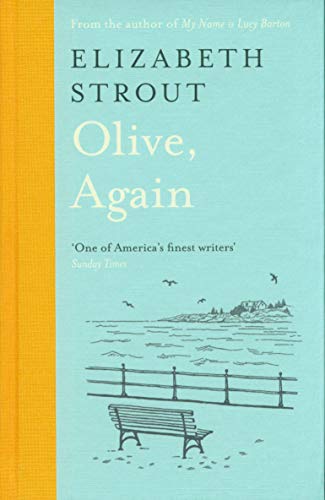
Elizabeth Strout, Olive, Again (Viking 2019)

This is a sequel to Elizabeth’s Strout’s Olive Kitteridge. I haven’t read that book, but I did see and love Lisa Cholodenko’s 2014 miniseries starring Frances McDormand (my tiny blog post here).

Olive Kitteridge is a retired math(s) teacher in the small Maine town of Crosby. The book’s thirteen chapters form what Frank Moorhouse used to call a discontinuous narrative – sometimes Olive is front and centre, so that we see everything through her eyes; sometimes she makes a tiny, almost inconsequential appearance in the lives of other local characters, and we catch glimpses, usually unflattering, of how they see her.

Olive is a large, socially awkward woman who can be shockingly unaware of the needs of other people: when her son and his wife come on a visit from New York City with their four children, including a small baby, she doesn’t think to buy milk and realises only when they are all there that she has only two chairs in her kitchen. The flip side of that quality is that she speaks her truth unsparingly – without malice, but without care for the effect of her words. As trivial example, at a display of work by local artists she loudly proclaims that it’s all crap. She tells a grieving widower that his recently deceased wife once called her a cunt – and Olive is a woman who hates swearing.

Yet amid all the wreckage of her life, she has a wonderful integrity and an ability to learn from painful interactions. To at least some people she’s loveable; to some she’s an inspiration. When she needs home nursing help she bluntly challenges the racism of one carer but wins her affection anyhow, and her similarly blunt interrogation of a Somali-heritage nurse wins her as well.

In the brief Acknowledgments, Elizabeth Strout mentions ‘cultural differences between New York City and Maine’, which makes me think that perhaps Olive is meant as a kind of incarnation of the spirit of Maine – plain-spoken, honest, taciturn as opposed to New York’s sophistication. I do wonder if Olive might be on the spectrum, but really that’s not what matters: she lives on the page as completely her own woman, warts – plenty of warts – and all.

If the book is reaching for anything other than a portrait of a woman (definitely not a lady) who came to Elizabeth Strout fully made, maybe its an approach to life, a philosophy, that’s summed up in a statement made by another character who is dealing with bereavement (there’s a lot of death, suffering and infidelity in this book, as well as love, tolerance and surprising moments of joy):

‘I’ve thought about this a lot. A lot. And here is the – well , the phrase I’ve come up with, I mean just for myself, but this is he phrase that goes through my head. I think our job – maybe even our duty – is to – ‘ Her voice became calm, adultlike. ‘To bear the burden of the mystery with as much grace as we can.’

(p 115–116)

Very much in her own way, Olive has grace.

Susan Hill’s Black Sheep

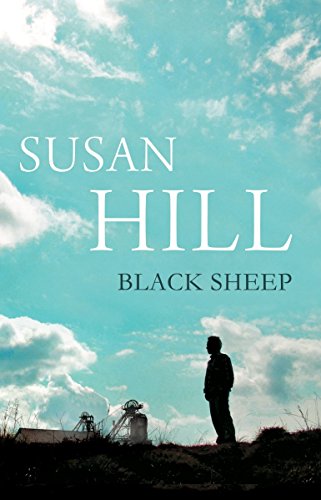
Susan Hill, Black Sheep (Chatto & Windus 2013)

At the recent climate strike in Sydney, one of the student leaders was making the point that there needs to be a just transition away from fossil fuels to renewable energy sources. It needs to be acknowledged, she said, that mining isn’t just a job, it’s an identity, and people who worked in fossil fuel industries deserved to be thought about, not ruthlessly declared dispensable (as they were, she might have said, when Maggie Thatcher, whose grasp of climate science may have had some bearing on her shutting down the coal mines of Britain).

Black Sheep, which I borrowed at my Book Club (the book-swap one, not the discussion one), is a 135 page sketch of a family living tight inside that identity in pre-Thatcher Britain. Evie and John have five children, four sons and a daughter. John’s mother dies early in the novella, and his father moves into the already crowded cottage, bringing his black Bible with him. The boys are destined to join their father in the pit. The girl helps to service the men – cooking, cleaning, washing – and is expected to marry another pit-worker and repeat her mother’s life. Coal dust is everywhere.

It’s a grim life, and any thought of finding an alternative is seen as betrayal: ‘this is a pit family and you are one of it.’ Family coherence is strong, and when there is an explosion in the mine everyone in the community, including shepherds on the nearby hills, drops everything and runs toward the pit head, hoping to help. It’s powerful portrait of a family and a community caught in a destructive system, and keeping each other there.

It doesn’t end well, except possibly for the son, Arthur, who disappears overnight and is never heard from again. Two family members have hope: the daughter risks being ostracised by marrying a man who, though he works for the mining company, doesn’t go down the pit; and Ted, the youngest son, dreams of a different life and finds it working as a shepherd, though he too risks being ostracised. Both escape attempts fail. Both Ted and Rose are drawn back into the bosom of the family. It’s a fable about the deep injuries of class and the effects of ruthless capitalism, when even the virtues of working people contribute to their destruction.

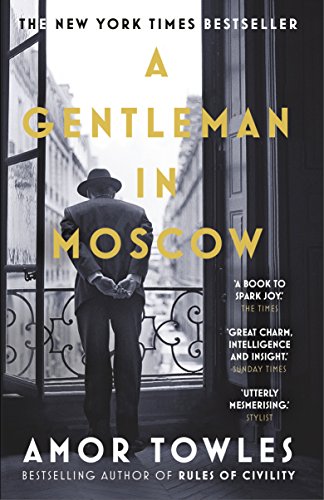
The Book Group with A Gentleman in Moscow

Amor Towles, A Gentleman in Moscow (2016, Windmill 2017)

Before the meeting: This is a fabulous book to read after The Disappearing Earth. Both are by USians looking to Russia, but where Julia Phillips’s novel is a contemporary thriller (kind of) set in remote Siberia, and features Indigenous people, Amor Towles’s novel is a comedy of manners (kind of) whose action takes place almost entirely within the walls of the luxurious Hotel Metropol in post-revolution Moscow. It’s probably not stretching things too far to say that, for all their difference, they are both reactions against mainstream US’s Russophobia, while neither goes so far as to assert any sympathy with Communism. They seem to confirm that the Book Group has a recurring interest in Russia and the former Soviet Bloc, coming as they do after Anna Karenina (discussed in August 2009), Chekhov’s short stories (September 2012), China Miéville’s October (September 2017), and Svetlana Alexievich’s Chernobyl Prayer (November 2017).

Count Rostov is a Former Person, that is to say a member of the pre-revolutionary aristocracy, whose life is spared because of a poem filled with pre-revolutionary zeal, and who is sentenced to live the rest of his life under house arrest in the Hotel Metropol. Rostov, whose aristocratic virtues include extraordinary social adeptness, courtesy, wit and generosity, has been a favourite guest at the hotel. When he is moved by decree from his luxurious quarters to a tiny room on the top floor, his relationships with members of the staff remain affectionate. He is befriended by a young girl (who initiates the friendship by asking him what has happened to his spectacular moustaches – which have been peremptorily scissored by a brutish apparatchik) and some decades later takes on the guardianship of her daughter, who becomes the emotional centre of his life. He is employed as head waiter in the hotel’s prestigious dining room, where his aristocratic training in tact and diplomacy serves him well. Over the decades of his house arrest, his gift for friendship wins him unexpected allies, even while his undaunted aristocratic bearing makes an enemy or two.

All this plays out against the history of Stalinism, the Second World War, the coming of Kruschev, forced collectivisation, purges, straitjacketing and worse of artists, writers and performers, the gulags, millions dying of famine, increasing wealth and eventual opening up to the West, samizdat. The Count leaves the hotel only once before the final pages; history comes to visit him, and friends fall foul of the iron hand of Stalinism. He is described as the luckiest man in Russia.

Beneath this charming fantasy, there’s a joyful assertion of the value of decency, a celebration of resilient humane virtues. I enjoyed it a lot, and laughed out loud more than once. But …

… although at no stage did I feel the urge to stand up and sing ‘The Internationale’ (to quote Mark Kermode reviewing Downton Abbey), I was uneasy about the possibility that the book plays into a quietistic approach to life, as in, ‘I can be decent, even generous, with people within my small sphere, but what can I possibly do about big issues like climate change when my sphere is so limited?’ I don’t know. Maybe this is a question for the Group – that is, if we can resist the pull to rip into Scott Morrison dealings with Trump.

At the meeting: I was surprised that this book was substantial enough to hold our attention for long, yet it provoked very interesting, wide-ranging, inclusive and at times robust conversation.

One man had read it twice, the second time when he had a visitor staying with his family to whom he read a page or so on a number of nights, which he and his audience enjoyed immensely. This man actually stayed at the Hotel Metropol some decades ago, a disclosure he managed to withhold until well into the evening, winning a round of applause for his restraint. He also challenged the idea that may have been floating in the room and/or the book that civility and grace were somehow aristocratic virtues – two of the most gracious people he had ever met were working class unionists Jack Mundey and Jack Ferguson.

I got to put my question, or call it my unease, and wasn’t dismissed out of hand. One man immediately wondered aloud if that unease wasn’t the actual intentional subject of the book. One chap described the book as a Western liberal response to the Russian Communist experiment, in which liberalism comes out as superior. Another (a recovering Trot, I think) saw it as asserting that attempts at major social change were doomed to fail because the old order just reproduces itself in new forms. Someone else heard me as using the rhetorical device of ‘What about …?’ – that is, asking how we could be giving attention to this froth and bubble when Climate Change. (I think I defended myself successfully against that charge.) If Rostov doesn’t engage with the social change activism, perhaps it’s because he’s under house arrest, and perhaps (this was a quick aside from someone) we all tend to feel we’re under house arrest.

We managed to talk about any number of subjects without leaving the book: Boris Johnson and the Etonian old boys currently running the UK (aristocratic virtues, anyone?), The Good Place (addresses the question of what it means to be good!), Poldark (which not many of have watched, but evidently it addresses contemporary issues through a story set in the past), being fathers of girls.

I love my Book Group.

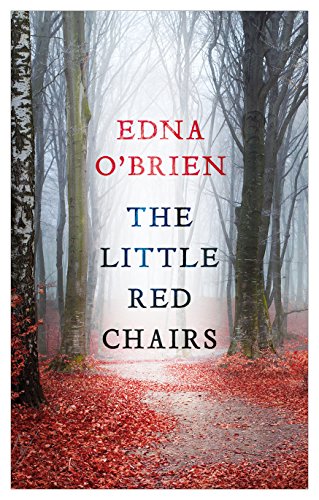
Edna O’Brien’s Little Red Chairs

Edna O’Brien, The Little Red Chairs (Faber & Faber 2015)

This book’s title, supplemented by a note explaining it before the title page, warns us what to expect. In 2012, the note says, an installation of 11,541 red chairs was set up in Sarajevo to commemorate the twentieth anniversary of the start of the siege of that city by Bosnian Serb forces: one empty chair for every Sarajevan killed during the siege, and of them 643 little red chairs to represent children. Somehow, we are being warned, the horrors of that siege will feature in what we are about to read.

Yet the novel starts out in a tiny community in the west of Ireland that could almost be Ballykissangel revisited – or an Irish version of Doc Martin‘s Port Wenn or Hamish Macbeth’s Lochdubh, with a pub, a policeman, a nun, a refurbished castle. A tall stranger in a long dark coat comes to town, bringing with him a whiff of the exotic, some intrigue, some sexiness. He’s a practitioner of alternative medicines. All set for a cosy comedy except, even if you’re smart enough to have avoided the terrible spoiler on the back cover, you’ve been warned.

The stranger gives a new lease of life to Sister Bonaventure, and his healing hands and herbs do wonders for many of the villagers, especially the women. Fidelma O’Brien, whose older husband can’t give her children, and whose shop selling imported finery has gone bust because a new expressway has meant most of her customers can go to the nearest city, decides she wants to get pregnant by him.

Not unexpectedly, things go terribly wrong. Then, at about the midpoint of the book, when Fidelma is pregnant, the stranger’s past has caught up with him, and the reader is wondering where on earth the story can go now, there is a moment of extreme sexual violence which I for one didn’t see coming even one paragraph before it happened, followed by a deeply distressing, and equally unexpected by me, moment of moral violence. Suddenly, it is a completely different kind of book. It becomes, in effect, Edna O’Brien’s equivalent of a red chairs installation.

The novel moves away from the tiny village, to return only briefly towards the end, and its narrative through line almost disappears in a harrowing series of tales of abuse, dislocation, and refuge. It’s as if the small story of the first half was split open and the whole suffering world was allowed to flow in through the cracks. Edna O’brien is a masterful writer, and she takes the reader with her to some very dark places, to reach a resolution that is a long way from restoring the comfort of the beginning.