Tag Archives: Novel

Qiu Xiaolong’s Don’t Cry, Tai Lake

Qiu Xiaolong, Don’t Cry, Tai Lake (Minotaur Books 2012)

1250021588

I’ve pretty much stopped reading detective novels. Inspector Chen, Chinese poet-detective tempted me back into the genre. There was a promise of insight into the workings of contemporary China, and Chinese poetry ancient and modern, all floating on a light whodunnit froth.

I should have known better. The whodunnit element is flimsy. The poetry feels inserted (though it’s a nice touch that Chen quotes Matthew Arnold as well as verse from ancient dynasties). And any issue of Asia Literary Review offers more insight.

I might still have enjoyed it but, perhaps because had just read Steven Pinker’s The Sense of Style, my internal blue pencil was on the alert, and this book’s copy editor let far too much go by: not anything gross, but far too much tautology of the ‘There was something eerily familiar about the peddler, Chen noticed, thinking he might have seen him somewhere’ kind, and enough examples of words that don’t mean what they’re meant to mean, as in the book’s very last sentence, ‘He wondered if he would be able to take a nap on the train, feeling the onslaught of a splitting headache.’ A decent copy editor would surely have suggested ‘onset’ because who can wonder about naps in the middle of any kind of onslaught?

I reached for a collection of essays by the impeccable David Malouf.

Leila Yusaf Chung’s Chasing Shadows 

Leila Yusaf Chung, Chasing Shadows (Vintage Books Australia, 2014)

1csIn August 2001, John w Howard kept the press away from the asylum seekers who had been rescued by captain Arne Rinnan of the Norwegian ship Tampa. It was crucial to Howard’s strategy of depicting the would-be refugees as ‘illegals’ and ‘queue-jumpers’ that Australians not see them as individual men, women and children. His famous utterance, ‘We will decide who comes to this country and the circumstances in which they come,’ could not have sounded like a defiant assertion of sovereignty if its hearers knew the wretched terror and misery – not to mention courage and determination – of those who were being ‘decided’ against.

Short of meeting asylum seekers in person, and so far I haven’t bestirred myself to do that, fiction has to be a good way of engaging imaginatively with this class of people who are still being relentlessly disparaged and dehumanised in our media. I bought a copy of Leila Yusaf Chung’s novel with those considerations in mind after hearing her speak, beautifully, at the Sydney Writers Festival about the importance of women in refugee communities.

I’m happy to report that the book filled the brief I had given it. Set mainly in Israel and Lebanon from the 1940s to the 1980s, it has real people who suffer real losses, confront real mysteries, and make their ways through the violence and indifference they meet at every turn. The form of the book mirrors the complexity of Middle Eastern politics, to the extent that plot summaries either misrepresent the book or are close to impossible to unravel. A character who seems to be the main driver of the plot becomes marginal to the point that when he dies we hardly notice; sympathetic characters do terrible things, and a shift in perspective reveals what looked like – and was – abuse to be an act of love; an early scene narrated from an uncomprehending child’s point of view turns out to contain a mystery that is central to the story; there are many false starts, many shifts of location and allegiance.

The book has a Zelig quality – characters find themselves on the spot just in time to be on the wrong side of a disastrous event: a Polish Jew living in Israel converts to Islam just before the naqba, so that he and his new family are among the hundreds of thousands of Palestinians driven from their homes by the Israeli army into apparently permanent exile; a young Palestinian woman is persuaded to marry an Iranian official, only to arrive in Tehran the day of the 1979 revolution and be gaoled along with hundreds of women who don’t meet the requirements of Ayatollah Khomeini’s new regime; characters are caught up in the Lebanese civil war and the Israeli invasion of Lebanon in 1982.

Identity is fluid, and sometimes a  pragmatic choice: the Jew Lavi becomes the Muslim Abu Fadi in order to marry a young Muslim woman; his Arab daughter poses as a Christian Armenian to give her infant daughter a safe environment to grow up in; another daughter finds a source of strength in strict Islam. Nothing is simple.

I recommend the book. If you read it I’d love to hear your response in the comments.

aww-badge-2015

Chasing Shadows is the twelfth book I’ve read for the 2015 Australian Women Writers Challenge.

Of Mice and Men and the Book Group

John Steinbeck, Of Mice and Men (1937)

ommEvery now and then the Book Group reads a classic. As one of us is currently performing in the play of Of Mice and Men, it seemed like an obviously good idea to read the book and see the play together.

Before the meeting: This is one of those books that you feel you don’t actually need to read. Like the photos of Dorothea Lange and Walker Evans, it’s a solid part of our understanding of the US in the 1930s. A little skinny guy and a lumbering giant with intellectual disability team up in rural USA during the Great Depression. The big man is a gentle soul, but doesn’t know his own strength and bad things happen.

Predictably, the book turned out to offer any number of surprises. First was the lyricism of the opening. I vaguely knew that Elmore Leonard’s disparagement of ‘hooptedoodle‘, the descriptive bits that readers tend to skip, cited Steinbeck as an authority. It was a surprise, then, to meet an opening paragraph that describes a pool over which arch the ‘recumbent limbs and branches’ of sycamores, and to which water ‘has slipped twinkling over the yellow sands in the sunlight’. That ‘twinkling’ challenged my assumptions mightily.

But then the humans appear, and there’s no more twinkling or recumbent arches until the final chapter, where ‘row on row of tiny wind waves flowed up the pool’s green surface’. The return to that pool carries a huge emotional thwack. Steinbeck knew a little hooptedoodle goes a long way, but he knew how to do it well. In this case, it’s the equivalent of a theatrical backdrop.

The story unfolds in six scenes, each of which observes the classical unities of time, place and action – that is, we see only what happens in a given place, and we see everything that happens there in sequence. The settings, described briefly at the start of each scene, are: an idyllic clearing on the bank of the Salinas river on a Thursday evening; a ranch bunkhouse the next morning; the bunkhouse again that evening; the harness room, which is also the bedroom of Crooks, the stable buck, on Saturday night; the barn, Sunday afternoon; the pool again, still Sunday.

Almost everything is conveyed by dialogue and action. It’s a short book, just about 100 pages – it could have been twice as long in the hands of a writer who wanted to tell us what his characters were thinking, rather than trusting us to get it.

There’s another passage of ‘fine writing’ that stands out. Unlike the other characters – the old man Candy, Crooks, Curley – who reveal themselves by their words and actions, Slim first appears in a long descriptive passage. Here’s the end of that passage:

There was a gravity in his manner and a quiet so profound that all talk stopped when he spoke. His authority was so great that his word was taken on any subject, be it politics or love. This was Slim, the jerkline skinner. His hatchet face was ageless. He might have been thirty-five or fifty. His ear heard more than was said to him, and his slow speech had overtones not of thought, but of understanding beyond thought. His hands, large and lean, were as delicate in their action as those of a temple dancer.

This eloquent prose telegraphs Slim’s function as moral touchstone: we know that his judgement is to be trusted, that his point of view is as close as we’ll get to the author’s. Then the prose snaps back to normal, not so much undercutting the hoptedoodle as saving it from itself, when Slim speaks:

‘It’s brighter’n a bitch outside,’ he said gently. ‘Can’t hardly see nothin’ in here.’

As I was reading this book, Barack Obama made headlines for using the N word. (As someone said, he is the first US President to use that word without referring to someone he claimed to own.) Given the extreme sensitivity to that word in the US today, it’s gratifying that Steinbeck’s use of it hasn’t been bowdlerised, at least not in the edition I read. The characters’ casual use of it to refer to Crooks, the only African American character, is very uneasy-making. Then there’s a scene where the woman addresses him by the vile term, and reminds him that she could have him ‘strung up on a tree so easy it ain’t even funny’. Steinbeck and Obama would agree that racism is not just a matter of it not being polite to use some words in public.

After the meeting: We didn’t have a group meeting as such, as we spent two and a half hours at the Sport for Jove production of Steinbeck’s play, directed by Iain Sinclair, with an all-round excellent cast. All good intentions of joining our actor-member after the show evaporated at the final curtain, and we all made our way home to warm mid-week beds.

It was interesting to see the play so soon after reading the novel. Maybe Steinbeck had the play in mind when he wrote the novel, because it really did feel largely as if as if the book had been magically transmogrified into flesh and blood. Maybe George wasn’t as wiry as I’d imagined, and Curley’s wife (her lack of a name much more noticeable in the play) was less sexy; the scene in Crooks’ bunk felt truncated; the dog was cuter and more alert than the book’s smelly wreck. But these were minor variations. The novel was walking and talking in front of our eyes. But no twinkling water or recumbent sycamore branches.

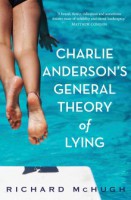
Richard McHugh’s Charlie Anderson’s General Theory of Lying at the Book Group

Richard McHugh, Charlie Anderson’s General Theory of Lying (Viking 2015)

1cagtolBefore the meeting: This book made me realise how little of my reading is just for the fun of it. It’s a comedy of manners set in the world of business consultants, bank executives and corporate CEOs after the financial crisis. The first chapter introduces Charlie Anderson, a brilliant consultant whose life is just as he’d want it: a wife who is the love of his life, three wonderful daughters, a girlfriend with no strings attached, and a belief in cheerful deceit that keeps it all working. We just know things are going to go terribly wrong. And they do.
Charlie runs foul of every one of these women, plus a couple more, to excellent comic effect. The domestic relationships are beautifully evoked: in particular, I feel as if I know each of the three daughters (and am glad I only have sons!). It’s quite an achievement that even though we are made privy to the long and not terribly profound meditations of Charlie and his wife the story zings along. None of the narrative threads lead to anything much: we never find out what happened in a crucial offstage incident; a situation that looks as if it’s going to lead to major catastrophe evaporates without explanation; some actions taken with a great sense of jeopardy have no consequences at all. Maybe the point is that self-deceivers like Charlie get off scot-free, but it felt to me that, apart from a single stinging wordless moment at the end of the chapter before the epilogue, there’s just no pay-off: like a detective story where foreshadowed crimes don’t happen, and confession to real crimes go unpunished.

It’s an enjoyable ride all the same.

The meeting: Richard McHugh  came to our meeting – he’s a friend of one of us. He arrived late, which, as someone said, gave us a chance to get all our slagging-off out of the way so we could be civil to the man himself. In the event, there wasn’t any slagging off as such, and the conversation wasn’t painfully civil. We all had a good time, including Richard. He said the three weeks doing publicity since the book was published had been hard work, and it was a pleasure to sit with a group of men who’d actually read the book, especially given that the general wisdom is that it’s mostly women who read fiction. (We were silent about the man in the room who had only reached the halfway point.) I had a list of questions, which I’ll put in white so as not to foist spoilers on you:

  1. Did Anna know about Charlie’s philandering?
  2. What actually happened at the barbecue?
  3. Why didn’t anything come of Charlie’s confession to the police?

It may be Richard’s first published novel, but he wasn’t naive enough to answer the questions outright. He replied to all of them with ‘What do you think?’, but then spoke interestingly. In particular, it turned out that one of the questions had been explicitly answered in an earlier version of the book. He told us what had  been cut, and I think we all agreed that the novel worked better with those parts removed, but we were still glad to know the answer. Our own surmises had all been less interesting.

While I still feel the lack of pay-off is a frustrating element, my sense of the ending has changed. I had bought into the central character’s smug belief that he had come though the events of the novel unscathed, seeing the faint rumblings of disquiet around the edges as relatively insignificant. Now I think of it as more like the pleasant family gathering at the end of The Sopranos, where we know that men with machine guns are going to come out of the restaurant toilet and kill them all as soon as the show is over. Charlie doesn’t get his come-uppance in the novel, but the writing is on the wall.

Lisa Gorton’s Life of Houses

Lisa Gorton, The Life of Houses (Giramondo 2015)

9781922146809

Lisa Gorton is a an award-winning poet. I’m using that journalist’s phrase because I haven’t read enough of her poetry to have any real sense of it. I have read some of her criticism and been intensely grateful for the insights she shares. Her first novel, Cloudland, was for young readers. The Life of Houses is her first novel for a general readership.

The action of the novel unfolds over about a week. Anna manages a Melbourne art gallery. While her husband is visiting his family in England, she sends their teenaged daughter Kit to stay with her estranged parents in a tiny seaside town a couple of hours’ train journey away. Anna has to prepare for an exhibition opening during school holidays, but her real reason for packing Kit off is so she can spend time with a lover, who is pressing her to leave her husband.

While Anna wrestles with her ambivalence about her love life, Kit encounters the miasma of unresolved emotion in her mother’s childhood home – her grandparents’ not-really-unspoken resentment of their daughter who left them with barely a backward glance, and the small-mindedness of small-town life beyond the family.

Not a lot happens. A teenage boy has died, probably by suicide, probably because he was gay, and Scott, an artist who was Anna’s childhood friend, falls under suspicion because he had spent time with the boy. There’s something needy and a bit creepy about Scott, but I don’t think it’s a spoiler to say we never learn anything about his sexuality, and that the suspicion is purely a symptom of small town thinking. He befriends Kit, and is the only person who has an inkling of what she is experiencing.

There’s another death, but external events are much less important in this novel than internal processes. Kit begins to think of her mother differently, and her sense of herself has grown. Anna’s attitude to her family softens, and her ambivalence about the lover deepens. Scott almost decides to leave the town. Everyone has a take on the building that is the family home: its history, its ghosts, who will inherit it, its emotional meanings and (in passing, but ominously) its market value. Absolutely nothing is neatly resolved.

Lisa Gorton and the editorial team at Giramondo aren’t afraid of hard-working adjectives or busy punctuation. For example:

The whole scene lay open before her: heat shimmering off scrub out where the road was, mile after mile of flat, low, secretive country. She found a sort of elation in it: a loneliness answering her mood. Sharp, scattering sounds drew her eyes to where the bird was lifting wing-beat by wing-beat up from the surface of the lake, its legs trailing in the water. She watched holding her breath; it seemed so unlikely the bird would rise.

That’s two colons and a semicolon in four sentences. More than once, a single sentence matches that. Here’s one from when Kit is listening in on a conversation between her aunt and Scott soon after she arrives in the town:

Their way of ignoring so much made Kit notice more: the creaking sound of some loose join in the decking; and that lasting roar: it was the wind, not the sea, she could hear.

The frequent use of sentence structures that call for this kind of punctuation has the effect of blocking the flow of the narrative. What is happening is almost always less important than the process of observing it. And often it feels as if things are there because they have been observed, even though they add nothing to the narrative or our understanding of character. Anyone reading to find out what happens next may be disappointed. The pleasures of this book lie elsewhere.

I received my review copy of the book from Giramondo.

aww-badge-2015

The Life of Houses is the tenth book I’ve read for the 2015 Australian Women Writers Challenge. I’ve now finished the challenge – but I don’t expect I’ll stop reading relevant books.

Lisa Gorton recently gave a fascinating interview about The Life of Houses to Fiona Gruber on the ABC’s Books and Arts.

Omar Musa’s Here Come the Dogs and the Book Group

Omar Musa, Here Come the Dogs (Hamish Hamilton 2014)

1hcdAt the last meeting: Someone said he wanted us to choose a book that would blow our minds. By the usual apparently random process, we picked Here Come the Dogs. Would it provide the desired explosion?

Before this meeting: The novel follows the lives of three men in their 20s who live in the Town, which is a bus ride away from the City – as Queanbeyan is from Canberra. Solomon and Jimmy are half brothers. Solomon is Samoan, a former basketball player whose career and university scholarship were cut short by injury. Jimmy, whose ‘eyes cut left to right, / paranoid and grim’ – well, his father was a bit of a fabulist, and no one knowns the truth of his ethnicity.Macedonian-born Aleks, their friend and neighbour since childhood, has connections with organised crime. The friends live in hip-hop culture, tagging and rapping, tending their tattoos, ingesting a range of mood-altering substances, fighting when need or impulse calls for it.

A character describes Solomon as bilingual because he can talk to university students in their own language (‘I guess I have to check my privilege. My bad.’). By that token, Omar Musa is multilingual. The novel’s back-and-forth movement from verse to prose is only part of the rich variation in the language: street argot, delicate descriptive prose, fine dramatic scenes, an occasional voice from the mainstream – all are there without any apparent strain. I’ll leave it to someone else to comment on the accuracy of hip-hop language and references – of the hundreds of names dropped I recognised maybe three. But Musa evokes the milieu with tremendous energy. Likewise the tagging/bombing references: it’s something of a miracle that, without any obvious signposting, an outsider like me is rarely left wondering what they mean.

The first chapter, which is laid out as verse, introduces the three main characters. They’re on a night out, as ‘the only ethnics at the dog races’ and then wandering, partying, getting into fights, and one of them into a sexual encounter. It’s smoke-filled, drug-inflected, and definitely not to be read aloud in a vicarage, but it works beautifully as a sequence of poems. The form allows moments like this, a one line poem and its title:

Wish we had a white person with us
Ten empty cabs have passed us by

In the morning-after prose that begins the second chapter, there’s an abrupt change of tone as we find Aleks meticulously cleaning his kitchen and getting his little daughter ready for school. The book keeps on springing similar surprises: just as you expect one thing, it gives you another. An act of criminal violence is performed with genuine compassion; a relationship that looks set to be central to the plot ends with some blunt name-calling; what looks like a major catastrophe turns out to be just another incident in a character’s near-chaotic life; a prison sequence is convincingly real while standing prison-story conventions on their heads; moral choices faced by the characters are deeply complex.

I loved the book. It has a lot in common with fiction that’s been coming from Western Sydney lately, evoking the knockabout world of marginalised people who struggle to live with integrity. And like that other fiction, it burns with passion for that world.

The meeting: It was a big turn-up for lasagna and cheesecake. Everyone had read the book, an almost unprecedented occurrence, and though some were keener than others, we had all enjoyed it. Some found it hard to get past the swagger of the opening chapter. Some found the ending unsatisfactory – partly because there is no real climax, and partly because of a manufactured feel to what climax there is. (I didn’t see either of these as problems.)

One chap said that as novels are mostly read by middle class people, it’s possible to read a lot of this one as intended to challenge middle-class readers. The C-bomb that’s the fourth word of the first chapter is a message in code: You’re not in polite politically-correct land any more. On the other hand, while agreeing that the lives of these characters was very different from our mostly comfortable, educated and secure lives, I think we mostly felt that as readers we weren’t observing them as examples, but finding a lot to identify with.

This led to an interesting discussion about young men and violence – we compared stories of teenage years in suburban London, small-town New South Wales, suburban Sydney. The book’s arson episode drew out arson-related memories. In one episode a character drives his car with his eyes shut, guided only by a voice that may be on his phone or perhaps is just in his head: is it magical realism, or was the young man just very lucky? Someone confessed to once driving with his eyes shut when young, just to see what it would be like to be blind. Like the character, he opened his eyes not far from disaster.

And of course, the conversation ranged: James Turrell in Canberra, Marina Abramovic’s coming visit to Sydney, the merits of the GP that a number of us go to, things we learn from our children, travel tales, movies, theatre …

Thanks, Omar.

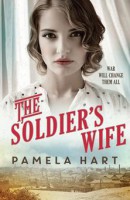
Pamela Hart’s Soldier’s Wife

Pamela Hart, The Soldier’s Wife (Hachette Australia 2015)

9780733633737

Romance novels really aren’t my thing, but Pamela Hart, as Pamela Freeman, has written a number of magnificent books in other genres, so I stepped out of my comfort zone to read her first venture into the world of historical romance. Also, it’s the centenary of the landing at Gallipoli, and in our house the schmaltzy, revisionist jingoism in the media has made it close to impossible to attend to the occasion. James Kent’s movie of Vera Brittain’s Testament of Youth was a big crack in that frozen wall. The Soldier’s Wife promised another.

The book  delivers on both fronts: as a story of the WWI home front, and as a all stops out romance.

Ruby has had a blissful honeymoon week with her tall handsome husband Jimmy, and then one last day in town before he is shipped off to Gallipoli, where they know he is going into harm’s way. (If I was being true to the period and to the book, I’d call her Mrs Hawkins, but after all I’ve been though with her, she’s Ruby to me.) Hailing from Burke, Ruby lodges with the friend of a friend in Annandale, a Sydney suburb, and gets a job as bookkeeper in a timber yard – the boss of the yard has a son who is an officer in the same battalion as Jimmy, which accounts for his willingness to take on a woman.

And it goes from there: Ruby lives in constant terror that the next telegram to be delivered will bring news of Jimmy’s death; she negotiates the perils of the all male workplace, where she fends off sexual predation and high-toned disapproval; having so briefly enjoyed married life and then left, she is strongly drawn to the handsome, muscular foreman of the yard; bit by bit she takes on more responsibility in the workplace and her relationship with her landlady becomes more solid.

I was surprised by some of the plot twists, and though in retrospect they were completely logical I don’t want to spoil them for you. I’ll just say that we are not spared the harrowing experience of learning of a loved one’s injury and death in battle; and the changing balance in power relationships between men and women that was brought about by the war is made painfully real, along with the ghastly difficulty in communication between those who went off to the unreal nightmare world of war and those who stayed behind in the all too real struggles at home.

The main characters are all Catholic – attending St Brendan’s in Annandale, where I have been myself more than once – and the moral world of the book is that of early 20th century Australian Irish Catholicism. I love this, because so much historical fiction shies away from such religious dimension, yet it is so important to an understanding of the times. It also adds a particular kind of intensity to Ruby’s temptations with the foreman – and I don’t think it’s a spoiler to say that I desperately wanted her to yield to temptation, and that the matter stayed unresolved until almost the last page.

The Soldier’s Wife is being promoted as an ideal Mother’s Day gift. I think my mother would have liked it, though she might have been unsettled by some of the discreetly worded but nevertheless explicit sexual references. I doubt if my father would have read it, but he would have enjoyed it too. It’s a good yarn. You care about the characters. And there’s the blessed relief of being able to think about Gallipoli through the experience of life-sized, complex people without the background noise of rascally patriotism.

aww-badge-2015

The Soldier’s Wife is the ninth book I’ve read for the 2015 Australian Women Writers Challenge.

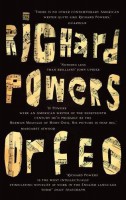
Richard Powers’ Orfeo

Richard Powers, Orfeo (Atlantic Books 2014)

1782391622

Margaret Atwood, no less, is quoted on the cover of this book as saying, ‘If Powers were an American writer of the nineteenth century he’d probably be the Herman Melville of Moby-Dick. His picture is that big.’ That’s probably taken out of context, and it’s a wee bit over the top, but, you know, only a wee bit. If Melville had been writing about the music scene rather than the whaling industry, he might have written this book. The digressions are just about as long as the ones in Moby-Dick, and for my money at least as interesting; the quest at the centre of the story is as doomed and self-destructive; the frame of reference as global.

Peter Els, a 70 year old composer who has had very little popular or critical success, calls 911 when his dog dies. The police who come to his door have their security-threat detectors set off when they see that he is a DIY biochemist, and soon he is on the run with the full might of Homeland Security behind him. The story of his flight, which becomes a kind of Thelma-and-Louise flavoured 12-steps amends-making pilgrimage, is told in counterpoint with his back story. Folded into one story is the world of Homeland Security vigilance about real and imagined terrorist threats, media panics and the surveillance state; and into the other the history of 20th century US cutting-edge music in its broader world political context.

It’s a gauge of how well Powers writes that just as Els’s flight is reaching a critical moment, he stops off to give a lecture in an old people’s residence, and everything stops while we are told the story of the composition and first performance of Olivier Messiaen’s Quartet for the End of Time – and it’s so interesting that 17 pages later, when we return to the main narrative (‘That was the story Els told his eleventh-hour pupils … ) we do so as if waking up from a vivid, satisfying dream. There are other, shorter digressions, in which Els listens to a piece of music, and we are taken through it moment by moment: this is a book to be read, not just with Google on hand to chase up interesting references, but with access to a music library to listen along with Els to Mahler, George Rochberg, John Cage, Harry Partch, and on and on. And yet it has the pace and suspense of a thriller.

I scored (no pun) Orfeo at my book-swappng club. Since I’d had Powers’ Galatea 2.2 on my TBR pile for some years, I decided to read it first. If the creative and life crises depicted in the earlier book when author and character, both called Richard Powers and in their mid 30s, were based in reality, it seems that they passed. Six novels and 19 years later, I don’t know that Orfeo is any more cheerful than Galatea 2.2 but if Galatea 2.2 contemplated the abyss, then Orfeo is gloriously, operatically, romantically over the cliff.

Richard Powers’ Galatea 2.2

Richard Powers, Galatea 2.2 (©1995, Harper Perennial 1996)

0060976926The narrator of Galatea 2.2 is a 35 year old ‘humanist in residence’ at a massive, cutting-edge scientific research centre somewhere in the USA. Recently returned from years in The Netherlands, he is still hurting from the end of his first great love relationship. When an odd, misanthropic scientist invites him to collaborate in a project to develop an artificial entity capable of producing literary commentary that will pass for human, he accepts the challenge. They are doing it for a bet, and start out thinking of it as an elaborate scam. The novel’s reference to the story of Pygmalion, the sculptor who fell in love with his statue Galatea, which then came to life, sets up clear enough expectations.

A complicating factor is that the narrator’s name is Richard Powers, and as he tells the story of his past in a second, retrospective narrative strand, a good bit of that story (Powers’ previous four novels, the places he lived, a passing mention of time spent in south-east Asia as a child) is verifiably the same as that of the author Richard Powers. This narrative tells of Richard’s falling in love and the gradual deterioration of the relationship even as his career as a novelist flourishes: the love story may or not be drawn from life.

It’s a teasing mixture of memoir and speculative fiction. Add to the mix extended accounts of cognitive science and artificial intelligence debates, and a sometimes overwhelmingly dense play of literary allusion (Powers is educating the machine in the great canon of literature in English, and he and some of the other human characters can quote great slabs from that canon from memory), and you’ve got a very rich mix. Here’s a relatively straightforward literary bit when the machine, now called Helen, is well advanced in its/her ‘education’:

She wanted to know whether a person could die by spontaneous combustion. The odds against a letter slipped under the door slipping under the carpet as well. Ishmael’s real name. Who this ‘Reader’ was and why he rated knowing who married whom. Whether single men with fortunes really needed wives. what home would be without Plumtree’s Potted Meats. How long would it take to compile a key to all mythologies. What the son of a fish looked like. Where Uncle Toby was wounded. Why anyone wanted to imagine unquiet slumbers for sleepers in quiet earth. Whether Conrad was a racist. Why Huck Finn was taken out of libraries. Which end of an egg to break. Why people read. Why they stopped reading. What it meant to be ‘only a novel’. What use half a locket was to anyone. Why it would be a mistake not to live all you can.

I get quite a few of those references, and I expect you do too. It’s a Trivial Pursuit kind of  fun. You can imagine someone reading the novel with one hand and holding a googling machine in the other.

The scientific palaver offers a different kind of pleasure:

It struck me. Every neuron formed a middle term in a continuous, elaborate, brain-wide pun. With a rash of dendrite inputs and handfuls of axon cuts, each cell served as enharmonic point in countless constellations, shifting configurations of light, each circuit standing in for some new sense. To fire or not meant different things, depending on how the registers aligned at a given instant and which other alignments read the standing sum. Each node was an entire computer, a comprehensive comparison. And the way they fit together was a cupola itself.
Those weird parallaxes of framing must be why the mind opened out on meaning at all.

I leave it to cognitive scientist readers to decided whether this is Doctor Who-ish ‘timey-wimey stuff’ or something more substantial. Either way, it – and many passages like it – serves to impress on us how complicated the science is. And, though the going becomes tough at times for readers like me who don’t like to skip the technical paragraphs, a believable narrative emerges of a machine capable of increasingly complex responses.

The love story isn’t completely convincing, and some minor characters tend to fall just short of being prompts for reflection on the nature of intelligence: one character has a wife with advanced dementia, another has a son with Down syndrome, and a postgrad literature student for whom Richard conceives an infatuation is conveniently imbued with Theory. Oddly enough, the parts of the book that I found most convincing were the descriptions of life in a Dutch village, in which the author’s love of the Netherlands is almost palpable, and the narrator’s ups and downs as he learns Dutch ring completely, joyously true.

Emily Bitto’s Strays

Emily Bitto, The Strays (Affirm Press 2014)

1straysThis is a novel about a fictional artist’s colony in Victoria in the 1930s. Though the colony bears some resemblance to the Heide group, and a couple of historical figures, notably Bert Evatt, are mentioned or make brief appearances, it would be a mistake to read it as a roman à clef. At least, I hope so – if not, Heide was quite a bit nastier than I’ve heard.

The narrator, Lily, looks back in middle age to her girlhood friendship with Eva, whose father, Evan Trentham, is a modernist painter and a towering figure in the Australian art scene, and to the years in which she became a virtual member of Eva’s family – one of a number of ‘strays’, of whom the others were young modernist artists. From a deeply conventional family herself, young Lily is fascinated by the bohemian life of the Trentham household: adults who are so engaged in their own pursuits that they leave children to fend for themselves, earnest talk, ‘reefer’ and opium seeds, erotic art, casual nudity, and the smells and sights of a group of working artists and their models.

Of course, all is not well in Bohemia. Eva and Lily, friends since they were eight, drift apart in their early teenage years in ways neither of them can acknowledge, and when calamity strikes the household, it brings the death of their intense intimacy as well.

The book is beautifully written. The characters are vividly realised: Evan the alpha male; Helena his wife and presiding goddess of the household; their three daughters – Bea the responsible eldest, bold Eva and deeply resentful Heloise; and the young adult members of the colony – including Jerome, the young artist who will eclipse his mentor and whose transgressions undo the community.

For all its manifest virtues, though, I couldn’t get excited about the book. It’s not that I was bored, and there are some wonderful things: there are moments when the intensely physical intertwining of young Lily and Eva comes brilliantly alive, so that the distance between them when they meet again as adults is devastating. But over all I couldn’t tell why any of it should matter to me, or actually why it mattered to the author. Interestingly, it’s as if the novel knows that concern needs to be addressed. In the over-long, loose-thread-tying section in which the main events of the novel are in the distant past, Lily tells Helena and Eva that she is thinking of writing a memoir about her days with the family. Helena asks the question that had been playing in my mind for 200 pages: why write it? The question leads in the short term to a tense exchange of blame and counter-blame. But later, Lily reflects (omitting spoilers):

The events of the Trenthams and their strays have long since been recorded in the pages of art history.  … Always, … the artist himself was at the centre, with Helena, Eva, Heloise at the distant peripheries. They were cast as ‘events’ that accounted for the prevalence of particular themes, detailed in the same manner as the influence of the war on Jerome. Heloise’s life a footnote explaining Jerome’s brilliant work.

So the narrator’s motive for writing is clear – it’s a feminist redress of the dominant patriarchal narrative. And we can extrapolate that as the novelist’s motive as well. But any passion behind that motivation didn’t make it to the page, or at least didn’t communicate from the page to me. Perhaps the book’s beginnings as part of a PhD left a subliminal sense that it was being written for an examiner’s eye. Perhaps it’s that I read The Strays after the Biff Ward’s grimly real In My Mother’s Hands, and was unconvinced by Emily Bitto’s inventions. Or maybe I’ve finally reached the predicted old-man condition of not liking fiction much any more. Certainly my lukewarmness seems to be a minority response.

aww-badge-2015This is the seventh book I’ve read for the 2015 Australian Women Writers Challenge.