Tag Archives: Philip Roth

Journal Catch-up 24

As I have mentioned before, I once had a substantial collection of Meanjins. I parted company with them in the course of moving house, probably forty years ago or so, and I haven’t kept up with Meanjin‘s changing identity since. In 2021 I toyed with the idea of resubscribing, but I may have been daunted by the sheer size of each issue. I have now bitten the bullet.


Esther Anatolitis (ediitor), Meanjin Vol 83 Nº 1 (Autumn 2024)
(links are to the Meanjin website: some but not all of them are available to non-subscribers)
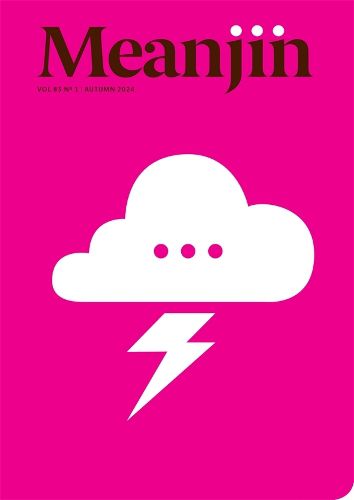
This issue is a doozie!

It’s as engaged with current social and political issues as Overland. There are a number of essays on aspects of the Israeli invasion of Gaza, including Sarah M Saleh’s brilliant argument for the importance of Palestinian solidarity movements to the political wellbeing of Australia as a whole. There’s a concise summary article by father and daughter team Stephen Charles and Lucy Hamilton on the role of lies and disinformation in the Voice referendum. There’s a portrait by Jack Nicholls of eco-warrior CoCo Violet. There’s Amy Remeikis on the significance of the (first) Bruce Lehrmann rape case. And more.

It’s as culturally diverse as Heat in its heyday. Editor Esther Anatolitis (Σταθία Ανατολίτη) interviews Peter Polites. André Dao gives the 2023 State of the (Writing) Nation Oration. And more.

It’s as academically challenging as Southerly. See Dan Disney’s esoteric discussion of a Korean verse form and the fraughtness (impossibility?) of translating it, or imitating it, without subsuming it into the linguistic dominance of the English language; or Ianto Ware’s account of the challenges he fac ed in writing about his mother’s life and death.

First Nations writing has a strong presence. Among other things, ‘Ilkakelheme akngakelheme—resisting assimilation‘, a powerful essay by Theresa Penangke Alice, has pride of place before the contents page, and the new poetry editor is Wiradjuri woman Janine Leane.

I learned a lot – from Renata Grossi about the law concerning wills and what happens when they are contested; from Tom Doig about the long shadow of the 2014 Hazelwood disaster; from Marcus Westbury about the possibilities of something like a Universal Basic Income.

There are memoirs, including a brief snippet by Clare Wright, which starts out from an elaborate piece of costumery in the Powerhouse Museum and takes the reader to an unexpected ugly teenage encounter.

There are book reviews, and poetry. I was delighted to read, ‘Thread‘ a new poem by Eileen Chong. Two very different poems, ‘Oomarri—coming home‘ by Traudl Tan with Kwini Elder Ambrose Mungala Chalarimeri, and ‘Dreaming in Bourke‘ Paul Magee, talk to each other across the pages about the importance of country for First Nations people.

I picked up a couple of new words. My favourite is::

  • pipikism, a term coined by Philip Roth, who defined it as ‘the antitragic force that deconsequentalises everything – farcicalises everything, trivialises everything, superficialises everything’. Naomi Klein revisits the term in Doppelganger, her book reviewed in this Meanjin by Sam Elkin.

I’ll give the last word of this post to Peter Polities, whose words on page 77* in some ways speak to the journal as a whole:

I remember when I was in art school … this guy said to me: ‘I’m not political.’ And I was like: What did you say?!?’ I was just so shocked the first time I heard it, but then by the second time, I was so sarcastic: I said, ‘Yeah, what’s political about making goods for a luxury market?’ So this is what these kids wanted to be: to create work that you hang above a fucking couch for rich people. My interest in art is as a site for intervention, a site for politics, and culture is one of the most political things that we have.


I finished writing this blog post in stunningly beautiful Kuku Yalanji country, to the tune of parrots, curlews and the calls of other birds I don’t recognise.


* My blogging practice for some time has been to focus arbitrarily on the page of a book or journal that coincides with my age.
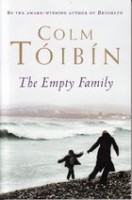
Colm Tóibín’s Empty Family

Colm Tóibín, The Empty Family (Picador 2010)

I’ve read very little by Colm Tóibín – his book on Barcelona, an extraordinarily spoilerish review of Ian McEwan’s On Chesil Beach, and that’s pretty much the lot. This collection of nine short stories, which has been beside my bed for a while and which I decided to read just now as possibly better suited to post-nasal-surgery times than a single longer work, is my introduction to his fiction.

While there are no characters who recur, and nothing like a discontinuous narrative, the book feels coherent – a number of the stories are about people returning to their country of origin after a period of exile, self-imposed or otherwise; many of them deal with Gay male experience; they are mostly set in Ireland or Barcelona, and in all of them connection with place and the people of the place are significant. An elderly Irishwoman returns to her native Dublin after a long absence to design a film set; after the fall of Franco, a Barcelona Communist returns from exile and encounters the old and new Spains; an Irishman returns from New York when his mother is dying. ‘The Pearl Fishers’ traces a delicate, questioning path through the Irish Catholic Church’s sex scandals. ‘The street’, the longest story, traces the developing relationship between two Pakistani indentured labourers in Barcelona.

I don’t know if I would have been quite so struck by this book’s Not Safe For Work bits if I hadn’t read it immediately after Philip Roth’s The Humbling, but I was struck by them. In three of the stories, there are graphic accounts of sex, probably more specific than the ones in The Humbling, but where at one stage Roth’s narrator protests, ‘This was not soft porn,’ Tóibín’s narrator and his characters are too engaged to need any such disclaimer. Both writers describe activities that I personally have no urge to participate in – Roth’s account makes me wish I’d somehow missed those pages; Tóibín’s prose manages to shed light on the nature of desire. ‘Barcelona, 1975’ reads as memoir, or at least conte à clef, and has an almost anthropological feel to it: this is how we did things in the dying days of the Franco regime, this is some of what we learned, and in particular this is how it felt.  Everywhere in his writing, you can feel the connections between people, again in stark contrast to the despairing isolation in the Roth book. That’s got to do with their different subjects, of course: Roth is writing about the loss of creativity. But I suspect I’m talking about something that goes much deeper in each writer – perhaps a cultural difference between Irish Catholic, lapsed or otherwise, and New York Jewish intellectual who is only as successful as his latest creation.

The Humbling of Philip Roth

Philip Roth, The Humbling (Jonathan Cape 2009)

I love Philip Roth’s prose, the way it seems to just flow directly from somewhere inside him, like lava or blood, yet always with extraordinary control of nuance. I haven’t read enough of his novels to know if The Humbling is representative of what he’s writing these days, but I do hope it’s not. I also hope the book isn’t a fictionalised representation of his current state of mind. Simon Axler, the hero, is a great stage actor who has suddenly lost his ability to act, and the agony of his loss is conveyed with such poignancy that it’s hard not to think Roth has been there, or has at least fantasised such a loss for himself.

What does a great artist do in such a situation? Well, first he doesn’t kill himself, then he commits himself into a psych hospital, then he’s discharged and after a while either kills himself or doesn’t (he does make a clear choice, I’m trying not to be too spoilerish). And that’s the whole story. Except for the second act where he falls in love with a much younger woman and has lots of increasingly exotic sex with her.

I believed in the despair. I accepted the falling in love. The specifics of the sex felt like an older man working hard to imagine how the young folk these days do stuff, what with all that queer theory and non-binary approach to gender they’re always going on about. Or maybe I was just embarrassed.

The Nobel Prize for Literature is to be announced in a couple of days and Philip Roth’s name is being mentioned again. If he gets up it won’t be on account of this book, but maybe it will cheer him up.