
Jeff Lemire (writer), Caitlin Yarsky (art), Dave Stewart (colorist) and Nate Piekos (letterer), Black Hammer Volume 5: Reborn Part I (Dark Horse Books 2022)
Jeff Lemire (writer), Caitlin Yarsky (art), Dave Stewart (colorist) and Nate Piekos (letterer), Black Hammer Volume 7: Reborn Part III (Dark Horse Books 2022)
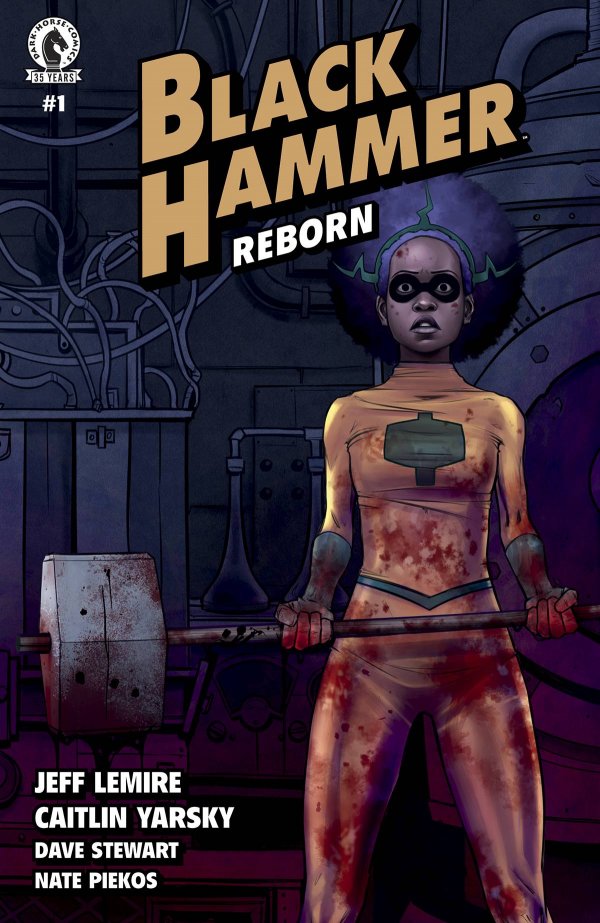
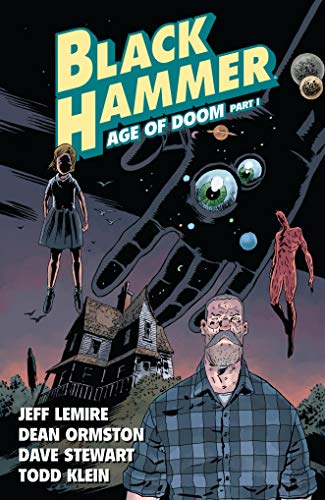
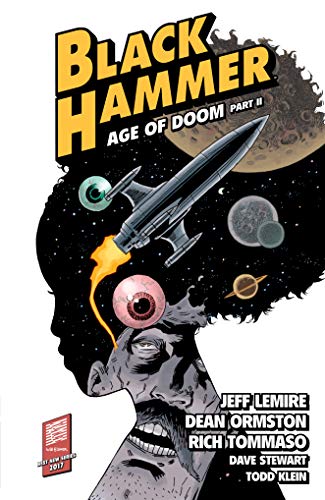
When I wrote about Black Hammer Volume 4 (at this link) I thought it was the end of the story, but no, two year later in real life and TWENTY YEARS LATER in comics caption, along comes Volume 5, or Reborn Part I (monthly comics #1-4), closely followed by Volume 6 and 7, Reborn Parts II and III (monthly comics #5–8 and #9–12 respectively). Not only is superhero Black Hammer reborn, as his daughter Lucy reluctantly resumes the identity, but there is a new, female artist. Caitlin Yarsky’s distinctive artwork is every bit as dramatic as Dean Ormston’s in the earlier volumes, though I think the domestic elements of the story have taken on more weight
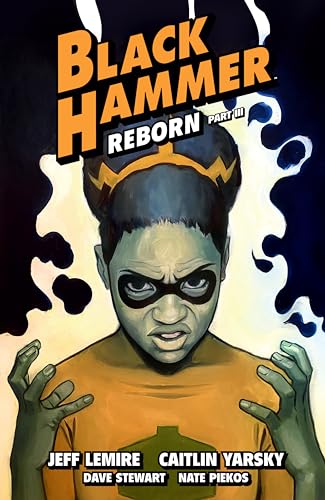
I was given Volume 7 as a Christmas gift. I hunted for the two earlier ones, but found only Volume 5. I’m resigned to never reading the middle of this trilogy, but I did enjoy the parts of the ride that I took part in, and Volume 7 does start with a recap of sorts.
Anti-God was defeated in the earlier books, and now he’s coming back, and multiple universes are about to be collide and be destroyed. In earlier books, the superannuated superheroes were put out to pasture in a kind of simulacrum of rustic bliss. Many of them turn up in this one, older, possibly wiser, or maybe something else. In the dizzying interplay of universes, the dead live again, the good become evil, the evil good – and some heartbreaking decisions have to be made. There are plenty of what you expect from a superhero comic: THWAKs, SHRIPs and THOOMs and svelte female bodies (always, mercifully, clothed), there’s also a lot of complex, even bewildering time shifts. The emotional heart of the story is Lucy having to choose between being a good mother and saving the universe. (A bit like E. M. Foster’s famous line in ‘Two Cheers for Democracy’: ‘If I had to choose between betraying my country and betraying my friend I hope I should have the guts to betray my country.’) Oh, she also has to resolve her daddy issues in a multiverse kind of way.
This is probably not the end of this Black Hammer series. The caption on the last page of Volume 7 reads, ‘The cataclysm has begun.’
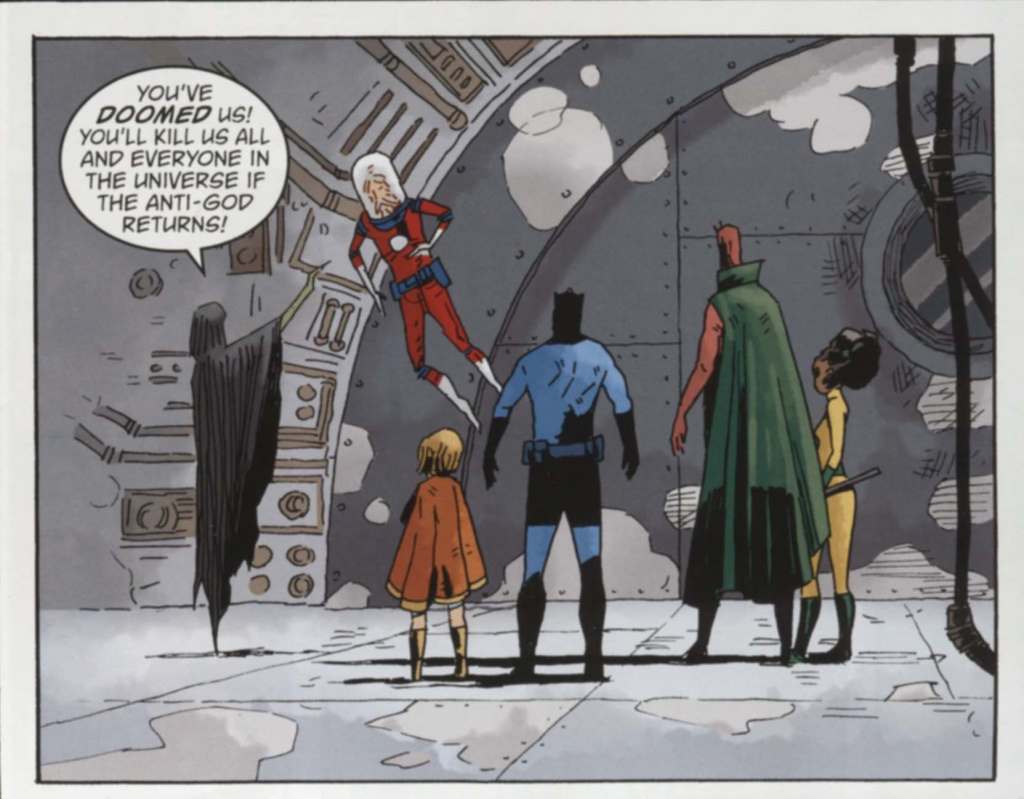
The two pages 77* illustrate the books’ range of art and narrative style.
In Volume 5, there’s a more or less domestic scene, in characteristic muted tones.
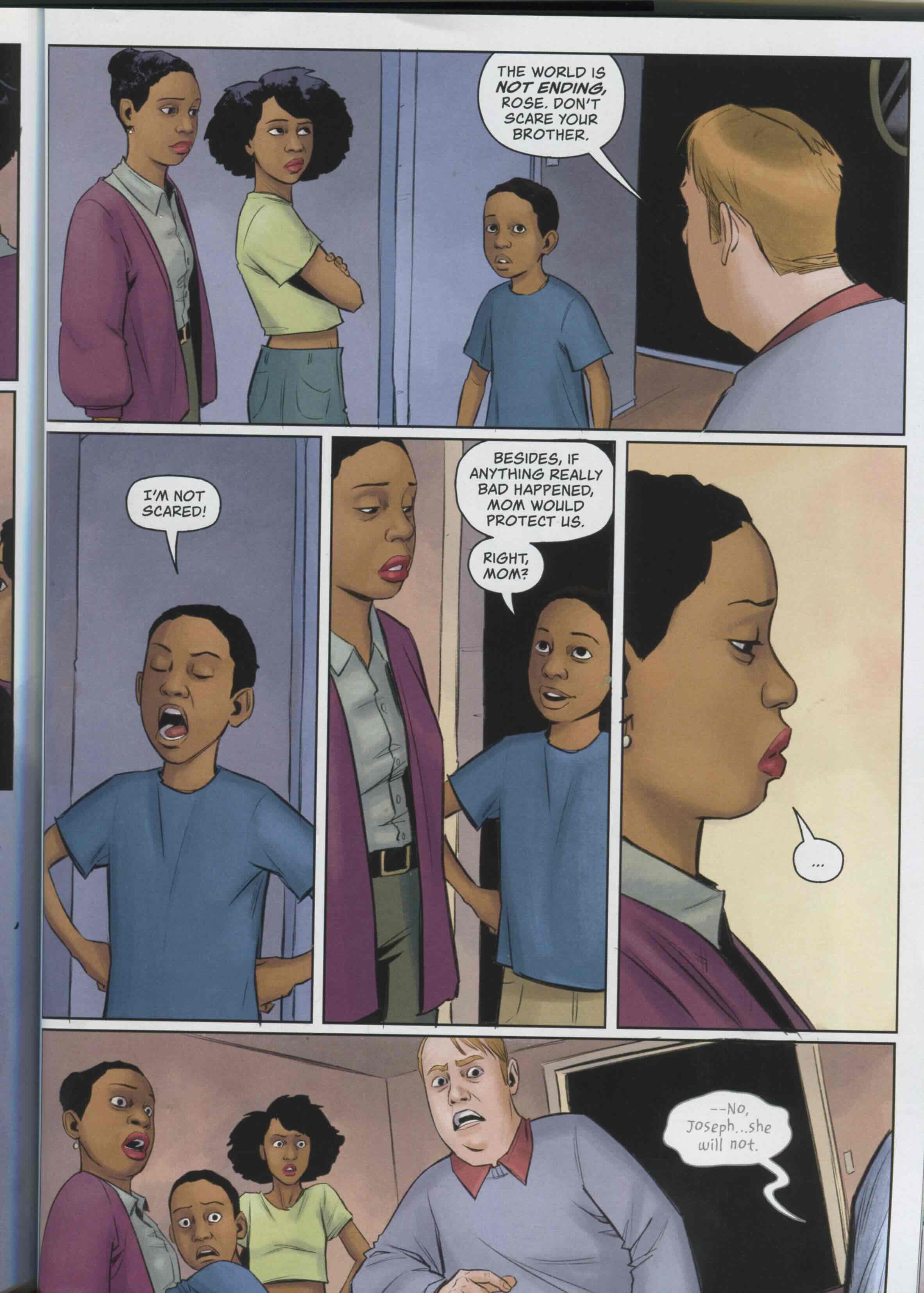
‘Mom’ here is Black Hammer in her mundane identity. The pudgy middle-aged man, the children’s father, was once an aspiring super-villain. His superpower was pretty pathetic and when Black Hammer vanquished him she also won his heart. In a note, Caitlin Yarsky says his his ‘suburban dad look’ was partly inspired by the late Philip Seymour Hoffman. Lucy’s reluctance to rise to her son’s challenge is a micro version of her central dilemma.
Readers of previous volumes immediately recognise the quavery font in the final panel’s speech bubble: it’s the voice of Colonel Weird, whose entanglement in a time warp means that he lives in the ‘Para-Zone’ were he experiences all times at once. When he says something about the future, we know it’s true. This little speech bubble carries a huge narrative force, as the other characters’ response indicates.
Volume 7’s page 77 may not feature any SCRACKs or KRA-KoooOOMs (these come a couple of pages later), but it’s part of the luridly coloured epic story.
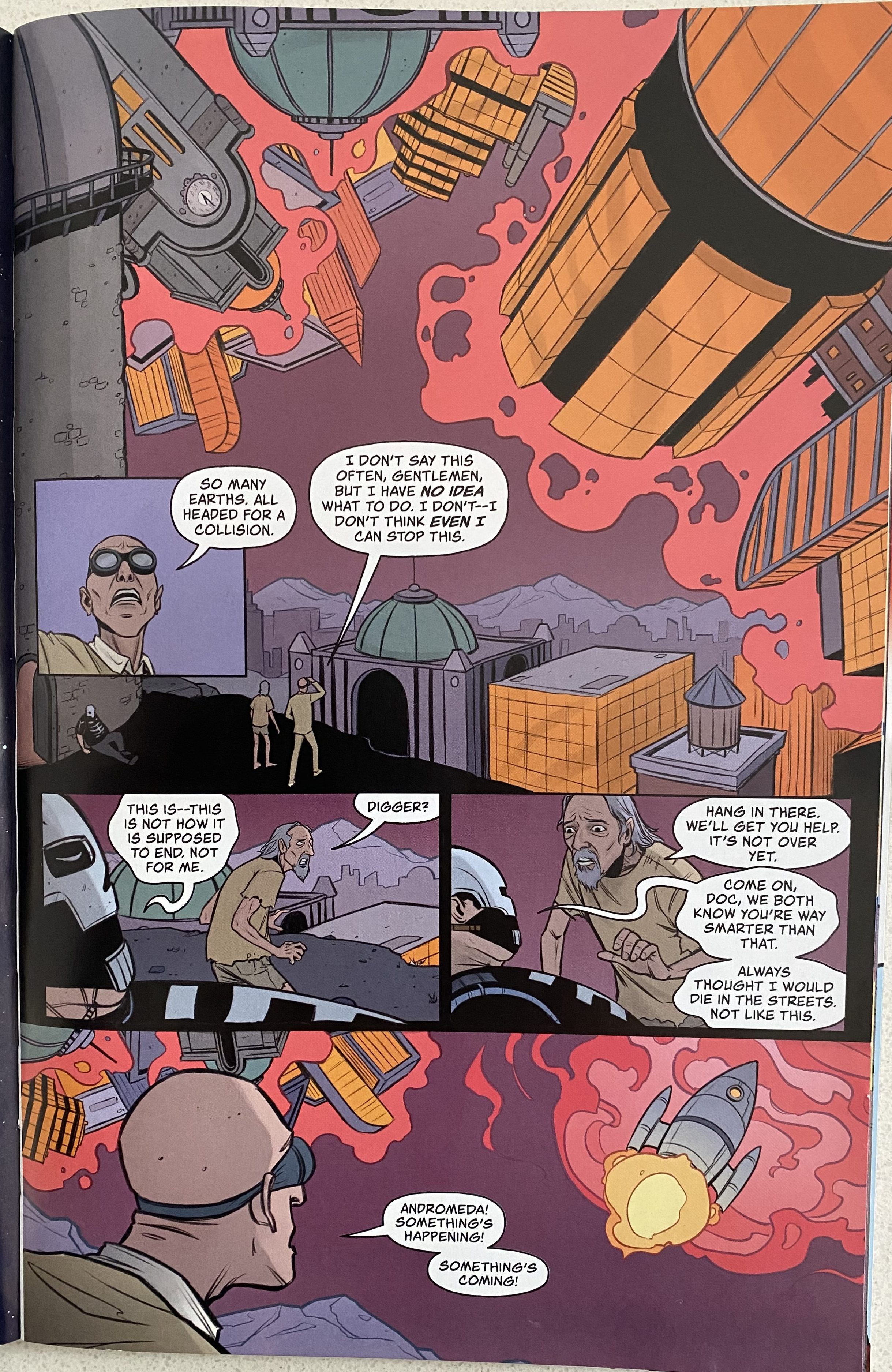
Yes, it’s lurid, but it is crystal clear.
Those upside-down buildings in the top part of the page are parts of other universes heading for this one. A convergence will spell major disaster. Digger is another former supervillain, now Black Hammer’s major ally. He is wounded and probably dying. The Doc is one of the completely good guys – at least this version of him is. The man with the goggles … no, it’s all too complex for a quick summary. And that approaching rocket ship is about to introduce a whole new level of complexity, as Colonel Weird makes another appearance, this time accompanied by multiple even weirder versions of himself.
I guess I’ll keep an eye out for Volume 8 – maybe it will hit the shops in time for my March birthday.
I wrote this blog post on land of the Gadigal and Wangal clans of the Eora Nation. I pay my respects to Elders past and present. After days of heavy rain, the heat is beating down, and the lizards are loving it.
* My blogging practice is focus arbitrarily on the page of a book that coincides with my age, which is currently 77.


 Me fail? I fly!