
Samantha Harvey, Orbital (2023)

Before the meeting: We picked this book as our next title the day before it won the Booker Prize. Smart us!
Four men and two women on a space station orbit the Earth sixteen times in twenty-four hours. They eat, they monitor experiments with plants and mice, they do strenuous exercise to counteract the bodily effects of living in low-gravity, they maintain their environment and monitor their own vital signs, they report back to ground control, they exchange messages and images with their loved ones at home, they occasionally have weirdly unreal conversations with complete strangers on Earth, and they look out with wonder at the planet below them and at the vastness of space.
That’s the plot.
A writer less sure of herself might have developed a plot where the relationships among the travellers create conflict or titillation. There would be plenty of possibilities in the crew consisting of two Russian men, an Irish woman, a Japanese woman, a Christian man from the USA, and a Latino man with connections in the Philippines. But the subject of this novel is the humans’ relationship to the planet, and beyond that to the universe, from a perspective that makes the conflicts that dominate human life in general seem absurd.
At the front of the book there’s a diagram showing the pathway of the spacecraft’s orbit over the day. The craft flies / falls in a straight line, but the rotation of the planet beneath it means that it crisscrosses the land and ocean below. I kept flipping back to the diagram as chapter by chapter, one for each of the sixteen Earth orbits in the day, describes in lyrical language what can be seen below.
This book is ideal for my blogging practice of singling out a particular page, currently page 77, because though there is a narrative of sorts it’s not the kind that means one has to be wary about spoilers. Part of what makes this book a worthy winner of the Booker is its brilliance at the sentence level.
Page 77 is in the chapter ‘Orbit 8, ascending’. Though the craft is over the south-west of the USA, the narrative departs, as it does occasionally, from what lies below to describe what is happening on the other side of the planet:
Over there, in tomorrow, the typhoon summons winds of a hundred and eighty miles per hour. It’s rampaging through the Mariana Islands. The sea levels off the islands’ coasts have already risen with the expansion of the warmer water, and now, where the winds push the sea toward the westward edges of its basin, the sea rises more and a five-metre storm surge engulfs the inlands of Tinian and Saipan. It’s as though the islands are hit with cluster bombs – windows blown out, walls buckling, furniture flying, trees splicing.
There follows a little more description of the typhoon from a meteorological perspective. Its growth is the book’s one central narrative thread. In later chapters, the crew see it as spectacle – contrasted with the terrifying reality on land, especially as it affects a poor family who once offered hospitality to one of them.
But for now, the daily routine asserts itself:
The crew go on with the last of their tasks. Anton eats an energy bar to fight off late afternoon drowsiness. Shaun removes the four fasteners on the bracket of the smoke detector that needs replacing. Chie inspects the bacteria filters. Their path now ups and overs and exits America where the Atlantic is ancient, the placid silver-grey of a dug-up brooch. Calm suffuses this hemisphere. And with no ceremony they complete another lap of the lonely planet. They top out some three hundred miles off the Irish coast.
And then there’s this:
ln passing through the lab, Nell looks out and sees the promise of Europe on the watery horizon. She feels somehow speechless. Speechless at the fact of her loved ones being down there on that stately and resplendent sphere, as if she’s just discovered they’ve been living all along in the palace of a king or queen. People live there, she thinks. I live there. This seems improbable to her today.
This intermingling of more or less objective observations of the Earth as seen from orbit, the daily routines of life in the space station, moments of lyrical reflection is maintained, with miraculous poise, through the whole book.
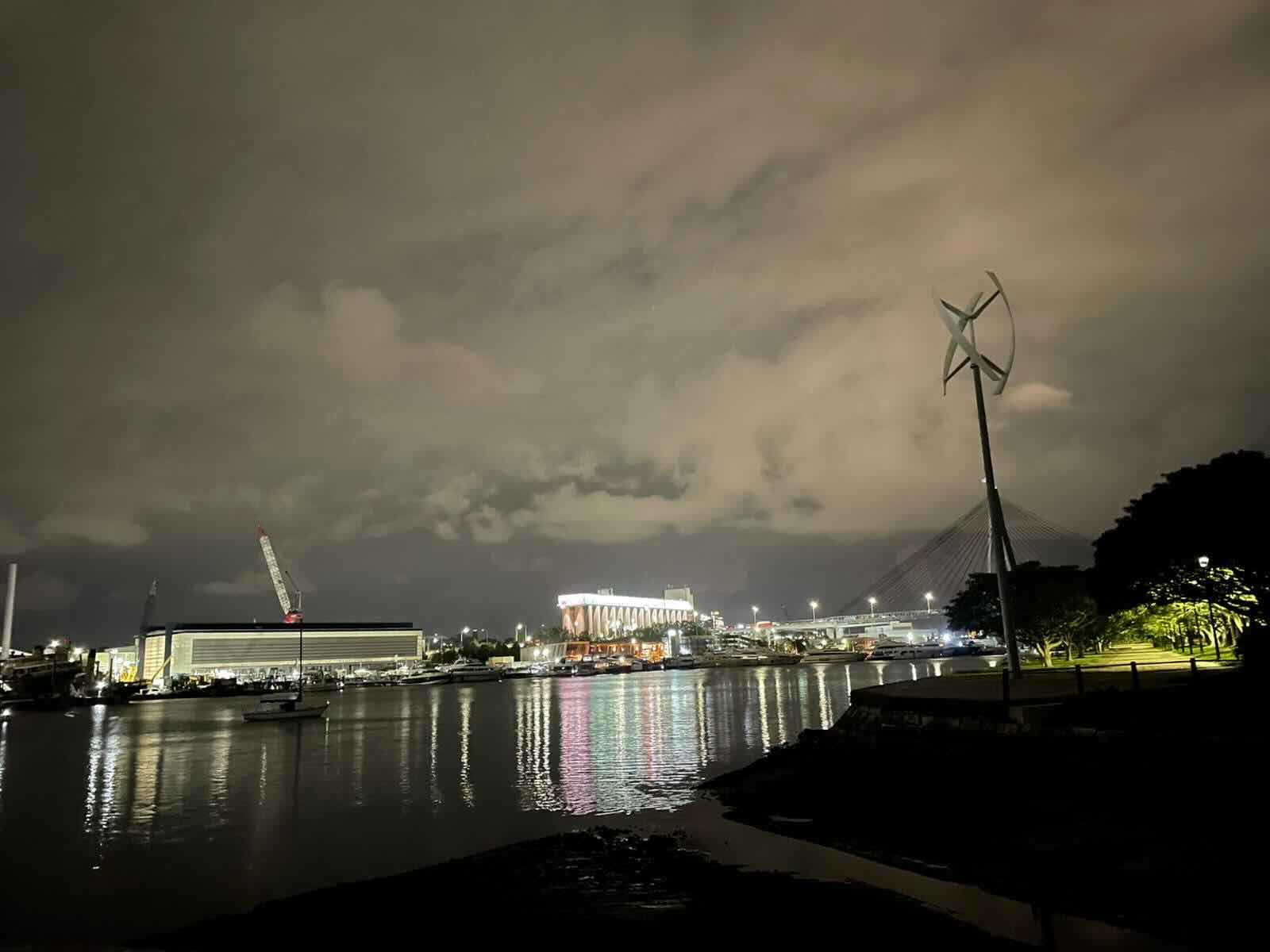
The meeting: We’ve been calling our bring-a-plate meetings gentlemen’s picnics. This one was an actual picnic, in Bicentennial Park on the shores of Blackwattle Bay, Gadigal land. Pavlova, quiche, dumplings, barbecued sausages eaten to a backdrop of birdsong and practising dragon boats beneath a three-quarter moon. We were interrupted briefly by what seemed to be a gay bashing – eight men of certain ages tried to look imposing as we lumbered towards the scene, but it seemed to vanish before we reached it. We conferred with a couple of men who were dossing down in the Esther Abrahams pavilion, and with a cluster of hefty teenage boys, and decided there was nothing further any of us could do.
It was our final meeting for the year, so we swapped gift-wrapped books (I scored a Zadie Smith) and most of us read a poem: David Malouf, Robert Frost, me and John Levy (it was unclear whether I’d broken a rule by reading one of my own, but it was excused because my poem was there to illuminate John’s), Brecht, James Baldwin.
In the middle of this mostly joyous occasion, we managed to talk about the book. The first thing said could have been a paraphrase of my fourth paragraph above: what a relief that Samantha Harvey didn’t go down the track of having big conflicts among the crew. My sense is that everyone enjoyed the book a lot.
We reminded each other of ‘good bits’: the lab mice learning to live in low gravity, the tear drop that has to be caught and disposed of because free-floating liquid can’t be tolerated, the nose pressed against a stomach as two characters squeeze past each other … Someone mentioned what should have been obvious: though the crew sees sixteen sunrises, they all happen on the same day – I took that in my stride while reading the book, but when it’s put like that it leaves me gasping.
One person found a lot of the book tedious and repetitive, but later, driving in the car, he realised that the repetition was partly the point, these people were caught in a continuous loop.
The closest we came to disagreement was when someone said the absence of ordinary, everyday irritations and conflicts among the crew strained his credulity. In real life, people living together in such close quarters would inevitably grate on each other at best. Two arguments were offered to counter this view. First, on the level of verisimilitude, the crew are disciplined – they can live with an itch in a space suit for hours without scratching, surely they can put personal irritations aside. Second, yes it’s unrealistic, but to pay attention to such matters would have cluttered the book or even taken it to a different, less interesting place. (One of us has spent some months in a hut in the Antarctic, so could vouch for the likelihood of conflict – though he was the one who argued most strongly that these are disciplined space travellers.)
It was a terrific end to another Book Group year.


 Me fail? I fly!