Johka Alharthi, Celestial Bodies, translated by Marilyn Booth (published in Arabic as Sayyidat al qamar 2010, translation Allen and Unwin 2019)
This book is quite a ride. The first novel by an Omani woman to be translated into English, it’s Jokha Alharti’s second novel. According to the Translator’s Introduction, it’s one of ‘ a wave of historical novels that constitutes a major subgenre of fiction in the Arab world’, and ‘has been praised by critics across the Arab world for its fineness of portraiture, its historical depth and subtlety, and its innovative literary structure’.
It tells the story of a couple of intertwined Omani families in the village of al-Awafi over four generations, but its ‘innovative literary structure’, which is at first bamboozling and never becomes straightforward, means that the story isn’t told in anything remotely like a straight chronology. With some exceptions, alternate chapters are narrated by Abdallah, son of the merchant Sulayman: he drifts in and out of sleep and entertains trance-like memories while travelling on a plane, he ruminates on his complex, pain-filled relationship with his late father, on the state of his marriage and on his children’s life paths. Each of the other chapters focus on a different character: Abdallah’s wife, his daughter, his sisters-in-law, his father-in-law, the slave woman who raised him. With each of these characters, the novel moves off into different directions and to different times. Time collapses and the overwhelming sense is that everything is happening in an imagined present.
Yet the period covered by the narration sees huge social and political change. A recurring image of flimsy buildings being replaced by cement ones becomes emblematic of the changes. Slavery was legal in Oman until 1970, but one of the main characters is irritated or worse when her husband and then her son insist that she and they are no longer slaves – that’s how she thinks of herself and she has made it work for her, including establishing a sexual partnership with her ‘owner’. The situation of women in general is in a state of flux: three sisters negotiate different outcomes in relation to the outgoing custom of arranged marriages; each of them faces down the patriarchy in her own way, though patriarchy stays intact.
The modernity of lab coats, plane trips and celebrity culture jostles with elaborate cursing rituals, offerings to placate djinns, and (no spoiler really) what turns out to be a covert honour killing. Classic Arabic literature has a strong presence – my impression is it wouldn’t be realistic if the characters didn’t recite poetry every now and then, and indeed they do. There’s more than one unsolved murder, although – after some teasing – the reader is left in little doubt about the perpetrators. There are some deeply satisfying twists for better and worse in the many complex marriages and relationships. Especially towards the end, tragedies that have been passed over or heard about at third hand are seen in close-up.
Marilyn Booth’s English is elegant and accessible, and leaves enough Arabic words in place that the reader is always aware that this is a place and a culture he (in my case) knows next to nothing about. There’s a map of the characters at the front, which I needed to consult often.
Celestial Bodies won the 2019 Man Booker International Prize (you can read how the judges described it at that link), which is how it came to be on offer at our Book-swapping Club. I’m glad to have read it.
From a septuagenarian’s memoir to queer teenage romance, the war on drugs and soundscape ecology, here are the next five sessions from the 2020 Sydney Writers’ Festival that Covid sent into virtuality.Once again, I haven’t read any of the books discussed.
Vicki Laveau-Harvie’s The Erratics won the Stella Prize last year. It’s edging onto my TBR shelf, and I’ve heard and read quite a lot about it, so I almost didn’t listen to this podcast: hearing too much about a book before you read it can completely undermine the experience of reading it for oneself.
But once I’d started listening I was hooked. Ange Lavoipierre (so many excellent interviewers at this Festival that I’ve never heard of) elicited wonderful reflections, on the difference between memoir and autobiography, the astonishing way something that’s peculiarly personal can resonate with many people’s experience, the way writing a memory down is like taking a snapshot which replaces the fluid thing that was there before, and much more.
The conversation made me want to read the book rather than making me feel, as this kind of conversation sometimes does, that I don’t need to.
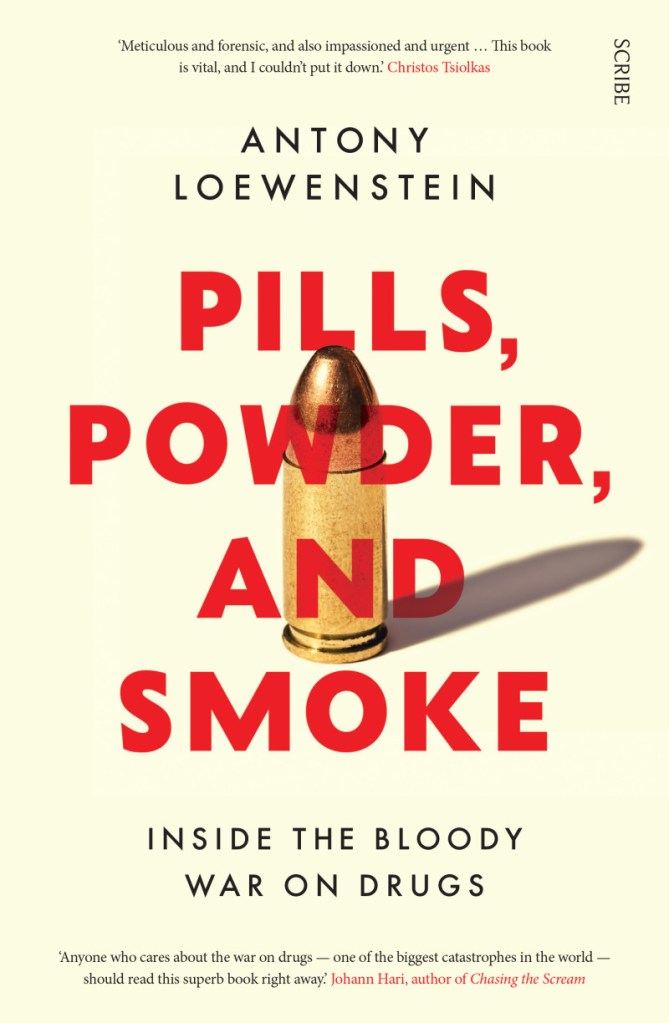
Antony Loewenstein is back, this time talking about his own book about the war on drugs, Pills, Powder, and Smoke, with George Dertadian. Dertadian introduces himself as an academic who researches aspects of illegal / recreational drug use, who only put Loewenstein’s book down because he had to. So it’s a high-level journalist talking to a scholar, a good combo.
The war on drugs is like the war on terror: neither can ever be won, and both – if I remember correctly – generally make worse the thing they seek to remedy. The war on drugs can become a war on drug users, as experience in the Philippines under Duterte shows. Shockingly but not surprisingly, Loewenstein says, Duterte’s program of extrajudicial killings is generally popular. But the Philippines is an extreme example of what is happening elsewhere:
American administrations have not killed millions of Black people to fight a drug war, not within the US at least. What they’ve done is, they’ve got the world’s largest prison population, which I might add was mostly expanded under Democratic administrations, not Republicans, and Joe Biden, potentially the next US president was the key architect of the War on Drugs rhetoric.
There’s a fascinating discussion of ethical drug use, challenging the mindset, ‘My enjoyment is not connected to other people’s suffering,’ with information about the cost of the drug trade for lower level people in the supply chain in the drugs’ countries of origin. And equally fascinating, though brief, discussion of the safe injecting rooms in Sydney and Melbourne.
My favourite quote: ‘With some notable exceptions politicians on this subject are gutless pricks. I think that’s the correct academic term.’
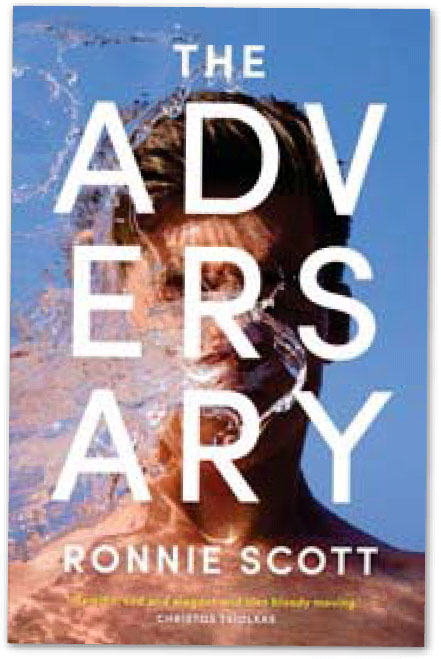
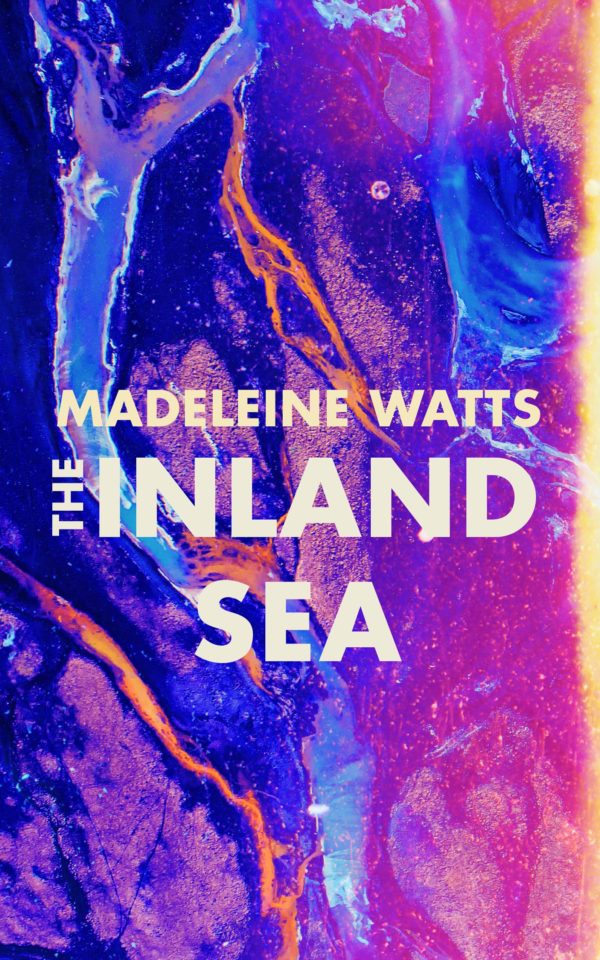
Ronnie Scott and Madeleine Watts, authors of the coming-of-age novels The Adversary (set in Melbourne) and The Inland Sea (set in Sydney) respectively, talk with Rebecca Harkins-Cross, Melbourne-based critic and writer.
They each read from their books, always a good thing in these conversations, and both books sound interesting. The conversation mostly avoids the trap of detailed discussion of the books and instead ranges over the questions of research and the relationship of these books to others. Patrick White, Christina Stead, Sumner Locke Elliott and explorer John Oxley are all mentioned. I learned a little about ‘post-AIDS-crisis’ culture among Gay men, and enjoyed hearing a Sydney-Melbourne conversation that didn’t indulge any of the inane rivalry tropes.
Josephine Rowe, described on the SWF website as one of Australia’s short-fiction greats, discusses her recent collection, Here Until August, with novelist Stephanie Bishop. Listening to this podcast was like eavesdropping on two smart, likeable strangers taking in spoilerish detail about a book I hadn’t read, a pleasant but pointless activity, until …
…. speaking of the importance of place in her fiction, JR went off piste for a moment to speak about the fascinating work of Bernie Krause, a soundscape ecologist who has been recording the sounds made by particular locations over five decades:
[He has] built up this incredible archive of 1300 biomes, their sonic signatures, and how they change over time … He talks a lot about the ways in which animals communicate and the bandwidths that they use. There’s the geophony, which is the sound of the natural, non-animal, non-sentient world. Then there’s the biophony, which is all non-human creatures, sound-making organisms. And there’s the anthrophony, which is us: our noise interacting or coming in and taking up certain registers means that creatures can’t communicate with each other in the same way and they’re being edged out. So you might be looking at the same patch of forest and it might look completely the same, but when you listen to the sound signature of it you hear how much is missing.
… Of these 1300 environment that he has recorded over the past 50 years, two thirds of them are either unrecognisable or in some cases completely silent, and that’s such a terrifying idea.
The conversation then turns to craft – how writing a novel differed from writing short stories (not necessarily harder!), how building with bricks differs from building with stone … And the session finishes with a reading from one of the stories in Here Until August, which made me want to go out and by the book.
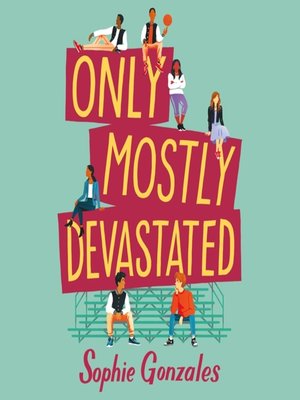
The non-digital SWF was to have an All Day YA event. This panel was to be part of it, featuring YA writers Erin Gough (Amelia Westlake), Sophie Gonzales (Only Mostly Devastated) and Anna Whateley (Peta Lyre’s Rating Normal), all of whom have written queer romance.
Again, I felt I was eavesdropping on smart, likeable people talking about books I haven’t read, and in this case am unlikely too, because my niblings are either out of the YA age group or aren’t much interested in romance, queer or otherwise, and by the time my grandies have reached YA reader age the field will have moved on.
There wasn’t really any YA as such when I was of that age. I searched out the little book where I listed all the books I read 1961 to 1975. Not including the books set for school, the list for 1961, the year I turned 14, which I understand to be peak YA, comprises:
20 books by Agatha Christie
5 by Edgar Wallace
4 by Erle Stanley Gardner
4 racist yarns by Sax Rohmer
2 by Ngaio Marsh
a guilty 2 by Carter Brown
only 1 by Georgette Heyer, alas
1 by Arthur Conan Doyle
2 detective stories by people I’ve never heard of otherwise
3 historical novels – Ben Hur, The Robe and I Will Repay by Baroness Orczy
1 science fiction: H G Wells, The Invisible Man
Cheaper by the Dozen by the Gilbreths
Patrick Dennis, Around he World with Aunty Mame
Willie Fennel, Dexter’s Court, which I noted was funny by don’t remember
Much Ado About Nothing (I don’t know why)
I guess if there’d been YA queer romance, or any YA books at all, I would have been spared that immersion in churned-out detective fiction.






 Me fail? I fly!