Category Archives: Book Club

Kevin Powers’ Yellow Birds

Kevin Powers, The Yellow Birds (Sceptre 2012)

1444756133Kevin Powers served in the US Army in Iraq in 2004 and 2005, and this novel draws on that experience. It’s a story about combat told by someone who was there. It needs to be approached with respect. And I did. I was repelled by some callous and/or confused anti-Islamic imagery in the first paragraph (‘The war tried to kill us in the spring … While we slept, the war rubbed its thousand ribs against the ground in prayer.’). But I read on.

The anti-Islam thing was clearly not deliberate. The narrative follows a small group of soldiers in Iraq – really just three characters. They do vile things, but they’re not triumphalist about it: this is what soldiers have to do, and they are pretty much as numb to the deaths of their comrades as to the enemies and the innocent bystanders they kill. There are flashbacks to home in rural Virginia. A terrible fate for one of them is foreshadowed. There’s a nasty scene in a brothel, a colonel who does what the narrator calls a ‘half-assed Patton imitation’, some clueless embedded journalists.

I had trouble believing any of it. I don’t for a moment think Powers is misrepresenting things. Certainly, there’s a fierce rejection of the sort of crypto-glamour of something like The Hurt Locker (I mean the movie – I haven’t read the book it draws on). I’m pretty sure he tackled some material that was unimaginably hard to face, and I admire him greatly for that. But nothing came alive for me, everything felt painfully constructed. I stopped reading at about page 90 when an embedded journalist was being a complete idiot.

So The Yellow Birds may be all the things that the distinguished writers quoted on its back cover say it is: ‘inexplicably beautiful and utterly, urgently necessary’, ‘born from experience and rendered with compassion and intelligence’, written ‘with a fierce and exact concentration and sense of truth’. It may, as one of them proclaims, be the All Quiet on the Western Front of America’s Arab Wars. Please don’t take my word against the combined judgement of Ann Patchett, Tom Wolfe, Colm Tóibín. Alice Sebold and more. As far as I read, I thought it was pretty good first novel on a very important subject, and hope Kevin Powers has a great writing career ahead of him.

Teju Cole’s Open City

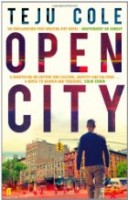
Teju Cole, Open City (2011, Faber and Faber 2012)

0571279430 Julius, the narrator–protagonist of this novel, is a psychiatrist by trade, but as far as we’re concerned he is a flâneur: we don’t quite have a word in English for such a person, one who strolls (flâne) around a city, observing people and things with a detached, intelligent curiosity, and no other agenda. Julius strolls from street to street, from church to bar, gallery to movie theatre to concert hall. He visits an old friend who is dying, phones a former girlfriend, has a casual sexual encounter, chats with the man who checks the air-conditioning vents on the subway, is mugged, runs into the sister of a friend from his teenage years. Almost always, he is moved by whim rather than intention, and when he does set out on a quest at one point, the quest comes to absolutely nothing.

The city is New York, though Julius visits Brussels for a spell and continues his flâning ways there. I didn’t read the book with a street map open beside it, but I expect that if I had I’d have known to within a block or two where I was on almost every page. The same goes for time: he visits and responds to particular films, concerts and exhibitions, and I’m reasonably sure that the date he saw them on could be approximated by a quick check of past issues of New York newspapers.

In a way, just as Julius’ wanderings trace the shape of the city, his encounters (not all of them are conversations) build a picture of the less tangible social and political world, mostly from perspectives other than the dominant one, as most of the people he talks to are not white – he himself is the Nigerian-born son of a German mother and a Nigerian father.

But the book is not the meandering bore or disguised tract that description may conjure up. True, it doesn’t have a central quest or conflict needing resolution. Also true, there are reflections on the state of racism and internalised racism in the US, on ‘political correctness’, on Middle Eastern politics. But none of the reflections amounts to a didactic ‘line’, and there is a quiet and unobtrusive overall arc. We get to know Julius, and start to wonder about him. He has an ambivalent attitude to African-Americans in general – welcoming the sense of connection but shying away from the enforcement of identity. He loves his old English professor and knows he is dying, yet visits him only twice over many weeks, and when he discovers on his third visit that his old friend has died, he resumes his peripatetic ways without missing more than a beat. There is a striking lack of affect in his account of a sexual encounter with a Czech woman in Brussels. His quest to find his German grandmother is oddly half-hearted. His music references are incredibly erudite, and you might start to wonder if ‘incredible’ might be more precise than it at first seems – that he might be straining to project an image of himself as a man of high culture. It’s not that we’re being given a coded alternative version, but we realise that, perhaps inadvertently, he is telling us a lot about what it means to be a mixed-heritage, middle-class African immigrant to the US. Perhaps it’s a sop to the conventional reader that there is a surprise revelation towards the end, but I found it both disturbing and deeply satisfying that Julius lets the revelation sit on the page with only a broad introductory comment, as if he is as stunned by it as we are.

I’m not sure what the title means. An open city, in the usual wartime context of the term, has declared that it will not defend itself in case of attack. Perhaps Manhattan is wide open, ready to yield its secrets to anyone who wants to walk its streets and buildings with eyes and mind on the alert. Or perhaps Julius is the open city of the title – laying himself out there without defensiveness.

Open City was one of the books I took home from our last Book[-swapping] Club. It took me months to actually pick it up because I’m generally suspicious of books and movies that treat New York as a cosmos. This isn’t one of those.

Stephen Greenblatt’s Swerve

Stephen Greenblatt, The Swerve: How the world became modern (Norton 2011)

This book tells of the rediscovery in 1417 of a copy of Lucretius’ poem De rerum natura (Of the nature of Things) as a key moment in the transformation of European culture – in the Renaissance. The preface begins promisingly with a moving account of the author’s own first encounter with the poem as an impressionable young man, but my antennae started twitching when, describing the contents of the poem, it said:

All things … have evolved over vast stretches of time. The evolution is random, though in the case of living organisms it involves a principle of natural selection. That is, species that are suited to survive and to reproduce successfully endure, at least for a time; those that are not so well suited die off quickly.

Hmm, I’ll bet London to a brick that the phrase ‘natural selection’ wasn’t around long before Darwin: even Alfred Russel Wallace, co-discoverer of the mechanism, didn’t use the term. And that paragraph manages to suggest the very Darwinian ‘survival of the fittest’. It looks awfully as if Mr Greenblatt is a bit over-keen to claim modernity for the poem, and to read the past through an excluding modern lens. A passing reference two pages later to ‘Robert Burton’s encyclopaedic account of mental illness’ (melancholy=mental illness? Really?) confirmed my distrust.

Sure enough, the book’s thesis, that the discovery of De rerum natura changed everything, comes across as a marketing hook rather than a serious argument. But then if you’re writing about something as dry as an ancient Roman philosophical poem, the temptation to play up any conflict or drama (mediaeval monks stupid and repressed / Renaissance humanists bold and clever) and to gloss over inconvenient complexities must be so great as to seem a necessity. In a deeply unsympathetic account of the early development of Christian theology, for example, Greenblatt comes close to saying the theology was formulated as a way of fighting off challenges from Epicureanism in general and Lucretius’s poem in particular, an implausibly narrow claim I would have thought. For the mediaeval Christian church, he tells us in other examples, curiosity was a mortal sin, and the silence during monastic meals was imposed for the purpose of preventing discussion. These assertions probably aren’t flat-out wrong, but it took five seconds with Google to find Thomas Aquinas going on about ‘the vice of curiosity’ in a nuanced way that makes it clear that the phrase has been taken out of context, and I’d like to see a debate about mediaeval monasteries and literacy between Greenblatt and Thomas Cahill, author of How the Irish Saved Civilization.

The book tells a good story. It gives a lively, heart-rending account of the destruction of the vast body of written work built up during Greek and Roman antiquity, and brings home with great force the way it was sheer chance that De rerum natura and many other works survived and were recovered – sheer chance plus the prepared mind of book-hunter Poggio Bracciolini, who knew what he’d found when he saw it on the shelves of a monastery somewhere in Germany. Poggio was fairly famous in his own time as a humanist writer and discoverer of ancient texts. Greenblatt has done us a service in giving us a lively portrait of him.

I’d just written that last paragraph when a link turned up in my Feedly reader to a review by Morgan Meis in n+1. As opposed to this blog post, it’s a proper review which gives a good account of The Swerve‘s argument and then gets stuck into its slipperiness from a better informed position than mine. I recommend the review as a whole, but here’s a quote for those who won’t click through to it:

The end of all Lucretius’s observation and wonder is to reach ataraxia, the point at which we look with indifference at the natural world. We realize we have no control over it and that it doesn’t matter what happens to us anyway. […]

A tremendous amount of desire is expressed in The Swerve. It is the desire, first and foremost, to present the modern age as a definitive solution to the human problem. Greenblatt wants Lucretius to be telling us it is OK to love the world and to be engaged with one another in the pursuit of pleasure and the avoidance of pain. There is immense joy to be found in that pursuit, Greenblatt thinks, and it is one that human beings have foolishly denied themselves again and again. Greenblatt finds great satisfaction in the fact that a two thousand-year-old poem expresses, in his view, this exact desire. Coming back to Lucretius is thus coming back to ourselves.

But Greenblatt can only make this argument by ignoring ataraxia, the whole point and purpose of Epicurean philosophy.

In other words, someone who knows quite a bit more about the subject than I do has confirmed my sense that the book should be treated warily. Greenblatt is a scholar writing for the masses, and he simplifies, which sometimes leads to distortion. He’s a secularist Jew writing in a US where self-righteous fundamentalist Christians are increasingly prominent in public life, and he goes in to bat for a different point of view, which sometimes leads to significant omissions and distortion. He’s witty, has an eye for the telling anecdote, paints a convincing picture of  life among the humanists employed in the courts of the more or less corrupt popes of the late 14th and early 15th centuries, reminds us that the renaissance didn’t just happen but had to be fought for, and above all whets the appetite for reading Lucretius (whose name, I now remember, was often on the lips of my high school Latin teacher).

Added much later: There’s a heartfelt smackdown of this book by Jim Hinch in the Los Angeles Review of Books of 1 December 2012.

Elisabeth Tova Bailey’s Sound of a Wild Snail Eating

Elisabeth Tova Bailey, The Sound of a Wild Snail Eating (Text 2010)

ImageFrom my hotel window I look over the deep glacial lake to the foothills and the Alps beyond.

Is it just me, or is that a really bad first sentence? That deep is surely doing nothing at all or far too much, and really, the Alps beyond? Things don’t improve in the second sentence, where the verbs are respectively mannered and cutely passive: Twilight vanishes the hills into the mountains; then all is lost to the dark. I read on with dread in my heart. But, marvellously, within two or three pages the book’s tiny hero had appeared, the prose stopped trying so hard and I was eating out of Ms Bailey’s hand.

The hero is a wild snail. Soon after leaving the hotel of the prologue, Elisabeth Tova Bailey was laid low by a mystery virus. For years afterwards she was so debilitated that it was a major undertaking to leave her bed, and even to sit up or turn over was a big deal. She couldn’t play with her dog, and even the most welcome of visitors left her feeling exhausted. While she was in this state of enforced passivity, a friend brought her a gift of a tiny snail she had found in the woods. The author initially responded unenthusiastically, but as time passed she found that the snail provided not only a distraction during her long stretches of solitude, but also a deeply comforting companionship.

The story is beautifully told. As the relationship with the snail develops, we follow the illness’s progress, share the writer’s reflections on her subjective experience of time, are treated to snail-related gleanings from literary greats and not-so-greats (Oliver Goldsmith, Kobayashi Issa, Elizabeth Bishop, Rainer Maria Rilke, Patricia Cornwall – the list goes on), and learn fascinating information about the anatomy, habits, defences and mating behaviour of snails, some observed directly by Ms Bailey and much garnered from the reference books that took up a lot of her bed time.

I would say the book is charming, and that would be true, especially perhaps of the marginal drawings by Kathy Bray. But it’s also much more than that. What emerges is a profound sense of respect for living things and for the connectedness between them. The chapter epigraphs include a number of marvellous haiku. Oddly, it strikes me that there’s something haiku-like about the book as a whole: where those tiny poems capture a moment, this book, really an extended personal essay, captures a much more substantial swathe of time, but because of the mental state induced by the author’s illness it has a haiku-ish sense of quiet discovery.

It’s all done, after that awkward opening, without straining for effect, without heavily emotive language or any whiff of religiosity. Richard Dawkins would be delighted. I was.

Frank Moorhouse’s Cold Light

Frank Moorhouse, Cold Light (Vintage 2011)

This book came highly recommended by what seemed like the whole world, and I can see what people admire, even enjoy about it.

It’s a rare thing, a novel whose main character lives consciously and deliberately as part of the great historical narrative of her time. Edith Campbell Berry engages with ideas, faces political realities, and tries to wield influence for the good. In the first chapters she has returned to Australia in the early 1950s. She has a hand in the design of Canberra – in fact, her intervention seems to be crucial to the decision to go ahead with Walter and Marion Griffin’s plan for a lake. Through her brother and his partner she is a close-up witness to the Communist Party’s response to Bob Menzies’ failed attempt to ban it, and then to Khrushchev’s revelations about Stalin and the invasion of Hungary. She dines at Menzies’ table, and chats with Whitlam soon after his election in 1972. She works with the International Atomic Energy Agency and is again close to the action when secrets about the English atomic tests in Western Australia leak out. At her death she is a special envoy in the Middle East for the Whitlam government.

Edith is no cardboard cutout. Through all these years, she has to contend with assumptions that women’s place is not among those wielding power. Failing to gain official positions, she bluffs her way past public service obstacles and procedures, works her connections, takes advantage of gossip that she is some kind of spy. Her sexual experiences, and sexual might-have-beens, are unconventional and complex. Possibly the most attractive thing about the writing is the sense that Frank Moorhouse is discovering things about her as the novel progresses. Ambrose, Edith’s husband at the start of the book and the love of her life, is a cross-dresser, and I couldn’t resist the notion that this is a metaphor for the way the author slips into Edith’s skin and clothes – including on occasion her underclothes. Be that as it may, there’s a strong sense of Edith as someone Frank admires and loves, someone who exists independently of him. I didn’t need to be told that there was a real woman somewhere in the background (as Frank told Stephen McCarty at Ubud and on Slow TV a while back – it’s towards the end of the clip). It does feel at the end of the book that one has read the story of a life lived for its own sake and not to enact a writer’s world view. That’s really something.

But, you know, I can’t say I enjoyed the book. It’s the third volume of a trilogy and maybe I should have read the other two books first. As it was, there seemed to be an inordinate amount of recapping, an awful lot of ‘As you know, Bob’. I expect that if I’d read the other books, these would have been less irritating, and I might have had greater tolerance for Edith’s frequent ruminations because of a clearer sense of them perhaps as charting her mental journey. She ruminates on her ideal capital city, on the nature of love, on the lessons to be learned from the League of Nations. I’ve got nothing against rumination, but I couldn’t find anything wise, witty or provocative in Edith’s – I don’t think I’ve ever been so bored in a book that I still wanted to keep reading.

And then there was the sense that Moorhouse had done a huge amount of research and couldn’t bear to let some of it go even though it didn’t quite serve the story. I can enjoy info dumps: my love of Neal Stephenson is partly due to the way he drops in great wads of information, and if Barbara Hambly’s Free Man of Color groans under the weight of her research into the New Orleans society of its time, it is the groaning of a table laden for a feast. But for whatever reason – perhaps because Moorhouse often presents his information as a character’s reveries or as even less plausible conversations – I wondered if the Readers Digest Condensed Version might be a better book. There’s an extremely poignant moment a bit past the novel’s midpoint, where Edith and Ambrose have parted, perhaps forever. And just as she – and the reader – have a moment to absorb the full import of the event, along comes this conversation with her driver:

‘How long will it take the Major to reach London?’ he asked, making conversation.
‘About fifty hours, plus the time from Canberra to Sydney.’
‘Many stops?’
‘Darwin – Singapore – Calcutta– Karachi – Cairo – Rome. I’d rather not talk, Theo.’
‘Of course, ma’am.’

Your mileage may differ, and I hope it does, but for me that was a case Frank the Irritating Researcher interrupting Frank the Passionate Story-teller. When Edith returned to her reverie, the moment for this reader had been lost.

I didn’t hate the book. I did learn from it. I do admire it. I’m glad I read it. It was a slog.

You wouldn’t read about it

On Friday night my book club had its end of year meeting. That’s the book club where we swap books and keep discussion to a minimum. I missed the end of year meeting of the book group, where the rest of the chaps discussed a book of essays by David Foster Wallace which I hadn’t managed to read, so I didn’t miss anything but conviviality and shame (unless of course something happened that they’re being secretive about). The book club met at Anong in Kings Cross for the best Thai food I remember ever eating, and we had a wonderful night, helped by two of our number being on first name terms with the restaurant owners and several having had recent travel adventures.

Rather than the usual complex swapping, this meeting each year is the occasion of a bit of simple giving. Each of us brings a gift-wrapped book, and each goes home with one. Two years ago three of the six books turned out to be The Slap, which has become even more ubiquitous since then, if that’s possible. This year, despite all the double guessing and byway exploration that goes into the choice of books, there was another hat trick: Jeanette Winterson’s Why Be Happy When You Could Be Normal?

LoSoRhyMo #6: Michael Cunningham’s By Nightfall

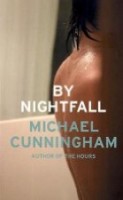
Michael Cunningham, By Nightfall (Farrar, Straus and Giroux 2010)

The Book Club (the one where we swap books and keep discussion of them to a minimum) has introduced me to many writers and kinds of writing that I wouldn’t have sought out otherwise. Thanks to it I’ve read excellent books I might have prejudged as boring (an engrossing biography of a World Bank CEO comes to mind). But there have also been books the lender thought were brilliant that stank in my nostrils. By page 34, I was thinking By Nightfall might be about to join Philip Roth’s The Humbling as one of my stinkers (though nowhere near as pungent as that). Two characters’ visit to the Metropolitan Museum on page 34 came close to tipping the balance:

… Peter and Bette walk together through the Great Hall at the Met, grand somnolent portal into the civilized world. Why deny its satisfactions – its elephantine poise, its capacity to excite the very molecules of its own air with a sense of reverent occasion and queenly glamour and the centuries-long looting of five continents. The Hall receives with a vast patience. It’s the mother who’ll never die, and right up front are her votaries, the women of the central kiosk, elderly for the most part, kind-looking, waiting to offer information from under the enormous floral arrangement (cherry blossoms, just now) that festoons the air over their heads with petal and leaf.

This is by no means uncharacteristic of the prose – the pages are littered with such unmurdered darlings. But Cunningham wrote the novel The Hours, the basis for the excellent film of the same name, so I read on. A couple of bedtime reads and a long walk with the dog took me to page 167. I still wasn’t engrossed, but I was planning to read the remaining 71 pages (yes, I was counting pages) to see what Michael Cunningham would make of the (to me) unpromising narrative. Then I was chatting to someone and outlined the story so far – see Sonnet 6 below – and realised I just didn’t care. I read somewhere recently that one of the rules of writing a novel is, ‘Cool stuff now, cooler stuff later,’ that is, ‘Don’t save all your cool stuff to the end – you know it’s coming, but the reader doesn’t.’ There’s probably lots of cool, subtly nuanced stuff towards the end of this book. And maybe what I’ve read is cool to a certain sensibility.

Sonnet 6: The story up to the point where I stopped reading
Our Peter’s life is fairly flat.
He loves his wife, they do sex well
enough, they’re faithful, and that’s that.
Their daughter doesn’t even yell.
His gallery in NYC
is testing his integrity.
The Hirst shark (symbolising death)
is at the Met. But soon a breath
of something new arrives: the younger
brother of his wife, who’s hot,
and often naked, stirs erot-
ic yens in Pete. This new-found hunger
leads to reams of introspection
and one psychoanalysed erection.

I peeked ahead after I wrote that.

[SPOILER ALERT]

Peter does kiss Mizzy, his brother in law, which seems to lead to a lot more introspection and a little conversation. My guess, based on a skim of the last pages, is that it all turns out satisfyingly inconclusive in the end.

Peter Timms in search of Hobart

Peter Timms, In Search of Hobart (UNSW Press 2009)

I enjoyed Delia Falconer’s book on Sydney in the Cities series very much, so when this turned up for borrowing at our Book Club, I fell on it with cries of joy.

Alas, after a characteristically elegant foreword by Robert Dessaix, in which he ominously mentions that the author is his partner and describes the book as ‘a concatenation of views of Hobart’, my enthusiasm took a beating. By page 15 the concatenated voices are complaining about the traffic, and before any of the beauties of the city have been evoked we’re treated to argument about town planning and the puncturing of self-serving quotes from government officials such as emanates from local ginger groups in any modern city. A swipe at Kevin Rudd’s ‘working families’ mantra left me feeling not just that I was listening in on local fights, but that the fights were old.

On page 40, in a dip into colonial history, ‘Having staked their claim, the authorities in London promptly put the struggling settlement out of their minds,’ I decided to follow their example and put the book out of mine. It might improve – if you know for sure it does, you know where comment button is.

Audrey Niffenegger’s Night Bookmobile

It’s tempting to say that Audrey Niffenegger creates comics for people who don’t like comics. It’s probably more accurate to say that she creates the kind of comics that appeal to people who like, say, Emma Magenta’s work, or Kate Williamson’s, which are, after all, comics as much as Watchmen or Sin City. (I’ve read both Emma Magenta and Kate Williamson thanks to the Book Club, which is also where I got The Night Bookmobile.)

The Night Bookmobile is more like other comics than The Three Incestuous Sisters, the only other of Niffenegger’s books I’ve read, in which the text played very poor second fiddle to the images. This is much more integrated. A young woman called Alexandra (get it?) discovers a fantastical night bookmobile that contains every book she has ever read. Over the years she encounters the bookmobile and its kindly, melancholy driver a few more times, and each time its collection has grown to incorporate what she has read in the meantime. It’s like a dream incarnation of a LibraryThing account. Alexandra becomes a librarian and longs to work in the bookmobile. Two pages of skippable text at the end explain how to interpret the story, and tell us that its the first instalment of a much larger work, The Library.

I was charmed, and not just charmed, but unsettled by the book’s dark and mercifully unexplained elements. There’s something half in love with death about Niffenegger.

As it happens, Perry Middlemiss’s site, Rhymes Rudely Strung, which publishes an Australian poem a day, turned up today with this, first published in The Bulletin in 1917, but taking Niffenegger’s sex-death-books connection and running with it:

Books
by Zora Cross

Oh bury me in books when I am dead,
Fair quarto leaves of ivory and gold,
And silk octavos bound in brown and red,
That tales of love and chivalry unfold.

Heap me in volumes of fine vellum wrought,
Creamed with the close content of silent speech.
Wrap me in sapphire tapestries of thought
From some old epic out of common reach.

I would my shroud were verse-embroidered too –
Your verse for preference, in starry stitch,
And powdered o’er with rhymes that poets woo,
Breathing dream-lyrics in moon-measures rich.

Night holds me with a horror of the grave
That knows not poetry, nor song, nor you;
Nor leaves of love that down the ages wave
Romance and fire in burnished cloths of blue.

Oh bury me in books, and I’ll not mind
The cold, slow worms that coil around my head;
Since my lone soul may turn the page and find
The lines you wrote to me, when I am dead.

Sunset Oasis

Bahaa Taher, Sunset Oasis (2007. Translation by Humphrey Davies, McClelland and Stewart  2009)

This won the inaugural International Prize for Arabic Fiction in 2008. If successive winners are as good as this, then it’s a prize to watch. Set in the late nineteenth century, mostly in the Egyptian oasis of Siwa, the narrative centres on Mahmoud Abd el Zahir, who is sent to the oasis as government representative, and his Irish wife, Catherine, who accompanies him on this dangerous assignment (previous government representatives have been murdered by the oasis-dwellers) because of Siwa’s historical connection with Alexander the Great – she dreams of discovering his tomb there. There’s a vivid sense of the time and place, of the complex politics of an Egypt recently occupied by the British, now in effect passing on the mistreatment to the ethnic minority in the oasis, of the challenges of intercultural relationships, of Egypt’s multi-layered past. Catherine and others are fascinated by antiquity, Mahmoud struggles to come to terms with his own experience in recent upheavals, the people of the oasis have their own internecine history. In the oasis, Easterners and Westerners have a long history of self-perpetuating warfare, and various ones of their leaders are convinced that peace can come only when one side of the struggle or the other is completely wiped out. It’s hard not to read this as a sly reference to our current global clash between Easterners and Westerners.

The book is beautifully written, and constantly fresh and surprising. It’s narrative switches effortlessly between Mahmoud, Catherine and a number of other characters including, brilliantly, Alexander the Great. I was initially disappointed by the ending (it’s all right, no spoilers), but on reflection I realised that it opened the narrative out to great depths of meaning.

After all my recent whingeing about reading works in translation, I’m glad to report that Sunset Oasis reads beautifully in English. So much so, I needed to remind myself regularly that it was originally written in Arabic. I found a wonderful interview with Humphrey Davies, the translator, at The Quarterly Conversation, which ends:

The first draft of a book is very heavy lifting. It hurts my eyes in particular; it’s a real strain on my eyes. At the end of the day, I’m pretty gobsmacked. The most pleasurable part is when the first draft comes back from the editor with questions, and then you can see the shape of it. You can start fine tuning and tweaking and coming up with nice little things.

So there you go. This translator gets to have an editor go over his first draft in detail, and is then paid good money to refine the work. This reader considers that extra money well spent – and, take note publishers, that opinion may well translate into sales. Both Bahaa Taher and Humphrey Davies are on my list of people to trust.

I’m posting in a bit of a rush, because this book was a Book Club borrow, and the meeting where I’m to return it is due to happen in about  15 minutes. So here you are, just ahead of the deadline. [I’m returning three books. The other two I couldn’t get past 100 pages. So it’s not only a joy but a relief to have enjoyed this so much.]