Category Archives: Books

End of year lists

The Emerging Artist and I are once again in Victoria for the New Year, and squeezing in our end-of-year lists.

Best Movies:

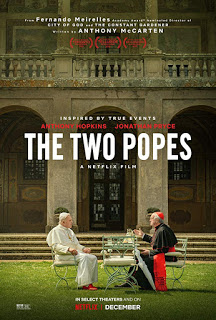
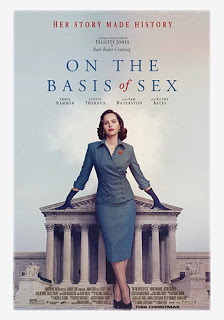
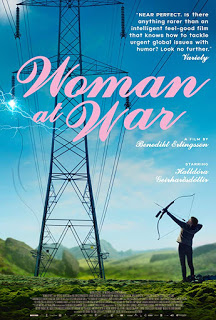
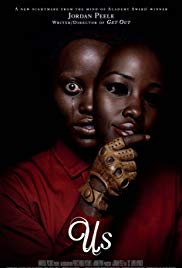
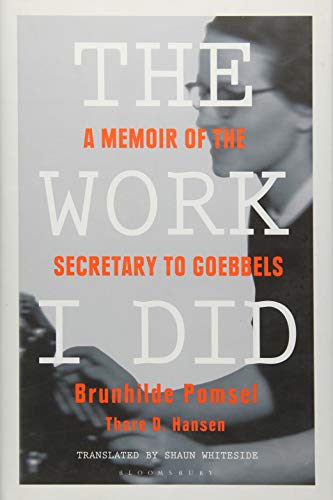
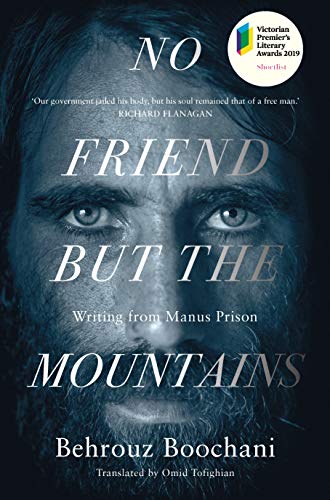
We saw about 50 movies this year. It’s an approximate figure because we don’t know if we should count the two we walked out of or the ones we watched on TV. We each gave every film a score out of 5. Four films scored the full 10. Here they are in random order (click on the images for my brief blog reviews):
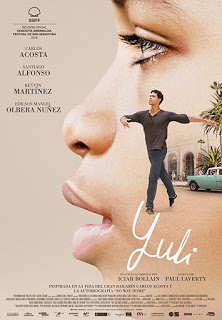
We each chose one more to make five each:
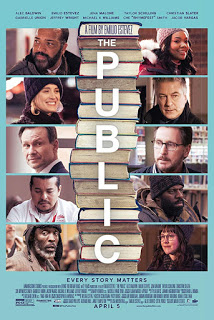
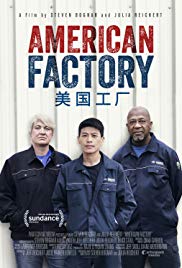
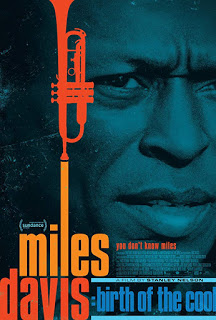
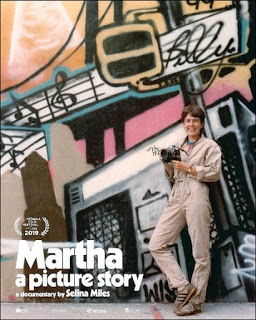
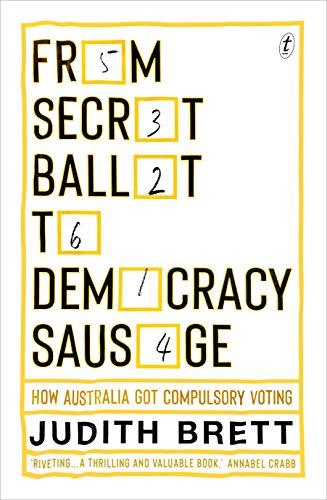
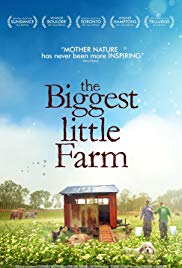
Of documentaries seen in the cinema we agreed on a top four, all seen at the Sydney Film Festival:
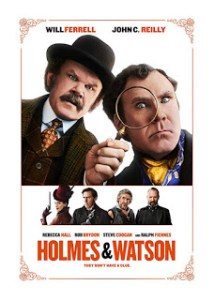
A special award for earliest walk-out of a movie goes to Etan Cohen’s Holmes and Watson. Having seen less than a quarter of an hour of it, our only regret was not leaving earlier.
Theatre (best and worst):

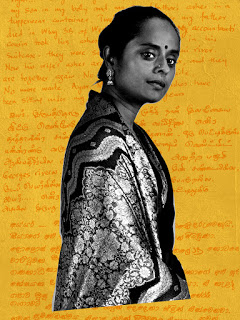
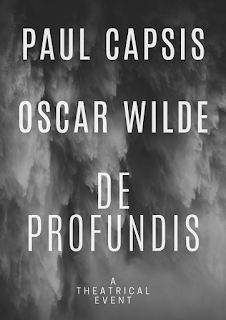
We subscribed to Belvoir Street again and there wasn’t a single dud. As for naming a best, we couldn’t go past Counting and Cracking, written by S Shakthidharan and directed by Eamon Flack in a Sydney Town Hall transformed into a huge Indian fort set. I want to give a special mention for Biggest Disappointment to Paul Capsis reading Oscar Wilde’s De Profundis at the Old Fitz, directed by Dino Dimitriadis which was inexplicably beyond terrible (and cost $50 a seat).
Books:

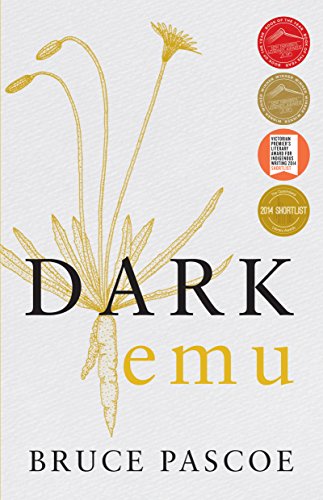
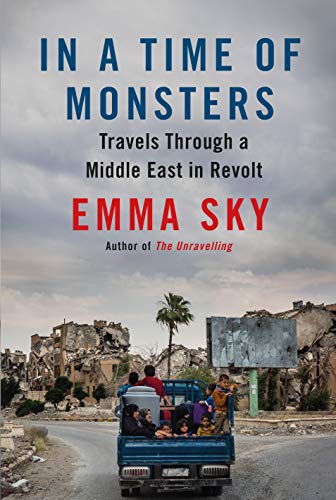
The Emerging Artist read 35 books in hard copy and roughly 17 on her device. Of the hard copy books, 22 were by women. She has given me a list of her five best books in non-fiction and fiction categories, but couldn’t be induced to dictate any comments. Here they are then, non-fiction first, none of which I’ve read (yet), all of them with explanatory subtitles:
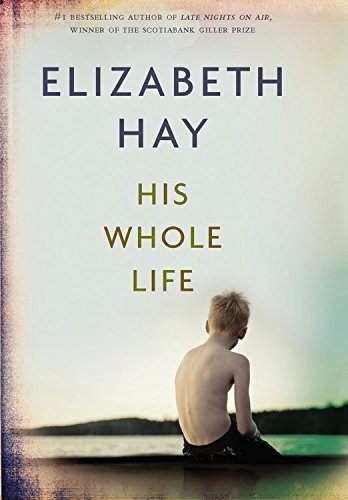
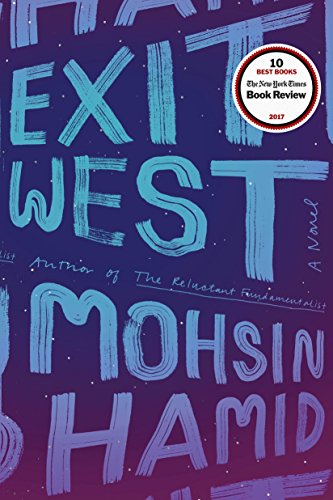
And the fiction (the last two with links to my blog posts, which don’t claim to represent the EA’s opinions):
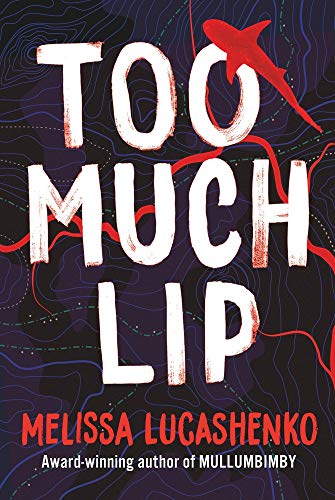
As for me, I don’t know how to pick best books from my year. Reading À la recherche du temps perdu, the first two novels so far, has been a delight and a fascination. Moments from Melissa Lucashenko’s Too Much Lip keep surfacing vividly months after reading it. Edna O’Brien’s The Little Red Chairs knocked me back on my heels. Rebecca Huntley’s Quarterly Essay Australia Fair changed my understanding of the meaning of elections. Nadia Wheatley’s Her Mother’s Daughter and Fiona Wright’s The World Was Whole make me look at the people around me differently, with greater respect for their unseen struggles and heroism. I’ve read much wonderful poetry, and rediscovered brilliant books for very small children. I’ve done a quick gender breakdown in an earlier post (here).

And that’s it for 2019. Please feel free to name your own Bests in the comments, and may all my readers have a fire-free and climate-change-mitigating New Year!
Simon Leys’ Death of Napoleon

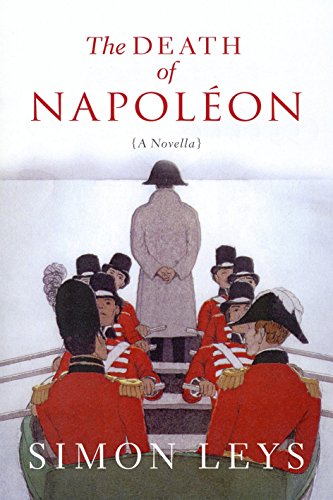
Simon Leys, The Death of Napoleon, translatd by Patricia Clancy and the author (Black Inc 2006)

This book imagines that Napoleon escaped from exile in St Helena through a brilliantly complex conspiracy, and that the man who died on he island was an impersonator. Napoleon starts out planning to contact his loyal followers and regain power, but – not a spoiler really – that doesn’t happen. So what does a great military strategist and statesman do when deprived of his army and any possibility of rebuilding his power base? What effect does it have on him to take on the identity of a lowly corporal? Can his skills be turned to any other purpose, and what happens if he tries to reveal his true identity? It’s an intriguing and entertaining premise, and it unfolds in precisely realised, sometimes very funny, scenes and crystal-clear language.

This is the only work of fiction by Belgian-Australian scholar Simon Leys (real name Pierre Ryckmans), who is best known, I think, as a learned commentator on Chinese politics and culture. Written in 1967 in his native French it was first published as La mort de Napoléon in 1986. The English translation is copyright 1991, and this edition, which includes a fabulously taciturn Author’s Afterword, was published in 2006.

L’Académie royale de langue et de littérature françaises de Belgique, of which Ryckmans was a member, comments on its website (link here) that this book ‘seems to have found its true mother tongue in its English translation’. Certainly the cool, ironic yet still respectful narrative voice feels comfortably Australian. Even leaving aside the twist in the title – Napoleon’s death is announced fairly early in the narrative, but our hero, the real Napoleon, lives on – the story has plenty of clever twists and surprises, always justified by character, and the final tragicomic movement should be predictable but wasn’t predicted by me.

I’ve only read one other of Simon Leys’ books – not fiction, but written with a novelist’s attention to the telling detail and the emotional force of events: The Wreck of the Batavia and Prosper (my blog post here). I wonder if we should regret that he didn’t write more fiction.

My copy of The Death of Napoleon is on loan from my Book Club.

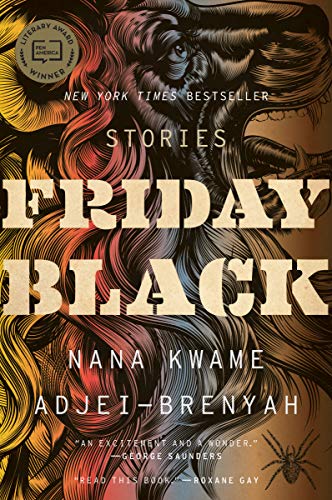
Nana Kwama Adjei-Brenyah’s Friday Black

Nana Kwama Adjei-Brenyah, Friday Black (Mariner Books 2018)

The Black Lives Matter movement looms large in the warp and weft of this book, especially in the first story, ‘The Finkelstein 5’, which features an activity known as Naming – African-Americans brutally kill random white people while shouting the names of the victims of a hideous racist murder –, and in ‘Zimmer Land’, in which a theme park named for Trayvon Martin’s killer caters to white men acting act out fantasies of killing young African-American men.

But it’s a long way from being a political manifesto. This is strong, beautifully crafted fiction, with a weird, fantastic edge to it: the killer in ‘The Finkelstein 5’ dismembered five teenagers in a parking lot with a chainsaw and was still found not guilty because he argued that what he did was for his own children; and the protagonist in ‘Zimmer Land’ wears a hi-tech suit that enables him on the one hand to become hugely threatening to the customers and on the other hand not be killed when they shoot him.

The other stories are less violent – though there is one set in a department store that involves a callous acceptance of the death of many customers in the Black Friday sales. (I was being all complacent about us not having such a barbaric ritual in Australia despite the efforts of Amazon and others to impose it – here Black Friday refers to some terrible bushfires – when I saw a news item about people being crushed in a mall in Parramatta, and the story retrospectvely took on a much more urgent feel.)

The sensibility behind the stories has a lot in common with Jordan Peel’s brilliant, borderline-horror movies, Get Out and Us. As in those movies, the stories are the thing, and the implications trail behind them like the tails of comets, staying in the mind a long time.

My copy was a gift from a friend who bought the book in New York to read on the flight home. He thought that because I enjoy China Miéville I would like these stories. I have no idea if Nana Kwama Adjei-Brenyah has even heard of China Miéville, but my friend was right about my response to the book.

Gustason & Uberti’s Notes from Public Typewriter

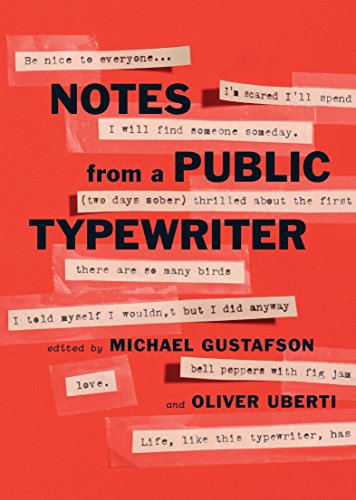
Michael Gustafson & Oliver Uberti (editors), Notes from a Public Typewriter (Scribe 2018)

This is a tasteful novelty book, the kind you give someone for a birthday present expecting them to find it pleasantly diverting and maybe even in some way illuminating. I was given it as a birthday present back in March, and if I’m right about the giver’s expectations I can report that they were met.

In 2013 Michael and Hilary Gustafson opened an independent bookstore in the university town of Ann Arbor in Michigan, USA. As an offshoot of an enthusiasm of Michael’s and as a point of difference in the difficult world of independent bookstores (many having closed in Ann Arbor in the years before 2013), they put a typewriter on display with a sheet of paper invitingly inserted. The typewriter on the opening day was a light blue Olivetti Lettera 32, which sounds very like the one I owned in the 1960s on which I typed out the lyrics of every Bob Dylan song I had access to, so I understand the appeal. That typewriter and its successors (a public typewriter can only last so long, and typewriter repairers are hard to find) attracted a steady stream of typists who sat down to pound out witticisms, confessions, comings-out, proposals of marriage, memorials, poems.

The bookshop and its public typewriter became a much loved local institution. The meat of this book is a wealth of things typed there, ranging from, say:

Why does this thing 
have a hashtag symbol?
They didn't have Twitter.
#weird

to:

Dear ––, I love you and I hope
one day we can talk about things
when we are sober.

The typewritten fragments are punctuated and illuminated by short essays by Michael Gustafson. Graphic artist Oliver Uberti who designed a typewriter sign for the shop window is responsible for the book’s elegant design. Beautifully reproduced photographs are scattered throughout.

So yes, the public typewriter is a gimmick, the book is a novelty and a piece of self promotion – effective, because if ever I’m in Ann Arbor I’ll certainly look for the Literati bookshop. But there’s something moving about the image that stands behind it all of an apparently endless stream of people responding to the challenge of a blank sheet of paper, whether it’s to write ‘fart’ five times (and mercifully Gustafson gives us only one of presumable =y many who wrote things of that sort), or to make the typewrite the centrepiece of that peculiarly US ritual of the public marriage proposal. Having been involved in the Sorry Book Project a decade ago, and Penny Ryan’s Connecting Hearts Project in recent years, I am in awe of the way people can rise to that challenge and in love with the way a community can manifest itself through devices of this sort.

Ruby Reads (17)

It’s been a while since I’ve posted about books I’ve encountered when wearing my Poppa hat. Here are some of the wonders I’ve encountered since last I blogged about them.

Margaret Wise Brown, illustrated by Clement Hurd, Goodnight Moon (1947)

Anyone who has worked in children’s literature has heard of Goodnight Moon. It’s an absolute classic US picture book for young children, which I can now tick off my Shame List. The person who sold it to me said he’d had to hide his daughter’s copy because she demanded it so relentlessly. Yet he claimed to still like it. I don’t know what I was expecting – maybe something full of saccharine statements of maternal love – but actually it’s terrific. A tiny rabbit in a big bed says goodnight to all the wonderful things in the bedroom and outside the window.

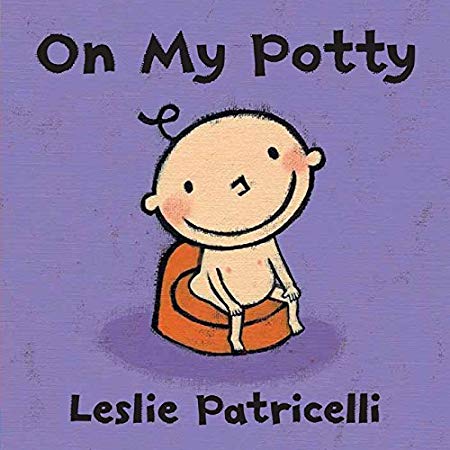
Leslie Patricelli, On My Potty (Walker Books 2010)

If Goodnight Moon can be read as a text with a manipulative subtext (a reading encouraged by a page at the end of our copy that list dozen hints for how to get your child to sleep), On My Potty can’t be read any other way. No actual potty has yet appeared in Ruby’s life, so the book is a bot on the theoretical side, but there’s no doubt that it’s meant as a tool for toilet-training. It’s charming and silly as well. Whether it succeeds in its aims remains to be seen in our case.

Laura Bunting, illustrations by Philip Bunting, Kookaburras Love to Laugh (Koala Book Company 2018)

I imagine all two-year-old people have enthusiasms. Ruby is loves kookaburras. Two of her recurring sentences are, ‘Kookaburra in tree’ (that one is sometimes a question, or perhaps a request) and, ‘Kookaburra fly away.’ The plot of Kookaburras Love to Laugh may be a little beyond her: there’s a serious kookaburra who leaves his family in search of more serious birds. He ends up with some garden flamingoes who are completely serious but utterly boring, and goes back home, converted to the enjoyment of laughter. So the plot is OK, especially given that his family also make adjustments to meet his needs, but the real appeal is page after page of kookaburras and the frequent need for kookaburra imitations from the reader.

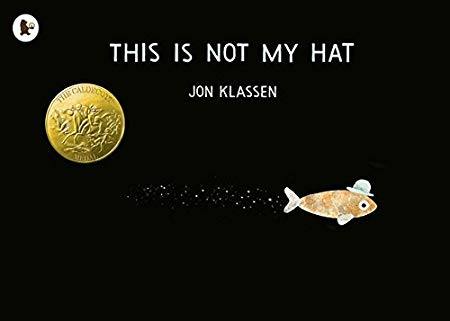
Jon Klassen, This Is Not My Hat (Walker 2012)

The second in John Kalassen’s wonderful minimalist hat trilogy. In the first book, I Want My Hat Back (link is to my review), a bear goes on search of his hat and finally finds and deals with the thief. This one tells a similar story from the thief’s point of view. A small fish has stolen the hat of a very big fish and is confident of getting away with it. But the reader who notices small details such as the direction the big fish is looking or the angle of a bystander crab’s nippers knows that the confidence is misplaced. The humour is sly, and the images are brilliant.

Jon Klassen, We Found a Hat (Walker 2016)

This is the third in the series. Two tortoises find a hat in the desert. One hat, two tortoises. They decide that that won’t work so they walk away, but one of them looks back longingly and when the other goes to sleep he sneaks back towards the hat … Unlike the other two books this one doesn’t end with retribution, but with a splendid, richly satisfying imagined resolution to this specific sharing dilemma. (We are witnessing many sharing dilemmas in playgrounds.)

Ruby’s father and grandfather both love these hat books. I think Ruby quite likes them.

Kookaburras Love to Laugh is the thirty-sixth book I’ve read for the 2019 Australian Women Writers Challenge.

Proust Progress Report 4:

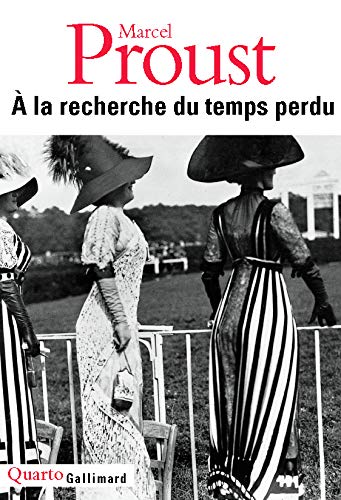
Marcel Proust, À la recherche du temps perdu (text established under the direction of Jean-Yves Tadié ©1987–1992): À l’ombre des jeunes filles en fleurs (1919), deuxième partie, ‘Nom de pays: le pays’

Here’s my fourth monthly progress report on my project of reading five pages a day of Proust’s Á la recherche du temps perdu. I’ve reached page 682, roughly 60 pages from the end of Book Two. Last month I noted with some surprise that I was now invested in the effete upper-class Parisian characters, especially the chronically ill, introspective narrator-as-remembered. This month, I’m surprised to report, I’m taking the narrator’s longwinded seriously – still laughing at times, but no longer unsympathetically.

Mind you, there’s still something absurd about the young narrator. He glimpses a woman selling milk at a railway station and wants to spend the rest of his life with her. He sees a group of young women at the beach resort of Belbac and falls in love with the whole group. He fantasises the wonderful letters of friendship he will receive from a young man he hasn’t met, is bitterly disappointed when on his first actual meeting with him the young man is reserved. He weeps in bed at night when his grandmother doesn’t come to say goodnight. But I now understand that the narrator, remembering himself as a young man, is at least as amused, astonished or even unbelieving as I am.

Someone defined a literary classic as a book one can’t read for the first time. I understand that: though I wouldn’t say I’ve heard or read very much about Proust, but in the last month he has cropped up twice: as an anagram for ‘stupor’ in a crossword (which gave the Emerging Artist joy, as she has to suffer my occasional chat about the book), and at a talk on memoir by Walter Mason at the Ashfield Library, where he showed an image of madeleines (one of which, dipped in herbal tea, plays a key role in the first book).

Reading the book in French, with some difficulty and a lot of vocabulary blanks, just a couple of pages at a time, I’m generally focusing on particular moments rather than following the broad sweep of the narrative (if there is one).

Here are some more or less random highlights.

When the narrator and his grandmother are at Balbec, he is acutely aware that most of the other guests at the hotel see them as social inferiors (there’s a lot about snobbery in this book, despising it and being unawarely caught up in it). An aristocratic woman (who I imagine as a French Maggie Smith) turns up, inaccessible to the other guests because of a phalanx of attendants. But she is an old friend of the narrator’s grandmother, and he hopes that the connection will increase his own prestige. But when she comes into the dining room, and nods imperiously at grand-mère, the latter – who considers that when on holiday at the beach one should be free from any obligation to acknowledge friends from one’s life in Paris – ignores her. The narrator compares the moment to the sensation of someone who is shipwrecked at sea who sees a large vessel, a potential rescue, approach, only to sail on past without seeing them. (I should mention that in what I’m coming to see as a typically Proustian twist, the two elderly women somehow come to spend a great amount of time together, and the narrator’s hopes are later fulfilled.)

The narrator meets an artist, Elstir, who invites him to visit his studio. The encounter does move the plot forward, but first many pages are spent in rhapsodic description of the artist’s paintings, and theorising about them and about art in general. What’s new for me is that I’m no longer reading these digressions (though you can’t really call them digressions because they’re pretty much central) as waffle. Here’s a tiny example I dog-eared a page for:

si Dieu le Père avait créé les choses en les nommant, c’est en leur ôtant leur nom, ou en leur en donnant un autre qu’Elstir les recréait. Les noms qui désignent les choses répondent toujours à une notion de l’intelligence, étrangère à nos impressions véritables et qui nous force à éliminer d’elles tout ce qui ne se rapporte pas à cette notion.

(p 656)

And a translation I found on the internet (and modified slightly):

If God the Father had created things by naming them, it was by taking away their name or giving them another that Elstir created them anew. The names which designate things correspond invariably to an intellectual notion, alien to our true impressions, and compelling us to eliminate from them everything that is not in keeping with that notion.

(From https://www.proust-ink.com/quotable-a)

That comes close to describing what Proust is doing in À la recherche: he takes familiar things – youthful infatuation, a sunset, a romanesque church – and pulls them, or rather the act of experiencing them, apart, then puts them back together transformed. It’s the pulling apart that has people giving up on him saying things like, ‘He just goes on so much!’ But one of the effects of reading him is that an awful lot of what I read or hear elsewhere starts to sound intolerably glib and/or ready-made.

In this morning’s pages, the narrator has almost been introduced to Albertine. The experience is anticlimactic, which is not surprising to the reader as he repeatedly fantasises about something – a theatrical performance, a new friend, the church at Balbec – and then is disappointed when that something materialises in the real world. But this time he follows it up with this lovely reflection:

Tout cela avait causé pour moi du plaisir, mais ce plaisir m’était resté caché ; il était de ces visiteurs qui attendent pour nous faire savoir qu’ils sont là, que les autres nous aient quittés, que nous soyons seuls. Alors nous les apercevons, nous pouvons leur dire : je suis tout à vous, et les écouter. Quelquefois entre le moment où ces plaisirs sont entrés en nous et le moment où nous pouvons y rentrer nous-même, il s’est écoulé tant d’heures, nous avons vu tant de gens dans l’intervalle que nous craignons qu’ils ne nous aient pas attendus. Mais ils sont patients, ils ne se lassent pas, et dès que tout le monde est parti, nous les trouvons en face de nous.

(p 678)

And in English:

All this had been a source of pleasure, but that pleasure had remained hidden from me; it was one of those guests who don’t make their presence known until the others have gone and we are by ourselves. Then we catch sight of them, and can say to them, “I am all yours,” and listen to what they have to say. Sometimes between the moment when these pleasures have entered our consciousness and the moment when we can enter there ourselves, so many hours have passed, we have seen so many people in the interval, that we are afraid they might not have waited for us. But they are patient, they do not grow tired, and as soon as everyone has gone we find them there in front of us.

(C K Scott Moncrieff’s translation, at https://marcel-proust.com/text.html, tinkered with by me)

Did I already say this? It’s like an epic of introspection that may sometimes be silly or solipsistic, but mostly it’s so very alive.

No more writing about Proust from me until the middle of January, by which time, with any luck, I’ll be some way into the third book, Le côté de Guermantes.

Emma Lew’s Crow College

Emma Lew, Crow College: New and Selected Poems (Giramondo 2019)

This book’s cover image, from a painting by Maryanne Coutts, hints at a dark, elusive narrative. A woman whose face is turned away from us engages in an activity that is far from clear and possibly dangerous. It could be a moment from a dream. Many of Emma Lew’s poems have a similar sense of being spoken from the midst of a dark, elusive narrative. The ‘I’ is invariably hard to pin down: you may (as I, naively, did) start out thinking the poems feature Lew speaking in her own voice but you soon realise you’re wrong. In fact, most of the time it’s hard to have any sense of Emma Lew’s engagement except as a crafter of highly-charged enigmas. In his review of this book, Martin Duwell writes that he once surmised that Lew’s characteristic poem

was based on something like putting the characters of one novel into a quite different novel (usually Central European or Russian) – say like transferring the characters of Great Expectations into Pasternak’s Dr Zhivago – isolating a scene and then writing it as a fragmented monologue or third person narration removing all clues as to what either of the original novels might have been.

Australian Poetry Review at this link

He has discarded that hypothesis, but it does a nice job of evoking both the drama and the disorientation one experiences reading many of the poems in this book.

Evidently the Giramondo team felt that readers might need a little help with that disorientation, because whereas most books of poetry have minimal guidance in how to read them, this one includes an introduction by poet Bella Li. I generally avoid introductions, but I read this one hoping it would help me blog coherently. I also read a number of reviews, including the excellent one by Martin Duwell quoted above and one by Ross Gibson – author of the brilliant books Seven Versions of an Australian Badland and 26 Views of the Starburst World [links to my blog posts] – in Sydney Review of Books [here’s a link].

Everything I read about the poetry is interesting (though Ross Gibson’s prose at times went off into academic incomprehensibility). What I realised is not that I didn’t understand what was happening in the poems, but that I didn’t get how to enjoy them.

My copy of the book is an ARC (advanced reading copy) which comes with a request not to quote from it, but I can’t bear to end without giving my readers at least a small taste. This is the start of the relatively straightforward ‘Kanipshins’, whose title the internet says is a Yiddish word meaning fits or temper tantrums:

In consideration for my mother
the yacht got free of its moorings.
'Just bring him home:
I'll decide who's handsome.'
We tried to quarrel quietly in the bathroom.
She had kept certain phrases for this moment
but ended up expressing desperation
through the elaborateness
of her hairdo, and drama,
the way she salted her food.

See what I mean? There’s a slantwise portrait of a mother daughter relationship there: the daughter brings a boyfriend/suitor home for the mother to evaluate; the young people find a little privacy in the bathroom; the mother communicates in non-verbal ways. But what is the broader picture presumably alluded to in the first two lines? should we care what the young people are quarrelling about? Is it the mother who is desperate, and why? These are questions that have no answers. The poem continues (I think) with the mother hectoring the daughter to marry the young man, but just as you think you’re following the story, it goes somewhere quite unexpected and enigmatic:

The drug companies did the serenading,

but how the girdle must have hurt!

And there are a couple more twists before the end, including the wonderfull but elusive line ‘holding lilies, almost apoplectic’. Could be a narrative – a dramatic monologue or the abstract of a short film or play – but without establishing shots or guideposts. So it offers some of the pleasures of story while refusing others. It’s not my cup of tea, but I can see that it’s very good.

Crow College is the thirty-eighth and last book I’ve read for the 2019 Australian Women Writers Challenge. My copy is an ARC from Giramondo Publishing.

#aww2019 and #aww2020

This is my round-up post for the Australian Women Writers Challenge 2019.

I read a total of 38 books by Australian women writers, well over the goal of ten that I’d set for myself. They ranged from Alexis Wright’s 640 page many-voiced Tracker to picture books with fewer than 100 words, and included:

  • 19 books for very young children
  • 8 books of poetry
  • 2 novels (only 2!)
  • 6 memoir/biography/history/essay/creative non-fiction
  • 2 books that mixed genres (one poems and recipes, the other a novella and essays)
  • 1 short book of art criticism

Three books were written by Indigenous Australian women. None were translated from languages other than English. The list doesn’t include journals.

You can see my blog entries on them at this link.

Now I’m signing up for another year, at the Franklin level, which means I aim to read and review 10 books by Australian women in 2020.

On a related topic, I’ve done a quick gender check on books I read this year altogether [and updated it on 30 December]. Not counting journals or children’s picture books, I read:

  • 30 31 by women
  • 29 33 by men

I read four five books in translation (two three from French, one each from Japanese and German), and two in their original French.

November Verse 7 & Proust Progress Report 3

Marcel Proust, À la recherche du temps perdu (text established under the direction of Jean-Yves Tadié ©1987–1992): À l’ombre des jeunes filles en fleurs (1919), première partie, ‘Autour de Mme Swann’

I have a project to read five pages a day of Marcel Proust’s À la recherche du temps perdu until I finish it, probably in a year or two. This month I’ve pretty much kept to my quota, and finished the first part of the second novel. The traditional English title of this volume is Within a Budding Grove, which, at least on the surface, is less enigmatic than the literal translation of the French, In the Shade of the Girls in Flower. The unnamed narrator has a couple of conversations with distinguished men who offer perspectives on his goals to become a writer; he falls in love for the first time and is deeply impressed by the mother of the object of his infatuation. His age is never specified, but my guess is that he progresses in these pages from about 14 to his early 20s.

I was chatting about this project with someone who read À la recherche in English with a friend over 5 years: they met every six weeks or so to discuss the book. She described it as an early masterpiece of queer culture. Well, that’s not true of the part that I’ve read, unless my French is even worse than I think it is. In what I’ve read this month the male narrator recalls his infatuation with Gilberte, the daughter of M Swann and his wife Odette, the cocotte of the first book. There’s just one explicitly sexual moment, but it happens quickly and the narrator, who elsewhere spends pages drawing out the implications of a tiny gesture, moves on quickly saying that he didn’t have time to savour the moment (‘savour’ is my translation for ‘goûter’, rather than ‘analyse’ in the Moncrieff version – which I looked up because I wasn’t sure what had happened). He also mentions, without dwelling on it, that he goes to brothels quite a lot, and he’s pretty fascinated by Odette herself. So heterosexuality seems to be all the go for our sickly, introspective, writerly narrator.

I’m still glad I’m reading it in French. My attention is held at the sentence level, rather than, say, skimming for the story, and at sentence level Proust is captivating. He can be extraordinarily complex, with plenty of inversions that are OK in French but wouldn’t be in English, lots of subjunctives, and and a sometimes bewildering use of pronouns. Yet whenever I’ve taken the time to sort out a sentence, the structure always holds up. Another feature I’ve come to love in an awestruck way is his use of similes. (Maybe I’ll give examples in my next post.) My attitude to the prolonged accounts of emotional twists and turns has changed. I read Swann’s jealous torments over Odette in the first book as comedy. Reading the narrator’s quite similar torment over Gilberte, I found myself remembering what it was like to be in my mid 20s and insecurely in love, and being profoundly glad not to be there any more. That is to say, I’m now invested in these unbelievably privileged, self-regarding characters.

For my seventh November Verse, I set myself the task of versifying a passage from this month’s Proust. One challenge was to find one that would fit into just 14 lines of verse. I settled on this, early in the long demise of the narrator’s relationship with Gilberte:

Le 1er janvier sonna toutes ses heures sans qu’arrivât cette lettre de Gilberte. Et comme j’en reçus quelques-unes de voeux tardifs ou retardés par l’encombrement des courriers à ces dates-là, le 3 et le 4 janvier, j’espérais encore, de moins en moins pourtant. Les jours qui suivirent, je pleurai beaucoup. Certes cela tenait à ce qu’ayant été moins sincère que je ne l’avais cru quand j’avais renoncé à Gilberte, j’avais gardé cet espoir d’une lettre d’elle pour la nouvelle année. Et le voyant épuisé avant que j’eusse eu le temps de me précautionner d’un autre, je souffrais comme un malade qui a vidé sa fiole de morphine sans en avoir sous la main une seconde. 

(page 483)

You can read the Moncrieff translation at this link. Allons-y!

November Verse 7: From Proust
Jan 1 chimed each hour so fleeting.
Gilberte's letter did not show.
Others came with seasons greetings
posted late, delivered slow,
so on Jan 3 I was still hoping,
Jan 4, my hope was downward-sloping.
The next days I wept a lot.*
I know: less sincere than I'd thought
when I'd claimed to have surrendered
my great love. My secret hope
was dashed and gone. I could not cope,
like one in pain or on a bender
who's used up his or her last fix
and now has nothing, nada, nix

* That line may sound very non-Proustian, but – unlike the rest of the stanza – it’s much closer to a literal translation than Moncrieff flowery ‘Upon the days that followed I gazed through a mist of tears.’

Mad, Bad, Dangerous to Know at the Book Group, plus November Verse 6

Colm Tóibín, Mad, Bad, Dangerous to Know: The Fathers of Wilde, Yeats and Joyce (Penguin Random House 2018)

Before the meeting: I was going to say that this book does what it says on the tin – that is, it tells about the three fathers of famous Protestant Irish writers named in the subtitle. But it doesn’t come good on the implication of the main title – which is a slight variation on a phrase used to describe the poet Byron by Lady Caroline Lamb, and which has been used as a title for a number of works since, including a play about Byron by Australian Ron Blair. Neither Byron nor Byronic heroics are to be found in these pages. Nor, really, are any of the three men all that mad, all that bad, or all that dangerous.

Three of the book’s four chapters were given as lectures at a university in Atlanta Georgia in November 2017. I imagine the lectures were riveting. I don’t know this for sure, but it looks to me as if Colm Tóibín has added an introduction and padded out the lectures in a bit of a rush job.

So: there’s plenty of interesting information about the three men and their roles in their sons’ lives and works.

The chapter on William Wilde is framed by Tóibín’s account of a five-hour reading he gave of Oscar Wilde’s De Profundis in the Reading Gaol prison cell where Wilde wrote it. A striking thing about De Profundis, he writes, is that while it honours Wilde’s mother it barely mentions his father. Nonetheless, Tóibín argues, William Wilde was a big influence on Oscar. And a striking picture of the man emerges, gleaned from contemporary accounts and biographies. My takeaway from this chapter, however, is the desire to see Paul Capsis reading from De Profundis in Woolloomooloo – seven of us from the group are planning to do so.

John B Yeats didn’t get on with his famous son. The elder Yeats was a failed artist – he had trouble finishing paintings, and even his masterpiece, a self-portrait he spent years on, remained incomplete at his death. He was an amazing letter-writer, which we know because his correspondents kept his letters, and many of them have been published, and republished. Among the letters he wrote to William, there’s one that Tóibín quotes advising him to turn away from the mystical path he was taking. In his later years, and this is where the chapter comes fully alive, he wrote frank, passionate love letters from New York to Rosa Butts in Ireland, a woman he may or may not have ever had physical intimacy with. She and he had agreed to burn their letters once they had read them: he kept his part of the agreement, but she did us a favour and reneged.

John Stanislaus Joyce had the dubious honour of being written about by two of his sons, Stanislaus and James. Stanislaus’s books, My Brother’s Keeper and The Dublin Diary of Stanislaus Joyce, make it clear that he was a terrible husband and father: drunk, improvident, at times cruel. The main thrust of his chapter is an exploration of how Joyce in his fiction managed to combine ‘the need to be generous with the need to be true to what it had been like in all its variety and fulness, and indeed its pain and misery’. If ever I reread Ulysses my reading will be richer thanks to this chapter.

A key question about a book like this is whether it engages the interest of a reader who doesn’t have a prior commitment to the subject. I’m moderately interested in all three of these writers: not the Wilde of De Profundis so much as the one who wrote The Importance of Being Earnest, who doesn’t really get a look in; the Yeats who wrote ‘The Circus Animals’ Desertion’ and ‘Sailing to Byzantium’; and the Joyce who, as my eldest brother told my father when he was 19 and I was 10, wrote a ‘dirty dirty‘ book called Ulysses. I enjoyed a lot of it, but there’s a lot that I found dull. In particular, the Introduction, which might have offered some basis for general interest, takes the reader on a stroll, pedestrian in both senses, through Dublin streets, telling us how the Wildes, the Yeatses and the Joyces were sometimes neighbours, or not, how their lives intersected (‘Yeats’s grandparents and his father knew Oscar Wilde’s parents’), and how other poets and writers since have lived in or near those places.

I’ve no doubt that Colm Toíbín has a deeply felt interest in these three men. Not a Protestant himself as far as I know, perhaps he is fascinated by the eminence of these Protestant writers and their fathers in mostly-Catholic Ireland. But the book fails to communicate to me why I should be interested. In particular, it may be that Toíbin’s heart just wasn’t in the process of expanding his three lectures to a 205 page book. The lectures were published in the London Review of Books (and are available online here, here and here). I expect they make excellent reading.


After the meeting:

I was nearly two hours late for our meeting. Ice creams were being eaten when I made my entrance. Though there was a feeble attempt to convince me that everyone else had completely loved the book it didn’t take long to elicit an elegant summary of the discussion so far: the book was mostly dull and unengaging with some excellent bits. Most of the discussion had been about people’s relationships with their own fathers and, where possible, sons. I was very sorry to have missed that conversation, though the remnants of it that followed my arrival were terrific: an extraordinary tall traveller’s tale about one chap’s father shouting him and his brother to dubious treats in Bangkok; unspectacular but treasured moments of play; how different generations express affection among males.

About the book: about half of us studied literature in some way at university a long time ago. If the book was marginally interesting to us, it was substantially less so to the others, and fewer than usual bothered to read to the end. One man, who is deeply cultured in other respects, didn’t know the circumstances of Oscar Wilde’s imprisonment, knowledge that Tóibín assumes in his readers; and I’m pretty sure someone said they’d never heard of W B Yeats (though he’s now tempted to seek out Yeats Senior’s letters).


And because it’s November, here are 14 rhyming lines. I went searching on my bookshelves for anything on the fathers of famous Australian writers, and found this little anecdote in Patrick White’s Flaws in the Glass (Jonathan Cape 1981, page 5).

November Verse 6: 
Patrick White, when just a laddy,
felt his penis growing hard.
There's something odd, he told his daddy.
Daddy reddened, hummed and haaed,
and said, 'Step out' – the passing glimmer
of a smile told the young swimmer
all was well. At that same age
a first poet stepped onto the stage
of Paddy's life. Face like a wrinkled,
sooty lemon, driest kind
of gent, the Banjo paid no mind
to Patrick. But those first notes tinkled:
first ripples on great passion's tide
delivered at his father's side.