Category Archives: Diary

Alan Ramsey at Gleebooks

When Alan Ramsey retired in December last year he left a gap in the Saturday morning ritual at our house. Reading his Sydney Morning Herald ‘column’ (usually a whole page) aloud, with all its grumpy vehemence, its aggrieved sense of history (he’d been writing from Canberra for more than 20 years), its long screeds quoted from other people, its telling glimpses behind the scenes at Parliament House, had become as habitual as poached eggs on Vegemite toast. To judge from the mood of the crowd last night at Gleebooks we weren’t unusual.

The occasion was the recent publication  by Allen & Unwin of A Matter of Opinion, a collection of 150 of his columns. If journalism is the first rough draft of history, I imagine this book will be an invaluable resource to historians of Australian politics, because Ramsey wrote without fear or favour, and did it with formidable intelligence and intelligence-gathering savvy. Last night he was ‘in conversation with’ Monica Attard. I suppose I had been hoping for some behind-the-scenes stuff, the goss as one woman put it – not who-did-what-with-whom-and-in-what-bedroom goss, but how-it-all-works-in-Parliament goss. Instead we got an hour or so of largely misanthropic and eminently crowd pleasing opinion (I count myself one of the pleased). Monica Attard started off setting up a game: ‘I’ll give you a name, and you give me one word in response.’ But Ramsey is probably physically incapable of a one-word response, and the ‘conversation’ consisted for the most part of Monica Attard and then audience members throwing him a name or a phrase and him ripping into it until he was thrown the next one: Bob Hawke (‘I couldn’t stand him, he was a narcissist, but he was the best Prime Minister of post-war Australia’), Kevin Rudd (‘a prim, prissy prick’), John Howard (‘Let’s move on’), Peter Garrett (‘Whatever you think of his performance, you have to realise that no one in his position would do any better, and he fights for what small victories he manages’), Peter Reith (‘one of Howard’s thugs’), the best politician he observed in his time in the press gallery (John Button, an excellent politician and an attractive human being), and so on.

It was all good fun, with frequent flashes of insight, but if you didn’t already know the broad story, there wasn’t a lot of information to help you orient yourself. And much of the game could easily have been renamed, ‘Say something definite to confirm my dislike of/contempt for X.’ I It was a relief when towards the end someone asked why he referred to asylum seekers as ‘queue jumpers’. ‘Because that’s what they are,’ he snarled, and just like that we’d moved beyond show-pony opinion to what could have become a heated debate if there’d been time. My impression was that Alan Ramsey welcomed that prospect.
Bankstown Pressure Cooks

Sha’s Place is a very welcome, brand new blog by a Sydney Muslim woman who comes originally from Pakistan. Her second entry is about a project that my Penny is the moving power behind, Bankstown Pressure Cooks. The Pressure Cooks site decribes it as a competition that

is part of a celebration of the cultural diversity of the Bankstown area, encouraging Sydneysiders to recognise the culinary delights of the area. That means the competition will test [participants’] ability to cook from different cultural traditions (as well as [their] own).

Sha’s Place says:

This has by far been my most positive experience in Aussie Land. I arrived here just over a year ago and am simply amazed at the genuine warmth of the people here. My association with all members who have worked on this project has given a boost to my dwindling morale in an economy hit by recession.

There have been two rounds so far, which I haven’t blogged about because I haven’t been able to attend. The Grand Final Cook-Off happens on Saturday 28 November at Centro, Bankstown CBD from 11 o’clock in the morning.

Conversations while reading while walking

I’ve posted about these brief conversations before, and they continue to amuse and even fascinate me. How much can be communicated in the time it takes to pass a friend, neighbour or stranger in the street! The conversation en passant is an under-appreciated artform.

So here are a couple that have accumulated over the last couple of weeks.

Neighbour: (beaming) Jonathan, every time I see you you’re reading. I wish it would rub off. It’s years since I’ve read anything.
Me: It’s not always serious stuff, you know. (Though I was reading Sarah Maddison’s Black Politics, which is surely serious enough for anyone.)
—–
A non-conversation that fits here anyhow: I actually saw someone else in the Taylor Street Park reading while walking, accompanied by a dog. We didn’t acknowledge each other, and I didn’t get close enough to see what she was reading. It had an orange cover.
—–
This one could have happened whether I was reading or not (I was wearing my red Viva-the-Kevolution shirt – a red version of this one, not this one):

Silver-haired man outside Glebe library: I’m not talking to you! (When I took no notice, being about 20 metres away) Hey, man in the red shirt … I’m not talking to you! (As I look up from my book and acknowledge him) I’ve got ADHD and I’m disciplining myself not to talk to everyone who walks past, so I’m not talking to you.
Me: (somewhat absent-mindedly) Oh, OK, thanks. (Now more like 30 metres from him, I return to my book.)
Silver-haired man: (calling cheerfully) I’m a little disappointed in your response. It would have been better if you’d said. ‘Now I’ll never know what I’m missing out on,’ or something like that.
Me: (closing my book, turning to face him, but not retracing my steps) Of course, I’m sorry. I wasn’t paying attention.
Silver-haired man: You see how needy I am!
Me: You’ll do.

My guess is that this charming man has been convinced  by a well meaning psychiatrist / psychologist that his ‘inappropriate’ gregarious impulses constitute a disorder.
—–

More of these conversations as they occur. I do get a lot of indulgent smiles, and I’m not including dog-psychology haiku chats

Peter Madden on creating sustainable cities

Peter Madden, Chief Executive of the UK not-for-profit organisation Forum for the Future, has just visited Australia for a series of public lectures. The main event has been his part in the Deakins – the Alfred Deakin Eco-Innovation Lectures, an initiative of the Victorian government – and I gather his Melbourne lectures were well publicised and will soon be up on the web. On his way home, he spent a couple of days in Sydney , and I went to his lecture, ‘Creating Sustainable Cities’, at UTS on Thursday night. Although it was technically public, this lecture seems to have been a well kept secret, advertised pretty much by word of mouth,  with notes on the UTS staff bulletin board and the Sydney Cyclist web site. As far as I’ve seen it went unnoticed by the press. And you thought sustainability was a hot subject!

Forum for the Future was founded roughly 13 years ago by to members of the Green Movement in Britain who realised that Greens seemed to spend most of their time protesting – their activities had a predominantly negative feel to them. They decided to organise on a positive footing, and the Forum was the result. It has been working with business and government to persuade them to take environmentally responsible initiatives, and show them how.  The opening slide of the lecture showed the logos of maybe a hundred organisations that have worked with Forum for the Future. The idea is to help them think through ways to change their practices in response to climate change – to reduce their own carbon footprints and then to make their activities benign rather than destructive in relation to the environment.

I won’t try to summarise the lecture, but I have two thoughts to inflict on you.

The level of public conversation about climate change is very different in Britain from the one here. Prominent Australian politicians proudly declare themselves to be climate sceptics, failing to realise that the science of climate change is based on systematic scepticism and that they are actually identifying as denialists, and debate often gets bogged down there, pretty much at kindergarten level. Meanwhile the question of whether to pass the tokenistic CPRS legislation gets to be seen as the be-all and end-all, with Kevin and Penny saying, either disingenuously or idiotically,  that since they’re being criticised from both left and right they must have it about right. That is to say, climate change is hardly treated seriously at all, for all the lip service it’s given. In Britain the conservative opposition has more far-reaching policies about climate change than the Labour government, and there are significant commitments from Government – for example, by 2015 to have every new house built be carbon neutral.

Peter Madden guesses that the issue is taken seriously in the UK because so many of the leading climate change scientists are British , and speak with authority. It strikes me that the reason the science is treated with such disregard here is a legacy of the Howard years: just as the Howard government dismantled ATSIC and deprived Aboriginal and Torres Strait Islanders of a national voice, it also set about discrediting CSIRO, once looked to as a reliable source of information on scientific matters, now able to be dismissed by the likes of Nick Minchin, along with the vast majority of climate scientists, as left wing propagandists.

The other thought, more or less unconnected, is that greenies fail to communicate their message because they/we fail to listen. According to Peter Madden a recent study shows that green activists tend to have a weird and atypical psychological make-up, in which abstract, altruistic concerns rate high. Their/our attempts to communicate often come off sounding like preaching or even haranguing. What he and the Forum for the Future try to do is reframe the conversation in the positive: here’s a major problem we’re all facing, and here are some ideas for how we can address them. Business can do this thing and still be profitable. Governments and do that thing and still be re-elected. Individuals can do the other thing and still live well. So Tesco, the huge, many would say rapacious, supermaket chain, has a green strategy with teeth; the NHS is exploring ways to reduce its carbon footprint and at the same time deliver health services more intelligently.

About individual action to reduce carbon footprint, he said you could cut through a lot of the agonising over details by addressing these key questions:

1. What forms of transport do you use?
2. Where do you go for holidays?
3. How much red meat and dairy do you eat?
4. How do you heat or cool your home?

I’m sorry the audience for this lecture was so small, mainly because it gave a glimpse of possibilities. During question time, one man evidently a green activist, asked Peter to talk about bullshit moments – that is to say, moments when he realised that he was listening to someone talk about their green credentials in a completely disingenuous way. Peter did mention a bottled water company who claimed to be carbon neutral – the Forum had refused to work with them because bottled water is an environmental disaster, end of story. But he was adamant that while almost none of the companies he worked with could claim to be completely clean, they were all going on a journey. Even in the most profit-motivated corporations, there are people who, given half a chance, will have a go at sustainability.

A cool invitation?

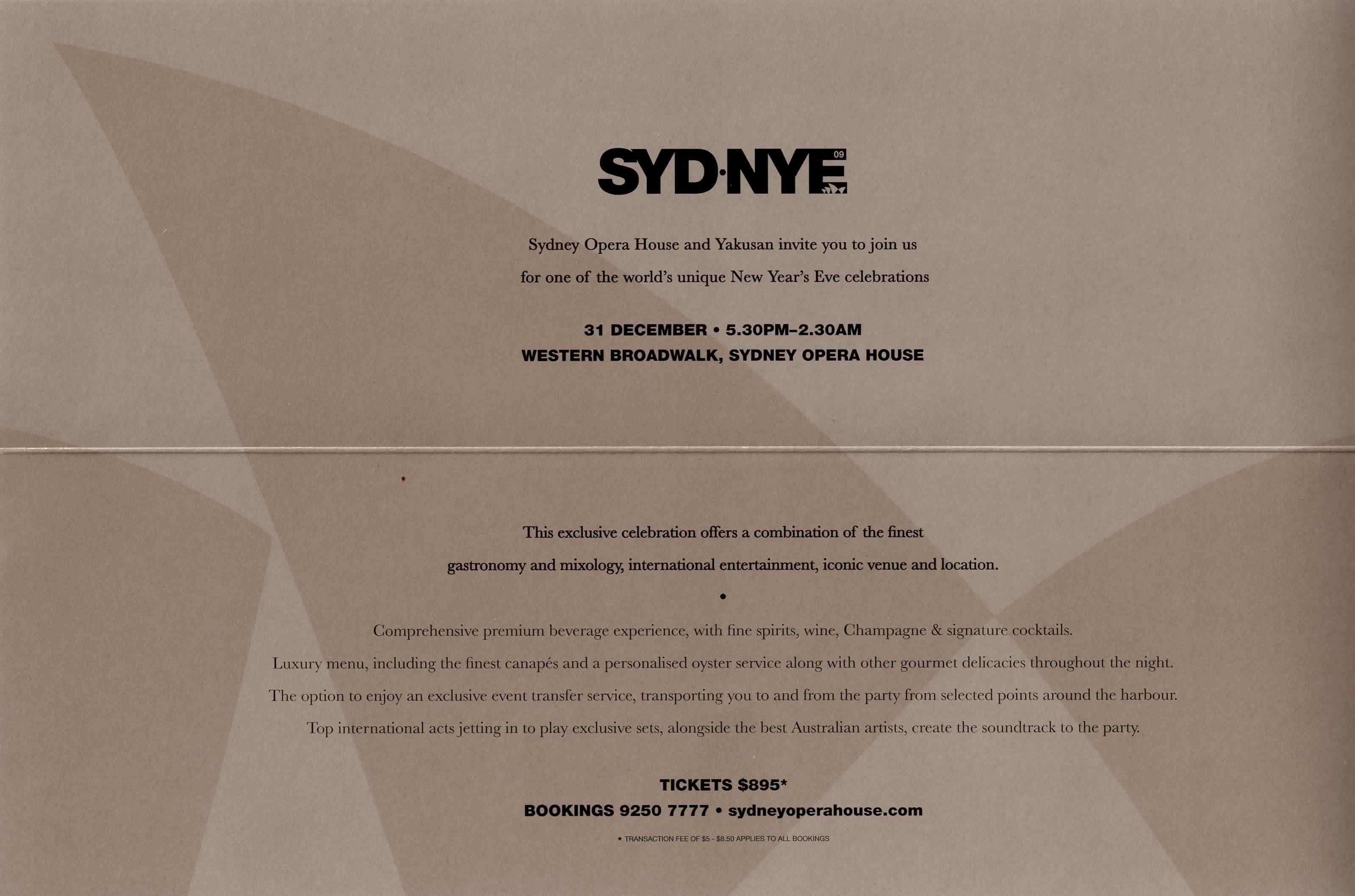
A tantalisingly misshapen envelope arrived in our mailbox today, and it turned out to contain an invitation to a party.

SYD NYEClick to see bigger.

In case you can’t read it, it’s to  a New Year’s Eve party on the Western Boardwalk of the Sydney Opera House, offering ‘a combination of the finest gastronomy and mixology, international entertainment, iconic venue and location’.

How fabulous, I thought. One of our really influential friends must have got us onto the guest list. As a non-drinker I’d even put up with all those expensively tipsy people for the sake of the sheer exclusivity of it.

But then I reached the bottom of the page.

EPSON002_2

Oh, it’s not an invitation at all. It’s trying to sell something. Let’s see, is this the way I want to spend $895? Before the obvious answer could settle in my mind, I saw the very tiny type at the bottom

EPSON002_2

Yes, not only would I have to give the Opera House $895 to accept this ‘invitation’, but I’d have to pay between $5 and $8.50 for the privilege

In that case, I thought, they can keep their mixologies.

You know you’re getting old when …

… someone who was in your son’s class at school is appointed artistic director of a major cultural institution.

Congratulations, Ralph!

Our new painting

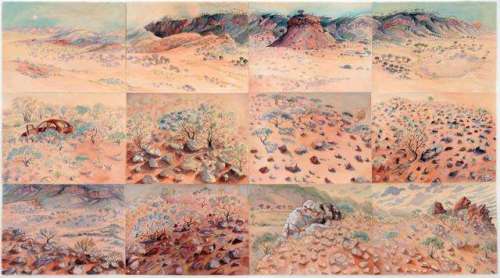
We really really couldn’t afford this. It’s Valley, by Carol Ruff, perhaps it should be rechristened Folie (à deux)

valley

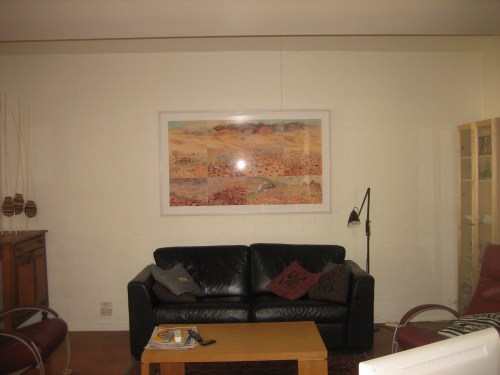
But here it is on our wall, making the endorphins flow:

IN room

Sculpture by the Sea

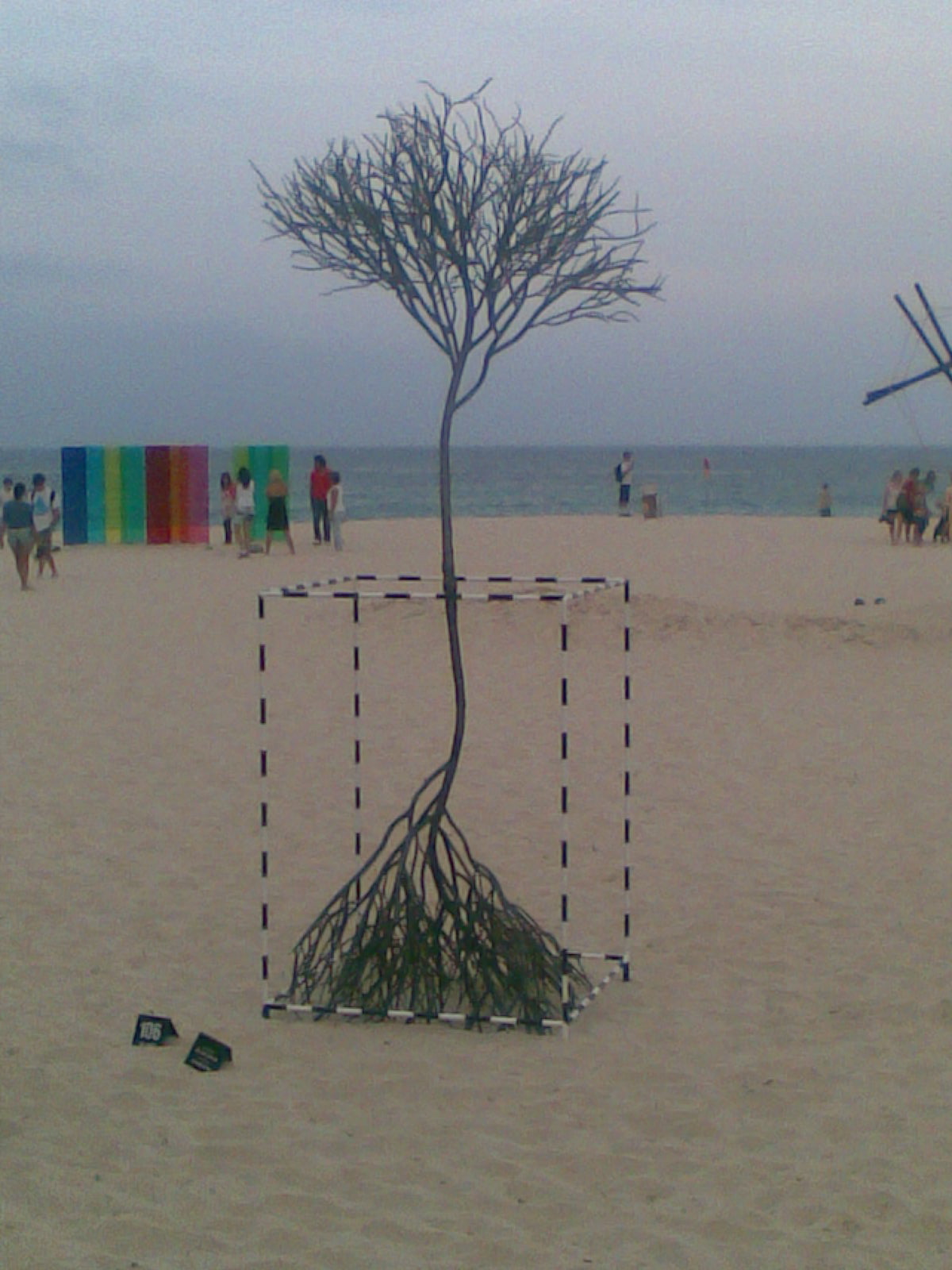
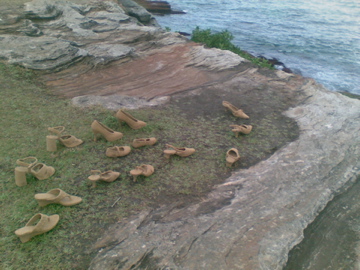
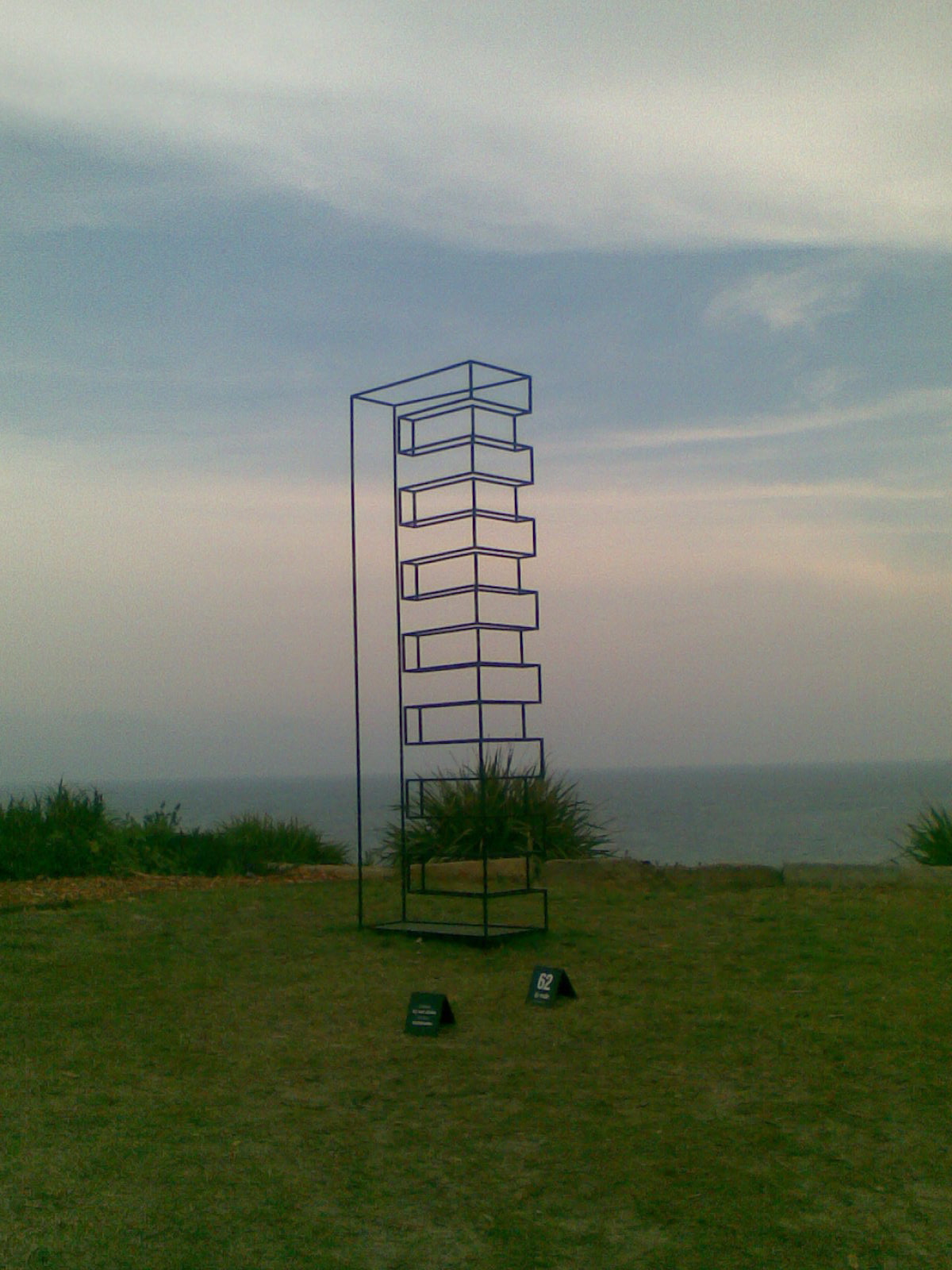
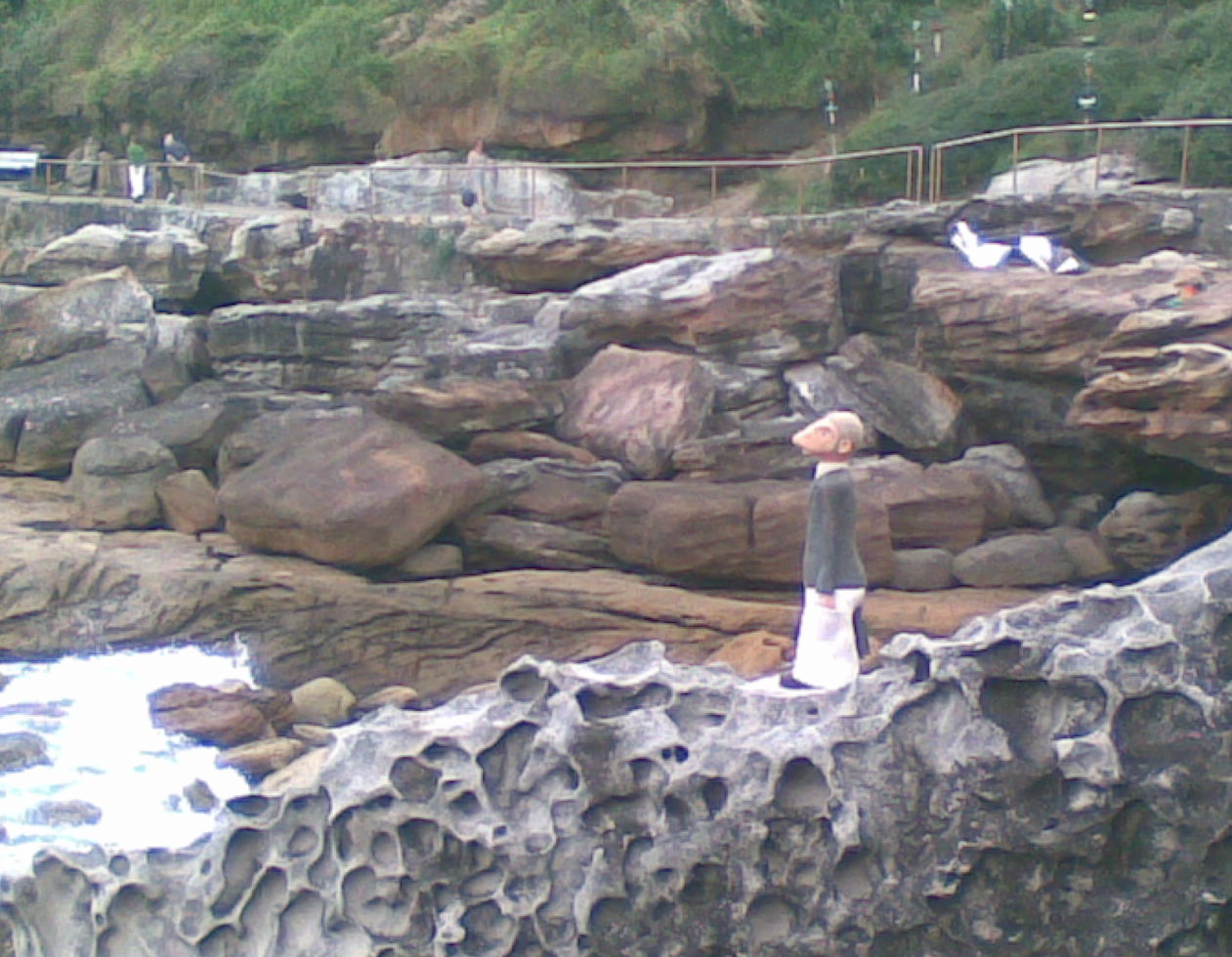
It’s that time of year again in Sydney. The jacarandas are in bloom, the first cicadas are shockingly loud, the weather lurches from chilly to sweltering from one day to the next, and the cliffs between Bondi to Tamarama have become a sculpture gallery. Richard Tulloch has already reported, with fabulous photos, on this year’s Sculpture by the Sea, but that’s no reason for me not to tell you, again, what I saw there, and post an album of phone photos (yes, we forgot to take a camera).

We went this afternoon to avoid the weekend crush. It was far from crowded – the joggers were hardly inconvenienced at all.

As I’m writing the captions for those blurry, poorly composed photos I realise that I could have spent much longer on that walk. For instance, there’s a brightly coloured little house that I’m told has nasty surprises inside, but I couldn’t get anywhere near it because it was full to bursting with children who had been so charmed by the outside that whatever was on the inside made no apparent impression at all. I could have sat with some of the delicately moving pieces for a long time. There were one or two pieces positioned so as to take the walker by surprise. Perhaps I’ll go back to savour them a little.

The sculptures will be there until 15 November.

White Rabbit and Menagerie

This afternoon we visited the White Rabbit Gallery in Chippendale, and then went on to Object Gallery to see their part of the exhibition Menagerie.

The White Rabbit Gallery has been open for exactly three months. In a converted Chippendale warehouse, a couple of very rich Sydneyites have set up a space to share with the public their collection of contemporary Chinese art. Admission is free, and gallery staff members are on hand on all four floors to answer questions, point out things you might have missed, offer a word or two about the biography of the artist. From the meticulously shredded Mao suits of Sun Furong’s Tomb Figures, through the spectacular trompe-l’oeuil draughtsmanship of Ma Yanling’s four images of opera singers, to Chen Wen-Ling’s over-the-top sculptures (guaranteed to make a pig-lover smile, and maybe even a pig-hater) this gallery is fabulous. Thanks, Judith and Kerr Nielson.

Menagerie: Contemporary Indigenous Sculpture is, according to the Australian Museum web site, ‘a groundbreaking exhibition featuring animal sculptures by 33 established and emerging Aboriginal and Torres Strait Islander artists’. Part of it is at the Museum, part at the Object Gallery up the hill (The site uses flash but irritating Flash: click on Explore on the side and you’ll get details of this exhibition). We’ve yet to visit the former. The latter occupies the single room of the Main Gallery, with a 20 minute video on six of the artists playing on a loop in the small upstairs space. It’s magic. I particularly loved ‘Red, White and Blue’ by Danie Mellor. This consists of three kangaroos, about a metre high, with front paws covering respectively mouth, eyes and ears. They’re made of mosaic tiles (respectively red-patterned, white and blue-patterned), except for their paws and ears, which are made of kangaroo skin, creating the impression that living animals have been encased in unyielding shells made from the detritus of settler society. They’re beautiful, poignant, and made by a man of Mamu heritage (I was born in Mamu country). I just googled Danie Mellor and found out that he won the Telstra Aboriginal Art Award this year, and that he had a solo exhibition at Elizabeth Bay that closed yesterday. I have terrible timing.

The White Rabbit exhibition stays up until January, when it is replaced by other contemporary Chinese works from Judith Nielson’s collection. Menagerie closes on 15 November.

Me and Larry

Several of my younger relatives insist that Larry David and I are lookalikes. You be the judge.

111larry

IMG_3835