Category Archives: Diary

An acquisition

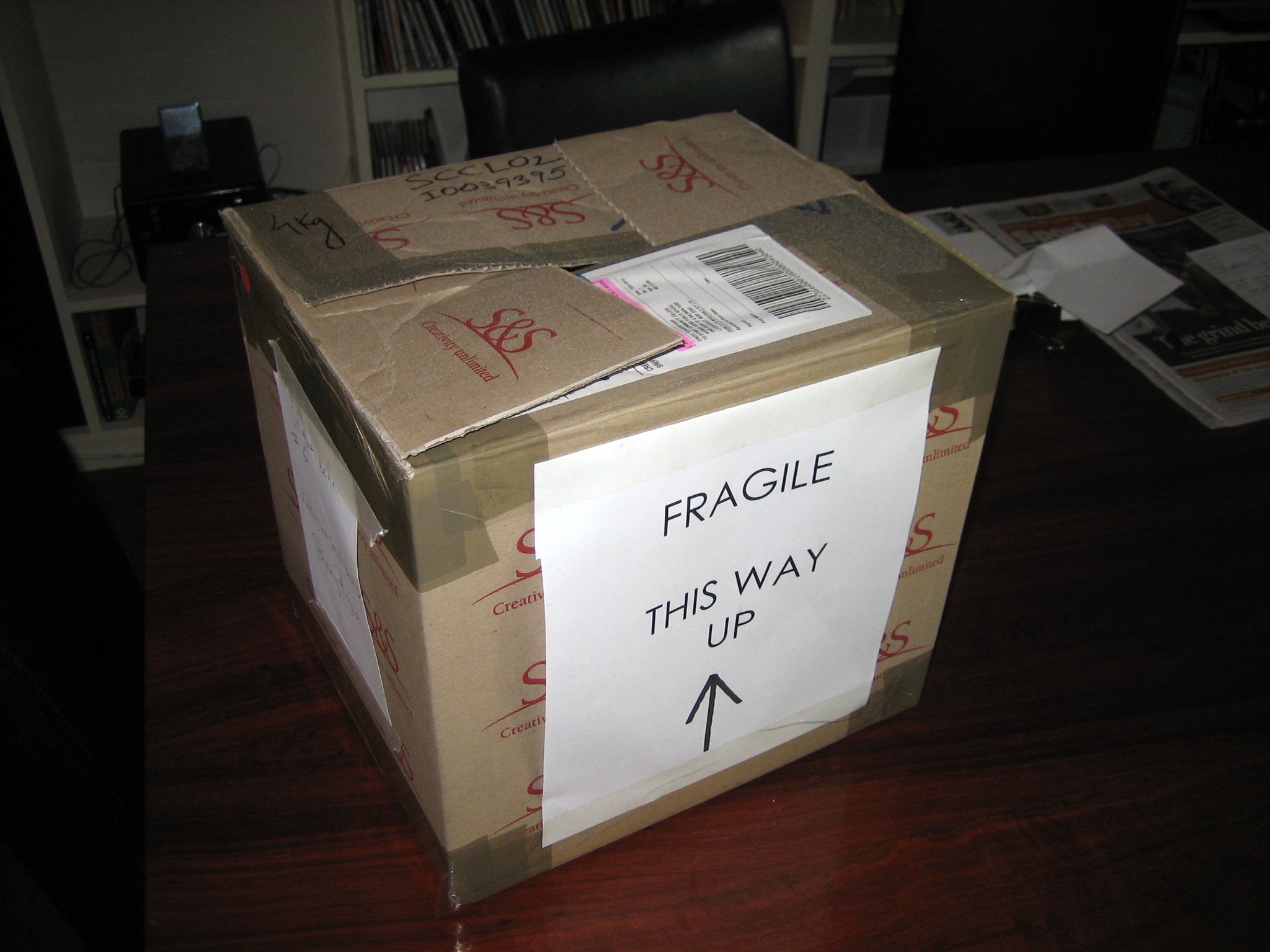
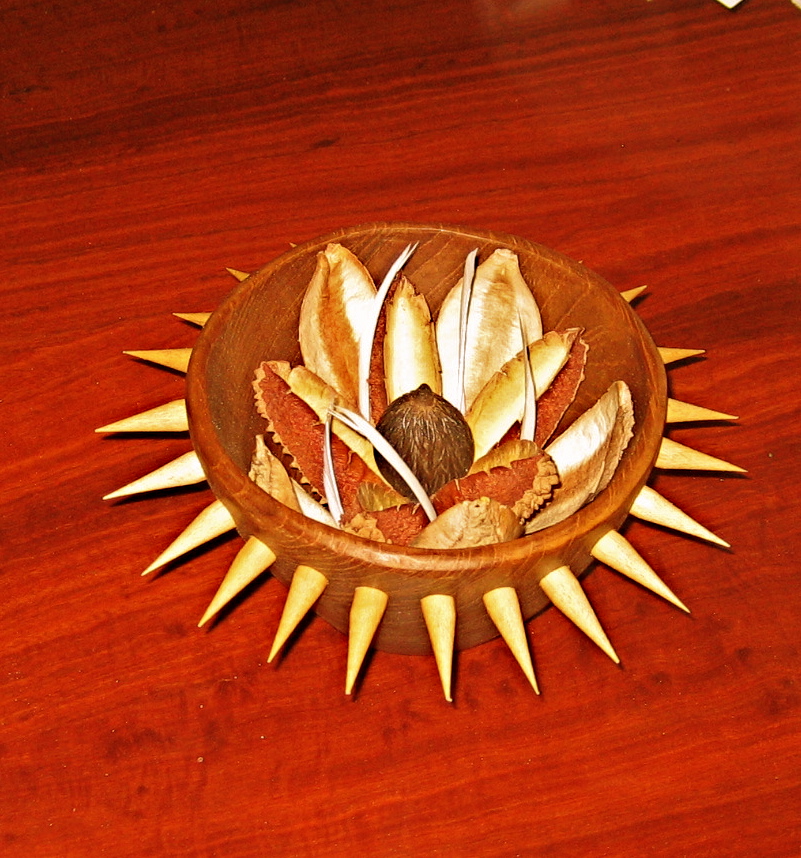
I dropped in at Little Queen Street today to pick up Steven Vella’s small bowl, which we bought a couple of weeks ago.

Here it is nestling in its bed of polystyrene:

Out of the box:

On the wall, though we have yet to find a place where its shadow is as dramatic as in the gallery:

Greg Weight and Western Desert Artists

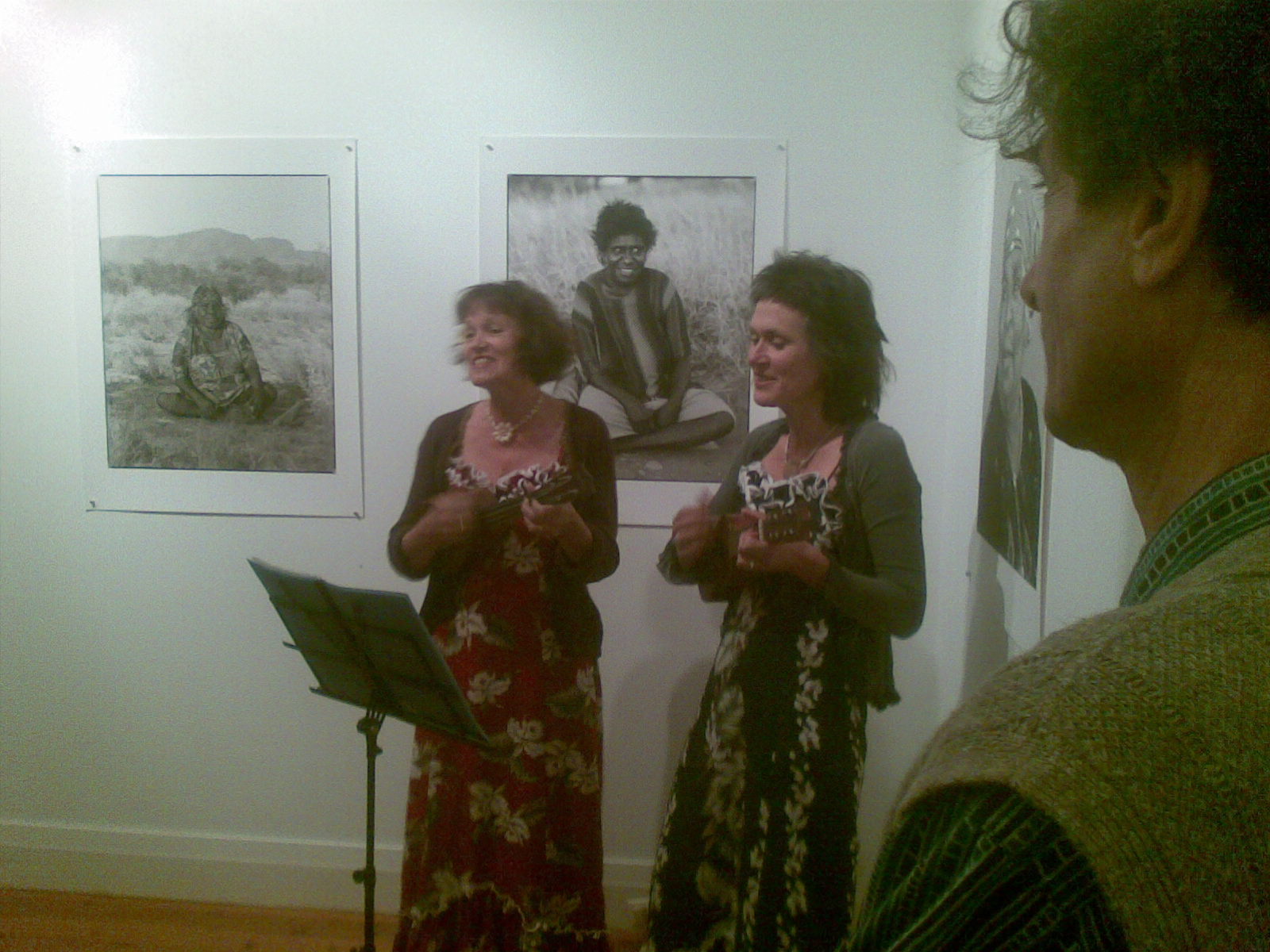
At least one of my regular readers would have loved to be at the Gallery East opening this evening [All turn and look at Will]. Greg Weight’s ‘Artists of the Western Desert’ comprises eleven portraits of Western Desert artists – from Kintore, Haast Bluff, Yuendumu and Alice Springs. The opening was a small, even intimate gathering. I recognised a number of stars of the art world, but someone explained that they were there as neighbours and old friends of Greg and Carol Ruff, his partner and the owner of the gallery, rather than as A-listers.

Long Jack Philipus Tjakamara dominates the gallery’s front window.

In lieu of speeches, Carol Ruff and friend played ukulele and sang – among other things, Carol’s own song ‘Finding Love in CLOVElly’ – and were joined on the bongos by the artist photographer, seen here in the right foreground. The Indigenous artist beaming down from the wall is Yukultjii Napangati, a Pintipu woman who came in out of the desert in 1984 when she was about 14 years old.

The exhibition lasts until 23 May.  If you miss it at Clovelly, you may be able to catch it at the Musée Branly in Paris in the next year or so.

Steven Vella at NG Galleries

It seems decades ago, and it probably is, that my eldest niece was living in Sydney with a number of creative young men. The Art Student and I have just come in from the opening of an exhibition of splendid art created by one of them. Steven Vella’s Garden of Natural Wonders [Do click on the link and scroll along for some of the pieces] is the kind of exhibition that has you looking constantly from the artworks to the catalogue sheet, not to see what the piece is called, though some of the names are revelatory, but to see what materials it’s made from. It’s a gleaner’s equivalent of the treasury of a renaissance church, with bean pods, palm inflorescence, feathers, banksia seed in place of precious stones and metals. The religious dimension of that comparison isn’t too wide of the mark – there’s at least one cross, a couple of stupas, and a wall of ceremonial staffs that remind me of the theatricality of Mediterranean Catholicism. Steven’s North Queensland provenance and his Maltese heritage are both strongly present. But then the room is dominated by ‘Medusa’, which if not for its gorgeous flowing lines could be a homage to the Flying Spaghetti Monster:

But you know, my favourite piece is probably ‘Aunt Bibi’s Salad Bowl’, one of the smaller works, which assembles durian skins and a vintage teak bowl, among other things, to create a weird, spiky, domestic icon. Sadly I can’t find a photo, so if you want to see it you’ll have to go there yourself.

The NG Art Gallery is in Little Queen Street, Chippendale, just around the corner from the White Rabbit Gallery, and the exhibition will be there until 8 May.

Imants Tillers and watercolour

It’s Art Month in Sydney, and because I now live with an art student (yes, I’ve ditched the anxious Consultant and now cohabit with a cheerful Arty Type), we thought we’d better squeeze an art excursion into our busy schedule before the month was over. So yesterday we set out to hear Imants Tillers in conversation with Edmund Capon at the Roslyn Oxley Gallery.

We arrived nearly an hour early, so went for a stroll up the hill looking for diversion. We found it in spades, in the form of an exhibition at the Wagner Gallery of watercolours from the Australian, English and Scottish Watercolour Institutes. We were just in time for a talk and demonstration by Rob Candy, who it turns out leads tours to China for watercolourists (just $4925 for 16 days all included). Sadly we had to leave as he was beginning to pencil in his composition, but we were there long enough to get a delightful glimpse of the international siblinghood of watercolour devotees.

Back at the bottom of the hill, Tillers and Capon’s conversation had already started when we arrived. It was an animated forty minutes or so, ranging over Tillers’ reading (Heidegger, Thomas Bernhard, etc), artists he admired (De Chirico, and many Australian artists none of whom I’d heard of except Emily Kame Kngwarreye), and the work on display. Each of his works comprises a number of small abutting canvases – he doesn’t sign them, but every small canvas has a number on the back, now up to something like 80 000 I think he said. Tillers spoke very interestingly about his use words in his images – quoting Ezra Pound, Tomas Bernhardt, Virgil (though he didn’t mention him, he’s the source of ‘lacrimae rerum / tears of things’, prominent on the canvas next to me). One of the large works is about to be donated to the Art Gallery of NSW, to Capon’s manifest delight: it had been commissioned by a grazier who thought it might help in the protest movement against a wind farm proposed a particularly beautiful part of New South Wales – gifting it to the AGNSW was part of the plan. (Capon: ‘Wind farms are such ugly things.’ Tillers: ‘I think there’s definitely a place for them, but some landscapes should be declared part of the national heritage.’) They discussed the difference that Tillers’ move to Cooma had made to his art – he had discovered that outside the cities Australia has a huge vast landscape. (Capon said that the work had very little sense of place in it, which may be true of Tillers’ earlier work, but I would have thought was dead wrong about these images.) They talked about Appropriation, which apparently was big and shocking in the 80s, though now everyone does it. They wondered why it is so hard for Australian art to take up space in the international arena: Tillers made a bit of a splash in the US in the 80s, he said; Capon lamented that only Indigenous Australians got much of a look-in, not that he begrudged it them. (Tillers: But you have to hand it to Aboriginal artists. Aborigines are 1.5 percent of the population and they have produced this glorious work out of all proportion.)

After the talking we got to look at the work, which is wonderful. Penny said in the car on the way home, apparently a propos of nothing, ‘You don’t hear the word sublime much any more, do you?’ It probably does apply here. The big paintings that most moved me were Blossoming 17 (which quotes Virgil and Pound to great effect)and The Beech Forest. And there are a couple of smaller works that perform breathtaking appropriations from Emily Kame Kngwarreye. The images on the web don’t begin to give an idea of the complex layering, the interplay of text and image, text as image etc, but here’s one of the Emilys.

The text reads:
Around the border in blue: A THROW OF THE DICE / WILL NEVER  / ABOLISH / CHANCE
Bottom right in small yellow letters: FOR YEARS NOW
Scattered over the painting, in large, mostly yellow block letters: I CLOSE MY EYES / THE  PATH OF LUCK  / UTOPIA / ANMATYERRE / ALAWARRE / DELMORE DOWNS / ARRERNTE /ALICE SPRINGS / ENTRY / AS IF

If you get a chance to see this exhibition, whether you live with an art student or not, I recommend you take it. It closes on 1 April.

Dungog

We drove up to Dungog on Saturday – Penny, her brother Chris and I – to visit a nonagenarian second cousin of theirs. We stayed at one of the Dungog Country Apartments, which was inexpensive (by Sydney standards), light and airy, with a roomy kitchen, pleasant furniture, a balcony with a view of the pub, and Norman Lindsay cheek by jowl with Norman Rockwell on the wall.

There was weather, so we didn’t go for the walk we’d planned on Saturday afternoon. And none of the town’s recommended eateries was open, so we ate some huge steaks at ‘the top pub’ (which must make the hotel opposite our apartment the bottom pub) before striding off to the James Theatre, Australia’s oldest still running purpose built cinema, just in time for the evening session of Flickerfest.

Flickerfest has been an annual event at Bondi for 19 years now, but I’ve never been to it. The prospect of several days of short movies just hasn’t had enough drawing power. In fact, just about the only short-film programs I’ve seen have been ones where a friend or offspring had made one of the films. But we were in Dungog, and apart from the trivia quiz at the Menshed and billiards and jukebok at the top pub there wasn’t a lot else on, so we were quite pleased that there is now a travelling, pocket-sized Flickerfest, that Dungog is among the 24 venues it visits around the country, and that Saturday was Dungog’s day.

I’m not a convert to short-film nights. Bring back the days when there was a short before the main feature, I say. In that context, almost any one of the films we saw – the Best of Australian Shorts – would have been perfectly adequate, and some would have been hard acts to follow. One, Miracle Fish by Luke Doolan, was not only nominated for an Academy Award this year but also was shot in the primary school my sons attended, so had a certain holding power (though it was far too long). Maziar Lahooti’s Crossroads stood out for me, partly for a beautiful moment of inarticulate masculinity after a display of heroic competence (that’s the second short film of his I’ve seen and loved), and Dominic Allen’s Two Men, all four minutes of it, is perfect – translating a 160-word piece by Kafka into Aboriginal English and setting it in a remote community with absolute sureness of touch.

The Dungog Film Festival is in May. For four days, as Penny’s second-cousin-once-removed told us on Sunday, black-clad movie lovers turn the main street of Dungog into little Newtown. It might be just the thing for disgruntled ex-Sydney Film Festival goers.

The Australia Pacific Triennial and other Brisbane things

It can’t be! Two full weeks since I blogged! I must have been busy.

On the weekend Penny and I went to Brisbane for my brother’s seventieth birthday party, and had a fabulous time renewing contact with my family: brother and sisters and their spouses, nieces and nephews, grand nephews and nieces, cousins, sundry dogs, as well as a number of my brother’s old friends I hadn’t seen since I was 13, who have grown astonishingly old. The highlight of the party was a video created by two of my brother’s children, featuring many interviews and greetings from Innisfail, and a performance of ‘Don’t Fence Me In’ (a song that featured in one of my brother’s colourful adolescent brushes with the law escapades) in which an extraordinary range of people each sang a single phrase.

On Saturday we went to the Queensland Art Gallery and the Gallery of Modern Art (Qag and Goma) to have a look at the Australia Pacific Triennial. Unlike the National Art Gallery current blockbuster, this fabulous exhibition was easy to get into and there was no admission charge. I say it was a fabulous exhibition, but in fact I only saw a tiny fraction of it. I spent most of my time in the galleries sitting with pen and pad sweating over a writing task with a tight deadline. This was an astonishingly pleasant experience. The galleries are high-ceilinged and full of natural light, and quiet exuberance of the punters made for a buoyant environment.

Really I only saw three pieces. The first was ‘In Flight‘ by Alfredo and Isabel Aqulizan. The artists are immigrants to Australia from the Philippines, this information may have influenced my response to their work: it’s a huge pile of recycling material, that is to say junk, reminiscent of those vast garbage heaps near Manila, but rising from it are not toxic fumes or scavenging birds but a host of model aeroplanes made by young people in a series of workshops before the exhibition. The planes – zappy little plastic creations, shaggy monsters, a couple of balloons, flappable egg-cartons, brightly coloured paddlepop sticks bound into shapes that might be aerodynamic in another universe – adorn the wall near the garbage pile, hang from the ceiling  above it, and then lead the viewer down the nearby corridor to the exit that leads to the main exhibition in the Goma building. Around the base of the pile the creativity continues, as my phone bears witness:
I also spent time in front of Reuben Paterson’s eight-metre-sqare ‘Whakapapa: Get Down on Your Knees‘. The image at the link give you no idea of the effect of the work, especially its effect on little girls. The whole vast surface of the painting is done with glitter, which clearly hit a significant nerve. One little girl in particular – I’d guess she was five or six years old – tried to take a photo. She laughed with delight for a full minute as she tried to get far enough away to fit the whole image into her viewfinder (unsuccessfully, thanks to a facing wall).

And then there was ‘Lightning for Neda‘  by Iranian artist Monir Shahroudy Farmanfarmaian. Again, the link gives only a faint indication of the work itself. It’s an intricate mosaic – or rather six of them, each three metres tall by two metres wide – made of slivers of mirrored glass, not a piece of art that conceals the amount of work that has gone into its making. As I sat pen in hand, I felt I was beginning to know the work by seeing it interact with scores of people, remarkably free of the solemnity that often prevails in galleries, but there was an awful lot of awe just the same. Only one child couldn’t resist touching, and I wished I was her (at least, I wished I was her until her father moved in on her).

It’s a great way to see art: to sit with it while the world goes by, see it reflected in a dozen faces, watch how people respond with their hands and bodies, hear the words it draws from them. Interestingly each of these works, as well as others I saw more cursorily, was accessible to young people. Children seemed to feel at home in these galleries, or on a fun outing, and that’s surely to everyone’s benefit.

Added later:

Here are a couple more photos, these ones taken by Penny (yes the Qag and the Goma allow photos, though not flashes):

This slideshow requires JavaScript.

How women should live their lives

This piece from yesterday’s Herald includes a fairly shocking glimpse of Kevin Rudd unplugged: ‘Rudd rolled his eyes and in a terse voice lacking any sense of irony remarked that [completing a PhD] is the “excuse” that “all” young women are using nowadays to avoid starting families.’

Penny had a strikingly similar encounter yesterday.

I haven’t mentioned this before, but after 37 or so years in the workforce – as an activist for women’s health, childcare, community health, and a consultant on those and similar fields – Penny is taking a year off to do a Graduate Diploma in Fine Art. Yesterday she ran into an older woman, a feminist public intellectual, whom I will call Lilith. When Penny told Lilith what she was doing, Lilith said (in a striking verbal echo of the Prime Minister): ‘In these gloomy times it’s not surprising that so many people are withdrawing from activism.’ She went on, ‘I’ll keep plugging away.’

Usually I’d follow an anecdote like that with a number of one-line comebacks thought of too late. In this case, though, Penny opened her mouth to talk about the work she’s still doing for asylum seekers etc, but Lilith had actually moved away, her assumptions about the role of art untroubled by the evidence.

Lukewarm turkey

Schopenhauer and Richard Flanagan staged a virtual intervention and made me realise I have a problem. I don’t know about acknowledging a higher power and all that, but I’ve decided to Cut. Down. On. My. Reading. Habit.

So, I resolved, there’ll be no more reading before the sun is over the yardarm. I’ll take the dog on her morning walk bookless.

Yesterday was the first day of this desolate new regime. I left American Rust beside my bed. As I was packing the plastic bags, I caught my addictive brain thinking, ‘Maybe I could just slip the anthology of Chinese poems in as well.’ Resisting that temptation, I then had to stop my hand from picking up the Asia Literary Quarterly of its own volition, and then the Monthly. But I got out the door with no printed matter about my person, had a very pleasant walk and on my return actually managed to engage with my current writing project sufficiently to get some words on paper.

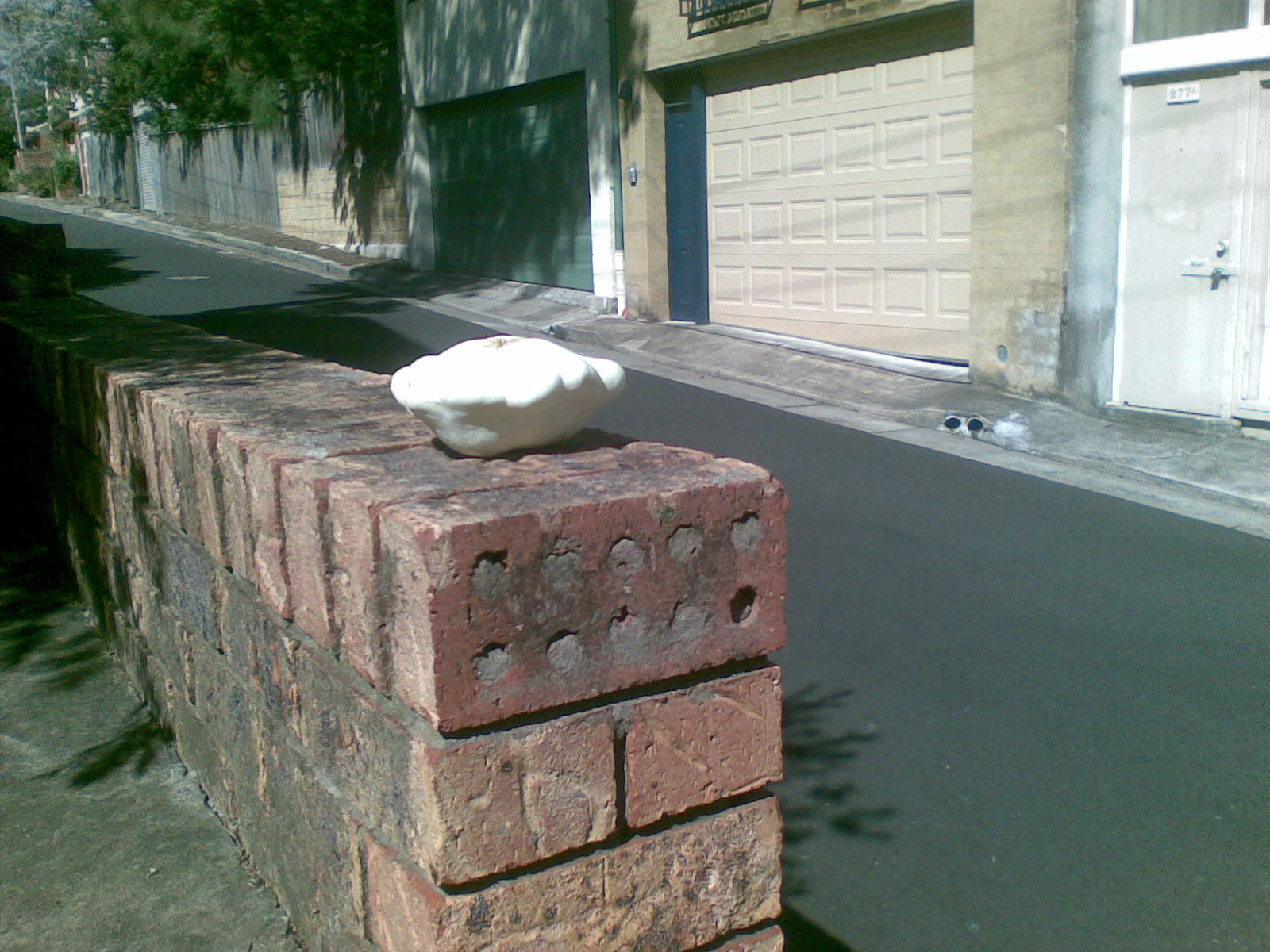
And I got to notice odd things around the suburb, like this big button squash put out to ripen in a back lane, for all the world like a pumpkin in a French village:

I still allow myself to read on the afternoon dog-walk. Yesterday we went on a 30-page excursion.

Our baskets and Awaye

Almost exactly a year ago I mentioned that we’d acquired three beautiful woven baskets. The artist, whose name I omitted to mention then, was Jim Walliss, a white man from down Nowra way. Yesterday onABC’s Awaye he received an honorable mention in a program about Boolarng Nangamai Aboriginal Art and Culture Studio in Gerringong, near Nowra. The Awaye link in the last sentence gets you the audio. Here’s the relevant bit, where Steven Russell, weaver, painter and print-maker is talking to Nicole Steinke from the ABC:

Nicole Steinke: How did you start with the weaving, because you’ve said you really love the weaving?
Steven Russell: It started back in TAFE, in 2000, when I first started TAFE. We were taught by this old fella, a whitefella –
NS: Is that Jim Walliss?
SR: Jim Walliss, yeah. He’s a pretty good weaver himself, and he told us stories about the Aboriginals and what they did. He showed us a lot, and we just took off from there and ran with it and haven’t looked back since. I’m just thankful for Jim, for knowing him, and teaching us something that should have been passed down by our ancestors, and which wasn’t.
NS: So was there a sharing there that went on?
SR: Yes, it was sharing, and he was honoured to teach us. He taught us a lot of things about weaving and styles of weaving. He taught us our traditional weaving and that’s something that we’ll cherish for the rest of our lives, and we’ll pass it on to our kids.

So our beautiful little baskets have some sweet connections.

Fourmillante Sydney …

… Sydney of dreams …

Last night we spent a couple of hours in the city for the first night of the Festival of Sydney. We saw:

  • thousands of people in a good mood, many sporting little electric fans that somehow lit up with an ad telling us to switch to a sponsoring bank
  • the fig trees in Hyde Park sporting ornate trunk wraps
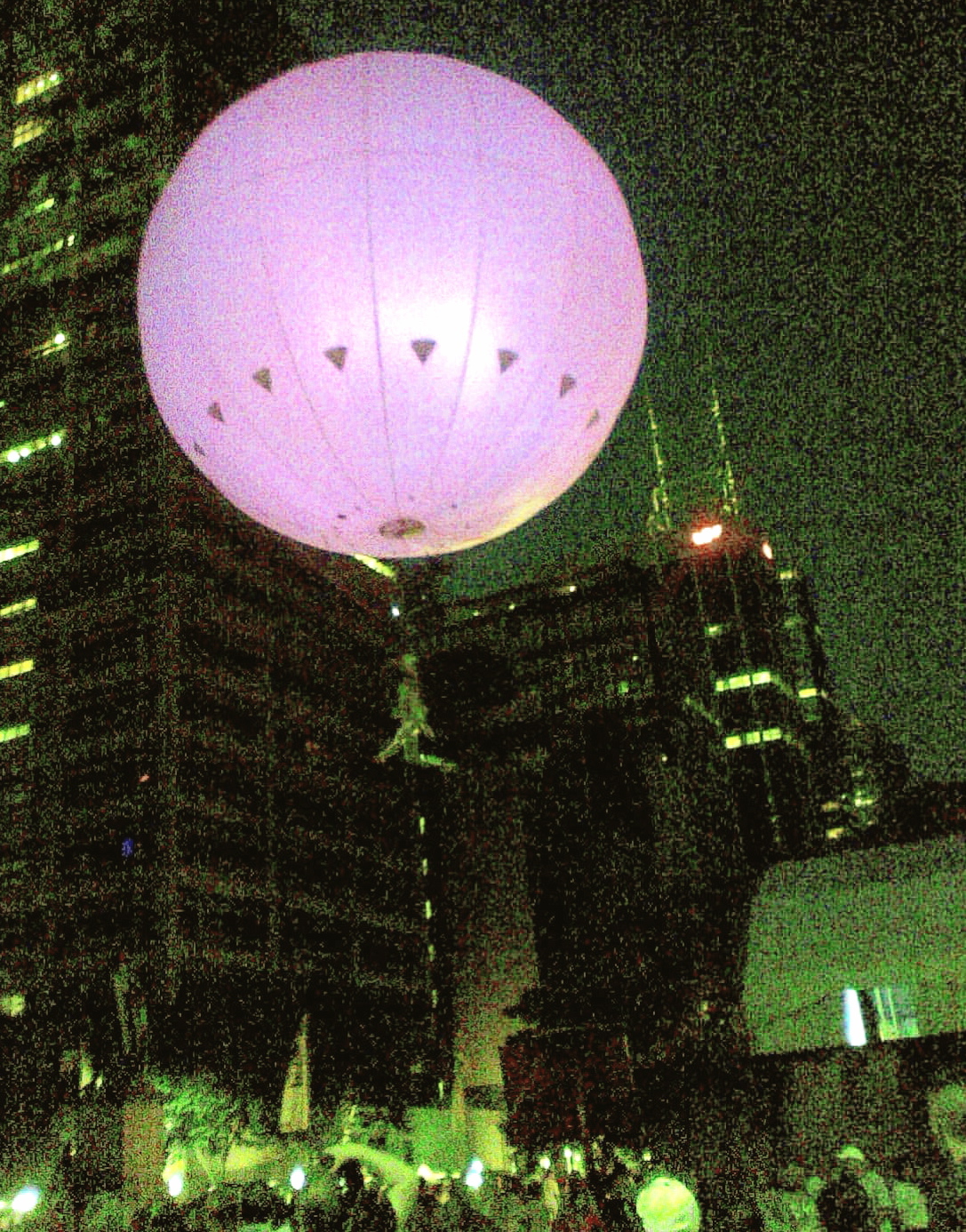
  • a spangled woman floating beneath a giant balloon outside the Barracks Museum, who dived in slow motion to touch fingers with a little girl sitting on her father’s shoulders

  • kaleidoscopic images lighting up the wall of the law courts building
  • a hundred saxophone players belting out a tune from the upper and lower verandahs of the Mint Museum
  • twenty bagpipers playing ‘Amazing Grace’ from the front of Parliament Building
  • Black Arm Band singing ‘Treaty’ in the Domain, and even though we were half a kilometre away from the stage they really did the business (Al Green, the main act, didn’t reach as far back as us in quite the same way)
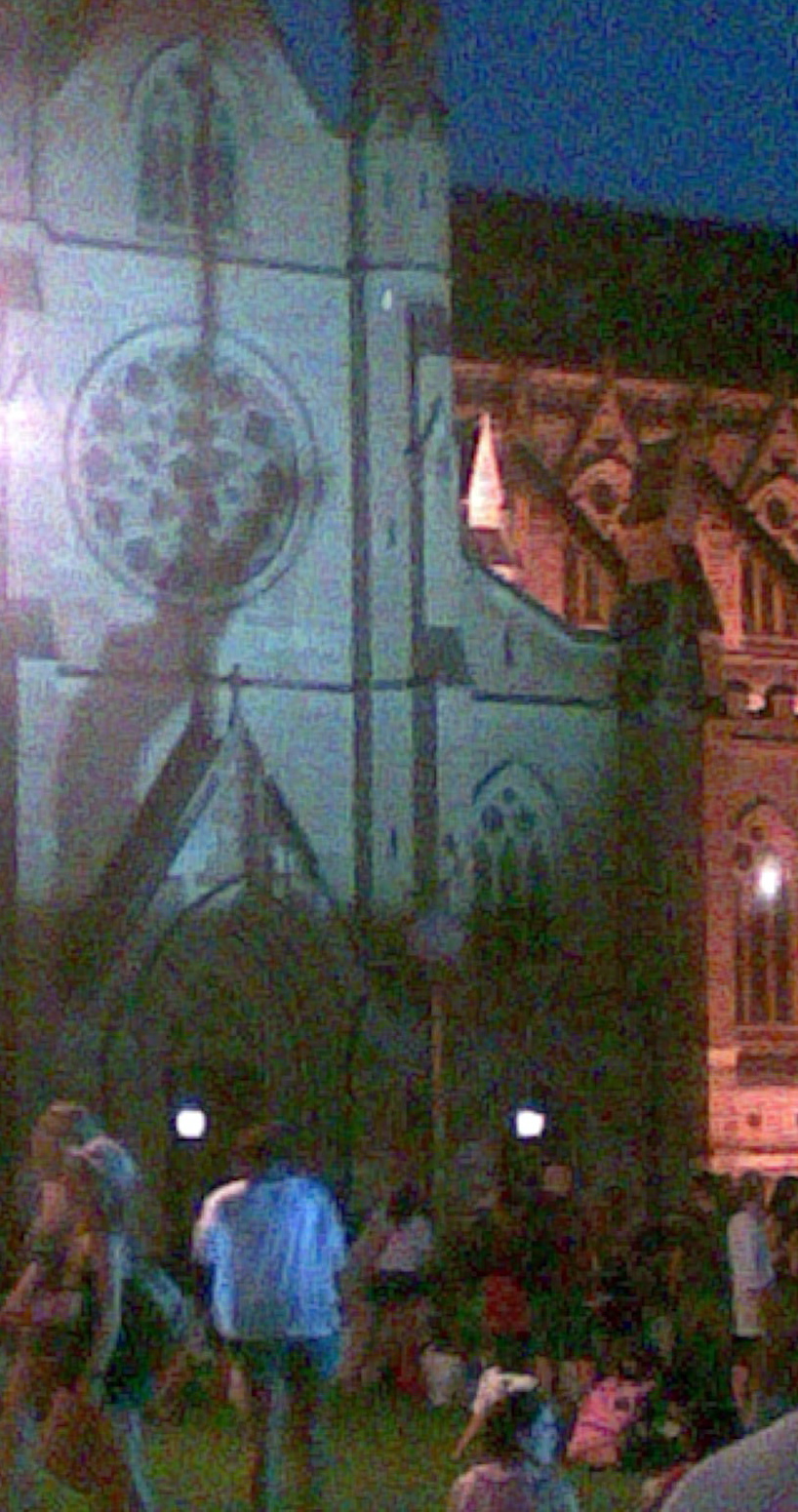
  • aerialists throwing weird shadows onto the western façade of St Mary’s Cathedral

  • A fabulous band called (I’ve just looked them up on the Festival web site) Big Bad Voodoo Daddy doing ‘Minnie the Moocher’ in Martin Place, which was packed even tighter than the Domain

I don’t have high expectations of these kinds of giant parties, particularly since being vomited on by a stranger at Darling Harbour one New Year’s Eve 25 years or so ago. Last night was like a good dream, or a dozen of them at once.