Monthly Archives: Aug 2026

Lee Lai’s Cannon

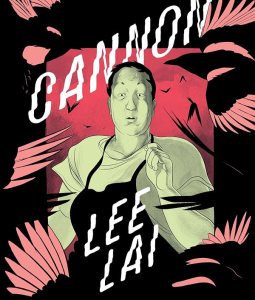
Lee Lai, Cannon (Giramondo 2025)

Cannon made history by being the first comic to win the prestigious Stella Prize. Unlike other prize winners it didn’t take long to become available at the library. This may be because the kind of people who borrow prize winners from libraries mostly aren’t persuaded that comics can be a good read. There’s a chance that the luridly unpleasant cover art is a further disincentive.

It’s their loss.

The story begins on the endpapers, which feature a scattered mess of kitchen items – a whisk, a spatula, a saucepan, glasses, straws, broken plates. The next pages, the equivalent of a pre-title sequence, begin with a full-page image of a restaurant with tables and chairs in a chaotic overturned state. Everything is dark grey, as if on an unlit night, except for a score of birds, pitch black but with white on their wings, perched on the furniture. On the next page a lumpish person sits on the floor, wearing white and black like the birds and breathing heavily (the lettering, ‘HUF’ and ‘HF’, floats in the gloom around her). She is joined by another starkly drawn black and white figure, tall, thin. We realise that the chaos has been caused by the first figure, and the second one has come to her aid. The story begins.

It takes a few more pages before it’s clear that the lumpish person is Cannon, a woman, and the other figure, also a woman, is her friend Trish. They are queer Asian women, and the book is mainly about their friendship. Not to give too much away, Cannon has a stressful job as a cook, and is caring for her disabled grandfather (much of whose grumpy dialogue is given in Chinese characters and untranslated). The black birds are hallucinations produced by Cannon’s increasingly agitated mental state. Trish is a writer, of comics, and though she is pretty much Cannon’s only close friend, she is secretly creating a book about her. So this book is about Cannon, and about someone writing a book about Cannon, and inevitably about how Cannon responds when she finds out that her friend is commodifying her in this way.

It’s sometimes funny, sometimes sexy (there are heterosexual as well as Lesbian encounters, not exactly safe to read on the couch with children, but not creepy), sometimes sexy and funny at the same time. There are family dynamics, wonderfully nuanced portrayals of relationships, some recursive references to being a token queer Asian comic creator. The austere black and white is occasionally punctuated by garish red when Trish and Cannon watch a horror movie on television or in intense moments. So much to enjoy and savour.

In the restaurant, Cannon is the one who keeps her cool while everyone else is losing it. But we see the beads of sweat on her forehead, and the birds of suppressed emotion. The restaurant-smashing scene doesn’t happen until page 221, and when it does it goes on for nine pages, to this reader’s intense relief!

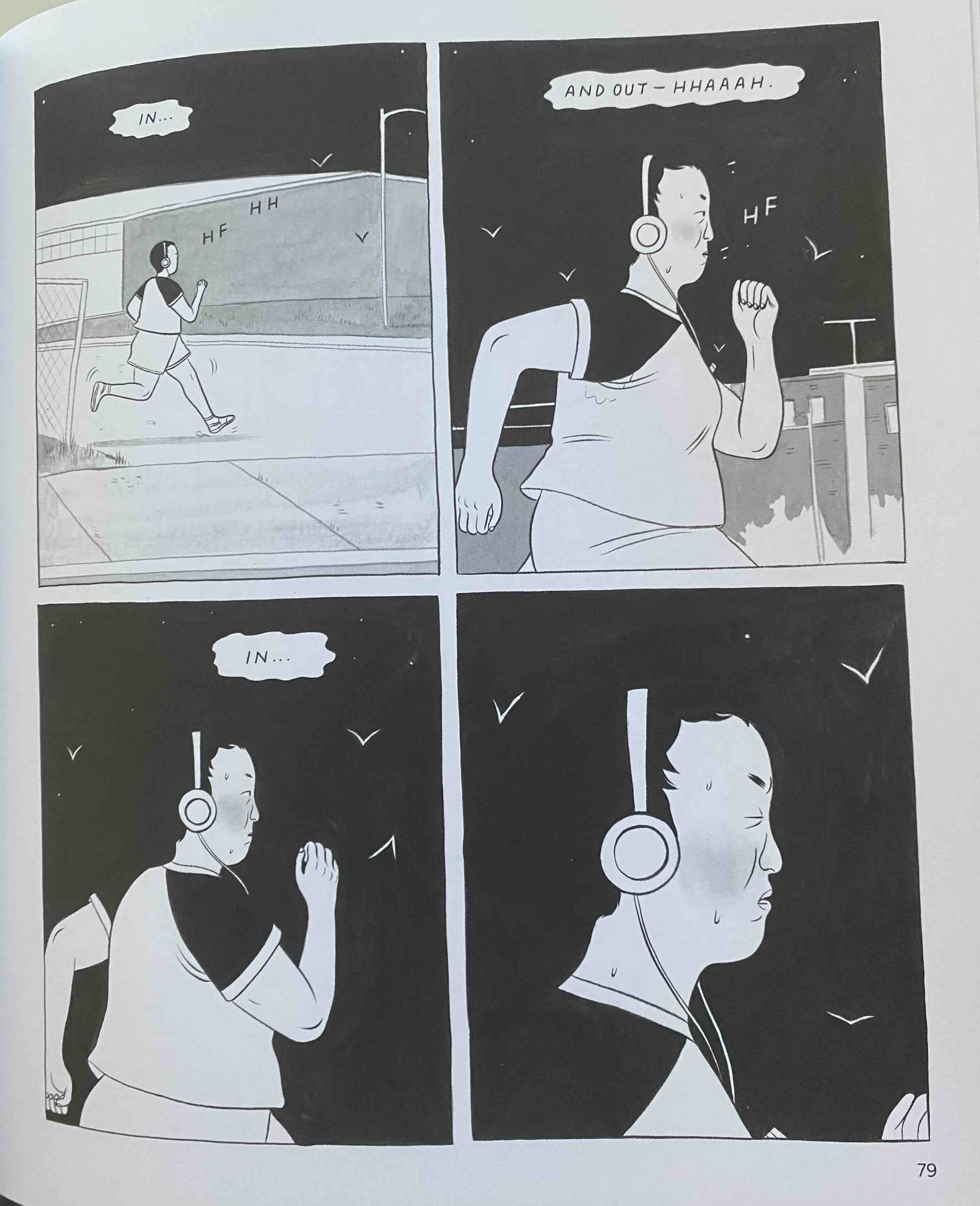
Here’s page 79*:

Cannon is going on a run at night, listening to a calming tape, with stylised birds in the background. If you picked this book up in a shop and turned to this page, and only this page, to see if you wanted to buy, you’d probably put it back on the shelf.

But in context it’s a different story. By this stage of the book we understand that running with the tape is Cannon’s way of staying on an even keel. Each time she goes for a run the narrative slows down and the reader takes time out with her. On this occasion, her grandfather has taken a turn for the worse, her mother refuses to help, and Trish’s sympathetic advice hasn’t helped. Six pages of her running are interspersed with other bits of story – Cannon remembers Trish intervening at school when a mean girl attacked her, Trish in the present does something that we only understand much later in the book. The birds are here, reduced to distant, barely noticeable shapes – the running is doing its job.

The art is deceptively simple. Cannon is not there to be looked at. The simple, elegant line drawings and uncluttered frames throughout don’t draw attention to themselves and allow the story to move along seamlessly. The plentiful white (and sometimes black, as on page 79) space opens up room for the reader to feel.

I wouldn’t have read this if not for the Stella Prize. I’m grateful.


I wrote this blog post on land of Wangal and Gadigal of the Darug Nation where just now the nights are cold but the days, as often as not, are cloudless and windless. I gratefully acknowledge the Elders past and present, and welcome any First Nations readers of this blog.


My blogging practice is to focus on the page that coincides with my age, currently 79.
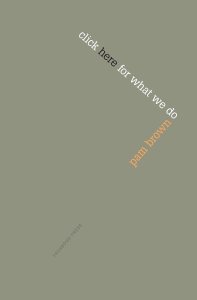
Jill Jones’s How to Emerge

Jill Jones, How to Emerge (Vagabond Press 2025)

Jill Jones is a formidable poet, sometimes thrilling, often difficult, never cliché or dull.

Like many of her previous books, How to Emerge has won awards (including the Kenneth Slessor Prize for Poetry at the 2026 NSW Literary Awards) and been shortlisted for others (most recently the 2026 Prime Minister’s Literary Awards, winner to be announced on the 10th of September).

Some quotes from judges’ comments may give you a sense of the poetry, and also of the difficulty of describing it.

From the PM’s Literary Awards (for the full comments, click on the book’s cover at this link):

Advancing by non-propositional proposition, chances and crossings, How To Emerge is an absorbing, elegant collection of poetic numbers operating at the threshold of the personal and the impersonal. In its richly suggestive representation of worldly entanglement, it solicits readers willing to enter into a pact of mutual attention and unpredictable exchange. 

From the NSW Literary Awards (the full comments are at this link):

These poems discover humanity, perhaps even meaning in the accumulating weight of the world; we are star dust, but we are also the brat summer. Part of the appeal of these poems is the rare faith they show in the reader, a belief that readers will find their own meaning and carry from the collection something of the warmth, humour and care that radiates from the poems.

I won’t add any generalisations of my own, except to say that I like the idea that readers have to be ‘willing’ (PMLA judges) and ‘will find their own meaning’ (NSWLA judges).

I’ll just look at one poem, ‘Poem Mourning My Name’, on page 79*.

It has fifteen lines. According to an endnote, all the poems in the book ‘are composed of lines that are multiples of three’. I’m guessing this was a self-imposed restraint, important in creating the poems, but not so much in the reading of them, unless at a subliminal, numerological level.

Before you read on, please stop and read the poem itself, preferably aloud. You’ll get a sense of its flow, its general effect, and if you’re like me, you’ll feel an itch to look more closely, poke around in it, figure out what precisely is happening. The rest of this blog post is an attempt to record some of that looking, poking and figuring.

When I was thinking about the poem, I happened to hear Florence Knapp discussing her novel The Names in a Sydney Writers’ Festival podcast (at this link). That novel tells three life stories, each of the same boy, but he is given a different name in each with massive consequences for how his life goes. And I realised that in various contexts my name has been Jonny, Jonno, Shaw, Shawrie, [offensive nickname deleted], John, Jon, Jacko (just for one weekend) and Jonathan. Names are important, and perhaps everyone can tell a story about theirs.

What if you’re called Jill Jones? I stopped counting when I reached the 200th person with that name on Facebook. This commonness could be what leads to the poem’s opening. Surely, you might think, if your name is a marker of your untransferable individuality, it must be more distinctive than that. In my reading of the poem, that’s the starting point – the fantasy that behind the everyday name there is another, ‘real’ name:

What is my real name, is it a name of the dead 
___ something to fling off like an old coat, a translation
of a dream, a river, a fairytale, a rock or tree?

Is it too hard to remember, or a joke that's barely
___ cute? Is it a message someone deleted? It's strange
on my tongue, like an old lover, a lack of neatness.

As in many of Jill Jones’s poems, these lines are full of allusion. Some people are named after dead ancestors, or from a parent’s dream. Fairytales about names abound – I was just telling my grandson about Rumpelstiltskin this week. There’s a popular belief that in some cultures babies are named for the first thing the mother sees after giving birth – a rock or tree. And there’s a joke that’s ‘barely cute’ that relates to that belief – which I won’t tell here because I try to keep the blog family friendly.

While this play is going on, a different understanding of the opening question swims beneath the surface. Is a name something other than an arbitrary word used to identify the person? Is a real name an inversion of what the trans community calls a dead name? In the second triplet, that unease comes closer to the surface: the deleted message, the strangeness on the tongue, the awkwardness of an old lover, something that doesn’t fit though maybe it did once in a time that’s forgotten.

It is this imagined-forgotten name that is being mourned.

The next lines, coming after after a visual break, are a kind of prayer.

Call me by the name I was, tell me I'm part of a pattern 
___the constellations, some kind of DNA.

Was I once a fish, a horse, a sparrow, a red red rose?

The ‘real name’ has become ‘the name I was’: it’s more than a label, it’s a metaphor for lost identity, a way of understanding the speaker’s place in the universe, but one that’s in the past. We name stars by their place in constellations. DNA is a deep identifier. But the last line here does a kind of twist. After a glancing, fanciful reference to reincarnation, it pulls back from that rabbit-hole and allows a rose to enter the poem. In European poetry, a rose can’t be mentioned without invoking a long tradition: here the phrase is taken from Robert Burns (‘My love is like a red red rose’) but it’s impossible not to think of Shakespeare (‘A rose by any other name would smell as sweet’) and Gertrude Stein (‘A rose is a rose is a rose’), both of which, with their understanding that names are arbitrary, oppose the main argument.

After another visual break, the poem makes a new start, perhaps responding to that skepticism:

I can breathe without my name, that’s good, so it’s not
___ something I need tell anybody. Not even as a story
forged awkwardly. And no-one has come anyway.

But it’s still something to hide away, a riddle half-buried
___ by a loch that’s too narrow, too deep. Even underneath
where there are signs, there are layers and bones.

A paraphrase: Assuming that there was a real name in the past, I don’t need it to go on with life; I don’t even need to tell anybody, and that’s just as well as no one would want to hear me anyhow. But …

Is this what the PMLA judges meant by a ‘non-propositional proposition’? Maybe it’s nonsense to think I had a ‘real’ name, now lost, and that knowing it would reveal something essential about myself. But somehow the idea won’t go away: it lingers in some half-buried part of consciousness.

There’s a fresh twist in the last sentence. The poem to this point has been a lament for a lost name, a lost sign. But even when there are signs, it says,there are layers of meaning in them. (Which brings me back to the stories I could tell (perhaps awkwardly) about the variations on my own unforgotten and unmourned name.

Through all of this strangely abstract rumination, there are things: a coat, a river, a rock, a tree, a fish, a horse, a sparrow, a rose, and in the end bones.

We keep being told that there’s a crisis in our culture to do with shrinking attention spans. A remedy that’s often suggested is to read long-form writing like novels. A poem as short as 15 lines can also invite – and reward – sustained, active attention.


I am an Australian man of settler heritage. I’ve written this blog post on the currently cold, wet land of Gadigal and Wangal of the Darug Nation. I acknowledge Elders past and present of those clans, and welcome any First Nations readers and commenters.


My blogging practice is to focus on the page that coincides with my age, currently 79.
How to End a Story, report 3

Helen Garner, How to End a Story: Collected Diaries 1978–1998 (Text Publishing 2025)
– pages 354, mid 1988 to page 458, six pages into 1991.

Since my last nominally monthly report on my progress with Helen Garner’s diaries I’ve spent a couple of weeks away. The Garner book is completely unsuitable for aeroplane travel, so this report is running late and I have fewer pages to report on.

One of the joys of the diaries is the elliptical narrative that emerges. At this stage of my reading, it seems that the whole 770 pages tells the story of Garner’s relationship with her third husband, the novelist known in these pages as V. In the first entries she is still married to F, a marriage which ends acrimoniously, though by now she and F are friendly again, as he helps clean up a translation of Monkey Grip and attends performances by Helen’s daughter. Then V appears and is one of two men she is having a fling with. She chooses between them, realises she is in love with V and embarks on a serious relationship with him, guiltily because he is married. He leaves his wife and for a time they live together secretly in Sydney, where Helen pines for her Melbourne home and community. Now they have moved together to Melbourne, where she is much happier and he is feeling uprooted. In the last couple of days of my reading the possibility of marriage has been mentioned, not by Helen or V but by a friend – recorded without comment in the diary.

This compelling story is embedded in a host of sharp observations of the world, notes on the progress of her writing, the twists and turns of other relationships, world events, the writerly life.

In today’s reading the main narrative advance comes in an entry where V says he finds it very hard to work in Melbourne. An otherwise unidentified ‘novelist from New York’ comments that whereas ‘traditionally’ in marriage the woman goes to live on the man’s turf, V has left his own territory and come entirely on to Helen’s:

He has no family and no kids, he’s estranged from his wife of twenty-four years, he has sold his piece of property, and he’s here.

This is a sweet note that makes one realise that the many diary entries about quarrels in which V comes off as arrogant, patriarchal, dismissive of the woman’s point of view are far from being the whole picture. The move to Melbourne was his suggestion, in response to Helen’s discontent in Sydney.

And there’s so much else in today’s five pages:

Helen submits Cosmo Cosmolino to Y (probably Diana Gribble), her publisher, they have a laughter-filled editing session, then she labours at some painful rewriting, and is scared that with this book she ‘will come a cropper’. She sees a fine cut of The Last Days of Chez Nous, and enjoys it, then is cranky when she receives faxes (faxes!) ‘demanding further dialogue for post-synching’. She mentions writing a review of David Marr’s biography of Patrick White, and delights in her father’s comment, ‘I think the writer of that book will be … enchanted by what you said about it.’

There are events from the wide world: Rajiv Gandhi is assassinated. There are notes on her reading (The Diary of the Rev Francis Kilvert) and music listened to, reports on conversations (notably one about sex on international flights – ‘For once I was entirely innocent’), a death, a divorce, a bust-up with an important woman friend. A friend becomes a grandmother. Her friend J (evidently Tim Winton) is interviewed on TV.

I like to end these reports with one entry. Here’s my favourite from today (page 458):

Out walking as it was getting light, V and I passed a blackbird singing on a wire. A very beautiful song, melodic, generously paced, sweet. V laughed: ‘I build good nests. I find many worms.’


I am a man of settler heritage. I wrote this blog post on the land of Gadigal and Wangal of the Darug Nation. I acknowledge their Elders past and present and welcome any First Nations readers.

Toby Fitch’s Ill Lit Pop

Toby Fitch, Ill Lit Pop (Flying Island Poets 2018)

There’s a thing in contemporary poetry where a poem is created by doing something to another piece of writing. A mechanical example is n+7, in which every noun in the original passage is replaced by the seventh noun after it in the dictionary. Depending what dictionary you use, ‘Friends, Romans, countrymen, lend me your ears’ might become, ‘Fringes, romps, courage, lend me your earshot.’

There are other, less mechanical techniques. In a cento, a form that has been around for a very long time, each line of the new poem is made up of a line from another poem. There are erasures, cut-ups, flarf (see Wikipedia description here), and more. They can be fun and challenging to do, and the results can be intriguing, hilarious, or sometimes just plain mystifying to read.

Toby Fitch does a lot of that kind of thing. His book before Ill Lit Pop was The Bloomin’ Notions of Other & Beau (Vagabond Press 2016) – say its name aloud and you might realise that the book has something to do with Illuminations by Arthur Rimbaud. In 2021’s Sydney Spleen (Giramondo, my blog post here), he applies N+ 7 viciously to some Scott Morrison’s speeches.

Ill Lit Pop includes similar play. An end note lists ‘sources’ for each of the book’s 21 poems. They all do something to – or with, or through – other pieces of writing. The ‘sources’ include Kurt Cobain, Ice House, Taylor Swift, Walt Whitman, Arthur Rimbaud and William Blake. If my reading of the book’s title is correct, it suggests that many of the poems take pop lyrics and make them obscure, as in poorly illuminated pop music.

Probably the poem that speaks most directly to me is ‘Let’s Dance’ [or, as the contents pages puts it, ‘Let’s Dance (da da-da-da da-da-da)’], a more or less traditional poem responding to David Bowie’s fabulous video of his song by that name. It begins:

It wasn't Stravinsky's rite of spring
to plonk Uluru on his album cover
but it led Bowie to the beach-blonde pub
summer dance-off

To read the rest of the poem you’ll have to find a copy of the book. You can see the video at this link.

In the less traditional poems, I generally find myself bemused.

Page 47* will give you a taste. It’s the last page of ‘Evening of the Bot Man’, which has the explanatory subtitle ‘(A bad lip reading of Rimbaud)‘. The note on sources names ‘selected lines of Le bateau ivre, Arthur Rimbaud’.

I think I get the idea of bad lip reading. Here’s how I imagine this poem was created. Toby Fitch watched someone perform Le bateau ivre, probably in the original French, with the sound turned down, and wrote words in English that roughly fitted what he saw. Then, I’m guessing, he read through what he had written and selected the bits that looked interesting, tidied them up a bit, and perhaps nudged them towards some kind of meaning. Maybe it’s a process a little like reading tealeaves or playing with a ouija board. Or like interpreting dreams – the lipreader’s unconscious mind surely has a role in deciding what words to see.

I don’t think there’s much point to reading it alongside Rimbaud’s poem – I tried and failed. The title, ‘Evening of the Bot Man’, could be a tidied-up version of ‘the bot man’s evening’, which is a plausible bad lip reading of ‘le bateau ivre’. Such comparative reading for the rest of the poem would be a lot of work, and probably not very productive. So the poem needs to be read in its own right.

In the first four pages, nothing makes obvious sense, but there are some wonderful surrealist phrases.A random sample includes ‘tweeting pics / of the cooked black rain’, ‘icy poles exalting / among purple columns of lard’, or ‘July fizzing w/ quadrupeds’. But a narrative thread emerges from the apparent chaos. The poem is addressed to someone, and the speaker has done something he regrets:

a single sexy night saw me regret
___________________________the fallout of my life
's pleasure dome
__________________________u shivered non-plussed
the Furies all slow-clapped
our marriage

Such is the nature of the piece that as I read I wondered if it was me or Toby Fitch who decided that was part of a through narrative line. Whichever, oncec I’ve seen it, it’s definitely there, and the poem continues with self-recrimination and perhaps some excuse-making.

So these final lines, on page 47, read almost coherently, beginning with a meta moment:

_______love needs a narrative to absorb

People need narratives – and the nominally arbitrary process of bad lip reading has urned one up.

_______the moon is atrocious w/ its solar mains
you & i both know
__________________desire is beastly in the flesh

These lines invoke the biblical phrase, ‘The spirit is willing but the flesh is weak,’ putting it in an astronomical rather than theological context – the moon in relationship to the sun. ‘There’s a hint of forgiveness in ‘you and I both know’. And so …

& so we're content
______________all the better to awkward you w/
night-night selfie
___________________________on the bed next to me
_________yr disappointment eyes

The issue – arising from that ‘single sexy night’ – is not resolved. Things are still awkward. The speaker and his spouse have reached an awkward detente. Disappointment is still there, but so is contentment.

None of which has anything to do with the Rimbaud’s most famous Symbolist poem, whose surface narrative is all about a boat sailing drunkenly down a river. Rimbaud has provided the text from which the new text has arisen. If you can find the poem I’d love to hear other people’s readings of it.


I am an Australian man of settler heritage. I’ve written this blog post on Wulgurukaba land, on beautiful Yunbenun (aka Magnetic Island). I acknowledge their Elders past and present, including their sustained struggle to have the island’s long history acknowledged, and I welcome any First Nations readers and commenters.


My blogging practice is to focus on the page that coincides with my age, currently 79. When a book has fewer than 79 pages, as this one does, I look at page 47, the year of my birth minus 1900.