Category Archives: Page 47

Eunice Andrada’s Kontra

Eunice Andrada, Kontra (Giramondo 2025)
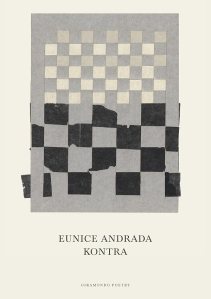
Kontra, the third book of poetry by Eunice Andrada, has won the Victorian Premier’s Award for Poetry and is shortlisted for other awards, including the 2026 Prime Minister’s Literary Awards.

Andrada’s previous books, Flood Damages and TAKE CARE (links are to my blog posts) deal a lot with female suffering, especially in the context of colonisation, with what Andrada calls ‘bare vulnerability’. Kontra‘s poems focus mainly on the figure of the kontrabida, the villainess in Filipino soap operas that viewers love to hate. It comes at the same subject from a different angle, and it’s a book in which the women fight back.

Whereas the soap opera (or teleseryes) heroine, the bida, tends to be virtuously well behaved, the kotrabida is ferocious and glamorous, though doomed to loss and humiliation, or worse. Andrada sets out to give her a fuller life. She says in an author’s note:

The kontrabida always arrives fully formed, without a backstory. I couldn’t find out what she thought by going off the information that was presented through teleserye storylines. Through poems that oscillate between her and me, I wanted to piece together her lineage, and in doing so, look at my own. I was thinking about my blood lineage and my poetic lineage, the women who have hurt me and healed me, and the poets who shaped me.

I have never seen a Filipino soap opera – the closest I’ve come is an event billed as a Bading Talent Show at the Marrickville Bowling Club, in which a number of men in spectacular drag gave off the kind of energy I now recognise as belonging to the kontrabida.

If I were to stick to my usual practice of looking at page 79*, I would now discuss ‘Speaking of Love’, which has the explanatory subtitle, ‘cento for women slain in operas – may you live in love forever’. A cento, as you may know, is a poem made up of lines taken from other poems. This poem does a beautiful job of repurposing lines to give the slain women an alternative, active fate.

But I’m breaking my rule to talk a little about the book’s second section.

There are three sections: ‘Kontra’, ‘Operá’ and ‘Bida’. ‘Kontra’ and ‘Bida’ feature the teleseryes characters. ‘Operá’ mostly leaves the world of teleseryes behind. It consists of a 25-page multi-part poem, described in an author’s note as a dyptich.

On the right-hand side of each spread, the poet responds to a painting by Artemisia Gentileschi, Judith Slaying Holofernes, with the introductory heading ‘[Florence, 2023]’. In case the painting is as unknown to you as the teleseryes are to me, you can see it at this link. It refers to the story in the Book of Judith, which is not considered part of the biblical canon by Jews or Protestants, but counts for the Catholic and Orthodox churches.

On the left, with the introductory heading ‘[Korte Suprema, 2025]’, poems riff on the subject of divorce in the Filipino context, and include personal accounts of family violence. The title ‘operá’ is defined on the section title page as a verb, ‘to perform a surgical operation’: some of the left-hand pages includes short instructional sections labelled ‘operá’ – thought experiments, perhaps, or magic procedures, or metaphorical surgeries.

The diptych sequence folds personal history, Philippine law, and mainstream western art into a single whole. For me, the Gentileschi painting acts as a bridge enabling me to connect with the world of the teleseryes, and to the book’s complex humanity, rather than leaving me on the outside looking in.

Hee’s a sample spread:
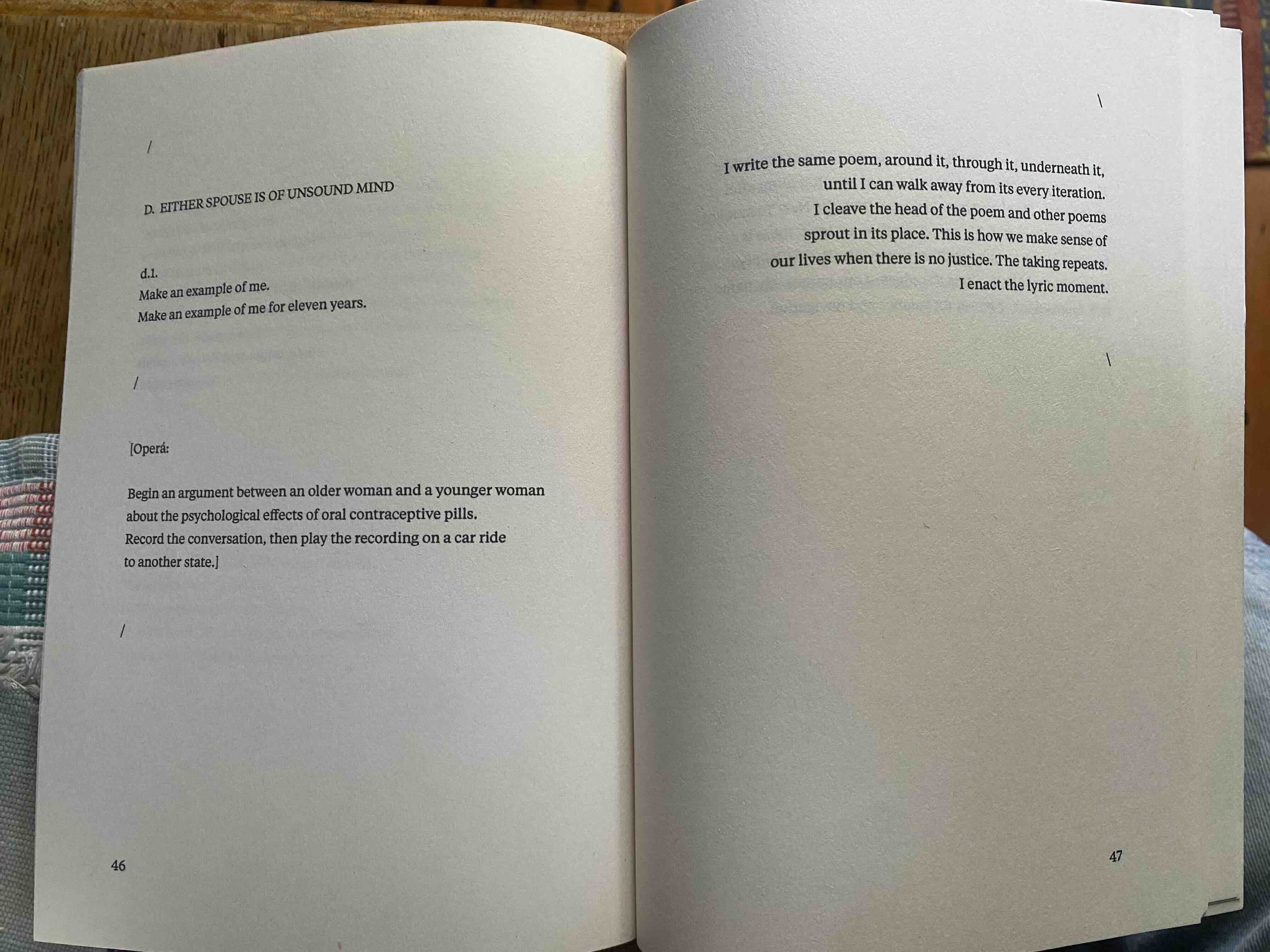
You see how it works. There are four components on the page. Let me walk you through them:

First on the left,

D. EITHER SPOUSE IS OF UNSOUND MIND

The sequence features five of these headings, numbered A to E. They give the conditions under which a woman may remarry while divorce remains illegal under Philippine law: A, Death of a spouse; B, Presumptive death; C, Alternative reality (I’m pretty sure that the law’s term for this is annulment); D, as on this page, Either spouse is on unsound mind; and E, introducing the final part of the sequence, Leaving the country.

Presented baldly in capitals, these headings create a restricting framework. Each of them is followed immediately by a spelling-out of its implications, sometimes as on this page offering a subclause, sometimes in extended narrative verse. The brevity of the response on this page builds on the narrative of family suffering that has followed ‘Presumptive death’.

d.1.
Make an example of me.
Make an example of me for eleven years.

It’s not clear who is speaking here. Because of the context, I first read it as the daughter of an abusive marriage where a woman is trapped. It could equally be the woman trapped in the marriage. Someone speaks back with passion to the impersonal legal language.

Then:

[Operá:
Begin an argument between an older woman and a younger woman
about the psychological effects of oral contraceptive pills.
Record the conversation, then play the recording on a car ride
to another state.]

In the sequence in general, the bracketed instructions imply that there is always something one can do. This is the only one that involves another person, It evokes the massive generational shift from Catholic-dominated Filipino culture to a more liberal secular mindset. Oral contraceptives aren’t recent news, and nor are car rides, but here they both represent modernity.

All of that is very Philippines specific. On the right-hand side, the speaker continues her contemplation of the 17th century Italian painting. In other parts of the sequence she has contemplated the painting, identifying with Artemisia Gentileschi as a rape survivor who went on to be a creative artist. Realising that Gentileschi returned to the Biblical story a number of times, she has sought out other versions. On this spread, the right-hand side of the diptych sequence takes a metapoetic turn:

I write the same poem, around it, through it, underneath it,
until I can walk away from its every iteration.
I cleave the head of the poem and other poems
sprout in its place. This is how we make sense of
our lives when there is no justice. The taking repeats.
I enact the lyric moment.

Like Gentileschi, the speaker of the poem returns again and again to the same subject. Holofernes – now a symbolic figure – must be beheaded many times before ‘I’ can walk away from him. Cleaving its head is a brutal metaphor for resolving a poem’s issue – and I guess the process of writing poetry may at times feel brutal. But the subject stays alive through many iterations – or, in the imagery of this poem, sprouts new heads.

Gentileschi was raped as a young woman, and although her rapist was found guilty he was never punished. The poem suggests that her repeated depiction of the violence against Holofernes was a way of making sense of her life in the absence of justice. And not just her, but ‘we’. The I of the poem returns to the mistreatment of women and children – in the left-hand pages of this dyptich but not only there. There’s a fine reaching out in solidarity over the centuries and across cultural difference.

‘I enact the lyric moment.’ I don’t know if writing lyric poetry has ever before been compared to a bloody beheading.

There’s a lot more to this poem and to the book. I’m glad it’s being noticed by the awards judges.

I am grateful to the Giramondo Publishing Company for my copy.


I wrote this blog post in Gadigal Wangal country, where it is my great joy to live. I acknowledge Elders past, present and emerging for their continuing custodianship of this land.


* My blogging practice is to focus on the page that coincides with my age, currently 79.
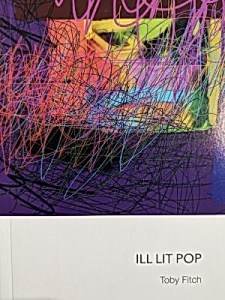
Toby Fitch’s Ill Lit Pop

Toby Fitch, Ill Lit Pop (Flying Island Poets 2018)

There’s a thing in contemporary poetry where a poem is created by doing something to another piece of writing. A mechanical example is n+7, in which every noun in the original passage is replaced by the seventh noun after it in the dictionary. Depending what dictionary you use, ‘Friends, Romans, countrymen, lend me your ears’ might become, ‘Fringes, romps, courage, lend me your earshot.’

There are other, less mechanical techniques. In a cento, a form that has been around for a very long time, each line of the new poem is made up of a line from another poem. There are erasures, cut-ups, flarf (see Wikipedia description here), and more. They can be fun and challenging to do, and the results can be intriguing, hilarious, or sometimes just plain mystifying to read.

Toby Fitch does a lot of that kind of thing. His book before Ill Lit Pop was The Bloomin’ Notions of Other & Beau (Vagabond Press 2016) – say its name aloud and you might realise that the book has something to do with Illuminations by Arthur Rimbaud. In 2021’s Sydney Spleen (Giramondo, my blog post here), he applies N+ 7 viciously to some Scott Morrison’s speeches.

Ill Lit Pop includes similar play. An end note lists ‘sources’ for each of the book’s 21 poems. They all do something to – or with, or through – other pieces of writing. The ‘sources’ include Kurt Cobain, Ice House, Taylor Swift, Walt Whitman, Arthur Rimbaud and William Blake. If my reading of the book’s title is correct, it suggests that many of the poems take pop lyrics and make them obscure, as in poorly illuminated pop music.

Probably the poem that speaks most directly to me is ‘Let’s Dance’ [or, as the contents pages puts it, ‘Let’s Dance (da da-da-da da-da-da)’], a more or less traditional poem responding to David Bowie’s fabulous video of his song by that name. It begins:

It wasn't Stravinsky's rite of spring
to plonk Uluru on his album cover
but it led Bowie to the beach-blonde pub
summer dance-off

To read the rest of the poem you’ll have to find a copy of the book. You can see the video at this link.

In the less traditional poems, I generally find myself bemused.

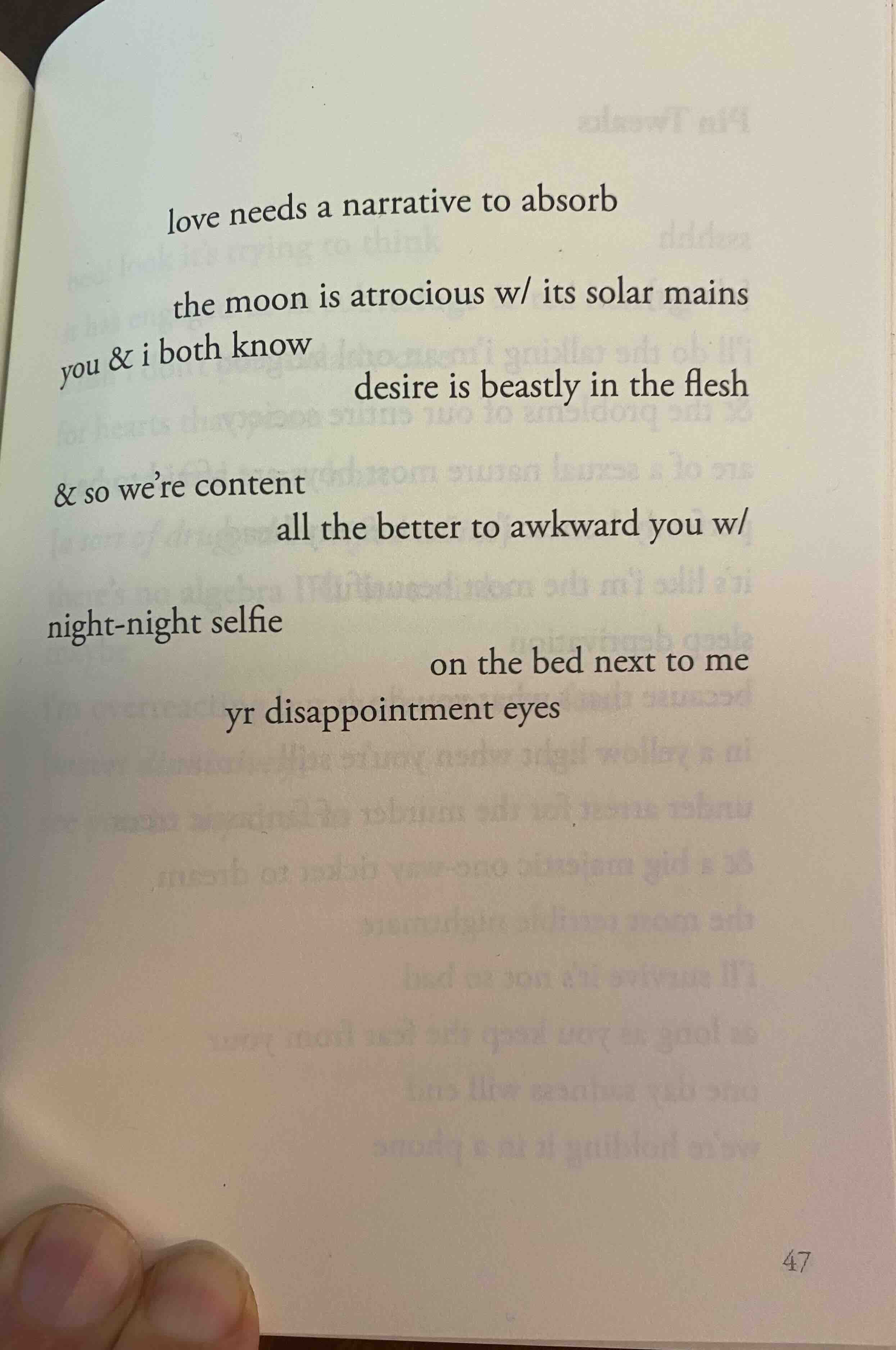
Page 47* will give you a taste. It’s the last page of ‘Evening of the Bot Man’, which has the explanatory subtitle ‘(A bad lip reading of Rimbaud)‘. The note on sources names ‘selected lines of Le bateau ivre, Arthur Rimbaud’.

I think I get the idea of bad lip reading. Here’s how I imagine this poem was created. Toby Fitch watched someone perform Le bateau ivre, probably in the original French, with the sound turned down, and wrote words in English that roughly fitted what he saw. Then, I’m guessing, he read through what he had written and selected the bits that looked interesting, tidied them up a bit, and perhaps nudged them towards some kind of meaning. Maybe it’s a process a little like reading tealeaves or playing with a ouija board. Or like interpreting dreams – the lipreader’s unconscious mind surely has a role in deciding what words to see.

I don’t think there’s much point to reading it alongside Rimbaud’s poem – I tried and failed. The title, ‘Evening of the Bot Man’, could be a tidied-up version of ‘the bot man’s evening’, which is a plausible bad lip reading of ‘le bateau ivre’. Such comparative reading for the rest of the poem would be a lot of work, and probably not very productive. So the poem needs to be read in its own right.

In the first four pages, nothing makes obvious sense, but there are some wonderful surrealist phrases.A random sample includes ‘tweeting pics / of the cooked black rain’, ‘icy poles exalting / among purple columns of lard’, or ‘July fizzing w/ quadrupeds’. But a narrative thread emerges from the apparent chaos. The poem is addressed to someone, and the speaker has done something he regrets:

a single sexy night saw me regret
___________________________the fallout of my life
's pleasure dome
__________________________u shivered non-plussed
the Furies all slow-clapped
our marriage

Such is the nature of the piece that as I read I wondered if it was me or Toby Fitch who decided that was part of a through narrative line. Whichever, oncec I’ve seen it, it’s definitely there, and the poem continues with self-recrimination and perhaps some excuse-making.

So these final lines, on page 47, read almost coherently, beginning with a meta moment:

_______love needs a narrative to absorb

People need narratives – and the nominally arbitrary process of bad lip reading has urned one up.

_______the moon is atrocious w/ its solar mains
you & i both know
__________________desire is beastly in the flesh

These lines invoke the biblical phrase, ‘The spirit is willing but the flesh is weak,’ putting it in an astronomical rather than theological context – the moon in relationship to the sun. ‘There’s a hint of forgiveness in ‘you and I both know’. And so …

& so we're content
______________all the better to awkward you w/
night-night selfie
___________________________on the bed next to me
_________yr disappointment eyes

The issue – arising from that ‘single sexy night’ – is not resolved. Things are still awkward. The speaker and his spouse have reached an awkward detente. Disappointment is still there, but so is contentment.

None of which has anything to do with the Rimbaud’s most famous Symbolist poem, whose surface narrative is all about a boat sailing drunkenly down a river. Rimbaud has provided the text from which the new text has arisen. If you can find the poem I’d love to hear other people’s readings of it.


I am an Australian man of settler heritage. I’ve written this blog post on Wulgurukaba land, on beautiful Yunbenun (aka Magnetic Island). I acknowledge their Elders past and present, including their sustained struggle to have the island’s long history acknowledged, and I welcome any First Nations readers and commenters.


* My blogging practice is to focus on the page that coincides with my age, currently 79. When a book has fewer than 79 pages, as this one does, I look at page 47, the year of my birth minus 1900.
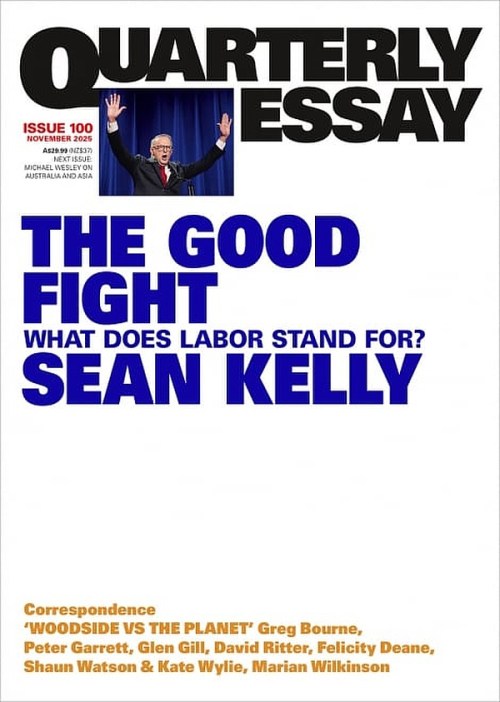
Sean Kelly Fights the Good Fight

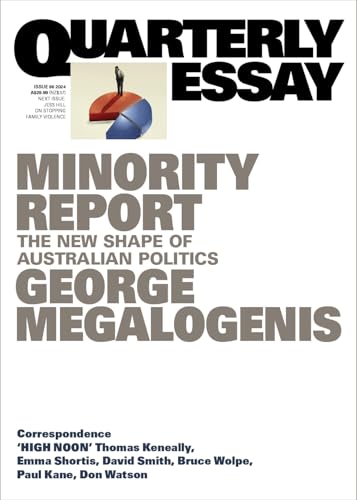
Sean Kelly, The Good Fight: What Does Labor Stand For? (Quarterly Essay 100, 2025)
– plus correspondence in Quarterly Essay 101

The subtitle of this Quarterly Essay seems even more relevant now than it did three months ago when it was published, as our Labor governments make mealy mouthed statements of concern about the ongoing genocide in Gaza or the genocidal rhetoric emanating from the White House and the Pentagon, give the go-ahead to climate vandalism by fossil-fuel companies, follow right-wing advisers in responding to the horrific killing of Jews in Bondi last year, come down hard on protest – oh, you name it!

But I was glad that the essay was more than a prolonged wail about Anthony Albanese et al‘s timidity or worse, perfidy. Instead, it’s a thoughtful essay in the original sense of the word, an attempt – Kelly starts out with a question that he doesn’t know the answer to, and he still doesn’t have a definite answer by the end. And my practice of holding off on reading Quarterly Essays until I can read the correspondence in the following issue paid off beautifully.

Kelly is a Labor man, adviser to former Labor Prime Ministers. Like Anthony Albanese he had a working class Catholic childhood. He tells us briefly that he knows Albanese, and likes him – enough to refrain from the fake-familiarity of nicknames. He frames his discussion as the inevitable tension between ideals (call them beliefs) and pragmatism (things you have to do to stay in government). He argues convincingly that it’s a mistake to adopt a strategy of going slowly with reforms in order to hold onto government long enough to make substantial change. The Whitlam government moved fast, he points out, and came a cropper, but it changed Australia society. Albanese’s assertion that he wants Labor to be the natural party of government, that he wants it to represent all interests, sounds good, but it’s largely a formula for futility.

There is an interesting discussion of the decline of the two-party system. The current impressive degree of unity in the ALP, Kelly argues, is not a good thing. Vigorous debate is a way of refining policy, and the ALP has outsourced the arguments from the left to the Greens, where they can be dismissed as hostility. The current disarray in the Coalition is not useful either – if a good part of Labor’s raison d’être is in ‘fighting Tories’, to use Albanese’s phrase, where do you go when the Tories are doing it for you?

Page 47* quotes Graham Freudenberg, legendary speechwriter for Labor leaders including Gough Whitlam and Bob Hawke. He described the ALP as ‘a collective memory in action’. Kelly comments:

That collective memory, driven by emotion, has inevitably harked back to Labor’s longest period in government: a period in which Labor won the approval of the Australian people at five successive elections, and for which it has since garnered much praise, including from its usual critics.

He is talking about the Hawke-Keating government. The current Labor government, he argues, is striding away from what it sees as the failures of its most recent predecessors and moving towards the ‘glittering memory’ of those years:

Hawke and Keating are both Labor heroes for good reason. Their government introduced Medicare, saved the Franklin River, acted on the High Court’s land rights judgment.

But, he goes on, they also deregulated the economy in ways that the right would have been proud of, and this is what they are mostly remembered for. On page 80, he laments:

The remarkable fact is that Labor, which has historically been so good at mythologising its past, has in this case effectively allowed the right to choose what will dominate its collective memory.

Keating’s personal boldness haunts this essay. Kelly quotes him in his final pages saying that ‘great political leaders have the instincts of artists’:

I always believe in leadership there are only two ingredients: imagination and courage.

This idea should be taken seriously, Kelly says:

I think it should be taken particularly seriously because of the way we have more lately come to think of politicians as technocrats, types of elevated bureaucrats.

We can sense artistic heat in Albanese, he says, but he doesn’t say – he doesn’t have to say – that Albanese is more commonly seen as fitting the technocrat, elevated-bureaucrat description. Then, with an almost Montaigne-like swerve, he discusses the writer Ella Ferrante’s creative process, ending the essay with this paragraph:

After establishing a consistent tone, she breaks out of her calmness. There is, she admits, a risk: that the calm will not be able to be recovered. or that the readers will no longer believe in that calm. But it is that risk that gives her writing life.


Correspondence in Quarterly Essay 101 (Blind Spot by Michael Wesley) is well worth reading. The learned correspondents correct Kelly on a number of facts. The one that stands out for me is Judith Brett, whose contribution is in effect a brief and enlightening essay on the word ‘socialism’:

What socialism has meant in Australian political debate has not been opposition to capitalism but belief in the creative and ameliorative capacities of the state to reduce inequality and advance the common good.

There’s quite a bit more, all worth reading, but it’s tangential to Kelly’s central argument. That is, he may be wrong when he says that Albanese has abandoned Labor’s socialist objective by catering to business interests, but his concern stands, and in his reply to correspondents he has interesting things to say about Albanese in relation to that formulation.

The other correspondents include a number of Labor insiders, but it rises well above the inside-baseball dangers of such discussions. They have interesting things to say about the history, about Kelly’s philosophical questions, and about the special dangers of the present moment.

I’ll give the last word to Kelly, whose final question, sadly, suggests an answer in the negative:

The correspondents agreed this was a strange time. I think so too. But it is possible that all of us are wrong: that this is not a special moment, but another moment of change and turmoil in an endless series. We think our era is unique, but we are – like most of those before us – wrong. In that case, Albanese Labor will be graded the way most Labor governments are: did it contribute to the improvement of Australian society in ways that are permanent and important?


I am a man of settler heritage who has been alive for almost a third of the time elapsed since Arthur Phillip claimed this continent for the British crown. I wrote this blog post on the land of Gadigal and Wangal of teh Eora Nation, where the nights are lasting longer but the days are still warm. I acknowledge their Elders past and present and welcome any First Nations readers of the blog.


* My blogging practice is to focus on the page that coincides with my age, currently 79. When, as in this Quarterly Essay, there is no page 79, I revert to ’47, my birth year.
Nam Le’s 36 ways of Writing a Vietnamese Poem

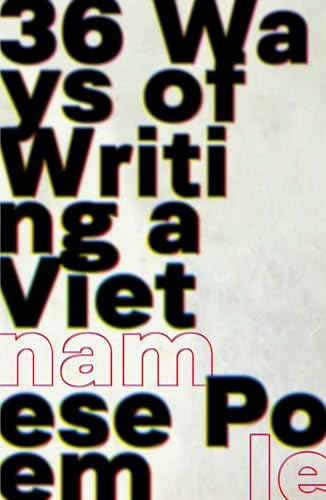
Nam Le, 36 ways of Writing a Vietnamese Poem (2023)

I know that I’ve read and enjoyed Nam Le’s first book, The Boat, but I don’t seem to have blogged about it. In one of its early stories, a character who fled from Vietnam with his family as a young child in a dangerously overcrowded boat is now an emerging writer. He resists pressure from all sides to write from within the Vietnamese refugee identity. After several other stories, the book ends with ‘The Boat’, a version of the story the character has been hassled to write. Resist as you may, the collection as a whole seems to say, in the end you will write the kind of thing that people demand from you.

This book of poetry plays with the same dilemma. Interestingly enough, in the acknowledgements, Nam Le thanks Nick Feik, ‘who for years gave my poems a home in The Monthly‘ and goes on, ‘Those poems are not in this book, but they paved the way for these.’ That is to say, Nam Le has not been condemned to write only ‘Vietnamese poems’. He has chosen this task. The poems explores identity, history (including colonial history), autobiography, family relationships. They are full of painful exploration and playful, formal adventure.

Each poem is numbered and named for its ‘way of writing’, beginning with ‘[1. Diasporic]’ and including poems named for their poetic form such as ‘[3. Ekphrastic]’, for their subject matter ‘[12. Communist]’, with puns on their content ‘[Dire critical]’, and so on. Many titles include the word ‘Violence’.

I can’t say that I found all the poems accessible. But I understood and enjoyed more of them than Nam Le’s session at the 2024 Sydney Writers’ Festival led me to expect (my blog post here). I love what J. M. Coetzee says on the back cover. To quote a little:

There is wit aplenty, of a dancing, ironic kind, but the fury and the bitterness that underlie 36 Ways come without disguise, as do its moments of aching love and loss.

The poem on page 47*, is ‘[26. Erasive]’. Normally, I’d photograph the spread where the poem appears and quote at least some of it, but in this case I’ll attempt a description instead.

Beneath the poem’s title is a subtitle in smaller all-caps type, ‘[ERASURE RHYMES WITH ASIA]‘. The rest of the spread consists of what appears to be 46 lines of prose, 23 on each page, that have been almost completely redacted – that is, the pages consist visually of two sets of 23 thick black lines.

There are 25 patches of un-erased text, each consisting of either a single letter or a pair of letters. They can be laboriously piece together to make two sentences:

Left-hand page: N o ar ch iv e is sa fe  
Right-hand page: Bu t is t h i s a l l t h er e is to i t.

The hunt through the archives turns up something, but leaves so much unknown.

This is powerfully evocative – especially just now, when the US Department of Justice has released hundreds of pages of the Epstein files completely blacked out. History is written by the victors, and the archives are controlled by those in power.

In the book I hold in my hand, the erased text on the left hand page is just legible. At least, to my eyes it hovers on the threshold of legibility. With a little help and a lot of squinting, I can tell you that the deleted script begins:

Newspaper Articles Almanacs Treatises (Scientific, Political,
Anthropological. Ethnological), Expedition Reports Ships Logs
Royal Proclamations Acts of Parliament Papal Bulls and Breves
Vatican Decrees Edicts Encyclicals Jesuit Relations

and – I’m leaving out the intervening lines – ends:

White Papers Green Papers Letters Patent Land Grants Titles
Medical Records Inventories Accounts Patents Estimates
of Expense Reports Settlement Proposals Petitions Notice
Dictionaries (Bilingual, Trilingual) Treaties Confessions Poems

I’ve bolded the only letters in those lines that are left un-erased.

Many (most?) erasure poems work on a given text to comment on it in some way – like ‘Sacrificed on Altar of Vice’ by Brittany Bentley in a recent Meanjin, or my own little exercise in my blog post on David Adès’s The Heart’s Lush Gardens. That’s not what’s happening here.

Here the underlying text is a list, composed as part of the poem, of the kinds of documents one finds in an archive. The poem enacts the process of sifting through the archives to find information, encountering colonialist-bureaucratic ways of seeing, from property documentation to papal bulls (the infamous Doctrine of Discovery comes to mind). Then, just as one might be feeling a little smug because, after all, I am the kind of person who reads poems, the last almost-erased word is ‘Poems’. Nam Le does not exclude himself from complicity.

That’s the first page. On the second page the erased text is completely illegible. Erasure is complete: we can never know what is hidden from history.

The more I looked (literally) into this poem, the more I appreciated its ingenuity. More importantly, the more I fond myself responding to its emotional and intellectual charge: ‘Erasure rhymes with Asia.


I wrote this blog post on the land of Gadigal and Wangal of the Eora Nation. I acknowledge Elders past and present, and welcome any First Nations readers.


* My blogging practice is to focus on the page that coincides with my age, currently 78. When, as here, a book has fewer than 78 pages, I focus on page 47 (I was born in 1947).

Patricia Sykes Among the Gone of It

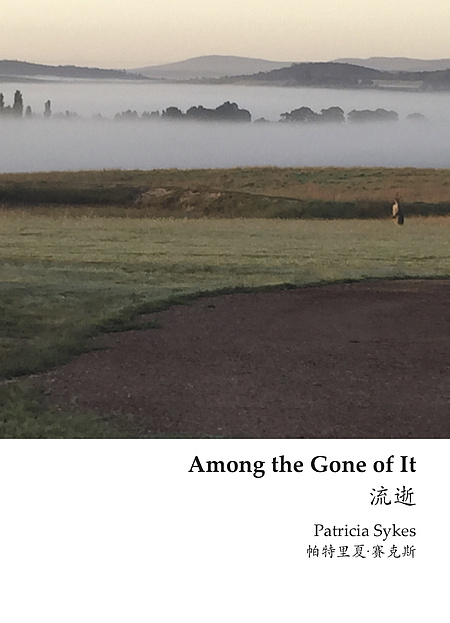
Patricia Sykes, Among the Gone of It, with Chinese translation by Xu Daozhi and Wu Xi (Flying Island Books 2017)

This is my fifth post for National Poetry Month, and my third bilingual book this month from the Flying Island Poets series.

A web search for “Patricia Sykes poet” produces a large number of hits that begin, ‘Patricia Sykes is a poet and librettist.’ She has collaborated with composer Liza Lim to create The Navigator, a chamber opera, and a number of her poems have been set to music. As a child she was a resident in the Abbotsford Convent orphanage in Melbourne (now an arts precinct), and as an adult she was a member of the Women’s Circus, both of which have been subjects of her poetry – in The Abbotsford Mysteries (2011) and Wire Dancing (1999) respectively, both published by Spinifex Press.

Of the translators, Xu Daozhi has a PhD in English literature studies from the University of Hong Kong and Wu Xi is a poet and scholar who was also stationed in Hong Kong at the time of translation. Again, I can’t comment on their work except to admire its visual beauty.

The poems in Among the Gone of It that spoke to me most strongly were those dealing with illness and ageing. By happy coincidence, one of these poems falls partly on page 47*.

‘Cassandra Vegas’ is a sequence of six poems in which the title character undergoes major surgery for cancer. Her name signals the poems’ concerns. In Greek myth, Cassandra had the gift of seeing the future, and Vegas is a synonym for gambling: so much language around illness and surgery is about prognosis (prophecy) and percentages (gambling odds). The sequence begins with ‘Casino’, in which Cassandra contemplates the risks of surgery or not-surgery:

to operate will swell the death odds
not to operate makes death certain

This is followed by ‘Theatre’ and ‘Anaesthesia’, whose titles give you their place in the narrative, though not their poetry. In ‘Angel Switch’ she is in intensive care after the operation. In ‘Vegas, Vagus’ she leaves hospital,

the craved bliss of silken air
a leaf's kiss on her bald head
like welcome to a newborn

and learns how to deal with the changes in her body.

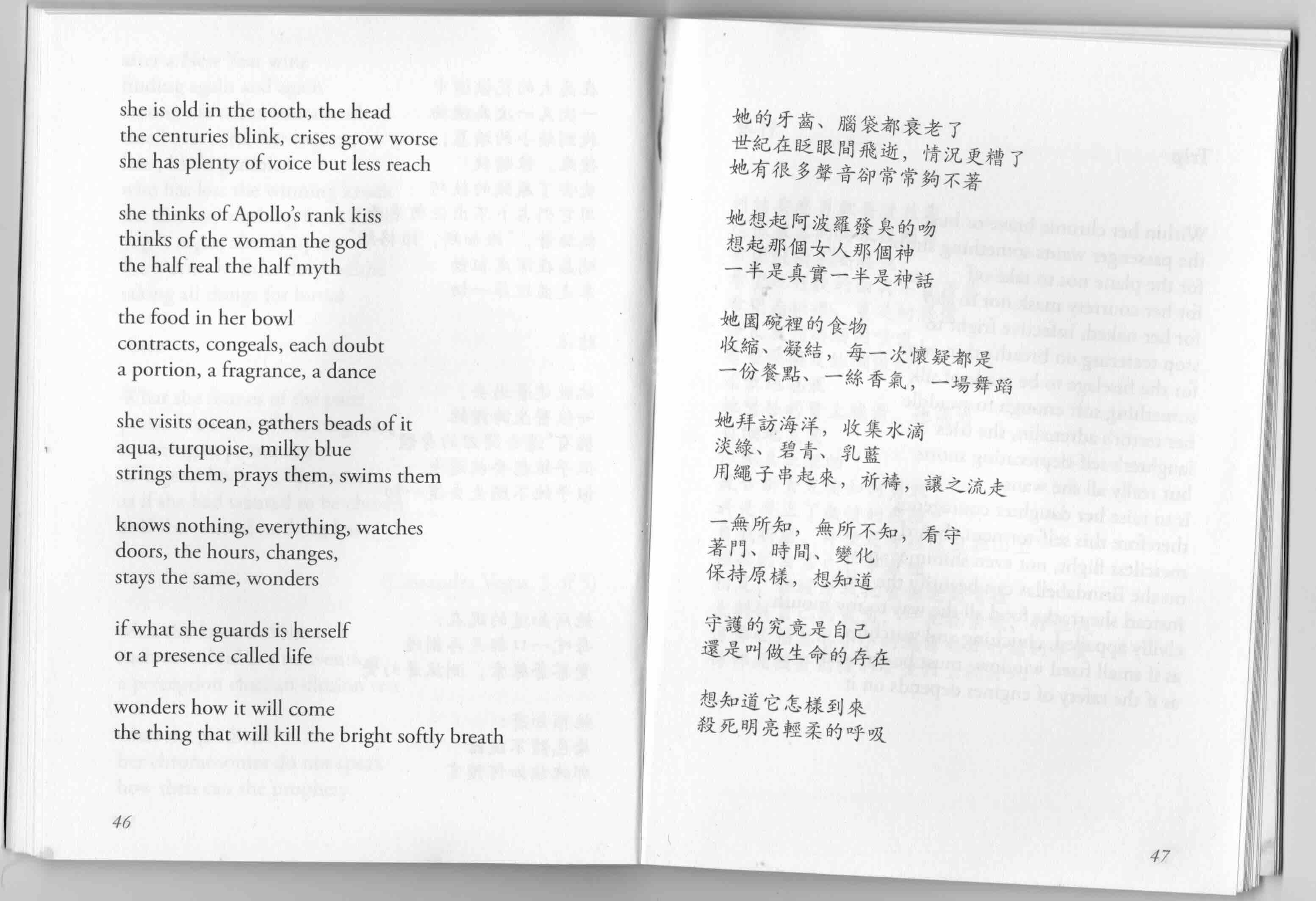
The final poem is ‘Ante’, of which all but the first three stanzas are on pages 46–47.

The title, meaning ‘before’, at first seems ironic, as the poem is in the position where you might expect one titled ‘Aftermath’. But it also sits in anticipation of whatever is to come next – an ante is a bet placed on the table before the next hand is dealt.

The first three stanzas have dealt methodically with the immediate past (‘praise from one of the surgeons’), the present (‘each mouthful is a reinvention’) and the unknowable future (‘her chromosomes do not speak / how then can she prophesy?’). The poem now opens out:

she is old in the tooth, the head 
the centuries blink, crises grow worse
she has plenty of voice but less reach

she thinks of Apollo's rank kiss
thinks of the woman the god
the half real the half myth

Not that the preceding poems in the sequence have been straightforward narrative, but this marks a shift. ‘She is old in the tooth, the head’ is a simple literal statement, but with ‘the centuries blink’ it takes on a grander meaning. As in Walter Pater’s famous description of the Mona Lisa, ‘She is older than the rocks among which she sits’, the woman in this poem has become archetypal. The crises that grow worse refer both to her individual worsening health crises and to the deepening crises of the society and world around her. In another context, ‘plenty of voice but less reach’ could be a lament about contemporary poetry in general – there’s a lot of it out there, but the readership is small. (I’ve just been listening to a lecture by Sarah Holland-Batt on the Fully Lit podcast, in which she says, ‘Australia has never been short of poets, it’s short only of poetry readers.’)

In the next stanza the archetype is further identified. Cassandra in Greek myth was given the gift of prophecy by the god Apollo, but when she didn’t reciprocate his desire (his ‘rank kiss’), he added the curse that no one would believe her prophecies.

The remaining stanzas enlarge on that last line: what does ‘the half real the half myth’ mean?

The next stanza is a kind of bridge. It first evokes her post-surgery difficulty eating, as described earlier, and then goes to a new place:

the food in her bowl
contracts, congeals, each doubt
a portion, a fragrance, a dance

The unpleasant image of food contracting and congealing becomes a metaphor for doubt – the uncertainty, tentativeness, anxiety that can follow major surgery. Somehow these doubts, this unpleasant food, are transformed, in three steps. The food is a portion – it is what has been allotted to her, what has landed on her plate. Unpleasant as it looks, it has a fragrance – let’s attend to qualities other than its visual qualities. But there’s a subtle shift. Food has a fragrance, but here each doubt is a fragrance. The poem is leaving the literal food behind and talking now about what it represents metaphorically. In the final word of the stanza, the food has gone completely, the doubts are transformed into a dance.

The next three stanzas spell out the nature of that dance:

she visits ocean, gathers beads of it 
aqua, turquoise, milky blue
strings them, prays them, swims them

knows nothing, everything, watches
doors, the hours, changes,
stays the same, wonders

Crude paraphrase: ‘She is fully alive to the world.’ I love the idea of gathering beads of ocean – to wear, to pray like a rosary, to immerse herself in them. And I love the line break at the end of this stanza. If the poem finished here, we’d be left with Cassandra filled with wonder. That meaning lingers for a moment, but at the start of the next line the meaning of ‘wonders’ morphs from ‘has a sense of awe’ to ‘asks the following questions’.

stays the same, wonders

if what she guards is herself
or a presence called life

The play with myth is resolved. Like all of us, this woman is an embodiment of something sacred, ‘a presence called life’. ‘Guards’ is an interesting word. Unlike words like ‘battle’ or ‘struggle’ commonly used in this context, it implied strength but also tenderness and caring: she is not defensive, but protective, of the ‘presence’.

And the poem ends with an acknowledgement that survival is inevitably temporary. A harsh paraphrase of the final stanza might be, ‘Wonders how she will die.’ But it’s interesting to notice what that paraphrase leaves out (and I so wish I could read the Chinese translation). In this phrasing she won’t die – she will be killed. The ‘thing’ could be a car, a cancer, a virus, a lightning strike. And what it will kill is this precious, tender thing. It’s not fear of death being expressed, but a cherishing of life, knowing that death will come. The pedant in me would insist that ‘softly’ is an adverb, that it should be ‘bright, soft breath’. I can’t justify it, but the pedant is just wrong this time.

And I’m so glad there’s no full stop at the end. Even punctuation can carry metaphorical meaning.

wonders how it will come
the thing that will kill the bright softly breath

I first read Among the Gone of It while flying between Djagubay land and air and Gadigal Wangal land and air. I wrote the blog post on the Country of Gadigal and Wangal of the Eora Nation. I acknowledge Elders past and present of all those Nations, and welcome any First Nations readers.


* My blogging practice is to focus on the page that coincides with my age, currently 78. The last poem in Among the Gone of It finishes on page 77, so my personal algorithm sends me to page 47 (I was born in 1947).

Lizz Murphy’s Bitumen Psalms

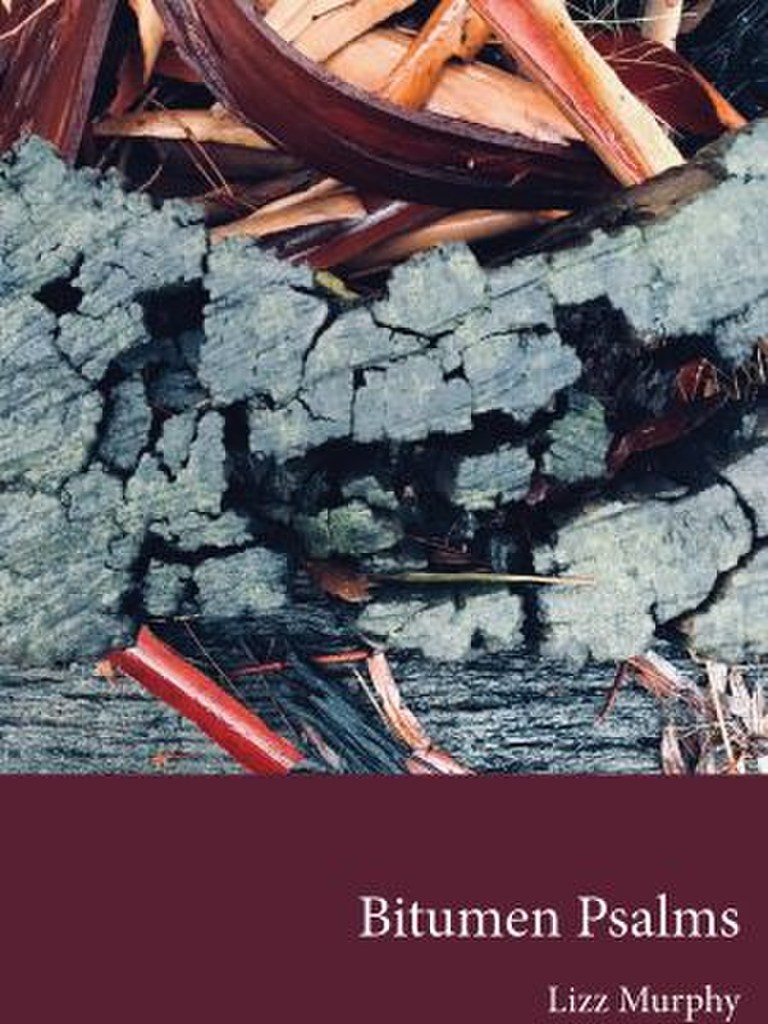
Lizz Murphy, Bitumen Psalms (Flying Island 2024)

This book is another jewel in the Flying Island Pocket Poets series, more than 100 pocket-sized books (14 x 11 cm) so far, published under the stewardship of Kit Kelen. It’s a wonderful series, in which well-established poets appear cheek by jowl with brand new talents. You can subscribe here to receive 10 books at the start of each year.

The poems in Bitumen Psalms are mostly short, or sequences of short stanzas that might be stand-alone poems. I had to consult the table of contents a number of times to check whether what I was seeing on a page was a number of separate poems or the stanzas of a single poem. Mostly they weren’t, but publishing the poems without titles leaves open the possibility of reading them all as one continuous mega-poem.

The book is in seven sections. The first, ‘Bitumen Psalms’, is a long poem made up of short stanzas, each a glimpse seen from a car travelling from inland New South Wales to the sea. A recurring line, ‘I forbid the camera’ spells it out: these are word snapshots – similes and haiku-like compression in place of shutter-clicks.

‘All Weathers’ is seven pages of glimpses of people. ‘Marking Time’ is spent in hospital, whether as visitor or as patient is not clear, and doesn’t need to be. ‘Cast Your Wing’, the section I enjoyed most, begins with the poem ‘I don’t go outside often enough’, and takes the reader out into a world of birds, animals, clouds and light. ‘Things’ takes us back inside again, mostly, for three pages of, mostly, domestic objects wittily observed. ‘Shudders’ is three pages of computer-related joke-poems. ‘Breath and Air’, the final section, has four longer poems in which birds feature. It includes the killer lines (in ‘Under the filling moon’):

A hundred thousand
children at risk
and I am writing about birds

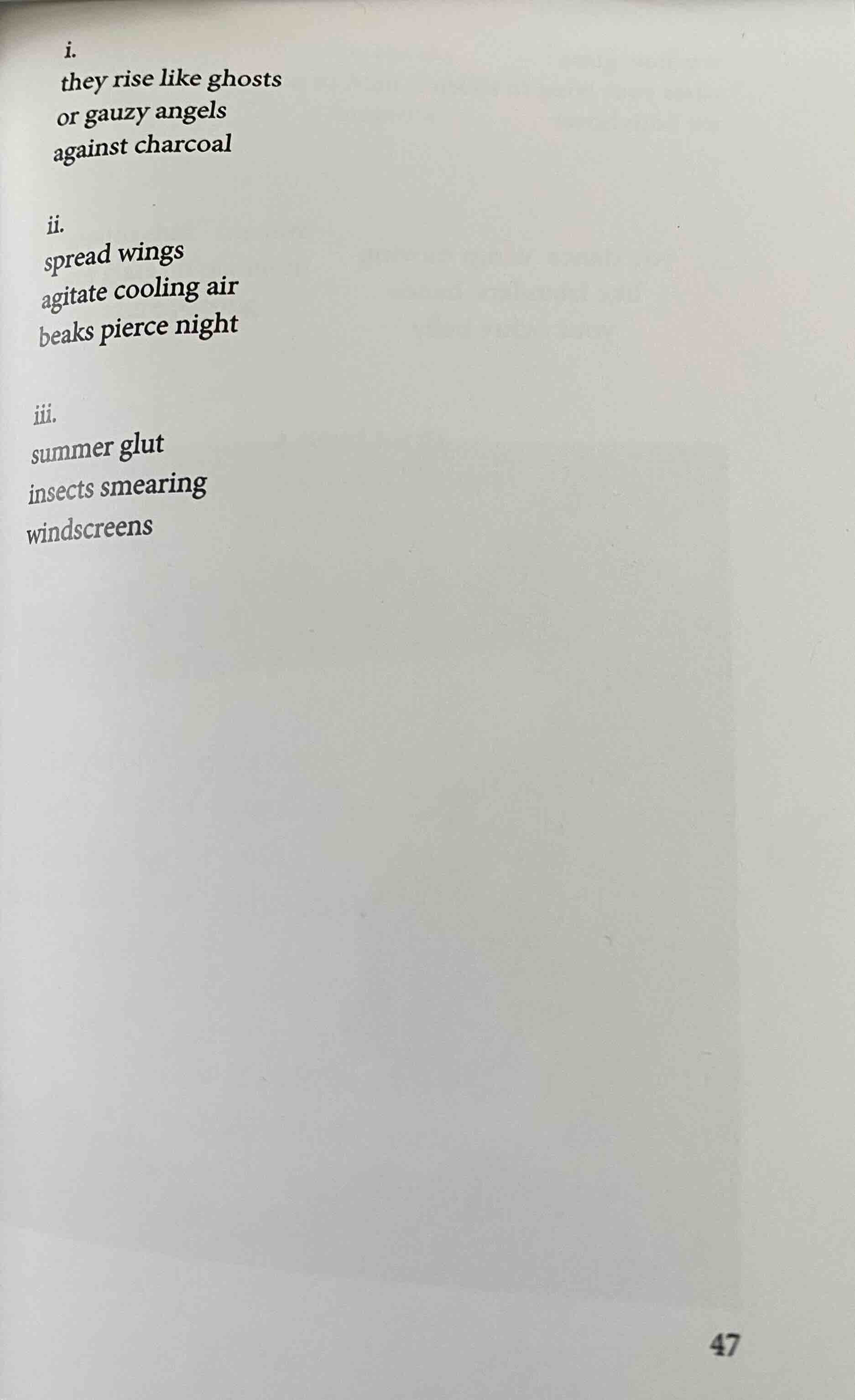
Like most of those in the book, the one on page 47* is untitled. It differs by giving clear indications that the three blocks of print are to be read as a single poem in three parts.

Exactly how they constitute a single poem isn’t straightforward.

On first reading section i, I expected to following sections to clarify who they are who ‘rise like ghosts’ – birds, perhaps, or moths? And section ii seemed to be heading that way with its wings and beaks – ah, it’s birds. But section iii puts the kibosh on that, being definitely about insects.

My initial expectation having been thwarted, I take a pleasurable moment to sit with the poem, to simply enjoy its three images and let any connections arise. I have to suppress the impulse to figure out, even nail down, what the poet had in mind, but I’m gradually learning what critics of contemporary poetry mean when they say that it’s the reader’s job to create meaning in a poem as much as it is the poet’s. (Or sometimes, they say, the job of a number of readers collaborating: so feel free to say something in the comments section.)

i.
they rise like ghosts
or gauzy angels
against charcoal

This vividly evokes white and fluttering things taking to the air at night. (I get the whiteness from ‘like ghosts’, and the fluttering from the sound of ‘ghosts / or gauzy’, and of course they have the wings of angels.) It doesn’t identify them. While that creates a kind of puzzle for the reader, it’s not the main effect. It’s more like an invitation to reflect on the image, to bring your own experience to bear on it, or to let it do the work, calling up images from your mind. It gives the reader room to reflect.

I saw moths, but then:

ii.
spread wings
agitate cooling air
beaks pierce night

The strong sound of ‘spread wings’ contrasts with the flutteriness of the first section, and the night-piercing beaks make it clear that these are not the same creatures. Perhaps the poem is simply turning its attention to a new subject, a new image, something else the poet sees as night falls. But there’s something purposeful about these birds, their wings and beaks. I catch a hint that they are swooping to prey on the moths, swallows perhaps, and now I can’t read the lines any other way.

The third section, at first a jarring contrast to the observations of nature that precede it, now fits.

iii.
summer glut
insects smearing
windscreens

The subject is still the death of insects, but the language of economics (‘glut’) and technology (‘windscreens’) intrudes. It’s a very different death from the targeted killing by hungry birds – it’s now happening on an industrial scale, and it’s soulless, collateral damage. And is it just me, or is there an edge of nostalgia here? Having insects smeared on a windscreens used to be a feature of long-distance drives in the country. In my experience this is no longer so. The summer glut is a thing of the past. This is not just death of individual insects, but the wiping out of populations. The poem has moved from a gentle observation of insect and bird life to a deep sorrow about the state of the world. Or at least it has moved me in that way.

I love this book. You can flip it open at any page and find something to smile at or mull on.


I wrote this blog post on unceded Wulgurukaba land, Yunbenun, where yesterday I met a family of five red-tailed black cockatoos, gorgeous and unafraid. I acknowledge Elders past and present who have cared for this country for millennia, and welcome any First Nations readers.


* My blogging practice is to focus on the page that coincides with my age, currently 78. The last poem in Bitumen Psalms finishes on page 75, so my personal algorithm sends me to page 47 (I was born in 1947).

George Megalogenis’ Minority Report

George Megalogenis, Minority Report: The new shape of Australian politics (Quarterly Essay 96, December 2024)

George Megalogenis takes Australia’s federal polling statistics and renders them into readable, even enjoyable prose. In this Quarterly Essay, he reads the data from elections since John Howard’s time up to the present moment, and attempts to make sense of the current political landscape.

The global financial crisis, the coming of the teals, Covid, the defeat of the Voice referendum, the genocide in Gaza, housing, the climate emergency, the hollowing out of the ABC: all are grist to the mill of this nuanced inside-baseball analysis.

The essay and the correspondence in Quarterly Essay 97 probably make a significant contribution to our general understanding of Australian electoral politics. But as I was reading it, I couldn’t help but be aware that it was written at the end of 2024, and if a week is a long time in politics, then the four months that have passed between then and now amount to an epoch. Even the correspondence was written before Donald J. Trump’s ‘Independence Day’. Who knows if, as Megalogenis projects, there will be a hung parliament in May? And if there is, who knows if he is right that it ‘offers perhaps our last best chance to restore purpose to our politics – and policymaking’?

Still, I admire and enjoy Magalogenis’ ability to communicate complex matter in a readable way. Page 47, which begins a section on the level of trust in government, includes an example:

In the wake of the 2010 federal election, I pinpointed the 2001 campaign as the turning point to a more trivial politics.
John Howard responded to warnings of electoral doom with a panic of handouts in the first half of that year. …
None of the bribes offered to voters in this period came with offsetting savings for the budget. They left a maze of entitlements and distorted market signals which stored up problems for the future, most notably in the housing sector, where prices boomed beyond the reach of the middle class, and in public infrastructure, which could not keep up with population growth.
Labor’s unforced policy errors on climate change and the mining tax in 2010 felt like the culmination of a decade-long trend which reduced the relationship between government and citizen to the question: how can I buy your support?

That general trend to trivialisation was interrupted first by the global financial crisis which, Megalogenis argues, created ‘a bubble of trust in our leaders and institutions, which burst once the existential threat passed’, triggering what he calls a ‘new super-cycle in our politics – pro-incumbent in the crisis and anti-incumbent in the recovery’.

There’s pleasure in discerning patterns of this sort. There may also be some usefulness.


In the correspondence, the stand-out for me is Judith Brett. She observes that the major political parties have been hollowed out, as their membership has declined and they have become ‘professional electoral machines’. When memberships were much larger, debate, negotiation and compromise took place within the parties. These debates connected with the lived experience, interests and prejudice of a range of electors. And when the legislation reached the parliament it was assured safe passage by the government’s majority:

What is happening, I think, is that the debate, negotiation and consensus-building is shifting from inside the parties back to the parliament, where they were for most of the nineteenth and early twentieth centuries … The conflicts of interest will be more publicly visible than they are when the resolution takes place inside the parties. This will be a magnet for media speculation and give the impression of dysfunction, but in my opinion it is no cause for alarm. The public will have a clearer view of the interests and arguments at play, and the government will have to negotiate. But it does not mean the end of effective legislation.

We’ll see.


I wrote this blog post on land of Gadigal and Wangal of the Eora Nation, where the day started out with rich blue sky, turned to heavy rain, fined up, and as I press ‘Publish’ is beginning to rain once more.. I acknowledge the Elders past and present who have cared for this land for millennia.

Jennifer Maiden’s WWIII: New Poems

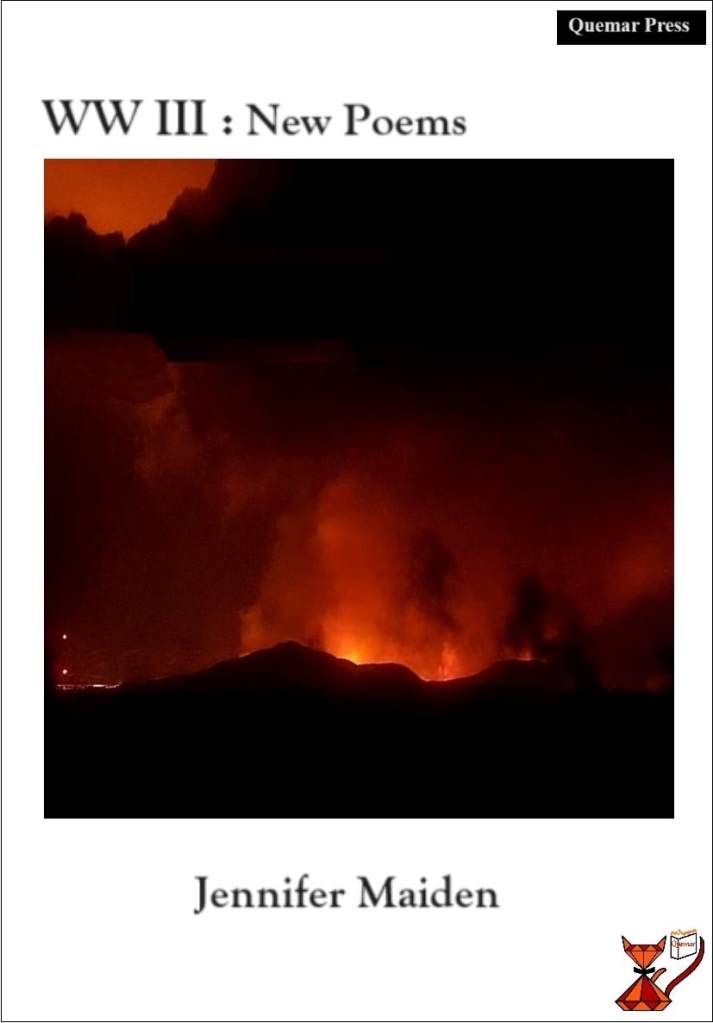
Jennifer Maiden, WW III: New Poems (Quemar Press 2025)

You don’t go to Jennifer Maiden’s poetry for a comfort read. For almost a decade now she has announced the title and theme of a forthcoming book early each year, and uploaded sample poems as they were written over the following months, generally relating to violence, political hypocrisy, and villainy from the headlines. The book has appeared, as promised, early the next January. It’s as if a fragmentary epic poem of our times is unfolding in real time.

WW III: New Poems is the latest instalment. As the title suggests, violent conflict, especially in the Ukraine and Gaza, features prominently, behind it the looming threat of global war. For a proper review, I recommend Geoff Page in the ABR at this link. This blog post isn’t so much a review as a disjointed reflection on just page 47*.

Before going there, a personal note. My blog post about Maiden’s previous book – The China Shelf: New Poems (Quemar Press 2024) – focused on the poem, ‘It’s an odd thing, pity’, and included this:

Not everyone will grasp how US imperialism can be seen as ‘falling’. If anything, some would say it’s on the verge of exploding and bringing the rest of us down with it, terrifying rather than poignant. 

The title poem of WW III includes this:

Reviewing The China Shelf, a kind critic worried
that my reference to the falling Empire could
lessen the idea that it wasn't just falling
but exploding, and possibly dragging
its allies hellward with it, but he was only
considering one poem and of course the book
and others before it always took
often a stance of sharper warning

I may have got it wrong, but at least I’m kind, and as a humble blogger I’m flattered to be called a critic.

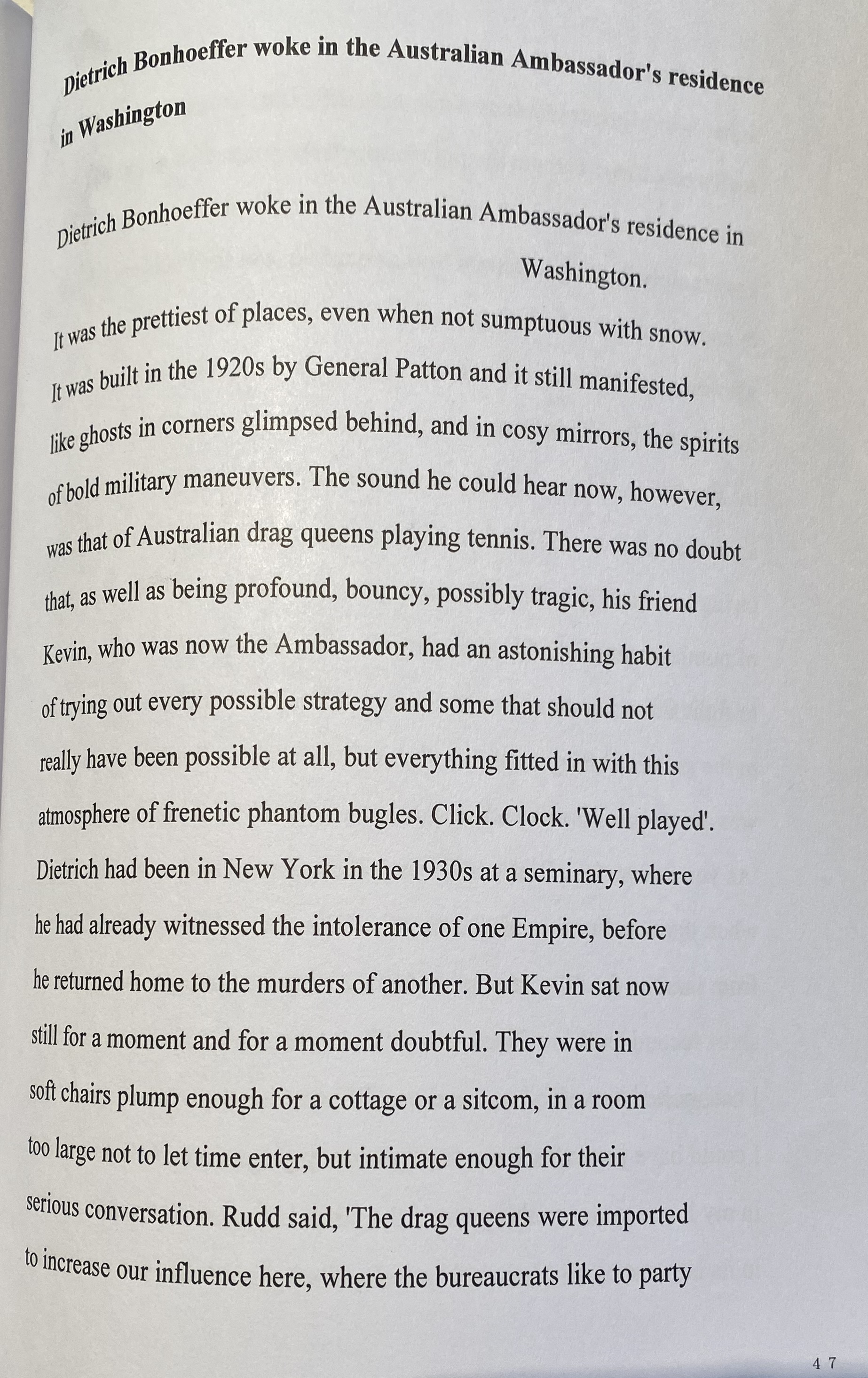
Page 47 of WW III is the first 19 lines of ‘Dietrich Bonhoeffer woke up in the Australian Ambassador’s residence in Washington’.

This page sets the scene for a much longer poem. The ‘serious conversation’, foreshadowed in the second-last line, could be summarised as, ‘Dietrich Bonhoeffer tells Kevin Rudd that it’s not wise to set Australia up to be the US’s proxy in a future war with China.’ The poem could be summarised abstractly: ‘With Dietrich Bonhoeffer as mouthpiece, Jennifer Maiden repeats her warning that the USA is not to be trusted as an ally to Australia.’ Luckily, as with any poem worth its salt, that summary tells you almost nothing and is pretty misleading. You can buy the book to read the whole poem, or you can hear Jennifer Maiden performing it at this link.

The poem belongs to Maiden’s personal tradition of poems where a famous person, historical or fictional, ‘wakes up’ to interact with a living person. In 2009 her fictional character George Jeffreys woke up in a number of global hotspots to see George W Bush on television. Kevin Rudd is one of a number of Australian politicians who have figured since then in delicious conversations: Tony Abbott with Queen Victoria, Julia Gillard with Aneurin Bevan, Malcolm Turnbull with Jessica Fletcher from Murder She Wrote, Tanya Plibersek with Jane Austen. (Beyond these shores, pairings have included Mother Teresa and Diana Spencer, Gore Vidal and Julian Assange, Eleanor Roosevelt and Hillary Clinton.) Usually the pairings are based on something the politician has said or written. In Kevin Rudd’s 2006 essay, ‘Faith in Politics’, published in The Monthly (link here, if you want to refresh your memory), he named Bonhoeffer as an inspiration. The pair made their maiden Maiden appearance in Drones and Phantoms (2014).

It’s interesting to notice just how much information is either given or assumed in these lines. It wouldn’t be a crime to read without googling. As Magdalena Ball said in her review of The China Shelf (link here), ‘You don’t have to have the kind of encyclopaedic knowledge of Australian history and command of current affairs that Jennifer Maiden does to read her books.’ But it helps, and there’s always the invitation to learn more.

First, Dietrich Bonhoeffer. I’ve vaguely heard of him as a pastor who spoke out against the Nazis and was murdered by them. So I know he brings a kind of moral integrity to the conversation. The poem give me a little more:

Dietrich had been in New York in the 1930s at a seminary, where
he had already witnessed the intolerance of one Empire, before
he returned home to the murders of another.

I might not have gone googling if I wasn’t blogging about the poem, but I did, and found that while studying theology in New York in 1930, Bonhoeffer engaged with African-American churches, and became strongly anti-racist. I don’t know that he used the term ‘empire’ about either the USA or Nazi Germany, but it wouldn’t be a poem without that kind of editorialising.

Second, Kevin Rudd. You’d probably know that he was the Australian Ambassador to the USA, but for those who know him there’s a deft evocation of his persona: ‘profound, bouncy, possibly tragic’. (Further on in the conversation, Kevin asks a question ‘and answered himself, as was his custom’.)

Third, the setting. Here’s a pic from the building’s facebook page – ‘the prettiest of places’. Who knew it was associated with the notoriously belligerent US general George Patton? (For readers of my generation no explanation needed: George C Scott in the movie Patton leaps to mind.) According to my googling, Patton rented the house rather than built it, but the association is still there.

DJ Kity Glitter with Rudd. Photo from Sydney Morning Herald 5 June 2023

Fourth, the headlines. Kevin Rudd did host a party featuring drag queens at the ambassador’s residence in June 2023. As far as I can tell, the tennis party was a different occasion, but who’s to say there wasn’t tennis at the Pride party as well? The fabulous image of drag queens playing tennis is an example of a news items seized on for poetic purposes, in this case with what looks like glee.

Given recent events in the USA, the mention of drag queens suggests that the poem will be about culture wars. But it’s actually a piece of misdirection. Over the page, the poem’s real subject is revealed, when Kevin asks:

____________________________________ But I suppose
really you are here about the police force?

And the poem’s key news item is identified: a hot-mic moment in August 2024 in which a US official, talking to Prime Minister Anthony Albanese,

_________________________ named Rudd as the schemer 
who dissuaded America from proposing their own police
force in the Pacific in favour of one organised and paid for
by Australia.

All this information, of course, doesn’t lie inert on the page, but is woven into engaging poetry. For instance, one of Maiden’s themes is the way the US, behind its benign façade, is a ruthless military power. The residence, with its link to Patton, could have been built to her specifications. The prettiness and cosiness of the residence is haunted by bold military maneuvers (note the US spelling), yet the sensuous reality is also there:

still for a moment and for a moment doubtful. They were in 
soft chairs plump enough for a cottage or a sitcom, in a room
too large not to let time enter, but intimate enough for their
serious conversation.

We are given enough of Kevin and Dietrich’s histories and personal quirks for them to be more than simply avatars for positions or points of view (like, say, the characters in Plato’s dialogues). On the other hand, neither on the page nor when performing the poem, does Maiden make any attempt to give them different voices. (Maiden-Trump has none of real-life-Trump’s incoherence.) They are not fully-rounded dramatic characters (it’s not a sitcom) but they have enough independent reality that you feel the poet herself is curious to hear what they have to say in their ‘serious conversation’. I think that’s why this long run of imaginary conversations doesn’t feel tired or repetitive – they are still part of a process of discovery. (There’s an underlying question that this poem goes on to address: What are we to make of Kevin Rudd’s current incarnation as Ambassador? What’s happened to his irritability, his love of China, his social awkwardness, any bitterness about being ousted by Julia Gillard? It doesn’t address Trump’s hostility to him … that would be a different poem.)

It’s easy to be caught up in Maiden’s subject matter. Her poems can be contentious – over the page, Kevin says, as if it’s plain fact, ‘the Americans replaced me with Gillard’, and even on this page there may be an implied equivalence between Nazi Germany and 1930s USA. (If ever there was a poet who didn’t expect her readers to agree with her sentiments a hundred percent, it is Jennifer Maiden.) But this is poetry, and what is said isn’t necessarily more important than the way it is said.

Weaving isn’t a bad metaphor for how these lines progress. The reader’s attention moves back and forth like the shuttle on a loom: the residence with and without snow, General Patton then and now, corners and mirrors, military manoeuvres and drag queens, Kevin’s contrasting qualities, a room large but intimate, the shift from drag queens to the Pacific police force. Maybe it’s not so much a shuttle as a tennis ball. ‘Click. Clock.’

The way the poem sounds is interesting. Some of Maiden’s poems have sustained rhymes that you barely notice on first reading. That’s not so in this one, but especially in the opening lines there’s a lot of alliteration, especially of sibilants (‘prettiest of places’, ‘still manifested, / like ghosts in corners’, ‘every possible strategy and some that should not’). The long lines often break in mid sentence, even mid phrase (‘his friend / Kevin’, ‘should not / really have been’, ‘where / he had already witnessed’, ‘before / he returned’, ‘they were in / soft chairs’, ‘their / serious conversation’). To my ear, these result in a kind of clutter, a feature rather than a bug, that adds an odd urgency to the voice, an urgency that’s all too fitting in poems that predict war.

Since WW III: New Poems was published, Dietrich and Kevin have had a further conversation in the Residence. Click on this link to the Quemar Press website and search for “Rare Earths”.


I wrote this blog post on land of Gadigal and Wangal of the Eora Nation. I acknowledge the Elders past and present of this country, never ceded.


* My blogging practice is focus arbitrarily on the page of a book that coincides with my age, currently page 78. As WW III: New Poems only has 76 pages, I’m reverting to the year of my birth, ’47.

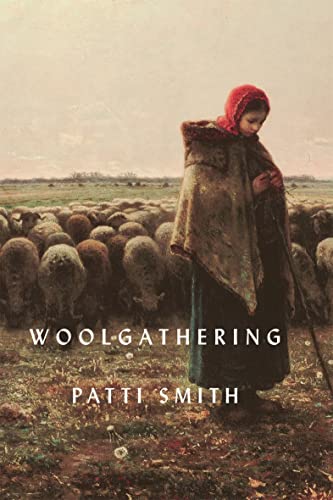
Patti Smith’s Woolgathering

Patti Smith, Woolgathering (©1992, Bloomsbury 2012)

I’m coming late to Patti Smith. I know that her memoir Just Kids is much loved, and I know she partnered with Robert Mapplethorpe. (I have seen a major exhibition of his photos, including a curtained space with an explicit content warning in which nevertheless punters were vocally shocked). Wikipedia informs me that she is a singer-songwriter, poet, painter and photographer. I believe she was big in punk. Her only performance I have seen is her brilliant rendition of ‘A Hard Rain’ at Bob Dylan’s Nobel Prize ceremony. (If you haven’t seen that, do watch it on YouTube, especially the absolutely disarming moment at about the 2 minute mark.)

This huge absence from my inner cultural landscape has now been slightly remedied, thanks to a well-judged Christmas gift.

Woolgathering was first published in 1992 as number 45 in a series of tiny books – 3 by 4 inches (roughly 7.6 by 10 centimetres). That’s even smaller than the Flying Island Pocket Poets books, and only slightly bigger than the titles in Maurice Sendak’s Nutshell Library. It contained 15 prose poems and a healthy scattering of photographs, mostly taken by the author or featuring her or her family. It was reissued in 2011, expanded to 5 by 7 inches (12 by 19 centimetres), with a new introduction and four extra poems.

In her introductory note to the 2011 edition (which is what I have in my hand), Patti Smith says that the book was commissioned when she was living with her husband and two school-age children on the outskirts of Detroit, and experiencing ‘a terrible and inexpressible melancholy’:

Everything contained in this little book is true, and written just like it was. The writing of it drew me from my strange torpor, and I hope that in some measure it will fill the reader with a vague and curious joy.

I don’t know that it does that for me, but it’s a lovely book – to look at, to hold, to read and to reread. There are glimpses of her childhood, including the story of her marble collection, her caring for her often ill little sister, her relationships with parents and grandparents, and wonderful lines like this from ‘Barndance’:

The mind of a child is like a kiss on the forehead – open and disinterested. It turns as the ballerina turns, atop a party cake with frosted tiers, poisonous and sweet.

I read it as elliptical, discontinuous, even cryptic story of how she came to be a writer and artist. The first poem. ‘A Bidding’, begins, ‘I always imagined I would write a book, if only a small one’. And the next to last poem, having described a dream in which, while her siblings ‘sat watching in wordless admiration’, she ‘lay suspended a few feet from the ground’. She is almost tempted to try the feat in real life:

But my writing desk awaits , my open journal, my quills, inks, and here are precious words to grind. So I leave myself to wonder and begin, for I always imagined I would one day write a book.

Writing is a realistic alternative to flying.

Page 47* occurs in the middle of ‘Two Worlds’, one of the poems added in 2011. At first glance, it makes Patti Smith’s claim that everything in the book is true look a bit, um, disingenuous. It starts out like a realistic narrative with the poet watching scenes from Jean Cocteau’s Orphée (in which the main characters move through mirrors from the ordinary world to Hades), and morphs into a dream narrative. If it’s true, it’s in the way that dreams are true (as in Bob Dylan’s ‘The Gates of Eden’, ‘Sometimes I think there are no words but these to say what’s true.’) She is dressed like a poet from the movie, except that his shirt is spattered with blood – then she realises that her shirt is also stained, with ‘the deep red juice of kidney beans’, and soon she is actually bleeding. She wanders from the movie’s Café des Poètes to a series of other cafes that I’m guessing would be recognisable to US readers in the 1990s.

Here’s most of page 47:

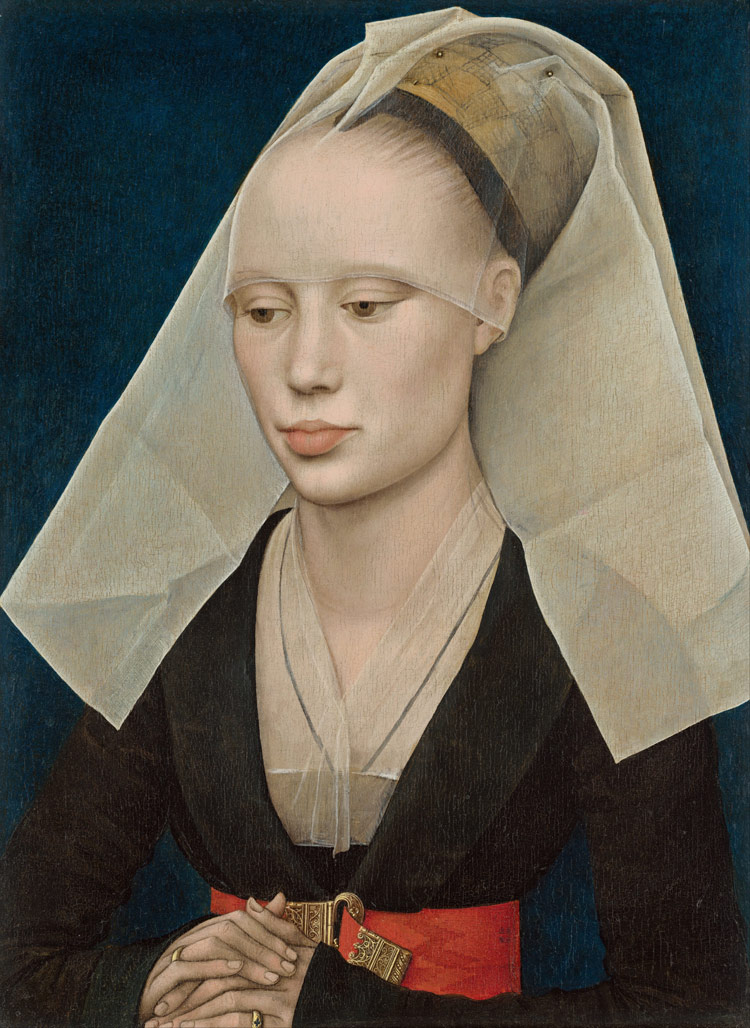
I ordered another Pernod and water, but what I really wanted was to lie down. I lost a lot of blood and some had dripped on the page of my journal. The tears of Pollock, I explained to the waiter. The tears of Pollock I scrawled across the page. The drips multiplied forming a fence of slim jagged poles. The lines I had written multiplied as well. I could not tame them and my entire station was noticeably vibrating, as if teeming with newborn caterpillars. Quickly I drained my glass and motioned for another. I tried to focus on a portrait behind the brass cash register. Flemish fifteenth-century. I had seen it somewhere before, perhaps in the hall of a local guild. The sight of it produced a shudder and then a curious rush of warmth. It was her head covering. A fragile habit framing her face like the folding wings of a large diaphanous moth.

This makes me think that the whole poem is a kind of surreal ars poetica: an account of how she sees her own writing. I read ‘Pollock’ as referring to Jackson Pollock: where he dripped paint onto the canvas (and when I first typed that there was a typo, so he dripped pain), she lets her blood drip onto the page, and then scrawls over it. You probably don’t have to be an Australian of a certain age to have ‘fence of slim jagged poles’ bring to mind Pollock’s Blue Poles, whose purchase once outraged our philistine newspapers. But the dripping of raw pain onto the page isn’t enough: beyond the effects of alcohol and the brass cash register (am I over-reading to see this as a dream symbol of the commodification of art?), she struggles to focus on the stillness of a fifteenth century painting in which the other-worldliness of a moth embraces a woman’s face.

That image turns up again in a later poem, ‘Flying’, in a non-dream context but in almost exactly the same words:

Above my desk is a small portrait – Flemish, fifteenth century. It never fails, when I gaze upon it, to produce a shudder, followed by a ciurious rush of warmth, recognition. Perhaps it is the serenity of the expression or perhaps the head-covering – a fragile habit framing the face like the folding wings of a large, diaphanous moth.

And facing page features a photo of that face and its ‘fragile habit’ on her wall. (A quick web search identifies it as Rogier van der Weyden’s Portrait_of_a_Lady.)

But ‘Two Worlds’ moves on – the Flemish portrait has been just a glimpse of quietness, perhaps something to aspire to. ‘I dreamed of being a painter,’ she writes, ‘but I let the image slide … while I bounded from temple to junkyard in pursuit of the word.’

This was Patti Smith in the years between punk stardom and her current status as grande icon, delving into memories, dreams and other people’s art to find her bearings, and rekindle in herself ‘a vague and curious joy’. Not bad!


I wrote this blog post on land of the Gadigal and Wangal clans of the Eora Nation. The heat is beating down, and the lizards are loving it.


* My blogging practice is focus arbitrarily on the page of a book that coincides with my age. A focus on just one page seems to work well with books of poetry, where the parts are so often greater than the whole. As Woolgatherers has fewer than 77 pages, I’ve focused instead on my birth year, ’47.

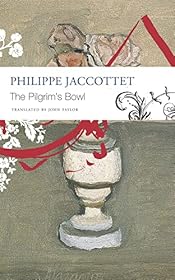
Philippe Jaccottet’s Pilgrim’s Bowl

Philippe Jaccottet. The Pilgrim’s Bowl (2001, translated by John Taylor 2015, Seagull Books 2022)

This is a short book by a poet who is completely new to me about an artist whose work I have never seen. It was a Christmas present, a book I wouldn’t have dreamed of buying for myself. I enjoyed it a lot.

Philipe Jaccottet (1925–2021) was a Swiss poet who wrote in French, one of only fifteen writers to be included in the canon-defining Bibliothèque de la Pléiade while still alive. His English-language Wikipedia page is extremely sparse, but French-language Wikipedia is a different thing altogether. His expansive page there includes this (as rendered by Google Translate):

Jaccottet writes that the poet is no longer ‘the Sun […] nor a son of the Sun; nor even a Torchbearer or a Lighthouse’ (he therefore rejects the image of the ‘poet-prophet’): the task of this ‘anonymous one […] dressed like any other anxious man’ is to try to ‘paint’ the world ‘so wonderfully’ that his work would be able to distract Man from his fear of death.

In The Pilgrim’s Bowl, Jaccottet turns his attention to the work of Italian painter and printmaker, Giorgio Morandi.

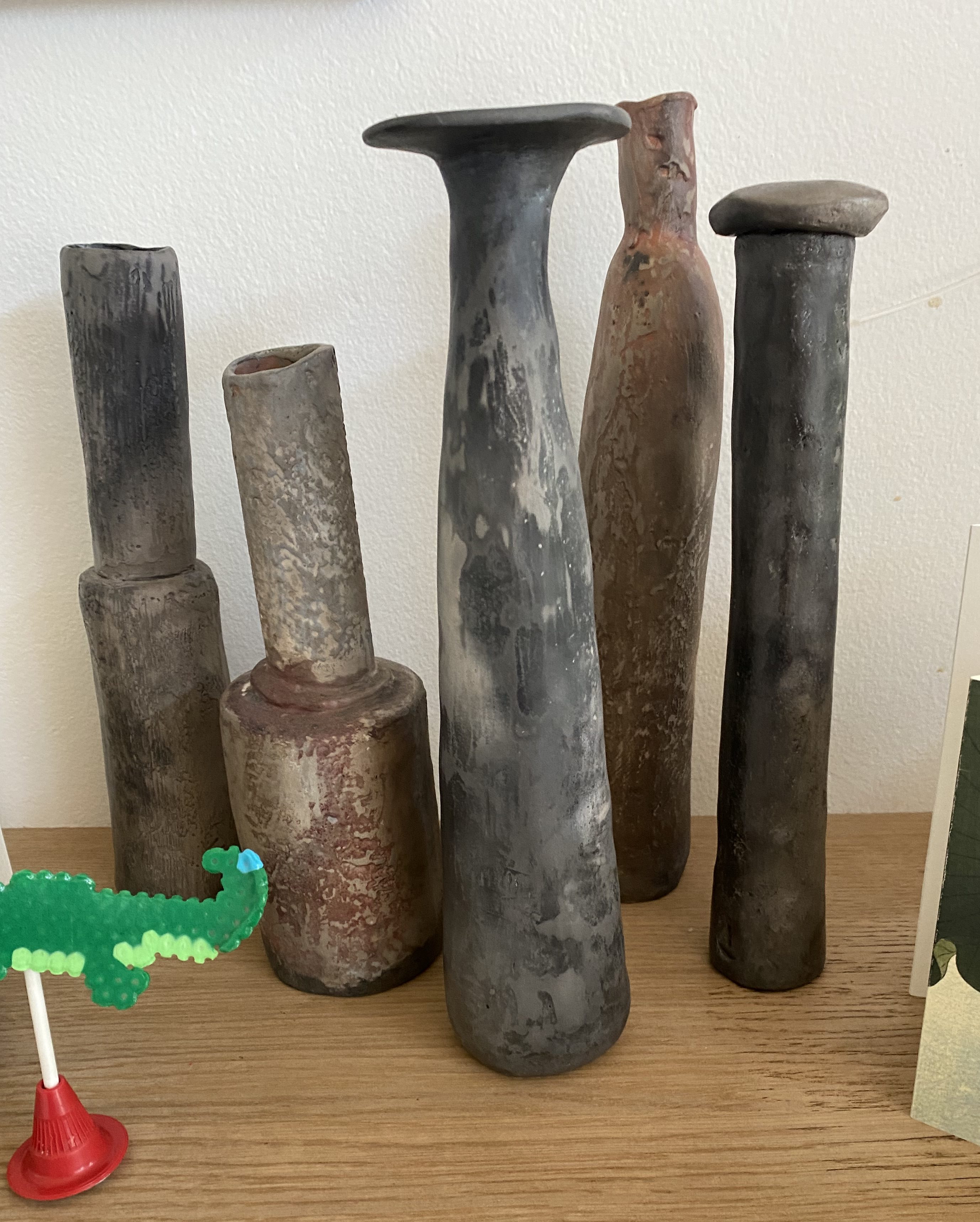
Though I’ve never seen an original work by Morandi (1890–1964, Wikipedia page here), I know a little more about him than about Jaccottet. The Emerging Artist did a beautiful drawing when at Art School that was copied, she told me, from one of his paintings, and the great cartoonist Jenny Coopes, taking up ceramics late in life, created a set of Morandesque objects which we now own. (For the benefit of readers who don’t know Morandi’s work: this photo does not capture anything of its austere, dreamlike simplicity.)

After reading this 66-page book with its dozen images, I feel that I know – and like, and admire – both these people much better. Jaccottet does not present as an art critic. He is not out to describe Morandi’s paintings, but to explore what he calls the enigma of the powerful emotion they create in him. This is from page 3:

It is not surprising to be stirred by the view of a mountain, the ocean, a sunset, a big city; or by the imminence of a war, the nearness of a face, the death of a close friend. And therefore, consequently, by their representation in a painting, poem or narrative. But with this artist: those inevitable three or four bottles, vases, boxes and bowls – what apparent insignificance, what ludicrousness or nearly so (and all the more so when the world seems about to collapse or explode)! And how can you dare claim that such a painting speaks a more convincing language to you than most contemporary works of art?

He approaches the enigma from different angles, ‘as naively as possible’. Which means he goes down tangent after tangent, and somehow enriches our sense of Morandi’s work.

Noting that Pascal and Leopardi were Morandi’s favourite authors, he spends fascinating pages discussing them. He riffs on snippets of Morandi’s biography. He catches fleeting associations – remembering that Morandi would let dust settle on his paintings, he thinks of the ‘sandman’ and then of the Sleeping Beauty, which gives him a way of talking about ‘the unchanging light bathing Morandi’s paintings’:

It never sparkles or glares, never flashes or breaks through clouds, even if it is clear as the dawn, with subtle rose and grey hues, this light is always strangely tranquil.

There is much more about that light.

He quotes from Dante and Plato. Acknowledging that he may be a little over the top, he compares Morandi’s still lifes with Vermeer’s paintings of young women and even with classic Madonnas.

Page 47* is the first half of the book’s most tangential tangent. Page 46 ends with this beautifully distilled paragraph:

The more Morandi’s art progresses in terms of deprivation and concentration, the more the objects in his still lifes take on, against a background of dust, ash or sand, the appearance and the dignity of monuments.

Then, abruptly, a parenthesis takes up the next two pages, beginning:

One night not long ago, I remembered a stopover in Ouazazarte, Morocco – rose-coloured sands and yellow sands, windy gusts blowing distant sand up into flags, and those fortress-like buildings shimmering in the excessive light without being mirages, yet barely distinct from the ground on which they had been built – why was this brief glimpse-like vision one morning so poignant?

I don’t know how to summarise this work. You have to be there. Let me just say that when I do get to see a painting by Morandi, I will come to it with eyes, heart and mind prepared.


I wrote this blog post on Wadawurrung land, overlooking the Painkalac River. I acknowledge their Elders past and present.


* My blogging practice is to focus on the page of a book that coincides with my age, currently. As The Pilgrim’s Bowl has fewer than 77 pages, I’m focusing instead on my birth year, ’47.