Category Archives: LoSoRhyMo

LoSoRhyMo #11: Here comes January

Not so much a five finger exercise as a 112 foot warm-up, fourteen lines every second day isn’t such a big deal, but it pushes me to make rhymes about things previously in the Prosaic basket, like booking theatre tickets:

Sonnet 11: Festival City
The end of autumn’s here, November,
drizzle one day, next day sun.
Summer’s coming, must remember:
January’s time for fun.
I’ve tickets for the Festival
of Sydney
(this one’s estival,
unlike the ones for Film, Rides, Writers,
Vivid, Mardi Gras and Kiters).
Yang and Foley, Glass and Ford
Cheek by Jowl and on the Harbour,
all dressed up in fancy garb or
motley as the first night‘s horde.
My heart is going patter pitter –
can’t wait, as they say on Twitter.

LoSoRhyMo #10: From yesterday’s front page

Emotion recollected, not exactly in tranquillity, from yesterday’s Sydney Morning Herald:

Sonnet 10: Front page news
We’ll stay the course, the PM said
and Doctor No for once agreed.
For boys who went there and are dead
our staying somehow fills the need
to make their dying meaningful,
their killing too. This seeming bull –
‘That didn’t work, so let’s do more’ –
persuades those who promote this war.
Commander of the Afghan troops
our troops are training (some of whom
went rogue, sent Aussies to the tomb)
has put that logic through some hoops:
‘Three years is too long. Leave your gear.
Thanks for the help. Get out of here.’

LoSoRhyMo #9: Deadline

Oh no, I’ve fallen behind schedule even on my fun! If I’m to manage 14 sonnets in November I need to push out one every two days, allowing for a couple of days slippage. It’s now the 21st and I’ve only done eight. Here’s a very quick one.

Sonnet 9: I love to hear them whooshing by
I cannot, will not touch a key
on my computer keyboard now,
although I know it’s time to be
delivering that text. Oh how
I though it would be fun to write –
this guilt by day, this ghost by night,
this task that makes my blood run slow
and gives all else a tempting glow!
St Frank the patron saint of writers
is also patron of the deaf.
That fact’s a whistle from the ref –
don’t listen to the world’s detritus.
Disconnect, log out, ignore
all writing not being writ by Shaw.

OK, now I’m off to have a tomato and cheese sandwich then take my own advice.

LoSoRhyMo #8: Place names

I’ve recently discovered Luke Pearson’s @Aboriginal oz blog, which I recommend for smart, measured writing about hard subjects.

I stumbled across (not upon) it when doing some research on Massacre Island (also known as Murdering Island) near Narrandera. In a piece on the ‘History Wars‘, Luke takes off on a bit of grim comedy:

MURDERING ISLAND…. “and if you look to your left, you will see Kid Stealing Hill just behind Rape Road, and just after you cross Old Black Bastards Belong On The Other Side of The River Bridge…. which of course was replaced by the New Black Bastards Belong On The Other Side of The River Bridge in 2007. And of course the towns biggest tourist attraction, the Giant Prison Tree, which is still occasionally used just to keep the history alive!”

(It wasn’t until I cut and pasted that that I saw the mention of the Prison Tree, which I would have imagined was as much an invention as the bridges if I hadn’t fortuitously seen Rew Hanks’s linoprint ‘Whispers from the Prison Tree‘ at Watters Gallery last night.)

I can feel my compulsory November sonnet coming on:

Sonnet 8: Some Australian place names
Mount Despair, Cape Tribulation,
Misery in Port, Mount, Beach,
Shipwreck Creek and Desolation
Bay, Point Perilous: names teach
the sufferings, struggles of our past,
recall events and list the cast
of characters (Macquarie, Cook
are everywhere– just have a look).
But some names aren’t on Google Maps:
Massacre Island, Murdering Point,
Poisoned Waterholes Creek.* A Joint
Committee could be formed perhaps
to set things right. Now, sad to say,
My street’s named Look The Other Way.

In haste …

* These are all real places, and I couldn’t see any of them on Google Maps. In the interests of accuracy, I should say that the explanation I heard as a child for Murdering Point, at Kurrimine Beach in Queensland, is that survivors of a shipwreck were murdered by Aboriginal people – no mention was made of the monstrous actual retaliation.

LoSoRhyMo #7: Easier than citrus fruit

mccardey asked for a sonnet about feral apostrophes. What mccardey asks for, mccardey sometimes gets.

Sonnet 7: Lines 5 & 10 dont need any more punctuation to make sense, nor does this title
O hail, thou blithe apostrophe
perhaps the most dispensable
of punctuation marks. To thee
I sing, no ode, but sensible
to commenters demand, a sonnet.
What blackboard hath not thee upon it?
Bean’s, tangerine’s and door alarm’s!
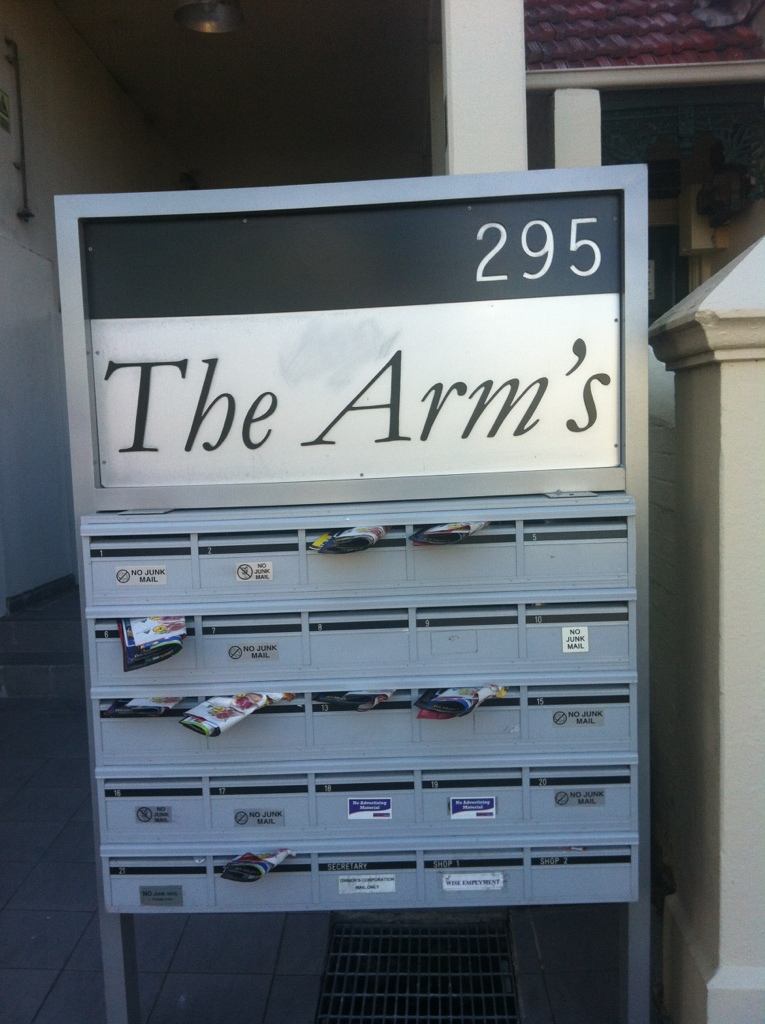
I’ll never live down at The Arm’s.
My not-so-smart phone changes its
to it’s. Oh, what I learned at schools
now shrunk to arbitrary rules.
It must be time to call it quits:
though I have loved you, dearest punct-
-uation mark, please go defunct.

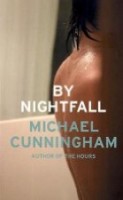
LoSoRhyMo #6: Michael Cunningham’s By Nightfall

Michael Cunningham, By Nightfall (Farrar, Straus and Giroux 2010)

The Book Club (the one where we swap books and keep discussion of them to a minimum) has introduced me to many writers and kinds of writing that I wouldn’t have sought out otherwise. Thanks to it I’ve read excellent books I might have prejudged as boring (an engrossing biography of a World Bank CEO comes to mind). But there have also been books the lender thought were brilliant that stank in my nostrils. By page 34, I was thinking By Nightfall might be about to join Philip Roth’s The Humbling as one of my stinkers (though nowhere near as pungent as that). Two characters’ visit to the Metropolitan Museum on page 34 came close to tipping the balance:

… Peter and Bette walk together through the Great Hall at the Met, grand somnolent portal into the civilized world. Why deny its satisfactions – its elephantine poise, its capacity to excite the very molecules of its own air with a sense of reverent occasion and queenly glamour and the centuries-long looting of five continents. The Hall receives with a vast patience. It’s the mother who’ll never die, and right up front are her votaries, the women of the central kiosk, elderly for the most part, kind-looking, waiting to offer information from under the enormous floral arrangement (cherry blossoms, just now) that festoons the air over their heads with petal and leaf.

This is by no means uncharacteristic of the prose – the pages are littered with such unmurdered darlings. But Cunningham wrote the novel The Hours, the basis for the excellent film of the same name, so I read on. A couple of bedtime reads and a long walk with the dog took me to page 167. I still wasn’t engrossed, but I was planning to read the remaining 71 pages (yes, I was counting pages) to see what Michael Cunningham would make of the (to me) unpromising narrative. Then I was chatting to someone and outlined the story so far – see Sonnet 6 below – and realised I just didn’t care. I read somewhere recently that one of the rules of writing a novel is, ‘Cool stuff now, cooler stuff later,’ that is, ‘Don’t save all your cool stuff to the end – you know it’s coming, but the reader doesn’t.’ There’s probably lots of cool, subtly nuanced stuff towards the end of this book. And maybe what I’ve read is cool to a certain sensibility.

Sonnet 6: The story up to the point where I stopped reading
Our Peter’s life is fairly flat.
He loves his wife, they do sex well
enough, they’re faithful, and that’s that.
Their daughter doesn’t even yell.
His gallery in NYC
is testing his integrity.
The Hirst shark (symbolising death)
is at the Met. But soon a breath
of something new arrives: the younger
brother of his wife, who’s hot,
and often naked, stirs erot-
ic yens in Pete. This new-found hunger
leads to reams of introspection
and one psychoanalysed erection.

I peeked ahead after I wrote that.

[SPOILER ALERT]

Peter does kiss Mizzy, his brother in law, which seems to lead to a lot more introspection and a little conversation. My guess, based on a skim of the last pages, is that it all turns out satisfyingly inconclusive in the end.

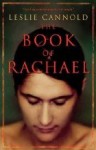
LoSoRhyMo #5: Leslie Cannold’s Book of Rachael

Leslie Cannold, The Book of Rachael (Text 2011)

At the Sydney Writers’ Festival earlier this year I embarrassed myself and Leslie Cannold, author of this book about an imagined sister to Jesus, by singing her a snatch of Dory Previn:

Did he have a sister, a little baby sister,
Did Jesus have a sister?
Was she there at his death?

I was expecting to find in the novel the kind of revisionist pleasure provided by ‘Did Jesus Have a Baby Sister‘ (the link takes you to the song on YouTube). But it turns out to be quite a different beast: it doesn’t so much ring changes on the biblical story as set out to imagine what life would have been for a spirited young woman in the time of Jesus, using the biblical story as a kind of baseline. There is some revisionism, of course: the virgin birth is explained – almost incidentally – by the familiar Roman soldier story; as a young man, Joshua/Jesus comes home late at night smelling of alcohol and women; and there’s an excellent account of the raising of Lazarus. But the aim isn’t to debunk or mock.

It’s years since I read any theology, apart from Tissa Balasuriya’s Mary and Human Liberation. Leslie Cannold’s approach to the biblical narrative goes quite a bit beyond Balasuriya’s ‘hermeneutics of suspicion’, and she certainly doesn’t take up his vision of Mary (here called Miriame) as a revolutionary figure. I doubt if many scholars would take seriously the book’s version of how Joshua came to go on his preaching mission (he was looking for a woman who was pregnant to him, who had been consequently sold into prostitution by her father). It’s clear from this and other examples that this is not an attempt at historical excavation. Such pernicketiness aside, I don’t think I’ve ever read an account of the Jesus story that brings home more clearly what it meant to be poor or outcast or female in those times. That was the main pleasure of the book for me, rather than an engagement with the characters, who never quite came completely to life, despite even the scattering of cheerful sex scenes. Still, the pleasure was considerable.

But it’s November, and a sonnet is compulsory, even though it may create even more embarrassment all round than an off-key rendition of Dory Previn:

Sonnet 5: Where were the women?
These days I think of the Last Supper
and wonder where the women were
when Jesus foretold in that upper
room his foes would soon bestir
themselves and take his life. Who cooked
and shared that meal, were overlooked
by gospels and two thousand years
of art and preaching? More than spears
such silence pierces the hearts
of half the world. Oh they were there,
not just their sinful, perfumed hair
or veils, or wombs and other parts.
They've always held up half the sky.
Their absence is a stupid lie.

LoSoRhyMo #4: Love and cash registers

There are so many possibilities for my fourth November sonnet. I’m resisting the obvious subject, a farewell to our weekend visitor, even though said visitor went so far as to compose a final couplet for me:

And now our Rita’s gone away
the world has gone all flat and grey.

I’m also resisting Sculpture by the Sea. It got a sonnet last year and this year I’m completely intimidated by Richard Tulloch’s beautiful blogging (that’s two separate links) about it.

Instead, here’s one about what we did last night:

Sonnet 4:
The AGNSW is
an auction house this rainy night
for things owned by the late Ann Lewis.
Six hundred people squeezed in tight
to bid on art from all her walls:
kitchen, bathroom, office, halls,
Riley, Kippel, Napagnardis,
Walpidi, Williams, packed like sardies.
This vast, exuberant collection
reduced to ‘dollars on the phone’,
or ‘absentee with me’ – soul’s flown.
That life of passionate connection
(HelicopterRosalie …)
here has its hammered exequy.

We were empowered to bid on two works on behalf of friends. Both were sold for three or four times our maximum. If there has been a slump in the art market recently, there was no sign of it last night. Perhaps people felt that Ann Lewis’s name added value, or perhaps they were being generous as a way of honouring her memory.

LoSoRhyMo #3: Written early Saturday morning

Sonnet 3: In anticipation
Today our Rita comes to town
God willing and the creeks don’t rise
(that is, if fate or Joyce don’t frown
and Qantas don’t forsake the skies).
We’ll meet her plane at ten to ten,
kiss-kiss, collect her bags and then
that welded-on Melburnian
will come with us a-journeyin’ –
White Rabbit, Sculpture by the Sea,
a ferry ride, so many jaunts.
There’s time to tour our local haunts
and if it rains, a cup of tea
at home. Our Rita’s here to stay
the whole weekend. Calooh! Callay,

‘The Second Coming’ it ain’t, but I had to make breakfast.

LoSoRhyMo #2: I couldn’t find a way to include navel in the sonnet itself

Encouraged by my commenters, I’m taking a break from work to write about work and keep up my sonnet quota, though I suspect that beyond the rhyme scheme and the correct number of lines this hardly qualifies as a sonnet:

Sonnet 2: How many A’s in ‘nav*l’?
Oh spare line editors a thought
who wield blue pencils for a crust
(though, since our kind have mostly bought
PCs or Macs on which we must
track changes, spellcheck, search/replace,
and plumb the depths of cyberspace
to verify a quote’s complete,
blue pencils are now obsolete).
We catch apostrophes that stray,
keep minuscule to just one I.
Two Cs in ‘practised’ make us cry
(unless we’re from the USA).
We care for commas, fix each error,
then make new ones – our greatest terror.