[Because the older version of this blog has become unreachable, I am retrieving at least occasional posts from it that I see people trying to click on. This is one from February 2008.]
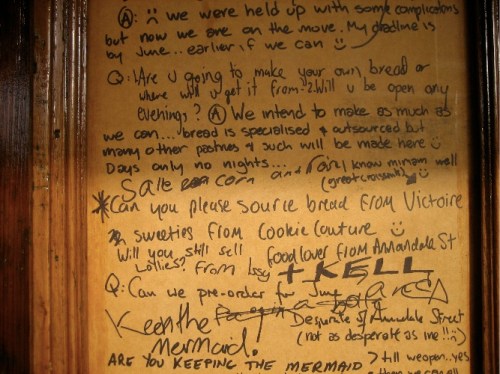
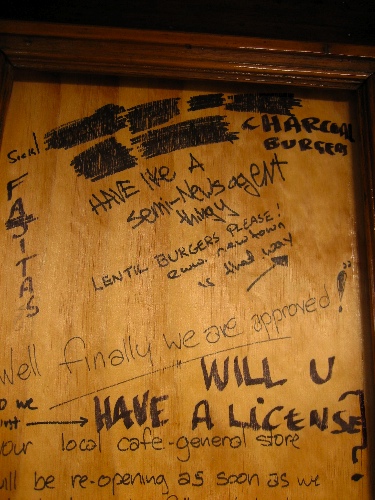
As promised a little over a year ago, I’ve been posting about developments at our corner shop. Things seem to be coming to a head, although the only obvious sign of progress at the moment is a lot of texta on the door. Still, though we’ve lost our corner rubbish bin, arguably because of the threat of terror (though more likely because it interfered with the Indian-theme Amex ad shoot in the middle of last year), the politics of hope is alive and well in this part of the world: here’s a sample of the hopes and dreams of people of Our Block. Who knows what the blacked out request was? What will become of the mermaid — will democracy decide? Would Newtownfolk approve of being identified as lentilburger munchers? Where will the sourdough come from? Fajitas? Alcohol? These questions and more may be answered in June.
[Because the older version of this blog has become unreachable, I am retrieving at least occasional posts from it that I see people trying to click on. This is one from January 2008.]
This one isn’t about India but our transmogrifying corner shop. Come to think of it, the corner shop was dressed up with Hindu arches and populated by people in kurtas and saris for an ad shoot one week last year, so there’s a connection.
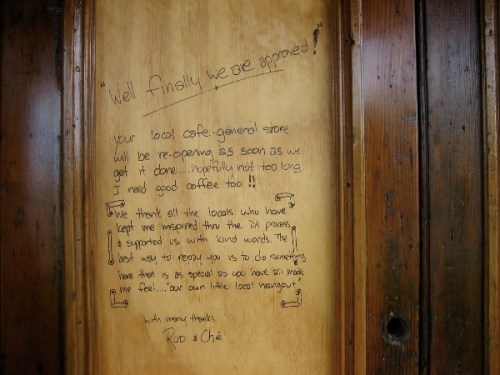
There has been progress. After being stalled for months by the objections of one neighbour, who evidently didn’t warm to the prospect of having people sitting out on the footpath drinking coffee and eating cake within shouting distance of her front yard, the development application has been approved. Once again we hear the sound of hammering from behind closed doors; the doors themselves have had several coats of paint blow-torched off them, and this cheerful note has appeared:
Deciding what books to take travelling is probably always problematic. They need to weigh little enough, be discardable or relevant enough, and preferably be likely to be read by more than one traveller. My reading on this trip managed a fairly decent combination of those criteria.
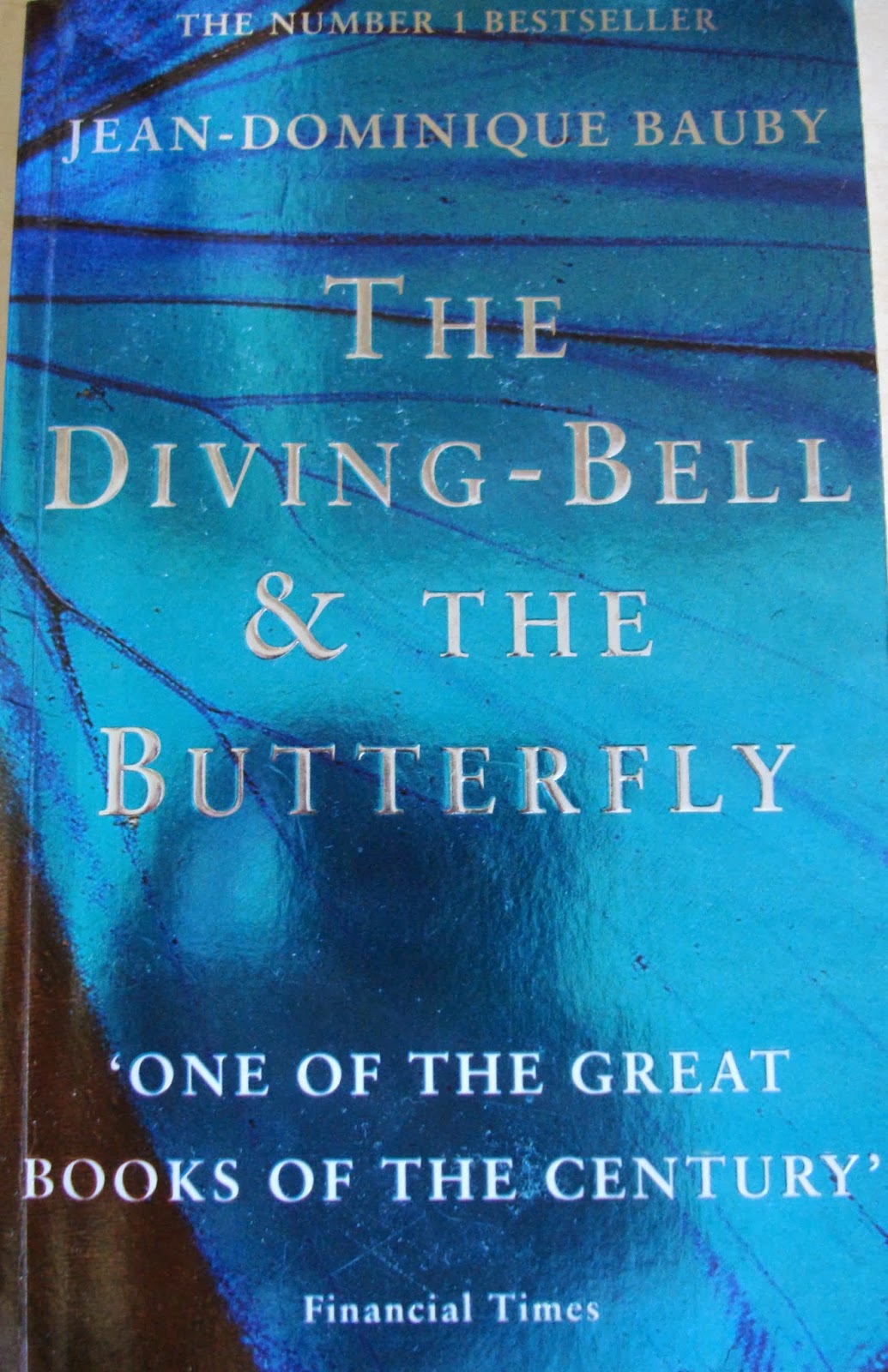
The Jean-Dominique Bauby memoir rates high on the light-of-weight criterion. Given the manner of its composition, it’s just as well. Bauby was suffering Locked-in Syndrome in the aftermath of a stroke: his mind was unimpaired, but his paralysis was so extensive that he could communicate only by blinking his left eye. Just reading about it was enough to restimulate my mild episode of Bell’s Palsy from some decades ago. He dictated this elegant, even lyrical book one letter at a time by blinking that eye. I’ll never look at the immobile and unresponsive people in the nursing home the same again: they differ from Bauby in being demented, but the powerful lesson of the book is surely that inability to communicate is not at all the same thing as lack of ability to perceive and respond.
I read the whole thing before we reached Singapore. As it had been lent to me, it stayed with me for the whole remainder of the trip, and came home safely. I recoil from the idea of the film (which is coming to Sydney soon). This is a quintessentially verbal creation, and I can’t see that a film could be anything other than a travesty.
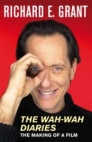
I expected the Richard E Grant book to be discardable, but it’s such a good read that it too stayed with me for the whole trip and is now on loan to an emerging filmmaker. The thing about REG (as he is called in the captions to the location photographs) is that as a first-time, perhaps even one-time writer-director who is also a well-established character actor, he is at the same time an insider and an outsider in the movie business. Wah-Wah is an intensely personal, autobiographical film, and the diary of its making is also intensely personal, an account of revisiting a difficult but rich childhood. It’s also the story of a multinational, multimillion dollar enterprise in which it sometimes seemed that anything that could go wrong would go wrong. The diary form serves the subject well, and in his producer REG finds a perfect villain. It’s hard to believe she was ever as incompetent, as obnoxious, as French-arrogant as she is portrayed, but the joy she gives as a character in the book is directly proportional to the pain she apparently gave in the real/reel world. I remember enjoying the film. I’d now like to see it again. And I’d love to see a version that includes some of the (correctly) excised scenes.
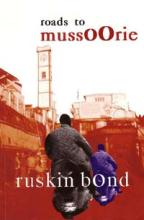
By now we were in Delhi, and when in the Central Cottage Industries Emporium on Jarpath Radial near Connaught Place I saw books by Ruskin Bond, a sometime contributor to a magazine I once edited, of course I bought one – an interesting experience in itself, as the process was broken down into its parts: agreement to the purchase and receipt of a docket at the counter; payment and having the docket stamped at a cashier two floors down; receipt of the book and surrender of the docket just inside the exit door.
The book is a collection of rambling essays about the joys of living in Mussoorie, a hill station in Uttar Pradesh. It turned out I’d read a number of the pieces before when RB submitted them as typescripts to the magazine (corrected with white-out and ink – I can verify his assertion in the book that he doesn’t use a computer). We published at least one of them. But there was a special pleasure in reading them so close to the place where they were written, and where Ruskin still lives, as far as I know. Among many delights, one that stands out is the little excursion into the history of potato in India – we had an Irish soldier to thank for the plentiful potato that seemed to feature in every meal.
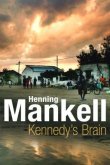
The Henning Mankell book made the cut because both Penny and I have enjoyed his detective stories, and I’m respectful of his two books for young people (one of which deals, like this book, with AIDS). Written, according to an endnote, in fury at the role of the West in relation to AIDS in Africa, it appears to have been revised in haste, to have done without beta readers altogether, and been copy-edited on a tight budget. The result is that, though the same endnote asks that the book be taken seriously as shedding light on terrible things, it actually comes across as a clumsy fantasy of wickedness, a rickety, even incoherent, echo of Le Carre’s The Constant Gardener, a trivialising of the issues about which Mankell undoubtedly cares deeply. The translation may be partly to blame, but I don’t think so.
We didn’t have the heart to inflict this on any of our fellow travellers, so it found a bin in the pink city of Jaipur.
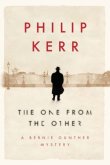
We brought The One from the Other for pretty much the same reasons as the Henning Mankell, except I haven’t read any of Philip Kerr’s children’s books. It ranked low on the relevance scale, though as I took my malaria tablets one morning, I enjoyed the moment’s connection to the book’s maguffin, a cure for malaria which was to be found at monstrous cost.
It turns out to be a ripping good yarn, in an amusing tough-guy voice; its incidents and conspiracy theories are plausible; and its endnote provides quite a bit of information on the sources on post-war Germany and Austria where it is set. Of course, Kerr has the advantage over Mankell of a setting nearly 60 years in the past, which is well documented and much storied, and in which he has already set a number of novels. Still … we didn’t have any qualms about passing this one on.
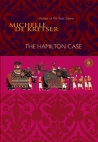
Michelle De Kretser writes a pretty damn good sentence, and a pretty damn good yarn. Our copy of The Hamilton Case is a hardcover, so not designed for ease of packing, and neither Penny nor I had read anything by this author. We must have thought its setting made it relevant. And indeed, Ceylonese complexities did resonate with our experiences in the land of the former British Raj. The resonances weren’t always comfortable. I noted down a couple of neat observations:
There is an old instinct, at work in bordellos and the relations of East and West, to convert the unbearable into the picturesque. It enables a sordid existence to be endured, on one side, and witnessed, on the other, with something like equanimity
and
The coloniser returns as a tourist, you see. And he is mad for difference. That is the luxury commodity we now supply, as we once kept him in cinnamon and sapphires.
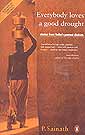
On the train from Delhi to Agra we got chatting with an Indian couple from Pune who were also sightseeing. In a wide-ranging conversation, I asked if they would recommend any books about India by Indians. They mentioned Everybody Loves a Good Drought. The first time I got to a bookshop was in Pushkar in the last couple of days of our trip, and sure enough, there it was, along with just about every other book by an Indian or about india that I have ever read. I read it on the plane home, and haven’t quite finished it. The subtitle says it all: ‘Stories from India’s Poorest Districts’.
It’s wonderful, powerful journalism: P Sainath spent some years travelling around talking to the poorest of the poor and writing articles for The Times of India. This is a collection of the articles linked by short generalising essays. It gives faces and voices to the poor, and it’s unremitting. Nothing picturesque or ‘different’ here.
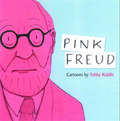
Tohby’s collection of cartoons from the weekend magazines of the Sydney Morning Herald and the Melbourne Age was on the hall table on our return, a very welcome gift. I was still making frequent visits to the toilet, and this book made the experience much less unpleasant. I include it here, because it was part of the India experience to come home to something so very Sydney: warm, witty, elliptic, muted, spiritual and sometimes laugh-out-loud. I particularly liked the image of a search and rescue worker who, when asked where he’s going, says, ‘I’m going to India to find myself.’
Teresa Nielsen Hayden is a finder of wonderful things, many of which she puts in the Particles sidebar on Making Light. She posted a link to this page, which lists common errors in English, possibly as many as 2008 of them. As I grow older and either mellower or more easily confused, I increasingly need this kind of thing. I looked for two words that have been giving me gip recently: reticent and obtuse. I’m pleased to report that the list confirms in each case my sense that these words are slipping badly in common journalistic usage:
‘Reticent’ most often means ‘reluctant to speak’. It can also mean ‘reserved’, ‘restrained’, though conservatives prefer to use it to apply only to speech. If you’re feeling nervous about doing something, you’re hesitant: ‘I’m hesitant about trying to ride a unicycle in public.’ ‘Hesitant’ is by far the more common word; so if you hesitate to choose between the two, go with ‘hesitant’.
and:
Most people first encounter ‘obtuse’ in geometry class, where it labels an angle of more than 90 degrees. Imagine what sort of blunt arrowhead that kind of angle would make and you will understand why it also has a figurative meaning of ‘dull, stupid’. But people often mix the word up with ‘abstruse’, which means ‘difficult to understand.’ When you mean to criticise something for being needlessly complex or baffling, the word you need is not ‘obtuse’, but ‘abstruse’.
The author of the list, Paul Brians, also gets points from me for his judicious remarks about ‘they’ and ‘their’ as singular pronouns.
[This post, transferred from my original blog, Family Life, which is no longer accessible, is even more to the point now than it was in October 2007.]
Via Making Light’s Particles, I draw your attention to the Unitarian Jihad, as reported by Jon Carroll of the San Francisco Chronicle. (If you don’t know any Unitarians, you should. Someone – it might have been Erasmus Darwin – described Unitarianism as a mattress to catch a falling Protestant.)
Beware! Unless you people shut up and begin acting like grown-ups with brains enough to understand the difference between political belief and personal faith, the Unitarian Jihad will begin a series of terrorist-like actions. We will take over television studios, kidnap so-called commentators and broadcast calm, well-reasoned discussions of the issues of the day. We will not try for ‘balance’ by hiring fruitcakes; we will try for balance by hiring non-ideologues who have carefully thought through the issues.
We are Unitarian Jihad. We will appear in public places and require people to shake hands with each other.
Read the whole thing. It’s funny, and a dream of a much better world.
[I published this small response to the Northern Territory Intervention in June 2007: here it is again. The links are still live, and still to the point ten years later.]
I don’t have anything original to say about the Prime Minister’s initiative in the Northern Territory. But the australoblogosphere has lit up like a switchboard. Just in case you haven’t found them all by yourself, you might like to read Elsewhere, plus the discussion in the comments.
Once again, as it was done in America, relegating the indigenous population to the least desirable land in the country has not proven enough. Decades of neglect, underfunding, and refusal to work with those who have been marginalized are not enough. In order to promote his political agenda and to ensure his place in history, Howard, like his mentor and political inspiration, George W. Bush, must crush a people he does not understand in order to secure victory for his party and his place in history.
Then Jim Belshaw (whose comments section also shouldn’t be missed) points out, chillingly, that:
Models developed by Australia in intervention in Timor or the Solomon Islands are now being applied on Australian soil.
It would look a lot less like a cynical election strategy if the initiatives were actually taking up the recommendations of the report but, by one count, only about 5 percent of the recommendations are being implemented.
[Originally published in May 2007 in my now defunct earlier blog, Family Life. I’ve retrieved it because a friend was looking for information on Jeff Sparrow’s book.]
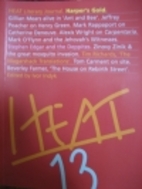
Heat was, as always, a solid read. And as always it’s a bit of a puzzle how the title was arrived at: in this case it’s a phrase from one of the stories, with no obvious overarching thematic relevance. But it doesn’t matter. Even if there is no theme that makes the book hang together, the pieces in this issue, as in others, are free to resonate with, echo and comment on one another, so that the whole is pleasingly more than the accretion of its parts — and I did read and enjoy this issue cover to cover.
Beverley Farmer visits her former husband’s village in Greece in ‘The House on Rebirth Street’ (dropping a few too many untranslated Greek words for my comfort); Greece brings some respite to the heroine of Stephen Edgar‘s pseudo ghost story in verse, ‘The Deppites’. There are a number of nostalgic visits to family homes, and frequent references to migration.
Nostalgia for religious belief bubbles to the surface in a number of pieces. Gillian Mears is visited by the rumtitum rhythms of Edward Lear’s ‘Pelican Chorus‘ as she’s wheeled in, near death, to the operating theatre; Felicity Plunkett‘s wonderful sequence of poems ‘The Negative Cutter: An Introduction to Editing’, also deals with surgery, playing with a cinematic metaphor; Mark Rappaport, documentary film maker, has fun riffing on his connections to Catherine Deneuve, as fan and appalling collaborator. I love all this.
When I edited a literary magazine not so very long ago, it was regularly proposed to us that each issue should be organised around a Theme. Just as regularly, I resisted the proposal, as it seemed to me that it was based in a misunderstanding of what kind of creature a literary magazine is. My pleasure in Heat confirms me in my belief. Instead of corseting, regimentation, control, there is a sense of organic relationship, of many minds independently but harmoniously making story, or seeking truth, or singing, or doing whatever it is that literature does.
In his introduction to Communism: A Love Story, Jeff Sparrow writes:
Communism provided an alternative. It was, in many ways, the alternative, the most important indicator that society could be remade. Between 1917 and 1989, its star shone bright and its star shone dim, but its continuing sparkle in the political firmament allowed millions to believe in a world beyond the free market. Even those who despised communism felt that while it existed, change – whether they wanted it or not – was a possibility.
Today, that feeling is gone.
The book is a biography of Guido Baracchi, a well-heeled, literate bohemian and committed Marxist/Communist who lived from 1887 to 1975, described by Stuart Macintyre as ‘the knight errant of Australian communism’. He’s a terrific subject for biography: he worked for the cause in Weimar Germany and the 1930s Soviet Union; he had intense relationships with a number of poets and playwrights (Lesbia Harford, Katharine Susannah Prichard, Betty Roland), each of whose accounts this biography has drawn on; he was widely read and wrote a lot himself, also supplying a wealth of material to his biographer.
I was telling some friends about the book, and one woman was prompted to talk of her youthful romance with a son of a leading Communist family: when they were about to go out on a date, he would say, ‘Let’s stay home tonight – the old coms are coming around and there’ll be lots of tales.’ I suspect Jeff Sparrow had a background something like that, because while this book meticulously cites its written sources (discreetly, up the back, not interfering with the flow of the narrative), and doesn’t hang back from quoting T S Eliot and James Joyce to good effect, it’s also bursting at the seams with ‘tales’, with the lore of Australian Communism: clever ploys, bastardry, romance, betrayal, nobility (like Guido’s wife Neura’s principled reaction to the news that he had taken up with another woman, from which she seems never to have wavered), tragedy (which is too pallid a word for what Stalin and Stalinism did to the hopes of the world). You can almost hear the stories being told with suitable embellishment at a smoke-wreathed kitchen table far into the night.
As the story unfolds, what today is called the mainstream media is relegated to commenting from the sidelines: for example, during the travails of the tiny Australian Marxist movement of the early 20s, bitterly divided within itself, devoting most of its energies to self-education, and discouraged at the prospect of ever being effective, we learn that Prime Minister Bruce gets headlines by accusing the Labor Party of pandering to Bolshevism, and succeeds at a stroke ‘in elevating communism into a public issue in a way that the communists themselves found impossible’. Sadly, the MSM version has become received wisdom, and a whole dimension of our history has been largely forgotten. Those who deplore ‘black-armband history’ would no doubt equally deplore this, perhaps as ‘red-tie history’. I can’t recommend it enough – for that worthy reason, but also because it is a ripping good read, another example of history written with the verve and imaginative force that some think is the exclusive domain of the novel.
An extra pleasure of the book for me was encountering a number of people I have actually met: Betty Roland, the Currency Methuen edition of whose play The Touch of Silk I edited in 1974; Eric Aarons, ‘the young branch secretary’ who banned Guido from lecturing in 1939, whom I met as a gentle old man, a sculptor and caretaker of a workshop site (and whose own memoir What’s Left sits on my bookshelf unread); Nick Origlass, Trotskyist, who seems to have used the long boring speech as a weapon just as consistently in youth as in age; Bob Gould, shambolic bookshop proprietor, who appears here as a fiery youth; a friend’s mother gets a guernsey as one of two students who defied pressure to reject Guido’s teaching in 1939. And a final personal note: one of my dearest friends and teachers, a US communist in the 30s and 40s, still preserved his hatred for Trotskyism intact 40 years after leaving the party; I wonder what he would make of Jeff Sparrow’s implied contention that it was the Trotskyists who kept the flame of communism burning clearest during Stalin’s era.
Rotters and Squatters is the third in the Fair Dinkum Histories series, and takes the story of the Australian colonies from 1820 to 1850. I’ve already raved about this series. Consider it raved about again. They’re children’s books, but only a bizarre age-based separatist mentality would prevent an adult from enjoying them. Maybe you need an appreciation of juvenile humour to enjoy the deliberately appalling puns in some of Peter Sheehan’s cartoon illustrations, but this book communicates without condescension or chalk-dust or scatology, and strikes a wholly attractive balance between the general and the particular, the comic and the very serious, the personal and the (discreet cough) political.
Like the previous books in the series, it doesn’t attempt sanitised ‘balance’: no doubt it will irk the haters of black-armband or red-tie history. I reckon the series, and this book as part of it, makes a significant contribution to historical writing about Australia, not least by being a quick read with an occasional laugh-out-loud moment. One of several idiosyncratic reasons for my enjoying it is that its short Recommended Reading list includes just one book by an explorer: Edward John Eyre’s Journals of Expeditions of Discovery, the subject of my aborted MA thesis in the 1970s, which in my opinion richly deserves its recommendation here. (If my thesis supervisor – you know who you are! – is still alive and reads this, I’d like my copy back, please).
After a break, I went back to the Frank O’Hara. I still don’t think it’s my cup of tea, but I decided to read the poems as play – instead of puzzling over what he means by an obscurity, I’ll just take it that it’s there because it’s what popped into his head and sounded cool – or in some way captured the emotion of the moment. And I decided not to worry about his name-dropping and hi-falutin’ allusions. In other words, I stopped trying to understand what was going on and just let it flow. No doubt I missed a lot – because of his hurling words at the page like Jackson Pollock creating a painting, and because of the references and allusions that went past me – but I also enjoyed a lot. There are some outright reader-friendly bits like this piece of New-York patriotism from ‘Meditations in an Emergency’:
I can’t even enjoy a blade of grass unless I know there’s a subway handy, or a record store or some other sign that people do not totally regret life.
I gather he’s as hip as ever: people even use phrases from his poems as novel titles.
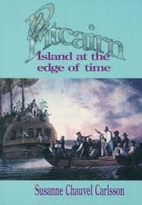
I read the Pitcairn book in preparation for an editing job (which seems, alas, to have fallen by the wayside – in Pitkern, it es ay los’ bawl). Susanne Chauvel Carlsson is the daughter of Charles and Elsa Chauvel. Her interest in Pitcairn Island grew from her parents’ relationship with the island, beginning with their 1932 visit to film parts of In the Wake of the Bounty. The book is a mix of fascinating potted history, family lore, personal reminiscence and observation, and travel log.
People who read the newspapers more carefully than I do, and that’s probably most people, may already know a lot of the Pitcairn story, but even if I’m coming in late, I’m compelled to say the story is riveting. Pitcairn was settled in 1790 by a party of Bounty mutineers led by Fletcher Christian and accompanied by a number of Polynesians: nine mutineers, six Tahitian men, nine Polynesian women (all but one of them from Tahiti) and one baby girl. The first decade was rough, with quite a bit of drunken rioting and mayhem (ears bitten off and so on), murder, a suspicious suicide. After a failed escape attempt, some of the women murdered the remaining Tahitian men. By 1800 the population comprised one man, the mutineer Aleck Smith (who later changed his name to John Adams); ten women (I don’t know where the extra one came from – the book is plagued with such inconsistencies ); and about 23 children. It was another eight years before the Pitcairners had any contact with the outside world, and isolation has been a major factor in the Island’s cultural, economic, linguistic and political development ever since.
It’s a story that reads like a lost-in-space fiction: the language developed as a mixture of rough English and Tahitian; the religion grew from the one semi-literate man’s determination to read and then communicate to the women and children what he found in the Bounty‘s bible. Susanne Carlsson makes no bones about having fallen in love with the place and the people – it’s one of those unfathomable complexities that the object of her affection has also been the site of a history of sexual assault and of sanctioned sexual practices that in most other places would be condemned as paedophilia.
All that news was bad enough already. It becomes much worse when you’ve read accounts of these people playing a cheerfully innovative version of cricket (you have to innovate when your total population is about 50), sharing out Christmas presents in the town square, praying in their Seventh-day Adventist chapel, rowing longboats out to meet the still infrequent visiting ship. I imagine we’ll never know whether the evidently widespread sexual abuse has been there from the beginning or whether it is a symptom of the recent breakdown of the stern religious glue that held the community together.
Oh, and this book had an excellent addition to the Little Known Facts file: in 1838, when the Pitcairners persuaded a visiting Royal Navy ship’s captain ‘to draw up a constitution and code of laws suitable to their needs’, Pitcairn became the first place where women had the right to vote, 46 years ahead of South Australia.
Baby Boomer Reminiscence Alert. Skip to the end if BBRs drive you nuts.
(OK, they’ve gone, but I’ll assume I’m not talking only to myself.) Back in the early 70s there were a lot of poetry readings in Sydney: there were Moratorium readings, Balmain readings, Sydney University Great Hall readings; at the 1972 Aquarius Festival in Canberra, the year before the much more famous Nimbin Aquarius Festival, there were a number of serious group poetry readings. I was a keen poetry-goer in those days. There were dramatic moments: Roland Robinson once shouted something like ‘This is muck!’ during a Chris Wallace Crabbe poem that began ‘To f**k is to move through grooves of time’. The dignified cadences of A D Hope shared the stage with the precision of Dave Malouf, the raffishness of Bob Adamson, the heady intellectualism of Martin Johnston, the drugged waifishness of Michael Dransfield, the hypnotic incantations of Les A. Murray … and so on. If I remember correctly, John Tranter was a regular at these events, but for some reason I’ve never really got his poems: back then, and on my occasional attempts to read him since, I found them intriguing but it felt as if they existed in a thicket of references and allusions and associations that were outside my experience. I thought of him as a poet’s poet.
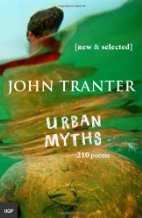
Afflicted as I am with an indefensible, irrational and unfillable greed to know and read everything, I used one of my 60th birthday vouchers to buy Urban Myths, which includes selections from his previous books dating back to 2000. I’m now about a third of the way through it. Those early poems are still intriguing but almost completely opaque. It’s not just the allusiveness; in some way that’s hard to articulate, I can’t hear a human voice in the poems, even one I don’t understand. I’m pleased to report that we’re getting on much better by page 80: I’ve laughed, I’ve been close to tears, I’ve reread some poems a number of times until I feel I understand them, because they promised to repay the effort. The book won the NSW Premiers Literary Award for poetry a couple of nights ago. John read the poem that opens the book, ‘After Hölderlin’, and I couldn’t remember what my problem was. That poem is dated 2002 in Urban Myths, so I’m expecting the best as I read on.
The Sydney Writers Festival is under way. I kicked off my personal festival yesterday with a workshop led by Patti Miller. The workshop was billed as ‘Memoir – Random Provocations’, which anyone who had read Patti’s book would have recognised as incorporating the title of her chapter on the personal essay. The rest of us signed on for what we thought was three hours looking at approaches to memoir. Heigh ho! It was an excellent three hours regardless, and probably useful. Then last night I went to a screening of Ten Canoes preceded by a conversation between Julianne Schultz and Rolf de Heer, for which the microphones were turned up far too loud for my comfort (I really must post about my tinnitus and booming ears some time). The conversation was interesting, if a little gossipy, and the film was even more wonderful the second time around.
This evening, though, was the real start of my festival. The great court of the Art Gallery of New South Wales was overrun once more by literary types, some who’ve had their likenesses on the walls, but mostly humble key-tappers and pen-wielders. I was at a table with, among others, my friend Madam Misrule, children’s literature activist Bernard Cohen, academic John Stephens, editor-writer-politician-parent Peter Coleman and a charming woman who lives in my street and is often walking her dog when I am walking mine – this was the first time we’ve exchanged names and discovered we have friends and interests in common. The meal was excellent, though I didn’t see anything that would have thrilled a vegetarian. There’s something wonderful about a conga line of waiters weaving between sculptures and tables with plates of beautifully arranged meat and what looked like a dainty caponata.
But on to the business of the evening. Geoffrey Atherden’s address and the award citations are, or soon will be, up on the Ministry for the Arts web site [links all dead in 2020]. I recently bought a microphone for my iPod, and took it for a trial run tonight, so I can give you verbatim bits of the acceptance speeches. But first, I can tell you, nerdishly perhaps, some of the differences between Geoffrey Atherden’s excellent speech as written and as spoken. He cut out about a third of it. In fact he cut out the parts where he argued his case against User Generated Content: someone, talking to me recently about the User Generated Content business model, said that mindless consumerism is being replaced by mindless producerism, and Geoffrey makes a similar argument. He also left out interesting reflections on the Free Trade Agreement, and on the argument that ‘the exciting new multi media, multi platform, new age of digital technology’ will increase the demand for good writing. Presumably these omissions were in order to save time. More interesting than the omissions was an insertion right at the end. Where the written speech, having lamented the current lack of opportunity for young writers in Australia, ends by inviting us to imagine ‘if we had an environment of artistic and cultural activity here that was so stimulating that all those talented young Australians would want to come back,’ and says, with something approaching a non sequitur:
You see, I’m only pretending to be gloomy. Deep down, I’m still hanging on to a last, thin shred of optimism.
The address as spoken ended like this:
… all those young Australians would come flooding back. I seem to remember it happened once before. I seem to remember it happened just after a federal election. Indeed, I’m only pretending to be gloomy.
Gough Whitlam, to whose election in 1972 he was of course referring, was in the room. On the tape I hear myself saying, ‘Stay gloomy, Geoffrey, stay gloomy. It’s not going to happen.’ I hope he’s a better prophet than I am. Given the company I was keeping, I was a little embarrassed when the premier later seized on Geoffrey’s remarks to be fairly crudely party political.
One other nice moment to do with the opening address. As a warm-up remark, Geoffrey said that Maggie Beare in Mother and Son was not based on his mother, and Geoff Morel’s political wheeler-dealer in Grass Roots was not based on Frank Sartor, Minister for the Arts and presenter of all but the final award. In thanking Geoffrey for his address, Frank said, in a welcome departure from his generally ill-at-ease manner, ‘You may not have known this, but Geoff Morel followed me around for two days before he started filming Grass Roots.’
I can’t offer an opinion on any of the awards, because I’ve read so few of the works on the shortlist, but I can tell you a little of what happened.
The first award, the NSW Premier’s Translation Prize and PEN Medallion, went to John Nieuwenhuizen, who has translated from Dutch and Flemish. ‘I’m actually invisible,’ he said. ‘At least that’s what a review of one of my books said, and the judges for this prize agreed. This is of course a huge compliment for a translator. But here I am.’ He also accepted the award as a validation of writing for children – many of the books he has translated have been for children, and this award counterbalances the times he has been asked when he was going to move on to ‘real’ books.
The UTS Award for New Writing was won by Tara June Winch for Swallow the Air. With lovely self deprecation, she said that she’d spent the week practising walking up and down in high heels instead of writing a speech. She made it to the dais and back without stumbling.
Gideon Haigh won the Gleebooks Prize for Critical writing for Asbestos House: the secret history of James Hardie Industries (Scribe). ‘Some books you want to write. Some books just have to be written. This was one of the latter. I couldn’t have turned it down and still considered myself a proper journalist.’
Community Relations Commission Award was won by Shaun Tan’s The Arrival (Hachette Livre Australia), a wordless graphic novel. A friend told me later that she’d nearly hit someone in the ladies’ who was mouthing off about how wrong it was to give a literary award to something that didn’t use words. Well, it’s a paradox I suppose, but it’s a marvellous book, and as Shaun said in his acceptance speech, it’s being read by people who don’t normally read graphic novels, or anything at all – older migrants, for whom the book was really written. I’d cheerfully predicted that this book would win three awards. It won two: it also won the Book of the Year Award. Ms Misrule leapt to her feet and cheered. ‘I love it when one of ours wins,’ she said, encapsulating the esprit de corps that prevails in the children’s literature mob at events like this.
The Scriptwriting Award went to Tony Ayres for the script of The Home Song Stories, a movie we haven’t seen yet. He explained that the story had started out as a memoir but turned into a film script because that’s what he knew how to do.
The Play Award was won by Tommy Murphy for Holding the Man. Impeccably dressed in suit and tie, he told of nervously reading his initial list of ideas for the play to his director: ‘This play might open on the moon. Perhaps the Grim Reaper will appear at some point. And when the character John gets sick he will become a puppet.’ He talked of the importance of collaboration. And he did a gracious thing, which you’ll understand better if you bear in mind that in the play the family of the dying John treat his lover Tim, devastatingly, as having no valid place at his bedside. Tommy, in contrast, thanked his family for teaching the seventh of eight children to embrace sharing, and said his family were represented in the hall by his boyfriend Dane. He went on with some high romance: ‘You can’t win a prize for a love story unless you love someone as deeply as I love Dane.’ He also paid tribute to Tim Conigrave, author of the memoir the play was based on: ‘Tim has taught me that writing is sharing too much. There’s no avoiding that, and I embrace it.’
The Patricia Wrightson Prize went to Narelle Oliver, a Queenslander, for Home (Omnibus), a picture book about peregrine falcons who built a nest high up in a building in Brisbane. She thanked, among many others, the falcons Freda and Frodo: ‘They are probably bedding down right now on their nest of stones upon which I did lie with my camera to capture their home a couple of years ago. I saw my city afresh, in a new and exciting way, through the eyes of falcons, and I hope to share that with children and adults in the book.’
The Ethel Turner Prize for young people’s literature was won by Ursula Dubosarsky’s The Red Shoe (Allen & Unwin). Ursula had had a dog accident in the morning, resulting in a broken wrist and her absence from the dinner. Her father, Peter Colemen, read her acceptance speech. ‘You may well ask what on earth does a six year old girl [the book’s heroine Matilda] make of something as weighty as the Petrov affair [A Soviet defection that made headlines in the 1950s]. What indeed do six year old children make of the current images of public fear – the Twin Towers, Saddam Hussein, global warming? Well, in reply, as the late Ted Hughes has observed, just remember, your first six years shape everything.’
John Tranter won the Kenneth Slessor Prize for poetry with Urban Myths: 210 Poems (UQP). He read a poem (which someone objected to as inappropriate, but I appreciated: it was ‘After Holderlin’, and John’s brief explanatory notes were illuminating). He then contributed to the political theme of the evening by thanking ‘the working men and women of New South Wales who elected this generous government and whose tax dollars went to make up this wonderful cheque’.
The Douglas Stewart Prize for non-fiction was won by Robert Hughes’s Things I Didn’t Know: a Memoir (Random House Australia). Bob wasn’t there but his acceptance speech was read by his publisher. His first remark – ‘The last time I won any sort of prize in Australia was a dismaying number of years ago: I won it for building a control line model aeroplane and flying it in Centennial Park’ – enraged one of my dinner companions: ‘That man is incapable of telling the truth. Everything he says is a lie.’ Be that as it may, the acceptance speech went on to a gracious tribute to Douglas Stewart, his nature poetry and his verse drama, in particular The Fire on the Snow, ‘much of which I still find I know by heart’.
Probably the most prestigious prize apart from book of the year, the Christina Stead Prize for fiction, went to Peter Carey for Theft: A Love Story (Random House Australia), another New Yorker, whose speech was read by the same publisher. After some nicely-turned complaints about a back injury and dental problems, this speech too paid tribute to the person who gave the prize its name. Christina Stead spent 46 years away from Australia; Peter Carey has been away for 16:
I can now understand Christina Stead as one part of that endless stream of Australian travellers most of whom come back in a year or two – most, but not all. Hundreds and thousands of us have become waylaid, up some foreign creek, some foreign road among people who cannot imagine who we are, or that our dreams each night are of Australian landscapes with those smooth, lovely trunks and the vast khaki canopy tossing in the wind showing the silver undersides of its fragrant leaves. I probably don’t need to say this to anyone who has read my work … but I am not only pleased that Theft has been read with pleasure and intelligence by its first true readers, people who do not need a footnote to know what a Blue Heeler is; but also deeply moved that it is the Christina Stead award I am receiving. The award this year is for Theft, but every year it makes us honour a brave artist who swam against the current, worked away from home for 46 years, and bequeathed us novels that are among the greatest works of Australian literature.
Special Award winner was Gerald Murnane. On the tape, when Frank Sartor mispronounces the name of the journal and enduring feature of Australia’s literary landscape Meanjin as ‘Minnajin’, it sounds as if the whole assembly murmurs in amazed disapproval. Frank hesitates, then realises that whatever he’s done wrong can’t be mended and ploughs on. Mr Murnane gave a curmudgeonly speech about receiving the award late in his career.
Shaun Tan was called back to the podium, this time to shake hands with the Premier, Morris Iemma (who seems to be winning people over, to the extent that I heard him referred to as Morris Yummy). One of the great things about the Book of the Year prize is that the recipient doesn’t necessarily know about it in advance, so we get some unprepared remarks. After muttering that there must have been a mistake and thanking the people he’d forgotten in his first trip up front, Shaun talked about his long campaign to have picture books recognised as being for adults as well as children: ‘Part of my success with this book may have been children getting their parents to read it. I’ve got this huge support base among children.’ He thanked independent booksellers for supporting the book, ‘and seeing its inability to be categorised as a blessing rather than a curse’.
And it was all over bar the tart, the chocolates and the schmoozing.
Crotchety note added later: The Sydney Morning Herald‘s report, headlined ‘Big Names Take Book Awards’, doesn’t even mention the Book of the Year or the Special Award, possibly because the sub-editor didn’t deem Shaun Tan or Gerard Murnane to be Big Enough Names, or because the money is the story, and the combined monetary value of Shaun’s two prizes amounts to $17 000 and Gerard raked in a measly $5000, whereas the Big Names each won $20 000. But then John Tranter and Ursula Dubosarsky each got a guernsey – perhaps as token poet and children’s writer, or to flesh out the subtext of resentment of expatriates by indicating that, unlike the judges, the Herald knows about non-expatriate talent. It’s a mystery.
[Because the older version of this blog has become unreachable, I am retrieving at least occasional posts from it that I see people trying to click on. This is one from April 2007.]
Our corner shop continues its transformation into something possibly rich and strange.





 Me fail? I fly!