The Invitation (conclusion)

Continuing ‘The Invitation’, my versification of Scott Ludlam’s speech. Today’s instalment takes us to the end.

A lone voice in the chamber, he goes on.
‘You’re planning to destroy the NBN;
your A-G, Brandis, bows before the con
of NSA snoop-crimes (has he no yen
for self-respect?). And now the word has gone
out on the Web. Nerds, geeks and coders, then
gamers, are for the first time turning Green,
thanks to your tech-illiterate machine.

‘Most deeply, your campaign to stir up fear –
of people fleeing violence and war –
hoping Australians would accept the smear
and bring our worst impulses to the fore,
instead is bringing out the best. Oh dear
PM, you are most welcome to take your
heartless racist policies and ram
them where tax-payer funded travel scams

‘are hidden and the western sun don’t shine.
What is at stake on by-election day
is whether this man owns the root and vine
of parliament for years. Another way:
we want our country back. Chance, not design,
some ballots lost, required this replay:
we have the opportunity to wrest
one seat back now. Game on, PM. Come west.’

Scott Ludlam, Greens, in purple tie, sat down
to no applause, but now, if your desire is
to see the whole thing, you can go to town
on YouTube where it’s spreading like a virus.

Go, little poem. I pray that Scott won’t frown
at this hommage from one of his admirers.
I’ve changed some meanings, forced by Rhyme, the hoodlum.
What’s vile is mine, what’s fine is made by Ludlam.

Here ends the poem. The Senate by-election campaign is in full swing in WA. Scott Ludlam’s Twitter handle is @SenatorLudlam.

The Invitation (part three)

Continuing ‘The Invitation’, my versification of Scott Ludlam’s speech. Today’s instalment, only three stanzas, takes us to 5:47 of 7:34.

‘It’s 30 years since Greens first called for sanity
against the Cold War nuclear suicide pact.
We’ve fanned the flames for renewable energy.
We’ve fought for values too often attacked:
innovation, learning and equality.
We’ve honoured the First Peoples, and we’ve backed
worldwide resistance to the damage from
worldwide misuse of our uranium.

‘Mr Abbott, your deeds have been noted.
Perth light rail’s millions cancelled, that’s been noted.
Blank cheque for bloody cull of sharks here, noted.
Medicare, schools funding attacks, noted.
Environmental duties outsourced, noted.
Sell-out to Hollywood and biotech, noted.
Between big business and the common good:
we note each time you choose. We note it good.

‘So to be blunt, Prime Minister, the reason
I invite you over west for as much time
as you can spare, is that in pre-poll season
your every utterance makes our vote climb.
Your fracker friends and their like might just breeze in
but hundreds see their actions as a crime
and in the last few weeks have knocked on doors
of thousands more. Your presence helps our cause.’

To be concluded, hopefully tomorrow.

The Invitation (part two)

Continuing ‘The Invitation’, my versification of Scott Ludlam’s speech. Today’s instalment, only three stanzas, takes us to 3:13 of 7:34.

‘Sandgropers have a generous, welcoming soul,
but if when here you boast of your endeavour
to bankrupt the alternatives to coal,
hamstring the ABC, and also sever
state funds from SBS, to dig a hole
and bury same-sex marriage; of your ever
more insidious attacks on work-
ing people, then we’ll treat you like a jerk.

‘Life’s hard enough without three years of you
and your lot working hard to make things worse.
Awkward that you seek out the point of view
of billionaires and oligarchs averse
to Sunday loadings, decent pay – ah, true,
less awkward than revolting. But this curse
will pass. Your sad benighted time won’t last.
We need to raise our sights. The world is vast.

‘The reign of dinosaurs in the cretaceous
was cut short – Oops! dead, buried and cremated!
A like surprise may lurk – Oh goodness gracious! –
in store for you, Hon Tony, perhaps you’re slated
to be just a thin greasy layer of ashes
for research into politics that’s dated
early 21st CE.’ I smile.
He’s having fun. Chris Kenny called it vile.

To be continued. (Chris Kenny’s exchange with Senator Ludlam at the link is amusing.)

The Invitation (part one)

Eighteen months or so ago, I ventured on the huge (for me) task of versifying an Alan Jones press conference. You can read its five parts here, here, here, here and here. It wasn’t great art but it was fun to do. For quite different reasons – hommage rather than dommage – I’ve undertaken  a similar thing with a recent speech by WA Senator Scott Ludlam. My versification is no match for the eloquence of the original, and the ruthless demands of rhyme result in quite a bit of distortion of the meaning. I’ve skipped over some bits, in particular some party-political moments, but I hope I’ve captured something of the speech’s greatness. Here’s Part One, which takes us to 1:47 of the 7:34 video:

The Invitation
The Senate chamber, ten at night, when bed
or business has led all to quit the scene
save two, who sit in the expanse of red –
not red themselves: a Liberal and a Green.
Scott Ludlam stands to say what must be said,
main audience a future YouTube screen:
his last speech in this place before the poll
to make up for the one that someone stole.

‘Tonight I rise,’ he says, ‘to bid you come,
Prime Minister, to visit my home state,
the beautiful Westralia. Do please come.
I ask in all good faith, because our fate
is on the line. I ask respectfully: come.
You’re welcome here, but please first contemplate
the baggage that you pack for your stopover,
though it be brief, a campaign supernova.

‘You will alight on Whadjuk Nyoongar earth
where Derbal Yerigan (the Swan)’s been sung,
two hundred times as long as there’s been Perth.
Mount Druitt’s further off than Mount Agung.
The drought here’s never-ending. There’s a dearth
of housing fit for purchase by the young.
We live with climate change, we know it drives
the loss of jobs, and property and lives.

‘Prime Minister, I beg you, leave back east
your boring three-word slogans. Read us right!
Not as redneck monsters whose hearts feast
on Manus Island horrors. Though you might
call us ‘the mining state’ as if the beast
that benches, chops and  blasts as if by right
a third of this great continent was us.’
Mild mannered, neat, he turns a page. No fuss.

To be continued.

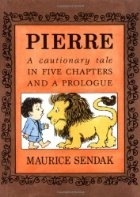
Maurice Sendak’s Pierre

Maurice Sendak, Pierre (HarperCollins 1962)

20140309-072501.jpg I don’t generally blog about books I’ve re-read, but my blogging has been light-on recently as I’ve been reading mostly film scripts, which are exempt from my self-imposed task of writing about everything I read, so here’s a quick note on Maurice Sendak’s Pierre, which I re-read recently before wrapping it as a present.

Pierre: A cautionary tale in five chapters and a prologue was first published as a tiny book, cased with three others as The Nutshell Library. Our copies of those tiny books have long since disappeared after a huge amount of use and abuse. Besides Pierre, there are an alphabet book, Alligators All Around, a counting book, One Was Johnny, a book of the months, Chicken Soup with Rice. In case there’s anyone who doesn’t already know, Sendak was one of the 20th century’s greatest writers and illustrators for children, and though these books are in some ways very modest, absolutely obedient to the rules of their genres, each of them is a masterpiece. I have read them all aloud many many times to small co-readers and still love hem.

But Pierre has a special place. I think I first heard of it when my older brother took his eleven year old son on his knee and said,

Good morning, darling boy,
You are my only joy.

And when his son said, shockingly, ‘I don’t care,’ they both laughed.

And that’s the set-up: Pierre’s refrain is ‘I don’t care!’ Because it’s billed as a cautionary tale, the punitive saying ‘Don’t care was made to care’ can’t be far from an adult reader’s mind, as in the cautionary tales of Hilaire Belloc. For those who have so far been spared the delicious horrors of Belloc, let me mention ‘Jim, who ran away from his nurse and was eaten by a lion’. The title tells the whole story really – and then there’s this (punctuated as in the original):

His Mother, as She dried her eyes,
Said, ‘Well – it gives me no surprise,
He would not do as he was told!’
His Father, who was self-controlled,
Bade all the children round attend
To James’s miserable end,
And always keep a-hold of Nurse
For fear of finding something worse.

As a child I enjoyed Belloc’s tales of appalling retribution, confident that my own parents could never be that callous. And I enjoyed Roald Dahl’s even more gruesome variants when I read them to my children. But Sendak pushes the form beyond lip-smacking crime and punishment. Like Jim, Pierre is eaten by a lion as a direct consequence of his naughtiness. But whereas the father imagined by Catholic Belloc goes on to moralise, the Jewish Sendak’s parents, realising that their son is inside the lion, spring into action:

They rushed the lion into town.
The doctor shook him up and down
and when the lion gave a roar
Pierre fell out upon the floor.
He rubbed his eyes and scratched his head
and laughed because he wasn’t dead.

I may be idiotic, but that last couplet never fails to fill me with joy.

There’s a nice discussion of the whole Nutshell Library on the We Read It Like This blog, where there’s also an excellent reading.

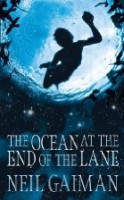
Neil Gaiman’s Ocean at the End of the Lane

Neil Gaiman, The Ocean at the End of the Lane (Headline 2013)

1472200322 Neil Gaiman is a rock star among writers. He’s a brilliant user of social media, a generous participant in readings and signings, a glamorously nerdy co-star with his wife Amanda Palmer (whose ‘Vegemite (the Black Death)‘ he has described as the only love song she’s written for him). He reads with a sinister intonation that reminds one of Hammer horror movies. He has written brilliant comic books, most notably the Sandman epic, and his children’s books (Coraline, The Day I Swapped My Dad for Two Goldfish, The Wolves in the Walls, The Graveyard Book) tend to become instant classics. He has written screenplays for a handful of movies and for episodes of Doctor Who. The wonderfully creepy Coraline has been made into a successfully creepy animated movie, and his novel for grown-ups American Gods is on its way to becoming a TV series.

Gaiman fandom is such a phenomenon that shortly after the publication of The Ocean at the End of the Lane a lane in his native Portsmouth had its name changed to ‘The Ocean at the End of the’ Lane. The Internet has a photo of Neil (as he’s known to his fans) unveiling the sign, looking chuffed

On top of all that, the book is excellent. It’s a fantasy tale of a small boy who tangles with a vast amorphous monster and stops it from destroying the universe, with the help of three mysterious women who live in the house at the end of the lane, right next to the pond that the youngest of them – actually an eleven year old girl rather than a woman, though she has been around for millennia – insists is really an ocean. There’s a strong sense, as in many of his books, of childhood as a time of huge moral and other challenges, when the stakes are very high and the possibilities for wonder are endless. The protagonist is six years old but it’s not a children’s book: all but the most committed young readers are likely to be deterred by the elliptical writing in the first few pages, in which the narrator, having just attended his father’s funeral, is drawn by a vague nostalgic impulse to drive down the lane near his childhood home. It looks to me like an excellent way out of the dilemma faced by people who write books for adults as well as children: how to signal clearly enough to prospective readers whether they are going to be happy in a given book.

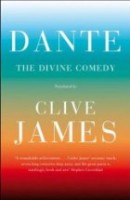
Clive’s Dante’s Hell

Dante Alighieri, The Divine Comedy, Book One: Hell, translated by Clive James (Picador 2013)

1447244214My rudimentary Italian isn’t up to reading the Divine Comedy in the original. I have started out on a couple of translations, Dorothy Sayers’ being the one I remember, but each time after a couple of pages it started to feel pointless: I mean, he’s in a wood, when a leopard blocks his path, or maybe it’s a wolf, a lion and a leopard, and the evening star rises, then Virgil appears – as they say on the Internet, WTF! Apart from my ignorance of 13th Century Italian terms of reference, it was clear the prose translations were missing something crucial. I haven’t had any more joy with verse translations, in spite of having been fascinated by terza rima, the Divine Comedy‘s verse form, since I read John Manifold’s ‘The Tomb of Lt John Learmonth, AIF’ as a teenager. So it’s no small thing when I say that Clive James’s version, in rhyming quatrains, is readable. The narrative hums along, the action is mostly clear, and even some of the references are glossed (that leopard, for example, seems much less arbitrary thanks to a little parenthesis: ‘was this the leopard, Lechery?’).

One other thing helped me approach the book as something other than an exhibit in the Travelling Museum of Great Literature. I’d heard the late Peter Porter in one of his turbo-charged radio conversations with Clive James describe Dante’s Inferno as repellent because of its mean-spirited punitiveness. ‘Oh,’ I thought, ‘so I don’t have to read it on bended knee.’ That and the romantic circumstances of the translation: Clive James’s wife is a leading Dante scholar; he has terminal cancer and they are estranged; it’s hard not to see this huge labour as a deathbed love offering.

So, the book itself? Dante is having a midlife crisis when the Roman poet Virgil appears and takes him on a tour of the mediaeval Christian afterlife (for reasons that remain obscure to me, but that’s just quibbling). The tour takes 100 cantos, of which the set-up takes one and Hell, Purgatory and Heaven in that order take 33 each. I intend to read the whole work, but I expect I’ll have different responses to each of the books, so Hell has its own blog entry.

As I said, the narrative hums along, with so much ingenious, graphically-described hideous suffering it’s surprising a video game hasn’t been made of it. There are lots of allusions, to Classical mythology, to the politics of Dante’s time and place, to Italian history, to Arthurian legend, to scandals in the Papacy. No doubt if you knew your Guelphs from your Ghibellines and your Boniface from your Celestine you’d get more out of the poem than I did, and I can see how someone could devote their professional life to studying it. But for instance, I’ve read Virgil’s epic, the Aeneid, and know that Dante’s journey into hell refers to the section where Aeneas, like Odysseus in the Odyssey, visits the Underworld and has the shades of the dead speak to him. But knowing this doesn’t make all that much difference to how the story works.

Deeper levels of meaning resonate, of course. I dare to disagree with Peter Porter. Rather than being mean-spirited and punitive, I read Dante as challenging the orthodox doctrine of eternal damnation: over and again, his character feels pity for the suffering souls he encounters, which creates an undertow of implication that God is less compassionate than humans. I have no idea of course if such a challenge was in Dante’s mind, but there’s definitely a tension between an emerging humanist sensibility and a mediaeval doctrinal view. The mixture of classical and Christian references is another marker of that tension.

Less portentously, there’s a strong element of crowd-pleasing satire. Public figures who lied or murdered or allowed evil to triumph by standing by and doing nothing are all punished in gruesomely appropriate ways (and forget what I just said about compassion). Splitters are split; muckrakers drown permanently in muck; and so on. The idea of eternal damnation may be abhorrent to a modern sensibility – I remember fondly the Marist Brother who said to us in 1969, ‘I believe in hell because it is a dogma of the church, but I don’t have to believe that any human has ever been sent there by a merciful God’. Even in my traditional Catholic childhood we were told that none of us could know if any individual had been damned: even Judas may have repented as the rope tightened around his neck. But as I read Dante via James, atavistic vengeful impulses surfaced: I wondered what punishment should be meted out to those Labor Party MPs who undermined Julia Gillard’s Prime Ministership and so gave the government of Australia to the current ruthless gang, and I wondered about the immortal souls of ostentatiously Christian political leaders who equivocate and plunder and gloss over deaths that happen on their watch. Satirists these days can do little more than mock and reproach: Dante could threaten the objects of his rage with eternal suffering.

Now, having passed through the knot at the centre of the earth and climbed back up to see the stars again, it’s time to move on. I’ll write again after Purgatory

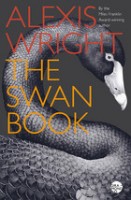
Alexis Wright’s Swan Book

Alexis Wright, The Swan Book (Giramondo 2013)
1sbA friend of mine, an activist whom I admire hugely, says that when he can’t sleep at night he generally does one of three things: he plays a computer game, reads a novel, or does some work. None of the three is satisfactory, he says, but at least if he does work, then his sleeplessness has been productive. If he spends an hour or two doing either of the others, nothing has changed at the end of that time.

I’m fairly sure that when he speaks so lightly of novels he’s not thinking of The Swan Book or books like it (if there are any). It would be hard to read this book and not feel that something had changed.

As my blogging time is severely limited these days, I give you a heroic attempt at describing the set-up, lifted from an impeccable source – thanks, Will:

Wright’s opening chapter chronicles a post-apocalyptic world where climate change has sent everything mad, where people have been driven from their homelands, forced to seek refuge without knowing a destination, carrying along with them, as they mass upon the oceans seeking a new home, the history of the world’s cultures. That history becomes layered and overlapped, interpenetrating, elements commingled. Wagner jostles the Bible in a radioactive landscape of water and ice, monkeys and swans. Aunty Bella Donna of the Champions, leading this exodus from a drowned world, comes to Australia.

There is a marshy swamp, where she settles, in and amidst the rusted hulls of naval vessels cast up to rot in Army-run camps of an intervention, under a sky filled with swans, sometimes. Sometimes, instead, there are helicopters shining searchlights onto the jetsam of Aboriginal people confined there. There, Aunty Bella Donna takes under her wing the girl Oblivia. Oblivion Ethylene, to credit her fully, is a sly spry spink spank sprint of a thing (a characterization I’ve taken not from Wright, but from Finnegans Wake) pulled out from the depths of a eucalyptus tree where she hid after being raped by a pack of petrol sniffers.

That, as Will goes on to say, is just the beginning. There’s the Harbour Master, who is probably Aboriginal and may or may not be a ghost for most of the book, along with his well-dressed monkey. And there’s Warren Finch, a kind of Aboriginal Barack Obama cranked up to eleven, and brolgas, and owls, and rats, and a weird building full of fountains and cats. Oblivia becomes the First Lady of whatnot, she becomes the swan lady, she takes part in a great exodus from a dying city (Sydney perhaps) across a land devastated by climate change.

The book doesn’t lend itself to a quick synopsis. It moves like a dream: the identities of places, people and other living things are unstable. For instance, Oblivia, who has married Warren Finch, sees herself on television accompanying him on state occasions. Since we know, or think we know, that she hasn’t left the house where he dumped her immediately after the wedding, we assume she is seeing an imposter, or perhaps a robotic creation of some kind – it is after all the future. But Oblivia doesn’t share that assumption: as far as she is concerned she must have been there. Are we to read this as Oblivia having a tenuous grasp on reality? Perhaps. Or perhaps we’re the ones who don’t understand how this world works. The narrator doesn’t really care one way or another.

The narrative voice is merciless to the reader’s desire for certainty. In other ways, too, it’s constantly unsettling. As a recovering proofreader, I bristled at a couple of glaring errors: someone etched out a living, graffiti was sprawled on a rusted keel. But by the time I came to a character reigning in an impulse, I realised that in all likelihood the author had staved off any editorial intervention: these occasional errors, along with the frequent grammatical slippages, mangled cliches and apparently random quotes featuring swans, aren’t a bug, but a feature. Likewise the occasional impossibility, such as the tiny Oblivia picking up an adult swan and carrying it some distance tucked under one arm. The reader isn’t so much being told a story as being drawn into a vast dream. And dreams don’t care about proofreading or footnotes or logical consistency.

It’s an almost incredibly rich book. There’s satire (‘closing the gap’ is still a slogan, but its meaning has changed to sinister effect),  astute observation (the scene where Oblivia meets a white family is a deeply uncomfortable lesson about cultural sensitivity), erudition (lots of science and history to do with black and white swans), science fiction (a grim dystopian future), and at its heart a devastating non-love story.

awwbadge_2014The Swan Book is the third book I’ve read as part of the 2014 Australian Women Writers Challenge.

Dorothy Porter’s Bee Hut

Dorothy Porter, The Bee Hut (Black Inc 2009)

1863954465

I found it hard when reading this book to separate the poetry out from the circumstances in which it was written, but I don’t think that’s necessarily a bad thing. The doctrine that the author’s biography is irrelevant to an understanding of her work may be useful in the classroom but not so much anywhere else.

Most of the poems collected here were written when Dorothy Porter was dealing with cancer – diagnosis, surgery, chemotherapy, remission, recurrence and the expectation of imminent death. The poetry is permeated by a sense of mortality and – as with the last poems of Dorothy Hewett and any number of other poets – the knowledge of the real-life situation adds tremendous poignancy for the reader.

Some of the poems address the cancer story directly – as in ‘The Ninth Hour’ (‘it’s your shriveling / flesh / that has the whip hand’), or ‘Not the Same’ (‘When you climb / out a black well / you are not the same’), or ‘View from 437’, written days before her death (‘Something in me / despite everything / can’t believe my luck’). Others, possibly most of the poems in the book, might otherwise seem elegant meditations or slender lyrics, but in this context read as heroic moments of facing reality. I particularly like ‘Numbers’, otherwise a slight, self-derogatory reflection, for the way it is transformed by knowledge of the circumstances of its creation:

I get magic
 sometimes I get more
 than I bargain for

but I don't get
 numbers.

Numbers do worse
 than humiliate
 or elude me

they don't add up.

I am no algebra tart
 ravished
 by the meretricious music
 of the spheres.

My eyes and nose
 never streamed
 with incontinent ecstasy
 through geometry classes
 as my disastrous triangles
 collapsed in a cacophony
 around me.

Perhaps it's a failing
 to grasp
 or even want
 the utterly perfect number
 burning through my retina
 like the utterly perfect morning.

Instead I peer
 with nauseating vertigo
 into the deep dark pitch
 of numbers
 like an exhausted mammoth
 dangerously tottering
 on the edge
 of a bottomless mystery.

I may be playing a version of that game where you add ‘in bed’ to the quotes on a desk calendar, and almost without exception the quotes still make sense, usually quite a different sense from the original. But is it too far-fetched to read ‘Numbers’ as responding obliquely to all the calculation of percentages and probabilities that accompanies cancer diagnosis and treatment? Or is it just that, as I’m sure someone has said, all true art deals with mortality?

This isn’t a gloomy or single-minded book. There are traveller’s tales, some of them recalling moments from the poet’s variously brash, optimistic and judgmental youth; love poems; lyrics commissioned for performance; responses to other poets, including Byron, Blake, Bruce Beaver, Baudelaire, some that don’t start with B, and a possibly ironic lament for not having read enough Rimbaud (or more accurately not having read Rimbaud enough); and more.

My previous acquaintance with Dorothy Porter’s work has been through the forgettable movie made from her verse novel The Monkey’s Paw, and her verse novel What a Piece of Work, which I hated for its vilely misogynistic Francis Webb figure. I’m glad I decided to have another go at reading her work.

awwbadge_2014

The Bee Hut is the second book I’ve read as part of the 2014 Australian Women Writers Challenge. (Evidently I was one of the two most prolific reviewers of poetry for last year’s challenge. I confess to feeling like a fraud, since a number of the poetry books I reviewed had fewer than 20 pages.)

Blogging from New Caledonia 3

The heavy rain we were staring out last time I wrote was part of something that could have turned into a cyclone. The whole of southern New Caledonia was on orange alert on Tuesday and Wednesday, which meant we were advised to stay under shelter and batten down any available hatches, even though in the still of the night we could see stars. Cyclone Edna didn’t materialise, so we got up early this morning and cleaned our borrowed residence thoroughly, hoping that the proposed trip to the Rivière Bleue park would be on. But the park was closed anyhow, so no trip.

We went to town, bought some little gifts, visited the bookshop to buy some more, made an attempt to go to the Maritime Museum but decided we were happy just strolling by the water. We caught the bus home, then a shuttle out here to spend the night at the Tontoutel Hotel, just across the road from the Tontouta airport, ready for an early departure tomorrow. For the record, the hotel is quite pleasant, a little down at heel perhaps, like an old country hotel in New South Wales, but nowhere near as dire as some indignant TripAdviser reviews would make out. The swimming pool is dry, but the air is full of birdsong, the outdoor chairs are comfortable, the reggae from the bar is unobtrusive, passing children call out ‘Bonjour!’ What do people want?

Despite our plans and attempts to get out of Nouméa having generally come to nothing, we’ve had a good holiday here, spending time in a place where English isn’t the dominant language, where a very large minority of the people are not white, where the trees play a game of ‘Am I what you think I am?’ We’ve had time to read and chat and (me) blog and (the Art Student) paint and draw. We’ve met some lovely people and had our sense of the world expanded.

There have been small moments of drama. On our first night, at the tourist beach of Anse Vata, as we were passing the taxi-hire hut, we heard a dog yelping and a man shouting in French, then some thuds. On the other side of a bamboo fence, we saw a white man kick a dog repeatedly, hard, then pick it up by the scruff of the neck. At this stage we saw the dog – a black Labrador, yelping in great distress. That all took just a few seconds, and the man and the dog were both gone, leaving us and two Melanesian men as the stunned witnesses. We had been planning to hire a water taxi the next day to see the open-air sculpture exhibition on the nearby Ile aux Canards, but there was no way we would give our custom to that establishment, whatever crime the dog had committed. (Alas, the exhibition was over by the time we realised there was another water-taxi hire place a little to the north.) That was our only glimpse of the dark thread of violence that I suppose is inevitable in colonial/postcolonial societies. Other dogs, I should note, seemed happy and pampered, and even an alarmingly diseased looking creature we met on the road out here in la brousse seemed curious rather than frightened or aggressive.

The other small drama was much more benign. At the Baie des Citrons yesterday afternoon, some women were exclaiming and laughing loudly as we strolled past. A beautiful striped sea snake was in the grass near them, and a big, competent-looking man was making moves to deal with it. These snakes are shy, but their venom is very poisonous, so there was good reason to pay attention, though no one was really freaking out. It was a young woman who saved the day by finding a branch long enough to pick the snake up and hold it at a safe, non-striking distance. This is just what she did, before handing the branch to the man, who then flung the snake the 10 metres or so into the lagoon. We all watched in silence for a few moments until the snake, which had been limp until then, began to swim languidly away from the beach.

One final note: apart from being out of the country when Jennifer Maiden won the Victorian Premier’s Literature Prize, we’ve also been away when a Preatures video directed by our firstborn son won Rolling Stone’s 2013 music video of the year. The report on the awards is here. There are only two photos at that URL, and he who is known as the Film Director on this blog is in the lower one: he’s the chap on the end looking very happy and every inch not a rock star. We’re the absolute cliché of proud parents. You can watch the video on YouTube.