Category Archives: Vicarious vainglory

Edwina Shaw’s Dear Madman

Edwina Shaw, Dear Madman (AndAlso Press 2026)
Revisionist exploration of family lore is a rich vein of story telling. As one of many examples, Tasma Walton’s novel I Am Nannertgarrook grew from that kind of impulse, and it’s part of the truth-telling project that stems from the Uluru Statement from the Heart. Dear Madman doesn’t deal with First Nations issues, but it is a gripping addition to the genre, and it also deals in truth-telling.

Edwina Shaw’s great-aunt, her maternal grandmother’s sister, was murdered as a small child. The murder was part of family lore, a historic family tragedy, a scary tale told to children by a loving grandmother. The book is part memoir – how the story featured in the lives of Edwina and her family, and how she scoured newspaper accounts, prison records, the murderer’s mental health files and more, to find a fuller story. And it’s part novel: alternating chapters take us into the life of the early 20th century family and, most grippingly, into the murderer’s mind.

Edwina is my niece, and I have been privileged to see the book in a number of drafts, so I should leave it to others to discuss it in detail. I’ll just say that it’s a white-knuckle tale of suspense and a marvellous achievement of empathy. It’s a family history, a True Crime essay, a horror story, a dark and violent version of A B Facey’s A Fortunate Life, a hard but rewarding read.

Page 79* is in one of the sections where the author speaks about her task:
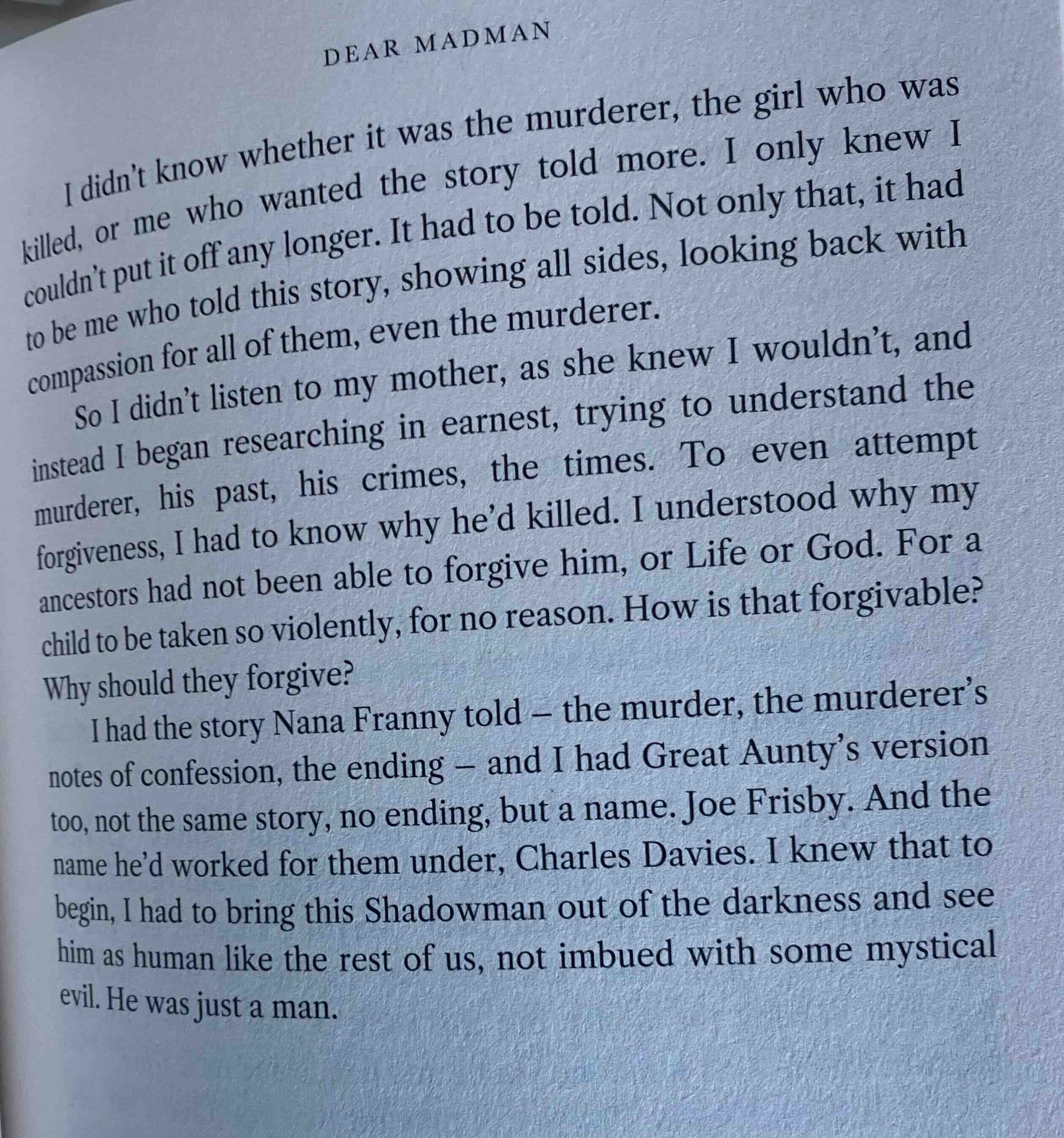
I didn’t know whether it was the murderer, the girl who was killed, or me who wanted the story told more. I only knew I couldn’t put it off any longer. It had to be told. Not only that, it had to be me who told this story, showing all sides, looking back with compassion for all of them, even the murderer.
… I began researching in earnest, trying to understand the murderer, his past, his crimes, the times. To even attempt forgiveness, I had to know why he’d killed. I understood why my ancestors had not been able to forgive him, or Life or God. For a child to be taken so violently, for no reason. How is that forgivable?
Why should they forgive?
I had the story Nana Franny told – the murder, the murderer’s notes of confession, the ending – and I had Great Aunty’s version too, not the same story, no ending, but a name. Joe Frisby. And the name he’d worked for them under, Charles Davies. I knew that to begin, I had to bring this Shadowman out of the darkness and see him as human like the rest of us, not imbued with some mystical evil. He was just a man.

It’s rare that a book includes such a neat statement of its goals. Maybe it’s an underlying goal of all good story telling – to have compassion for all one’s characters. And maybe the extent to which that’s achieved is a test of all serious story telling. I think this book does it in spades.

Without being too spoilerish: the cover image is the photo of the murderer taken on his admission to Goodna Mental Asylum ten years after the murder, which Edwina found very late in the research process, after reading about him, having conversations with him on car journeys, meeting some of his descendants, and imagining her way into his mind. In some ways, the appearance of this photo is the moment in the book when he becomes ‘just a man’. Here’s Edwina’s description of it:

Joe’s forehead is deeply creased, and his moustache, huge and grey, is hiding his lips. Above the collar of his rough cotton uniform, you can make out the scar across his neck from where he slit his own throat, but there’s also a softness about the image that makes him look like an old Labrador. His eyes, dark and bright and mad, are looking up with hope as if he’s glimpsing God. He seems happy to me, though others don’t see it.
I propped up his photo as I wrote on, but when it came to the murder scene, I had to turn the picture face down.

I’m one proud uncle (on the murderless paternal side).


I am an Australian man of settler heritage. I’ve written this blog post on the land of Gadigal and Wangal of the Eora Nation. I acknowledge Elders past and present of those clans, and welcome any First Nations readers and commenters.


My blogging practice is to focus on the page that coincides with my age, currently 79.
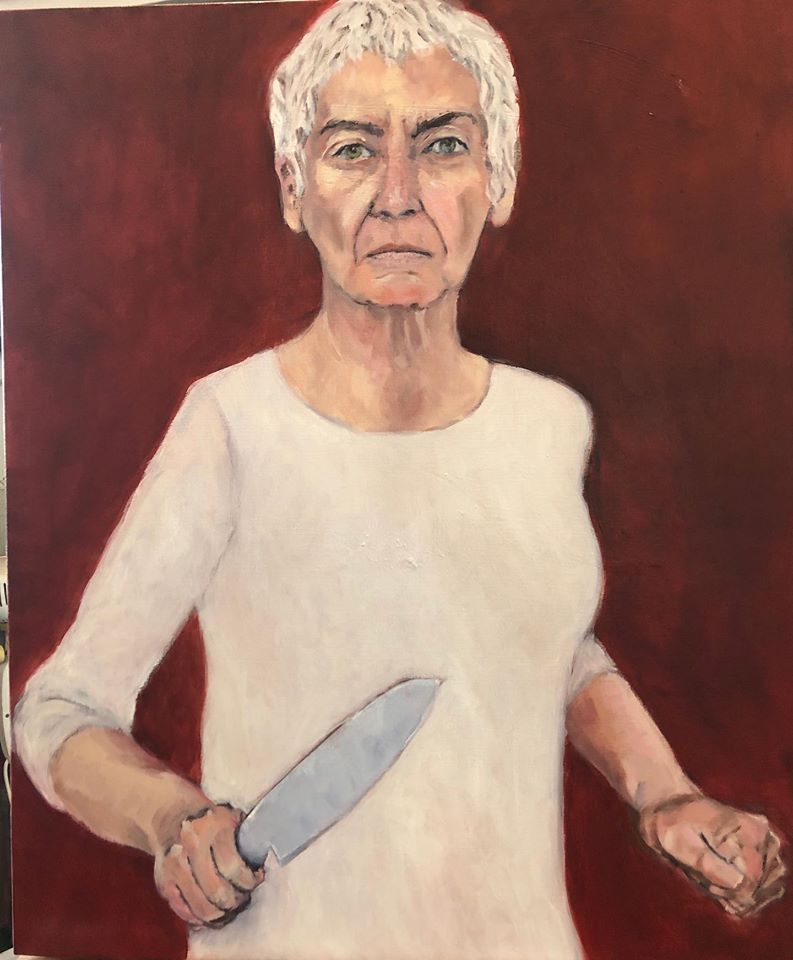
November verse 3: Woman with knife

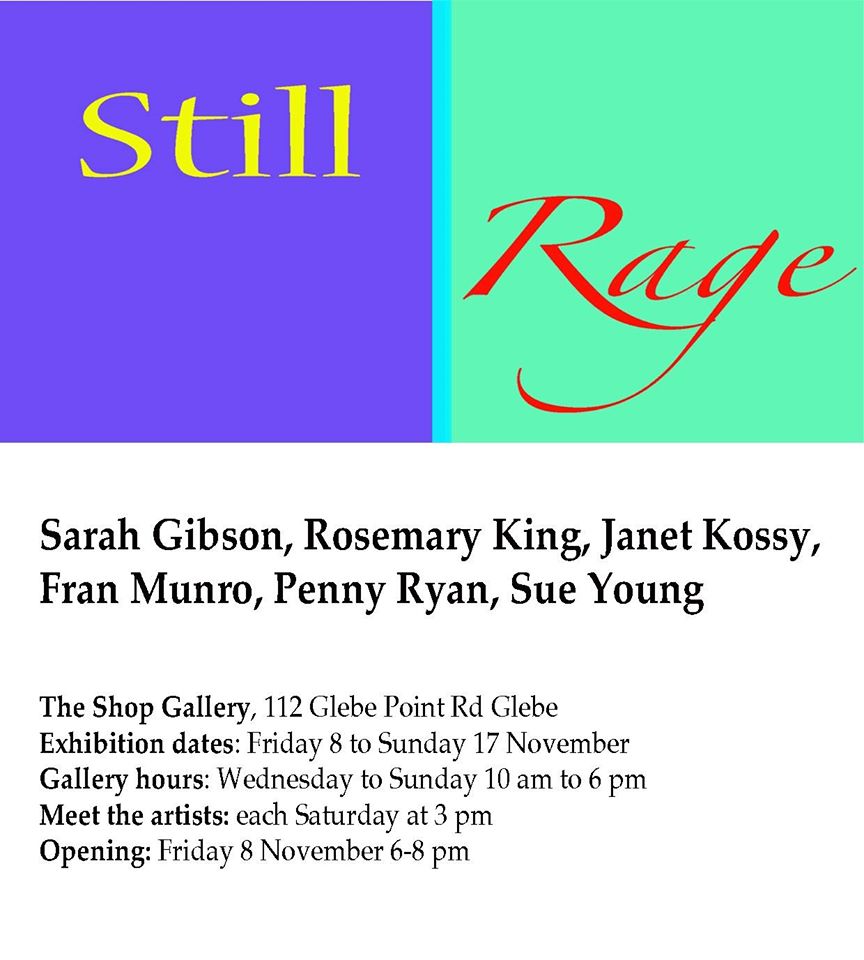
The Emerging Artist and five others have a terrific exhibition currently at The Shop Gallery in Glebe.

There are raging female monsters, exquisite still lives, images of brightly wrapped babies, orthodox Jews and patriots, a beatific Greta Thunberg, a powerful portrait of a Wiradjuri woman, ceramic cotton-reel pendants with unsettling inscriptions, and three images of a woman with a knife, including this one:

November verse 3: Woman with Knife – Red
She's got a knife and she will use it
if she must. Not so much rage
as weariness has made her lose it.
No choice but to turn the page
on compromise, compliance, meekness,
millennia of other-cheekness.
Her right hand's ready for the fight.
Her left holds hidden treasure tight.
No harpy, lamia, sphinx or gorgon,
no trained assassin, hired gun,
or martial artist out for fun:
a new sound blast, a whole new organ
shakes the floor. How good's that frown?
Good enough to bring you down.

Open Hearts in Chippendale

The winner of the fourth annual Chippendale New World Art Prize will be announced tomorrow night at the opening of the exhibition of the 41 finalists (thumbnails here). And I’m telling you this because the Emerging Artist is one of the finalists.

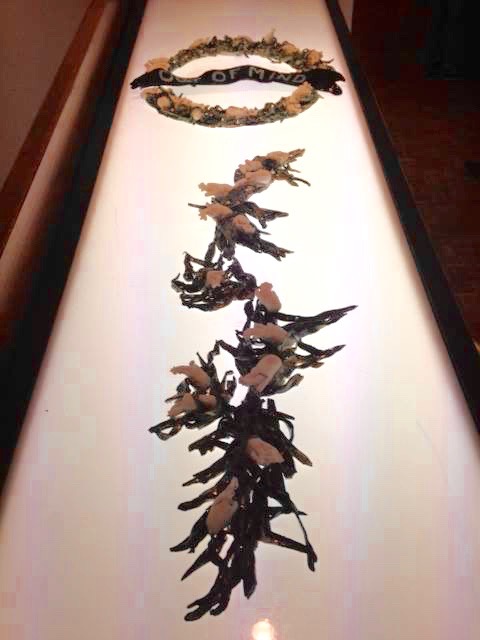
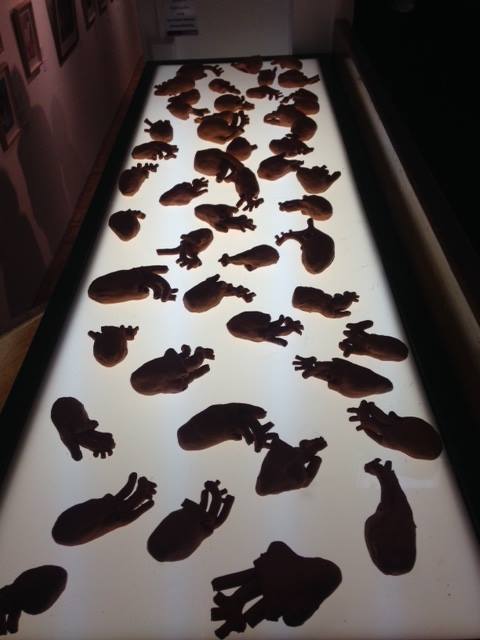
Her work, Open Hearts, is the first big day out for her Confined Hearts project (see Squarespace or facebook), in which she is working with a wide variety of people – from Rohingya asylum seekers to a retired children’s magazine editor – to make 1468 ceramic models of the human heart, one for each person in detention on Manus Island or Nauru. As she says, it’s an open question whether the hearts represent the detainees or us.

A small selection of the hearts was part of the recent Life Lines exhibition in the Chrissie Cotter Gallery in Camperdown, looking much better than in these snaps:

wreath  cchearts


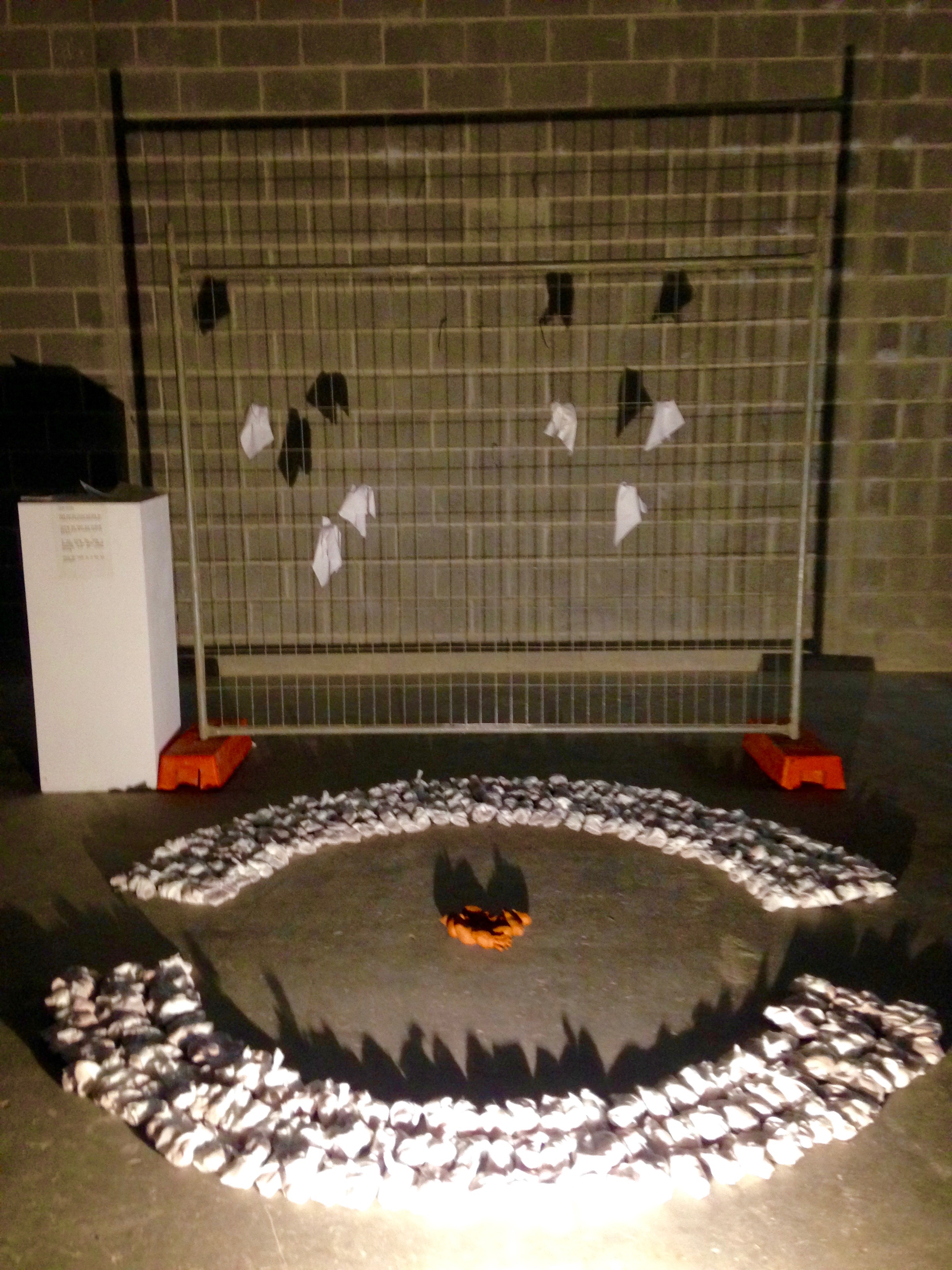
In the Chippendale outing, hundreds of the hearts lie in a hollow circle on the floor in front of a cyclone fence, wrapped in little muslin shrouds. Visitors are invited to step into the circle, unwrap a heart and place it in the centre of the circle, then place the white cloth in the fence. Writing a message on the cloth is optional – some of the hearts have been inscribed by their makers.

It was installed this morning. Here’s a sneak preview.

openhearts

The exhibition is on until early July in Kensington Street, Chippendale.

November Rhyme #13

OK, this is a fridge door poem I made earlier, but since the object it describes is once again being exhibited I’m passing it off as done today

as+for+living+II+web

As for Living III, by Penny Ryan. Photo by Kate Scott

Rhyme # 13: Piece in an exhibition
A broken ribcage from some broken
evolutionary line?
But these  aren’t bones – too glibly spoken!
That’s no knotted ridge of spine.
This work displayed in art school stairway
is not by some apprentice Yahweh,
nor did the wondrous Burgess Shale
a woven life like this unveil.
And yet it speaks of some great sorrow,
something beautiful that’s lost,
A world bereft, left with a ghost.
Perhaps a warning for tomorrow
unless we act, lives we hold dear
will be as if they never were.

Hidden glory

I’m just back from the opening of the HIDDEN Sculpture Walk in Rookwood, Australia’s oldest, biggest and most culturally diverse cemetery, also the one with a sculpture exhibition showing from  sunrise to sunset from tomorrow, Friday 18 September to Sunday 18 October. Entry is free.

As I mentioned last week, the Emerging Artist is in the exhibition, and today when the prizes were announced,  she was one of the three commended works. (There are also three highly commended works, plus two that shared the $10,000 prize. Both the Emerging Artist and I were too thrilled to make  dependable notes on what the other 7 works were, but I expect they’ll be listed on the Hidden website soon.

Heavy rain was forecast today, but the weather for the opening was cool, dry and very bright. Here’s yet another picture of the work and the artist:

IMG_1390

Coming Soon

If you live in Sydney, you ought to know about two fabulous things coming soon.

1.
HIDDEN: Rookwood Cemetery, from sunrise to sunset
Friday 18 September to Sunday 18 October
ENTRY IS FREE!

The Hidden website says it well:

Hidden is an outdoor sculpture exhibition that takes place amongst the gardens and graves in one of the oldest sections of [Rookwood] Cemetery. The exhibition invites artists to ponder the notion of history, culture, remembrance and love and allows audiences to witness creative expression hidden throughout Australia’s largest and most historic cemetery.

This is Hidden’s seventh year. I’ve been in previous years, and there’s something  marvellous about the sculptures placed among the tombstones. (It’s in an older part of the cemetery – no one will see the grave of someone who died recently being visited by an antic Don Quixote or a bright perspex rainbow.)

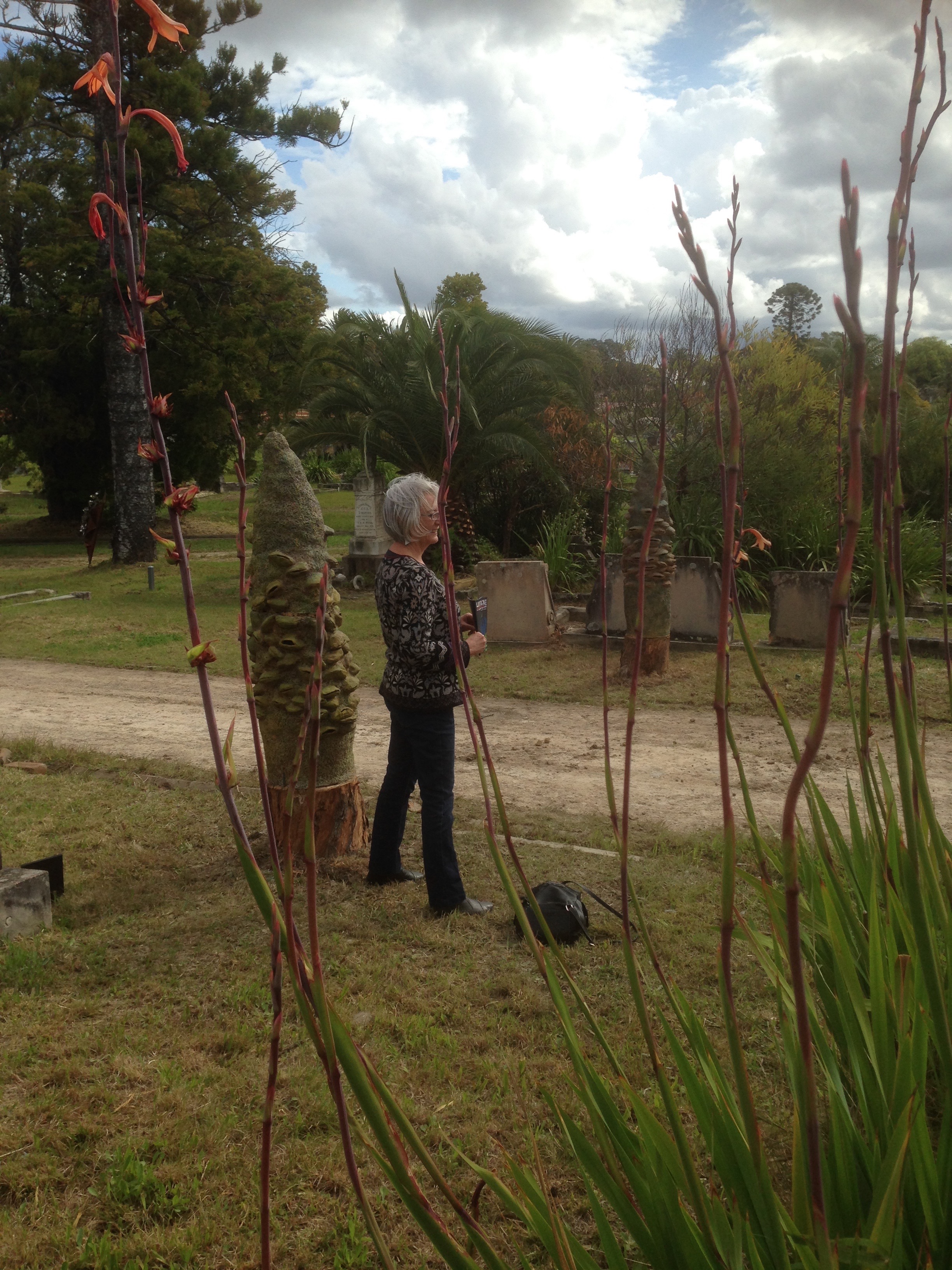
This year the Emerging Artist formerly known as the Art Student is part of the exhibition. Her piece, Bush Memorial, comprises two giant ceramic banksia seeds. Yesterday we installed it.

This slideshow requires JavaScript.

2.
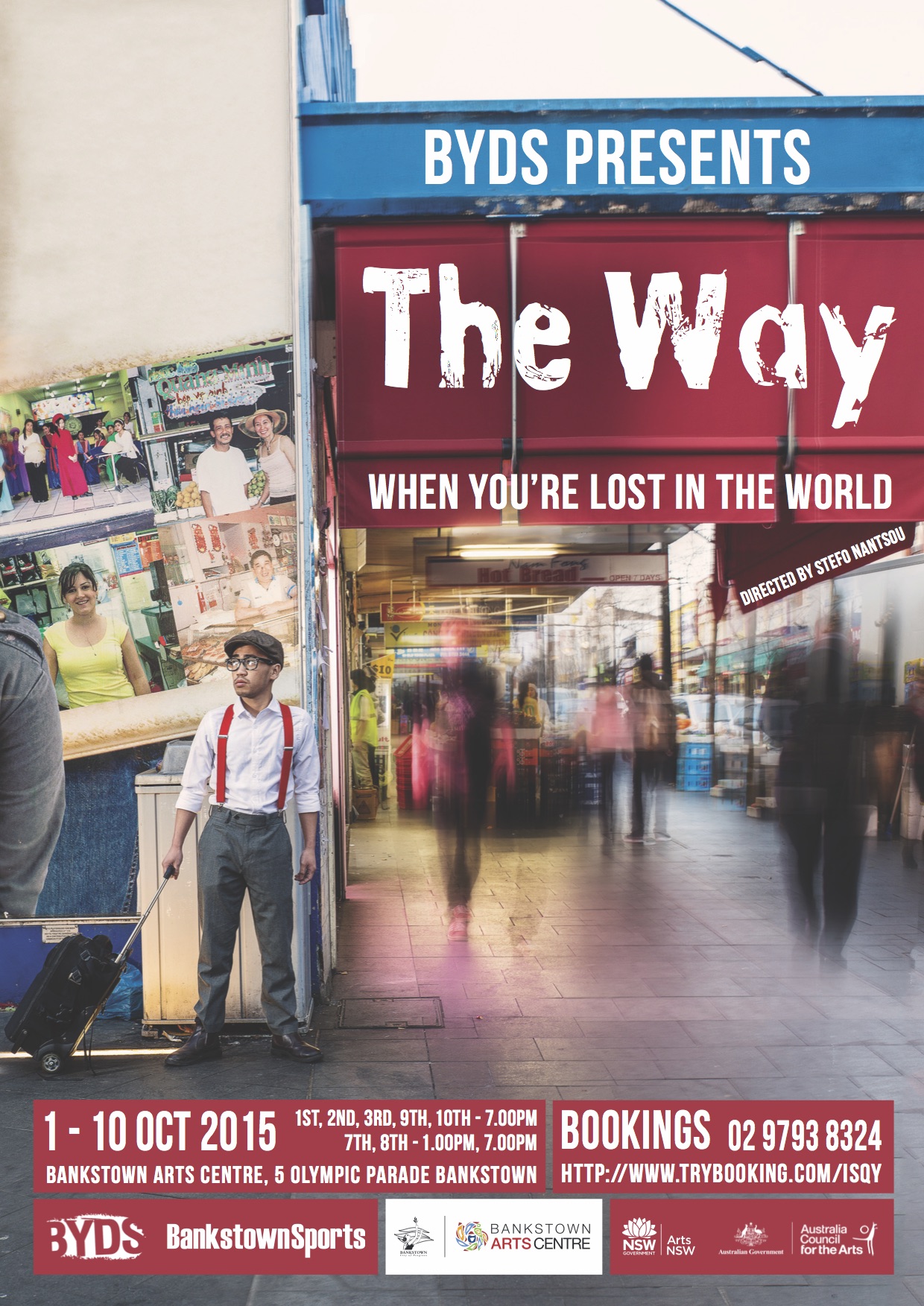
THE WAY: Bankstown Arts Centre, 1-10 October. (It’s not free but it’s unbelievably cheap)

The WayThis is the third play in a trilogy that has grown out of a collaboration between BYDS (Bankstown Youth Development Service) and the Sydney Theatre Company.  I saw the second play, The Other Way, in 2013. The collaboration of professional actors with local community members, led by actor/ writer/ director/ musician Stefo Nantsou, produced a brilliant evening of theatre. Here’s a bit from my blogging about it:

This isn’t professional/industrial theatre, where success is judged by the length of the run and size of box office takings. It’s community, where the division between audience and performers is porous, where there’s an intimate sense that people are telling their own stories and those of their neighbours.
There’s a wonderful scene where a group of boys are teasing/harassing a group of girls, who are giving back as good as they get. In the middle of the chiacking and posturing one of the girls looks one of the boys full in the face and says, ‘Hello!’ and the group falls silent. The whole thing falls apart, moves onto a different plane. Sure, it was scripted and stylised, but it felt like it was really happening right then and there.

I gather that The Way has a similar structure to its predecessors: over a single day in Bankstown, storylines intersect as people from diverse backgrounds experience their multitudinous joys and crises. I’m looking forward to it.

The Other Way was evidently seen by a relatively small total audience over its short run. The Way has eight scheduled performances. If you live in Sydney I recommend that you put it in your diary and book seats soon. You can read more about it here. Bookings: 02 9793 8324 or http://www.trybooking.com/isqy

The Preatures: Ordinary

Just a quick note to draw your attention tho this video of the Preatures on tour in the USA – video made by a close relative of mine, and interestingly for a music video you can see quite a bit of the band’s relationship with the person behind the camera:

Ngurrumbang update and some very old news

It can now be revealed that Melburnians will have a chance to see Ngurrumbang on their home turf in May. No need this time to travel to Sydney, Brisbane, Adelaide or central Spain, just head off to the Australian Shorts session of the Human Rights Arts and Film Festival at the Australian Centre for the Moving Image 7.30 pm on 9 May.  The whole program looks fabulous. (Sadly, that set of films won’t be part of the Festival as it travels around the country in the next three months.)

And other news: I was interviewed yesterday for a project about resistance to conscription at the time of the Vietnam War. Gulliver Media’s Hell No! We Won’t Go, which may one day become a film, is shaping up at present as a collection of interviews with draft resisters and conscientious objectors. I was a conscientious objector and happy to delve into memory as part of this project to preserve part of our history that is threatened with occlusion.

I also delved into a diary that I kept at the time (my CO hearing was either late 1970 or early 1971), which prompts me to offer the following unsolicited advice to anyone in their early 20s who is keeping a diary: no one, including yourself, is going to be interested in your half-baked witticisms and introspective anxieties in 40 years time; what they’ll want is NAMES, and DATES, and PLACES.

While finding very little to help my recollections of the court case, and shrivelling with embarrassment at the angst and pomposity of 23-year-old me (which makes me look even more kindly on Lena Dunham’s Girls),  I did find one or two entertaining snippets. On Les Murray:

I met Les Murray at Dianne’s party last Saturday night, a man who is not shy about quoting from his own someday-to-be-written ‘Table Talk’. Among other things he said wh I found interesting: ‘There is no Tao for stumbling in the dark. If you had the Tao, you’d walk.’

On David Malouf, perhaps from conversation in the English Department common rooms, which I’d forgotten I ever shared with him:

Dave Malouf  ‘don’t think Polanski’s any good’, but when pressed likes all except Rosemary’s baby, on the grounds that it moves away from the class vision wh MUST be part of his Communist framed sensibility – and WILL NOT see Fearless V Ks.

Having recently read the script of Rosemary’s Baby, I think he was right about that. But I hope he relented and saw The Fearless Vampire Killers, which I hope is as funny as I remember.

Blogging from New Caledonia 3

The heavy rain we were staring out last time I wrote was part of something that could have turned into a cyclone. The whole of southern New Caledonia was on orange alert on Tuesday and Wednesday, which meant we were advised to stay under shelter and batten down any available hatches, even though in the still of the night we could see stars. Cyclone Edna didn’t materialise, so we got up early this morning and cleaned our borrowed residence thoroughly, hoping that the proposed trip to the Rivière Bleue park would be on. But the park was closed anyhow, so no trip.

We went to town, bought some little gifts, visited the bookshop to buy some more, made an attempt to go to the Maritime Museum but decided we were happy just strolling by the water. We caught the bus home, then a shuttle out here to spend the night at the Tontoutel Hotel, just across the road from the Tontouta airport, ready for an early departure tomorrow. For the record, the hotel is quite pleasant, a little down at heel perhaps, like an old country hotel in New South Wales, but nowhere near as dire as some indignant TripAdviser reviews would make out. The swimming pool is dry, but the air is full of birdsong, the outdoor chairs are comfortable, the reggae from the bar is unobtrusive, passing children call out ‘Bonjour!’ What do people want?

Despite our plans and attempts to get out of Nouméa having generally come to nothing, we’ve had a good holiday here, spending time in a place where English isn’t the dominant language, where a very large minority of the people are not white, where the trees play a game of ‘Am I what you think I am?’ We’ve had time to read and chat and (me) blog and (the Art Student) paint and draw. We’ve met some lovely people and had our sense of the world expanded.

There have been small moments of drama. On our first night, at the tourist beach of Anse Vata, as we were passing the taxi-hire hut, we heard a dog yelping and a man shouting in French, then some thuds. On the other side of a bamboo fence, we saw a white man kick a dog repeatedly, hard, then pick it up by the scruff of the neck. At this stage we saw the dog – a black Labrador, yelping in great distress. That all took just a few seconds, and the man and the dog were both gone, leaving us and two Melanesian men as the stunned witnesses. We had been planning to hire a water taxi the next day to see the open-air sculpture exhibition on the nearby Ile aux Canards, but there was no way we would give our custom to that establishment, whatever crime the dog had committed. (Alas, the exhibition was over by the time we realised there was another water-taxi hire place a little to the north.) That was our only glimpse of the dark thread of violence that I suppose is inevitable in colonial/postcolonial societies. Other dogs, I should note, seemed happy and pampered, and even an alarmingly diseased looking creature we met on the road out here in la brousse seemed curious rather than frightened or aggressive.

The other small drama was much more benign. At the Baie des Citrons yesterday afternoon, some women were exclaiming and laughing loudly as we strolled past. A beautiful striped sea snake was in the grass near them, and a big, competent-looking man was making moves to deal with it. These snakes are shy, but their venom is very poisonous, so there was good reason to pay attention, though no one was really freaking out. It was a young woman who saved the day by finding a branch long enough to pick the snake up and hold it at a safe, non-striking distance. This is just what she did, before handing the branch to the man, who then flung the snake the 10 metres or so into the lagoon. We all watched in silence for a few moments until the snake, which had been limp until then, began to swim languidly away from the beach.

One final note: apart from being out of the country when Jennifer Maiden won the Victorian Premier’s Literature Prize, we’ve also been away when a Preatures video directed by our firstborn son won Rolling Stone’s 2013 music video of the year. The report on the awards is here. There are only two photos at that URL, and he who is known as the Film Director on this blog is in the lower one: he’s the chap on the end looking very happy and every inch not a rock star. We’re the absolute cliché of proud parents. You can watch the video on YouTube.

Our movie at Flickerfest

Flickerfest, the festival of short films that is one of Sydney’s cultural institutions, is on again at the Bondi Pavilion in the middle of next month. I confess to having appreciated it from afar until now, but this year I plan to be there. My elder son, Alex Ryan, sometimes known in these pages as the Filmmaker, has not one but two films screening.

FlickerClips, a program of music videos screening at 4.30 on Saturday 18 January, includes his video of the Cairos’ ‘Obsession‘. Given that the competition includes Nash Edgerton’s clip for Dylan’s ‘Duquesne Whistle’ we’re pretty chuffed.

The festival includes seven programs of Australian shorts. Ngurrumbang which Alex directed from a script written by him and me, is screening in Best of Australian 7 at 4.30 on Saturday 18 January.

You can buy tickets at the links.