Franny and Zooey revisited (not reviewed)

J D Salinger, Franny and Zooey (1961, Bantam 1964)
Franny_and_Zooey ImageAccording to the little red notebook I kept at the time, I read Franny and Zooey in 1962, when I was 15. My eldest brother, Michael, who was then 24, introduced us younger ones to much that was sophisticated, including classical music (played loud ‘so you can hear it properly’), rock and roll (danced with a slack-jawed deadpan expression I’ve seen nowhere else), Mad magazine, Jules Feiffer, sick jokes (‘Mummy, why do I keep walking in circles?’ ‘Shut up or I’ll nail your other foot to the floor’), and J D Salinger. So where other people found in Holden Caulfield a mouthpiece for their own teenage alienation, I read him dutifully in the footsteps of my luminous big brother. I moved on to Franny and Zooey in a similar mode, and what I remember is mainly that I was very pleased with myself for having read such a sophisticated book. Kerryn Goldsworthy blogged recently about how significant Franny and Zooey was to her as a 16 year old. The one moment that I retained, revelatory to me in its own way, was in ‘Franny’. Lane has been going on about his brilliant seminar paper. He pauses for Franny’s response. She says:

‘You going to eat your olive, or what?’
Lane gave his Martini glass a brief glance, then looked back at Franny. ‘No,’ he said coldly. ‘You want it?’

I couldn’t have told you why, but I felt I’d been allowed into a great secret at that moment. I had no idea what Lane was talking about – Flaubert, ‘capital-F Freudian’, the mot juste were droppings from the inscrutable world of adult discourse. But I understood that Franny found his olive more interesting than his monologue, and that his coldness was full of unspeakable emotion. The door to understanding the adult world was creaking open for me.

When I read it just now, I realised that the book had been much more influential than I realised. Everything I wrote from the age of 16 to 30, at least when I was trying to appear intelligent, aspired to sound like Buddy Glass (‘Zooey”s narrator) – the complex syntax, the self-deprecating hi-falutinness, the over-use of words like ‘rather’, and so on. Though I’d forgotten it, Zooey’s tirade about the importance of not moulding Jesus to fit one’s own psychological needs ranked with Dostoevsky’s Grand Inquisitor (I read The Brothers Karamazov two years later) as a major outside perspective on my intensely held Catholic faith.

As I started ‘Zooey’ this time, I doubted whether I’d actually ever read it. maybe I’d listed it in my notebook as a bit of wishful thinking. But from the scene where Zooey sits in the bath and first reads a very long letter from his brother  and then has a very very long, snitchy conversation with his mother, through the conversations with Franny who is in the middle of a nervous breakdown, I was amazed at how intensely personal it felt. It’s not as if I remembered individual passages –more like I was reopening old neural pathways, as if the book hadn’t been remembered in a normal way but somehow stored at a cellular level. That is to say, I have no idea what I’d have made of it if I’d read it for the first time today.

It’s embarrassing. I’d thought all those people who talked about how Salinger’s work had changed their lives were, um, a bit phoney. Now I discover that if I’d kept closer – or perhaps smarter – track on myself, I would have been one of them.
My Book Group Is Illuminated

Jonathan Safran Foer, Everything Is Illuminated (2002, Penguin Australia 2008)

I read five pages of this when it was freshly published, and decided it was not for me. It’s rare for me to dismiss a book like that, so I dipped ahead reading a page here, a page there, and found absolutely nothing to change my mind. Then at the December meeting of my Book Group, a number of people were keen to put it on our agenda, and they won the day. So, eventually, I bought a cheap copy (all the libraries’ copies were out) and set to work. By the time the group met last night, I’d finished it, though I did skim the last 20 pages so I’d have time to cook the dinner. There are some very strong bits, as it turns out to be a story of a small Ukrainian village whose entire Jewish population was murdered by German soldiers, counterpointed by a ludic tale of the Jonathan Safran Foer’s forebears’ lives in that village.  I can see why the book received such acclaim, but pretty much the first half is taken up with ha-ha-I’m-being-funny humour and an awful lot of the shtetl story that felt contrived, inconsistent and disrespectful, like Isaaac Bashevis Singer off the rails; the thesaurus-driven voice of the Ukrainian Alex, who narrates the modern-day quest for the village, eventually toned down as it got to the point, but by that time I had endured too much that was weary, stale, flat and unprofitable. My moment-by-moment irritation robbed the narrative of almost all momentum. In the hope that mine was a minority response, I came to the group resolved to listen and learn.

The book found no stout defenders among us. Roughly half hadn’t managed more than 20 pages or so. The man who’d liked it most – we think he was the one who proposed it – had seen and enjoyed the film, and admitted that when he read the book he skimmed the bits that weren’t in the film, which meant all the shtetl stories, all the clever literary bits (some would say these were darlings that should have been murdered), and the worst excesses of the mangled-English narration.

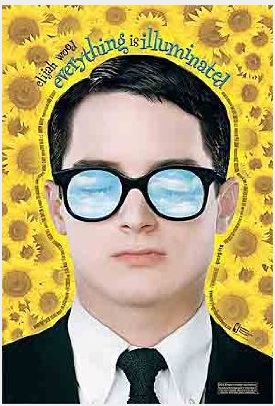
The reason we’d chosen this book is that we wanted to see how it went if we watched a movie of the book under discussion. So after dinner we watched Liev Schreiber’s Everything Is Illuminated. All O knew of the movie beforehand was from glimpses seen in Operation Filmmaker, the achingly funny documentary about an Iraqi intern on the shoot, in which Liev Shreiber and others came across as humane, generous and admirable people who clearly believed in their project. I don’t know that I liked the film all that much: the Elijah Wood character (‘Jonathan Safran Foer’) was too weird, and there were some awful saggy bits. It was fascinating to watch it so soon after reading the book. The ancestral story – roughly half the book – was sheared off. The second of the two revelations at the end was replaced with something much less interesting, less morally complex. A climactic action that almost made sense in the book made no sense at all in the film. And the upbeat ending was despair-inducing. Paradoxically, the film made me appreciate the book much more.

A pleasant evening was had by all, even the two dogs, who managed to bully someone into throwing a ball for them more than once. Next month, not Franny and Zooey or Arctic Dreams or The History of Knowledge or Wildlife, but Peter Temple’s Truth. We wanted a page-turner.

A US soldier talks about Iraq

Thanks to Antony Loewenstein for this, from Winter Soldier testimony in 2008:

[YouTube=http://www.youtube.com/watch?v=akm3nYN8aG8]

Try not to read the comments, at least not the illiterate ones.

White Rabbit revisited

Yesterday we visited The Tao of Now, the new exhibition of contemporary Chinese art at the White Rabbit Gallery in Chippendale, and had a very good time. The wonderful bright red pig car whose tongue soars to the ceiling and has another, golden pig and two other figures hanging from its tip – that and other pieces that were in the foyer previously are still there, but the three upper floors have had a complete makeover and the works are as fresh and surprising as the last lot.

As we were chatting over a display catalogue of Qin Fengling’s work, a tall silverhaired woman with a chihuahua on her arm (‘He will bite,’ she said later) joined our conversation, saying, ‘We have her red piece, though not in this exhibition.’ She flipped through the pages and showed us the piece she meant, and then went on to say that the Guggenheim had been interested in it, but she’d beat them to it because she didn’t have to secure a committee’s approval.

Aware of my solemn responsibility as blogger cum citizen journalist, and sharp as a tack as always, I said, ‘You must be … the owner.’ Those three dots represent the moment in which the name ‘Judith Nielson’ didn’t get past the tip of my tongue. She didn’t seem to mind. ‘Not the building,’ she said. ‘That’s my husband. But yes, I own the artworks.’

We chatted for a couple of minutes (there were five or six of us in the room – that citizen journalist thing was definitely a joke), and she said something that explained part of the appeal of the gallery: ‘I never buy something because of the explanation. If I need to read about a work to be able to enjoy it I’m not interested in acquiring it. But once we’ve bought it and have it back here, we have a whole machinery that swings into action to fill in the background.’ and it’s true: whether it’s the motorbike and sidecar crocheted out of bright blue wire, the interactive screens based on classic Chinese watercolour scrolls, or the giant painting of a headless Mongol archer looking out over Tien an Minh square, the works in this exhibition grab the attention first, ask questions later. It’s a bonus that there are attendants on every floor who are keen to raise and answer the questions.

I don’t suppose Ms Neilson and her tiny, dangerous dog are always there, but clearly they sometimes are, as an extra special bonus.

Bloom & Blair’s Islam

Jonathan Bloom & Sheila Blair, Islam: A thousand years of faith and power (Yale Nota Bene 2002)

I bought this book some years ago in the hope of finding some insight into how a religion that has sustained so many people for so long over such a geographic and cultural range could be used to justify the barbarity of suicide bombings and videoed beheadings. Since I don’t have much insight into how Christianity or Judaism can be used to justify mass murder either, and I’m already reasonably familiar with at least some parts of the former, maybe I should have expected my hope to be dashed, but it springs eternal, and trust in book-learnin’ is hard to shake.

The authors’ expertise, and presumably their passion as well, lie in Islamic art. This book was written to accompany a US television series, and despite its self-described aim as ‘to help Americans – of whatever and even no religion – understand the religion and culture of another place and time’, what it actually does is to provide background, to tell the grand, sweeping narrative of the beginnings, growth and spread of Islam in its first thousand years, with an inevitable emphasis military conquests and defeats, political struggles and religious strife, with a couple of welcome chapters on the flourishing of science and poetry between 750 and 1200 CE. The succession of dynasties and ruling elites – Abbasids, Barmakids, Chaghatayids, Fatimids, Ilkhanids, Mamluks, Mughals, Ottomans, Seljuqs, Umayyads – is as bewildering and at times as dull as the begats of Genesis.

I’m not complaining. In fact I wish I’d read the book 50 years ago as a supplement and antidote to the Eurocentric version of world history I received in my schooling. It’s bracing to read the stories, even in broad outline as here, of people and places that I know mainly as elements of  Orientalist decor: Saladin of the curly-toed shoes becomes Salah al-Din ibn Ayyub; Suleyman (isn’t that the guy from Lord of the Rings? – yes, I’m that ignorant) ruled the Ottoman Empire for 46 years, Marlowe’s Tamberlaine the Great becomes Timur, a Great Mongol conqueror; Samarkand, Timbuktu, Xanadu all existed outside romantic poems and fantasy literature. Many things I have assumed to be creations of Western culture are in fact borrowed from the Islamic world: romantic love I already knew about, but x as a way of representing an unknown in maths was news to me; The Divine Comedy wouldn’t have existed if Dante hadn’t read in translation popular Arabic stories of Muhammad’s mystical journey to heaven.

I’d just finished the book when I heard Ramona Koval on The Book Show with James Delgado talking about his Khubilai Khan’s Lost Fleet. As Ramona, helping out her audience by displaying her own real or pretend ignorance, wrestled with the difference between Khubilai Khan and Genghis Khan, I realised how glad I am to have read Bloom and Blair’s book. If I had read it 50 years ago, when my memory was much more retentive,  I might have emerged from it knowing who all those people were. As it is, I can expect the names to ring some kind of bell, and I’ll know where to look for a quick rundown – and yes, as well as a list of further reading, this book is blessed with a substantial index.

A short walk

Philip M. Isaacson, A Short Walk Around the Pyramids & Through the World of Art (Knopf 1993)

I don’t do much re-reading of old favourites. Maybe I should. I first read this when it was new, with an eye to possibly publishing an excerpt in the School Magazine. (We had reviewed and excerpted Philip M Isaacson’s marvellous first book, Round Buildings, Square Buildings, & Buildings that Wiggle Like a Fish.) I picked it up again today because Penny had taken it to read to Mollie in the nursing home, and reported that it had been a great success – not just for the photographs of the pyramids, but also for the actual reading-aloud, at least of the first few pages.

It’s a minor miracle of a book. The author is an art critic, writing a general introduction to art for young readers, and he manages to do it without a whiff of the pedagogical. Hayao Myazaki’s motto, ‘Get lost along with us,’ seem to apply. We go from the Egyptian pyramids, by way of the Parthenon and African traditional art, to Jacques Lipchitz, Alexander Calder, painters including Vermeer, Monet and Gauguin, and then on to photography, industrial design, urban design, all at a leisurely stroll. It’s not a lesson, but a lively conversation, with at least colour illustrations.  The imagined reader / interlocutor may be a child, but I can’t see any upper age limit on those who might enjoy it.

One question: If the Step Pyramid, which dates from a little more than 4600 years ago, is ‘among the oldest works of art in the world’, what does that say about the rock paintings in Australia and elsewhere that are closer to 30 000 years old?

Web of Lies

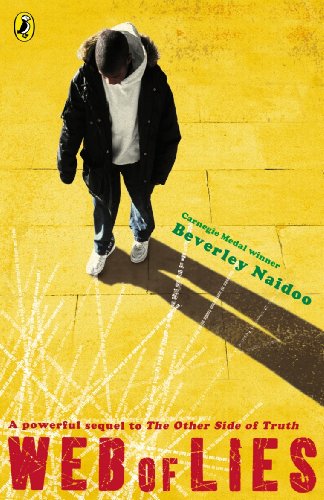
Beverley Naidoo, Web of Lies (Puffin 2004)

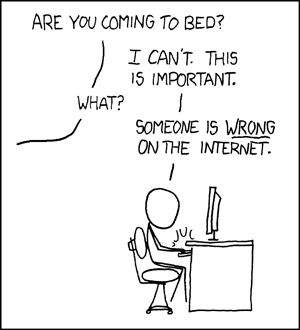
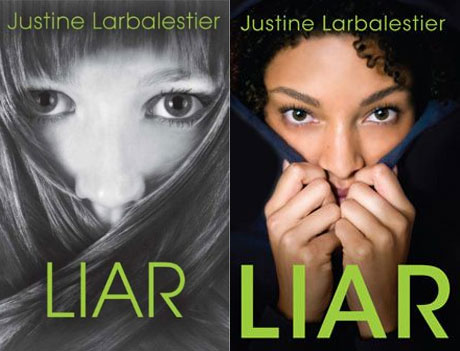
Someone recommended this book last year during the kerfuffle over Bloomsbury’s US cover of Justine Larbalestier‘s Liar. That book’s narrator and main character is African American, but the girl on the kerfufflised cover was unmistakeably white, giving rise to animated  discussion of the many fronts on which racism us still being combatted in children’s and young adult literature (not just someone is wrong on the internet), including debate about the doctrine long propounded in Australia as well as the USA that books with non-white characters on the cover won’t sell. A number of well informed participants in the conversation gave us lists of books that are on the side of the angels – Web of Lies was one of them. That kerfuffle, by the way, had an excellent outcome: Bloomsbury replaced the offending cover with one that didn’t tell young readers of African heritage that they were profoundly anti-photogenic. A lesson had been learned.

Or had it? It turned out that when I finally got around to reading this book another kerfuffle had arisen over another whitewashed cover from, yes, the same publisher. This time the book is actually published. It might seem like a storm in a teapot, some blogospheric ephemera, but there’s an important issue here. A young woman named Ari published an open letter to Bloomsbury on the blog Reading in Color, which said in part:

Can you imagine growing up as a little girl and wanting to be white because not only do you not see people who look like you on TV, you don’t see them in your favorite books either. You get discouraged and you want to be beautiful and be like the characters in the books you read and you start to believe that you can’t be that certain character because you don’t look like them. I love the books I grew up with, but none of them featured people of color. I found those later, when I was older and I started looking for them. Do you know how sad I feel when my middle school age sister tells me she would rather read a book about a white teen than a person of color because “we aren’t as pretty or interesting.” She doesn’t know the few books that do exist out there about people of color because publishing houses like yourself, don’t put people of color on the covers. And my little brother doesn’t even like to read, he wants to read about cool people who look like him, but he doesn’t see those books in bookstores and now he rarely reads.

The whole letter is worth reading. So is Justine Larbalestier’s post.

With all that in mind, Web of Lies is impressive. Not only does it have a Black youth on its cover, but it’s a gripping yarn whose main characters are African asylum seekers in England. I don’t know what Ari’s little brother thinks is cool, but there’s a fair chance that – when he’s less little – he’d be interested in Femi, the boy who gets mixed up with what used to be called bad company, and finds himself on a slippery slope involving petty theft, then drugs and violence. The author is white, originally South African, and has clearly done more than academic research into the experiences of African teens living in London. The story rings true and powerful, and if anyone was thinking of putting it in a niche category because its characters aren’t white, they’d be doing the world a disservice.

I know, it’s a bit odd to spend most of a post that’s nominally about a book talking about other things entirely, but I suppose what I’m trying to do here is to admit that I wouldn’t have read this book if not for the kerfuffle, and while part of the reason is that I don’t read much YA literature, another part is that I’ve unwittingly bought the propaganda that books about Black people are only for Black people to read. Wittingly, of course, I don’t believe that for a moment and have read many books that should have made me wiser.

Update: Within hours of my blogging about Bloomsbury’s bloomer, they have withdrawn the controversial cover. To quote their web site:

Bloomsbury is ceasing to supply copies of the US edition of Magic Under Glass. The jacket design has caused offense and we apologize for our mistake. Copies of the book with a new jacket design will be available shortly.

Thanks to Alien Onions for the news. (Though you know the problem isn’t that the jacket ’caused offence’. You can’t do much at all without offending someone. I would have preferred them to say something like ‘the jacket design was unintentionally hurtful’ or even go so far as to use the word ‘racist’.)

Belvoir’s Book of Everything

The Book of Everything at Belvoir Street, adapted by Richard Tulloch from Guus Kuijer’s children’s book, directed by Neil Armfield, designed by Kim Carpenter of Theatre of Image, and performed by a brilliant cast, gave me the most satisfying evening I’ve had in the theatre for a very long time. The audience was mostly adults, though the smattering of children – or at least the ones in my row – were vocal in their enjoyment.

It has its controversial aspects. In a comment at the Stage Noise site, someone identifying self only as ‘Mummy’, wrote::

Parents should be warned that the “dark moments” in this play include graphic domestic violence where a mother is hit in the stomach and face by her husband. I wonder how many parents would take their children to see the play if they were warned about this content.

At Mim’s Muddle, in the course of an excellent account of the play, the eponymous Mim mentioned the portrayal of domestic violence, noting that if she’d been more alert she would have seen mention of it in the press.  She went on to say, ‘But, being a story intended for kids, there was resolution and healing at the end and it certainly led to interesting conversations about relationships on the way home in the car.’ Richard Tulloch commented:

Yes, in rehearsals there was naturally much discussion about the violence in the show. It’s unavoidable in the story, and without the shock of seeing it, we wouldn’t feel the same elation when Thomas eventually rises above it. But we hope that by making it stylized and short it won’t dominate the whole experience for kids, so that they are unable to appreciate the happier scenes.

Here’s my two bobs’ worth, and I speak as one who walked out of a previous Belvoir Street production because of its representation of violence. Violence on stage is very different from screen violence; we could see that the people in front of us were not being harmed (the noise of impact was provided by a person sitting in full view on the other side of the stage, the action was in slow motion, etc.). The violence was understood as dreadful, possibly even cosmos shattering, so there’s no question of it being normalised (as it is every afternoon in the cartoons), and there was indeed resolution and the hope of forgiveness at the end. I too wonder how many children would get to see the play if their parents were ‘warned’ about this content, and I wonder, in addition, if the children who weren’t taken would be deprived of something valuable. I worry that protectiveness of our children may sometimes do more harm than the things we want to protect them from. An age advisory might be called for, but I think it would be a rare ten year old (almost the age of the play’s main character, played with amazing grace and stamina by the 33 year old Matthew Whittet) who would be traumatised by this production.

When  The Summer of the Seventeenth Doll toured rural Australia in the late 1950s, I had the good fortune to see it, my very first piece of professional theatre. I was 10 or 11 years old. Someone, in my hearing, questioned my parents’ wisdom in taking me, given the play’s adult themes. My good Catholic father, bless his memory, fobbed off the concerned citizen with a joke. I loved the play, the adult themes sailing right past me, but I was transported by the intense emotion, which these days might well be classed as domestic violence, and still treasure the memory.

Possibly the best thing about  The Book of Everything is that it transcends the separation of children’s and adult’s culture that we have come to accept as normal. It’s a play about a child that adults can enjoy without condescension. A man playing a savage dog, ridiculously, runs through the audience; there’s the kind of audience participation that’s usually restricted to children’s theatre (we throw things onto the stage, and some of us get to sit up there in the final scene). We adults are allowed to enjoy as if we are children. And the children in the audience are allowed to engage with big themes: how do you deal with abuse of power? is there a God?

North: Poems of Home

Maurice Kenny, North: Poems of home (Blue Cloud Quarterly 1977)

This book found me by serendipity. A BookMoocher  said she’d be willing to send me the book I wanted if I mooched at least one more at the same time (same postage for her, twice the BookMooch points). I chose this pretty much at random from her list of moochable titles.

Maurice Kenny is a Native American poet who has twice been nominated for the Pulitzer Prize. The blurb on this little book explains that the poems deal largely with ‘his childhood in the Mohawk Nation and his friendships there’. But the book lacks the personal touch that this description led me to expect, especially in the many incantatory list poems. I went looking on the web, and the very first Maurice Kenny poem I stumbled across, ‘Going Home‘, published a decade or so after this book, was of a completely different order. It’s as if in this book, he is in some way claiming, or proclaiming, his heritage:

north
north by the star
we go home, we go …
to the pheasant, woodchuck, muskrat
the last deer standing the summer
of flies on the blood of the wolf
howled in the north
(from ‘Home’)

And having claimed the heritage, he could look more closely at his relationship to it in the 1988 poem, which concludes:

home from Brooklyn to the reservation
that was not home
to songs I could not sing
to dances I could not dance
from Brooklyn bars and ghetto rats
to steaming horses stomping frozen earth
barns and privies lost in blizzards
home to a Nation, Mohawk
to faces I did not know
and hands which did not recognize me
to names and doors
my father shut

I don’t think I would have felt the pathos of that exclusion as fully if I hadn’t read these earlier, rhetorical poems.

Beyond Apollo

Barry N Malzberg, Beyond Apollo (1972, Pocket Books 1974)

In the real world, the Apollo moon program lasted from 1962 to 1972. Beyond Apollo, first published in 1972, tells what happened next: a failed attempt to land men on Mars in 1976, and then the Venus project in 1981. The immediate aftermath of the latter is the book’s present moment.  Malzberg’s future is our past. If he had been aiming for accurate prediction, he failed miserably. But this isn’t that kind of book.

James Tiptree Jr said of Barry Malzberg: ‘Everybody and everything hurts, for no known reason.’ She could have been giving us an abstract of this book. The main character, Harry Evans, has returned to earth after failing to land on Venus. His fellow-traveller, the Captain, died out there. Evans is probably deranged by whatever happened out there, although possibly his derangement out there led to whatever happened. He gives his debriefers – and us – about ten different versions of events, none of them cheery. Some are obvious fantasy, some probably lies, none is obviously true. He remembers (or fantasises) a lot of unpleasant sex with his wife, and possibly with the Captain. Actually, I probably approached this books thinking I should have read it when I was 14 – science fiction’s ideal reader is supposed to be a 14 year old boy, right? Well, no! I would strongly discourage any 14 year old boy, and a fortiori any 14 year old girl, from reading this. I read the horrible marital rape scenes as somehow parallelling the  mechanistic, soulless nature of the Venus project (Venus//sex, OK?), but they sure weren’t fun to read.

This is probably a very good book. Though there are aliens (possibly invented by Evans, possibly real, who is to know?), the book is not the romp with sexy aliens promised by the lurid cover. Nor is it an easy read. Everybody hurts, including the reader.