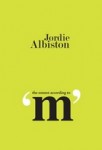
Hommage to Jordie Albiston

Inspired by Jordie Albiston’s use of her grandmother’s diary in The sonnet according to ‘m’, I dug out the folder of letters from my mother that I typed up in the mid 1970s. Here’s a sort of a sonnet based on one of the earliest of the letters, written in June 1964. My sister Mary Ann and I were both at boarding school, in Brisbane and cold Mittagong respectively. Our youngest sister Elizabeth was still at home, and our elder brother Eddie was working on the family farm.

Just a hurried scrawl which I hope you can read –
MA quite often can’t read certain words.
Eliza’s doing a Guides Test on Sat, Child Minding,
we’ve realised we don’t know any three year olds.

They mind a child in the Tester’s house. She checks
for what they do wrong. Lize can’t mind Stephanie Dillon
who’s barred because she’s too good & not a fair test.
Jackeline’s engagement’s still secret. Rumour predicts

a party in July to announce it – they’ll be broke!
I hope you’re taking the tablets to stop your chilblains
’cause you’ll feel the cold worse this year. Eddie’s in bed
with an awful cold he’s had for 2 weeks, but

he’s worked in the rain the whole time. Dad
has started painting the outside of the house.

I don’t know if it’s fun to read, but it was fun to do. Almost every word, including the ampersand, is from my mother’s pen.

Why Brendan Ryan Is Not a Farmer

Brendan Ryan, Why I Am Not a Farmer (Five Islands New Poets Series 2000)

This is a slim volume of poetry, published 10 years ago, so what are the chances of it still being in the shops? As it turns out, the chances are a hundred percent at Gleebooks, thanks partly to the poet’s name being towards the back of the alphabet so that the book is shelved just off the carpet where only the diligent searcher will see it,  and partly to the cover, which includes a clever photomontage of dairy cattle in a paddock with Melbourne’s skyline towering in the background but somehow manages to look like a pamphlet issued by the State Department of Agriculture. Of course I’m glad I was able to get a copy, but sad that sales have evidently been so slow. Perhaps other readers of Brendan Ryan’s article on the Ash Wednesday fires in the current Heat will be stirred, like me, to seek the poems out. There were at least five more copies there in the middle of last week.

Rural life tends to be romanticised in Australian poetry – or deeply imbued with identity politics. You don’t have to go back to the 1890s. Here’s David Campbell from ‘Cocky’s Calendar’

The hawk, the hill, the loping hare,
The blue tree and the blue air,
O all the coloured world I see
And walk upon, are made by me.

Even Les Murray, from the other end of the socio-economic spectrum, mostly keeps farm work at arm’s length, as in ‘The Family Farmers’ Victory’:

Cane work was too heavy for children
so these had their childhoods
as not all did, on family farms

Brendan Ryan’s poetry in this book is spattered with the shit and blood of work on a dairy farm. ‘Losing to the Cow’, for instance, is a graphic account of a bull calf’s difficult birth. ‘The Benefits of a Rotary Dairy’ takes the reader into the process of milking a herd of cattle. (Brendan Ryan spent his childhood on a dairy farm in western Victoria. On my father’s cane farm in north Queensland, we only ever milked two cows, and I didn’t do any actual milking, but the poem rings all sorts of bells for me just the same.)

 Back then, most cows
had names. You knew their history by the type of knot
you tied their outside ankle back with.
A double knot for the heifers and mongrel choppers
who kicked in a three-foot arc, and kept you wary,
a single knot for old Jerseys like Mary, who dragged her teats
in the mud and stood in the bail meditating
before the nail holes of light in the door.

Alan Wearne gets it right on the back cover: ‘these clear, sombre pieces make the reader exclaim “So that’s what it’s like!”‘

My high school Latin teacher said you could tell Virgil was a city man because in the Georgics he speaks of cow manure as disgusting. Brendan Ryan may well be citified, but he doesn’t shrink fastidiously from the details of labour on the family farm. He’s not whingeing. He has no obvious chip on his shoulder. And there’s no self-pity, as there would be if he took on Les Murray’s ‘not all did’. There is nostalgia perhaps, but it’s not so much a vague yearning for a lost home, as an ache to integrate, to come to terms with experience. In ‘May Day Reunion’ he meets another refugee from the district (‘it’s our eyes that give us away’):

As the reason for leaving
becomes the need for another beer,
the idea of going back
becomes a type of union against
being seen on the street as someone's son
who can't get a job.

Still, we lean forward

Really , I don’t know if anyone else has written as well as this about what is after all a very common experience, the migration from small rural community to city life.

The Blue Star

Fletcher Pratt, The Blue Star (©1952, Ballantyne Books 1969)

These days I get my genre fiction – science fiction, fantasy, crime and romance – mainly on screens. I’ve learned that Lynda La Plante and Steven Bochco are for external application only (ie, as novelists they suck), and I prefer my J K Rowling that way as well. All the same, even though the number of books I’ll get to read before the lights go out is shrinking daily, I’m not prepared to give up the pleasures of reading genre just yet. The Blue Star predates The Lord of the Rings: it’s fantasy from an earlier era – no dwarfs, elves or Celtic myths, and what magic there is is only slightly less abstract than the sex.  Actually, the 1969 edition I acquired via BookMooch is labelled adult fantasy, and one of the unexpected pleasures of the book is discovering just how chaste adult fantasy could be back then.

A prologue promises an alternative universe where magic occupies the place that science occupies in ours. If that promise creates an expectation of something like Terry Pratchett’s Discworld, then the book will disappoint. In fact, the practitioners of magic are a tiny, proscribed minority. Our young hero starts out as an idealistic member of a revolutionary group in a land ruled by a queen (who remains an abstraction) and a repressive social order. Following orders from the Central Committee he seduces a young witch and promises fidelity in order to gain control of her Blue Star, an amulet that gives its wearer telepathic powers. There’s a love story, then, and a political story: will the seduction lead to true love? can a revolutionary movement with such a utilitarian attitude to young love really lead to freedom? The playing out of these questions is diverting enough, and the subversively anti-romantic politics are engaging, especially the section about the Amorosans, who talk the talk of everything being done in love, but in the place where they hold power they are just as repressive as their enemies. On the whole, though, this is not a landmark book. If you can imagine a Lord of the Rings where Bilbo decides that there are more important things than destroying the ring and that the Return of the King and the defeat of Sauron, for good or bad, will happen (or not) without his help, you have some idea of the impact.

A word of warning: skip Lin Carter’s spoilerish introduction, or at least save it for after you’ve read the rest of the book. You might also want to skip the prologue, which seems to be there to justify the fantasy mode, and doesn’t do it very well.

Sonnets according to ‘m’

Jordie Albiston,  The sonnet according to ‘m’ (John Leonard Press 2009)

The M in these poems is not from Fritz Lang (‘When out of grace in Peter Lorre’s eyes’?) or the James Bond franchise (‘If gin and vermouth stirred not shaken are’?), but is, as the back cover blurb tells us in a manner ominously reminiscent of the  labels in contemporary art exhibitions, ’emblematic of recurrence and precipitousness’. It’s a commonplace that poets nowadays don’t generally have a huge audience. The most recent variation I’ve heard was from David Brooks, at a Sydney Writers Festival workshop: the world is desperate for poetry but poets aren’t writing the poetry that the world wants. It’s almost as if, he said (but blame me if this is crudely expressed, I took skimpy notes), you have to choose between writing for poets or writing for the public. As a reader, I definitely identify as part of the public, and Jordie Albiston’s clever play with the sonnet form in this book tends to intimidate and alienate me rather more than it delights. Yet, there is delight here, and a little sharpening of attention brought rewards.

There are at least three Ms: ‘me’, Marsi  and em. Marsi, the acknowledgements page informs us,  was the poet’s maternal grandmother, whose diary, kept for a month in 1959, provides the basis for 12 of the book’s 54 sonnets.  Em is Emily Skinner, Jordie’s paternal great-great-grandmother, whose memoir lies behind another four of them. I found the use of these sources fascinating. At the Sydney Writers’ Festival, Adam Aitken read a poem based on his father’s letters, so perhaps this kind of familial translation is a common practice. It’s certainly an interesting one, and here the Marsi sonnets in particular provide a kind of rootedness. They tend to observe metrical and rhyming conventions, not strictly, but more so than the ‘me’ poems, and the quiet intelligence they bring to the concerns of a 50s housewife  demonstrate Albiston’s range marvellously:

well we have waited twelve months to see
what the nuns would do with the old wood
house 00 a noise at last from the sainthood:
the roof is coming off! 00 now of course we

are curious to know What Next!

and so on. Compare this to the ebullient play with form in ‘mandatory’ (all but the ’em’ poems have titles beginning with  m):

well you gotta be good 00 but
you gotta be bad 00 you gotta
be both glad & sad 00 yep you
gotta be human it says in the
book but look! 00 there’s that
creature inside! 00 you gotta be
nothing you gotta be all 00 you
gotta be both great and small

Would you have picked that as the octet of a sonnet? There’s a huge variety here. There’s quite a bit that seems to be just for fun (as in ‘methinx (i)’, ‘2moro 2moro & 2moro / goes slo frm day 2 day’). Katherine Mansfield scores a sonnet. There are a number entitled ‘mural’ that celebrate and mourn the passing of verbal graffiti. Some seem to embody a very contemporary feeling of derangement. And so on.

I ended up being completely won over.

My second full day at the SWF

I was off to Walsh Bay again for the day today.

10 : 00 Marie Munkara in conversation with Irina Dunn
I first heard of Marie Munkara’s Every Secret Thing on Will Owen’s blog last December, and it’s been on my To Be read list since then. If it hadn’t been, this session would have put it there, especially when she read the opening pages, beginning most memorably, ‘It had been a shit of a day for Sister Annunciata and Sister Clavier.’ Irina (full disclosure: she’s an old and dear friend) did a lovely job of drawing out Marie’s biography in relation to the book, giving her scope to be – miraculously –  funny about her experience as a member of the stolen generations meeting up at last with her Aboriginal family:

My mother was black. I was thinking, ‘That can’t be my mother. And you know how they say all black people look the same … I’d say, ‘Hello, Auntie,’ and my mother would say, ‘Don’t talk to her, she’s rubbish.’ I’d say, ‘But isn’t that Auntie …’ ‘No!’

When she was little her class at school had to draw a picture of what they wanted to be when they grew up. She drew a figure with a red cloak and a crown. Sister Damien said, ‘Marie, you can’t be a king.’ But young Marie insisted that that’s what she wanted to be, because a king has lots of money and can do what he wants. ‘Now,’ said Marie today, ‘I haven’t got much money but I do what I want.’

11 : 30  Terrorism: How to Win a Cosmic War – Reza Aslan talking to Tony Jones about the futility of the War on Terror
I am not a Tony Jones fan. Ever since his extraordinary performance interviewing Nicole Cornes on election night 2007, I have had trouble watching him interview anyone. But Reza Aslan’s articulate confidence was a match for his combative style, and their sparring was actually enjoyable. Reza Aslan distinguished between Islamism and Jihadism. Islamism, he says, is a form of nationalism seeking to establish an Islamic state in principle no more diabolical than a Christian state like Greece or a Jewish state such as Israel. Jihadism is anti-nationalist, seeking to establish planet-wide Islamic theocracy. He went on to say that Islamism is the answer to Jihadism: that if Islamists are able to participate in normal political processes, Jihadism will lose its recruiting grounds. It was a riveting presentation, and we bought his book.

13:00 to 14:00 Three Australias: Les Murray, Ali Cobby Eckermann and Kim Cheng Boey reading their poems, chaired by Rhyll McMaster
This was the only event I attended where I had to stand in one of the monster queues and for some reason receive a “Good work” stamp on my wrist. The readings were interesting. I was especially glad to hear more of Ali Cobby Eckermann’s work, having read only her long piece on the Intervention in the Best of 2009 collection. Kim Cheng read one of the poems he read on Friday morning, and it was a pleasure to hear it again. Les Murray, who was probably the reason this event was held in one of the bigger spaces, was as always Les Murray, and a good thing too.

Ali Cobby Eckermann acknowledged the Gadigal people, as Anita Heiss and Boori Prior did yesterday. I wonder if it was by formal decision that such acknowledgements were not made at any other events, at least none of those I attended. Whether deliberate or not, I think the festival was the poorer for the absence of such acknowledgements. I also missed the PEN chairs at paid events, and the brief explanation of the imprisoned writer each chair represented. There is a roped off area in the vast Heritage Pier populated by a dozen beautifully painted chairs and a soundscape. The chairs are to be auctioned to raise money for PEN, but that’s not the same as explicit acknowledgement of named individuals.

2: 30  Who’s Interviewing Who? Alan Ramsey and John Faulkner
These two – a retired journalist famous for his take-no-prisoners opinion pieces and the Federal Minister for Defence famous for his ineluctable pursuit of corruption – have been friends for 20 years or so. They told us in all seriousness that the reason the friendship has thrived for so long is that they never discuss politics. They then moved on to discuss politics, with some tense moments. They were very funny together. At one stage Ramsey left the stage to get the quotes he’d left somewhere. Faulkner continued in the role of interviewee.

17 : 30 The Big Reading: Hanan al-Shaykh, Willy Vlautin, Dubravka Ugresic, Natasha Solomons and Rupert Thomson
This was my last event for the festival. It was, as it always is, pleasant to be read to. In particular I loved being read to again by Rupert Thomson – and the tone of the extract he read from This Party’s Got to Stop couldn’t have been further from that of the one he read on Thursday morning. It must be an intriguingly complex book.

I had been planning to stay in the general area to hear Jennifer Maiden, David Brooks and Adam Aitken read. But the reading didn’t start until 9.30, and it was in a wine bar. As a non-drinker who is very often in bed by 10 o’clock, I found the deterrents outweighed the attractions. I had heard a little of Aitken and Brooks this week (though the latter hadn’t been reading his own work), and I decided with regret that I would have to forgo the great pleasure of hearing Jennifer Maiden.

The Festival’s slogan this year was Read, Rethink, Respond. There wasn’t a lot of space at the festival itself for responding (question times just don’t do it!), and for that matter not a lot of reading got done, at least by the punters. But I’ve come away with plenty to think about, and the world is full of opportunities to respond, and far too much waiting to be read.

A full day at the SWF

My yesterday was entirely devoted to the Sydney Writers Festival, and I had a great time, starting out at Walsh Bay, where my choices seemed to keep me away from the monster queues.


10 : 00 Poetry on the Harbour: Adam Aitken, Judith Beveridge and Kim Cheng Boey, with Ivor (‘I know they’re good poets because I published them’) Indyk in the chair.

In general I prefer to hear poets read their own work over having actors deliver sonorous, deeply felt renditions, because actors’ performances tend to narrow the range of possible readings. I also prefer poets’ readings that avoid the incantatory (though I’m delighted by the over the top bits of Yeats and Tennyson I’ve heard). All the same, all three of these poets read their work with such modesty and introspection that I longed for just a touch of the rock star, just a hint that they might be able to hold us in the palm of their hands and wring our withers.

It was an excellent reading nonetheless. Adam Aitken read his ‘Pol Pot in Paris’, and a poem taken from his father’s letters (introduced with, ‘I love my father, but he had colonial attitudes’) got actual laughs. Judith Beveridge began with an anecdote from Robert Creeley: at a school reading a child asked him, ‘Mr Creeley, was that a real poem or did you just make it up yourself?’ Among the poems that JB had made up herself was a lovely piece about a man washing himself at the railway station tap just outside Delhi. Of the extraordinarily cosmopolitan Kim Cheng Boey’s poems, I particularly liked ‘Stamps’, in which the poet converses with his little daughter.


11 : 30 First Nation Stories: Richard Van Camp and Boori Monty Pryor herded ‘like cats’ by Anita Heiss.

In introducing his poets, Ivor Indyk mentioned university positions and awards. In this session, Anita Heiss talked about which Indigenous Nations/mobs people came from, including herself. Both Richard and Boori perform and tell stories in schools. Richard gave us what I took to be one of his school performances; Boori talked about his. Both men were very funny, and Boori gets the Me Fail I Fly nomination for the most charming man on the planet. Yet with all the humour and charm he managed to put some hard truths. ‘This is the only country in the world,’ he said, ‘that mines a culture and sells it off to the world but doesn’t want to know about the people who produce it.’ He told of a group of preschool teachers who asked him for advice on how to tell Aboriginal stories to their charges. ‘Do you know about the 1967 Referendum? The Gurindji campaign? The reserves?’ he asked (though he probably named different specifics). ‘You won’t be able to tell the stories until you know about the fight to keep them alive.’


13 : 00 The Politics of Storytelling: Mike Daisey and William Yang, chaired by Annette Shum Wah.

I’m told Mike Daisy’s story was shattering, but I went to sleep during the loud, bombastic opening section of his monologue, which I guess was meant to be the warm-up (a baby cried, presumably at the sheer loudness, and was incorporated into the rant, to the delight of the fans in front of me but adding to my need to absent myself). William Yang showed a number of slides, and it was reassuring to see that his style worked just as well when taken out of the tightly controlled environment of his shows. The discussion was interesting – Annette asked about their provocativeness (William’s photos can be a bit rude, and Mike uses four-letter words, hardly confronting in Sydney I would have thought, but he did mention a show where a big bloc of the audience stood up and walked out – it’s on YouTube and his response is wonderful). William said that when he first did his shows he was part of an angry community. Now he might put in an occasional naughty photo out of impishness. These were such different men, yet their mutual appreciation was lovely to behold.


16 : 00 David Wessel, Meet Paul Keating with George Megalogenis

Note to anyone doing this kind of gig: it really really helps if you read up on the person you’re appearing with and can refer approvingly to his work. Both these men did that and it was a great leavening to what could have been a dry conversation about economics. David Wessell (economic editor of the Wall Street Journal, was able to drop a number of Keating’s famous phrases into his presentation (‘The recession we had to have’, ‘A shiver looking for a spine to run up’, etc). Wessell explained the causes of the GFC memorably as resulting from two false assumptions in the US: that house prices would never fall, and that extraordinary financial innovations spread risk in such a way as to diminish it to the point of negligibility. Keating, equally memorably described Chinese reserves as a great cloud full of water and electricity floating over the world, and Alan Greenspan building a copper pipe up into the sky to draw down the water. He also talked about Spain, Portugal, Ireland and Greece as having a big one-off party made possible by converting to the Euro and suddenly enjoying German interest rates. Right now we’re seeing the morning-after crash. Questions were probably intelligent, but were well above my head.


18 : 00 Have We All Been Conned?: An Emergency Town Meeting: Bill McKibben, Ross Garnaut and Clive Hamilton, with Tim Flannery as participating Chair, discussing the politics and science of climate change.

A case of false labelling. Of course, we all knew it was a Writers’ Festival event and not a political rally, so it was no surprise that it was, as my son described them, four bald men in glasses talking to an appreciative audience about the current state of affairs. No one was really concerned to plug his own book – it was, as Tim Flannery, said, a bit of a dream team.

Was Copenhagen a success or failure? Too soon to tell, but it has meant that developing countries are now taking on climate change rather than waiting for the developing countries to do their bit first.

How come Australia is the biggest laggard in climate change action, yet it has the most to lose? Ross Garnaut spoke with transparent obliqueness of lack of political leadership. Bill McKibben, I think it was, first mentioned Kevin Rudd by name. Clive Hamilton sunk the boot: Kevin Rudd thinks science is a lobby group, and he’s a manager not a leader.

What about the Greens’ rejection of the CPRS? A lamentable strategic error, seemed to be the consensus, rather than a grievous failure of principle as we have seen from federal Labor. Bill McKibben said wise words here. Coming from afar, he said, he had the luxury of responding without knowing or needing to know the details, but what we have to remember is that any victory, however small, is to be celebrated, and any victory, however large, is only a step forward. This is a struggle that will continue for our lifetimes and beyond.

Perhaps the grimmest note of the evening was the statement from, I think, Bill McKibben, that our challenge now is no longer to prevent climate change but to take action to deal with the new world we now live in.

In question time we reaped the consequences of the false advertising. Person after person took the microphone to tell us what they thought about the subject. One woman, from an outfit called A Hundred Percent Renewable, had even brought a banner, which she trailed after her disconsolately as she left the microphone, having failed to get a taker to hold up its other end.

And I’m off to another full day today.

SWF: History, Memoir, panels

The Sydney Writers Festival is now in full swing. I’ve managed to go to two events in the last two days, both of them excellent.

The first, cheerily titled ‘Swindlers, Doctors and Nationalists’, was held late yesterday afternoon in the Macleay Museum at Sydney University. Anyone who got bored could contemplate the huge object in the front corner of the room, probably the cast of a dinosaur’s skull. But it wasn’t the kind of event where  such distraction was needed. On the contrary, the three historians on the panel pretty much fitted Mark Twain’s famous remark about Australian history in Following the Equator:

It does not read like history, but like the most beautiful lies; and all of a fresh new sort, no mouldy old stale ones. It is full of surprises and adventures, and incongruities, and contradictions, and incredibilities; but they are all true, they all happened.

The panel was elegantly chaired by Jude Philp, senior curator of the Macleay Museum. She asked each of the panellists to introduce their books, then invited each of them to speak in turn to maybe three or four questions, a round on each question. I mention this format, because I’ve been to some deadly panels where the time is divided into blocks, one for each participant, and there’s very little opportunity for interaction. That wasn’t a problem here – possibly it helped that all three historians are in the same History Department. The first two were Penny Russell (Savagery and Civility: A History of Manners in Colonial Australia) and Kirsten McKenzie (A Swindler’s Progress: Nobles and Convicts in the Age of Liberty), both doing the kind of colonial history that an acute filmmaker could make brilliant use of: comedies of manners just waiting to be made (it was widely insisted that the colonies should cleave to English standards of behaviour, but ideas of what those standards were varied dramatically), tales of intrigue, fraud, and idealism.  The third was James Curran, whose book The Unknown Nation, co-written with Stuart Ward, deals with the period in the late 1960s and early 1970s when Australia’s British-based identity had been pulled out from under it and we were hunting around for a new sense of what it means to be Australian.

Then this morning, the fourth day of my festival, at last I reached the Harbour. Wharf 2/3 was humming, and I arrived just in time for a session on Creative Memoir featuring Ali Alizadeh (Iran: My Grandfather) and Rupert Thomson (This Party’s Got To Stop) talking to editor, novelist and blogger Sophie Cunningham. Again, it was excellently done. Sophie had obviously read and enjoyed both books, and other things written by both authors. They each read – well doing the voices – and then she asked a couple of questions that enabled them to talk interestingly about choices they’d made in writing the books, about how the people who feature in them feel about their family linen being aired in public. Did you know that in the UK you’re legally required to get written permission to publish a book in which you give information about someone’s private life, not because of possible libel suits, but as a result of privacy legislation?

I went to this session because I’ve enjoyed Ali Azadeh’s poetry. To judge from the passage he read to us, he is also a prose writer to be savoured.

I’m off to an excellent start. The plan is for tomorrow to be my first full day: at the Wharf by half past nine in the morning, and home from the Town Hall about half past seven at night.

Heat 22: The Persistent Rabbit

Ivor Indyk (Ed), Heat 22: The persistent rabbit (Giramondo May 2010)

This issue of Heat has much that is wonderful. The title, following tradition, is a phrase chosen apparently at random from the contents, in this case from πO’s exuberant nonsense poem ‘Rabbit Proof Fence’:

The average person blinksoooo22 rabbits a minute.
Burke & Wills went into the desertoooowith a dozen rabbits
Obsession isooooa persistent rabbit.
The causes of a rabbitooooaren't clear.

Perhaps Ivor Indyk, the editor, is quietly suggesting that the seemingly  miraculous persistence of Heat owes not a little to obsession.

I understand Heat to be about diversity, about presenting a version of literary Australia that is open to the whole planet. It often includes, for instance, travel writing, translated pieces, news from abroad, and fiction, essays or images that grow from places where cultures intersect. In this issue there are examples of each of these – respectively, Barbara Brooks’s self-styled fictional memoir ‘Lost in the House’ (which powerfully combines tales of travel, dementia, memory and intergenerational relationships); Stuart Cooke’s ‘Two Mapuche Poets’ (the Mapuche people are indigenous to parts of Chile and Argentina); Priya Basil’s ‘My Home is Our Castle’ (about a communal housing project that won a major architecture prize in Berlin last year); Michelle Moo’s colonial historical fiction, ‘New Gold Mountain’ (white women and Chinese men on the Australian goldfields); Barry Hill’s ‘Ezra Pound: The tragic orientalist’; and the centre section of art by Guan Wei, ‘Longevity for Beginners’. (The last three provide a nice example of the kind of counterpoint that Edward Said recommended.)

Apart from Barbara Brooks’s memoir three pieces stood out for me.

Brendan Ryan (whose book of poetry, Why I Am Not a Farmer, I am now actively seeking) has a gripping personal essay on the 1983 Ash Wednesday fires in western Victoria, which is enough by itself to justify the price of the journal. Sadly, not even part of it is up on the Heat website.

Lee Kofman’s essay, ‘Revisiting the Geography of My Body’, just as gripping and as intensely personal, includes incidental elements of a migration story, but is mainly about scars, particularly scars on a woman’s body, and their almost complete absence from literature and visual arts: wounds, scars as something to be healed, scars on men (she doesn’t have to mention Coriolanus), but scars as such, particularly on a woman’s body, reside ‘outside the linguistic and public realm’. By sheer chance, I happened to walk past this piece of graffiti in Newtown just as I finished reading the essay. I hope Ms Kofman would enjoy it:

I said I wouldn’t whinge any more about proofing errors in this Heat, but there is one good old-fashioned belly laugh in this essay. The pursuit of bodily perfection, it tells us, ‘can be traced back to Pluto’s ideal of human beauty as the “natural”, unmarked body’. Roman myth, presumably, rather than Disney.

Of the poetry, Kate Middleton’s poems on a Hansel and Gretel theme stand out for me. They are billed as excerpts from Where Dingoes Tread. I look forward to seeing the whole thing:

Remember when hunger
was simple?
ooooooooooooThere was nothing
and we ate nothing. Then plenty returned
and I turned
to austerity.

SWF: Inside the Westside Writers Group

One of my highlights from last year’s Sydney Writers Festival was a staged reading in Bankstown Town Hall by members of the Westside Writers Group. Naturally, we trekked west in the rain to see what they were putting on this year.

A big room in Bankstown Youth Development Headquarters had been set up with a couple of sofas, cushions, a standard lamp and a coffee table for the group and seats for the audience in the rest of the room. They proceeded to have a meeting like the ones they’ve been having every fortnight for years: each member of the group read a piece she or he had been working on – some brand new, some reworkings or extensions of things the group had heard before.

It was a risky idea, and could have failed in any number of ways. But it was great. All the writers have been trained in reading to an audience, and as their mode of working is to read to each other rather than circulating printed copies of their work, they have all become skilled listeners. So we were treated to a lovely range of readings, and then some tender but forthright exploration of what made each one tick and where it could be improved. Luke Carman and Michael Mohammad Ahmad were the stand-outs for me, the former with another of his strangely surreal monologues/stories, the latter with a vignette (a word evidently much discussed by the group) of life in a small ethnic community in the western suburbs. Nothing was dull: sestinas by Lachlan Brown, other poems by Fiona Wright, Lina Jabbir and Rebecca Landon, stories by Susie Ahmad, Sam Hogg, Felicity Castagna and Peter Polites (the dark-haired man on the couch in the pic, shaven headed and unrecognisable on the night), and video in the making from Bilal Reda. All this with the delicate, respectful probing and prompting of Ivor Indyk, resident literary guru.

And you know, from where I was sitting none of these young writers seemed at all fazed by having an audience of roughly fifty people watching and listening from the shadows as they exposed the fruits of their imagination to one another’s critical gaze.

Later addition: I can’t believe I forgot to mention that Alexis Wright was there as a special guest, putting her two cents worth into the discussion and reading what may end up as the start of her next book. When she’d finished her reading – an unsettling piece involving a personification of drought, a young woman carrying a not-quite dead swan in her arms – Ivor Indyk challenged the group: ‘Anyone want to take on a Miles Franklin winner?’

NSWPLA dinner

There’s a quote from James Tiptree Jr I’ve been wanting to sneak into my blog for some time. When an editor asked her to write an afterword to her short story, ‘The Milk of Paradise’ she wrote that some authors are ‘walkie-talkie writers … who are named Mailer and Wolfe when they are good’ and went on:

But the rest of us, poor carnivores whose innards meagrely condense into speech. Only at intervals when the moon, perhaps, opens our throats do we clamber up on the rocks and emit our peculiar streams of sound to the sky. Good, bad, we do not know. When it is over we are finished, our glands have changed. Push microphones at us and you get only grumbles about the prevalence of fleas and the scarcity of rabbits.1

That, in short, is why I’ve become a dedicated paying guest at the annual  NSW Premier’s Literary Awards Dinner. I love to see those poor carnivores clamber up onto the podium to be honoured, even the ones who can’t manage any more than ‘Thank you’.

I nearly didn’t go this year, fearing that the dreaded PowerPoint’s incursion, begun at the shortlist announcement, would continue. I was also trying to think like a grown-up about the expense, and then there was the Dîner des Refusés precipitated by the nul prize for a playscript. But here I am again, home from the Art Gallery, out of pocket but flush with the inside dope, even though the on-the-spot tweeters and newspapers (with self-promoting or surprise-upset hooks) have beaten me to publication.

It turned out, no surprise, to be a pleasant evening. The company was convivial, the setting brilliant, the food excellent. There was no PowerPoint as such, but sadly the dinner has become an Event, the creation of Events Organisers, with glossily impersonal results. There was a would-be witty typewriter centrepiece on each table. Two huge television screens told us who was talking to us at any given moment, threatening but thankfully not quite managing to distract us from the mere humans on the stage between them. And the pause between the announcement of each winner’s name and their arrival at the microphone – that is, the time it took them to reach the stage, be photographed kissing the Premier and cross to the mike – was now filled, not just with applause and a buzz of conversation, but with a blast of fanfare from the sound system. I hope someone whispers to the Organisers that this isn’t the Oscars, still less the Logies.

Auntie Sylvia Scott welcomed us to country. As last year, she told us she was an avid reader, and revealed that though Nathan Rees had promised her a pile of books, she never saw any. As she left the stage Carol Mills, Director General of Communities NSW and MC for the evening, promised her a pile this year. She was gracious enough not to look sceptical.

Richard Fidler gave the address. He was funny, and with enough meat to be satisfying, with quotes ranging from Neil Gaiman (about the joys of being a writer), by way of Stalin (writers are the ‘engineers of the soul’) to the unnamed Bush aide (‘probably Karl Rove’) who derided the ‘reality based community’. He advise women in quest of a man to look to their bookshelves – men don’t care so much about appearances, it’s the books that count: ‘Ladies, if we see a copy of a book by Deepak Chopra or Erich von Daniken, we’re out of there.’ He recommended The Moth podcast, and inveighed against Twitter as the ruination of literature – all those writers being witty in 140 characters instead of being at work: ‘Get back to your desks you Gen Y bastards!’ (At that point I saw my Baby Boomer friend misrule discreetly tweeting.)

On to the awards:

The UTS Glenda Adams Prize for new writing: Andrew Croome – Document Z
I started to read this a while back but couldn’t bear to read yet another book on the subject. Perhaps seduced by the sub-Oscaresque music that accompanied him to the mike, Andrew Croome gave a straightforward thank you speech, an example followed by most of the award recipients. In particular he acknowledged his debt to University creative writing courses. The book started out as a PhD – ‘But that doesn’t mean it’s boring.’

The Community Relations Commission Award: Abbas El Zein – Leave to Remain: A Memoir
A lovely book. He said, ‘I never thought I’d shake hands with the Premier and be paid for it,’ introducing another recurring motif of writers responding to Kristina Keneally’s physical presence.

The NSW Premier’s Prize for Literary Scholarship: Philip Mead – Networked Language: Culture and History in Australian Poetry
I hope to read this hefty volume some day. The very tall Philip Mead (nickname ‘Tiny’) commented that it was lovely to stand next to someone of normal height. The Premier leaned over to his mike and said it was lovely to stand next to someone who was taller than her. He went on to thank, among others, independent Australian publishers, who are like tussocks: ‘we do everything we can to destroy them and they keep coming back.’

The Play Award: Controversially not awarded

The Script Writing Award: shared by Jane Campion for Bright Star and Aviva Ziegler for Fairweather Man
Jane is abroad. In accepting the award for her, the film’s producer Jan Chapman threw us the pleasing tidbit that in the absence of any letters from Fanny Bryce to Keats, Jane looked for inspiration on her character to her own teenage daughter. Aviva spoke about the ways writing a documentary is of its nature so much more a collaboration than other forms of writing.

The Kenneth Slessor Prize for poetry: Jordie Albiston – The Sonnet According to ‘M’
I bought the last copy of this on my way home.

At this point in the evening, the main meal was served. I was the only one at my table vulgar enough to want to trade fish for meat. One of my fellow guests was gracious enough to do so. The steak and mushroom and mashed potato was delicious, though it didn’t look a bit like the way my mother used to do it. Then on with the show:

The Ethel Turner Prize for young people:Pamela Rushby – When the Hipchicks Went to War
Pamela Rushby wins the Me fail? I fly! award for the best acceptance speech. She may have been the only recipient who began with the formal ‘Distinguished guests’, but she recovered from that slightly distancing moment by telling us she had pitched the book to publishers as Apocalypse Now meets A Chorus Line. Apart from giving us some little known information about young women who went to the Vietnam War as entertainers, she thanked her family, ‘without whose support the book would have been finished in half the time’.

The Patricia Wrightson Prize for a children’s book: Allan Baillie – Krakatoa Lighthouse
Allan writes with remarkable precision, but he speaks with difficulty – so he can be difficult to follow. I thought he said that on this project his wife had to endure more than most writers’ wives because he’d been carrying on with an orang utan. I probably misheard, but he does have an unsettling sense of humour. He definitely did say that his wife climbed Son of Krakatoa with him.

The Douglas Stewart Prize for non-fiction: Paul McGeough – Kill Khalid: Mossad’s failed Hit … and the Rise of Hammas
‘Madame Premier, Ms Premier?’ ‘Kristine.’ He mainly thanked his editors, and said very little about the book.

The Christina Stead Prize for fiction: J.M. Coetzee – Summertime
Unsurprisingly JMC wasn’t there. Meredith Purnell (?) from Random House read a brief note: ‘Whether I deserve to hold my head up with the esteemed previous winners is something only time will tell.’ So Summertime!

The People’s Choice Award: Cate Kennedy – The World Beneath
‘I can’t believe my luck that all this has come about from just telling stories.’

Book of the Year: Paul McGeough – Kill Khalid
This time, without notes, he spoke about the vulnerability of writers in these late-capitalist times (my term), and daringly drew a parallel with the Taliban, a ragtag collection of warriors holding at bay the great technological firepower of the USA, the closest the evening came to ‘the prevalence of fleas and the scarcity of rabbits’.

The Special Award: The Macquarie PEN Anthology of Australian Literature
This may have been an inevitable award, but it was sad that we didn’t get to honour an ageing lion, who would have responded memorably.

I didn’t realise until this morning how many of the writers receiving awards were born and partly educated outside Australia: Abbas El Zein of course, but also Jane Campion, Aviva Ziegler (I’m guessing from her accent), Allan Baillie, Paul McGeough and J M Coetzee. That’s at least six out of eleven. Does this mean, as a friend of mine insists, that Australians can’t write? I don’t think so. Does it mean anything at all? I don’t know.

The main pleasure of the evening for me, and I suspect others, was catching up with friends. I was sitting with people I didn’t know well, and that was another pleasure, especially as the three people I could talk to most easily were judges who managed to be gloriously indiscreet about some of this year’s processes. It’s often said that literary awards are given to compromise candidates, books that are no one’s favourites but that no one objects to. It seems this was not the case with these awards. There were sharp divisions of opinion over a couple of them, and my impression is some of the uncontroversial decisions had their share of anguish.
——
1From the collection, Meet Me at Infinity, edited by Jeffrey D Smith, 2000, p 238