Sign

Years ago, things were tense in Leichhardt. It seemed that the growing population of dog-owners and could never be friends with their dogless neighbours. The dogless objected to having their environment fouled; the dog owners wished everyone would just get used to being part of nature.

Peace broke out years ago, with a major cultural change among dog people. For years now it’s been rare  for a companion human to step out without a supply of plastic bags, and the parks are dotted with regularly replenished rolls of degradable bags provided by the Council.

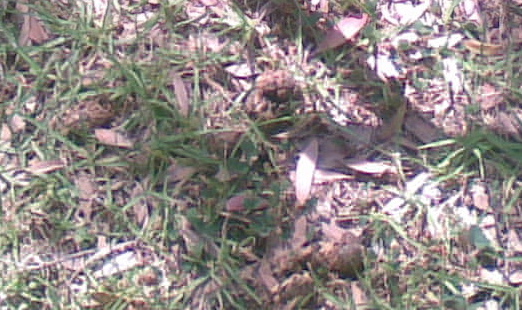
signThere’s peace, but it’s an uneasy one. dog owner vigilance is not perfect, and lapses aren’t always tolerated with good grace. Take this sign, for instance. In case you can’t see the photo, it shows a neatly printed A4 sheet stapled to a wooden stake: “Please pick up your dog’s poo / Small children about / Thanks”. At first glance you might take this for a courteous request that we all think about hygiene. But a close look reveals that it is nothing of the sort.

Clustered around the bottom of the stake, and around another identical sign roughly five yards away, is a scattering of drying dog turds. So the sign isn’t addressed to dog owners in general, but to a particular person, the one whose animal left this specific offering. Without the sign, the shit would have been invisible, but still capable of sticking to the sole of a shoe or attracting a small person interested in novel smells and tastes.

It occurs to me, though, that the ‘think of the children’ appeal is disingenuous, as it often is in other contexts. Surely if you thought small children, or even one small child, was endangered by something lying on the verge outside your house, you would remove the dangerous object rather than carefully manufacturing a sign asking someone else to do it? Clearly someone actually thought child safety less important than their impulse to advertise their (justifiable) irritation.

I confess that, like the maker of the sign, I decided this particular pile of poo was someone else’s business and walked on by.

After AFTRS

On Friday at Luna Park, AFTRS had its first whole-school graduation ceremony. As you’d expect, there was plenty of multimedia, and also as you’d expect it was beset by technical SNAFUs – but came through in the end. It was a nice touch to have a new cohort of media professionals being released on the world in a large room with the Harbour resplendent outside one set of windows and fairground machinery spinning outside the other. Peter Garrett gave a ministerial speech and left. Sandra Levy gave a CEO speech and shook the hand or kissed the cheek of every graduate, except one or two who accepted their testamurs and walked past her, oblivious.

Then yesterday we spent the afternoon at the Entertainment Quarter watching the fabulous AFTRS graduate screenings: five hours, 17 directors, 17 short movies. We would have stayed on for the Graduate documentaries (1 hour, 24 even shorter films) but we hadn’t checked out the program thoroughly enough in advance and had made other plans. What we did get was terrific. Here are some of my favourites, so when they turn up at a festival near you you’ll be able to say you read about them somewhere ages ago.

  • Craig Boreham, Ostia – La Notte Finale: the death of Pasolini, in subtitled Italian neo-realism, presumably shot around Sydney
  • Lucy Gaffy, The Lovesong of Iskra Prufrock: a radiographer dares to love in spite of the shadow
  • Martha Goddard, The Bridge: extraordinarily economic (and funny and suspenseful) evocation of a young woman’s complex life as artist, cynical media employee, family member, tenant, receiver of kindness.
  • C J Johnson, The Bris: a comedy involving old age, death, genital mutilation, religious inflexibility, and finally tender celebration, from a short story by Eileen Pollack.
  • Maziar Lahooti, Loveless: of the many offerings about young people dealing with love, sexism, drugs, despair, etc., I liked this best, perhaps because it incorporated elements of the heist genre.
  • Tresa Ponnor, Sosefina: I wouldn’t be surprised to see this turn up on ABC3 – a Pacific Islander schoolgirl in a colour saturated world tries to join the’popular’ group, but finds home is best.
  • Alex Ryan, Valhalla: I’m the director’s father and make a brief appearance in the background of one shot, so feel free to discount my opinion, but I loved this grainy glimpse of a dystopian future, playing an elusive adventure story off against the tentative beginnings of a relationship.

Added later: Alex told me that some of his fellow graduates already have established bodies of work. I’ve added links.

Mungo on Kevin

Mungo MacCallum, Australian Story: Kevin Rudd and the lucky country (Quarterly Essay issue 36, 2009)

Mungo MacCallum is now, according to the blurb of this Quarterly Essay, one of Australia’s most influential political journalists. He was probably already influential all those years ago when he was telling Nation Review readers how well Prime Minister Gough Whitlam filled a pair of swimming trunks, but now he is an elder. Mercifully, he is also still a bit of a smart Aleck.

There are no hints here about Kevin Rudd’s physical endowments – the essay’s main interest is in the nature of his appeal to voters. The essay quotes poetry, mainly bush verse, including a savage parody of ‘Clancy of the Overflow’:

He was poisoning the water when he chanced upon a slaughter
So he joined in patriotically to massacre and rape
And he sees the vision splendid of the native problem ended
and a land made safe for cattle from Tasmania to the Cape.

The essay takes the odd potshot at contrarian right-wing columnists. It produces some fabulous quotes, including for example a definition of a modern progressive as ‘a fella that stumbles forward every time somebody shoves him’. (Sadly there are no footnotes, so we often don’t know what wits are being quoted – I’m guessing Mungo himself did the Paterson parody.)

That is to say, there’s a lot to enjoy in this essay. It also has substance – of an airy sort. It deals with policy, that’s true, and Kevin Rudd’s largely successful response of the GFC, but mainly it argues that he taps into some deeply held myths about what it means to be Australian – egalitarianism, fairness, the larrikin–dutiful citizen dichotomy, that reluctant progressiveness, ‘fervent, if understated, nationalism’. ‘For all his nerdiness and prolixity,’ he concludes,

there is something very Australian about him, and the voters recognise it. In a totally unexpected way, Rudd has given them back their Lucky  Country – and this time not in a spirit of irony, but one of self-belief.

Hmmm … But I enjoyed the ride.

This issue also includes the 2009 Quarterly Essay Lecture, ‘Is Neo-Liberalism finished?’ a search for the meaning of what he calls the Great Recession by the chair of the editorial board, Robert Manne. The lecture isn’t as much fun as the title essay, covers some of the same ground, occasionally manages to be incomprehensible when explaining (yet again) how the Great Recession came about. Where MacCallum takes cheerfully bitter potshots, Manne eviscerates in earnest.

And then there’s correspondence about Noel Pearson’s Radical Hope. A number of the correspondents join in Pearson’s left-liberal bashing, and there’s a certain amount of jockeying for position from politicians and activists. Voices from the old Howard Government era talk of Pearson’s pre-eminence as an Aboriginal public voice on the national scene, without mentioning that the deliberate dismantling of ATSIC had destroyed any more organised and representative voice. Christine Nicholls, former principal of Lajamanu School in Yuendemu, is the only educationalist to write a substantial response, and she does a brilliant job of respectfully taking Pearson to task for his straw-man arguments against ideologically driven educationists. The only Aboriginal voice is that of Chris Sarra, who gently chides Pearson for dismissing elements of his own educational work without having ever visited it. Over all, the correspondence confirms that Pearson’s conversation is mainly with conservative white leaders, but it also shows him as eager to do more than simply pontificate as a lone voice.

No, really, what does fortuitous mean?

Mungo MacCallum has coined more than his share of memorable phrases. He quotes poetry and can work up an excellent bush ballad. His prose is generally witty and lucid. He’s not an academic, he’s a writer. In the current Quarterly Essay, which I’ll say more about in a day or two, he writes this:

From the start [non-Indigenous Australians] showed a preference for the young tree green of a new land over the old dead tree of Europe, which was in any case so remote as to be, for all practical purposes, irrelevant. Geoffrey Blainey’s ‘tyranny of distance’ was frequently seen not as a curse but as a blessing. Australia was fortuitously and proudly girt by sea.

I can’t make that fortuitous mean `happening by chance’, whether to one’s advantage or not. The word has clearly taken leave of its dictionary meaning. As in the example I quoted a couple of weeks ago, it seems to be a kind of intensification of fortunate, almost an equivalent of providential for those of us who no longer believe in Providence.

What do you think? Mungo, are you there?

Niece news

I don’t suppose many people would see an item about youth suicide in Queensland as a good news story, but this story in today’s Sydney Morning Herald marks my niece Kym’s first byline in a major newspaper. They’re a talented lot, my nieces.

Coetzee’s Youth

J M Coetzee, Youth ( 2002)

This is the second of three (so far) novels in Coetzee’s Scenes from Provincial Life series, which are fiction, but also by strong implication unsparing autobiography. It takes up our hero as an 18 year old student and aspiring poet living in a one-room flat in Capetown and drops him again as a 24 year old computer programmer living in an upstairs room in a house in the depths of the Berkshire countryside, convinced that he is a total failure.

It’s the 1960s. The young Coetzee is committed to escape being defined by his family, trapped in the dullness of colonial life, and torn apart in what he sees as the impending revolution in South Africa. He aspires to the status of poet, and theorises endlessly to himself about how he should live (as opposed to write) to achieve that aim. He agonises over his incompetence in relationships with women, over which writers and artists he should emulate (Ezra Pound presides over his pantheon, and Beckett the novelist is a late apparition), over how to shake off his colonial identity. He rationalises his moments of appalling behaviour and then berates himself for his rationalising, and for his general coldness. He aspires to Angst, but realises his sole talent is for ‘misery, dull, honest misery’.

I loved this book. There are two possibilities: either Coetzee’s interior life as an adolescent/young adult was uncannily like mine, or he has turned a searing light onto his experience of that time of his life and laid bare something essential about the collision of adolescent romanticism with the demands of reality. Given that the externals of his life weren’t noticeably similar to mine, and I never had his overarching sense of destiny, I’m guessing it’s the latter. Young Coetzee’s misery, confusion about sex, self castigation, romantic theorising and bitter disillusion are all presented without commentary, but with a gentle irony – which may derive partly from the reader’s knowledge that this pathetic youth went on to win the Nobel Prize (and possibly that an idea that comes and goes on page 138 was the seed of his first novel), but which also simmers in the prose, bubbling to the surface as humour often enough to suggest, without invalidating the character’s intensely felt experience, that an older, wiser head is constantly there, shaping the story. My favourite bubble pops up when young Coetzee, who lives alone and feeds himself with classic adolescent male incompetence, is ruminating on Ford Madox Ford:

Ford says that the civilization of Provence owes its lightness and grace to a diet of fish and olive oil and garlic. In his new lodgings in Highgate, out of deference to Ford, he buys fish fingers instead of sausages, fries them in olive oil instead of butter, sprinkles garlic salt over them.

We do wonder if he misses the point about so much else by quite so wide a mark.

Young Coetzee was writing an academic thesis on Ford. The paragraph after the one I just quoted describes the thesis as involving ‘the task of reducing his hundreds of pages of notes in tiny handwriting to a web of connected prose’. My sense is that this book has achieved something very like that: whether Coetzee has drawn on actual diaries from the period or on the virtual pages of his recollection, he has created from the material a shiny, elegant narrative web.

Early in his stay in London, young Coetzee hears a BBC talk about the Russian poet Joseph Brodsky and is enraptured by his poetry. He reflects on what Brodsky and a handful of other poets mean to him:

they release their words into the air, and along the airwaves the words speed to his room, the words of the poets of his time, telling him again of what poetry can be and therefore what he can be, filling him with joy that he inhabits the same earth as they. ‘Signal heard in London – please continue to transmit’: that is the message he would send them if he could.

If in my early 20s I could have received this book as a signal, I would have responded, I’m sure, with a very similar joy. As it is, confident though I am that J M Coetzee won’t be reading my blog, I’m sending him a belated message on behalf of my younger self:  ‘Signal heard in Sydney 40 years later – please continue to transmit.’
—-
I read Youth in a library copy. A previous reader had ‘corrected’ the text:

  • on page 53 s/he fixed a simple typo, inserting be in ‘It would nice to write’ (‘Thank you,’ I thought)
  • on page 72 s/he altered pay to pays in ‘But none of the girls on the trains pay him any attention’ (‘Hmm, you are an old-fashioned pedant, but at least you left that But alone’)
  • on page 85 s/he changed oneself to one’s self in the sentence ‘Only love and art are, in his opinion, worthy of giving oneself to without reserve” (‘Someone please take the pen away from that person’)
  • on page 95 s/he changed the phrase to eat packet soup, possibly because one doesn’t eat soup, then – sensibly – scratched  out the alteration
  • thereafter, s/he presumably resigned themselves to the probability that Coetzee and his editors were competent after all.
  • A Raffish Experiment launch

    In my mid 20s I worked for The Currency Press. It was my first real job, and it spoiled me forever. Our offices were frequently visited by luminaries from Australia and beyond. David Williamson ducked to get under the lintel; Jim McNeil and Peter Kenna duelled with anecdotes over afternoon tea; Alex Buzo described one of his leading ladies as having a face like the back of a bus; Richard Eyre (whose Stage Beauty I watched on TV last night) dropped by on a visit from the UK; Aileen Corpus chatted about developments in Aboriginal theatre; Dorothy Hewett and Merv Lilley moved in just up the road. I don’t remember if I actually met Rex Cramphorn, but his Performance Syndicate was one of the most exciting things happening in Sydney theatre at that time. I remember editing a short piece he wrote for a little newsletter that Currency used to produce, in which he imagined a production of Don’s Party in which the actors wore masks and high platform soles. More to the point, his productions made a deep impression on me – I still find myself humming snatches of song from Muriel, a play he directed about a young woman with developmental delay.

    Tonight at Gleebooks Louis Nowra, another occasional visitor to our office back then, launched A Raffish Experiment, a collection of Cramphorn’s writings, edited by Ian Maxwell and published by Currency Press. I got there early, bought a copy and sat in a corner browsing it, sipping on a glass of water (the only non-alcoholic drink on offer) while the crowd gathered. I didn’t see anyone I knew to talk to, though there were a number  faces familiar from stage, screen and the photographs in the book. I spent a lovely 20 minutes reading reviews of plays I saw more than 30 years ago. In 1970 Cramphorne (as he then spelled his name) described Hair as ‘the only doggedly good value in theatre here’, and ‘enjoyed the texts of Rosencrantz and Guildenstern Are Dead and Little Murders – though not the productions’. He describes the overture of a production of Reedy River as ‘a blackout in which the sonic hum of the air-conditioner contested for precedence with a medley of tunes hummed offstage’. Oh how one yearns for such a fearlessly opinionated reviewer these days.

    As the speeches were about to begin, a tall silver-haired man sat next to me. we exchanged pleasantries, and then I recognised him and said, ‘Oh hello Arthur!’ It was the great Arthur Dignam who of course doesn’t know me from Adam. By the time we’d established that, the lights had dimmed and the launch was on.

    Louis Nowra told charming tales of his collaborations with Cramphorn. Unlike almost everyone else in the theatre he didn’t pay much attention to opening nights – the show would come good eventually, and it didn’t really matter if that eventuality was three weeks into the season. (I must have been one lucky punter, as I have nothing but good memories of his shows, and looking at the list up the back of the book I can see that I did see quite a few.) Ian Maxwell read some excerpts from the second part of the book, which deals with Cramphorn’s own practice in the theatre and said he hopes it’s a book that will prove useful to anyone starting out on a career in the theatre – he wished he had been given a book like this when he was starting out to be a director: we can learn from Brecht and Artaud, and also from Rex Cramphorn.

    Speaking as one whose role in the theatre is to put a bum on a seat, I do hope a lot of them on the supply side read the book, and are infected with its disdain for the dull. The launch was a muted celebration of exactly that infection.

    Verbatim

    Today at the dementia ward, not a word of exaggeration:

    Penny: A choir is coming soon.
    Dot: (alarmed) There’s a fire?
    Penny: No, there’s going to be a choir.
    Dot: There’s going to be a fire?
    Penny: No. A choir! They’re going to come here and sing some lovely songs.
    Dot: I couldn’t care less about the songs.
    Penny: That’s not true, Dot. You love songs. You were just singing along with the CD a minute ago.
    Dot: Yes, but not if we’re all going to be burned to death.

    Mollie’s conversation, meanwhile, consists almost entirely of nods and headshakes. We tried to entice her into exercising her arms by playing with a balloon. After responding with apparent indifference for a while, she eventually batted the balloon in my direction with an emphatic backhander. I thought she had a mean look in her eye when she did it, but thought I must be mistaken, because she has such a sweet disposition. Later Penny confirmed that she shared my impression: every time Mollie hit the ball in my direction it was as if to say, ‘Take that, and f*** off!’

    Bankstown Cooks with Grace Under Pressure

    Bankstown Pressure Cooks final cook-off was today. You may have seen some publicity during the week, even heard Shaista Khan talking to Deb Cameron on 702 Mornings.

    I was drawn into the vortex, ferrying chairs and other equipment yesterday as well as providing amateur tech help, then today acting as marshal (because the Centro shopping centre insisted that there be marshals lest the fifty or so people who turned up disrupt the Saturday morning shoppers), getting the Powerpoint program to run, and generally being helpful.

    It was a terrific event. The competing teams had to cook a salmon dish in a cuisine that was outside their own heritage. In earlier rounds, Lebanese entrants had cooked Thai, Chinese had cooked European pastries. Today, the stretch wasn’t so great: ‘Hot and Spicy’, a Chinese couple cooked Thai, and the Maltese ‘Crazy Daisies’ cooked Italian. But it was far enough to satisfy the judges, and a fabulous nailbiting time was had by all. The local member and the mayor were there. The specially and expensively installed electricity didn’t work, so someone rushed out to buy electric frying pans. The four cooks didn’t seem to miss a beat. ‘Hot and Spicy’ won by a whisker.

    The mood was great. Lots of hijabs were in evidence, though it’s the second day of Eid l-‘Aḍḥā and presumably the hijab wearers had plenty of cooking of their own to do at home. Apart from the inadequate electricity, the only thing approaching a sour note was the two tables of elderly Greek men who evidently meet in that particular spot every Saturday morning to drink coffee, read the newspapers, gossip, argue, finger their beads. They paid casual attention to our goings-on, but clearly weren’t going to budge from their routine: if it could survive transplanting from the Aegean to western Sydney, then no fuss about cooking was going to cause it to falter.

    My recent reading prompted me to reflect that this is the utter catastrophe that White Australia was desperately trying to protect us from.

    Girl 3

    Stieg Larsson, The Girl Who Kicked the Hornets’ Nest (2007; tr Reg Keeland, Maclehose Press 2009)

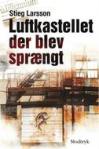
    Also known as: The queen in the palace of currents of air – A Rainha no Palácio das Correntes de Ar (Portuguese), La reina en el palacio de las corrientes de aire (Spanish), La Reina al palau dels corrents d’aire (Catalan), La reine dans le palais des courants d’air (French); The queen of the houses of cards – La regina dei castelli di carta (Italian); Justice – Gerechtigheid (Dutch); Forgiveness – Vergebung (German); Exploding  castles in the air The Castle in the Air That Was Blown Up (thanks to Reg Keeland in the comments for the correction) Luftslottet som sprängdes (Swedish, original), Luftkastellet der blev sprængt (Danish), Pilvilinna joka romahti (Finnish), Luftslottet som sprengtes (Norwegian). Dear commenters, please correct my translations of these titles if you think they need it.

    Plenty of material there for a prediction exercise in a literacy class, and then there are the covers:

    In fact, as you would expect, neither the titles nor the covers actually tell you much about the book at all. It’s very long, hard to put down, and could have done with more stringent editing. All of its twists and turns are signalled well in advance, and there’s a prolonged anticlimax. but I liked it more than the other two. The Pippi-Longstocking-esque Lisbeth Salander is confined to a hospital bed and then a prison cell for almost the whole book, so the author’s irritating fascination with her didn’t have a lot of room to play. Perhaps perversely, I enjoy the regular pauses in the action in which characters explain to each other the specifics of the Swedish legal–political system and constitution. I even came to savour the meticulous plotting of police procedures and tracking of journalistic protocols that regularly slow the action to a crawl.