The Brain that Changes Itself

Norman Doidge, The Brain that Changes Itself (2007, Scribe 2009)

1DoidgeThis has been beside my bed since the Sydney Writers Festival in May, and had been vaguely circling my TBR list well before that. It was James Tiptree Jr’s stories that finally got me to the point of opening it up. Alice Sheldon was a research psychologist and her stories reflect a deeply pessimistic sense, presumably based on her professional knowledge, that brains are hardwired. In ‘Houston, Houston, Do You Read’, for instance, the all-female Utopia, faced with three men delivered to them by a freak of time travel, have to choose between allowing the innately violent, hierarchical creatures to ruin their society and killing them humanely. In an alternative reading, of course, it’s a mostly Australian-heritage Utopia faced with three US military types. Either way, plasticity – that is to say, the capacity for change – doesn’t enter into it. My own experience contradicts this pessimism: with enough thoughtful work, and enough taking of two steps forward for each step back, I believe we can achieve all sorts of things that look impossible. The Norman Doidge book promised good news from the hard sciences and I turned to it for evidence-based optimism.

As well as some unexpected echoes of my recent Tiptree reading (for example, Doidge’s account of the PETA’s 1981 intervention to ‘save’ monkeys from alleged experimental cruelty reads like a real-world equivalent of the fantasy exodus from the labs in Tiptree’s 1974 story ‘The Psychologist Who Wouldn’t Do Awful Things to Rats’), I got what I was looking for.

The book is immensely satisfying science for lay readers, that is to say for people who know Sweet Fanny Adams about neuroscience but are interested in the workings of human brains. The subtitle – Stories of Personal Triumph from the Frontiers of Brain Science – is a fair summary of the book’s approach to its subject: each of eleven chapters matches the work of a scientist or clinician with the story of a person who has benefited directly from that work. At the start of the twentieth century, mainstream brain scientists were localisationists, working with a model of the brain in which every function was performed by a particular section of the brain, and if that part was damaged, the function was permanently lost. With increasingly reliable and accurate techniques for mapping brain activities, brain scientists have been discovering that the brain is much more complex than that model allows, and much more adaptable. What’s done cannot be undone, sure enough, because the brain isn’t elastic, but nor is it made of stone. Neurons that fire together wire together – if you can figure out a way to make them fire separately, it takes a surprisingly short time to make them unwire from each other. A Spanish scientist named Alvaro Pascual-Leon demonstrated in the 1990s that ‘our thoughts can change the material structure of our brains,’ and that’s only a part of it.

Seen from one point of view, the book is full of wonders. A woman born with only half a brain nevertheless reads, relates intelligently to other people, performs astonishing feats of memory, and dreams of a heaven tailor-made for her needs. People paralysed by stroke years earlier recover speech or movement through an intensive exercise regime. Persistent pain in phantom limbs is relieved using a mirror in a box. People move objects using only their imaginations (helped by electrodes attached to their brains and linked to computers).

From another point of view, it charts the progress of hard science catching up with common wisdom. Contrary to the dogmas of the ‘mental health’ industry, observable changes in the brain don’t incontrovertibly indicate physical conditions that can only be remedied by drugs, surgery or electric shock. The aggressive assertions of evolutionary psychologists look even more ideologically based than they did without this evidence. Addictions, including to internet pornography, look a lot less like life sentences. Doidge is a Freudian, and the progress of one man’s analysis as an exercise in neuroplastic therapy. In an appendix, ‘The Culturally Modified Brain’ he writes:

Neuroplastic research has shown us that every sustained activity ever mapped – including physical activities, sensory activities, learning, thinking and imagining – changes the brain as well as the mind.

I’m glad my primary schooldays included endless amounts of memorising. It looks as if the years that lie ahead will need to include even more.

If Tiptree/Sheldon were writing now, perhaps her time-lost astronauts would be welcomed to the new Earth, and the story would have to become a novel to chart their progress. Perhaps, too, she would have found an intense, repetitive practice to overcome the depression that debilitated her.
Street-fightin’ gentry

A little of the paper war about Revolver spilled over into the physical world on the weekend. I was taking Nessie out for her evening constitutional, just as the café was closing round about 4 o’clock. As I neared the corner I became aware of raised voices. Rod, the café owner, was standing at the fence of nearby neighbours, and both the man and the woman of the house were making a lot of noise with their mouths. I’m a dreadful reporter – I couldn’t distinguish a word they were saying. But as I passed them, their little dogs came charging at the fence yapping furiously at Nessie. Nessie, of course, responded in kind and I was preoccupied with getting her to the corner. I did hear Rod say, with admirable calm, ‘Well, all I can say is, go ahead and take more photos …’ Someone told me that he had offered them free breakfasts, but it seems they are implacable.

Apparently just before I arrived on the scene, the outraged neighbour had shouted into the cafe, urging Rod to pack up and leave because no one wanted him there, and then seized the brass ashtray, threatening to smash it on the footpath. Oh dear!

Our new painting

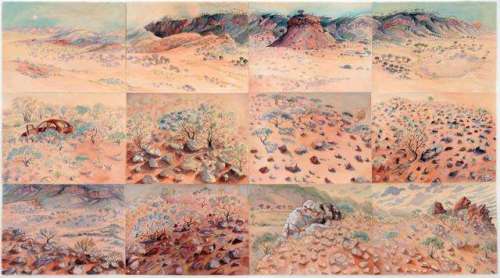
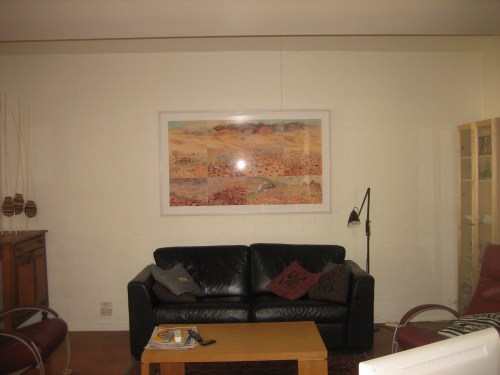
We really really couldn’t afford this. It’s Valley, by Carol Ruff, perhaps it should be rechristened Folie (à deux)

valley

But here it is on our wall, making the endorphins flow:

IN room

Star Songs of an Old Primate

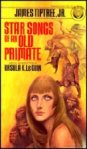
James Tiptree Jr, Star Songs of an Old Primate (Del Rey Books 1978)

0345254171Somewhere in the course of reading this book I realised it was a first edition, indeed an only edition, and that it’s been out of print for close to 30 years. You can’t even buy a copy on e-Bay. There is one collection of Tiptree’s stories still in print, Her Smoke Rose Up Forever, from Tachyon Publications in 2004, which contains eighteen stories compared to this volume’s eight, so perhaps there’s no big deal. Still it’s a shame that the fabulously self-promoting title of this collection has gone from the bookshop shelves. James Tiptree Jr/Alice Sheldon is the old primate in question, and a depressive old primate s/he is – I wouldn’t recommend these stories to anyone prone to letting grim prognoses for the planet take them on a nose dive. For all her feminism, her stories here feature an unhappy biological determinism, and even way back in 1978 she was terribly aware tht if nuclear war didn’t get us, then global warming or some terrible pandemic would.

I was glad to have Meet Me at Infinity still to hand, because Tiptree’s own comments on these stories, especially ‘Her Smoke Rose Up Forever’ and ‘Houston, Houston, Do You Read?’, greatly enriched the reading experience for me. Those comments make it clear that part of her project was to introduce what she calls software into hardware science fiction – she was au fait with cutting edge and out-on-the-edge psychological research of her time, and found in it the stuff of poetry.

Speaking of Meet Me at Infinity, I don’t care if F R Leavis said the artist’s biography was irrelevant to the work of art, ‘The Man Who Wouldn’t Do Awful Things to Rats’ gains tremendous resonance from its relationship to Alice Sheldon’s own history. Like her, Tilly Lipsitz is a researcher in psychology whose interests are at odds with the dominant mode of his place of employment. Like her, he is exhilarated by biological research; and their fields of enquiry are similar. Here’s a paragraph from the story (first published 1976):

He will never outgrow the thrill of it. The excitement of actually asking, after all the careful work of framing terms that can be answered. The act of putting a real question to Life. And watching, reverently, excited out of his skin as Life condescends to tell him yes or no. My animals, my living works of art (of which you are one) do thus and so. Yes, in this small aspect, you have understood Me

and one from an interview published in Contemporary Authors in 1983:

It takes time and work to learn how to ask a meaningful, unambiguous question of nature. For instance, you have to learn everything that has already been asked in your field, and what the answers were and the statistical techniques. And after you are qualified, there is still a period where you stand, as it were, in the great Presence, dejectedly hearing it grumble, ‘No … no … garble in …’ But you try and try, until one great day the needed cunning comes. And Everything-That-Is responds majestically, ‘Yes. You have truly grasped one of the hidden dimensions on which My creatures live and move.’ Time will never blur the wonder of that moment for me.

In the story, but hopefully not in the life, this thrill is overshadowed by the grim academic environment, strapped for cash even then and engaged in hideously cruel practices. That overshadowing grimness is characteristic of the stories, so even though there’s much that is rich in this book, I don’t see it becoming a favourite.

—–

And a niggle from a Down Under editor: It’s nice that Tiptree made Australian women the main surviving humans in ‘Houston Houston Do You Read?’, and gave the humanity of the future an Australian accent (‘date’ is pronounced ‘dyte’), but I wish she or her editors had checked the spelling of ‘Woomera’. I just checked in Google Books, and see that it wasn’t corrected for the 2004 edition either. Hooston, do you read?

The Alcoholic, comic

Jonathan Ames & Dean Haspiel, The Alcoholic (Vertigo 2008)

Disclaimer: I was not given this book by a publisher, nor is this blog entry a viral effusion in the hope that Vertigo will send me lots of freebies, though I wouldn’t be offended to be told that this review os not a review.*

1401210562I don’t imagine that many people would feel compelled to compare this comic with J M Coetzee’s Summertime. But here goes.

J M Coetzee’s hero is called John Coetzee; Jonathan Ames’s is Jonathan A. Both books, then, are presented as some kind of autobiography. In both, wiggle room is created, and the narrative saved from indulgent self-loathing, by the interposition of point(s) of view other than the author’s. In place of Coetzee’s multiple unreliable narrators, interviewees as well as fictional biographer, Ames has the graphic art of Dean Haspiel. It’s possible to imagine Ames’s story of his alcoholism being told for laughs, or with that creepy kind of apologeticness that leaves out the taking of responsibility, or in a way that invites hypocritical prurience, or as a hollow redemptive tale. Jonathan A is a writer, and at one stage he has an audience convulsed with laughter by an essay about his own fecal incontinence. But the pared down narration here, accompanied by Haspiel’s ruthlessly austere black and white art, gives us nothing to laugh at. There are sex scenes, and plenty of naked breasts, but there’s none of the adolescent eroticism of, say, Frank Miller, or for that matter Woody Allen. The hero makes excuses (he’s ‘allergic’ to alcohol, his well-meaning parents were too trusting and then died in a terrible car crash, etc), but on the page they remain just that – excuses. The final moment of decision is as unresolved as that of Summertime. Again and again, the visual severity of the images holds us to a moral (not moralistic) way of seeing. They’re very different books, of course, but they do share this uncompromising self-scrutiny. I don’t think I could have borne the story of  The Alcoholic presented as straight autobiography. As an uncomical comic (or graphic novel, if you need your sequential art to sound dignified), it’s a quick but powerful read.

*Given the frequency of my typos, I should note that that ‘os’ comes from the headline of Rosemary Sorenson’s article as it is online just now. By the time you go there it may have been corrected.

Summertime, Boyhood and the book group

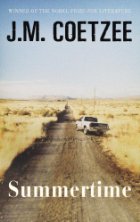
J M Koetzee, Summertime (Knopf 2009)
—-, Boyhood (Secker & Warburg 1997)

I wasn’t there when Summertime was chosen for the Book Group1846553180, and might well have argued against it. I’d read some bemused discussion about its mixing of truth and fiction and multiple perspectives that made it sound like the kind of clever writing that disappears up its own whatsit – you know, technically challenging but otherwise as gripping as batshit.

It turned out I loved it, and put in orders at the library for the two previous volumes in Coetzee’s Scenes from Provincial Life series, Boyhood and Youth. It’s autobiographical writing, covering the years when Coetzee was teaching at school and university in Cape Town and writing his first novels. It’s not straightforward autobiography, though. The John Coetzee character is dead, so who knows in what other respects the narrative here differs from the factual record? The book consists mainly of transcripts of recorded conversations between an (almost certainly invented) academic biographer and a handful of people. I have no idea what relationship any of the interviewees have to actual people, but I am persuaded that there’s a genuine project here on Coetzee’s part of imagining how he was seen by a number of key people in his life at that time. ‘Coetzee’ doesn’t exactly emerge covered in glory. In fact, if this had been told in straightforward narrative, even in third person, some of it would have been cringingly embarrassing; and some of it, removed from the realm of hints and suspicions, might have laid the author open to criminal investigation. Coming mainly from women who had, or in one case (if she is to be believed) didn’t have, sexual liaisons with him, it’s funny, and for me at least very engaging. I’m in awe of Coetzee’s feat of creating self-portrait from the point of view of people he’d had unsatisfactory intimate relationships with, most of them much more interested in themselves than in him. It’s an act of great imagination and unsparing self scrutiny.

BoyhoodAt the risk of appearing excessively diligent, I managed to read Boyhood before the Group met. At least on the surface, it’s a much more conventional piece of work, a possibly fictionalised memoir of the author’s childhood told in the third person. (We don’t learn that the boy’s name is John until about the halfway point.) Unlike the unreliable interviewees of Summertime, the narrator appears to be omniscient, though he reports the young John’s understanding of things without signalling to the reader when the boy has got it wrong. This sometimes results in a straightforward irony, as in matters of reproductive physiology. Elsewhere, as the boy struggles to make sense of his relationships to his parents, of the English, the Afrikaans, the Coloureds and the Africans, of South African history, of religion and his own preadolescent stirrings, the narrator leaves us alone with the boy’s painful sense of his own peculiarity. The effect, for me at least, rang very true to what childhood is like, stripped of the gloss of nostalgia and self-preserving sentiment. An unexpected bonus from having read the book out of order was the poignant discovery that the father for whom ‘John’ cares in Summertime was an object of his contempt and intense dislike in Boyhood.

Tonight we discussed Summertime in the book group. There were ten of us, fairly evenly divided between those who loved the book and those for whom it did nothing except perhaps induce sleep. A couple of guys turned up with their books bristling with sticky yellow papers, and argued for particular ways of reading the book. Over melon and prosciutto and then strawberries, the conversation tended to take the form of them what enjoyed the book telling them what didn’t about what had given them pleasure or illumination. One man talked about the theme of embodiment – that the struggle of the character was to find a way of being in the body, of having a voice, and the structure with its multiple filters and distancing devices fitted the theme brilliantly. Another read it as an extended build-up to the passage towards the end where a woman says of the John Coetzee character that people may be interested in him because he’s won the Nobel Prize and is seen as a brilliant writer, but to her he is just a man, and not a very interesting one (though others saw that passage as a bit of almost mechanical rounding out of things). Yet another was interested in it as a portrait of a man whose masculinity was under attack. And so on. It was a terrific evening; the book is perfect for that kind of free-ranging discussion.

Sculpture by the Sea

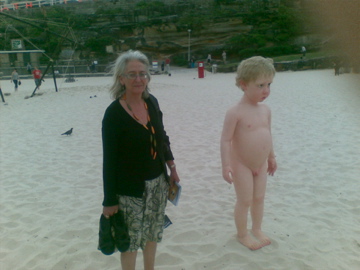
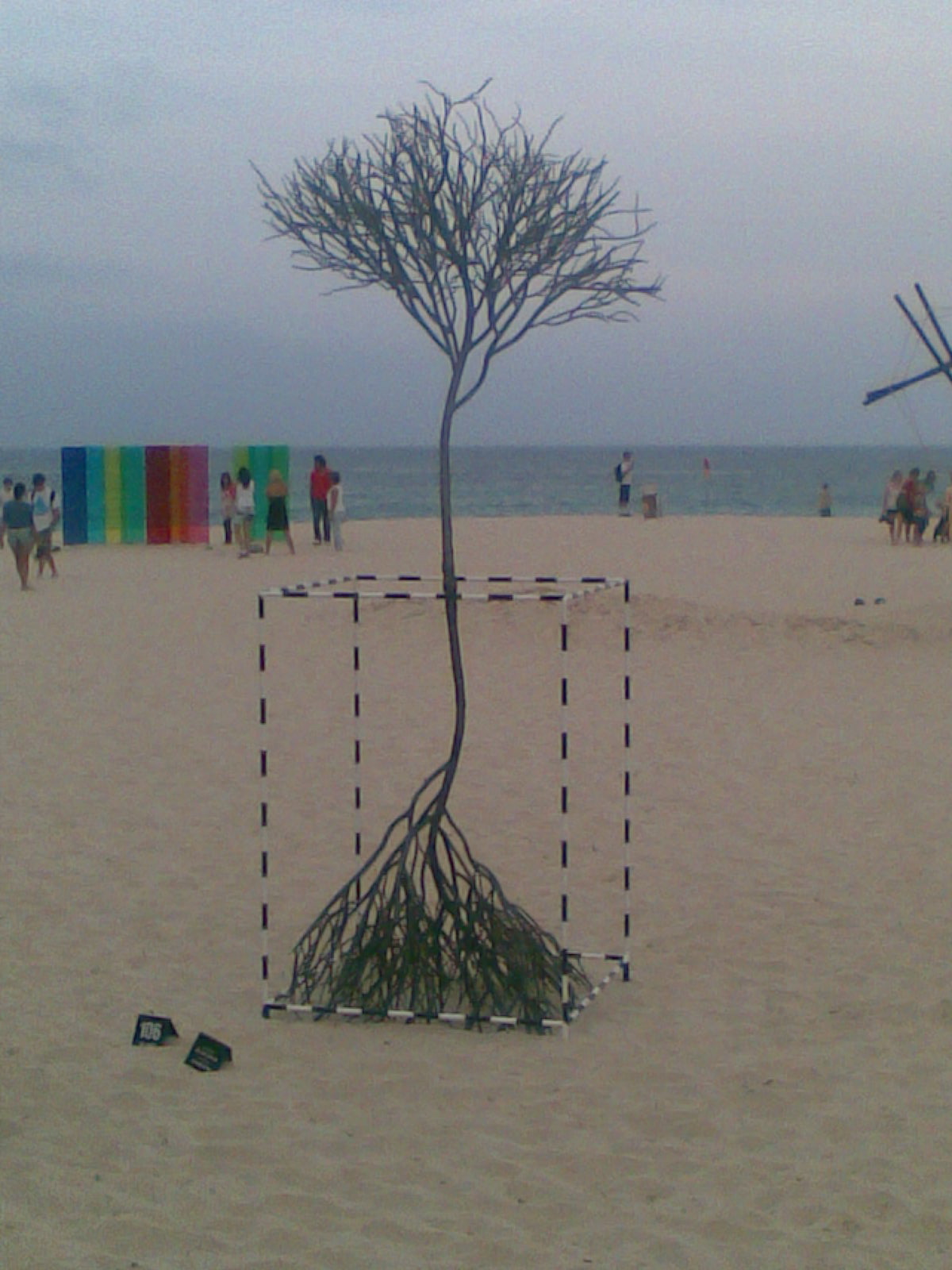
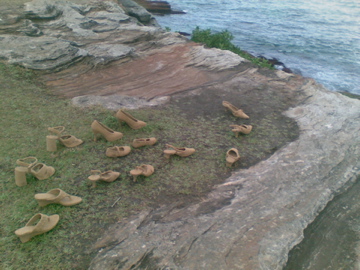
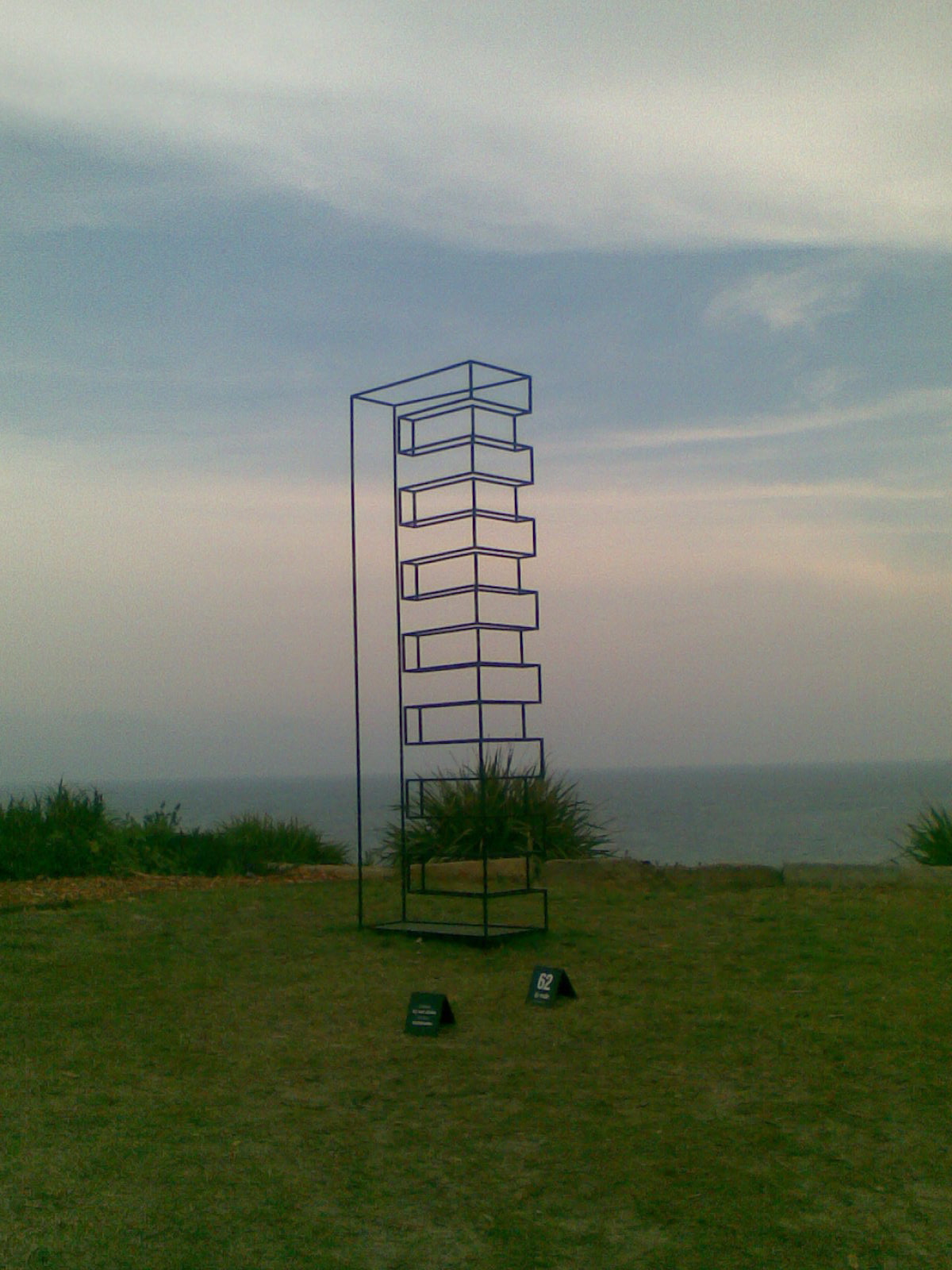
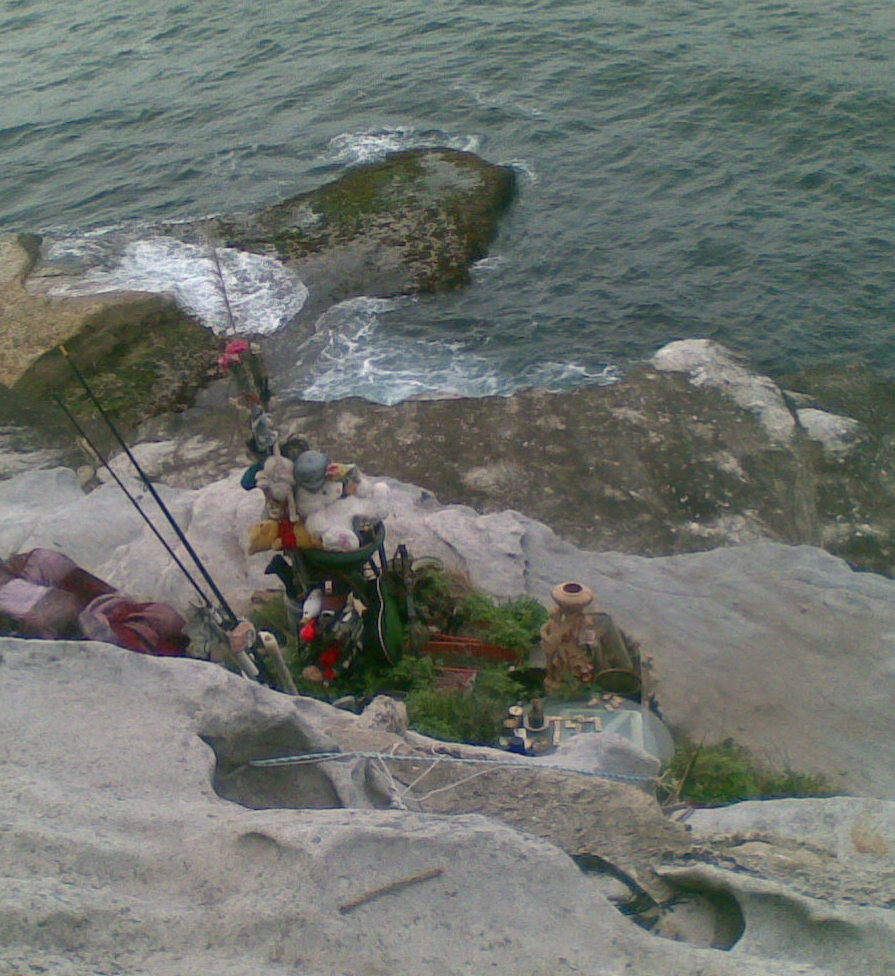
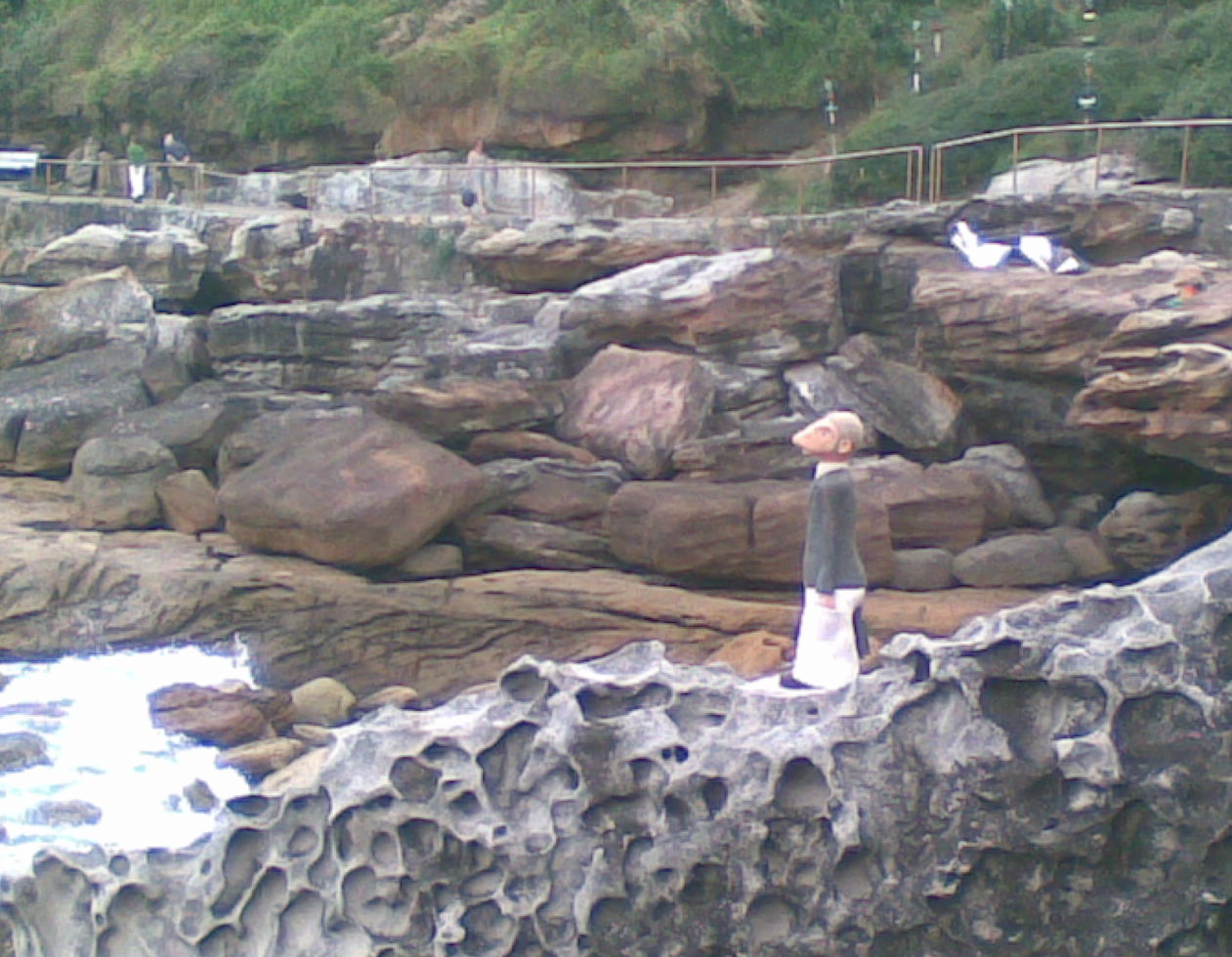
It’s that time of year again in Sydney. The jacarandas are in bloom, the first cicadas are shockingly loud, the weather lurches from chilly to sweltering from one day to the next, and the cliffs between Bondi to Tamarama have become a sculpture gallery. Richard Tulloch has already reported, with fabulous photos, on this year’s Sculpture by the Sea, but that’s no reason for me not to tell you, again, what I saw there, and post an album of phone photos (yes, we forgot to take a camera).

We went this afternoon to avoid the weekend crush. It was far from crowded – the joggers were hardly inconvenienced at all.

As I’m writing the captions for those blurry, poorly composed photos I realise that I could have spent much longer on that walk. For instance, there’s a brightly coloured little house that I’m told has nasty surprises inside, but I couldn’t get anywhere near it because it was full to bursting with children who had been so charmed by the outside that whatever was on the inside made no apparent impression at all. I could have sat with some of the delicately moving pieces for a long time. There were one or two pieces positioned so as to take the walker by surprise. Perhaps I’ll go back to savour them a little.

The sculptures will be there until 15 November.

White Rabbit and Menagerie

This afternoon we visited the White Rabbit Gallery in Chippendale, and then went on to Object Gallery to see their part of the exhibition Menagerie.

The White Rabbit Gallery has been open for exactly three months. In a converted Chippendale warehouse, a couple of very rich Sydneyites have set up a space to share with the public their collection of contemporary Chinese art. Admission is free, and gallery staff members are on hand on all four floors to answer questions, point out things you might have missed, offer a word or two about the biography of the artist. From the meticulously shredded Mao suits of Sun Furong’s Tomb Figures, through the spectacular trompe-l’oeuil draughtsmanship of Ma Yanling’s four images of opera singers, to Chen Wen-Ling’s over-the-top sculptures (guaranteed to make a pig-lover smile, and maybe even a pig-hater) this gallery is fabulous. Thanks, Judith and Kerr Nielson.

Menagerie: Contemporary Indigenous Sculpture is, according to the Australian Museum web site, ‘a groundbreaking exhibition featuring animal sculptures by 33 established and emerging Aboriginal and Torres Strait Islander artists’. Part of it is at the Museum, part at the Object Gallery up the hill (The site uses flash but irritating Flash: click on Explore on the side and you’ll get details of this exhibition). We’ve yet to visit the former. The latter occupies the single room of the Main Gallery, with a 20 minute video on six of the artists playing on a loop in the small upstairs space. It’s magic. I particularly loved ‘Red, White and Blue’ by Danie Mellor. This consists of three kangaroos, about a metre high, with front paws covering respectively mouth, eyes and ears. They’re made of mosaic tiles (respectively red-patterned, white and blue-patterned), except for their paws and ears, which are made of kangaroo skin, creating the impression that living animals have been encased in unyielding shells made from the detritus of settler society. They’re beautiful, poignant, and made by a man of Mamu heritage (I was born in Mamu country). I just googled Danie Mellor and found out that he won the Telstra Aboriginal Art Award this year, and that he had a solo exhibition at Elizabeth Bay that closed yesterday. I have terrible timing.

The White Rabbit exhibition stays up until January, when it is replaced by other contemporary Chinese works from Judith Nielson’s collection. Menagerie closes on 15 November.

Children’s literature is not a genre

There’s a way of talking about children’s literature as if it’s a genre, like detective stories or police procedurals or thrillers or vampire stories or fantasy novels. I think this is quite wrong. A genre has acknowledged conventions, that can be followed flexibly or even violated in any particular specimen of the genre. The conventions change and grow with time. But they still rule. It’s not a vampire movie if no one sucks blood. It’s not a detective story if there’s no major crime in the first quarter of the book. Children’s literature isn’t like that. It’s defined entirely by the imagined readership. I like Margaret Mahy’s definition, which I remember as: Children’s literature is literature that you can start enjoying while a child.

The two books I’ve just read illustrate my point.

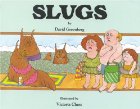
David Greenberg & Victoria Chess, Slugs (Pepper Press 1983)

0316326593

I read Slugs for the first time in years the other night. My five year old great-niece was staying with her father. At bedtime, having scoured our bookshelves, she emerged with this unpleasant little book and asked me in her sweet, shy way to read it to her. Evidently she’d fallen in love with the book earlier in the year when they stayed here in our absence. I complied with as much gusto as I could muster. I find the book profoundly unattractive. It has rudimentary rhymes, describing a huge variety of slugs, many being subjected to would-be comic indignities, tortured and murdered in hideous ways, all with images showing the brown creatures impassively accepting their fates, until in the last pages they come and wreak a horrible revenge on a child (known in the book as ‘you’), ending:

And after how you’ve treated Slugs
It surely serves you right!

My great-niece seemed to enjoy having this horror read to her, and when I’d finished she sat for maybe half an hour studying the pages intently.

Clearly she is the reader the creators had in mind – as well as my sons twenty or so years ago. I am not that reader.

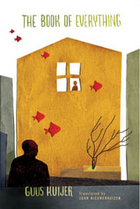
Guus Kuijer, The Book of Everything (2004; Translation by John Nieuwenhuizen, Allen & Unwin 2006)

1kuijer

The Book of Everything is definitely a children’s book, but it couldn’t be more different. It has more in common with J M Coetzee’s Boyhood (which I’ll blog about during the week), in subject matter, point of view, even tone, than it does with Slugs. A lonely boy, helped by apparitions of Jesus and an old woman who is almost certainly a witch, finds a way to free himself and his family from the dominion of his harsh, violent, religiously extreme father.

The book speaks in particular to literate children. The hero,Thomas, finds inspiration in Emil and the Detectives, Joanna Spyri’s All Alone in the World and the Book of Genesis. The narrative assumes familiarity with literary conventions (OK, there are some conventions!), particularly those about witches in children’s literature. I found my adult-reader self wanting explanations of Thomas’s visions: ‘Please be clear about this. Is the poor child hallucinating from terror, or is this a world where such things really happen?’ Such questions are just plain irrelevant to the book’s imagined reader, and once I moved over to occupy that position the book opened up to me – or I opened up to it.


It occurred to me that some animated movies tend to wink knowingly over the heads of the children in their audience, both these books are winking at the children – ‘Don’t tell the adults.’ If we have to talk genre, the first is something like Perversely Cautionary Verse (which may be a genre found only in children’s literature), the second Domestic Magic Realism (and I doubt if that is limited to any age readers).

I read The Book of Everything on Richard Tulloch‘s recommendation. His dramatisation of it will be playing at Belvoir Street at the end of the year. It seems to me that one of his challenges is to take the story away from the children and give it to the adults who will presumably make up the bulk of the Belvoir audience.

Revolver: the paper battle

As regular readers will know, I’ve considered the progress of our corner shop from sad dereliction to rebirth as Revolver, the coolest cafe on the block, to be a Very Good Thing. It’s rare these days to see the cafe empty, so I’m guessing that my sentiment is widely shared, and when Rod put in a DA to add four more four-seat outside tables to the one that’s currently allowed, I wished him well and sent an email to Council in support.

But it seems not everyone has cause to rejoice. People drive here now, especially since Revolver has been written up in Places People Read, and this has created parking problems for the immediate neighbours. Sometimes the clientele leave dogs tied up outside, and there are noisy encounters as local dogs go by. Yesterday we received a letter from the Council telling us that an Assessment Report was now available on the Council’s web site.

30102009(002)

Kindness to smokers and dogs

If you visit the web page where the DA is tracked and click on the little ‘+’ sign next to the heading ‘Documents’, you get some idea of the agonising paper trail that must be followed to get a project like this up. Roughly 50 documents were generated – though admittedly many were pretty much duplicates (our today’s letter is there, along with the similar letter to others who put in a submission). The Assessment Report, once you get past the bureaucratese, is a fascinating documentation of democracy in action. Roughly half of it is taken up with responses to the objections, which are quoted and dealt with paragraph by paragraph. While I can see that people had grounds for unease, particularly in relation to the parking issue, I admit to being shocked by the tone of some of the objections, peppered as they are with words like ‘ludicrous’, ‘blatant’, ‘incomprehensible’, ‘disingenuous’, ‘unreasonable’. To have lodged an application at all is, in one person’s view, barely legal. Another seethes over the OH&S implications of Rod’s practice of putting a bowl of water out for passing dogs, asserting that it leads to ‘excessive, uncontrolled howling’. That smokers will throw their butts and cigarette packets into people’s front yards, as history demonstrates, is another cause for complaint. What’s more, ‘families accompanied by their children on bikes and scooters and a baby in the pram’ might congregate there in ‘large and inappropriate’ gatherings.

The case against the extra tables has not, so far, prevailed. The report recommends that the DA be approved with conditions about smoking, littering and so on. I’m glad of that, but sad to realise that this no longer an unalloyed feel-good story!