Tag Archives: Abbas El-Zein

Sydney Writers’ Festival 2025: My day two, part two

By the end of the festival I was suffering from information overload. I plan to blog about every session, but it may take a little longer than I’d like. I’m writing this on Tuesday – about last Friday.


2 pm: Alan Hollinghurst: Our Evenings
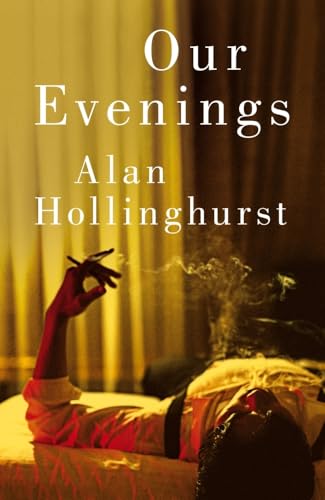
Hollinghurst appeared on stage, the very picture of an urbane British novelist, in discussion with British journalist Georgina Godwin. (Georgina’s brother Peter is also a guest at the Festival – I didn’t book for any of his sessions but was enthralled by his conversation with Sarah Kanowski on ABC Radio, which – serendipitously – I listened to while walking home from the festival.)

The conversation focused on Hollinghurst’s novel Our Evenings, which I’ve read and blogged about (at this link). The conversation flowed and Hollinghurst had a lot of interesting things to say. I’ll just mention a couple of them.

GG’s opening question was about first-person narration. After talking about its advantages and limitations as he had found them in his first novels, Hollinghurst said that though he will never write a memoir, he realised that he wanted this book to read like one. He won’t write an actual memoir because he doesn’t really know who he is – and when the audience laughed at that he thanked us for our kindness but said it was true. (I just reread my blog post about Our Evenings and see that our book group felt that one of the main things about its protagonist David Win is that he doesn’t really know who he is. It looks as if we were onto something.)

Hollinghurst wanted a character who was like him but with at least one undisguisable difference. His main character / narrator, David Win, is mixed race Burmese and British. Hollinghurst wouldn’t have dreamt of giving David, say, Caribbean parents, which would have entailed a massive feat of the imagination. As it is, David (or Dave, as I’m pretty sure Hollinghurst called him throughout the conversation) never knew his Burmese father – he is brought up in a completely white environment with just mementoes – a photograph, some items of clothing. He never visits Burma/Myanmar, and knows no more about it than a white English novelist who does some online research. But the difference is real, and perhaps just as much as class and sexuality it’s a driver of the plot.

The other thing I want to mention came up in response to a question. There were no questions from the floor, but Georgina Godwin harvested them from an online platform. Someone asked what it was like to have progressed from being a queer novelist to being a British novelist. Hollinghurst said that probably happened with the Booker Prize for The Line of Beauty. It’s not that he stopped writing on queer themes – there’s plenty of same-sex desire and deed in Our Evenings – but he never wanted to write for a niche audience. He wanted to be part of the general conversation. This interested my partly because of how it chimed with what First Nations poet Jazz Money had said in an earlier session: that as an Indigenous queer woman it was only after her first book was well received that she realised she had the gift of responsibility – in effect, the responsibility to be part of a general conversation.

Oh, he read to us, and it was great to be reminded of how beautifully he puts words and sentences together.


7 pm: Raja Shehadeh: Chronicling Palestine

While we were waiting for this session to begin, with Australian Abbas El-Zein (whose Leave to Remain I blogged about a while back, at this link) sat in darkness on the stage. Curious about the two athletic looking young men sitting next to me, I asked what had attracted them to the session. ‘That’s our dad up there,’ one of them said. ‘And we love Raja Shehadeh,’ the other added, and recommended especially his book, We Could Have Been Friends, My Father and I.

Then the giant screen came alive and Raja Shehadeh was beamed in from his home in Ramallah in the West Bank. He is a lawyer and the founder of the Palestinian human rights organisation Al-Haq. He’s also a prolific writer. In this conversation, Abbas el-Zein asked him about three recent books:

  • We Could Have Been Friends, My Father and I (2023). After his lawyer activist father was murdered, his mother wanted him to deal with the boxes of papers he left behind; when he eventually looked in the boxes he learned a lot. He said, ‘I did what I never did in his lifetime. I came to terms with his suffering.’
  • What Does Israel Fear from Palestine? (2024) This began as a lecture on the Naqba delivered in Japan
  • Forgotten: Searching for Palestine’s Hidden Places and Lost Memorials, due for publication later this year, written with his wife Penny Johnson. Its seed was when they came across a plaque in the west Bank commemorating the death of a group of Egyptian soldiers in the 1967 war. Who knew Egyptian soldiers had been there? he wondered. What other forgotten pieces of the Israel-Palestine story were told in such neglected monuments?

His writing, he said, has been an effort to show what really happened in the past as opposed to the romantic versions accepted by younger generations. Yet, as the settlements are eating up land on the West Bank, there is urgency in the present that he also must address.

The central question in his work is, How can these two nations live together after this? What he means by ‘this’ has grown ever more momentous. But there is no other way. What is happening now is destroying the state of Israel just as surely as it is destroying the lives of so many Palestinians in Gaza.

As at many moments during this Festival, I thought about Kathy Shand , who retired as Chairman of the Festival board just before this year’s program was announced, probably because of concerns over the way Israel-Palestine issues were being platformed. If she got to hear this session, she might have regretted her departure.


8 pm: Big Beginnings (I’ll add a link to the podcast if/when it is released.)

This was a fun session. A dour irishman, an urbane mixed-race Englishwoman and a flamboyant Melbourne man who lives in Athens, each dealing with and perhaps reeling a little from the success of a first novel.

Madeleine Gray (whose own first novel, Green Dot, made a splash last year) chaired the panel with cheerful authority, leading them down a clear path of well-constructed questions: What were the circumstances in which you wrote the novel? What was your path to publication? Where did the idea start? What role does humour play? Who were your big influences, including those you only realised after the book was finished? What’s your research process? What’s the weirdest thing that’s happened since publication?

We learned:

Dominic Amerena (I Want Everything) was earning money while he wrote the book by doing medical trials – the book is partly a revenge for those precarious times. It was a struggle to write but once he submitted it, it was a dream run. The book is an inside-publishing mystery-scandal, and began with Dominic being fascinated by the number of Australian literary hoaxes – he rattled off a list of five from Ern Malley to The Hand that Signed the Paper. What is so Australian about them, he wondered. The Whitlam era features in the novel, and in his research he discovered stories about ‘men’s rights terrorism’ of the time – which he found a way of squeezing in.

Kaliane Bradley (The Ministry of Time) had lost a job in publishing because of Covid and though she got a new one she was working from home, knew no one in the new office and felt very precarious. She submitted the manuscript under a pseudonym because she is known by agents and editors. Once it was accepted, she had to do six rewrites over a year. The seed of the book was a photograph of ‘a sexy dead guy’ – a member of a lost polar expedition of 1845. She wanted to bring him back to life, to amuse herself and her friends. In the rewrites she had to think about literary genre tropes – elements of romcom, sci-fi, spy thriller. The word mash-up came to mind. She won me when she proclaimed her love of Terry Pratchett, and quoted him: ‘The opposite of funny isn’t serious. The opposite of funny is … not funny.’

Ferdia Lennon’s (Glorious Exploits) was teaching at a university near Disneyland in London when Covid gave him time to write the book. He’d long been obsessed with Ancient Greece, and had read a line in an ancient historian saying that Athenian prisoners-of-war kept in appalling conditions in Syracuse would be given extra food if they could produce a quote from Euripides. (I’ve just read the novel, and can tell you that’s pretty much how it starts.) In his research, he tried to suss out what it would have felt like to be there: he visited the quarries where prisoners were held.

We were well entertained for an hour.


The Sydney Writers’ Festival is happening on Gadigal land. I have written this blog post on Gadigal and Wangal land, 45 minutes walk away, where the memory of ancient wetlands is currently very strong and the dark is coming earlier every night. I acknowledge their Elders past present and emerging, and welcome any First Nations readers of this blog.
2025 NSW [Premier’s] Literary Awards night

I almost missed the NSW Premier’s Literary Awards this year. I missed the announcement of the short lists altogether, and only realised that the awards were last night because the Sydney Writers’ Festival is about to start and I think of the NSWPLAs as the first cab off the festival rank.

Here I am making up for the omission. Sadly I’ve read only one of the books, and seen a production of only one script, none of the winners.

Last night, the awards ceremony was live streamed. As always on a Monday, I was busy being grandfather, so I tuned in late. It’s all on YouTube and you can even watch it by clicking the image below. The ceremony begins with didjeridoo and Welcome to Country by Uncle Brendan Kerin, who spoke eloquently about the meaning of the word ‘Country’ in this context. After introductory speeches from librarians and politicians, the presentation of awards by Senior Judge Bernadette Brennan and Library Chair Bob Debus begins at about 29 minutes.

Here are the shortlists in the order of announcements, with links to the judges’ comments. The winners are first in each list, in bold:

UTS Glenda Adam’s Award for New Writing ($10,000)

Dr Tracy Westerman appeared on video, speaking from Perth: ‘As someone who doesn’t consider themselves to be a real writer, as a kid from the Pilbara who had a pretty unorthodox education through distance education, being awarded for my writing feels, frankly, a little bit surreal.’ She went on to talk about mental wellbeing: it ‘should never be just for the privileged, and Jilya sheds light on the reality that it continues to be … because of a one-size-fits-all, monocultural approach to mental health.’

Multicultural NSW Award ($30,000)

Nam Le, also on video, spoke against a background of a bookshelf piled high with books. He thanked many people and dedicated the award to his father, who ‘has been an engine of multiculturalism in this country’.

Indigenous Writers’ Prize ($30,000)

Lorraine Coppin, CEO of Juluwarlu Group, also spoke on video. She and her husband have spent years documenting Yindjibarndi stories – the graphic novel format is a way of making the history accessible to young people.

Nick Enright Prize for Playwriting ($30,000)

Glenn Shea appeared in person! He is a member of the Stolen Generations. The play’s story comes from community. The question it asks is how do we plant seeds for our young people to shift and shape their decision-making about work lives and community. He shouted out La Mama theatre among many others.

Betty Roland Prize for Scriptwriting ($30,000)

Charles Williams was also in the room. He started out with a remark that must have struck a chord with many people in the movie industry: ‘I usually identify as a director more than as a writer, but I spend a lot of my life writing and not much directing.’ He quoted Charlie Kaufman: ‘A writer is someone for whom writing is harder than it is for other people,’ and noted in passing that Kaufman stole the line from Thomas Mann.

Patricia Wrightson Prize for Children’s Literature ($30,000)

Katrina Nannestad thanked all the right people, but in particular her mother, whose story is in the book.

Ethel Turner Prize for Young People’s Literature ($30,000)

Emma Lord said among other things that everything she writes is for her daughter, even though she is too young for the books. She acknowledged the courage of her publishers who accepted a book with a pandemic in it during a pandemic. Following a developing theme of the evening, she said her mother shared the award.

Translation Prize ($30,000)

Elizabeth Bryer accepted by video. She said she had decided to wind back her translation practice because she couldn’t see a way to make it viable. This award changes that, and means she can take on a project she had been thinking about – to set up a mentorship wth an emerging translator who is a person of colour or a heritage speaker.

Kenneth Slessor Prize for Poetry ($30,000)

Hasib Hourani described rock flight as intended to explore both historical and speculative acts of liberation in Palestine. ‘Throwing a rock is one kind of protest. A book is another.’

Douglas Stewart Prize for Non-fiction ($40, 000)

James Bradley revealed that winners had been instructed to speak for less than a minute. Among the many thankyous, he thanked Ashley Hay who read every draft. With a nod to W. H. Auden, he said that though it seems like books don’t make anything happen, his experience with this book has shown that this isn’t actually the case: ‘Books change minds, and by changing minds they can change the world, and at the moment that matters more than it has ever mattered before.’

Christina Stead Prize for Fiction ($40,000)

Fiona McFarlane is on the road, so Alex Craig from her publishers Allen & Unwin read a speech on her behalf.

The University of Sydney People’s Choice Award ($10,000)

The Lasting Harm, Lucia Osborne-Crowley (Allen & Unwin)

Lucia Osborne-Crowley was another video appearance. Before she made the necessary thankyous she noted the importance of writers speaking up for Palestinians who are being subjected to genocide and war crimes. She thanked the survivor community who voted for her – the book is for and about and by survivors of sexual violence and child sexual violence.

Special Award

This award went to Liminal. The award was accepted by founding editor Leah Jing McIntosh. Evidently aware than many people watching the awards or reading about them might not have herd of Liminal, she began by explaining that it is ‘a project driven by the desire to make visible the unacknowledged structures of racism that so dehumanise all of us.’ She went on, ‘We work towards new ways of thinking, of seeing, of being in the world. That is to say, we work together towards a better future. We know we cannot do it alone.’

Book of the Year ($10,000)

36 Ways of Writing a Vietnamese Poem, Nam Le (Scribner Australia). Ben Ball from Scribner Australia read a speech written by Nam Le. He expanded on his earlier dedication to his father, and spoke interestingly and powerfully about multiculturalism. I won’t try to summarise his speech here out of respect for his intellectual property. I hope it’s published somewhere. At heart it was a warning against complacency.

The twin shadows of Gaza and Trump were never far from the stage, and repudiations of all they stood for were frequent. And what a reading list has emerged from the evening, even if only of the winners.

NSWPLA dinner

There’s a quote from James Tiptree Jr I’ve been wanting to sneak into my blog for some time. When an editor asked her to write an afterword to her short story, ‘The Milk of Paradise’ she wrote that some authors are ‘walkie-talkie writers … who are named Mailer and Wolfe when they are good’ and went on:

But the rest of us, poor carnivores whose innards meagrely condense into speech. Only at intervals when the moon, perhaps, opens our throats do we clamber up on the rocks and emit our peculiar streams of sound to the sky. Good, bad, we do not know. When it is over we are finished, our glands have changed. Push microphones at us and you get only grumbles about the prevalence of fleas and the scarcity of rabbits.1

That, in short, is why I’ve become a dedicated paying guest at the annual  NSW Premier’s Literary Awards Dinner. I love to see those poor carnivores clamber up onto the podium to be honoured, even the ones who can’t manage any more than ‘Thank you’.

I nearly didn’t go this year, fearing that the dreaded PowerPoint’s incursion, begun at the shortlist announcement, would continue. I was also trying to think like a grown-up about the expense, and then there was the Dîner des Refusés precipitated by the nul prize for a playscript. But here I am again, home from the Art Gallery, out of pocket but flush with the inside dope, even though the on-the-spot tweeters and newspapers (with self-promoting or surprise-upset hooks) have beaten me to publication.

It turned out, no surprise, to be a pleasant evening. The company was convivial, the setting brilliant, the food excellent. There was no PowerPoint as such, but sadly the dinner has become an Event, the creation of Events Organisers, with glossily impersonal results. There was a would-be witty typewriter centrepiece on each table. Two huge television screens told us who was talking to us at any given moment, threatening but thankfully not quite managing to distract us from the mere humans on the stage between them. And the pause between the announcement of each winner’s name and their arrival at the microphone – that is, the time it took them to reach the stage, be photographed kissing the Premier and cross to the mike – was now filled, not just with applause and a buzz of conversation, but with a blast of fanfare from the sound system. I hope someone whispers to the Organisers that this isn’t the Oscars, still less the Logies.

Auntie Sylvia Scott welcomed us to country. As last year, she told us she was an avid reader, and revealed that though Nathan Rees had promised her a pile of books, she never saw any. As she left the stage Carol Mills, Director General of Communities NSW and MC for the evening, promised her a pile this year. She was gracious enough not to look sceptical.

Richard Fidler gave the address. He was funny, and with enough meat to be satisfying, with quotes ranging from Neil Gaiman (about the joys of being a writer), by way of Stalin (writers are the ‘engineers of the soul’) to the unnamed Bush aide (‘probably Karl Rove’) who derided the ‘reality based community’. He advise women in quest of a man to look to their bookshelves – men don’t care so much about appearances, it’s the books that count: ‘Ladies, if we see a copy of a book by Deepak Chopra or Erich von Daniken, we’re out of there.’ He recommended The Moth podcast, and inveighed against Twitter as the ruination of literature – all those writers being witty in 140 characters instead of being at work: ‘Get back to your desks you Gen Y bastards!’ (At that point I saw my Baby Boomer friend misrule discreetly tweeting.)

On to the awards:

The UTS Glenda Adams Prize for new writing: Andrew Croome – Document Z
I started to read this a while back but couldn’t bear to read yet another book on the subject. Perhaps seduced by the sub-Oscaresque music that accompanied him to the mike, Andrew Croome gave a straightforward thank you speech, an example followed by most of the award recipients. In particular he acknowledged his debt to University creative writing courses. The book started out as a PhD – ‘But that doesn’t mean it’s boring.’

The Community Relations Commission Award: Abbas El Zein – Leave to Remain: A Memoir
A lovely book. He said, ‘I never thought I’d shake hands with the Premier and be paid for it,’ introducing another recurring motif of writers responding to Kristina Keneally’s physical presence.

The NSW Premier’s Prize for Literary Scholarship: Philip Mead – Networked Language: Culture and History in Australian Poetry
I hope to read this hefty volume some day. The very tall Philip Mead (nickname ‘Tiny’) commented that it was lovely to stand next to someone of normal height. The Premier leaned over to his mike and said it was lovely to stand next to someone who was taller than her. He went on to thank, among others, independent Australian publishers, who are like tussocks: ‘we do everything we can to destroy them and they keep coming back.’

The Play Award: Controversially not awarded

The Script Writing Award: shared by Jane Campion for Bright Star and Aviva Ziegler for Fairweather Man
Jane is abroad. In accepting the award for her, the film’s producer Jan Chapman threw us the pleasing tidbit that in the absence of any letters from Fanny Bryce to Keats, Jane looked for inspiration on her character to her own teenage daughter. Aviva spoke about the ways writing a documentary is of its nature so much more a collaboration than other forms of writing.

The Kenneth Slessor Prize for poetry: Jordie Albiston – The Sonnet According to ‘M’
I bought the last copy of this on my way home.

At this point in the evening, the main meal was served. I was the only one at my table vulgar enough to want to trade fish for meat. One of my fellow guests was gracious enough to do so. The steak and mushroom and mashed potato was delicious, though it didn’t look a bit like the way my mother used to do it. Then on with the show:

The Ethel Turner Prize for young people:Pamela Rushby – When the Hipchicks Went to War
Pamela Rushby wins the Me fail? I fly! award for the best acceptance speech. She may have been the only recipient who began with the formal ‘Distinguished guests’, but she recovered from that slightly distancing moment by telling us she had pitched the book to publishers as Apocalypse Now meets A Chorus Line. Apart from giving us some little known information about young women who went to the Vietnam War as entertainers, she thanked her family, ‘without whose support the book would have been finished in half the time’.

The Patricia Wrightson Prize for a children’s book: Allan Baillie – Krakatoa Lighthouse
Allan writes with remarkable precision, but he speaks with difficulty – so he can be difficult to follow. I thought he said that on this project his wife had to endure more than most writers’ wives because he’d been carrying on with an orang utan. I probably misheard, but he does have an unsettling sense of humour. He definitely did say that his wife climbed Son of Krakatoa with him.

The Douglas Stewart Prize for non-fiction: Paul McGeough – Kill Khalid: Mossad’s failed Hit … and the Rise of Hammas
‘Madame Premier, Ms Premier?’ ‘Kristine.’ He mainly thanked his editors, and said very little about the book.

The Christina Stead Prize for fiction: J.M. Coetzee – Summertime
Unsurprisingly JMC wasn’t there. Meredith Purnell (?) from Random House read a brief note: ‘Whether I deserve to hold my head up with the esteemed previous winners is something only time will tell.’ So Summertime!

The People’s Choice Award: Cate Kennedy – The World Beneath
‘I can’t believe my luck that all this has come about from just telling stories.’

Book of the Year: Paul McGeough – Kill Khalid
This time, without notes, he spoke about the vulnerability of writers in these late-capitalist times (my term), and daringly drew a parallel with the Taliban, a ragtag collection of warriors holding at bay the great technological firepower of the USA, the closest the evening came to ‘the prevalence of fleas and the scarcity of rabbits’.

The Special Award: The Macquarie PEN Anthology of Australian Literature
This may have been an inevitable award, but it was sad that we didn’t get to honour an ageing lion, who would have responded memorably.

I didn’t realise until this morning how many of the writers receiving awards were born and partly educated outside Australia: Abbas El Zein of course, but also Jane Campion, Aviva Ziegler (I’m guessing from her accent), Allan Baillie, Paul McGeough and J M Coetzee. That’s at least six out of eleven. Does this mean, as a friend of mine insists, that Australians can’t write? I don’t think so. Does it mean anything at all? I don’t know.

The main pleasure of the evening for me, and I suspect others, was catching up with friends. I was sitting with people I didn’t know well, and that was another pleasure, especially as the three people I could talk to most easily were judges who managed to be gloriously indiscreet about some of this year’s processes. It’s often said that literary awards are given to compromise candidates, books that are no one’s favourites but that no one objects to. It seems this was not the case with these awards. There were sharp divisions of opinion over a couple of them, and my impression is some of the uncontroversial decisions had their share of anguish.
——
1From the collection, Meet Me at Infinity, edited by Jeffrey D Smith, 2000, p 238

Leave to remain

Abbas El-Zein, Leave to Remain (UQP 2009)

9780702236921

There was a piece on the news recently about a conference on Islamophobia. My lay thought on the subject is that the best way to make headway against that polysyllabic malady is to make friends with actual flesh-and-blood Muslims. A probably less efficacious but also less challenging cure might be to read books by Muslim writers. Irfan Yusuf’s Once Were Radicals is a case in point. So is Leave to Remain. Both books are memoirs by Australian Muslims who were born elsewhere, both deal with what it means to be Muslim and ‘of Middle Eastern appearance’ living in Australia; Irfan Yusuf comes from the rough and tumble world of blogdom and doesn’t know when to write ‘my friend and me’ rather than ‘my friend and I’, whereas Abbas El-Zein is a university professor and novelist, parts of whose book have appeared in literary journals. Once Were Radicals did a beautiful job (for me at least) of ‘de-Othering’ Islam – that is to say, I felt that the author had done a brilliant job of bridging the Islamophobia chasm. I approached Leave to Remain expecting something of the same, for a different generation, a different national background (Yusuf left Pakistan for Australia when he was a small child; El-Zein was an adult when he came here from Lebanon).

Paradoxically, even though Abbas El-Zein’s childhood and youth in war-torn Lebanon could hardly have been more different from mine in what someone has called the cotton-wool peace of White Australia, I had much less of a sense of chasms being bridged with this book. Perhaps that’s because Yusuf’s memoir deals largely with his adolescent exploration of Islam, which is still pretty much a closed Book to me; while El-Zein identifies unwaveringly as ‘an adherent … to Enlightenment ideas and practices concerning the secular state, pluralism, science and technology’, close to my own cultural identity.

The book has elements of biography, but is actually a collection of personal essays, each with a stage of the writer’s life as subject and springboard. It’s divided into two parts, of roughly equal length: the first, ‘Origins and Departures’, takes us up to the 32-year-old El-Zein’s arrival in Sydney in 1995, the second, ‘Unhappy Returns’, deals mainly with his return visits to Lebanon and his responses to the wars that have afflicted that part of the world since. I don’t have time to say much more than that there’s some wonderful writing and give some samples.

On his adolescent anti-Americanism (which he repudiates as naive, but records all the same):

As a teenager, I worried about America because I could not understand how it could show off its wealth so casually on screens around the world. Was it not afraid of exposing itself, of being so present in the lives of so many individuals, a presence which was all about America itself? Once, during the war in Beirut, my mother told my teenage sister not to go out with too much jewellery round her neck because the only men she would be likely to attract were robbers. I thought America could benefit from a little talk from my mother. Not that America was likely to grant an audience. America was a blind Narcissus, constantly playing mental images of himself with no hope of seeing himself, let alone anyone else, because he was Narcissus and because he was blind. America could not see. It was made to be seen.

On the War on Terrorism:

A Manichean view of history – in which ‘we’ are indisputably good and ‘they’ are inherently evil – remains the West’s dominant form of expression about terrorism, post–September 11, and barely disguises its racial overtones. It is one of the mysteries of our time that the Soviet nuclear warheads and the IRA campaign on the British mainland, to name two relatively recent threats, did not cause nearly the same ‘existentialist’ panic that a Middle-Aged tribesman has succeeded in inflicting on the West’s collective psyche from his remote hideout in Afghanistan. For all the atrocious deeds of Al Qaeda and European Jihadists in New York, London and Madrid, who does seriously believe that they pose a threat to our existence in the West?

There is a wonderfully comic–grotesque description of his first walk from Redfern Station to Sydney University a few weeks after his arrival in Australia. ‘There was more mutilation around this street than I could live with,’ he writes – and we remember that this is a man who grew up in a civil war. He writes beautifully about his parental anxieties: his little son Ali announces with glee that his name can be found in the word Australia, and a few days later, just as excitedly, that it’s also in Alien. He writes graphic and instructive accounts of religious practices, especially of the Shi-ite festival of Ashura – mentioning in an aside that the public bloodletting that is so alien to Western sensibilities may well have been imported into Islam from the practices of Catholic Spain.

Incidentally, the book was designed, beautifully, by Jenny Grigg, who has been responsible for some of Australia’s most beautiful books (she redesigned The School Magazine ten or so years ago).